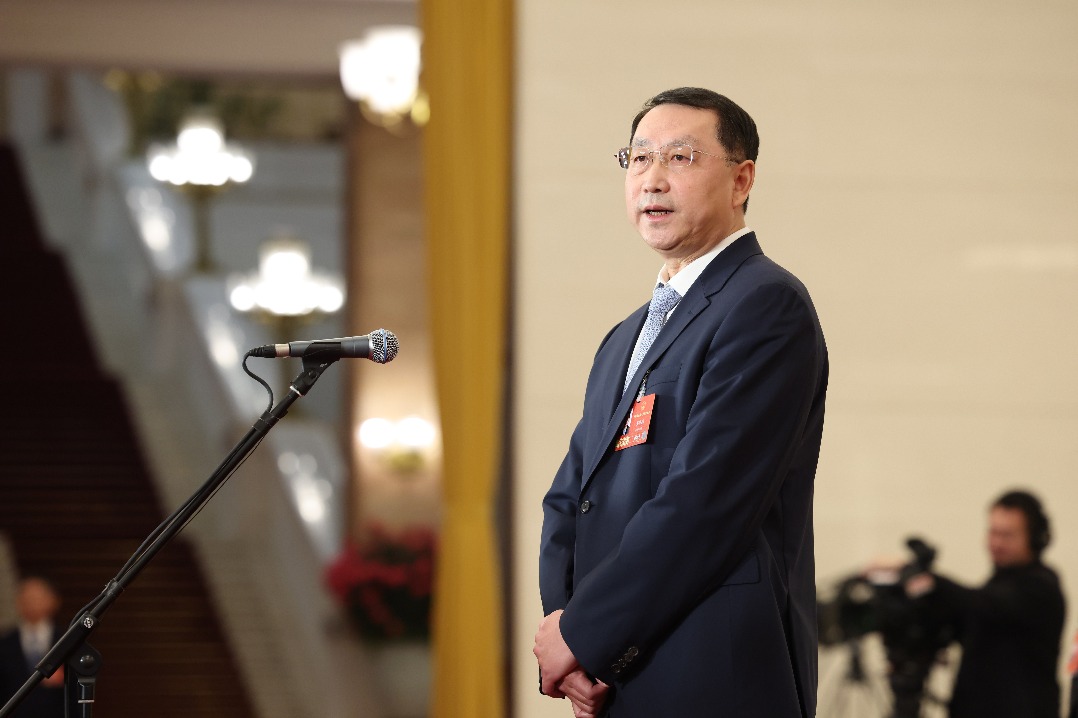
China has formally launched a comprehensive five-year strategic plan to propel its marine economy toward high-quality development, with Natural Resources Minister Guan Zhiou outlining the nation’s vision for oceanic advancement. The blueprint prioritizes ecological sustainability, technological innovation, and expanded international cooperation as core pillars for maritime growth.
Minister Guan, speaking during a ministerial passage interview following the conclusion of the National People’s Congress session, emphasized that “the marine represents a strategic frontier for high-quality development.” The initiative aligns with objectives set forth in China’s 15th Five-Year Plan (2026-2030), positioning ocean development as crucial to national economic transformation.
The strategy centers on major national programs to enhance deep-sea capabilities, including advanced sensing technologies, exploration systems, and resource development infrastructure. This technological push aims to catalyze industrial modernization and accelerate emerging sectors such as deep-sea equipment manufacturing and blue biomedicine.
Spatial planning and ecological conservation form another critical component, with coordinated land-sea development approaches to optimize bay layouts, improve management efficiency, and cultivate new economic drivers. The plan emphasizes protecting vital coastlines and maintaining water quality while promoting sustainable marine tourism activities including yacht cruising and recreational fishing.
International cooperation features prominently in China’s maritime strategy. Minister Guan committed to expanded marine cultural exchanges and contributing to “a maritime community with a shared future.” This global orientation builds on existing achievements that saw China’s gross ocean product exceed 11 trillion yuan ($1.6 trillion) in 2025, representing 7.9% of national GDP.
Recent accomplishments underscore China’s growing maritime capabilities: the Laoshan Laboratory has become fully operational, the domestically-designed Mengxiang deep-ocean drilling vessel has been commissioned, and the revolutionary Shenhai 1 offshore oil and gas platform has commenced operations. Joint Arctic expeditions by China’s Jiaolong and Fendouzhe submersibles demonstrate advancing polar capabilities.
Environmental protection measures include maintaining natural coastline ratios above 35%, expanding mangrove forests to 31,667 hectares, and establishing the Huangyan Island National Nature Reserve for coral reef ecosystem conservation. China has also emerged as a leader in global marine governance, becoming among the first signatories to the Marine Biodiversity of Areas Beyond National Jurisdiction Agreement while establishing blue economy partnerships with over 50 nations and international organizations.