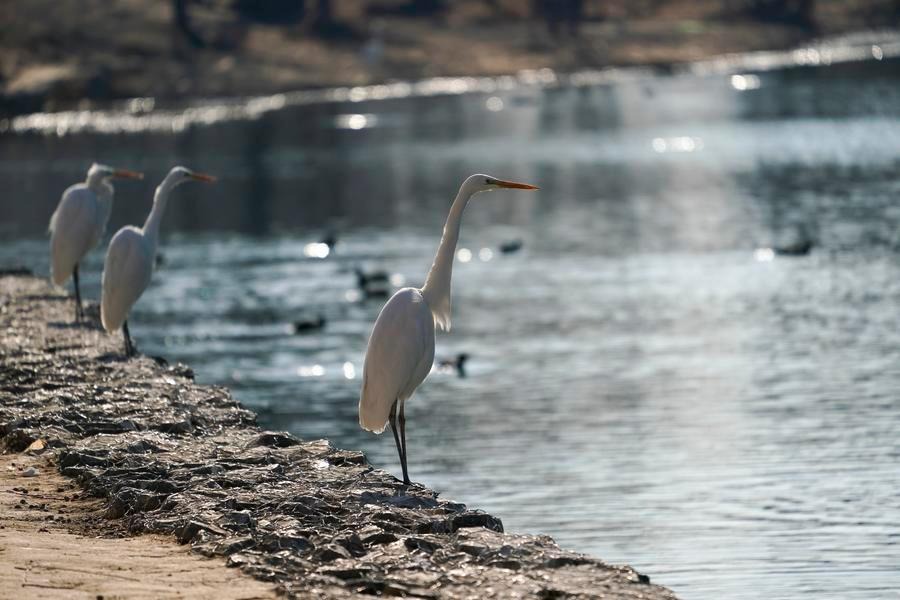
China has demonstrated extraordinary progress in ecological preservation, having successfully rehabilitated and expanded its wetland territories by more than one million hectares since 2012. This monumental achievement reinforces the nation’s status as Asia’s largest wetland ecosystem and the world’s fourth most significant wetland reservoir.
The National Forestry and Grassland Administration unveiled these accomplishments during the 30th World Wetlands Day celebrations, highlighting how this environmental milestone was realized through the implementation of over 3,800 specialized conservation projects. This year’s observance carried the theme ‘Wetlands and Traditional Knowledge: Celebrating Cultural Heritage,’ emphasizing the cultural dimensions of ecological stewardship.
China has pioneered a novel conservation framework that integrates prioritized restoration with categorized protection systems. The administration emphasized wetlands’ indispensable ecological, social, economic, and cultural values, noting strengthened legal protections including the 2022 national wetland conservation law and updated regulations across 21 provincial regions.
The country has established a comprehensive tiered management system featuring 82 internationally significant wetlands, 80 nationally designated sites, and 1,208 provincial-level protected areas. Additionally, 903 national wetland parks now operate with approximately 90% offering free public access, collectively attracting about 320 million annual visitors.
Mangrove conservation efforts have seen particular success with 9,200 hectares planted since 2012. The International Mangrove Center, launched in late 2024, has expanded its consortium to 20 member nations, demonstrating China’s growing leadership in global wetland preservation.
The administration outlined ambitious plans for the 15th Five-Year Plan period (2026-30), including legal framework enhancements, total wetland area control systems, and improved monitoring and early warning mechanisms.
At Zhalong National Nature Reserve in Heilongjiang province, technological innovation transforms conservation practices. Staff employ integrated monitoring networks combining remote sensing, video surveillance, drone technology, and ground patrols. ‘This comprehensive biodiversity monitoring system significantly enhances our conservation efficiency and effectiveness,’ stated Zhang Jianfei, director of the reserve’s protection center.
Field rangers like 47-year-old Li Chuanling utilize Beidou navigation devices and drone technology to monitor the reserve’s 210,000-hectare expanse. These technological advancements have enabled more successful rescues of rare bird species, with 28 birds from 15 protected species saved in 2025 alone.
Conservation efforts have yielded particularly impressive results for red-crowned cranes, with the reserve maintaining a stable population of approximately 300 birds—the world’s largest breeding ground for this first-class protected species.