China has enacted comprehensive sanctions against Shigeru Iwasaki, former chief of Japan’s Self-Defense Forces Joint Staff, for his alleged collaboration with Taiwanese separatist elements. The measures, effective immediately as of December 15, 2025, were formally announced by China’s Foreign Ministry through an official decree.
The sanctions package includes the freezing of all movable and immovable assets that Iwasaki holds within Chinese territory. Additionally, Chinese organizations and individuals are prohibited from engaging in any transactions or cooperative activities with the former Japanese official. Iwasaki has been barred from entering China, including its Hong Kong and Macao Special Administrative Regions, and will be denied Chinese visas indefinitely.
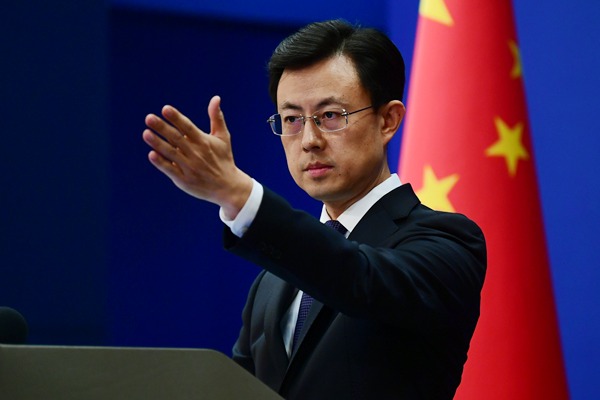
Foreign Ministry spokesman Guo Jiakun emphasized during a press briefing in Beijing that “the Taiwan question represents the core of China’s core interests and constitutes a fundamental red line that must not be crossed.” The ministry’s decree cited China’s Anti-Foreign Sanctions Law as the legal basis for these measures, asserting that Iwasaki’s actions constituted serious violations of the one-China principle and the four foundational China-Japan political agreements.
The diplomatic confrontation stems from Iwasaki’s acceptance of a position as political consultant to Taiwan’s authorities, which China first protested in March 2025. According to spokesman Guo, despite multiple diplomatic protests, the former Japanese official continued his provocations rather than rectifying his behavior.
This development occurs against the backdrop of escalating Sino-Japanese tensions, particularly following recent controversial remarks by Japanese Prime Minister Sanae Takaichi that suggested potential military intervention in Taiwan scenarios. Regional analysts, including Da Zhigang of Heilongjiang Provincial Academy of Social Sciences, interpret these events as indicative of Japan’s attempts to gradually erode the one-China principle, thereby creating significant risks for cross-strait stability.