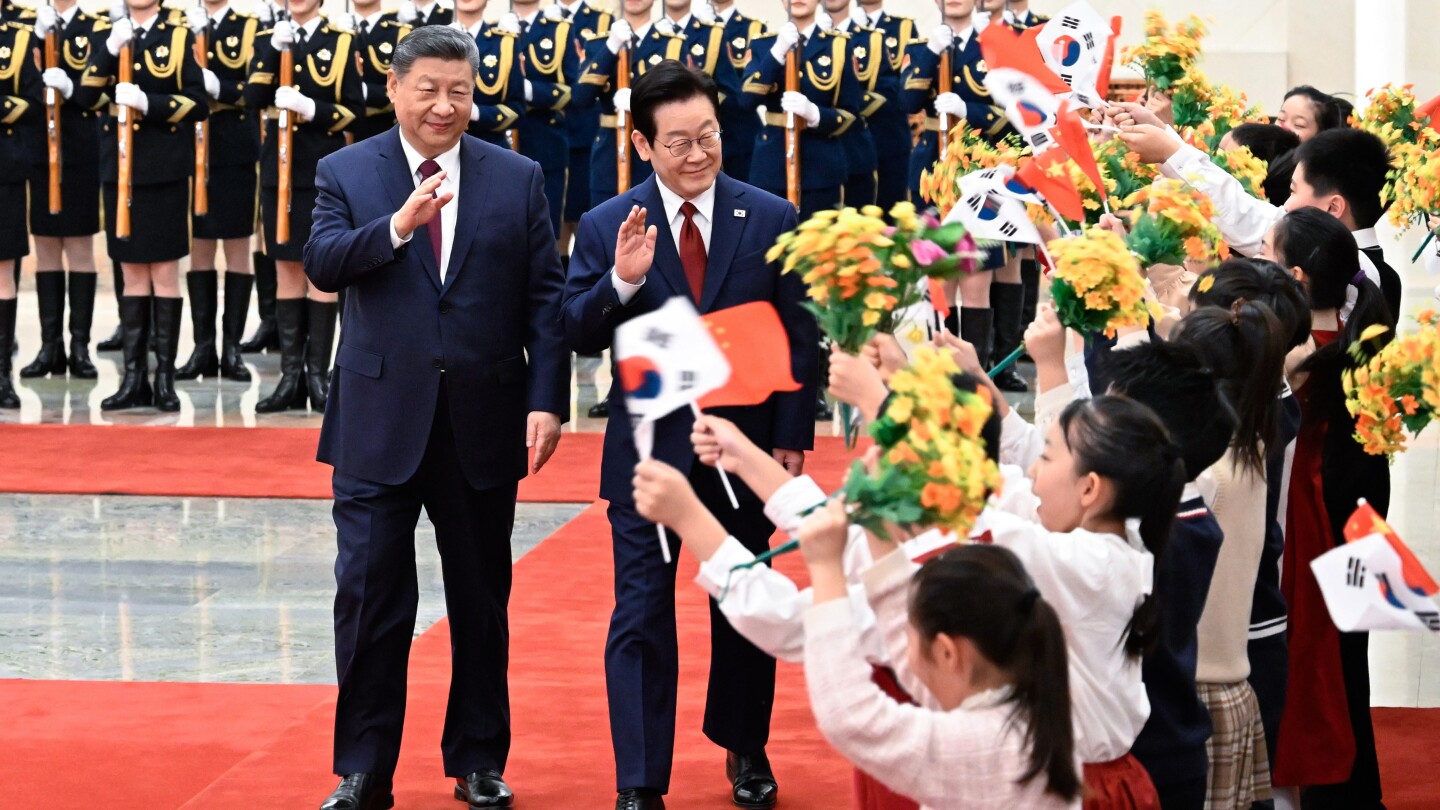
In a significant diplomatic engagement, Chinese President Xi Jinping hosted South Korean President Lee Jae Myung at Beijing’s Great Hall of the People on Monday, marking the latter’s inaugural visit since assuming office in June. The high-level meeting produced substantial bilateral agreements while navigating complex regional security challenges, including North Korea’s provocative missile tests and escalating Sino-Japanese tensions.
The leadership dialogue emphasized shared responsibilities in maintaining regional stability and fostering global development. President Xi underscored the historical context of Northeast Asian relations, specifically referencing the two nations’ collaborative efforts during World War II against Japan. President Lee articulated his vision for opening “a new chapter in Korea-China relations” during these transformative times, emphasizing that peace constitutes the fundamental basis for prosperity and growth.
This diplomatic exchange occurred against a backdrop of heightened regional volatility. Mere hours before President Lee’s arrival, North Korea launched multiple ballistic missiles, including advanced hypersonic systems capable of traveling at five times the speed of sound. Pyongyang simultaneously condemned recent U.S. military actions in Venezuela, drawing parallel concerns about potential regime change operations. China, as North Korea’s primary economic partner and political ally, joined in criticizing American foreign policy while maintaining its strategic positioning.
The bilateral relationship between Beijing and Seoul has experienced fluctuations in recent years, particularly regarding South Korea’s military cooperation with the United States. President Lee addressed these sensitivities directly, stating in a pre-visit interview that security partnerships with Washington should not necessitate confrontation with China. His visit aimed specifically to “minimize or eliminate past misunderstandings” while elevating bilateral relations to a new developmental stage.
Despite these geopolitical complexities, the two nations demonstrated strong commitment to economic collaboration. With bilateral trade reaching approximately $273 billion in 2024, the leaders oversaw the signing of fifteen cooperation agreements spanning technology, transportation, environmental protection, consumer goods, agriculture, biotechnology, and entertainment. These were complemented by earlier business forum engagements featuring major corporations including Samsung, Hyundai, LG, and Alibaba Group, signaling robust private sector involvement in the relationship.
The Taiwan issue emerged as another critical dimension, with recent Chinese military exercises around the island democracy and Japanese statements about potential intervention creating additional regional friction. President Xi’s specific invocation of historical rivalry with Japan highlighted how broader regional dynamics continue to shape Sino-Korean relations, even as both nations seek to advance their bilateral agenda.