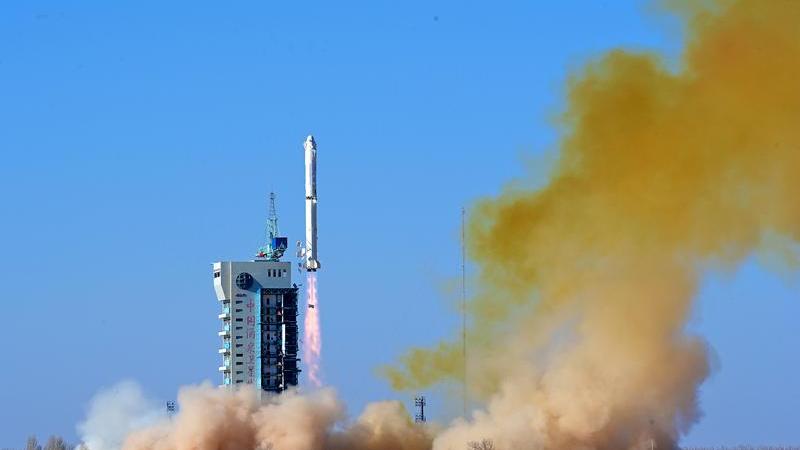
In a significant advancement of Sino-Algerian space collaboration, China successfully deployed the AlSat-3B remote-sensing satellite into orbit on Saturday, January 31st, 2026. The spacecraft ascended aboard a Long March 2C carrier rocket from the Jiuquan Satellite Launch Center in Inner Mongolia at precisely 12:01 pm local time.
The newly launched satellite represents the second component of Algeria’s enhanced Earth observation capabilities, joining its predecessor AlSat-3A which was similarly launched by Chinese partners just weeks earlier on January 15th. Both sophisticated satellites were developed by the China Academy of Space Technology, showcasing China’s growing prowess in international space technology partnerships.
This bilateral project operates under a comprehensive cooperation agreement signed in July 2023 between the Algerian Space Agency and China Great Wall Industry Corporation, the international trade subsidiary of China Aerospace Science and Technology Corp. The contractual arrangement encompasses not only satellite delivery but also includes complete ground systems, specialized training programs, and ongoing technical support services.
The twin-satellite constellation is designed to provide critical data for multiple civilian applications including geological surveying, agricultural planning, environmental monitoring, urban development mapping, and disaster management infrastructure. The partnership marks the most significant space cooperation between the nations since the successful deployment of Algeria’s Alcomsat-1 communications satellite in December 2017.
The launch vehicle itself, the Long March 2C manufactured by China Academy of Launch Vehicle Technology, stands 43 meters tall with a 3.35-meter diameter and a substantial liftoff weight of 242.5 metric tons. The reliable rocket model specializes in deploying payloads into both low-Earth and sun-synchronous orbits.
This mission represents the 629th flight of the Long March rocket series and China’s ninth successful orbital launch in 2026, demonstrating the nation’s accelerating pace in space operations and international technology cooperation.