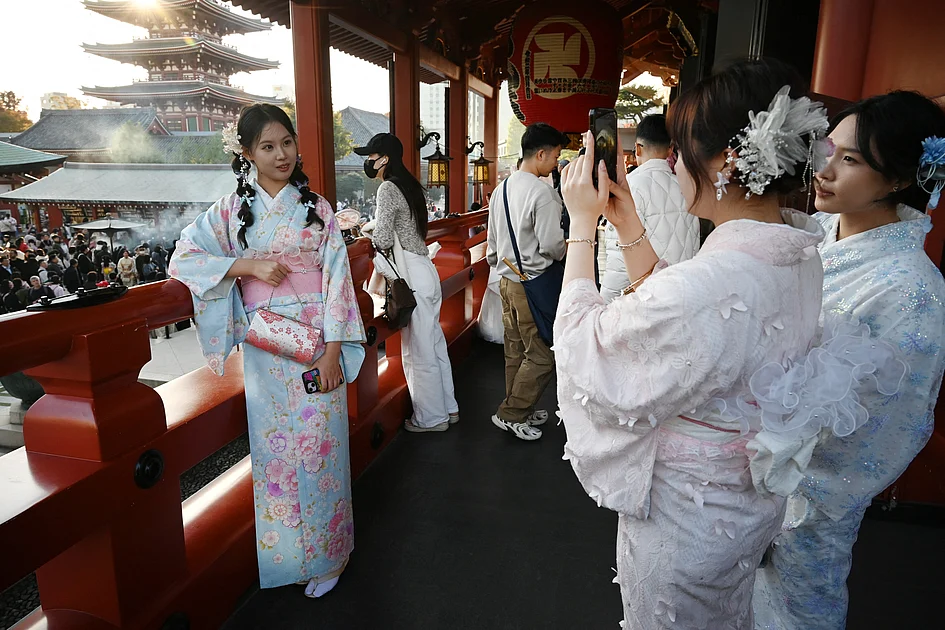
China has issued a travel advisory urging its citizens to avoid visiting Japan, escalating tensions following controversial remarks by Japanese Prime Minister Sanae Takaichi regarding Taiwan. The diplomatic row began on November 7 when Takaichi suggested in parliament that a hypothetical attack on Taiwan could justify a military response from Japan under the principle of ‘collective self-defence.’ Taiwan, which China claims as its territory, lies just 100 kilometres from Japan’s nearest island. In response, Beijing summoned Japan’s ambassador, while Tokyo reciprocated by summoning China’s envoy over an inflammatory online post, later removed, from a Chinese diplomat. China’s embassy in Japan warned on Friday that recent provocative statements by Japanese leaders have ‘severely damaged the atmosphere for people-to-people exchanges’ and posed ‘significant risks to the personal safety and lives of Chinese citizens in Japan.’ The Ministry of Foreign Affairs and Chinese embassies in Japan have advised citizens to refrain from travelling to the country. Japan’s Chief Cabinet Secretary Minoru Kihara criticized the advisory as ‘inconsistent with the promotion of a strategic and mutually beneficial relationship.’ Meanwhile, China’s major airlines—Air China, China Southern, and China Eastern—have offered full refunds for Japan-bound flights through December 31. Takaichi, a conservative and vocal critic of China, has since tempered her rhetoric but defended her remarks as consistent with Japan’s long-standing policy. The dispute highlights the fragile relationship between the two nations, which are key trading partners but often clash over historical grievances, territorial disputes, and military concerns. The U.S. has maintained strategic ambiguity on Taiwan, while Japan’s previous leaders avoided direct commentary on the island’s defence. The situation remains tense as both sides navigate the fallout from the escalating diplomatic feud.
China advises citizens to avoid Japan travel over Taiwan row; airlines offer refunds