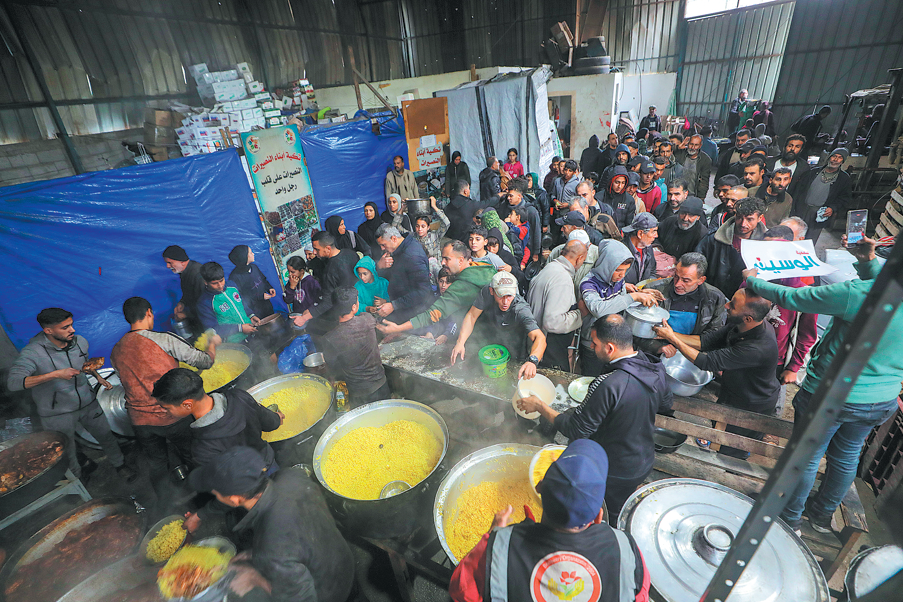
DEIR AL-BALAH, Gaza Strip — Thousands of displaced Palestinians across Gaza are confronting increasingly dire conditions as winter rains intensify their humanitarian crisis. In the central town of Deir al-Balah, families who have inhabited makeshift tents for approximately two years now brace for another season of harsh weather with severely limited resources.
The visual landscape reveals profound hardship: barefoot children play on chilled sand while fathers reinforce fraying tent structures with scavenged wood fragments. Inside these dim shelters, daylight filters through countless holes in tarpaulins, creating star-like patterns. Mothers wage constant battles against dampness, hanging sodden clothing on poles and cords during brief respites from rainfall that transforms pathways into muddy ponds.
Shaima Wadi, a mother of four displaced from Jabalia in northern Gaza, articulated the relentless struggle: “Each rainfall collapses our tent overhead, forcing us to constantly seek new wooden supports. With soaring prices and no income source, we cannot afford proper clothing for our children or adequate sleeping mattresses.”
Gaza’s Health Ministry reports dozens of fatalities, including a two-week-old infant, attributed to hypothermia and weather-related structural failures of war-damaged buildings. Aid organizations urgently appeal for increased humanitarian assistance and improved shelter solutions amid warnings from emergency responders about the dangers of remaining in compromised structures.
Innovative yet desperate survival methods emerge throughout the camps. Ahmad Wadi described collecting nylon, cardboard, and plastic from streets to either burn for warmth or use as improvised blankets. “Proper covers are nonexistent,” he explained. “The freezing temperatures combined with high humidity and pervasive water infiltration create unbearable conditions.”
Meanwhile, diplomatic developments continue as Israeli Prime Minister Benjamin Netanyahu prepares for upcoming Washington discussions regarding the second phase of the October 10 ceasefire. While the truce has generally held, implementation progress has slowed considerably. Critical outstanding issues include potential deployment of an international stabilization force, establishment of a technocratic governing body for Gaza, Hamas disarmament negotiations, and further Israeli troop withdrawals.
Both conflicting parties have exchanged accusations of ceasefire violations. The Palestinian death toll has now reached at least 71,266 according to official ministry reports.
Concurrently in the West Bank, Israeli forces imposed movement restrictions on multiple villages near Ramallah following reported shooting incidents near military checkpoints. Initial military statements described a Palestinian opening fire before fleeing, though officials later attributed the incident to “hunting activity.” Operations continue to locate individuals and confiscate weapons, disrupting mobility for residents across thirteen villages.