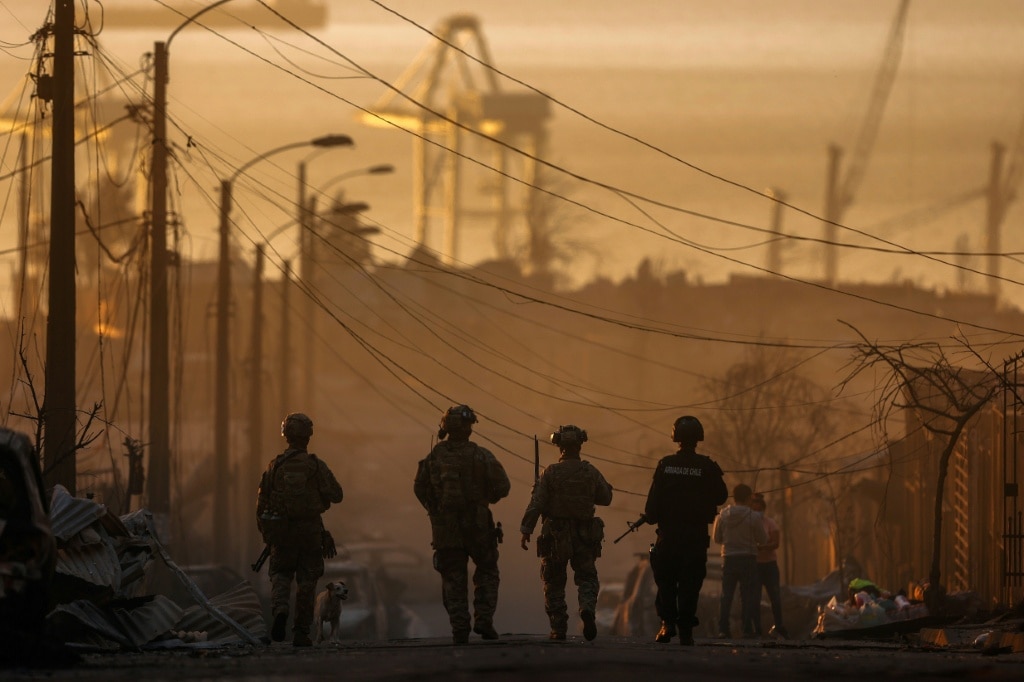
Southern Chile is grappling with a devastating wildfire catastrophe that has claimed at least 19 lives and obliterated entire communities, with infernos continuing their destructive path for a third consecutive day. The disaster zones in Nuble and Biobio regions, approximately 500 kilometers south of Santiago, have been declared emergency areas, triggering military deployment and nighttime curfews in the most severely affected localities.
Residents described harrowing escapes as walls of flame engulfed neighborhoods. Yagora Vasquez, a Lirquen port town inhabitant, recounted her frantic evacuation: “The situation turned horrific. I desperately tried to saturate my home with water, but witnessing the advancing flames forced us to flee immediately with my seven-year-old son and our dog.” The aftermath reveals landscapes of devastation—charred vehicles line streets where homes once stood, with survivors sifting through ashes to recover fragments of their lives.
The meteorological conditions have significantly complicated firefighting efforts, with winds exceeding 70 kilometers per hour and temperatures approaching 30°C (86°F). Despite brief nocturnal respites, authorities confirm that the most critical blazes remain uncontained. President Gabriel Boric warned citizens via social media platform X about anticipated unfavorable weather patterns that could reactivate smoldering hotspots throughout the day.
This environmental disaster echoes previous tragedies in the region. Many residents had relocated to these areas following the devastating 2010 tsunami that claimed over 500 lives, only to confront a different elemental threat. Mareli Torres, whose two-story home was reduced to blackened walls, contrasted the experiences: “This firewave proved far more destructive than the ocean surge. The earthquake brought devastation, but these fires have created unimaginable destruction.
Scientific research from Santiago’s Center for Climate and Resilience Research demonstrates that climate change has fundamentally altered fire dynamics in south-central Chile. The 2024 study establishes that long-term warming and drying trends have created conditions conducive to extreme wildfire seasons. This pattern has manifested repeatedly in recent years, with February 2024 fires near Viña del Mar causing 138 fatalities and unprecedented land area destruction during the 2016/17 and 2022/23 fire seasons.
The regional dimension of this crisis extends beyond Chilean borders, with Argentine Patagonia reporting over 15,000 hectares consumed by wildfires in recent days, highlighting the broader environmental challenges facing southern South America.