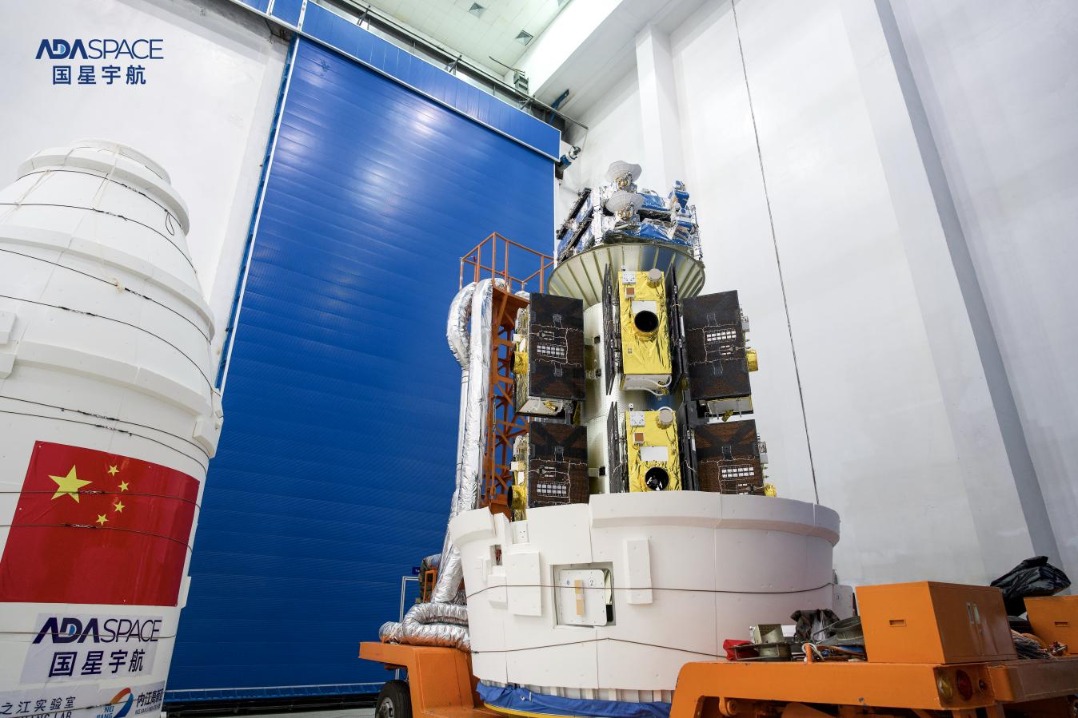
In a groundbreaking advancement for space technology and artificial intelligence, Chengdu-based GuoXing Aerospace Technology has successfully deployed a general-purpose AI model aboard orbiting satellites, creating the world’s first operational space-based computing center. The company announced this technological milestone at a recent seminar, revealing they have uplinked Alibaba’s sophisticated Qwen3 large language model to their inaugural satellite cluster launched in May 2025.
The achievement represents a significant leap in space computing capabilities, with the system successfully completing multiple end-to-end reasoning tasks entirely in orbit. During trials, questions transmitted from Earth to the satellite were processed on board and results returned to ground stations—all within an impressive two-minute timeframe.
This development emerges as global demand for computing power reaches unprecedented levels, driven largely by artificial intelligence applications. The space-based computing race has intensified with recent developments, including SpaceX’s November launch of the Starcloud-1 satellite equipped with Nvidia GPUs.
Wang Yabo, Executive Vice-President of the Sichuan-based startup, outlined ambitious plans to expand this initial success into a comprehensive network of 2,800 specialized computing satellites by 2035. The proposed constellation will include 2,400 inference satellites and 400 training satellites deployed across multiple orbital configurations at altitudes ranging from 500 to 1,000 kilometers.
The system is designed to utilize advanced laser inter-satellite links for high-speed data transfer, with projected capabilities of delivering 100,000 petaflops of inference compute and 1 million petaflops of training compute worldwide. The company plans to deploy additional satellite clusters this year, targeting completion of a 1,000-satellite network by 2030.