LONDON — As Valentine’s Day approaches, Britain’s National Archives unveils a remarkable exhibition titled “Love Letters,” showcasing five centuries of heartfelt correspondence that transcends conventional romantic notions. The collection presents an extraordinary tapestry of human emotion through meticulously preserved documents ranging from royal missives to ordinary citizens’ expressions of affection.
Curator Victoria Iglikowski-Broad describes the exhibition as revealing “legendary romances from British history” alongside voices from everyday life. “We’re trying to open up the potential of what a love letter can be,” she explained, noting that expressions of love emerge from unexpected sources and diverse formats. The collection spans medieval songs of heartbreak, twentieth-century classified ads seeking same-sex romance, and wartime correspondence between soldiers and their sweethearts.
Among the most poignant exhibits is Robert Dudley’s final letter to Queen Elizabeth I, written days before his death in 1588. The document, found at the queen’s bedside upon her death fifteen years later, reveals the intimate connection between the “Virgin Queen” and her self-described “poor old servant.”
The exhibition broadens the definition of love beyond romance to include familial bonds and friendship. Jane Austen’s handwritten will bequeathing nearly everything to her sister Cassandra appears alongside a 1956 plea from the father of gangster twins Reggie and Ronnie Kray, begging courts for leniency based on their good intentions.
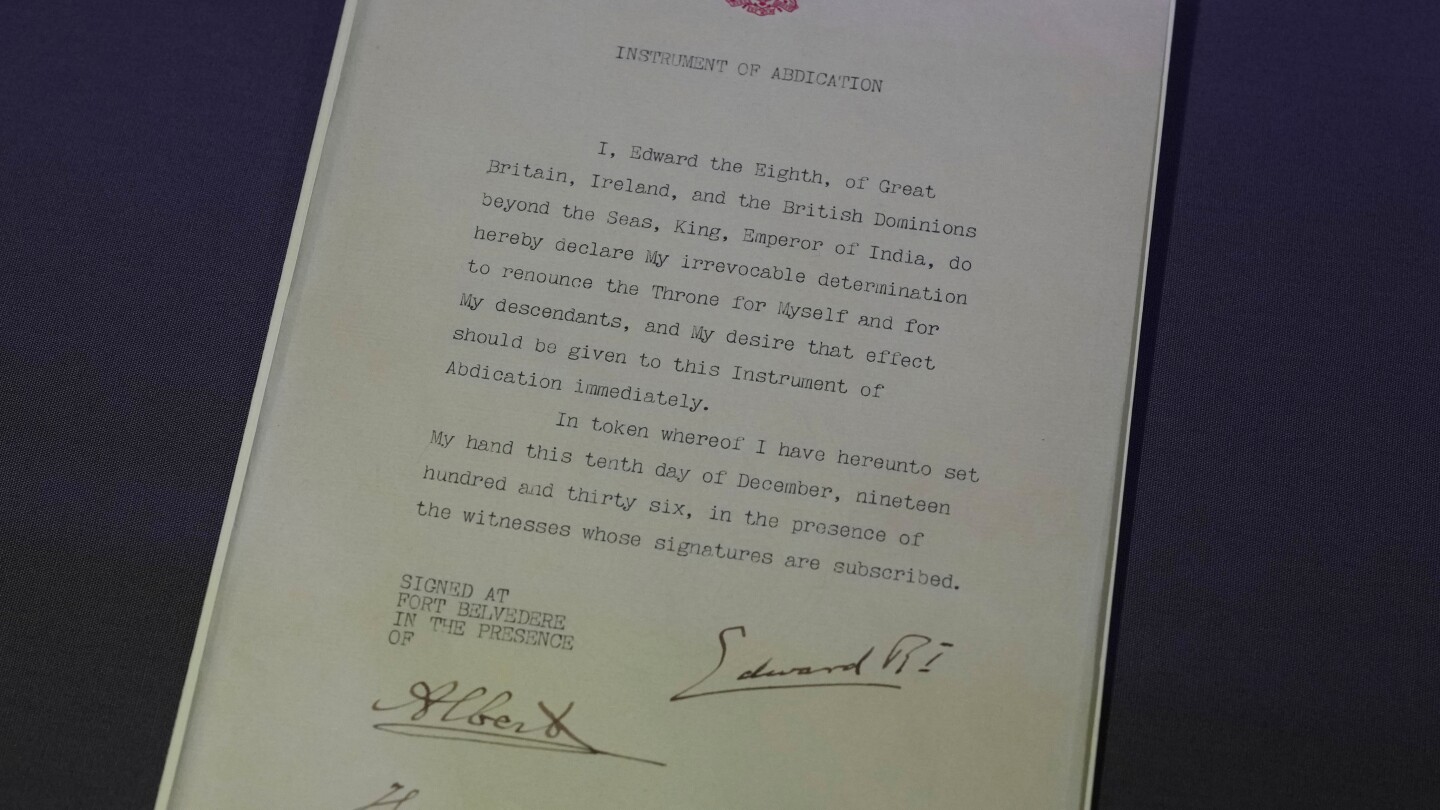
Remarkable contrasts emerge throughout the collection. An 1851 petition from unemployed weaver Daniel Rush, begging authorities not to separate him from his wife through workhouse assignments, appears beside King Edward VIII’s 1936 Instrument of Abdication, through which he relinquished the throne to marry “the woman I love,” Wallis Simpson.
“These two items share a common human feeling that sacrifice is worth it for love,” observed Iglikowski-Broad.
The exhibition also explores love’s tragic dimensions. A previously unseen 1944 letter from British intelligence officer John Cairncross (later revealed as a Soviet spy) reflects on lost romance with former girlfriend Gloria Barraclough. Historical tragedies include Catherine Howard’s 1541 letter to Thomas Culpeper—written with “restrained panic” before both were executed for treason—and Queen Henrietta Maria’s rare intimate letter to King Charles I, discovered among possessions abandoned after a civil war defeat.
Archives historian Neil Johnston noted the exceptional nature of the royal correspondence: “This is a little gem within the disaster of the English Civil War.”
The “Love Letters” exhibition opens Saturday and continues through April 12 with free admission, offering visitors an unprecedented journey through centuries of emotional history.