分类: world

  • China’s WWII commemoration rekindles cross-strait history battle

    China’s WWII commemoration rekindles cross-strait history battle

    Eight decades after World War II concluded with Japan’s surrender to Allied forces on September 2, 1945, the conflict continues to influence East Asian geopolitics, particularly in the context of modern tensions. The recent high-profile military parade in China, commemorating what Beijing terms the ‘War of Resistance against Japanese Aggression,’ has reignited debates over historical narratives and their implications for current relations. Critics in Tokyo accuse the Chinese Communist Party of fueling anti-Japanese sentiment, while the U.S. has expressed concerns over Beijing’s emphasis on Russia’s role at the expense of America’s contributions. The narrative battle between Taipei and Beijing is particularly significant. During the war, China’s communists and nationalists formed an uneasy alliance against Japan, but after the war, the communists emerged victorious, forcing the nationalists to retreat to Taiwan. This historical backdrop fuels ongoing disputes over each side’s role in defeating Japan and the symbolism of Beijing’s military displays. A key point of contention is the fact that Japan surrendered to the National Revolutionary Army of the Kuomintang, not the communists, a detail that underscores Taiwan’s claim to historical legitimacy. The nationalist army bore the brunt of conventional warfare, while the communists relied on guerrilla tactics, leading to differing interpretations of their respective contributions. Taiwan’s status post-war adds another layer of complexity. After 50 years of Japanese colonial rule, Taiwan was handed over to the Republic of China, but the island’s local population resisted the authoritarian nationalist regime. The Cairo Declaration of 1943 further complicated matters by affirming Taiwan’s return to China, a principle both Beijing and Taipei uphold, albeit with differing interpretations of which government represents China. These conflicting narratives resurface during commemorative events, such as China’s 2015 military parade marking the 70th anniversary of Japan’s surrender. Beijing uses these occasions to assert its role in shaping the post-war world order and to promote its vision of a multipolar world. Meanwhile, Taiwan opts for more subdued commemorations, reflecting its population’s focus on contemporary issues rather than historical grievances. As tensions across the Taiwan Strait escalate, the legacy of World War II remains a potent force in shaping East Asian geopolitics.

  • The paradox behind China’s military parade

    The paradox behind China’s military parade

    China’s recent military parade, marking the 80th anniversary of the end of World War II, showcased its advanced defense capabilities, including DF-41 intercontinental ballistic missiles and J-20 stealth fighters. This display of military prowess aimed to project confidence abroad and reassure domestic audiences. The event underscored China’s transformation from a nation reliant on Soviet imports to a global leader in defense manufacturing, with state-owned enterprises like AVIC, CASIC, CSSC, and CETC driving innovation in aviation, missiles, shipbuilding, and electronics. Today, China boasts the world’s largest navy, with over 370 vessels, and a modernized PLA Rocket Force and Air Force. However, this show of strength has unintended consequences. While China has achieved continental primacy, leveraging infrastructure projects and economic influence across Central Asia and Mongolia, its maritime ambitions face resistance. Regional powers like Japan, Australia, and the Philippines are bolstering their defenses and deepening ties with the U.S. to counterbalance China’s growing influence. Despite its industrial scale, China’s defense exports remain limited, and its assertive actions in the South China Sea and Taiwan Strait have heightened regional anxieties. The paradox of China’s military rise is that it has inadvertently reinforced the U.S.-led security architecture in the Indo-Pacific, diminishing the geopolitical returns on its vast investments.

  • Iran’s SCO entry turning into a road to nowhere

    Iran’s SCO entry turning into a road to nowhere

    TEHRAN – Iran’s membership in the Shanghai Cooperation Organization (SCO) was initially hailed as a strategic pivot to counter Western sanctions and bolster its economic independence. However, years after its full accession, the results paint a starkly different picture. Despite high hopes, Iran has struggled to achieve its core economic objectives through the SCO, raising questions about the organization’s effectiveness as an alternative to the Western financial system.

    One of Iran’s primary goals was to establish an alternative financial channel to bypass US dollar-based sanctions. The SCO’s ambitious ‘de-dollarization’ initiative, aimed at promoting trade in national currencies, was seen as a lifeline for Iran’s isolated banking sector. However, the lack of a unified financial messaging system or a multilateral clearing house has rendered this initiative largely symbolic. Instead of fostering a democratic basket of currencies, the initiative has inadvertently paved the way for the Chinese yuan’s dominance, offering little practical benefit to Iran.

    Another key objective was to attract vital capital for strategic infrastructure projects, particularly the International North-South Transport Corridor (INSTC). This project, designed to connect Russia to the Indian Ocean, was expected to unlock significant financing under the SCO’s political umbrella. Yet, the reality has been far from promising. Key segments of the INSTC remain underfunded, with pledges from Russia, India, and China failing to materialize into tangible investments. Secondary sanctions and Iran’s inability to provide credible sovereign guarantees have further deterred potential financiers.

    China, despite its 25-year strategic partnership agreement with Iran, has been notably risk-averse. Chinese state-owned banks and firms have refrained from committing to major Iranian projects, prioritizing commercial viability over political rhetoric. This has left Iran reliant on opaque financial networks and grey-market oil sales, perpetuating its economic vulnerability.

    In contrast, fellow SCO member Pakistan has successfully leveraged the organization to advance its infrastructure goals through the China-Pakistan Economic Corridor (CPEC), a bilateral project with guaranteed Chinese financing. Iran’s inability to secure similar backing highlights the SCO’s limitations as a financing institution.

    Ultimately, Iran’s SCO membership has been a political victory against Western isolation but an economic disappointment. The organization has provided a seat at the regional table but failed to unlock the financial resources needed to transform Iran’s economy. As rival transit corridors gain momentum, Iran risks falling further behind in the race to become a regional logistics hub.

  • Sudan landslide erases entire village, with hundreds feared dead

    Sudan landslide erases entire village, with hundreds feared dead

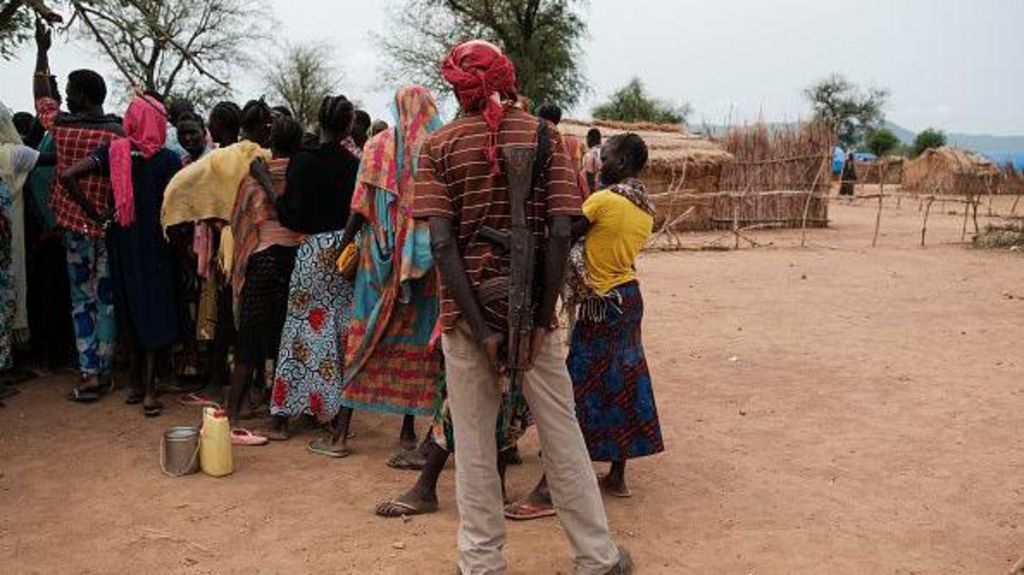
    A catastrophic landslide in the Marra mountains of western Sudan has completely obliterated the village of Tarsin, leaving a trail of devastation and uncertainty. The disaster, triggered by weeks of relentless heavy rains, has claimed an estimated death toll ranging from dozens to potentially 1,000 people, according to local accounts. Rescue operations are severely hampered by ongoing landslides, which continue to threaten nearby villages perched on the mountain’s 3,000-meter summit. The region, already a refuge for thousands displaced by Sudan’s protracted civil war, now faces compounded humanitarian crises. Many of the displaced had fled from el-Fasher, the besieged capital of North Sudan, where a humanitarian catastrophe has unfolded over 500 days of conflict. The war, pitting the Sudanese army against the paramilitary Rapid Support Forces (RSF), has resulted in hundreds of thousands of deaths, displaced 12 million people, and devastated the nation’s infrastructure. The Ummro district, where Tarsin is located, has been under the control of the Sudan People’s Liberation Movement/Abdul Wahid faction (SLM/AW), a rebel group claiming neutrality in the conflict. International aid organizations, already struggling to access war-torn areas, now face insurmountable challenges due to the rugged terrain, inaccessible routes, and the threat of further landslides. Adam Rigal, a support worker for displaced Sudanese, reported that Tarsin’s entire population of over 1,000 people perished, with only one survivor. Hundreds remain buried under the rubble, and locals are using rudimentary tools to retrieve bodies. The situation is dire, with urgent need for emergency and humanitarian assistance, including evacuation of nearby villages. Aid workers in Darfur emphasize the compounded disaster, as the war has rendered the area nearly inaccessible. The region’s health infrastructure is in ruins, heightening risks of cholera and dengue fever. Abdul Wahid al-Nur, leader of the SLM/AW, has called for immediate international intervention to save thousands at risk from ongoing landslides. Meanwhile, Sudan’s water and irrigation ministry has warned of continued heavy rains and dangerous floods threatening over 72 locations and 230,000 people across the country. Communities are urged to remain vigilant and evacuate flood-prone areas.

  • Sudan: Over 1,000 killed in Darfur landslide; only 1 survivor, says armed group

    Sudan: Over 1,000 killed in Darfur landslide; only 1 survivor, says armed group

    A devastating landslide in Sudan’s western Darfur region has resulted in the tragic deaths of over 1,000 people, with only one survivor reported, according to a statement released by the Sudan Liberation Movement/Army (SLM/A) late Monday. The disaster occurred on Sunday following days of relentless heavy rainfall, obliterating the village of Tarasin in the Marra mountains. The SLM/A, which controls the area, described the event as ‘massive and devastating,’ noting that the landslide flattened the village and completely destroyed a significant portion of the region renowned for its citrus production. The group has urgently appealed to the United Nations and various aid organizations for assistance in recovering the deceased. This calamity adds to the ongoing humanitarian crisis in Sudan, where a bloody civil war, now in its third year, has exacerbated conditions, particularly in Darfur. The conflict has intensified in recent months, especially in El-Fasher, following the army’s takeover of the capital, Khartoum, in March. The situation in Darfur remains dire, with famine declared in several areas, underscoring the urgent need for international intervention and support.

  • As Israeli students return to classrooms, Gaza’s schools lie in ruins

    As Israeli students return to classrooms, Gaza’s schools lie in ruins

    In the shadow of Israel’s military offensive, Gaza’s education system lies in ruins, creating what experts describe as a deliberate campaign to undermine Palestinian development for generations to come. The devastating impact on students like 19-year-old Layan Abdul-Rahman illustrates the profound human cost of this educational catastrophe.

    Before the conflict, Abdul-Rahman was an ambitious, English-fluent student preparing for university applications. Now, after two years of delayed education and the trauma of losing her father and multiple family members in Israeli attacks, she struggles to comprehend the possibility of continuing her studies. ‘She is mentally exhausted and constantly cries,’ her sister Israa told Middle East Eye. ‘Every day, she comes to me asking, ‘Am I really going to apply?”

    The scale of destruction is staggering. UN analysis of satellite imagery reveals that 97% of Gaza’s school buildings have sustained damage, with 76.6% suffering direct hits since October 2023. The UN agency for Palestinian refugees reports that over 660,000 children are being deprived of schooling for a third consecutive year, while Palestinian officials estimate approximately 700,000 students have had their education suspended.

    Those attempting to continue their education face unimaginable challenges. Sixteen-year-old Abdul-Aziz, once a diligent student, ‘no longer remembers which class he is in,’ according to family members, his priorities shifted from academics to survival. Yara Khaled, whose children attended the American International School in Gaza, describes how ‘their thinking has completely changed’—now preoccupied with basic necessities like lighting fires and finding bread for the next meal.

    Amid the devastation, grassroots initiatives like Gaza Great Minds offer glimmers of hope. Founded by English teacher Ahmad Abu Rizik in May 2024 after witnessing a child scrambling for aid instead of attending school, the organization operates six of Gaza’s approximately 50 remaining schools, providing free education to some 3,000 children. These makeshift tent classrooms represent a defiant commitment to learning despite overwhelming odds.

    Yet even these efforts face extreme challenges. Students arrive hungry and traumatized, parents hesitate to send children to school amid random Israeli shootings, and the organization has already lost nine pupils to the violence—including Mohammed and Dalia, killed recently while playing in the streets.

    Neve Gordon, chair of the British Society for Middle Eastern Studies’ Committee on Academic Freedom, characterizes Israel’s destruction of Gaza’s education system as intentional policy with far-reaching implications: ‘By decimating Gaza’s educational and intellectual infrastructure, Israel is systematically undermining the Strip’s development for years to come, much after the genocidal violence subsides.’ This systematic dismantling of education represents what many describe as a war on the very existence of the Palestinian people, with consequences that will echo through generations.

  • UN World Food Programme says Yemen’s Houthis detained agency employee

    UN World Food Programme says Yemen’s Houthis detained agency employee

    In a concerning development, Yemen’s Houthi rebels have detained an employee of the United Nations World Food Programme (WFP) in the rebel-held capital of Sanaa. The incident occurred on Sunday, with fears that additional staff members may have been apprehended in other regions of the country. According to a statement issued by the WFP, local security forces entered their offices in Sanaa and detained one staff member, while reports suggest similar detentions in other areas. The agency is urgently seeking further information from Houthi authorities, who have controlled Sanaa since 2014 and now govern significant portions of Yemen. A security source revealed to AFP that seven WFP employees and three UNICEF workers were arrested following raids on their offices. The WFP condemned the arbitrary detention of humanitarian staff, emphasizing that the safety and security of personnel are crucial for delivering life-saving aid. This incident follows an Israeli airstrike on Sanaa last Thursday, which resulted in the death of the Houthi prime minister. In response, Houthi authorities arrested dozens of individuals on suspicion of collaborating with Israel. This is not the first time the Houthis have targeted UN and aid workers. Earlier this year, eight UN employees were detained, adding to dozens of personnel held since June 2024. The Houthis have accused these individuals of being part of an ‘American-Israeli spy network’ operating under the guise of humanitarian organizations—a claim vehemently denied by the UN. UN Secretary-General Antonio Guterres has repeatedly called for the immediate and unconditional release of detained personnel, describing the death of a WFP staffer in custody earlier this year as a ‘deplorable tragedy.’ Yemen, already grappling with one of the world’s worst humanitarian crises due to a decade-long civil war, relies heavily on international aid, with over half of its population in need of assistance. The arrests have forced the UN to curtail its operations and suspend activities in certain regions of the impoverished nation.

  • At least 70 killed, 30 feared dead after migrant boat capsizes off West Africa

    At least 70 killed, 30 feared dead after migrant boat capsizes off West Africa

    In a devastating maritime disaster, at least 70 migrants lost their lives when a boat capsized off the coast of West Africa, according to a statement released by Gambia’s foreign affairs ministry on Friday. The vessel, believed to have departed from Gambia and carrying predominantly Gambian and Senegalese nationals, sank near Mauritania early Wednesday. Another 30 individuals are feared dead, bringing the potential death toll to over 100. The boat was reportedly carrying around 150 passengers, with only 16 survivors rescued so far. Mauritanian authorities have recovered 70 bodies, while witness accounts suggest the tragedy may have claimed even more lives. This incident marks one of the deadliest accidents along the perilous migration route from West Africa to Europe. The Atlantic migration route, particularly the journey from West Africa to Spain’s Canary Islands, is notorious for its dangers. Last year, over 46,000 irregular migrants reached the Canary Islands, a record number, according to the European Union. However, more than 10,000 died attempting the journey, a 58% increase from 2023, as reported by the rights group Caminando Fronteras. Gambia’s foreign affairs ministry has urged its citizens to avoid such hazardous voyages, which continue to claim countless lives. Mauritania remains a critical transit point for undocumented migrants from across Africa, many of whom risk their lives on overcrowded and unsafe vessels in pursuit of a better future in Europe. The tragedy underscores the ongoing humanitarian crisis and the urgent need for safer migration pathways.

  • Sudan’s RSF traps el-Fasher inside network of earth walls

    Sudan’s RSF traps el-Fasher inside network of earth walls

    The Rapid Support Forces (RSF) in Sudan have erected a network of earth walls, known as berms, around the city of el-Fasher, effectively trapping hundreds of thousands of civilians. This siege, ongoing for over 500 days, has intensified the humanitarian crisis in the region. According to a report by the Yale School of Public Health’s Humanitarian Research Lab (HRL), over 31 kilometers of berms have been constructed since May 2024, encircling the capital of North Darfur. While hundreds of thousands have fled, approximately 750,000 civilians remain trapped, with 260,000, including 130,000 children, stranded in the Abu Shouk displacement camp. Nathaniel Raymond, executive director of the HRL, noted that civilian movement has dwindled, with many either deceased, attempting to escape, or hiding in bomb shelters. The RSF’s actions have created what the HRL describes as a ‘literal kill box,’ preventing the entry of essential supplies like food and medicine and blocking escape routes. The conflict between the RSF and the Sudanese Armed Forces (SAF) has led to over 1,100 verified human rights violations in el-Fasher alone, including the killing and maiming of more than 1,000 children. The RSF, accused of genocide by the US government and international human rights groups, controls much of western Sudan, with el-Fasher being a notable exception. The international community’s inaction has been criticized, with calls for the UAE, a key RSF supporter, to end the siege and allow humanitarian aid. Despite denials, evidence suggests the UAE’s involvement in supplying the RSF. The SAF’s 6th Division remains confined to a garrison surrounded by mines, while the Joint Forces maintain mobility. The siege of el-Fasher highlights a broader failure to protect civilians from atrocities, reminiscent of the Janjaweed militias’ actions in Darfur two decades ago.

  • Nothing new in Israel’s killing of Palestinian journalists

    Nothing new in Israel’s killing of Palestinian journalists

    In a devastating turn of events, five journalists were among the 22 individuals killed in Israeli strikes on Nasser Hospital in the Gaza Strip on August 25, 2025. This incident has drawn global condemnation, with Israeli Prime Minister Benjamin Netanyahu’s office issuing a statement claiming Israel “values the work of journalists.” However, the grim statistics paint a starkly different picture. The death toll of journalists in Gaza has now reached 192 over nearly two years of conflict, according to the Committee to Protect Journalists (CPJ). The CPJ has accused Israel of engaging in the “deadliest and most deliberate effort to kill and silence journalists” in its history. Palestinian journalists are reportedly being threatened, targeted, detained, and tortured by Israeli forces in retaliation for their work. This alarming trend is part of a broader historical context dating back to 1967, when Israel began its military occupation of Palestinian territories. Over the decades, Israel has systematically attempted to control and censor Palestinian journalism through legal and military measures, including the issuance of Military Order 101 in 1967, which criminalized political assembly and propagandistic publications. Despite these oppressive tactics, Palestinian journalism has persisted, with local publications flourishing in the 1980s, albeit under strict Israeli military censorship. Editors were forced to submit all content, including articles, photos, and even crossword puzzles, to Israeli censors for approval. Violations of these censorship rules often resulted in detention or deportation. The situation has escalated in recent years, with Israeli forces increasingly targeting journalists, often under the guise of combating terrorism. The international community has repeatedly called for Israel to allow independent media access to Gaza, but these requests have been consistently denied. As a result, Palestinian journalists remain the primary witnesses to the ongoing devastation in Gaza, often at great personal risk. The question now is whether the international community will hold Israel accountable for these egregious violations of press freedom and human rights.