分类: world

  • Sudan militia implicated in war crimes used UK military equipment, UN told

    Sudan militia implicated in war crimes used UK military equipment, UN told

    Recent revelations have exposed the use of British-manufactured military equipment by Sudan’s paramilitary Rapid Support Forces (RSF), raising serious questions about the UK’s arms export policies. Documents reviewed by the UN Security Council, as reported by The Guardian, confirm that small-arms target systems and armoured personnel carrier engines, recovered from Sudanese combat zones, were produced in the UK. This discovery has intensified scrutiny of British arms exports to the United Arab Emirates (UAE), a key supporter of the RSF. The UAE has been accused of supplying weapons, funds, and political backing to the RSF, which has been implicated in war crimes and genocide allegations. Two dossiers, dated June 2024 and March 2025 and compiled by the Sudanese Armed Forces (SAF), provide evidence of UAE support for the RSF. These documents include images of British-made equipment, such as small-arms target devices and engines, recovered from RSF sites in Khartoum and Omdurman. A UK Foreign Office spokesperson defended the country’s export control regime, stating it is one of the most robust globally, with strict assessments to prevent diversion to undesirable end users. However, critics argue that the UK government has failed to prevent the UAE from diverting arms to embargoed countries and groups violating international humanitarian law. The situation worsened as the RSF stormed the North Darfur city of el-Fasher, capturing an army base and causing widespread fear of atrocities. This attack followed the collapse of US-sponsored ceasefire talks in Washington, where the UAE reportedly refused to address the crisis in el-Fasher. The RSF’s actions have further destabilized the region, highlighting the urgent need for international intervention to address the ongoing conflict in Sudan.

  • Takaichi, Trump swap praise for ‘new golden age’ of ties

    Takaichi, Trump swap praise for ‘new golden age’ of ties

    In a landmark visit to Tokyo, US President Donald Trump and Japan’s newly appointed Prime Minister Sanae Takaichi exchanged mutual admiration and solidified bilateral agreements, marking a significant moment in Japan-US relations. Takaichi, Japan’s first female premier, hailed Trump’s efforts in global diplomacy, including his role in brokering a ceasefire between Thailand and Cambodia and the historic Gaza deal. She even announced her intention to nominate Trump for the Nobel Peace Prize, a gesture reciprocated by Trump’s praise for her leadership potential.

    During their meeting at the Akasaka Palace state guest house, Trump emphasized the strength of the US-Japan alliance, calling it the ‘strongest level’ of partnership. The two leaders also signed a critical minerals agreement aimed at securing supply chains for rare earths, a strategic move in response to China’s recent restrictions on the industry. Trump further pledged to revive the US shipbuilding sector through a memorandum of understanding signed with Japan, countering China’s dominance in the global shipbuilding market.

    On the security front, Takaichi reaffirmed Japan’s commitment to bolstering its defense capabilities, aiming to spend 2% of its GDP on defense—a target achieved two years ahead of schedule. Trump announced the delivery of advanced missiles for Japan’s F-35 fighter jets, underscoring the deepening military cooperation between the two nations. The visit also included a poignant meeting with families of Japanese citizens abducted by North Korea, where Trump assured them of US support.

    Trump’s Asia tour, which includes a highly anticipated meeting with Chinese President Xi Jinping, is seen as a pivotal moment in global trade and security dynamics. The potential for a US-China trade deal remains a key focus, with global markets eagerly awaiting the outcome of their discussions in South Korea.

  • Hamas returns hostage body as families urge pause to Gaza truce

    Hamas returns hostage body as families urge pause to Gaza truce

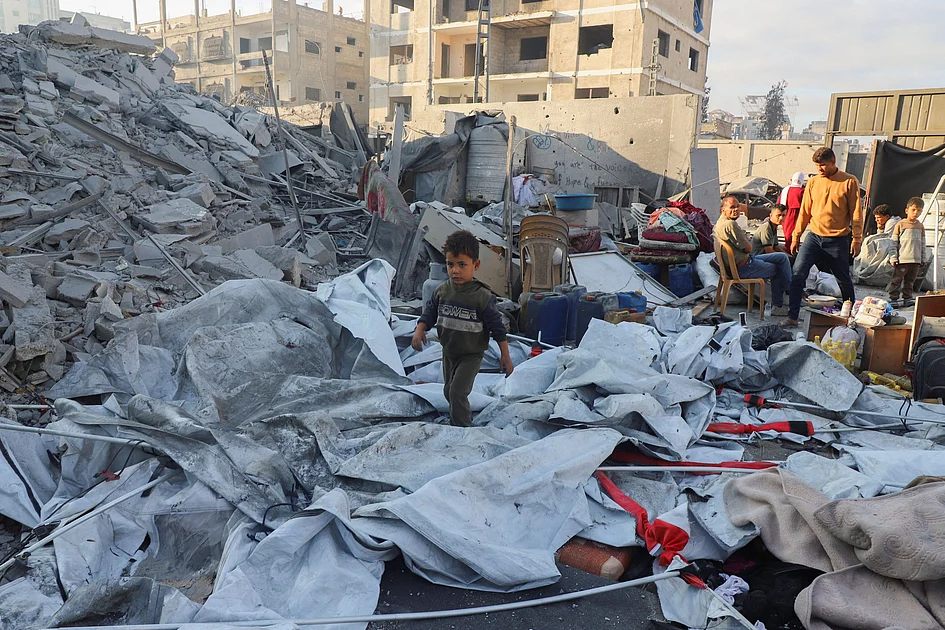
    In a significant development amidst the fragile Gaza ceasefire, Hamas has handed over the remains of a deceased hostage, marking the sixteenth of 28 bodies promised under the truce agreement. The Israeli Prime Minister’s office confirmed the receipt of the coffin, which was transported from Gaza to Israel for identification and eventual return to the hostage’s family. The Hostages and Missing Families Forum has urged Hamas to expedite the transfer of the remaining 13 deceased captives, emphasizing that the group knows their locations despite claims to the contrary. Hamas spokesperson Hazem Qassem countered that the destruction caused by Israel’s bombardment has complicated the recovery process, but reiterated the group’s commitment to fulfilling the ceasefire terms. The October 7, 2023 attack by Hamas resulted in 251 hostages, with most already released or recovered. The conflict has claimed over 68,000 lives in Gaza, according to Hamas-run health ministry figures. Meanwhile, Israel has lifted the state of emergency near the Gaza border for the first time since the attack, signaling a tentative step toward normalization. Egypt has deployed recovery crews to assist in the search for remaining bodies, with Israeli approval. The U.S. is working to establish an international security force to oversee the truce, though Israel has opposed Turkey’s participation, citing its hostile stance. Humanitarian agencies continue to push for greater access to Gaza for aid delivery, as Israel maintains control over half the territory.

  • Monsoon promise turns sour for India’s crops ruined by late downpours

    Monsoon promise turns sour for India’s crops ruined by late downpours

    Indian farmers, who had initially welcomed an abundant monsoon season, are now grappling with the devastating aftermath of late downpours that have ruined their crops. The unexpected heavy rains, which arrived just before harvest, have severely damaged key crops such as cotton and soybean, leaving millions of farmers in distress. This agricultural setback is expected to halve the sector’s growth in the December quarter, with projections dropping to 3% to 3.5% from 6.6% the previous year, according to Garima Kapoor, an economist at Elara Securities in Mumbai. The crop losses are not only threatening farmers’ livelihoods but also exacerbating rural debt and dampening consumption, which had been poised to rise following the Indian government’s recent tax cuts on consumer goods. Farmers like Kishore Hangargekar from Maharashtra, who had anticipated a bountiful soybean harvest, are now facing significant financial strain. ‘We hoped for 10 to 12 quintals per acre, but now we’ll be lucky to get 2 to 3 quintals,’ he lamented. The situation is further complicated by the fact that damaged crops are being sold at prices far below the government’s minimum support price, leaving farmers with little recourse. Sachin Nanaware, another farmer, sold his soybean at 3,200 rupees per 100 kg, well below the government-fixed rate of 5,328 rupees. The financial strain has forced many farmers to mortgage their gold jewelry to afford seeds and fertilizers for the upcoming winter sowing season. While the excessive rain has improved soil moisture for winter crops like wheat and rapeseed, the lack of funds remains a critical issue. Industry analyst Thomas Mielke of Oil World predicts that the damage to soybean and cotton crops will drive India’s vegetable oil imports to a record 18 million tons in the upcoming marketing year. As farmers scramble to salvage what they can, the broader implications for India’s agricultural sector and rural economy remain deeply concerning.

  • No resolution as Afghanistan, Pakistan end peace talks in Istanbul: Sources

    No resolution as Afghanistan, Pakistan end peace talks in Istanbul: Sources

    Peace negotiations between Afghanistan and Pakistan, mediated by Turkey and Qatar in Istanbul, concluded without a resolution on Tuesday, October 28, 2025. This development marks a significant setback for regional stability, following deadly border clashes earlier this month. The talks aimed to establish a long-term truce between the two South Asian neighbors, who have been embroiled in escalating violence since the Taliban assumed power in Kabul in 2021. Despite agreeing to a ceasefire brokered in Doha on October 19, the second round of discussions failed to yield common ground, with both sides attributing the impasse to the other. A Pakistani security source claimed that the Afghan Taliban refused to commit to restraining the Pakistani Taliban, a militant group hostile to Pakistan. Conversely, an Afghan source cited “tense exchanges” over the issue, emphasizing that Kabul has no control over the Pakistani Taliban. The breakdown in talks could jeopardize the fragile ceasefire and escalate tensions between the two nations. Over the weekend, clashes near the border resulted in the deaths of five Pakistani soldiers and 25 militants, underscoring the volatility of the situation. Neither the Afghan Taliban government nor Pakistani officials provided immediate comments on the failed negotiations.

  • Gunman pleads guilty to Japan ex-prime minister’s murder

    Gunman pleads guilty to Japan ex-prime minister’s murder

    In a landmark court hearing on Tuesday, Tetsuya Yamagami, the 45-year-old gunman accused of assassinating Japan’s former Prime Minister Shinzo Abe, pleaded guilty to the charges. The shocking murder, which occurred in broad daylight in July 2022, sent ripples across a nation unaccustomed to gun violence and exposed deep-seated issues surrounding the influence of the Unification Church on Japanese politics. Yamagami, handcuffed and with a rope around his waist, appeared in the Nara court, where he admitted to the crime in a barely audible voice. His lawyer indicated plans to contest certain charges, including violations of arms control laws, as Yamagami had allegedly used a handmade weapon. The trial, delayed due to a suspicious item found in 2023, has been a focal point of national attention, particularly for its exploration of Yamagami’s motivations. Prosecutors revealed that Yamagami harbored deep resentment toward the Unification Church, blaming it for derailing his life. He initially sought to target Church executives but, unable to procure a firearm, decided to craft his own. Yamagami believed that killing a figure as influential as Abe would draw public scrutiny to the Church. Abe had faced criticism for his perceived ties to the sect, which has been accused of exploiting its members. Yamagami’s lawyers argued that his life was devastated by the Church, citing his mother’s extreme financial devotion to the sect and the subsequent collapse of their family. The assassination prompted a national reckoning, leading to the resignation of four ministers and the dissolution of the Church’s Japanese arm. It also spurred Japan to further tighten its already stringent gun control laws, introducing penalties for sharing firearm-making tutorials online.

  • How do hurricanes form and are they getting stronger?

    How do hurricanes form and are they getting stronger?

    Hurricane Melissa, one of the most powerful Atlantic storms in history, has unleashed catastrophic conditions across Jamaica, prompting urgent warnings from the US National Hurricane Center. While climate change is not directly increasing the frequency of hurricanes, typhoons, and cyclones globally, it is amplifying their intensity. Warmer oceans and a heated atmosphere, both driven by climate change, are fueling higher wind speeds, heavier rainfall, and heightened risks of coastal flooding. This phenomenon is transforming already dangerous storms into even more destructive forces. Tropical cyclones, including hurricanes, are characterized by extreme wind speeds, torrential rains, and storm surges, which often result in widespread devastation. Although the global frequency of these storms has not risen over the past century, a growing proportion are reaching the most severe categories, with wind speeds exceeding 111 mph (178 km/h). The IPCC highlights ‘medium confidence’ in the increased average and peak rainfall rates linked to these storms, as well as a rise in ‘rapid intensification events,’ where wind speeds escalate dramatically. Additionally, tropical cyclones are moving slower across the Earth’s surface, prolonging rainfall and exacerbating flooding. For instance, Hurricane Harvey in 2017 stalled over Houston, dumping 100 cm of rain in just three days. Rising sea levels, driven by melting glaciers and thermal expansion of seawater, are further compounding the risks of coastal flooding. The IPCC concludes with ‘high confidence’ that human activities have contributed to increased precipitation in tropical cyclones and ‘medium confidence’ in their role in intensifying these storms. As global temperatures continue to climb, the proportion of category four and five hurricanes is expected to rise, underscoring the urgent need for climate action.

  • Gulf nationals get equal treatment as citizens in health facilities across GCC countries

    Gulf nationals get equal treatment as citizens in health facilities across GCC countries

    In a landmark development for Gulf Cooperation Council (GCC) nations, citizens of member states now have access to comprehensive healthcare services across the region, regardless of their country of residence or visit. This initiative underscores the GCC’s commitment to fostering unity and equal treatment among its citizens. During 2023, over 204,000 Gulf nationals benefited from government medical services outside their home countries, as revealed by Jasem Mohamed Albudaiwi, Secretary General of the GCC, during a meeting of GCC health ministers. The scope of healthcare services varies based on the duration of stay. Visitors staying up to three months are entitled to primary healthcare, emergency and ambulance services, and hospitalisation for critical cases until the emergency is resolved. For those residing in a GCC country for over three months, with valid residency and property ownership or lease contracts, all health services in hospitals and government health centres are accessible. The GCC region boasts an extensive healthcare infrastructure, with over 863 hospitals and 3,400 health centres and complexes. This initiative reflects the GCC’s vision of a ‘collective homeland,’ where citizens enjoy benefits equivalent to those of nationals in each member state. In the UAE, GCC nationals working in the private sector are treated equally to Emirati nationals in terms of employment and insurance coverage, as per Cabinet Resolution No. 72/5 of 2007. This policy, however, does not impact the Emiratisation quota for UAE citizens in the private sector. The move highlights the GCC’s dedication to enhancing regional integration and improving the quality of life for its citizens.

  • Israel’s killing of Abu Akleh was intentional, says lead US investigator

    Israel’s killing of Abu Akleh was intentional, says lead US investigator

    A retired US colonel involved in the investigation into the killing of Palestinian-American journalist Shireen Abu Akleh has asserted that she was deliberately shot by an Israeli soldier. In an interview with Zeteo News, Steve Gabavics, who served as chief of staff at the Office of the United States Security Coordinator for Israel and the Palestinian Authority (USSC) at the time of the incident, revealed that his findings concluded the shooting was intentional. Gabavics also accused the Biden administration of downplaying the results to maintain diplomatic relations with Israel. Israeli forces killed Abu Akleh during a raid in Jenin, occupied West Bank, in May 2022, sparking international outrage. While the Israeli army claimed the shooting was accidental, independent investigations and Gabavics’s evidence suggest otherwise. Gabavics presented his findings to General Michael Fenzel, who dismissed them, citing Israeli officials’ claims of a tragic accident. Gabavics expressed frustration over the US government’s perceived bias toward Israel, stating, ‘The favoritism is always toward the Israelis. Very little of that goes to the Palestinians.’

  • Air India bus catches fire at New Delhi airport; operations undisrupted

    Air India bus catches fire at New Delhi airport; operations undisrupted

    A bus operated by Air India’s ground-handling service provider, AI SATS, caught fire at Terminal 3 of New Delhi’s Indira Gandhi International Airport on Tuesday. The incident occurred near bay number 32, close to a parked aircraft. Fortunately, no passengers were onboard at the time, and there were no reported injuries or casualties. Airport emergency teams, including the Aircraft Rescue and Fire Fighting (ARFF) unit, responded promptly, extinguishing the blaze within minutes and preventing it from escalating. The Delhi Airport Authority confirmed that the bus was stationary and vacant during the incident, and all airport operations remained unaffected. In a statement on X (formerly Twitter), the airport emphasized that passenger and staff safety remains their top priority. The swift action of the emergency teams ensured that the situation was contained without disrupting flight schedules or causing harm to individuals. This incident highlights the efficiency of the airport’s emergency response protocols and their commitment to maintaining operational continuity even in unforeseen circumstances.