分类: world

  • BBC ‘deeply concerned’ about journalist unable to leave Vietnam

    BBC ‘deeply concerned’ about journalist unable to leave Vietnam

    The BBC has voiced serious concerns regarding the welfare of one of its journalists who has been unable to leave Vietnam for several months. The journalist, a Vietnamese national, traveled to the country to visit family and renew their passport. However, both the passport and ID card have been withheld, and the individual has undergone ‘multiple days of questioning,’ according to a BBC statement. The broadcaster is urgently calling on Vietnamese authorities to release the journalist’s documents and allow them to return to their work. This situation unfolds as To Lam, the General Secretary of the Communist Party of Vietnam, arrived in the UK on Tuesday for a visit that includes a scheduled meeting with Sir Keir Starmer. A spokesperson for the UK Foreign Office emphasized the country’s commitment to defending media freedom, stating, ‘Our position and track record defending media freedom is clear.’ They also expressed ongoing concerns about the reported harassment of NGOs, journalists, and rights activists in Vietnam, noting that these issues are regularly raised with Vietnamese officials. Vietnam, a one-party Communist state, has experienced rapid economic growth in Southeast Asia. However, this growth is accompanied by stringent political censorship and a troubling human rights record. The Communist Party maintains tight control over the media, with journalists and media outlets facing sanctions or arrest for addressing sensitive topics or criticizing the government. Online content perceived as a threat to Communist rule is frequently blocked.

  • Climate change ‘will not end civilisation’: Bill Gates points out 3 tough truths

    Climate change ‘will not end civilisation’: Bill Gates points out 3 tough truths

    Billionaire philanthropist Bill Gates is urging a paradigm shift in the global approach to climate change, emphasizing that solutions should prioritize human welfare over mere temperature targets. In his recent memo titled ‘A New Way to Look at the Problem,’ Gates argues that the fight against climate change must not undermine health, development, and poverty reduction, particularly in the world’s poorest nations. He calls for a ‘strategic pivot’ from focusing solely on limiting rising temperatures to addressing poverty and preventing diseases. Gates reassures that while climate change is a serious issue, it ‘will not be the end of civilisation,’ and he believes that innovation and science will be central to managing its impacts. He projects that by 2100, average global temperatures could rise by 2°C to 3°C compared to pre-industrial levels, surpassing the 1.5°C limit set by the 2015 Paris Agreement. However, he is optimistic that new zero-carbon technologies will become widely available within the next decade, enabling countries to meet rising energy demands without exacerbating climate change. Gates also stresses that success in combating climate change should be measured by improvements in people’s lives, especially in low-income countries, rather than just reductions in emissions or global temperature. Through Breakthrough Energy, Gates has supported over 150 companies working on solutions ranging from low-carbon cement and steel to advanced geothermal energy and AI-driven agriculture. He warns that climate policies must not deepen inequality, citing examples of well-meaning policies that left poor communities worse off, such as fertiliser bans that caused food shortages. Gates believes that focusing on energy, agriculture, and health will have the greatest impact on people’s ability to withstand climate challenges, particularly in developing nations. He emphasizes that health and economic growth can reduce climate-related deaths more effectively than any single environmental measure, citing research from the University of Chicago’s Climate Impact Lab that shows economic growth in low-income countries could cut climate-related deaths by more than 50% by the end of the century. Gates outlines two key priorities for the international climate agenda: driving the Green Premium — the extra cost of choosing clean technologies over fossil fuels — down to zero, and rigorously measuring impact to ensure limited resources go toward initiatives that deliver the greatest benefits for human welfare, from vaccines and malaria prevention to agricultural innovation.

  • UAE attraction: New camping, motorsports destination launched in Umm Al Quwain

    UAE attraction: New camping, motorsports destination launched in Umm Al Quwain

    Umm Al Quwain, one of the UAE’s lesser-known emirates, has unveiled an ambitious new project aimed at transforming it into a premier destination for motorsports, camping, and outdoor adventures. The initiative, announced on October 28, 2025, is designed to diversify the emirate’s tourism offerings and attract a younger, adventure-seeking demographic. The project will feature dedicated zones for motorsports competitions, equipped camping areas, and off-road trip facilities, catering to enthusiasts of all levels. Additionally, the destination will host recreational activities, artistic events, and provide integrated service infrastructure to enhance visitor comfort and create a seamless experience. Sheikh Majid bin Saud bin Rashid Al Mualla, Chairman of the Department of Tourism and Antiquities, emphasized that the project is more than just an entertainment hub—it’s a platform that blends cultural heritage with modern adventure, offering a safe and innovative environment for motorsports and outdoor enthusiasts. This initiative is part of a broader strategy to position Umm Al Quwain as a hub for sports tourism and outdoor exploration, balancing authenticity with modernity. The project is expected to significantly boost the emirate’s appeal, attracting both tourists and investors while stimulating economic activity in the region.

  • Strongest storm in Jamaica’s modern history causing havoc

    Strongest storm in Jamaica’s modern history causing havoc

    Hurricane Melissa, now a Category 4 storm with wind speeds reaching 150 mph (240 km/h), has unleashed unprecedented devastation across Jamaica, marking the strongest hurricane in the nation’s modern history. The US National Hurricane Center has warned of ‘catastrophic winds, flash flooding, and storm surges,’ while Jamaica’s Meteorological Service predicts conditions will ‘significantly worsen.’ Nearly a third of the country is already without power, and images of uprooted trees and shattered homes are emerging as the storm continues its destructive path. Anne-Claire Fontan, a tropical cyclone specialist at the World Meteorological Organization, described the situation as ‘catastrophic,’ with storm surges expected to reach up to four meters. ‘For Jamaica, it will be the storm of the century for sure,’ she stated. Hospitals have lost roofs, and residents are braving the tempest to rescue others. Some areas are forecast to receive up to 30 inches (76 cm) of rain, exacerbating flash flooding. With 70% of Jamaica’s 2.8 million population living within 5 km of the sea, the risk of displacement and danger is immense. Health officials have also warned that rising water levels could displace crocodiles into residential areas, urging residents to avoid floodwaters. The slow-moving hurricane is now heading toward Santiago de Cuba, where Cuban authorities have evacuated 500,000 people from vulnerable zones. Cuban President Miguel Diaz-Canel expressed grave concerns about the storm’s potential destruction. Earlier, Jamaica reported three fatalities due to storm-related incidents, including fallen trees.

  • Why are Israeli settlers destroying the Palestinian olive harvest?

    Why are Israeli settlers destroying the Palestinian olive harvest?

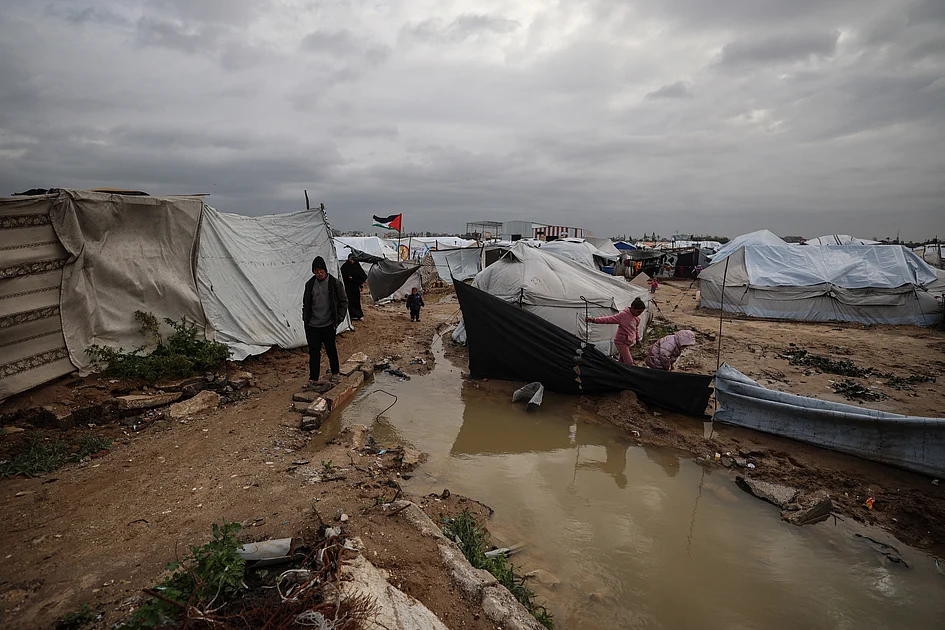
    The olive harvest in the occupied West Bank, a centuries-old tradition and economic cornerstone for Palestinians, has been marred by escalating violence from Israeli settlers and military forces. According to the UN Rights Office, 757 assaults by settlers were recorded in the first half of 2025, resulting in injuries, property damage, and the destruction of olive groves. These attacks have drawn global condemnation and criticism from UN human rights officials. In Gaza, once a thriving hub for olive cultivation, nearly all agricultural land has been devastated by Israel’s two-year military campaign, which has claimed over 68,000 Palestinian lives. The olive tree, deeply rooted in Palestinian culture and history, symbolizes resilience and peace. However, its survival is under threat as settler violence intensifies, often with the complicity of Israeli security forces. The destruction of olive groves, uprooting of trees, and restrictions on access to farmland have severely impacted the livelihoods of 100,000 families in the West Bank, many of whom rely on olive cultivation for income. In Gaza, the olive industry has been decimated, with 98.5% of agricultural land damaged or inaccessible, according to the UN Food and Agriculture Organization. The ongoing assault on Palestinian agriculture is part of a broader strategy to displace communities and annex land, exacerbating humanitarian crises and threatening the cultural and economic fabric of Palestinian society.

  • Strong winds and flying debris as Hurricane Melissa makes landfall

    Strong winds and flying debris as Hurricane Melissa makes landfall

    Hurricane Melissa has made landfall in Jamaica, unleashing powerful winds and dangerous storm surges. The hurricane is expected to bring waves reaching up to 13 feet (3.9 meters) above ground level, posing significant threats to coastal areas. The National Hurricane Center has warned of widespread destruction caused by flying debris and severe flooding. Emergency services are on high alert, urging residents to seek shelter and avoid unnecessary travel. This marks one of the most intense storms to hit the region this year, with experts emphasizing the importance of preparedness in the face of such extreme weather events. The impact of Hurricane Melissa is likely to disrupt daily life, damage infrastructure, and affect local economies for weeks to come.

  • UN human rights investigator delivers Gaza report from South Africa because of US sanctions

    UN human rights investigator delivers Gaza report from South Africa because of US sanctions

    Francesca Albanese, an independent United Nations investigator, delivered a scathing critique of global nations for their failure to challenge the United States over sanctions imposed on her. Speaking via video from South Africa during a General Assembly session, Albanese labeled the sanctions as ‘unlawful and spiteful,’ emphasizing that they undermine the U.N.’s independence and integrity. She urged the international community to confront this ‘dangerous precedent’ and highlighted the challenges she faced in presenting her latest report on Israeli human rights violations in the Palestinian territories. Despite the unprecedented attacks against her, Albanese noted that powerful nations have only issued declarations and condemnations without taking concrete steps since the U.S. imposed sanctions this summer. The U.S. State Department has yet to respond to requests for comment. Albanese, an Italian human rights lawyer and the U.N.’s special rapporteur for the West Bank and Gaza since May 2022, has consistently criticized Israel’s policies, describing its actions as ‘genocide’ and ‘apartheid.’ In her latest report, she painted a grim picture of Gaza, describing it as ‘strangled, starved, shattered’ under a fragile ceasefire. Israel and the U.S. have vehemently rejected her claims, with Israeli Ambassador Danny Danon dismissing her report as ‘shameful’ and ‘one-sided,’ and personally attacking her as a ‘witch.’ The U.S. sanctions, announced in July by Secretary of State Marco Rubio, accused Albanese of antisemitism and supporting terrorism. Albanese countered these allegations, asserting that she was targeted for fulfilling her role and vowed to continue her work. The U.N. high commissioner for human rights, Volker Türk, and the U.N.’s chief spokesperson, Stéphane Dujarric, both condemned the sanctions, calling them ‘unacceptable.’ The ongoing conflict in Gaza, which began with Hamas’s October 7, 2023, attack on Israel, has resulted in significant casualties and displacement. Albanese called for a permanent ceasefire and a full Israeli withdrawal from Palestinian territories, criticizing the U.S.-brokered ceasefire as insufficient and enabling continued violence.

  • No survivors: Small plane crashes in Kenya, killing all 11 on board

    No survivors: Small plane crashes in Kenya, killing all 11 on board

    A devastating plane crash in Kenya on Tuesday morning resulted in the tragic loss of all 11 individuals on board, including foreign nationals. The small aircraft, operated by Mombasa Air Safari, was en route from the coastal tourist destination of Diani to Kichwa Tembo airstrip in the Maasai Mara National Park when it crashed at approximately 5:30 am local time (0230 GMT). According to John Cleave, chairman of Mombasa Air Safari, the passengers included eight Hungarians, two Germans, and a Kenyan captain. Cleave confirmed that there were no survivors and expressed deep condolences, stating, ‘Our hearts and prayers are with all those affected by this tragic event.’ The Kenya Civil Aviation Authority (KCAA) has dispatched government agencies to the crash site to investigate the cause of the accident. This incident follows another tragic aviation event in August, when a light aircraft belonging to the medical NGO Amref crashed near Nairobi, claiming six lives and injuring two others. The latest crash has raised concerns about aviation safety in the region, particularly for small aircraft operating in remote areas.

  • Pakistan PM, Saudi Crown Prince meet in Riyadh, discuss electrical interconnection project

    Pakistan PM, Saudi Crown Prince meet in Riyadh, discuss electrical interconnection project

    In a significant diplomatic meeting held in Riyadh on Monday, Pakistan’s Prime Minister Muhammad Shehbaz Sharif and Saudi Arabia’s Crown Prince Mohammed bin Salman bin Abdulaziz Al Saud unveiled a comprehensive economic cooperation framework aimed at bolstering bilateral relations. The framework, rooted in shared economic interests, seeks to enhance trade, investment, and development ties between the two nations. Key sectors identified for collaboration include energy, industry, mining, information technology, tourism, agriculture, and food security. A joint statement highlighted the mutual commitment to fostering private sector involvement and increasing trade exchange in these priority areas. Among the initiatives under discussion is an electrical interconnection project, which is expected to be formalized through a memorandum of understanding (MoU). Additionally, the two countries are exploring further cooperation in the energy sector. This framework builds on longstanding fraternal relations and aligns with the leaders’ shared vision of establishing a sustainable partnership. The meeting also set the stage for an upcoming session of the Saudi-Pakistani Supreme Coordination Council, underscoring the depth of their strategic alliance.

  • Delhi turns to cloud seeding to spur rain, curb pollution

    Delhi turns to cloud seeding to spur rain, curb pollution

    In a groundbreaking move to tackle the escalating air pollution crisis, authorities in Delhi initiated cloud seeding operations on Tuesday. This innovative technique aims to induce artificial rainfall, which could potentially reduce pollution levels by up to 50%. Environment Minister Manjinder Singh Sirsa announced the initiative, emphasizing its urgency as the city grapples with hazardous air quality. Cloud seeding involves dispersing chemical particles into clouds to stimulate the formation of raindrops, a method previously used in other countries to address drought and improve air quality. However, this marks its first application in Delhi. The Indian Institute of Technology (IIT) in Kanpur is leading the project, with scientists predicting rainfall within 15 minutes to four hours post-seeding. If successful, the initiative could pave the way for a long-term strategy extending through February. Despite its potential, the effectiveness of cloud seeding remains debated, with studies yielding mixed results. Delhi’s air quality index (AQI) stood at 304 on Tuesday, classified as ‘very poor’ by the Central Pollution Control Board. The city’s pollution woes are exacerbated during winter by factors such as construction dust, vehicle emissions, and crop residue burning. Scientist Manindra Agrawal of IIT-Kanpur cautioned that while artificial rain can temporarily alleviate pollution, repeated efforts are necessary to sustain improvements.