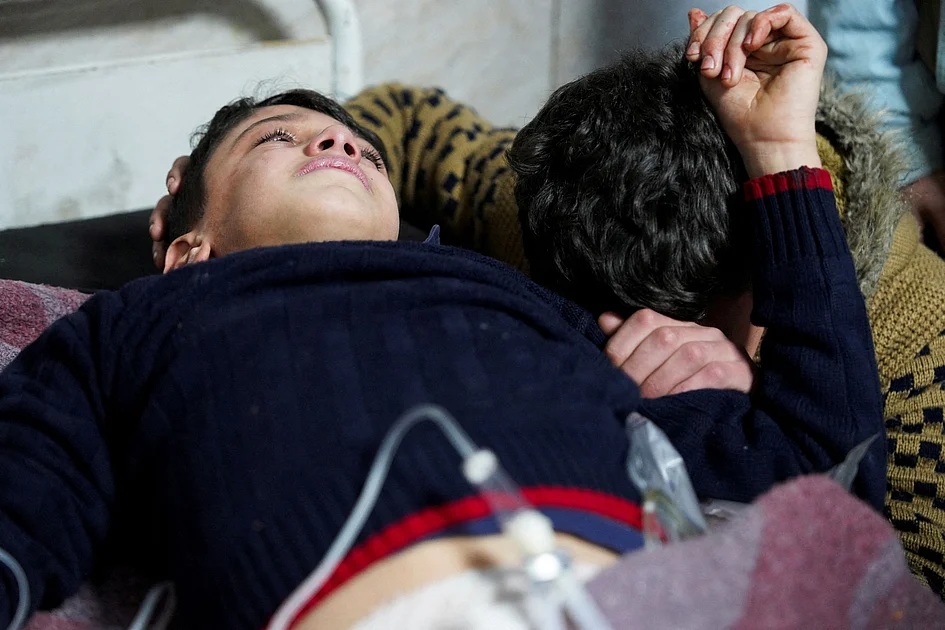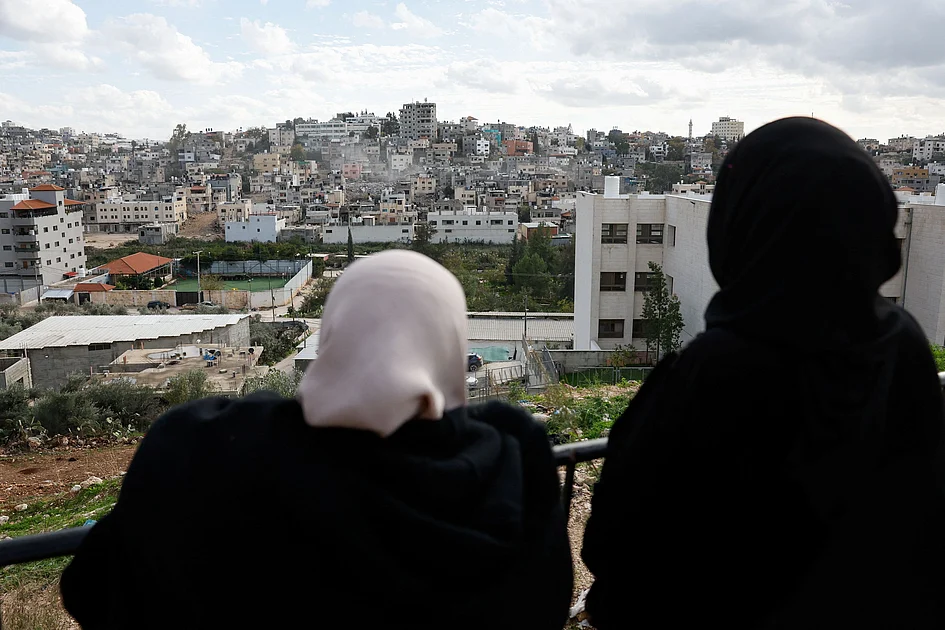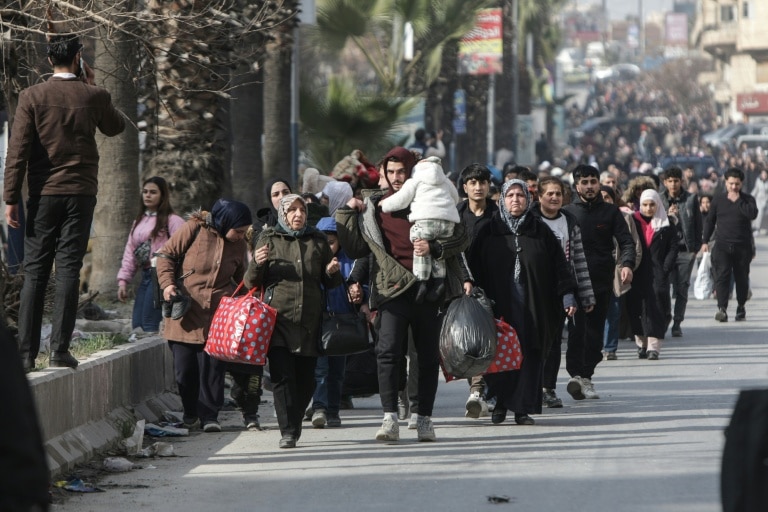
The city of Al Fasher in Sudan has become a scene of devastation as the Rapid Support Forces (RSF) seized control following an 18-month siege, leading to widespread atrocities and a humanitarian crisis. Survivors fleeing the city recounted harrowing tales of families being forcibly separated, children executed in front of their parents, and mass killings. Germany’s top diplomat, Johann Wadephul, described the situation as ‘apocalyptic,’ while satellite imagery from Yale University’s Humanitarian Research Lab suggested ongoing mass killings. Reports of summary executions, sexual violence, looting, and abductions have emerged, with tens of thousands of civilians still trapped in the city. The UN estimates that over 65,000 people have fled Al Fasher since the RSF’s final assault, but around 260,000 residents remain in grave danger. Doctors Without Borders (MSF) highlighted the limited number of survivors reaching safer areas, with only 5,000 making it to Tawila, 70 kilometers west of Al Fasher. Eyewitnesses reported that groups attempting to flee were often killed or captured, with individuals separated based on gender, age, or ethnicity. The RSF, descended from the Janjaweed militias accused of genocide in Darfur two decades ago, now controls all five state capitals in the region, effectively dividing Sudan along an east-west axis. The conflict has displaced nearly 12 million people, creating the world’s largest displacement and hunger crises. UN officials warn that the violence is spreading to the neighboring Kordofan region, with reports of large-scale atrocities perpetrated by the RSF.
分类: world
-

Devastation on repeat: How climate change is worsening Pakistan’s deadly floods
Pakistan has been ravaged by catastrophic floods, affecting both urban and rural areas, including the capital of Punjab, Lahore. The monsoon season, which began in late June, has claimed over 1,000 lives and impacted at least 6.9 million people, according to the United Nations Office for the Coordination of Humanitarian Affairs (OCHA). The floods have highlighted the severe consequences of climate change in a country that contributes just 1% of global greenhouse gas emissions.
-

Full list of Israel’s ceasefire violations in Gaza
Since the Gaza ceasefire agreement was signed last month, Israel has been accused of repeatedly violating its terms. Reports indicate a series of unprovoked actions, including air strikes, shootings, arrests, and incursions beyond agreed deployment lines. Israel has justified these actions by citing alleged breaches by Hamas and other Palestinian groups, but Hamas has denied these claims, asserting full compliance with the ceasefire terms. Many of these violations have targeted civilians without clear justification. According to the Gaza-based Government Media Office, as of October 28, Israeli forces had carried out 52 shootings and 55 shellings across the Gaza Strip, resulting in 226 deaths, including 97 children, and 594 injuries. Additionally, at least 11 civilian homes have been demolished, and Israeli forces have deployed explosive-laden robots to destroy buildings. The Rafah crossing, crucial for humanitarian aid, remains closed, preventing critically wounded individuals from seeking treatment abroad. Only a fraction of the agreed-upon aid has been delivered, with essential medical supplies and heavy machinery for clearing rubble still blocked. Hamas has also accused Israel of breaching the prisoner exchange agreement, failing to provide a complete list of detainees and delaying the release of women and children. Despite these violations, Hamas has returned 20 living captives and 17 bodies under the agreement, with 11 more believed to remain buried in Gaza. The ongoing violations and humanitarian crisis highlight the fragility of the ceasefire and the urgent need for international intervention.
-

UK announces £5 million aid for Sudan after ‘truly horrifying’ reports
The United Kingdom has pledged an additional £5 million ($6.57 million) in emergency aid to Sudan following alarming reports of widespread atrocities committed by the paramilitary Rapid Support Forces (RSF) in Al-Fasher. This funding supplements the £120 million already committed by the UK over the past year. A significant portion of the new aid, £2 million, is earmarked to support survivors of sexual violence in the region. The RSF, which has been in conflict with the Sudanese army since April 2023, recently captured Al-Fasher, the army’s last stronghold in the western Darfur region, after an 18-month siege characterized by bombardment and starvation. UK Foreign Minister Yvette Cooper described the situation as ‘truly horrifying,’ citing mass executions, starvation, and the use of rape as a weapon of war. She emphasized that women and children are disproportionately affected in what she termed ‘the largest humanitarian crisis of the 21st century.’ The UK Foreign Office has reiterated its commitment to urging all parties to cease hostilities, protect civilians, and ensure unimpeded humanitarian access.
-

Remains handed over to Israel not those of Gaza hostages, Israeli media report
Israeli media reported on Saturday that the partial remains of three deceased individuals transferred from Gaza to Israel are not those of any hostages held in the Palestinian territory. The International Committee of the Red Cross (ICRC) confirmed late on Friday that it facilitated the transfer of the remains to Israeli authorities for identification. However, DNA testing conducted by Israeli forensic authorities revealed that the remains did not match any known hostages. Hamas stated on Saturday that it initially offered three samples from unidentified bodies for testing, but Israel insisted on receiving the full remains, a condition Hamas later agreed to. Currently, the bodies of 11 hostages, including two foreign nationals, are believed to remain in Gaza. Since a US-brokered ceasefire took effect on October 10, following a two-year war, Hamas has released 20 living hostages and handed over the remains of 17 others. The ceasefire, which left unresolved issues such as the disarmament of Hamas and a timeline for Israeli withdrawal, has been periodically tested by outbreaks of violence.
-

Louvre heist suspects appear before Paris magistrates
Several individuals implicated in a brazen jewel heist at the Louvre Museum in Paris have appeared before magistrates, marking a significant development in the high-profile case. The Paris public prosecutor’s office confirmed the court appearance on Saturday but did not disclose the exact number of suspects involved. The audacious theft, which occurred last month, saw thieves armed with power tools execute the robbery in broad daylight, making off with jewelry valued at an estimated $102 million in just seven minutes. French authorities initially apprehended two suspects, followed by the arrest of five additional individuals this week, including a key figure in the operation. The arrests were concentrated in and around Paris, notably in the northern suburb of Seine-Saint-Denis. The first two suspects, who partially confessed to the charges, face accusations of theft and criminal conspiracy. They are believed to have been the primary perpetrators who entered the museum while two accomplices waited outside. Despite the arrests, the stolen jewels remain unaccounted for, leaving investigators to continue their search for the missing loot.
-

Sudan: New satellite images suggest mass killings continue in Al Fasher
New satellite imagery analyzed by Yale University’s Humanitarian Research Lab indicates that mass killings are likely continuing in and around Al Fasher, Sudan, following the city’s capture by the paramilitary Rapid Support Forces (RSF). The RSF seized Al Fasher on Sunday, marking the fall of the Sudanese army’s last stronghold in the Darfur region after an 18-month siege. Reports from survivors describe horrific atrocities, including the execution of children in front of their parents, widespread looting, and the abduction of civilians. The Yale report identified at least 31 clusters of objects consistent with human bodies across neighborhoods, university grounds, and military sites, suggesting a grim toll on the population. Tens of thousands remain trapped in the city, while over 65,000 have fled. The RSF claims to have arrested fighters accused of abuses, but UN officials have questioned their commitment to accountability. The conflict has deepened Sudan’s division, with the RSF now controlling all five state capitals in Darfur, effectively splitting the country along an east-west axis.
-

ICC prosecutors urge Appeals Chamber to keep ex Philippine president Duterte detained
The Office of the Prosecutor (OTP) at the International Criminal Court (ICC) has strongly advocated for the continued detention of former Philippine President Rodrigo Duterte, urging the Appeals Chamber to dismiss his request for temporary release. In a public redacted filing submitted on October 31, the prosecution defended the September 26 ruling by Pre-Trial Chamber I, which denied Duterte’s interim release under the Rome Statute. The prosecution argued that Duterte’s defense failed to identify any legal or factual errors in the initial decision to detain him. The chamber had previously emphasized that Duterte’s detention is essential to ensure his appearance at trial, prevent obstruction of justice, and halt any potential continuation of alleged crimes. The prosecution highlighted Duterte’s significant political influence and extensive network of loyal supporters, including his daughter, Philippine Vice-President Sara Duterte, and his recent election as mayor of Davao City, as factors that could enable him to evade justice. They also dismissed Duterte’s health-related arguments for release, stating that his medical claims were insufficient and that detention posed no serious risk to his well-being. The OTP further justified the use of public information, such as media reports and NGO findings, to support their case, noting that such sources are routinely accepted in ICC proceedings. The prosecution concluded that the risks of Duterte fleeing or obstructing justice are not hypothetical but substantiated by his political connections and international reach.
-

9 killed in stampede at Andhra Pradesh’s Venkateswara temple
A devastating stampede at the Venkateswara Temple in Andhra Pradesh’s Srikakulam district on Saturday resulted in the deaths of nine individuals, with many more injured. The incident occurred as a large crowd of devotees gathered at the temple, leading to a chaotic surge that overwhelmed the area. Andhra Pradesh Governor S. Abdul Nazeer expressed profound grief over the tragedy, while Prime Minister Narendra Modi offered condolences to the bereaved families and announced financial assistance for the victims. Modi stated, ‘I am deeply pained by the stampede at Venkateswara Swamy Temple. My thoughts are with those who have lost their loved ones, and I pray for the swift recovery of the injured.’ The Prime Minister’s National Relief Fund will provide Rs. 2 lakh to the families of the deceased and Rs. 50,000 to the injured. This incident is the latest in a series of deadly crowd crushes at Indian religious gatherings, highlighting ongoing safety concerns. In recent months, similar tragedies have occurred at campaign rallies, festivals, and rituals across the country, underscoring the urgent need for improved crowd management and safety measures.
-

Israel army says Gaza bodies received Friday not hostages
The Israeli military announced on Saturday that three bodies received from Gaza through the Red Cross on Friday were not those of hostages held in the Palestinian territory. Forensic analysis confirmed that the remains did not belong to any of the 11 deceased captives still expected to be returned under a US-brokered ceasefire agreement. Since the truce began on October 10, Hamas has returned 20 surviving hostages and initiated the process of repatriating the bodies of deceased captives. Among the 17 bodies already returned are 15 Israelis, one Thai national, and one Nepalese national. Israel has accused Hamas of delaying the return of the remaining bodies, while the Palestinian group claims the process is time-consuming due to the difficulty of locating remains buried in Gaza’s rubble.