A breathtaking weather phenomenon recently unfolded at Tianchi Lake, located within the Changbai Mountain Nature Reserve in Jilin Province, China. Strong winds combined with a sharp temperature drop created a mesmerizing scene of vapor swirling over the lake’s surface, resembling a boiling pot. This natural spectacle, known as ‘sea smoke,’ occurs when cold air causes water vapor to condense into mist, which then drifts with the wind, forming what is scientifically termed evaporation fog. Experts from the Jilin Provincial Meteorological Observatory explained that the unique conditions at Changbai Mountain contribute to this phenomenon. As cold air descends the volcanic crater and meets the warmer, unfrozen lake surface, the temperature contrast causes the water vapor to condense into fog. The synchronized movement of the water and air further enhances the visual effect, creating a dreamlike and ethereal atmosphere. The Integrated Media Center of Changbai Mountain captured the event on video, showcasing the lake’s natural beauty and the interplay of weather elements. This rare occurrence highlights the dynamic and ever-changing nature of the region’s environment, drawing attention to the wonders of natural phenomena.
分类: world
-

What to know about the French militants who clashed with Syrian forces in Idlib
Tensions escalated in northern Syria’s Idlib province this week as Syrian government forces clashed with fighters in Al-Fardan camp, led by Omar Diaby, a French militant with an international arrest warrant. The camp, located near the Turkish border, houses a small group of French and Francophone militants and their families. The confrontation began after residents reported severe violations, including the kidnapping of a girl by an armed group under Diaby’s command. Syrian security forces surrounded the camp, demanding Diaby’s surrender, but he refused, barricading himself and initiating gunfire, which led to intense exchanges and drone strikes. Videos on social media depicted damaged structures and civilians fleeing for safety. Diaby’s son, Jibril, appealed for mercy, emphasizing the presence of families and children in the camp. The arrival of Uzbek militants to defend the camp and fears of political fallout prompted a truce, with Diaby agreeing to surrender heavy weapons. Diaby, also known as Omar Omsen, is a Senegal-born French citizen notorious for recruiting jihadists via YouTube. Designated a terrorist by the U.S. in 2016, he previously led French fighters aligned with the Nusra Front, al-Qaida’s Syrian affiliate. His history includes faking his death in 2015 and conflicts with Hayat Tahrir al-Sham (HTS), the militant group that controlled northwest Syria before Assad’s fall. The presence of foreign fighters in Syria remains a contentious issue, with many Syrians opposing their extremist views. While some foreign fighters have been integrated into the new national army, their future remains uncertain, posing challenges for Syria’s interim government and its relations with Western nations.
-

Bangladesh court to deliver verdict against Hasina on November 13
A Bangladesh court is set to deliver its verdict on November 13 in the high-profile crimes against humanity case against former Prime Minister Sheikh Hasina, who has been tried in absentia. The trial, which concluded on Thursday, October 23, 2025, accused Hasina of orchestrating a deadly crackdown during a student-led uprising in July and August 2024, resulting in the deaths of up to 1,400 people, according to the United Nations. Hasina, 78, has defied court orders to return from India to face charges, including failure to prevent murder, which prosecutors argue constitute crimes against humanity under Bangladeshi law. The prosecution has demanded the death penalty if she is found guilty. Attorney General Md Asaduzzaman emphasized that Hasina’s refusal to return to Bangladesh undermines her claims of innocence, stating, ‘If she believed in the justice system, she should have returned.’ The trial, which began on June 1, 2025, included months of testimony and evidence, including audio tapes allegedly showing Hasina ordering security forces to use lethal force against protesters. Hasina, represented by a state-appointed lawyer, has refused to recognize the court’s authority, while her defense claims she was forced to flee the country. Her now-banned political party, the Awami League, has denounced the trial as a ‘show trial’ and maintains her innocence. The verdict comes ahead of Bangladesh’s first elections since Hasina’s overthrow, scheduled for early February 2026.
-

Myanmar scam centre raid sends hundreds fleeing to Thailand
In a dramatic turn of events, over 600 individuals fled one of Myanmar’s most infamous scam centers, crossing into Thailand following a military raid on the compound. The sprawling facility, known as KK Park, is part of a network of illicit operations that have flourished along Myanmar’s loosely governed border during its ongoing civil war, which began after the 2021 military coup. These centers are notorious for orchestrating internet fraud, including romance and business scams, targeting victims globally. Sawanit Suriyakul Na Ayutthaya, deputy governor of Thailand’s Tak province, confirmed that 677 people had crossed the Moei River into Thailand as of Thursday morning. Many were seen carrying large suitcases and backpacks, indicating a hasty escape. Authorities are now screening the individuals to determine if they are victims of human trafficking or if they will face charges for illegal border crossing. The scam centers, often fortified and connected to satellite networks like Starlink, have become a multibillion-dollar industry in Southeast Asia. While some workers are trafficked into these compounds, others voluntarily join, lured by the promise of higher earnings. Myanmar’s military has historically turned a blind eye to these operations, which benefit its militia allies. However, pressure from China, a key military backer, has prompted crackdowns, though analysts suggest these efforts may be superficial. The transnational scam industry has caused significant financial losses, with victims in the region conned out of up to $37 billion in 2023, according to a UN report. Recent developments include asset seizures and arrests linked to scam operations across Southeast Asia, highlighting the scale of this illicit enterprise.
-

Amsterdam’s international airport cancels dozens of flights due to storm
Amsterdam’s Schiphol Airport, one of Europe’s busiest aviation hubs, faced significant disruptions on Thursday as a severe storm approached the Dutch coastline. The adverse weather conditions prompted the cancellation of approximately 75 departing flights, primarily scheduled for the evening. The airport’s official website updated the cancellations around 11:00 AM local time (09:00 GMT), advising passengers to check their flight status before heading to the terminal. The storm, expected to intensify in the afternoon and evening, raised concerns over safety and operational efficiency. Schiphol Airport authorities emphasized their commitment to minimizing disruptions while prioritizing passenger safety. This incident highlights the vulnerability of major transportation hubs to extreme weather events, which are becoming increasingly frequent due to climate change. Travelers were advised to stay informed through official channels and consider alternative arrangements if necessary.
-

King and Pope make history by praying side by side
In a landmark moment of religious and historical significance, King Charles III and Pope Leo shared a prayer in the Sistine Chapel, marking an unprecedented act of unity between the leaders of the Church of England and the Catholic Church. This symbolic gesture, conducted under the watchful gaze of Michelangelo’s ‘The Last Judgment,’ bridged a divide that has persisted since the 16th-century Reformation. The service, enriched by music and prayers centered on nature, offered a serene interlude amidst the ongoing scrutiny surrounding Prince Andrew’s ties to Jeffrey Epstein. Despite the gravity of the occasion, the relentless presence of the media was a constant reminder of the modern challenges faced by public figures. King Charles humorously remarked on the omnipresence of cameras, to which Pope Leo responded with a relaxed, ‘You get used to it,’ reflecting his own adaptation to the demands of his high-profile role. The visit, meticulously choreographed, included moments of profound reflection, such as a private prayer at the tomb of St. Paul, and exchanges of gifts, including an icon symbolizing King Charles’s interest in the Orthodox Church. The day concluded with a sense of historical fulfillment, as the visit reinforced the growing friendship between the Catholic and Anglican churches, a bond that continues to strengthen both at the grassroots and leadership levels.
-

German ‘Maddie’ suspect living on streets, says report
Christian Brueckner, the prime suspect in the high-profile disappearance of British toddler Madeleine McCann, is reportedly living on the streets following his release from prison last month. According to German media reports, Brueckner, who was identified as a suspect in the ‘Maddie’ case in 2020 but never formally charged, was released on September 17 after serving a sentence for unrelated rape charges. Since his release, Brueckner has been moving between temporary accommodations, including a tent in a park in Kiel, northern Germany, where he is under constant police protection due to public hostility. His attempts to settle in a halfway house in Neumuenster were thwarted when local residents discovered his presence, leading to verbal abuse and threats that forced him to leave. Brueckner also reportedly traveled to Braunschweig to confront prosecutors who accuse him of abducting Maddie but was denied access. Madeleine McCann vanished from her family’s holiday apartment in Portugal’s Praia da Luz in May 2007, sparking a global manhunt and intense media scrutiny. Despite German prosecutors naming Brueckner as their top suspect in 2020, citing ‘concrete evidence,’ they have refrained from charging him due to insufficient proof for a conviction. Brueckner has a lengthy criminal record, including convictions for theft, drug trafficking, assault, child pornography, child abuse, and rape.
-

Gunmen kill Pakistan militia chief and five others
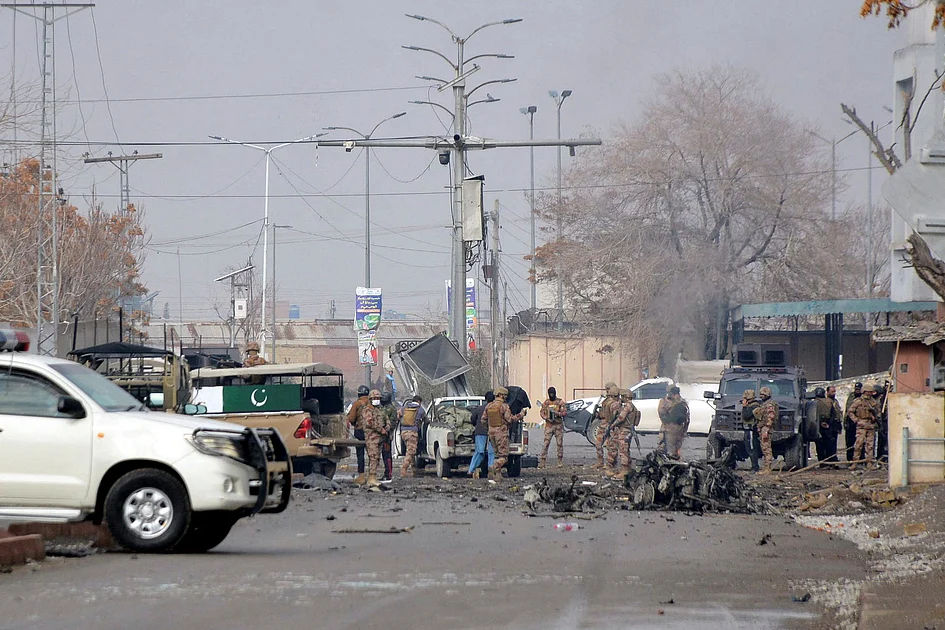
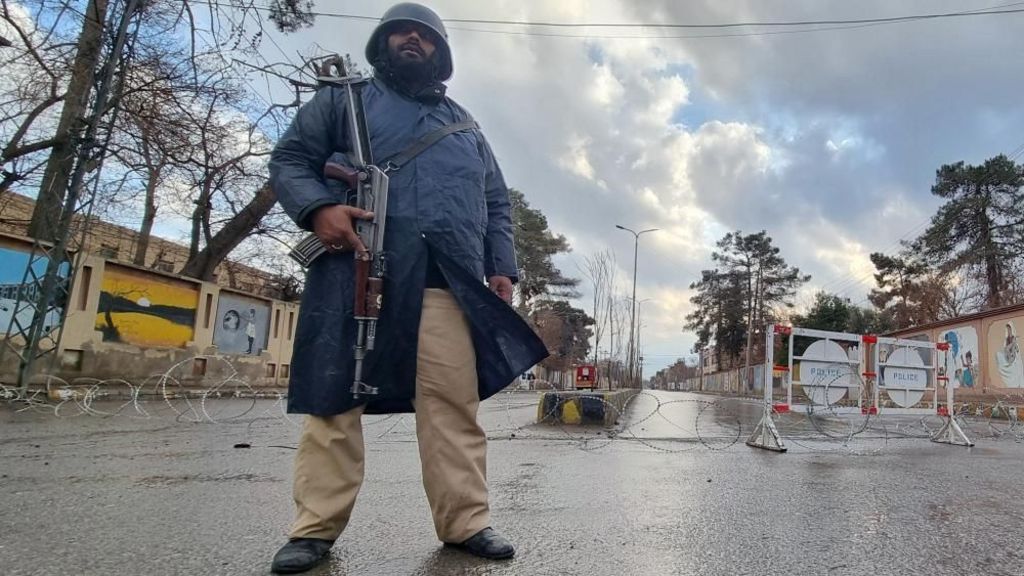
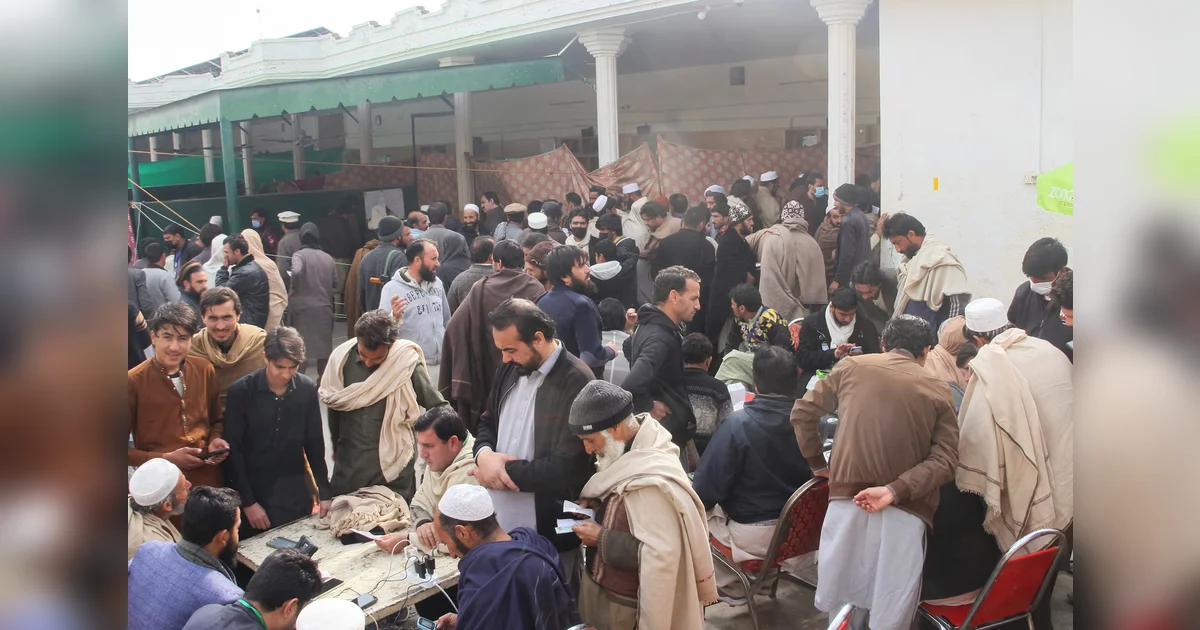
In a violent incident that has escalated tensions in Pakistan’s northwestern border region, gunmen attacked and killed a pro-government militia leader along with five others. The assailants reportedly opened fire on the victims, doused their vehicle with fuel, and set it ablaze, according to a senior administration official who spoke to AFP on Thursday under the condition of anonymity. The attack occurred in Khyber Pakhtunkhwa province, an area that has seen a surge in violence since the Taliban regained control of neighboring Afghanistan in 2021. The official stated that the attackers’ intent was to instill fear, as the bodies of the six victims were completely charred. While no group has claimed responsibility, the official suggested that the Tehreek-e-Taliban Pakistan (TTP), also known as the Pakistani Taliban, may have orchestrated the attack. The TTP had allegedly demanded extortion money from the militia leader, who refused to comply, leading to his execution. Pakistan has accused the Taliban-led government in Afghanistan of harboring TTP militants and facilitating cross-border attacks, a claim that Kabul denies. The border between the two nations was recently closed following clashes earlier this month, which were triggered by an explosion in Kabul on October 9 that resulted in significant civilian and military casualties on both sides. Afghanistan’s Taliban government blamed Pakistan for the blast and launched a retaliatory offensive along the border. A ceasefire brokered over the weekend remained in effect as of Thursday, with officials from both countries scheduled to meet in Turkey on Saturday to discuss the ongoing tensions.
-

Olive groves under siege: Palestinian families face Israeli violence during harvest
Afaf Abu Alia, a 53-year-old Palestinian woman, described a harrowing experience of being brutally attacked by Israeli settlers while harvesting olives near Ramallah in the occupied West Bank. “I felt like I was dying,” she recounted, detailing how more than 20 settlers beat her with sticks, leaving her with severe injuries, including brain bleeding and extensive bruising. The attack occurred as she and her family worked in Turmus Ayya, a village where settlers from nearby settlements like Maale Levona and Shilo have increasingly targeted Palestinian farmers. Despite fleeing to a safer area, the family returned to find their vehicle destroyed and their harvested olives stolen. Later, an Israeli military patrol intercepted them, firing a gas canister that left Afaf, who suffers from respiratory issues, incapacitated. The settlers returned in greater numbers, forcing the family to flee again, but Afaf, unable to move, endured further violence. This attack is part of a broader pattern of escalating settler violence against Palestinian olive harvesters, often under the protection of Israeli soldiers. The Abu Alia family, who had already been forced to rent land after settlers repeatedly targeted their own olive groves in al-Mughayyir, described the destruction of their olive trees as a devastating loss of heritage. Their great-grandfather had planted these ancient Roman olive trees over 150 years ago, and the family views them as a symbol of their identity and connection to the land. Since the start of the olive harvest season, over 158 settler attacks have been documented, resulting in the destruction of thousands of olive trees and significant economic losses for Palestinian families. The olive harvest, a deeply communal and cultural tradition, has become a battleground in the ongoing conflict, with settlers and Israeli forces systematically targeting Palestinian farmers to sever their ties to the land. Despite these efforts, Palestinians continue to resist, driven by a profound spiritual and ancestral bond with their olive trees.
-

Nigerian army kills over 50 Boko Haram militants as it fights off drone attacks
In a decisive response to recent drone attacks on military installations, Nigeria’s armed forces have reportedly eliminated more than 50 Boko Haram militants. The operation, which took place on Thursday, targeted insurgents who had launched simultaneous assaults on military bases in Borno and Yobe states. According to Army spokesperson Sani Uba, the militants initiated their attacks from northern Cameroon and Katarko, a village in Yobe State. The Nigerian military employed a combination of ground and aerial tactics to neutralize the threat, with ground troops and the Air Component continuing to pursue over 70 wounded militants in a coordinated effort. This counteroffensive follows a brutal nighttime attack by Boko Haram last month in Darul Jamal, a northeastern Nigerian village, which claimed at least 60 lives. Boko Haram, a jihadist group that emerged in 2009, seeks to impose its radical interpretation of Islamic law and opposes Western education. The decade-long insurgency has not only devastated Nigeria but also spilled into neighboring countries like Niger, resulting in approximately 35,000 civilian deaths and displacing over 2 million people, according to the United Nations. The group has since fractured into two factions following the death of its longtime leader, Abubakar Shekau, in 2021. One faction, the Islamic State West Africa Province, aligned with the Islamic State group, has intensified its attacks on military positions. In a related development, the U.S. has approved a potential $346 million arms sale to bolster security in Nigeria, Africa’s most populous nation.