分类: world

  • ‘Burned and destroyed’: Locals and tourists describe Mexico unrest

    ‘Burned and destroyed’: Locals and tourists describe Mexico unrest

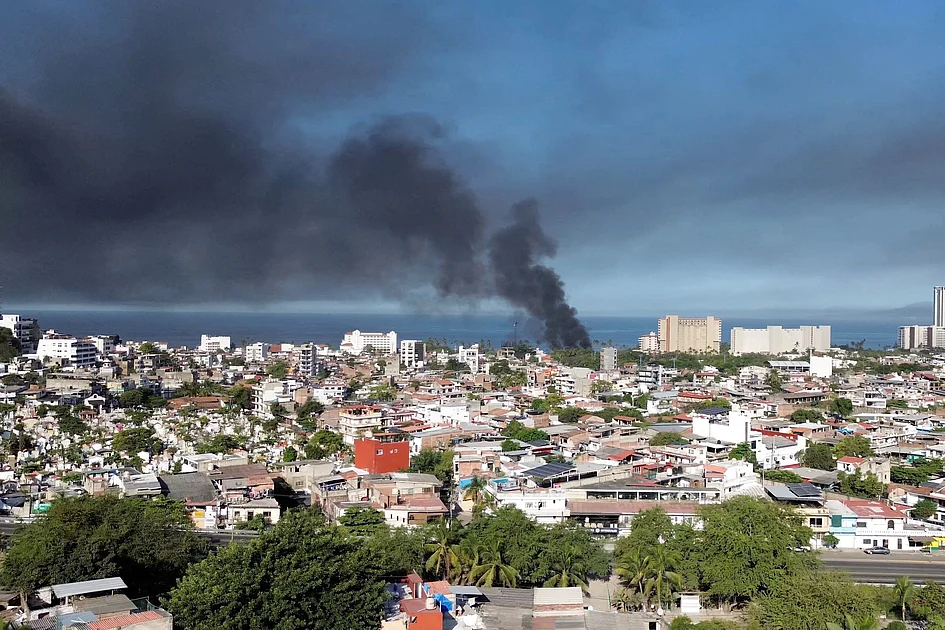
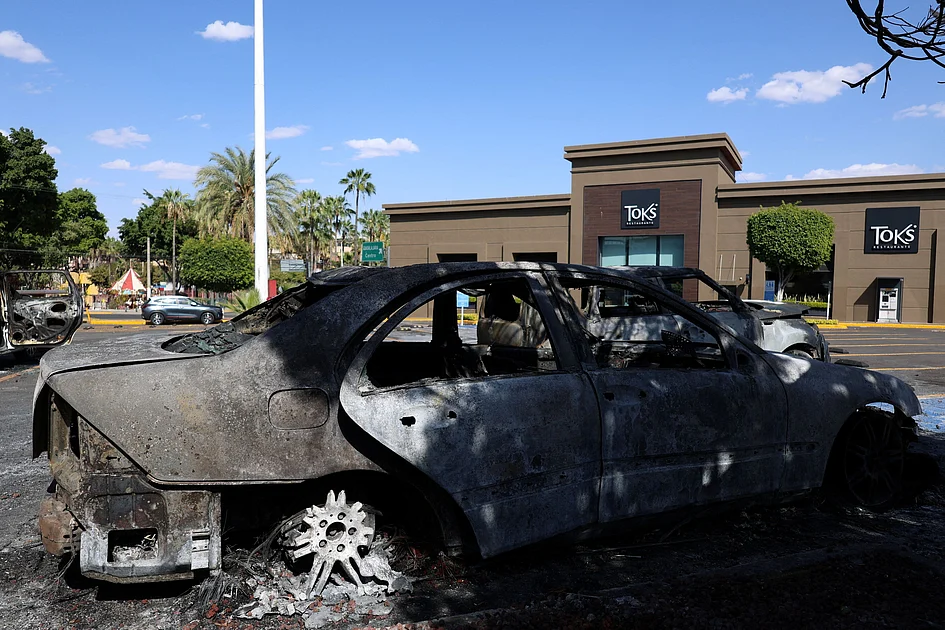
    Popular Mexican resort destinations were transformed into scenes of chaos and destruction following the security operation that resulted in the death of Nemesio Oseguera Cervantes, known as “El Mencho,” leader of the Jalisco New Generation Cartel (CJNG). The feared drug lord’s demise on Sunday triggered immediate and coordinated retaliatory attacks across multiple states, with tourist hotspots Puerto Vallarta and surrounding areas experiencing the most visible violence.

    Eyewitness accounts from residents and tourists describe unprecedented scenes of vehicles set ablaze, plumes of smoke rising across cities, and roads deliberately blocked with burning cars. Jerry Jones, an American expatriate and publisher of LGBT+ lifestyle magazine Out and About Puerto Vallarta, reported that the violence erupted without warning. “We were completely caught off guard,” Jones stated, noting that the first indication of trouble came when a reader sent video footage of a bus being intentionally set on fire.

    The rapid escalation left authorities overwhelmed, with residents receiving minimal official communication during the critical initial hours. Jones observed no military or police presence in his neighborhood until afternoon, despite widespread destruction occurring since morning. The local government eventually issued shelter-in-place orders, transforming normally vibrant streets into eerily quiet zones as businesses, schools, and universities closed indefinitely.

    Canadian content creator Marc-André, who documents life in Puerto Vallarta through his YouTube channel More Life Diaries, described the transformation of the tranquil resort town into what resembled “an absolute war zone.” His drone footage captured hundreds of vehicles simultaneously burning across the city, creating an apocalyptic landscape completely alien to the area’s typical atmosphere of music and social gatherings.

    The violence stranded both residents and tourists, with some becoming trapped inside retail establishments as chaos erupted outside. Community members demonstrated remarkable resilience, spontaneously organizing to combat fires overwhelmed firefighters couldn’t address and assisting tourists without access to food supplies. When a single grocery store briefly opened Sunday evening, queues stretched to unprecedented lengths as people sought essential provisions.

    Despite the trauma, long-term residents expressed confidence in the community’s ability to recover. Jones emphasized Puerto Vallarta’s history of overcoming adversity, noting: “We have been through hurricanes together, the pandemic together, and businesses here join together. In times like this, they do not compete. They join together and they help each other.”

    The economic implications for Mexico’s tourism industry remain concerning, with many visitors experiencing canceled flights and disrupted vacation plans. American tourists interviewed by CNN described the situation as a “complete shocker” and “like being in the twilight zone,” with many expressing surprise at the rapid deterioration of security in areas previously considered safe havens.
  • 1 Chinese killed in bus accident in C. Nepal

    1 Chinese killed in bus accident in C. Nepal

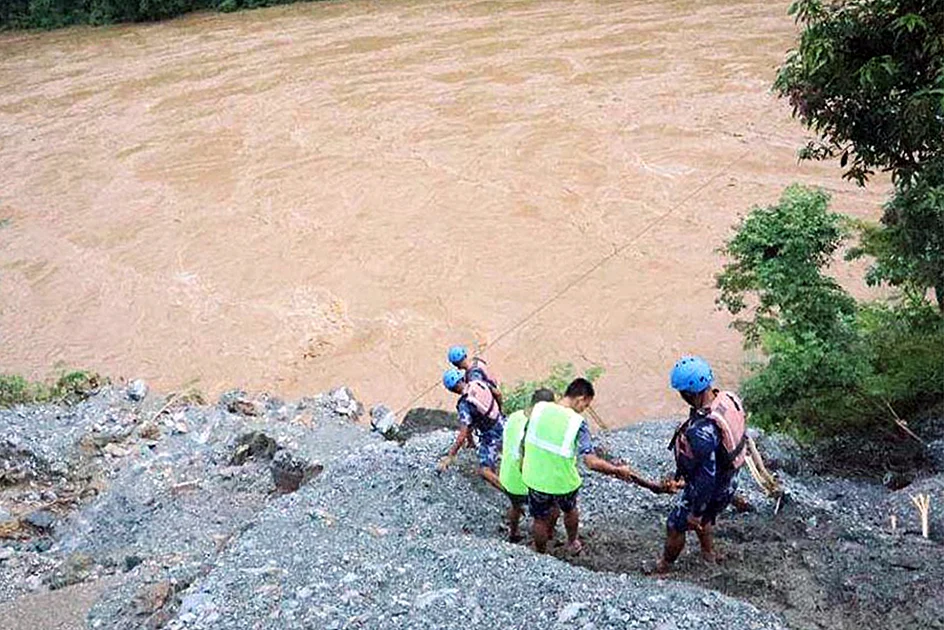
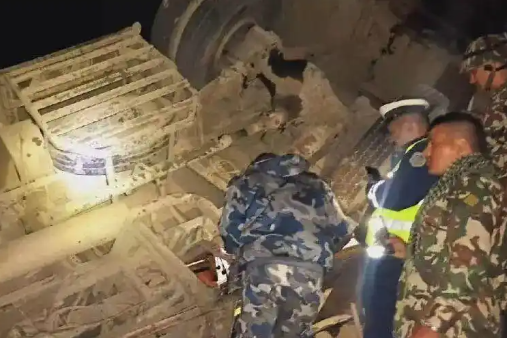
    A devastating bus accident in central Nepal’s Dhading district resulted in significant casualties early Monday, with local authorities confirming nineteen fatalities and twenty-five individuals injured. The tragic incident occurred when a passenger bus traveling from Pokhara to Kathmandu veered off the highway and plunged into the Trishuli River.

    The Chinese Embassy in Nepal verified that among the victims was one Chinese national who perished in the accident. Another Chinese citizen sustained injuries and is presently undergoing medical treatment at a nearby hospital. According to preliminary reports, the vehicle was carrying approximately 45 passengers at the time of the catastrophic plunge.

    Rescue operations were immediately launched following the incident, with local emergency services working tirelessly to extract survivors from the wreckage. The challenging terrain and river conditions complicated recovery efforts in the mountainous region. This tragedy highlights ongoing transportation safety concerns in Nepal’s difficult geographical landscape, where road accidents remain unfortunately common due to narrow highways and challenging driving conditions.

    The Nepalese administration has initiated a comprehensive investigation to determine the exact cause of the accident, examining factors ranging from potential mechanical failure to road conditions and driver error. The incident has drawn international attention to infrastructure and safety standards in the region, particularly as Nepal continues to develop its tourism industry and transportation networks.

  • No immediate casualties reported after 5.1-magnitude earthquake hits China’s Xinjiang

    No immediate casualties reported after 5.1-magnitude earthquake hits China’s Xinjiang

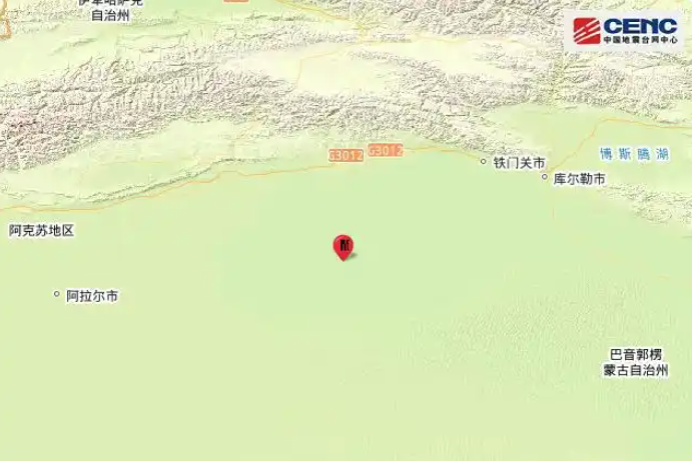
    A significant seismic event measuring 5.1 on the Richter scale struck northwestern China’s Xinjiang Uygur Autonomous Region on Monday, with preliminary assessments indicating no immediate casualties or structural damage. The earthquake occurred at precisely 12:12 local time, with its epicenter pinpointed in Yuli County at coordinates 40.88 degrees north latitude and 84.17 degrees east longitude, according to the China Earthquake Networks Center.

    The tremor originated at a depth of 15 kilometers, generating substantial ground shaking that was strongly felt throughout the affected area. Local authorities from the Yuli county government confirmed the immediate deployment of emergency response teams and firefighting personnel to assess potential impacts. Rescue units were promptly dispatched toward the epicentral region to conduct comprehensive evaluations.

    Critical infrastructure including transportation networks, power supply systems, and telecommunications operations remained fully functional following the seismic activity. Daily life and commercial activities throughout the county continued without interruption, demonstrating the region’s resilience and effective emergency preparedness measures. The swift organizational response and absence of immediate damage reports reflect the evolving seismic monitoring capabilities and disaster response protocols in China’s western regions.

  • Chad closes its border with Sudan after fighters spilled into its territory

    Chad closes its border with Sudan after fighters spilled into its territory

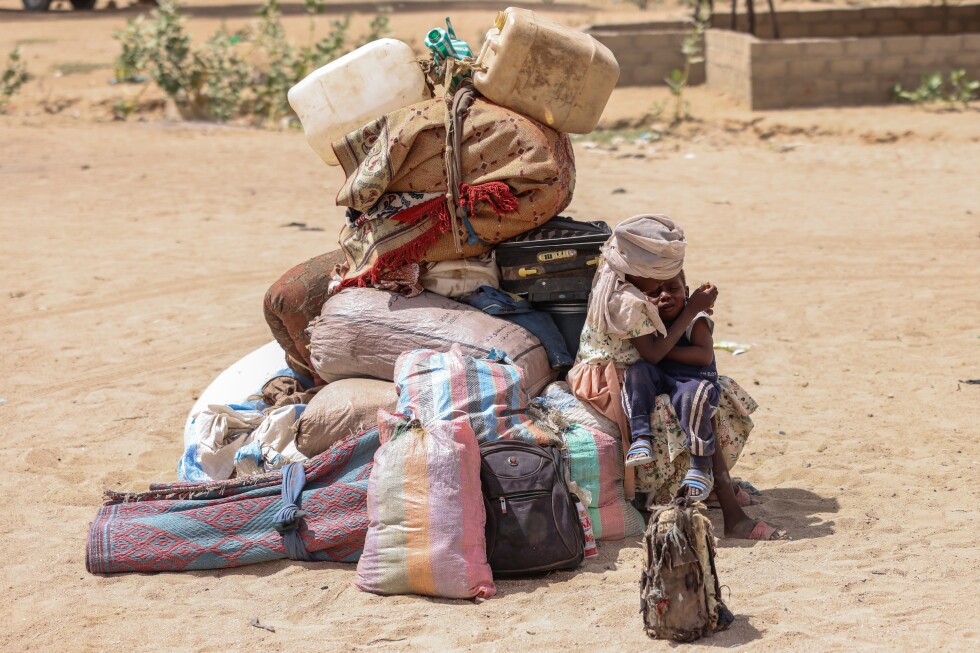
    In a decisive move to insulate its territory from regional violence, the Chadian government announced Monday the complete closure of its border with war-torn Sudan. Government spokesperson Gassim Cherif Mahamat characterized the measure as essential for national security, stating it aims to “prevent any risk of the conflict spreading to our soil, to protect our citizens and refugee populations, and to guarantee the stability and territorial integrity of our country.”

    The border shutdown follows intensified military confrontations in the Darfur region, where paramilitary Rapid Support Forces launched assaults on the strategic border town of Tine over the weekend. Sudanese Armed Forces claimed successful defense operations that forced RSF combatants to retreat across the border into Chadian territory. Tine represents one of the final Darfur strongholds remaining under Sudanese military control since the RSF assumed dominance over most of the region in October 2025.

    This marks the second border closure instituted by Chad since Sudan’s devastating conflict erupted in April 2023, when longstanding tensions between military leadership and paramilitary forces escalated into full-scale warfare. The humanitarian consequences have been catastrophic, with UN figures indicating over 40,000 fatalities—though aid organizations suggest actual numbers may be substantially higher.

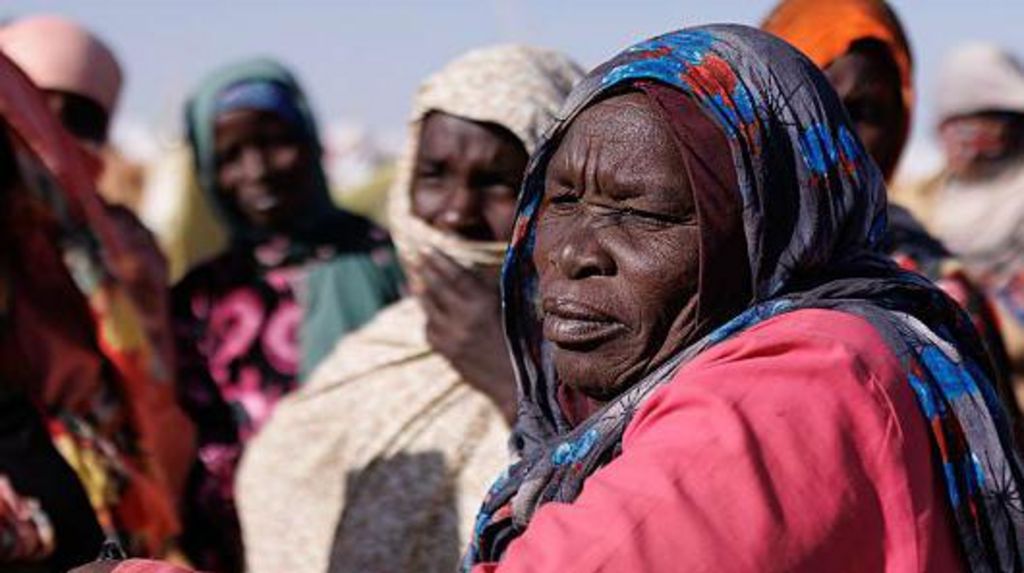
    The conflict has generated the world’s most severe humanitarian emergency, displacing more than 14 million people while triggering widespread disease outbreaks and famine conditions across Sudan. Chad has absorbed hundreds of thousands of Sudanese refugees throughout the crisis, with government officials noting that “exceptional exceptions, strictly justified by humanitarian reasons” might be permitted despite the general border closure.

  • Chad shuts border with Sudan in bid to stop conflict spreading

    Chad shuts border with Sudan in bid to stop conflict spreading

    Chad has implemented an indefinite closure of its eastern frontier with Sudan, citing repeated military incursions by Sudanese armed factions as the primary justification. The decisive action, announced on Monday, follows intense combat in the border settlement of al-Tina involving Sudan’s Rapid Support Forces (RSF) and local militias aligned with the Sudanese national army.

    Government officials characterized the border shutdown as an essential security precaution amid mounting concerns that Sudan’s internal conflict is encroaching upon Chadian territory. Communications Minister Mahamat Gassim Cherif issued an official statement emphasizing the measure’s purpose to prevent regional spillover of violence and ensure protection for both citizens and refugee populations.

    While the closure remains in effect indefinitely, authorities indicated they would consider humanitarian exemptions on a case-by-case basis with formal authorization. The government simultaneously issued a stern warning that Chad maintains the right to respond decisively to any aggression or border violations.

    The border region has witnessed deteriorating security conditions following weekend clashes that resulted in significant casualties. Preliminary reports indicate five Chadian soldiers and three civilians lost their lives, with at least twelve others sustaining injuries during cross-border hostilities.

    This development compounds an already severe humanitarian situation, with approximately one million Sudanese refugees having crossed into Chad since the civil war’s inception in April 2023. The nation serves as both a sanctuary for displaced persons and a critical conduit for humanitarian assistance entering Sudan.

    The conflict originated from a power struggle between army commander Gen Abdel Fattah al-Burhan and RSF leader Gen Mohamed Hamdan Dagalo (Hemedti), initially centering on integration of paramilitary forces into the regular army before escalating into full-scale warfare. Chad has repeatedly denied allegations from Sudanese authorities claiming it provides support to RSF operations.

  • Powerful winter storm shuts schools, disrupts travel across US Northeast

    Powerful winter storm shuts schools, disrupts travel across US Northeast

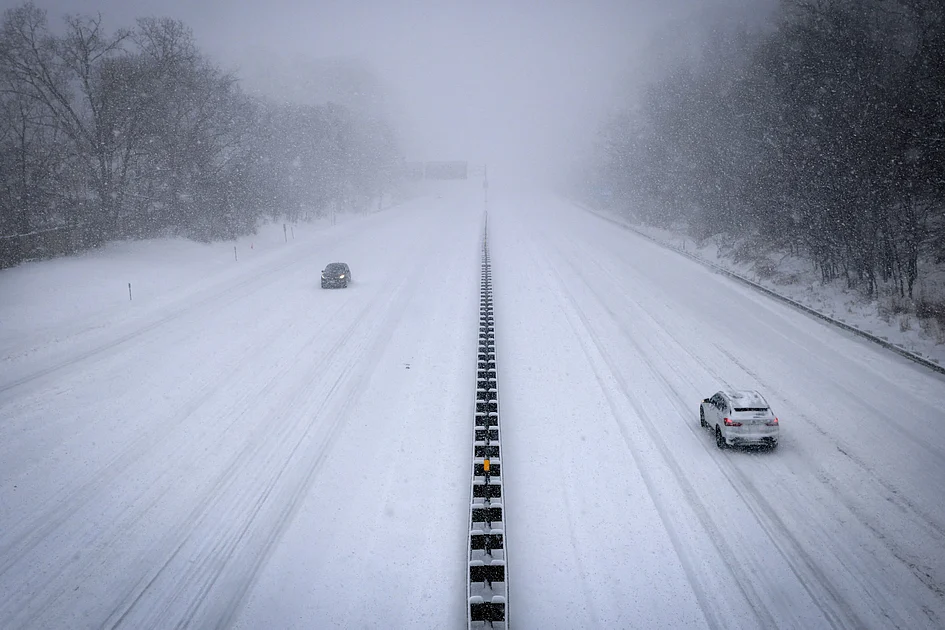
    A severe winter storm has brought the Northeastern United States to a standstill, prompting a cascade of emergency declarations, widespread school closures, and massive travel disruptions. The powerful system, delivering heavy snowfall and intense winds, has activated a multi-state crisis response.

    In New York City, Mayor Zohran Mamdani declared a state of emergency, instituting a vehicle ban for non-essential travel from Sunday night through Monday noon to facilitate snow clearance and emergency operations. The city’s public school system, the nation’s largest, canceled all classes and after-school programs for a traditional snow day, with no remote instruction. This marks the first blizzard warning for the city since 2017.

    The disruption extended to the highest levels of international diplomacy, forcing the closure of the United Nations headquarters complex in Manhattan. New York Governor Kathy Hochul mobilized 100 National Guard members to assist in hardest-hit regions, including Long Island and the Lower Hudson Valley, where forecasts predicted up to two feet of snow and wind gusts reaching 70 mph.

    The storm’s impact crippled transportation networks across the region. Air travel suffered significantly, with over 5,000 flights canceled for Monday according to FlightAware, with further cancellations expected. Ground transit systems, including NJ TRANSIT and Rhode Island Public Transit Authority services, were fully suspended. The U.S. Postal Service warned of potential delays in mail and package delivery.

    State leadership across the Northeast echoed urgent calls for public safety. Massachusetts Governor Maura Healey declared an emergency and ordered state workers to stay home. Connecticut implemented a commercial vehicle ban on limited-access highways, while New Jersey Governor Mikie Sherrill issued a statewide emergency, emphasizing the serious nature of the storm. Despite an ongoing funding lapse at the Department of Homeland Security, FEMA confirmed its disaster-response operations continue unimpeded, with life safety remaining the top priority.

  • Mexican drug lord killing sparks revenge attacks; businesses set ablaze, highways blocked

    Mexican drug lord killing sparks revenge attacks; businesses set ablaze, highways blocked

    Mexico has been plunged into a state of widespread turmoil and retaliatory violence following the confirmed death of Nemesio Oseguera Cervantes, the infamous leader of the Jalisco New Generation Cartel (CJNG) known as ‘El Mencho’. The high-profile kingpin was killed during a targeted military raid in the town of Tapalpa on Sunday, triggering an immediate and coordinated response from his loyalists.

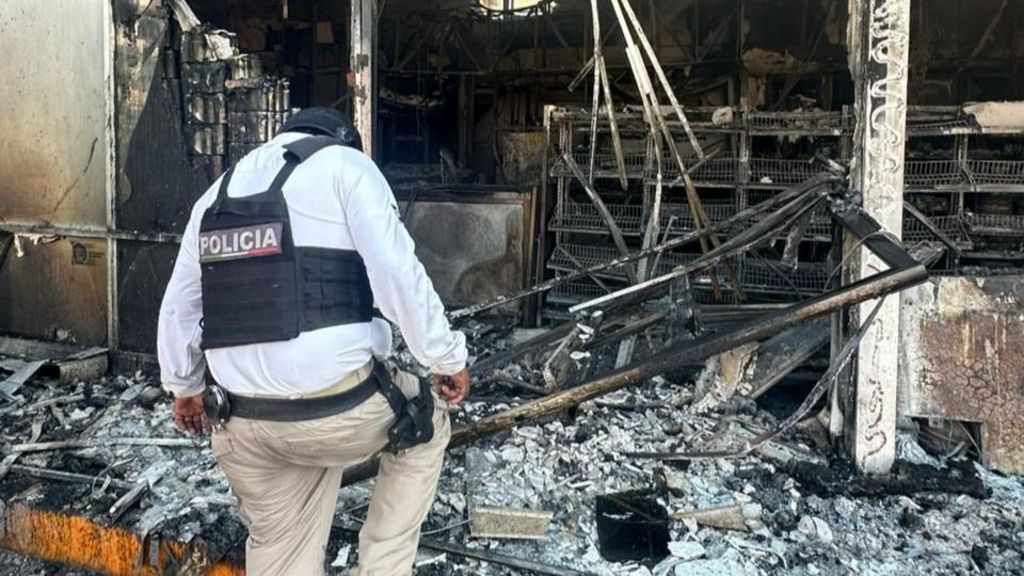
    Within hours of the operation, suspected cartel members launched a campaign of terror across more than half a dozen Mexican states. Key transportation arteries were systematically blockaded, while vehicles and commercial establishments were set ablaze in a show of force. The Pacific coast resort city of Puerto Vallarta, a crucial tourism hub, witnessed thick plumes of dark smoke obscuring its famous ocean views, prompting several international airlines to cancel flights to the region.

    Local authorities issued urgent advisories, urging both residents and tourists to shelter indoors as sporadic gunfire erupted. The national guard military police base in Jalisco came under direct attack, while trucking associations advised drivers to seek safe routes or return to their depots indefinitely. Government security sources shared videos depicting military tanks patrolling residential neighborhoods in Aguascalientes and cartel members openly blocking roads from pickup trucks in Colima.

    A CJNG member, speaking to Reuters on condition of anonymity, confirmed the attacks were acts of revenge for El Mencho’s death and warned of impending internal bloodshed as factions within the cartel vie for control. This pattern of explosive violence following the removal of cartel leadership has become a tragic hallmark of Mexico’s long-standing war against drug trafficking organizations, with previous operations against the Sinaloa Cartel producing similarly devastating consequences.

    International observers expressed grave concern, with former U.S. Ambassador to Mexico Christopher Landau describing the scenes with ‘great sadness and concern’ while emphasizing the need to maintain resolve. Mexican President Claudia Sheinbaum acknowledged the disturbances but sought to project calm, stating that ‘in most of the national territory, activities are happening with absolute normalcy’ despite evidence of significant disruption across multiple states.

  • Mexican military kills cartel boss ‘El Mencho’ in US-backed raid

    Mexican military kills cartel boss ‘El Mencho’ in US-backed raid

    In a landmark counter-narcotics operation, Mexican special forces have eliminated Nemesio Oseguera Cervantes, the infamous leader of the Jalisco New Generation Cartel (CJNG) known as ‘El Mencho’. The high-profile raid occurred Sunday in the Pacific coastal town of Tapalpa, Jalisco state, marking one of Mexico’s most significant victories against drug trafficking organizations.

    The operation, conducted with intelligence support from United States agencies, resulted in Oseguera sustaining fatal injuries during the confrontation. The 60-year-old cartel chieftain, who transitioned from law enforcement to become one of Mexico’s most feared criminal masterminds, died while in military custody. His body was transported to Mexico City under heavy National Guard security.

    The elimination of El Mencho triggered immediate retaliatory violence across multiple Mexican states. Cartel operatives erected blockades using burning vehicles, attacked businesses, and created widespread disruption. Popular tourist destination Puerto Vallarta witnessed dramatic scenes as plumes of dark smoke rose above the bay, prompting several international airlines to suspend flights to the area.

    The operation comes amid increasing pressure from the Trump administration on Mexican President Claudia Sheinbaum to intensify efforts against cartels responsible for producing and smuggling fentanyl and other drugs across the U.S. border. While praising the operation’s success, U.S. officials acknowledged Mexican leadership in executing the mission.

    Security analysts now monitor whether the cartel’s leadership structure will fracture into competing factions, potentially triggering extended violent confrontations. The CJNG under Oseguera’s command had diversified into multiple criminal enterprises including drug trafficking, fuel theft, extortion, and sophisticated financial fraud operations, employing innovative tactics such as weaponized drones.

    President Sheinbaum faces the complex challenge of balancing intensified cartel operations with maintaining national stability, while simultaneously affirming Mexico’s sovereignty against potential unilateral U.S. actions.

  • At least 18 killed after bus carrying over 35 passengers plunges into Nepal river

    At least 18 killed after bus carrying over 35 passengers plunges into Nepal river

    A devastating bus accident in central Nepal has resulted in at least 18 fatalities and 25 injuries after the vehicle plunged into the Trishuli River during overnight hours. The tragedy occurred near Chinadhara, close to Charaundi in the Benighat Rorang Rural Municipality, at approximately 1:15 AM local time on Monday.

    The bus, transporting more than 35 passengers on the route from Pokhara to Kathmandu, veered off the roadway and into the treacherous waters. The remote location and darkness significantly hampered initial rescue efforts, according to authorities on the scene.

    Emergency response teams comprising personnel from the Nepali Army, Armed Police Force, Nepal Police, and local volunteers immediately launched a complex rescue operation. District Traffic Police Office Chief Shishir Thapa confirmed the death toll, while Rajkumar Thakuri, Chair of the Highway Rescue Management Committee, reported that all injured survivors have been transported to medical facilities for treatment.

    This incident highlights the persistent challenges of road safety in Nepal’s mountainous regions, where difficult terrain and infrastructure limitations frequently contribute to transportation accidents. The Trishuli River area has witnessed similar tragedies in the past, raising concerns about highway safety measures and emergency response capabilities in remote areas.

    Investigation into the precise cause of the accident remains ongoing, with authorities examining factors including driver fatigue, road conditions, and potential mechanical failure. The nighttime timing of the incident presents additional challenges for investigators working to determine the sequence of events that led to this catastrophic outcome.

  • ICC to begin pre-trial hearing for Philippines’ Duterte

    ICC to begin pre-trial hearing for Philippines’ Duterte

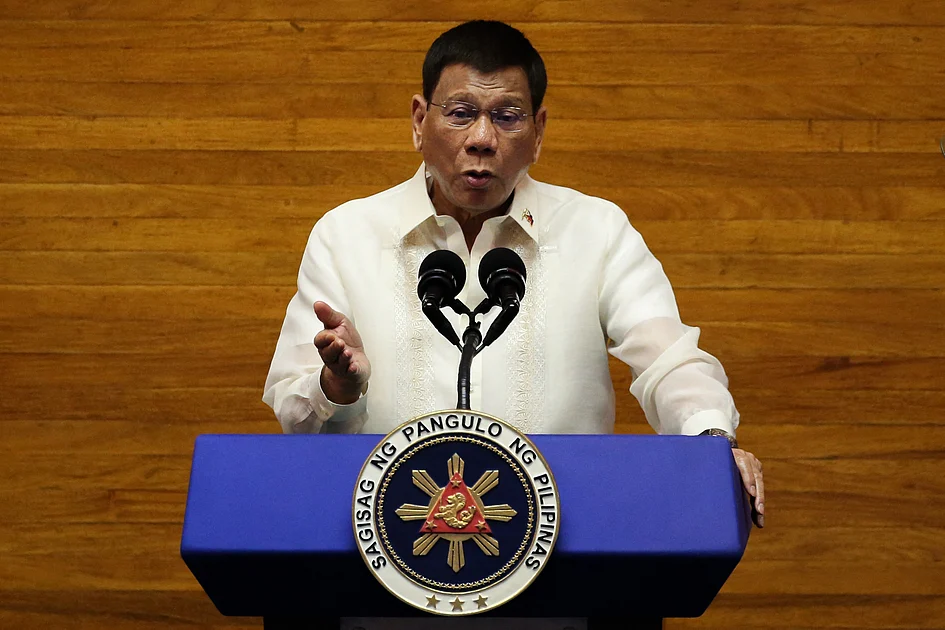
    The International Criminal Court has initiated a pivotal four-day judicial proceeding to examine evidence against former Philippine President Rodrigo Duterte, marking a significant development in one of the court’s most high-profile cases. The confirmation of charges hearing, which commenced Monday in The Hague, will determine whether sufficient evidence exists to proceed with a full trial for crimes against humanity allegedly committed during Duterte’s controversial anti-drug campaign.

    The 80-year-old former leader, currently detained at Scheveningen Prison following his arrest in Manila and subsequent transfer to the Netherlands in March 2025, will not physically attend the proceedings. The court granted a defense request to waive his appearance despite judicial findings that he remains medically fit to participate.

    Prosecutors have leveled three distinct charges against Duterte, encompassing his alleged involvement in at least 76 murders between 2013 and 2018. The first charge pertains to 19 murders allegedly orchestrated during his tenure as mayor of Davao City. The second involves 14 killings of designated ‘high-value targets’ during the initial phase of his presidency, while the third charge addresses 43 murders occurring during nationwide anti-drug operations.

    Human Rights Watch has characterized these proceedings as a crucial advancement toward accountability for victims of the Philippines’ drug war, which independent estimates suggest resulted in thousands of fatalities. Legal representatives for victims anticipate that a formal trial could empower additional families to come forward with testimony.

    The case unfolds amid significant geopolitical tensions, with the ICC facing two rounds of US sanctions implemented since June 2025. Although the Philippines withdrew from the ICC in 2019 under Duterte’s directive, the court maintains jurisdiction over crimes allegedly committed between 2011 and 2019. A defense appeal challenging this jurisdiction remains pending.

    Duterte, who maintains popularity in the Philippines for his tough stance on crime, becomes the first Asian former head of state to appear before the ICC. The hearing has sparked polarized reactions, with simultaneous demonstrations both supporting Duterte and advocating for victims registered outside the courthouse.

    Following the hearing, ICC judges will have 60 days to issue a written decision determining whether the case will advance to trial.