分类: world

  • Pakistan: Rescue workers clear Karachi mall fire ruins, 63 missing feared dead

    Pakistan: Rescue workers clear Karachi mall fire ruins, 63 missing feared dead

    Rescue teams in Karachi continue sifting through the smoldering wreckage of Gul Plaza shopping complex three days after Pakistan’s most devastating fire in over a decade erupted, with 21 confirmed fatalities and 63 individuals still unaccounted for amid fears of a catastrophic death toll.

    The inferno ignited late Saturday evening near closing time and rapidly consumed the massive commercial structure spanning larger than a football field. The shopping center, renowned for housing approximately 1,200 family-operated stores specializing in wedding attire, household goods, and toys, became an uncontrollable blaze that required nearly 48 hours to fully contain.

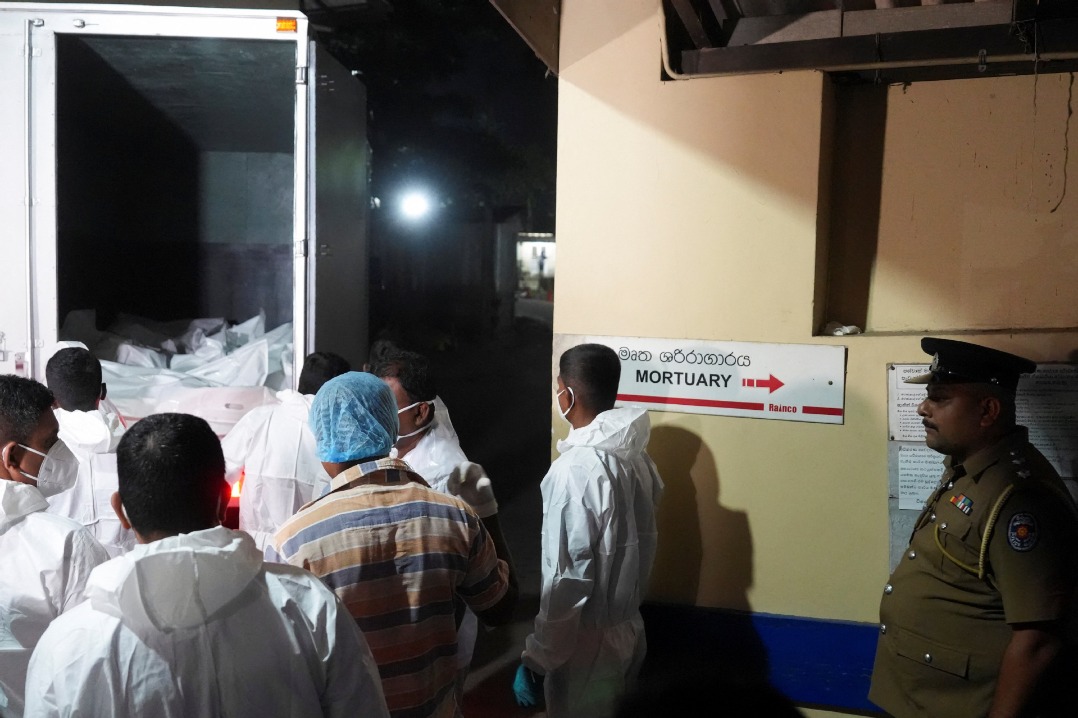
    Emergency response units from Rescue 1122 confirmed the recovery of 21 victims while continuing their grim search through unstable debris. The operation has transitioned to forensic recovery, with workers collecting human remains in sacks for DNA identification. Authorities have gathered 15 genetic samples to facilitate victim identification amid the severely compromised remains.

    Disturbing revelations have emerged regarding safety violations, with police confirming that 13 of the mall’s 16 emergency exits were secured when the fire broke out. This critical failure likely prevented occupants from escaping the rapidly spreading flames.

    Anguished families gathered at the disaster site expressed both desperation and outrage. Kosar Bano, whose six family members vanished while shopping for wedding supplies, articulated the horrifying reality: ‘The only hope we have is how many hands we will find, how many fingers we will find, and how many legs we will find.’

    Public frustration mounted as Karachi’s mayor faced jeering crowds who condemned the delayed emergency response. The government has pledged a comprehensive investigation into both the fire’s origin and the adequacy of rescue efforts. This tragedy represents Karachi’s most severe fire incident since the 2012 industrial inferno that claimed 260 lives, which courts later determined to be arson.

    Gul Plaza management has not responded to requests for comment regarding the locked emergency exits or overall safety protocols.

  • Colombia sentences ex-paramilitary leader Mancuso to 40 years in jail

    Colombia sentences ex-paramilitary leader Mancuso to 40 years in jail

    In a landmark ruling, Colombia’s Special Jurisdiction for Peace has imposed a 40-year prison sentence on former paramilitary commander Salvatore Mancuso for his role in orchestrating horrific crimes during the nation’s prolonged internal conflict. The 61-year-old ex-leader of the United Self-Defence Forces of Colombia (AUC) was convicted for masterminding over 117 documented atrocities—including targeted murders, enforced disappearances, and gender-based violence—against the indigenous Wayuu community in La Guajira province between 2002 and 2006.

    Mancuso’s return to Colombia in 2024 followed the completion of a 15-year narcotics sentence in the United States, where he was extradited in 2008. US justice authorities had previously convicted him for smuggling massive cocaine shipments to finance his 30,000-strong paramilitary apparatus.

    The tribunal outlined that Mancuso’s sentence could be reduced to just eight years if he fully cooperates with transitional justice mechanisms and participates in reparations programs—a provision that has ignited fierce controversy among human rights advocates. Despite his brutal legacy, the Petro administration recently designated him a ‘peace promoter’ to mediate with active armed groups, following his offers to expose alleged collusion between AUC forces and Colombia’s political and business elites.

    This case emerges from Colombia’s decades-long armed struggle that claimed over 450,000 lives between 1985 and 2018. Indigenous communities like the Wayuu were frequently trapped between Marxist guerrillas—who forcibly recruited children—and paramilitary units like AUC that accused them of rebel sympathies and systematically terrorized them off their ancestral lands.

    Although AUC formally demobilized under a 2005 peace agreement, splinter groups continued operating, deepening involvement in drug trafficking that had originally funded their anti-insurgency campaigns. Mancuso’s sentencing represents a pivotal moment in Colombia’s ongoing reckoning with conflict-era atrocities and the complex trade-offs between justice and reconciliation.

  • Canada-China reset could revive education and cultural exchanges, experts say

    Canada-China reset could revive education and cultural exchanges, experts say

    The recent diplomatic engagement between Canada and China has generated substantial optimism for revitalizing bilateral relations through enhanced educational and cultural exchanges, according to leading experts. This development follows Canadian Prime Minister Mark Carney’s inaugural visit to China and the subsequent agreement signaling a potential reset in the two nations’ relationship.

    Marc Jerry, President and Vice-Chancellor of Renison University College at the University of Waterloo, characterized the diplomatic breakthrough as “a very significant moment in resetting Canada-China relations in a positive way.” He emphasized that the prime minister’s visit demonstrates Canada’s serious commitment to partnership beyond mere trade considerations.

    The tangible benefits of such diplomatic movements are already evident in educational exchanges. Jerry cited a fall 2025 study program that brought Canadian students to China, noting participants returned with transformed perspectives and heightened cultural understanding. One student participant reported: “I came back home with a completely unique perspective on China; my experience was wonderful, and I want to go back and travel there more than ever!”

    Jeff Mahon, former Deputy Director of the China Division at Global Affairs Canada, highlighted the critical role of people-to-people exchanges, stating: “Governments build the bridge, but it is the people and businesses that use it.” This sentiment was echoed in the joint statement released after the Canada-China leaders’ meeting, which identified such exchanges as foundational to the bilateral relationship.

    The two governments have committed to restarting the Canada-China Joint Committee on Culture and strengthening cooperation across education, arts, heritage, creative industries, and sub-national exchanges. The Canadian government’s Friday statement further recognized that longstanding people-to-people ties have been fundamental to Canada-China relations.

    While optimism prevails, experts caution that normalization will require time and trust-building measures. Jiang Wenran, Founding Director of the China Institute at the University of Alberta, noted that “complete normalization might take time, particularly in sensitive high-technology research areas,” adding that extensive research collaboration would need to develop through progressive steps.

    University leaders anticipate that improved bilateral relations will generate additional opportunities for academic mobility, trade missions, and educational exchanges. Jerry expressed particular hope that the positive outcomes from recent trade talks would spill over into educational and cultural domains, reinforcing educational cooperation as a core pillar of the Canada-China relationship.

  • Russian strikes again leave half of Kyiv with no heating in winter cold snap

    Russian strikes again leave half of Kyiv with no heating in winter cold snap

    A massive Russian aerial offensive has plunged Kyiv into a deep freeze, severing heating and power to half the city’s residential buildings as temperatures plummet to -10°C. The assault, employing drones, ballistic missiles, and cruise missiles, targeted multiple Ukrainian cities including the capital, Dnipro, and Odesa, triggering prolonged air raid alerts throughout the night and into Tuesday.

    Ukrainian President Volodymyr Zelensky confirmed a ‘significant number’ of incoming projectiles were intercepted but revealed the financial toll of the defense reached approximately €80 million (£69 million) in air defense missiles alone. The human cost was equally stark, with at least four fatalities and 33 injuries reported across the country.

    The attack has catastrophic implications for civilian infrastructure. Kyiv Mayor Vitalii Klitschko reported over 5,600 residential buildings, each containing dozens of apartments, were left without heating and water. This setback nullifies weeks of relentless repair work following the large-scale January 9th attack, which had previously crippled the city’s utilities. ‘I have no electricity and no water,’ recounted Oleksandr Palii, a 29-year-old veteran, describing a night of relentless explosions.

    The crisis has forced extreme adaptations. With radiators bursting from frozen water and fires sparked by improvised gas heaters, residents are resorting to communal generators, portable stoves, and innovative food storage methods. Social media depicts scenes of resilience with citizens barbecuing in snowy yards, yet many describe this as the most brutal winter since the full-scale invasion began in 2022.

    Amid the turmoil, President Zelensky canceled his scheduled appearance at the World Economic Forum in Davos, stating he would only attend if documents on U.S. security guarantees and a prosperity plan were ready for signing. His absence underscores the severity of the situation on the ground.

    Shelter from the onslaught was found underground, as over 10,000 people, including nearly 800 children, sought refuge in Kyiv’s metro stations—the only reliable sanctuary in many high-rise areas lacking adequate shelters.

    While acknowledging the receipt of defensive missiles that ‘helped significantly,’ Zelensky emphasized a critical and ongoing need for enhanced air defense systems. He pointed to Russia’s undiminished capacity to produce and deploy a growing number of ballistic missiles, a threat for which U.S. support is pivotal. ‘A great deal in the security of Ukrainians depends on the unity of Europe and America,’ he stated, hinting at concerns that transatlantic tensions could jeopardize timely deliveries of essential military aid. Foreign Minister Andrii Sybiha echoed the sentiment, asserting that Ukrainian resilience ‘cannot be an excuse for this war to continue.’

  • Chile wildfires kill 19 as extreme heat triggers mass evacuations

    Chile wildfires kill 19 as extreme heat triggers mass evacuations

    Chile is grappling with a devastating wildfire catastrophe that has claimed at least 19 lives and triggered mass evacuations across central and southern regions. The fires, fueled by an intense heatwave and powerful winds, have consumed over 35,000 hectares—an area comparable to Philadelphia—destroying 325 homes and damaging another 1,100 properties.

    The coastal city of Penco, just north of Concepcion, has suffered the heaviest human toll, with most fatalities occurring in this vulnerable community. Thousands of residents returned to their neighborhoods on Monday to sift through the ashes of their destroyed homes while firefighters continued battling more than 30 active blazes.

    Security Minister Luis Cordero warned that despite slightly improved overnight conditions, the largest fires remained uncontrolled with high temperatures expected to persist throughout the day. ‘Our main concern is that new fires will be triggered throughout the region,’ Cordero stated during a news briefing.

    The crisis has prompted President Gabriel Boric to declare a state of catastrophe in the hardest-hit Ñuble and Bio Bio regions, mobilizing national emergency resources. Meteorological services have issued extreme heat warnings for central and southern Chile, with temperatures forecast to reach 37°C (99°F).

    University of Chile forest fire expert Miguel Castillo explained the unprecedented scale of the disaster: ‘There have been several consecutive days over 30 degrees Celsius, which is rare for the Concepcion area. When fires reach this size under extreme conditions, they practically become uncontrollable monsters.’

    The tragedy follows similar wildfires in Argentina’s Patagonia region earlier this month, where approximately 15,000 hectares burned, suggesting a broader pattern of climate-related disasters affecting South America during its summer season.

  • Israel will aid Greece in countering military drone swarms

    Israel will aid Greece in countering military drone swarms

    In a significant move to bolster regional security, Israel has committed to assisting Greece in developing advanced counter-drone technology to address the emerging threat of coordinated unmanned aerial and underwater vehicle swarms. This defense collaboration was announced following high-level talks in Athens between Greek Defense Minister Nikos Dendias and Israeli counterpart Israel Katz on Tuesday.

    The strategic partnership builds upon the trilateral defense agreement established in December between Greece, Israel, and Cyprus, which already includes Israeli assistance in developing Greece’s air defense capabilities. Minister Dendias emphasized the critical nature of this cooperation, stating that both nations would ‘exchange views and expertise to counter unmanned platforms—specifically swarms of unmanned aerial vehicles and groups of unmanned underwater vehicles.’

    Israeli Defense Minister Katz characterized the growing alliance as ‘an anchor of stability in the Mediterranean,’ highlighting its strategic importance beyond bilateral relations. The collaboration addresses a paradigm shift in modern warfare where drone swarms—typically employing numerous low-cost, coordinated craft—are increasingly deployed for reconnaissance, defensive operations, and overwhelming enemy systems.

    The defense partnership unfolds against the backdrop of Greece’s ongoing maritime disputes with NATO ally Turkey concerning boundaries and offshore resources. Despite being NATO members, both nations remain locked in a long-standing confrontation that has prompted Greece to maintain one of Europe’s highest military expenditures relative to its economic size.

    The December agreement established a comprehensive framework for joint military exercises, specialized operations training, and regular strategic consultations among the three Eastern Mediterranean nations. This trilateral cooperation emerged from discussions between national leaders focused on enhancing maritime security and advancing mutual energy initiatives in the region.

  • Spain announces 3 days of mourning as train crash toll rises to 40

    Spain announces 3 days of mourning as train crash toll rises to 40

    Spain has initiated three days of national mourning following the country’s most devastating rail disaster in over a decade. The catastrophic collision between two high-speed trains near Adamuz in southern Andalusia has resulted in 40 confirmed fatalities, with the death toll potentially rising as rescue operations continue.

    The tragedy occurred Sunday evening when an Iryo-operated train traveling from Malaga to Madrid inexplicably derailed and crossed onto adjacent tracks, colliding with an oncoming Renfe service headed to Huelva. The impact caused both trains to derail in a devastating chain of events that rescue officials describe as one of the most complex emergency responses in recent Spanish history.

    Prime Minister Pedro Sanchez, who visited the crash site Monday, characterized the event as “a day of sorrow for all of Spain” while promising absolute transparency in the investigation. Emergency crews utilizing heavy machinery worked through the night to lift severely damaged carriages and access trapped victims.

    Current figures indicate over 120 injured persons, with 41 remaining hospitalized in Córdoba medical facilities. Distressed relatives have turned to social media platforms to locate missing passengers, sharing photographs and personal details in desperate attempts to find loved ones.

    Investigative authorities have described the accident as “extremely strange” given several mitigating factors. Unlike the 2013 Santiago de Compostela disaster that claimed 80 lives, this derailment occurred on a straight section of recently renovated track with both trains operating within legal speed limits. The involved Iryo locomotive was manufactured in 2022 and underwent inspection just three days prior to the accident.

    Transport Minister Óscar Puente confirmed that human error and excessive speed have been largely ruled out as causative factors. Renfe President Álvaro Fernández Heredia suggested the investigation should focus on either Iryo’s rolling stock or infrastructure anomalies, noting both trains were traveling approximately 200 km/h—well below the 250 km/h limit for that section.

    Survivor accounts depict scenes of horror and chaos. Passenger Lucas Meriako described the impact as “a very strong hit from behind” that created the sensation “the whole train was about to collapse,” with numerous injuries resulting from shattered glass throughout the carriages.

    The tragedy has mobilized international response, with condolences offered by Pope Leo XIV and French President Emmanuel Macron. Local residents of Adamuz immediately organized relief efforts, delivering water, blankets, and essential supplies to emergency crews working at the disaster site.

    Spain maintains Europe’s most extensive high-speed rail network, with over 3,000 kilometers of dedicated tracks connecting major urban centers. This incident represents the most significant safety challenge to the system’s otherwise exemplary safety record, prompting nationwide scrutiny of rail infrastructure and operational protocols.

  • China demands Taliban protect its citizens after deadly Kabul blast

    China demands Taliban protect its citizens after deadly Kabul blast

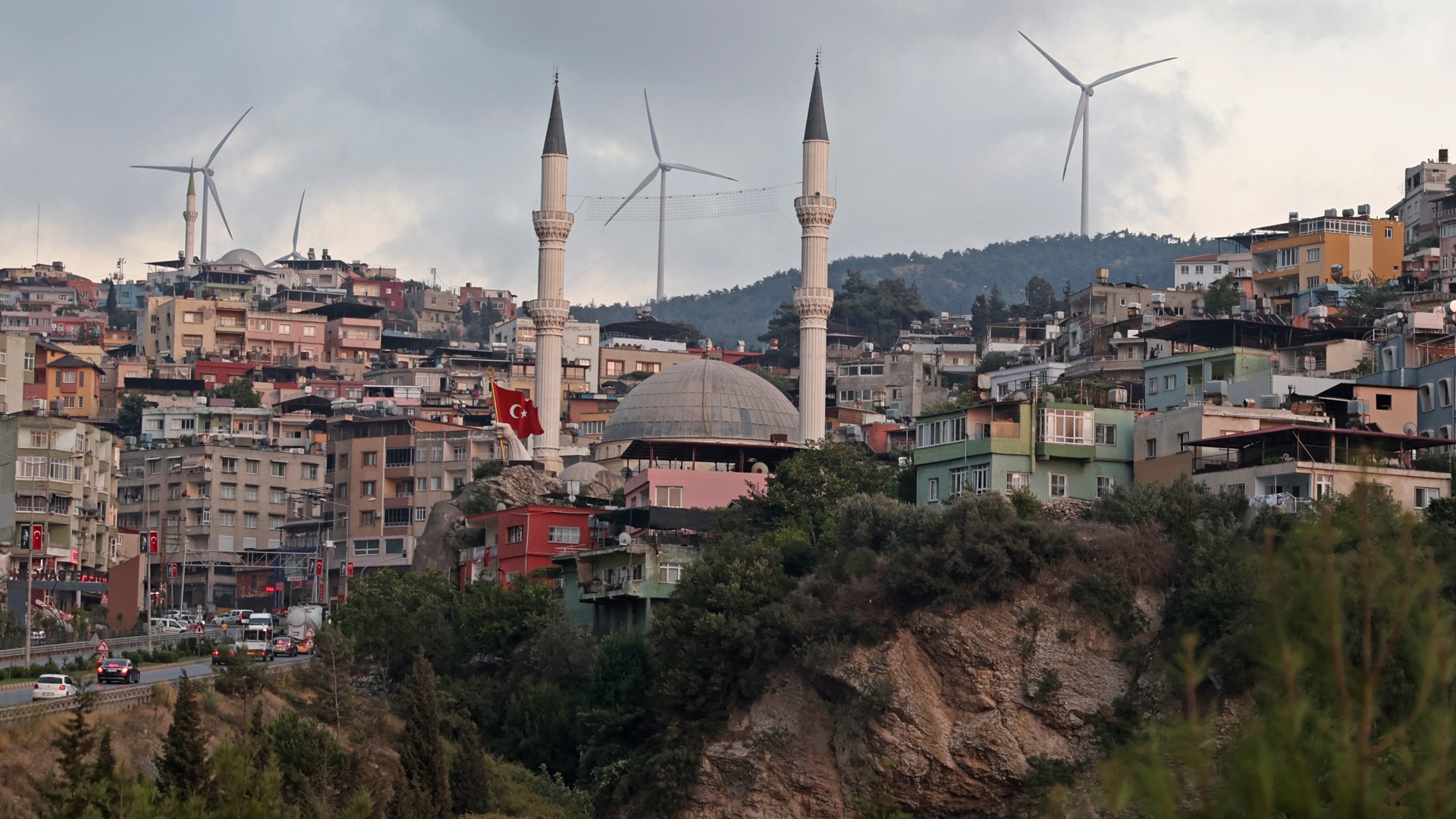
    A devastating explosion ripped through a Chinese restaurant in central Kabul on Monday, resulting in at least seven fatalities and multiple injuries, prompting a formal diplomatic demand from Beijing for enhanced protection of its citizens. The attack, which occurred in the heavily secured Shahr-e-Naw district, has been claimed by the jihadist organization Islamic State (IS).

    According to officials, the victims included six Afghan nationals and one Chinese citizen. The blast originated near the kitchen of the ‘Chinese Noodle’ restaurant, which operated beneath a guesthouse. Khalid Zadran, a spokesman for the Kabul police, confirmed the details while noting that the precise nature of the explosion remains under active investigation, contradicting IS’s swift claim of responsibility.

    In response to the tragedy, Chinese Foreign Ministry spokesman Guo Jiakun stated that Beijing has made urgent representations to the Taliban-led government. China demanded comprehensive medical care for the injured and the implementation of more robust measures to safeguard Chinese nationals residing in or traveling to Afghanistan. The government subsequently issued a renewed advisory, urging its citizens to avoid travel to the country.

    Humanitarian organization EMERGENCY reported receiving 20 casualties at its local hospital. Dejan Panic, the group’s Afghanistan director, confirmed that seven individuals were declared dead upon arrival, with the injured including four women and a child. Social media footage and eyewitness accounts described a scene of severe destruction, with a large section of the building torn open and a vehicle outside completely obliterated. Local residents assisted in transporting critically wounded individuals to medical facilities, and white sheets were later erected to conceal the damaged structure.

    The targeted establishment, which primarily served the Chinese Muslim community, was operated by an ethnic Uyghur businessman from China’s Xinjiang region, his wife, and an Afghan partner. In its official statement, the local IS branch explicitly cited China’s policies in Xinjiang as motivation, placing the country ‘on the list’ of its targets due to alleged ‘crimes against the oppressed Uyghur Muslims.’ The Chinese government has consistently denied all accusations of human rights abuses in the region.

    This incident marks a continuation of violence against Chinese interests in the area. IS previously claimed an attack on a Chinese-owned hotel in Kabul in 2022, and six Chinese nationals were killed in separate incidents in neighboring Tajikistan just last November, leading to further security advisories from Beijing.

  • Waterfall in Ukraine completely freezes

    Waterfall in Ukraine completely freezes

    An extraordinary natural phenomenon has emerged in Ukraine as one of the country’s waterfalls has completely solidified into a magnificent ice formation. The spectacular transformation occurred during a severe cold snap that has gripped the nation, with temperatures plummeting to approximately -20° Celsius (-4° Fahrenheit).

    The freezing conditions, characteristic of Arctic air masses sweeping across Eastern Europe, have created ideal circumstances for this rare winter spectacle. The waterfall’s continuous flow has gradually crystallized, layer by layer, forming intricate ice structures that capture and refract light in mesmerizing patterns. This temporary geological marvel demonstrates nature’s ability to create breathtaking art under extreme weather conditions.

    Local meteorologists report that the current cold front represents some of the most severe winter weather experienced in the region this season. The subzero temperatures have persisted for several consecutive days, allowing for the complete transformation of the waterfall into a frozen monument. While the specific location hasn’t been disclosed, similar phenomena have been documented previously in the Carpathian Mountains and other elevated regions of Ukraine during particularly harsh winters.

    The frozen waterfall has attracted attention from photographers and nature enthusiasts, though authorities caution against approaching too closely due to potential instability of the ice formations. Such natural ice sculptures typically remain intact until temperatures rise significantly above freezing, which meteorological forecasts suggest may not occur for at least another week.

  • France makes first interception targeting small boat crossings to UK

    France makes first interception targeting small boat crossings to UK

    French authorities have executed their inaugural maritime interception under a revamped strategy targeting human smuggling operations across the English Channel. On Saturday, law enforcement officers boarded an inflatable vessel termed a ‘taxi-boat’ along the Aa canal in Gravelines, situated along the Channel coast near Calais.

    This tactical shift emerged from a July 2025 UK-France summit between President Emmanuel Macron and Prime Minister Keir Starmer, responding to sustained British pressure for enhanced border security measures. Previously, French interventions were limited to preventing boat launches from beaches due to safety concerns regarding open-water operations.

    Criminal networks had adapted to previous enforcement methods by deploying these taxi-boats from distant locations to coastal pickup points where migrants enter the water to board. French documentation revealed this method achieved an alarming 81% success rate in 2025, contributing to 41,472 migrant arrivals in Britain last year—a increase from 36,566 in 2024 though below 2022’s peak of 45,774.

    The breakthrough in operational protocol addresses earlier safety and legal concerns that delayed implementation. Under the current engagement framework, gendarmerie exclusively intercept vessels before migrant boarding occurs, avoiding potentially dangerous situations with fully loaded craft. Saturday’s operation followed this protocol after police identified the inflatable craft moving toward the sea as likely preparing for migrant pickup.

    Visual evidence obtained by media outlets shows French police alongside the intercepted inflatable with several apparent smugglers aboard before the craft was towed to dock. French authorities have not yet provided official commentary on the operation.