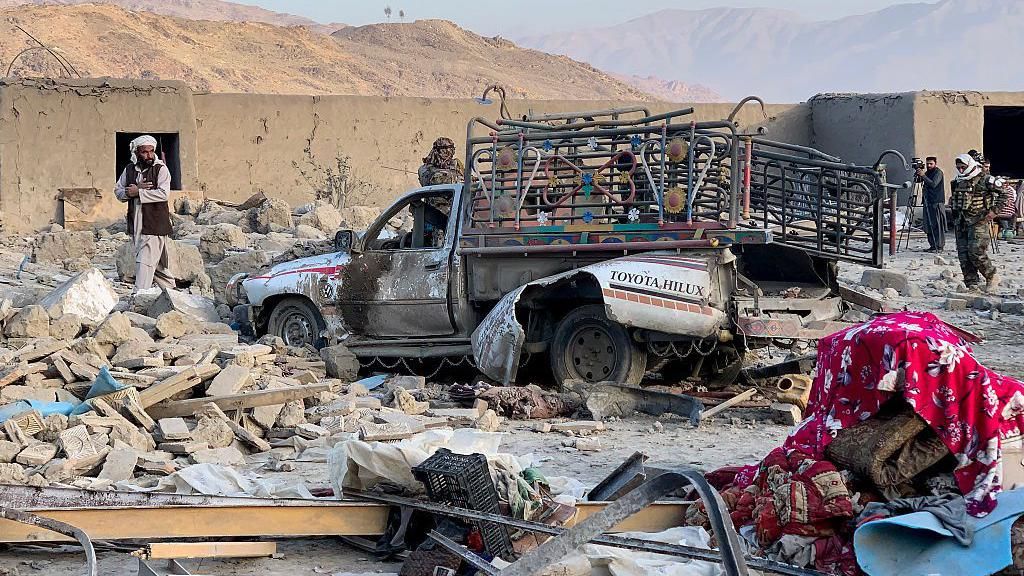
A devastating explosion at a police station in the Indian-administered region of Kashmir has resulted in the deaths of at least nine individuals and left 29 others injured. The incident occurred late on Friday at the Nowgam police station, where a stockpile of confiscated explosives detonated unexpectedly. Among the deceased were several police officers and forensic team members who were in the process of examining the stored materials. The blast’s intensity was so severe that body parts were reportedly found in nearby homes, situated approximately 100 to 200 meters away from the site. Emergency services, including fire tenders, were promptly dispatched to the scene to manage the aftermath. This tragic event follows closely on the heels of a car explosion in New Delhi, which claimed eight lives and was labeled a terrorist act by the Indian government. The ongoing territorial dispute between India and Pakistan over Kashmir, a region both nations claim in its entirety, continues to be a source of tension and conflict. The police chief of Jammu and Kashmir is scheduled to hold a press conference to provide further details on the incident.
分类: world
-

Arson attacks on mosque denounced
The international community, spearheaded by the United Nations, has vehemently condemned the recent arson attack on the Hajjah Hamidah mosque in the West Bank. This incident, which occurred in the early hours of Thursday, marks the latest in a series of escalating violent acts in the region. UN Secretary-General Antonio Guterres’ spokesman, Stephane Dujarric, expressed profound dismay at the actions of Israeli settlers responsible for the attack, labeling such assaults on places of worship as utterly unacceptable. The Palestinian Ministry of Foreign Affairs and Expatriates has accused the Israeli government of fostering a climate of impunity that encourages settler violence, aimed at displacing Palestinians and solidifying colonial occupation. Jordan has called for the international community to fulfill its legal and moral obligations to address these transgressions. Meanwhile, European nations, including Spain, Germany, and Switzerland, have urged Israel to halt the violence and ensure justice for the perpetrators. The intensifying unrest in the West Bank is increasingly seen as a threat to the fragile ceasefire brokered by the United States, with fears that such incidents could derail peace efforts in Gaza. Experts warn that the situation in Gaza, the West Bank, and East Jerusalem is interconnected, with violence in one area inevitably spilling over into others. The UN has also highlighted the challenges in scaling up humanitarian responses in Gaza as winter approaches, despite some progress in healthcare improvements.
-

Heat deaths rise as world emissions hit record high
As global carbon dioxide emissions from fossil fuels are projected to reach an unprecedented 38.1 billion tonnes in 2025, the world faces a dire climate crisis. This alarming forecast, presented at the 30th United Nations Climate Change Conference (COP30) in Belem, Brazil, underscores the widening gap between energy demand and renewable energy expansion. The Global Carbon Budget 2025, compiled by the Global Carbon Project, reveals a 1.1% increase in emissions compared to 2024, further jeopardizing the goal of limiting global warming to 1.5°C. Professor Pierre Friedlingstein of the University of Exeter emphasized that the remaining carbon budget for this target will be exhausted before 2030 if current emission rates persist. Climate change is also weakening natural carbon sinks, such as oceans and forests, amplifying the urgency for drastic emission reductions. Despite progress in reducing emissions across 35 countries, global efforts remain insufficient to achieve sustained decreases. The Lancet’s October report estimates nearly 550,000 annual deaths from heat-related causes exacerbated by climate change. In response, Brazil unveiled its first global climate adaptation plan at COP30, focusing on strengthening healthcare systems to protect vulnerable populations from climate impacts. The Belem Health Action Plan, developed by Brazil’s Health Ministry, outlines concrete measures to mitigate these challenges. As the world grapples with escalating emissions and their devastating consequences, the call for immediate and decisive action grows louder.
-

Experts laud Beijing’s vision of development
Experts and officials have lauded China’s Global Development Initiative (GDI) for its significant role in fostering equitable and inclusive growth, particularly in the Global South. Proposed by Chinese President Xi Jinping in 2021, the GDI emphasizes key areas such as poverty reduction, food security, and green development, aligning closely with the United Nations’ Agenda 2030 for Sustainable Development. James Shikwati, director of the Inter Region Economic Network in Nairobi, highlighted the initiative’s focus on balanced development, ensuring no region is left behind. He noted that the GDI addresses global financing gaps exacerbated by economic slowdowns in the US and Europe, providing crucial support for international organizations. Stephen Jackson, UN Resident Coordinator in Kenya, praised the GDI for leveraging China’s own development experience to aid countries like Kenya in their green transition. The Group of Friends of the GDI, a UN-backed platform, now includes over 100 countries, with China supporting projects ranging from agricultural cooperation in Africa to solar energy systems in Asia. Dennis Munene Mwaniki of the China-Africa Center emphasized the GDI’s role during the COVID-19 pandemic, where it not only supplied vaccines but also advanced the Sustainable Development Goals. Chinese Ambassador to Kenya Guo Haiyan stressed the need for global consensus and cooperation to achieve fairer and more sustainable development. China remains committed to working with all nations to accelerate the implementation of the GDI and other major initiatives, aiming to meet the UN’s 2030 targets.
-

At least 8 killed in huge blast at a police station in Indian-controlled Kashmir
A devastating explosion at a police station in Srinagar, the main city of Indian-administered Kashmir, has resulted in at least eight fatalities and 27 injuries, according to authorities. The incident occurred late Friday in the Nowgam area when forensic experts and police officers were examining a cache of confiscated explosives. The powerful blast destroyed the police station, ignited fires across the compound, and damaged multiple vehicles. Rescue efforts were hampered by subsequent smaller explosions, delaying the bomb disposal squad’s response. Most of the victims were police and forensic personnel, with several injured individuals reported to be in critical condition. This tragedy follows a car explosion in New Delhi earlier in the week, which claimed eight lives and was labeled a terror attack by Indian officials. The Srinagar explosion is believed to be connected to an ongoing investigation into a suspected militant cell operating from Kashmir to the outskirts of New Delhi. Recent raids in Kashmir have led to arrests and the seizure of weapons and bomb-making materials. The explosive material involved in the police station blast was reportedly part of the evidence collected during these operations. The Kashmir region remains a contentious issue between India and Pakistan, with both nations claiming sovereignty over the territory. Militants in Indian-controlled Kashmir have been resisting New Delhi’s rule since 1989, with India accusing Pakistan of sponsoring terrorism, a claim Pakistan denies. Many Kashmiris view the conflict as a legitimate struggle for freedom.
-

Report unveils Gen Z’s faith in growth led by China, US
A groundbreaking report titled ‘The World Through the Eyes of Gen Z’ reveals that Generation Z worldwide views China and the United States as the two most influential nations in shaping global affairs and economic performance. Conducted by China Daily’s Generation Z Research Center, Social Media Research Institute, and Xi’an Jiaotong University’s School of Journalism and New Media, the survey polled 12,400 young people across 31 countries from July to August 2025. The findings highlight that nearly half of respondents (49.07%) believe China will be the primary driver of the global economy in the next decade, followed by the US (29.27%). Gen Z also anticipates that the two nations will lead scientific and technological advancements, with China dominating sectors like new energy, AI, 6G, and electric vehicles, while the US maintains its edge in aerospace. The report underscores a shift in perceptions, as traditional powers like the EU, Japan, and the UK face declining influence in the eyes of Gen Z. Experts note that this generation, raised in the digital age, values inclusivity and self-expression, shaping their balanced perspective on global dynamics. The survey also reveals that China’s foreign policy garners more positive assessments for promoting global peace and stability compared to the US. Additionally, China’s modern pop culture, tourism, and visa-free transit policies are significant draws for global youth, positioning the country as a hub for development and exchange. As Gen Z assumes leadership roles, their views may foster positive changes in international relations, particularly between China and the US.
-

‘Without exception’: UAE calls for accountability in Sudan atrocities
The United Arab Emirates (UAE) has issued a strong call for accountability regarding the atrocities committed in Sudan, emphasizing the need for justice without exception. This comes in the wake of harrowing reports from women fleeing Al Fasher, who have recounted incidents of killings, systematic rape, and civilian casualties from drone strikes and street shootings. The UAE’s Permanent Representative to the United Nations, Jamal Al Musharakh, made this appeal during a special session of the UN Human Rights Council on Friday, November 14, 2025. He urged warring parties to cease obstructing humanitarian access and stressed the international community’s role in ensuring accountability for these crimes. The conflict, which erupted in 2023 between the Sudanese Armed Forces (SAF) and the Rapid Support Forces (RSF), has intensified with the fall of Al Fasher to the RSF on October 26, 2025, solidifying their control over the Darfur region. The UN is considering a fact-finding mission to investigate mass killings during the city’s capture. Al Musharakh reiterated the Quad’s recent statement, which calls for an immediate humanitarian truce, a permanent ceasefire, and a transition to a civilian-led government. The Quad, comprising the UAE, Egypt, Saudi Arabia, and the United States, has been instrumental in addressing the crisis. Since the conflict began, the UAE has provided significant support to Sudan, including $3.9 billion in humanitarian aid between 2014 and 2025, 122 cargo planes delivering essential supplies, and the establishment of field hospitals in Chad and South Sudan. The UAE’s efforts have directly assisted over 650,000 people within Sudan and delivered 100,000 food baskets to affected regions.
-

Israel denies accusations after UN forces say it built walls inside Lebanon
The United Nations Interim Force in Lebanon (UNIFIL) has accused Israel of constructing walls inside Lebanese territory near the UN-demarcated Blue Line, the de facto border between the two nations. UNIFIL stated that the walls, built by the Israel Defense Forces (IDF), encroached on Lebanese sovereignty and rendered over 4,000 square meters of land inaccessible to Lebanese citizens. The UN peacekeeping force confirmed the violations through surveys conducted in October and November 2025. Israel, however, denied the allegations, asserting that the wall was part of a broader security plan initiated in 2022 and did not cross the Blue Line. The IDF emphasized that the construction was aimed at reinforcing the northern border following lessons learned from recent conflicts. The dispute arises amidst ongoing tensions between Israel and the Lebanese militant group Hezbollah, despite a truce brokered in November 2024. UNIFIL has urged Israel to respect the Blue Line and withdraw from Lebanese territory, citing violations of UN Security Council Resolution 1701, which ended the 2006 conflict between Israel and Hezbollah. The resolution also underpinned the 2024 ceasefire, which sought to halt over a year of hostilities. UNIFIL has formally advised the IDF of its findings and requested the removal of the walls.
-

‘Worryingly’ few civilians from Sudan’s el-Fasher making it to Chad, says aid chief
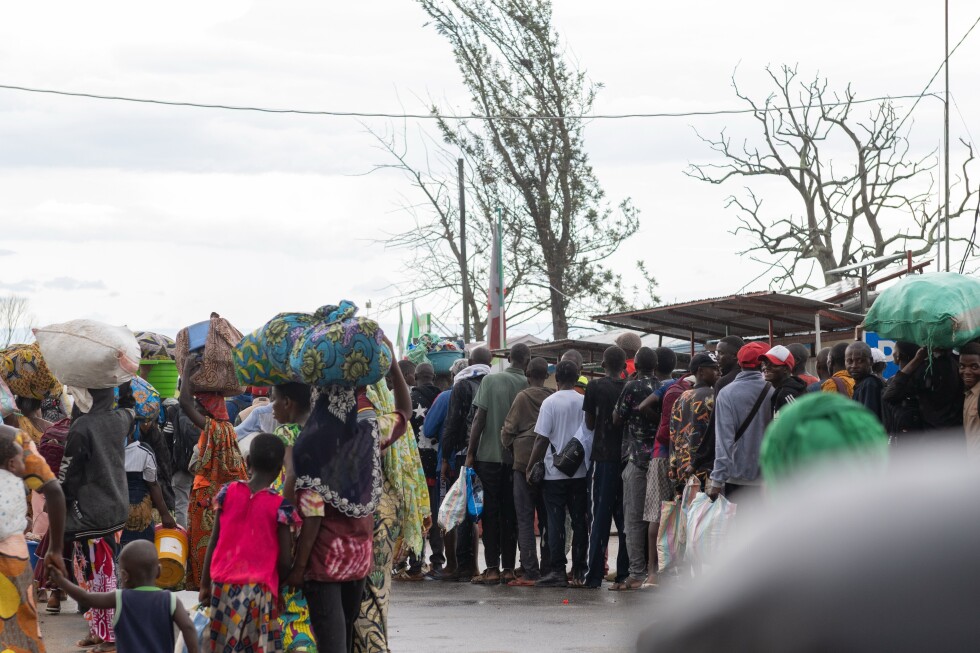
The humanitarian crisis in Sudan has taken a grim turn as only a small number of civilians fleeing the recently seized city of el-Fasher have reached eastern Chad, despite its proximity. Charlotte Slente, Secretary-General of the Danish Refugee Council (DRC), highlighted this alarming trend during her recent visit to the region. She reported that despite el-Fasher being less than 300 kilometers from Chad, only around 50 people are entering daily through the border town of Adre, with a total of 200 to 500 crossing all Chad-Sudan borders daily. The DRC described these numbers as “deeply worrying,” especially given the dire situation in el-Fasher, where 90,000 of its 260,000 civilians have fled. The low influx is attributed to the city’s prolonged siege and the perilous journey to safety. Slente shared harrowing accounts from refugees, including a young Sudanese couple who lost family members and endured extreme violence during their escape. The Rapid Support Forces (RSF), responsible for the city’s capture, have been accused of mass killings, sexual violence, and other atrocities, further complicating the humanitarian response. Chad, already hosting over 882,000 Sudanese refugees, is preparing for an additional 90,000 arrivals. Despite its limited resources, Chad’s government is allocating land for new refugee settlements. Slente criticized the international community for its inaction, warning that without concerted diplomatic pressure, more mass atrocities could occur. The conflict, rooted in tensions between the Sudanese Armed Forces and the RSF, has displaced millions and claimed tens of thousands of lives, with no end in sight.
-

UN rights council orders probe of ‘atrocities’ in Sudan’s El-Fasher
The UN Human Rights Council has mandated an urgent investigation into alleged atrocities in Sudan’s El-Fasher, aiming to identify and hold perpetrators accountable. The resolution, adopted unanimously during a special session, responds to escalating violence and warnings of potential genocide in the region. UN rights chief Volker Turk highlighted the severity of the crisis, stating that ‘bloodstains on the ground in El-Fasher have been photographed from space.’ The conflict, which began in April 2023 between Sudan’s army and the paramilitary Rapid Support Forces (RSF), has resulted in tens of thousands of deaths and displaced nearly 12 million people, creating one of the world’s worst humanitarian crises. Recent reports from El-Fasher detail executions, sexual violence, looting, and abductions, with nearly 100,000 residents fleeing the area in the past two weeks. British ambassador Kumar Iyer described the violence as a ‘coordinated campaign against civilians,’ citing credible reports of targeted killings and systematic abuses. The resolution broadens the scope of the UN’s independent fact-finding mission, despite objections from Sudan and other nations. The UAE denied allegations of supporting the RSF, while its ambassador criticized both the RSF and the Sudanese army for indiscriminate attacks. The International Criminal Court is reportedly monitoring the situation closely, with concerns that the violence could spread to the Kordofan region. The UN emphasized the need for accountability to break the cycle of impunity and prevent further atrocities.