分类: world

  • Thai-Cambodian clashes spread as death toll rises

    Thai-Cambodian clashes spread as death toll rises

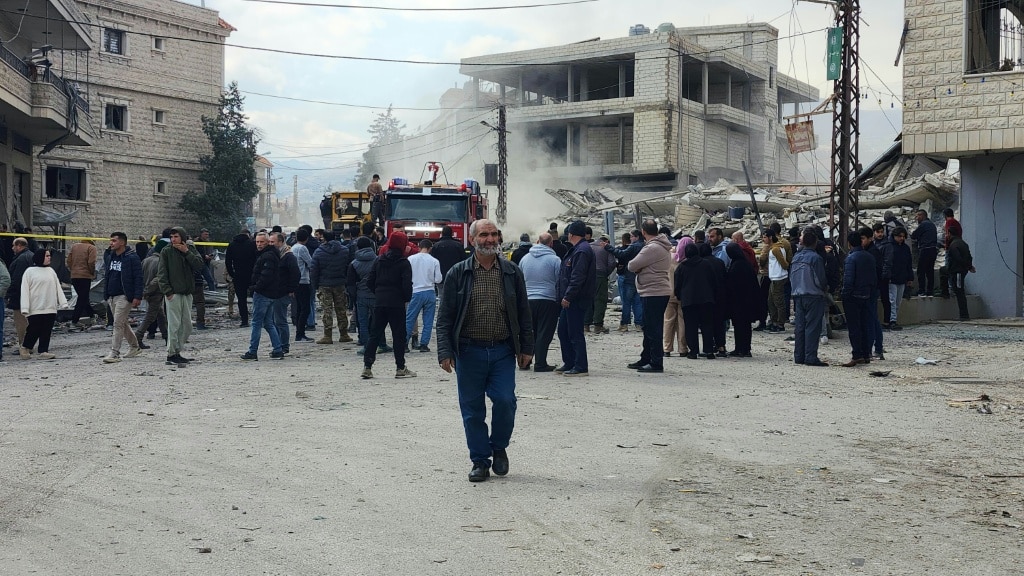
    The longstanding border dispute between Thailand and Cambodia has escalated into widespread military confrontation, resulting in significant civilian casualties and mass displacement. As of Tuesday, December 10, 2025, the death toll has risen to ten with over 140,000 civilians forced to evacuate their homes amid intensifying hostilities.

    Military engagements have expanded beyond initial conflict zones, with Thailand deploying airstrikes and tank units against Cambodian positions. The fighting has now reached historically sensitive areas including the vicinity of the UNESCO World Heritage Site Preah Vihear Temple, raising international concerns about potential damage to cultural heritage.

    Cambodian Senate President Hun Sen confirmed his nation’s military response after previously exercising restraint for two days. Phnom Penh authorities report seven civilian fatalities and approximately twenty injuries since hostilities reignited on Sunday. Thai military officials acknowledge three soldier casualties, including one killed by indirect fire in Surin Province and another by grenade near the Preah Vihear temple complex.

    Humanitarian crisis intensifies as nearly 500 temporary shelters have been established across border provinces, accommodating more than 125,000 displaced persons. Civilian testimonies reveal the trauma of repeated displacements, with some residents experiencing their fourth evacuation this year due to persistent border tensions.

    The conflict’s expansion into coastal regions adds another dimension to the crisis. Thai naval spokesperson Parat Rattanachaiphan accused Cambodian forces of establishing military installations in disputed coastal territories of Trat Province and deploying unmanned drones to provoke Thai units, prompting what Thailand describes as defensive military operations.

    The current violence represents the most significant escalation in the century-old border dispute between the Southeast Asian neighbors, with diplomatic solutions remaining elusive as military actions continue to intensify.

  • Iain Douglas-Hamilton, pioneering elephant conservationist, dies aged 83

    Iain Douglas-Hamilton, pioneering elephant conservationist, dies aged 83

    The global conservation community is mourning the passing of pioneering elephant researcher Iain Douglas-Hamilton, who died at 83 in his Nairobi home on Monday. The British zoologist dedicated his life to studying and protecting African elephants, revolutionizing our understanding of these majestic creatures while facing extraordinary personal risks.

    Douglas-Hamilton’s groundbreaking research exposed the catastrophic impact of poaching on elephant populations, work that proved instrumental in the international ban on ivory trade. His methodology involved meticulous documentation of individual elephants at Tanzania’s Lake Manyara National Park, where he became so familiar with herds that he could identify them by unique ear shapes and skin patterns.

    Prince William, who spent time with Douglas-Hamilton in Africa, paid heartfelt tribute to the conservationist. “The memories of spending time in Africa with him will remain with me forever,” said the Prince, who serves as royal patron for Tusk, the African wildlife conservation charity where Douglas-Hamilton was an ambassador. The Prince praised him as “a man who dedicated his life to conservation and whose life’s work leaves lasting impact on our appreciation for, and understanding of, elephants.”

    The aristocrat-turned-conservationist faced numerous life-threatening challenges throughout his career, including elephant charges, poacher gunfire, and a devastating flood that destroyed his Kenyan research facility in 2010. Despite these hardships, he remained unwavering in his mission, eventually becoming a leading voice in alerting the world to what he termed “an elephant holocaust.”

    His advocacy efforts culminated in the 1989 Convention on International Trade in Endangered Species. When this agreement proved insufficient, Douglas-Hamilton successfully targeted the world’s largest ivory markets, resulting in near-total import-export bans from China and the United States in 2015.

    In 1993, he established Save the Elephants, a charity dedicated to protecting the animals and advancing human understanding of their behavior. The organization’s CEO Frank Pope, also Douglas-Hamilton’s son-in-law, stated: “Iain changed the future not just for elephants, but for huge numbers of people across the globe. His courage, determination and rigour inspired everyone he met.”

    Fellow conservationist Jane Goodall, featured with Douglas-Hamilton in the 2024 documentary “A Life Among Elephants,” noted that his work revealed elephants’ capacity for human-like emotions. “I think his legacy will be one of a man who did so much to help people understand how majestic, how wonderful elephants are,” Goodall remarked.

    Douglas-Hamilton expressed his own vision for the future shortly before his passing: “I think my greatest hope is that there will be an ethic developed of human-elephant coexistence.” He is survived by his wife Oria, children Saba and Dudu, and six grandchildren.

  • How long Britain could really fight for if war broke out tomorrow

    How long Britain could really fight for if war broke out tomorrow

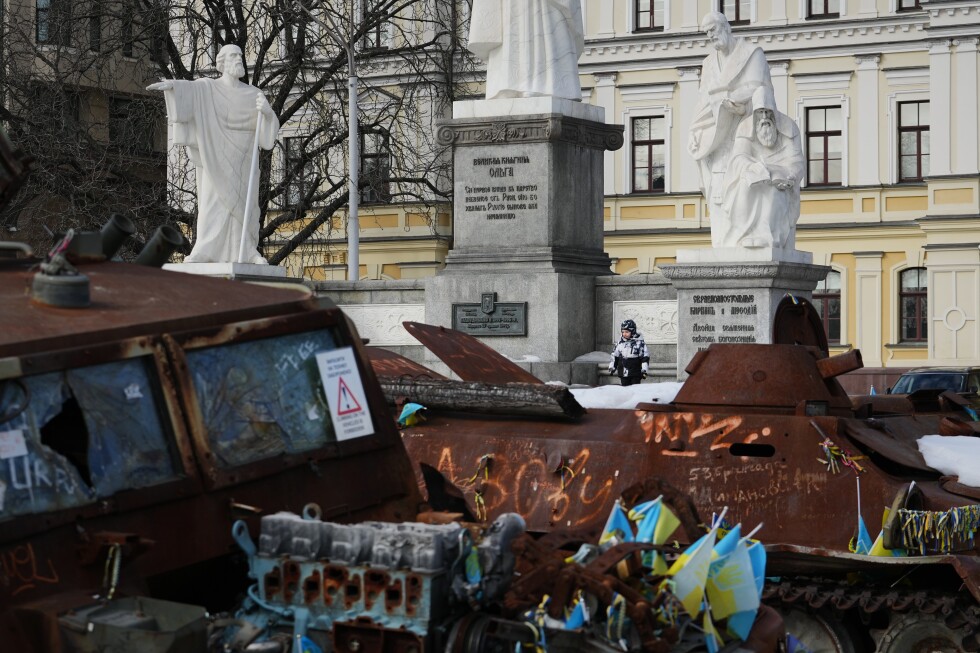
    As Russia’s full-scale invasion of Ukraine approaches its fifth anniversary, Western military analysts are raising urgent concerns about the United Kingdom’s preparedness for potential conflict with Moscow. Recent warnings from British military leadership emphasize that preparation for war remains the most reliable method of prevention, yet multiple assessments suggest the UK would struggle to sustain prolonged combat operations.

    Russian President Vladimir Putin’s December declaration that Russia stands ready for European conflict serves as a stark reminder that war between Russia and NATO nations, including the UK, represents a tangible threat rather than distant speculation. Modern warfare would likely commence not with conventional attacks but through hybrid tactics including cyber operations targeting critical infrastructure, communications blackouts, and disruption of financial systems and energy networks.

    Britain’s technology-dependent society relies extensively on subsea cables and pipelines for data transmission, financial transactions, and energy distribution. Intelligence indicates Russian spy vessels have extensively mapped these vulnerabilities for potential sabotage during hostilities. The Royal Navy has responded by investing in underwater drone technology with integrated sensors to monitor these critical assets.

    According to analysis from the Royal United Services Institute (Rusi), the UK lacks comprehensive plans for warfare extending beyond several weeks. Critical shortages exist in ammunition, artillery, vehicles, air defense systems, and medical capacity. Reserve regeneration pipelines operate slowly, and force design lacks the depth necessary to absorb losses and continue fighting effectively.

    The Ukraine conflict has demonstrated two crucial military lessons: the fundamental importance of drone technology across all combat levels, and the necessity of mass—both in personnel and military hardware. Russia maintains significant advantages in both categories, with monthly production reaching approximately 150 tanks, 550 infantry fighting vehicles, 120 Lancet drones, and over 50 artillery pieces. Russia’s defense spending approaches 7% of GDP, while the UK struggles to reach 2.5% by 2027.

    Personnel presents another critical challenge. The British Army’s paper strength of approximately 74,000 reduces to just 54,000 deployable soldiers when accounting for non-deployable personnel and global postings. This number falls below Russia’s average two-month casualty rate in Ukraine. While European nations like Germany, France, and Sweden are reinstating voluntary military service programs, the UK government rejected similar proposals for a ‘citizen army’ in 2024.

    Potential flashpoints include the Suwalki Gap between Poland and Lithuania, Baltic states with significant Russian-speaking minorities, and the Arctic archipelago of Svalbard. The UK maintains a battle group of approximately 900 personnel in Estonia, which would require rapid reinforcement to brigade strength in conflict scenarios.

    The wildcard remains U.S. commitment under President Donald Trump’s administration, though NATO’s Military Committee chairman maintains American dedication to alliance defense. Ultimately, experts conclude that while an isolated UK-Russia conflict remains improbable, Britain must address critical defense vulnerabilities through increased spending, industrial capacity expansion, and societal recognition that continued freedom requires substantial investment and preparation.

  • Sudan’s Heglig: Why the oil field taken by the RSF matters

    Sudan’s Heglig: Why the oil field taken by the RSF matters

    In a significant escalation of Sudan’s ongoing civil conflict, paramilitary Rapid Support Forces (RSF) have captured the nation’s largest oil field at Heglig, consolidating control over resource-rich southern territories previously held by the Sudanese Armed Forces (SAF). This strategic victory grants the RSF command over critical infrastructure including approximately 75 wells, processing stations, and a vital segment of the 1,600km Greater Nile Oil Pipeline that exports crude to international markets via Port Sudan.

    The capture represents both military and economic transformation in the conflict. Militarily, it opens a corridor toward el-Obeid and potentially back to Khartoum, while economically it provides the RSF with substantial revenue streams through control of oil transfer nodes and refineries. Conflict analyst Emadeddin Badi notes this development enables the RSF to replicate the model of UAE-backed Libyan commander Khalifa Haftar, using oil infrastructure as bargaining leverage and military financing.

    International dimensions complicate the situation, with the United Arab Emirates facing persistent allegations of supplying the RSF despite official denials. The involvement of South Sudanese forces further illustrates the conflict’s regional complexity, as the landlocked nation depends heavily on the pipeline for its oil exports. South Sudanese soldiers were documented facilitating the RSF’s takeover after the SAF’s 90th infantry brigade withdrew following negotiations with local groups.

    The RSF’s advancement effectively bifurcates Sudan, with the army retaining northern, eastern and central regions while the RSF controls western and substantial southern territories. This division raises concerns about potential long-term partition, though analysts note key differences with Libya’s situation, particularly regarding coastal access and bureaucratic infrastructure.

    Production at Heglig has been suspended following the takeover, with engineers evacuating to South Sudan. The facility previously processed approximately 130,000 barrels daily of South Sudanese crude alongside its own 40,000-barrel production, representing a crucial component of both nations’ economies that now falls under paramilitary control.

  • ‘This is revenge’: Israel deports Palestinian prisoners then bars families from visiting

    ‘This is revenge’: Israel deports Palestinian prisoners then bars families from visiting

    A systematic pattern of Israeli travel restrictions is preventing recently released Palestinian prisoners from reuniting with their families, creating what human rights organizations describe as a punitive extension of imprisonment through enforced separation.

    For Habis Bayyoud, who endured 24 years in Israeli detention, freedom has become a form of solitary exile. Released to Egypt under the October Gaza ceasefire and prisoner-exchange agreement between Israel and Hamas, Bayyoud remains separated from his family after Israeli authorities barred all seven siblings, his 78-year-old mother Intisar, and their children from leaving the occupied West Bank.

    “This is revenge against the prisoners and their families,” Jamal Bayyoud, Habis’s brother, told Middle East Eye. “Imagine spending 24 years in prison, only to find no one from your family allowed to reach you.”

    The Palestinian Prisoners’ Society reports that Israel has deported 383 Palestinian prisoners under recent exchange agreements, but only approximately 10% of their families have managed to reunite with them. According to spokesperson Abdullah al-Zaghari, these travel bans represent “a continuation of Israel’s assault on prisoners” implemented through new restrictions imposed after mass deportations earlier this year.

    Among those affected is Basem al-Khandaqji, imprisoned since 2004 and freed in the latest exchange. His family was stopped at the Israeli-controlled West Bank-Jordan crossing, with only his Jordanian-citizen sister permitted to proceed. “There is no logic in preventing a mother from seeing her son,” stated his older sister Amani.

    The most poignant case involves Nael al-Barghouthi, 68, who holds the Guinness World Record as the world’s longest-serving political prisoner after spending 45 years in Israeli custody. Deported to Turkey following his January release, Barghouthi’s wife Iman Nafi’ and all relatives have been barred from leaving the West Bank.

    “Israel denied Nael the right to remain in his homeland by deporting him,” Nafi’ told MEE. “They now deny him even one family member beside him in exile.”

    Medical emergencies compound the tragedy. Abdel-Rahman Salah, 72, was transferred from Ramleh prison clinic to an Egyptian hospital following his release, where he spent months recovering from a brain hemorrhage caused by guard assault. His daughter Rasha Salah revealed that despite appeals to human rights organizations, Israel has not granted any of his seven children or his wife permission to travel and care for him.

    Human rights organizations have approached international bodies to pressure Israel to lift the bans, but according to al-Zaghari, “nothing has changed on the ground.” The affected families maintain that these measures constitute political punishment rather than legitimate security precautions, as many had never faced travel restrictions before their relatives’ releases.

  • ICC sentences Darfur militia ‘axe murderer’ to 20 years over war crimes

    ICC sentences Darfur militia ‘axe murderer’ to 20 years over war crimes

    In a landmark ruling for international justice, the International Criminal Court has sentenced former Janjaweed commander Ali Muhammad Ali Abd-al-Rahman to 20 years imprisonment for crimes against humanity and war crimes committed during Darfur’s brutal conflict. The 76-year-old militia leader, widely known as Ali Kushayb, received his sentence Tuesday following an October conviction on 27 separate counts of atrocities including systematic murder, torture, and the orchestration of mass rape campaigns.

    Presiding Judge Joanna Korner delivered harrowing details of Abd-al-Rahman’s personal involvement in the violence, describing how he “personally perpetrated” beatings with axes and ordered executions. The court heard victim testimonies recounting days that “began at sunrise with torture” where “blood ran freely in the streets” without medical assistance or mercy. Judge Korner further revealed the defendant had walked on the heads of wounded men, women, and children during the 2003-2004 atrocities.

    This conviction represents the first successful prosecution of a militia leader for Darfur crimes, marking a significant milestone for the ICC since the UN Security Council referred the Sudan case in 2005. The trial saw unprecedented scope with 74 witnesses testifying, 1,861 items admitted as evidence, and 1,591 victims participating in proceedings from April 2022 through December 2024.

    Prosecutor Julian Nicholls characterized Abd-al-Rahman as “an enthusiastic, energetic, effective perpetrator” who committed crimes “knowingly, wilfully and with enthusiasm and vigour.” The defendant, who voluntarily surrendered to ICC custody in June 2020, listened impassively during sentencing.

    Human rights organizations hailed the verdict as long overdue justice. Tigere Chagutah, Amnesty International’s regional director for east and southern Africa, noted the ruling “should serve as a warning to those committing abuses in the context of the ongoing Sudan conflict.”

    The sentencing occurs against the backdrop of continued violence in Darfur, where the Rapid Support Forces (RSF)—an offshoot of the Janjaweed—now battle the Sudanese army. The ICC is currently investigating alleged RSF crimes in el-Fasher including extrajudicial killings, torture, and mass rape reported last month. Recent estimates suggest tens of thousands have been massacred since the RSF seized the city in October, exacerbating mass displacement and starvation in a region already devastated by nearly three years of civil war.

    Outstanding arrest warrants remain for other Sudanese officials, including former president Omar al-Bashir wanted for genocide, underscoring the ongoing pursuit of accountability for Darfur’s atrocities.

  • Israel named ‘worst enemy of journalists’ by Reporters Without Borders

    Israel named ‘worst enemy of journalists’ by Reporters Without Borders

    In a damning annual assessment released Thursday, Reporters Without Borders (RSF) has identified the Israeli military as the primary global threat to journalists, responsible for nearly half of all media professional fatalities worldwide during the past year. The Paris-based press freedom organization documented 67 journalist killings across the reporting period, with 43 percent occurring at the hands of Israeli forces in Palestinian territories—making this region the most lethal environment for news gatherers globally.

    RSF’s comprehensive analysis reveals that Israel’s military operations have surpassed even cartels and organized crime groups (24 percent) and the Russian army (4 percent) in journalist fatalities. The organization accused Prime Minister Benjamin Netanyahu’s government of conducting “an unprecedented massacre of the Palestinian press in recent history,” while simultaneously mounting a global propaganda campaign that falsely portrays Palestinian journalists as terrorists to justify these actions.

    The devastating toll includes over 250 media personnel killed since October 2023 according to Gaza’s Palestinian Media Office, with numerous documented cases of targeted strikes. On August 10, an Israeli attack killed Al Jazeera journalists Anas al-Sharif, Mohammed Qreiqeh, Mohammed Noufal, and Ibrahim Zaher, alongside freelance reporters Moamen Aliwa and Mohammed al-Khaldi. Israel alleged Sharif’s Hamas affiliation without presenting substantiating evidence—claims vehemently denied by Al Jazeera.

    Further atrocities include August’s ‘double-tap’ airstrikes on Nasser Hospital in southern Gaza that killed more than 20 people, including five journalists: Middle East Eye’s Mohamed Salama and Ahmed Abu Aziz, AP-affiliated freelancer Mariam Dagga, Reuters photojournalist Hussam al-Masri, and freelance reporter Moaz Abu Taha.

    Beyond the killings, RSF ranks Israel as the world’s ninth-worst jailer of journalists, immediately following Egypt. The report documents over 250 media workers detained since the Gaza conflict began, with at least 20—and potentially up to 50 according to the Commission of Detainees and Ex-Detainees Affairs—currently imprisoned. Most face no formal charges, instead being detained for social media activity labeled as ‘incitement’ or under administrative detention based on undisclosed ‘secret files’—a controversial practice enabling indefinite imprisonment without trial.

    International journalists have likewise faced repression, exemplified by the January detention of French journalist and Middle East Eye contributor Sylvain Mercadier for over four hours by Israeli forces while reporting from Syria. RSF concludes that Israel’s press suppression continues with impunity after more than two years of Gaza blockade and military operations.

  • China gets international recognition for search-and-rescue standards

    China gets international recognition for search-and-rescue standards

    China has attained prestigious international validation for its urban search and rescue capabilities after successfully completing the rigorous accreditation process administered by the International Search and Rescue Advisory Group (INSARAG), a United Nations-coordinated global network. The Ministry of Emergency Management announced this milestone achievement on Tuesday, confirming China’s position as only the tenth nation worldwide to pass the International Recognition of National Accreditation Process.

    This certification signifies that China’s urban search-and-rescue system has reached internationally advanced standards, with its operational capabilities earning broad recognition from the global emergency response community. As a result of this accreditation, China now receives official authorization from INSARAG to conduct domestic assessments of rescue teams and award INSARAG certification badges to those meeting international benchmarks.

    The comprehensive evaluation exercise took place earlier this month at China’s National Earthquake Emergency Rescue Training Base in Beijing. Under the leadership of the China Earthquake Emergency Search and Rescue Center, the drill assembled over 160 personnel from multiple organizations including the Beijing Fire and Rescue Corps, the National Emergency Medical Rescue Team, the China International Search and Rescue Team, and Beijing Language and Culture University.

    The accreditation process featured an intensive 30-hour continuous field operation simulating realistic earthquake scenarios. The exercise demonstrated highly efficient and well-coordinated rescue capabilities under demanding conditions. A distinguished evaluation panel consisting of 10 international technical experts from INSARAG alongside 10 Chinese assessment experts employed a dual-standard review system combining both international and domestic criteria to ensure the professionalism and authority of the accreditation process.

  • Lithuania declares emergency situation over Belarus balloons

    Lithuania declares emergency situation over Belarus balloons

    Lithuania has escalated its response to what it describes as a coordinated ‘hybrid attack’ from Belarus, declaring a nationwide emergency situation following hundreds of unauthorized incursions by weather balloons and drones. These aerial vehicles, allegedly carrying smuggled cigarettes, have repeatedly penetrated Lithuanian airspace, creating significant disruptions to civil aviation and national security.

    Prime Minister Inga Ruginiene condemned the ongoing provocations, stating they represent a deliberate campaign by Belarus to destabilize the situation. This year alone, approximately 600 smuggling-linked balloons and nearly 200 drones have entered Lithuanian territory, resulting in the repeated closure of Vilnius International Airport and affecting over 1,000 passengers. Authorities have intercepted 11 smuggling balloons, confiscating nearly 40,000 cigarette packets.

    The emergency declaration grants the Lithuanian armed forces enhanced powers to respond more swiftly and effectively to these incursions. This measure falls just below a full state of emergency, last implemented during Russia’s 2022 invasion of Ukraine.

    Belarusian leader Alexander Lukashenko has denied involvement, calling the accusations ‘politicized’ and insisting the balloons pose no actual threat to aviation. He expressed confusion over Lithuania’s motives, stating, ‘Do they want to fight us? We do not need war.’

    The situation has broader implications for European security. Lithuania’s President, Gitanas Nauseda, asserts there is substantial evidence indicating the balloon campaign is a ‘deliberate action’ backed by Belarus’s key ally, Russia. This incident echoes previous hybrid tactics, including the 2021 migrant crisis orchestrated by Belarus along its border with Lithuania.

    In retaliation to border checkpoint closures by Lithuania, Belarus has barred Lithuanian trucks from its roads, leaving hundreds of vehicles stranded. The EU has consistently condemned such activities as part of a wider ‘hybrid campaign’ by Russia, which includes sabotage and disruptions to critical infrastructure. NATO is reportedly considering a more ‘pro-active’ stance in response to these evolving hybrid warfare tactics.

  • Iain Douglas-Hamilton, British zoologist and Save the Elephants founder, dies at 83

    Iain Douglas-Hamilton, British zoologist and Save the Elephants founder, dies at 83

    NAIROBI, Kenya — The conservation world mourns the passing of Dr. Iain Douglas-Hamilton, the visionary British zoologist who revolutionized elephant protection strategies and spearheaded global efforts against ivory trafficking. The renowned conservationist died Monday in Kenya at age 83, according to his organization Save the Elephants.

    Douglas-Hamilton’s pioneering work established revolutionary animal tracking methodologies, including advanced collar systems that enabled unprecedented monitoring of elephant movements and poaching patterns. His groundbreaking research during the 1980s revealed the catastrophic decline of Africa’s elephant populations—with over half eliminated within a single decade—providing critical evidence that compelled the international community to implement the 1989 ivory trade ban through the Convention on International Trade in Endangered Species.

    “He never lost his lifelong curiosity about what was happening inside the minds of one of our planet’s most intriguing creatures,” remarked Frank Pope, CEO of Save the Elephants, describing Douglas-Hamilton’s unique connection to the animals he devoted his life to understanding. Colleagues remembered his characteristic enthusiasm whether observing elephants from the ground, analyzing movement maps, or conducting aerial surveys in his aircraft.

    Beyond scientific contributions, Douglas-Hamilton’s advocacy extended to policy transformation, playing instrumental roles in shuttering domestic ivory markets across multiple nations during the 2010s. His work significantly influenced China’s landmark decision to close its legal ivory markets, which he acknowledged in a 2017 interview: “With the end of the legal ivory trade in China, the survival chances for elephants have distinctly improved.”

    The Uganda Conservation Foundation honored his legacy of knowledge sharing and capacity building, noting he “empowered the people protecting them” while creating collaborative conservation networks. His academic credentials included degrees from Oxford University, and his work received recognition through numerous honors including Commander of the British Empire (2015) and the Esmond B. Martin Royal Geographical Society Prize awarded earlier this year.

    Douglas-Hamilton’s comprehensive approach addressed all threats to elephant survival, including climate-related challenges. During Kenya’s severe 2009 drought, he documented how food scarcity weakened elephant immune systems, increasing vulnerability to disease. His conservation philosophy extended beyond protection to deep ecological understanding, captured in his co-authored books with wife Oria and the 2024 documentary “A Life Among Elephants.”

    He is survived by his wife, two daughters, and six grandchildren, leaving a legacy that transformed global wildlife conservation practices and provided renewed hope for elephant species survival.