
Albanian authorities are under pressure to arrest and prosecute the country’s chief rabbi, Yoel Kaplan, for alleged war crimes and crimes against humanity linked to Israel’s military actions in Gaza. Middle East Eye has exclusively revealed that a case against Kaplan, an Israeli-American citizen and active Israeli soldier, was submitted to Albania’s prosecutor general on Wednesday. Kaplan, who also leads a small Jewish community in Thessaloniki, Greece, has been photographed in Gaza and is seen in videos wearing the uniform of the Israeli army’s 55th battalion, part of the 98th division. The International Centre of Justice for Palestinians (ICJP), a UK-based rights group, has formally notified Albanian police about Kaplan’s suspected involvement in war crimes, urging an immediate investigation and arrest. Sources in Albania have confirmed Kaplan’s identity as the suspect. The ICJP launched the Global 195 Coalition in March, an international legal network targeting Israeli war crimes and crimes against humanity in Gaza. Kaplan, who divides his time between Israel, Albania, and Greece, has been active in the military since the conflict began, stating, ‘I’m very active [in the military] and I think it’s the time to be active because if not in this war, when?’ The 98th Division, to which Kaplan belongs, operated in Gaza from December 2023 until at least August 2024, with reports of civilian deaths and widespread destruction in Khan Younis. Kaplan’s battalion was active during incidents where Israeli forces allegedly targeted hospitals, ambulances, and schools sheltering civilians. As a signatory to the International Criminal Court (ICC) and International Court of Justice (ICJ), Albania is obligated to investigate such allegations. In September 2024, Middle East Eye revealed social media footage of Kaplan celebrating atop a tank amid Gaza’s devastation. Kaplan, a member of the Chabad-Lubavitch movement, has aligned himself with hardline settler politics, framing Israel’s occupation of Palestinian land as a divine mission. Despite his role as a spiritual leader, Kaplan has dismissed pro-Palestinian protests in Albania as insignificant, claiming government support. The ICC has issued arrest warrants for Israeli Prime Minister Benjamin Netanyahu and former Defense Minister Yoav Gallant for alleged war crimes in Gaza, a decision Kaplan criticized. When questioned about the humanitarian crisis in Gaza, Kaplan repeated disproven Israeli government claims about Hamas stealing aid. Kaplan’s WhatsApp profile picture, showing him leading troops in prayer in Gaza, was deleted after Middle East Eye’s interview. The rabbi has not responded to requests for comment on the legal case against him.
分类: world
-

Italy condemns ‘drone attack’ on Gaza aid flotilla and deploys frigate
Italy’s Defense Minister Guido Crosetto has strongly condemned an alleged drone attack on the Global Sumud Flotilla (GSF), a humanitarian mission attempting to breach Israel’s naval blockade of Gaza. The flotilla, comprising 52 boats, is currently stationed off the coast of Crete. Crosetto has deployed an Italian Navy frigate to assist Italian citizens on board, following reports of explosions, unidentified objects being dropped, and communications jamming. The GSF has accused Israel of a ‘dangerous escalation,’ though Israel has yet to comment. Unverified footage released by the GSF shows a man jumping onto a yacht’s deck after an apparent explosion nearby, while another video captures a visible explosion from the vessel Spectre. The GSF claims at least 13 explosions occurred around several boats, with drones dropping objects on at least 10 vessels, though no material damage was reported. Passengers have requested assistance from the Greek coastguard, and a Frontex vessel dispatched to the area found no evidence of damage. Prominent activists, including Swedish climate campaigner Greta Thunberg, have vowed to continue the mission despite the risks. Thunberg described the incident as a ‘scare tactic’ and emphasized the group’s determination to deliver aid. Israel’s Foreign Ministry has accused the flotilla of being ‘organized by Hamas’ and reiterated its commitment to enforcing the naval blockade. The GSF, however, maintains its goal is to ‘break the illegal siege on Gaza by sea, open a humanitarian corridor, and end the ongoing genocide of the Palestinian people.’ The mission follows a UN-backed report confirming famine in Gaza City, with warnings of its spread to central and southern Gaza. The Hamas-run health ministry reports at least 440 deaths from malnutrition since the war began. Italy’s stance on the conflict has shifted, with Prime Minister Giorgia Meloni now aligning more closely with positions favoring Palestinian statehood, amid domestic political pressure and widespread protests.
-

How will the EU’s new border system work?
Travelers between the UK and Europe are set to experience significant changes this autumn with the phased introduction of the European Union’s Entry/Exit System (EES). Designed to enhance security and streamline border controls, the EES will replace the current manual passport stamping process for non-EU citizens entering and leaving the Schengen Area. The system, which has faced multiple delays, will officially commence on October 12, 2024, with a gradual rollout expected to be completed by April 10, 2026. The Schengen Area comprises 29 European countries, including popular destinations for UK travelers such as France, Spain, Italy, and Greece.
-
Typhoon Ragasa makes landfall in China after 17 killed in Taiwan
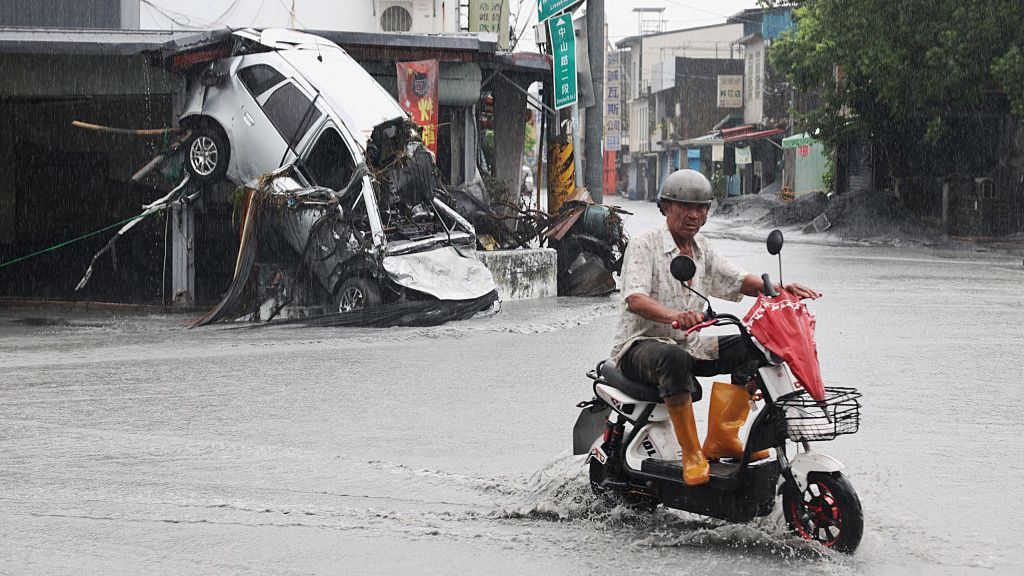
Typhoon Ragasa, one of the most powerful storms of the year, has left a trail of devastation across southern China and Taiwan, claiming lives, displacing millions, and causing widespread destruction. The typhoon made landfall on Wednesday in Guangdong province, China, with sustained winds of 144 km/h and gusts reaching up to 241 km/h. Authorities evacuated nearly two million people in anticipation of the storm’s arrival, which has been described as the ‘King of Storms’ by the China Meteorological Administration.
In Taiwan, the impact of Ragasa has been particularly severe. A barrier lake burst in Hualien County, triggering catastrophic flooding that killed at least 17 people and left many others missing. Premier Cho Jung-Tai has called for an investigation into the evacuation process, emphasizing the need to understand why orders were not effectively executed. The flooding, likened to a ‘tsunami from the mountains,’ released an estimated 15.4 million tonnes of water, washing away bridges, submerging vehicles, and trapping residents in their homes.
Hong Kong also felt the storm’s fury, with 90 people injured as Ragasa skirted the coastline. The Hong Kong Observatory issued its highest-level warning, grounding flights and shutting down schools and businesses. Earlier in the week, the typhoon wreaked havoc in the Philippines, leaving towns flooded, thousands displaced, and at least eight dead.
As Ragasa moves westward over land, wind speeds are expected to weaken, but torrential rain and slow-moving storms will continue to pose significant risks. Southern Chinese cities like Zhuhai, Shenzhen, and Guangzhou are bracing for seawater intrusion, while red alerts for landslides have been issued in Guangdong’s mountainous regions. Rescue efforts are ongoing in both China and Taiwan, with governments mobilizing resources to assist affected communities.
-

Ukraine in maps: Tracking the war with Russia
The ongoing conflict in Ukraine, now in its fourth year, has seen significant developments as Russian forces continue to expand their territorial control, particularly in the eastern regions of Luhansk and Donetsk. Despite fierce Ukrainian resistance, Moscow’s military has made incremental gains, bolstered by increased use of unmanned aerial vehicles (drones) to reduce casualties. The strategic ‘fortress belt’ in western Donetsk, a heavily fortified defensive line, remains a critical stronghold for Ukraine, though analysts predict it could take years for Russia to achieve its objectives in the region.
-
Howling winds and sheets of rain: Inside Chinese city battered by Typhoon Ragasa
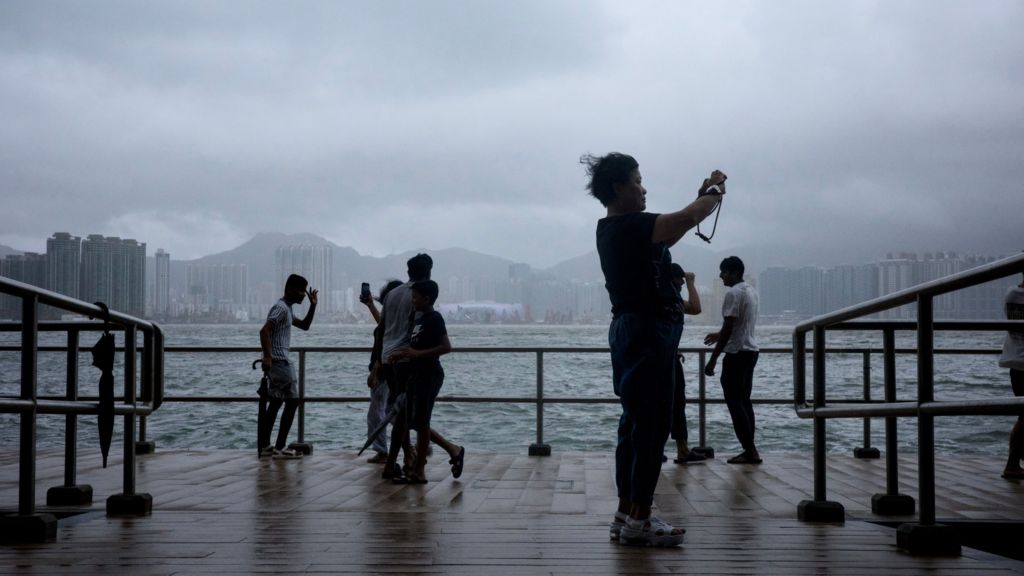
Southern China, particularly the coastal city of Zhuhai, has been brought to a standstill as Typhoon Ragasa, dubbed the ‘king of storms,’ made landfall with ferocious winds and torrential rains. The typhoon, the most intense the world has witnessed this year, swept through the South China Sea after wreaking havoc in the Philippines and Taiwan, where it claimed at least 15 lives due to a mountain lake bursting its banks. In Zhuhai, a city of nearly three million, the usual hustle and bustle of rush hour was replaced by the eerie silence of evacuated streets, punctuated only by the howling winds and the occasional determined cyclist braving the storm. Police vehicles patrolled the streets, urging residents to stay indoors, though their warnings were often drowned out by the 100mph (160km/h) gusts. The storm, which made landfall at 17:00 local time, had already forced the evacuation of nearly two million people in Guangdong province, with officials issuing a red alert for high tides and coastal surges. The city’s tall buildings bore the brunt of the storm, with rain lashing against windows and winds making it nearly impossible to stand upright. Evacuation centers across the city housed families who had fled their homes, their children finding solace in the unexpected day off school. Despite the severity of the storm, there was no panic, only a sense of resignation among the locals, who are no strangers to typhoons. Authorities, keen to avoid criticism from past natural disasters, had issued warnings days in advance, urging residents to prepare for a ‘catastrophic disaster.’ This year has been marked by extreme weather events in China, from heatwaves to floods, and Typhoon Ragasa is yet another test of the country’s disaster preparedness. With alerts for heavy rain and landslides still in place, the storm’s impact is far from over.
-
Typhoon bursts Taiwan lake as strongest storm barrels towards China
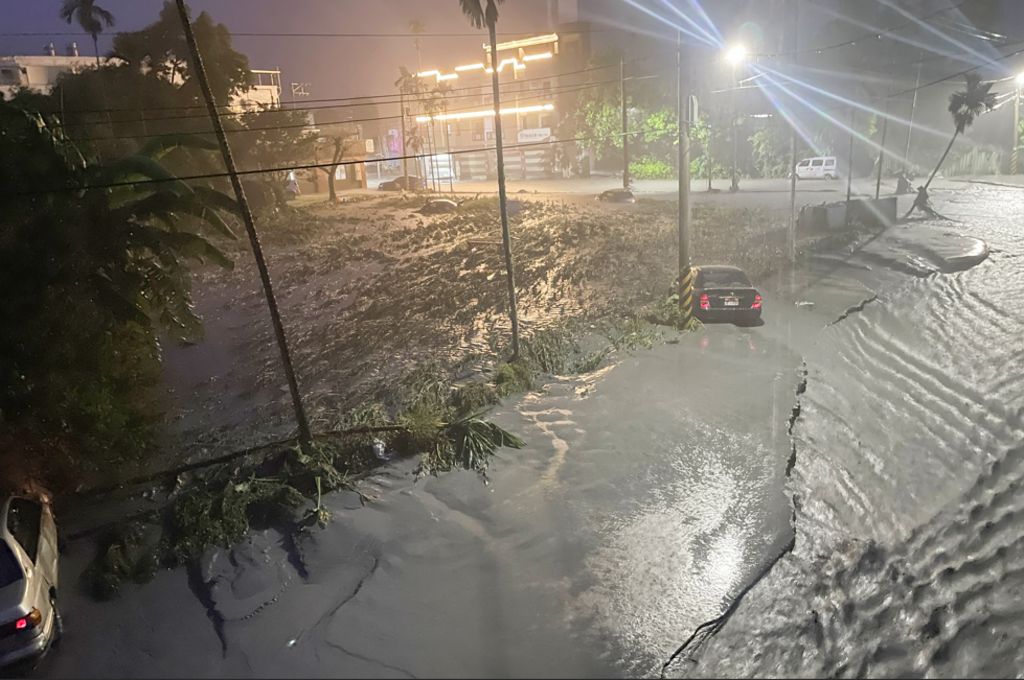
Super Typhoon Ragasa, the most powerful storm of 2025, has wreaked havoc across Taiwan and is now poised to strike southern China, prompting mass evacuations and widespread disruptions. In eastern Taiwan, the typhoon caused a mountain lake to burst its banks, leading to catastrophic flooding in Hualien County. At least 14 people have died, while 263 others remain trapped or missing. Rescuers are working tirelessly to reach affected areas, but the situation remains dire. The typhoon, equivalent to a Category 5 hurricane, has already unleashed wind gusts of up to 285 km/h (177 mph) and triggered severe flooding, landslides, and storm surges. In Hualien, a bridge was destroyed, trees uprooted, and cars submerged as floodwaters surged through the region. Deputy Chief of Hualien County Fire Department, Lee Lung-sheng, described water levels rising as high as the second floor of buildings in some areas. Meanwhile, Taiwan has recorded nearly 60 cm (24 inches) of rainfall in its eastern regions, with ferry services suspended and over 100 international flights canceled. As Ragasa approaches China’s Guangdong province, authorities have evacuated 370,000 people and issued warnings of a ‘catastrophic’ storm surge of up to five meters. Hong Kong has raised its typhoon warning to the maximum level 10, with supermarkets stripped bare as residents prepare for the storm’s impact. Hong Kong International Airport anticipates significant flight disruptions, with over 500 Cathay Pacific flights canceled. The typhoon, dubbed the ‘King of Storms’ by China’s meteorological agency, is expected to move towards northern Vietnam, potentially affecting millions. In the Philippines, Ragasa has already claimed one life and forced the evacuation of thousands. Experts warn that climate change is intensifying tropical storms, leading to higher wind speeds, heavier rainfall, and increased coastal flooding risks. As Ragasa continues its destructive path, the region braces for further devastation.
-
UN General Assembly 2025: Which Middle East leaders are speaking and when?
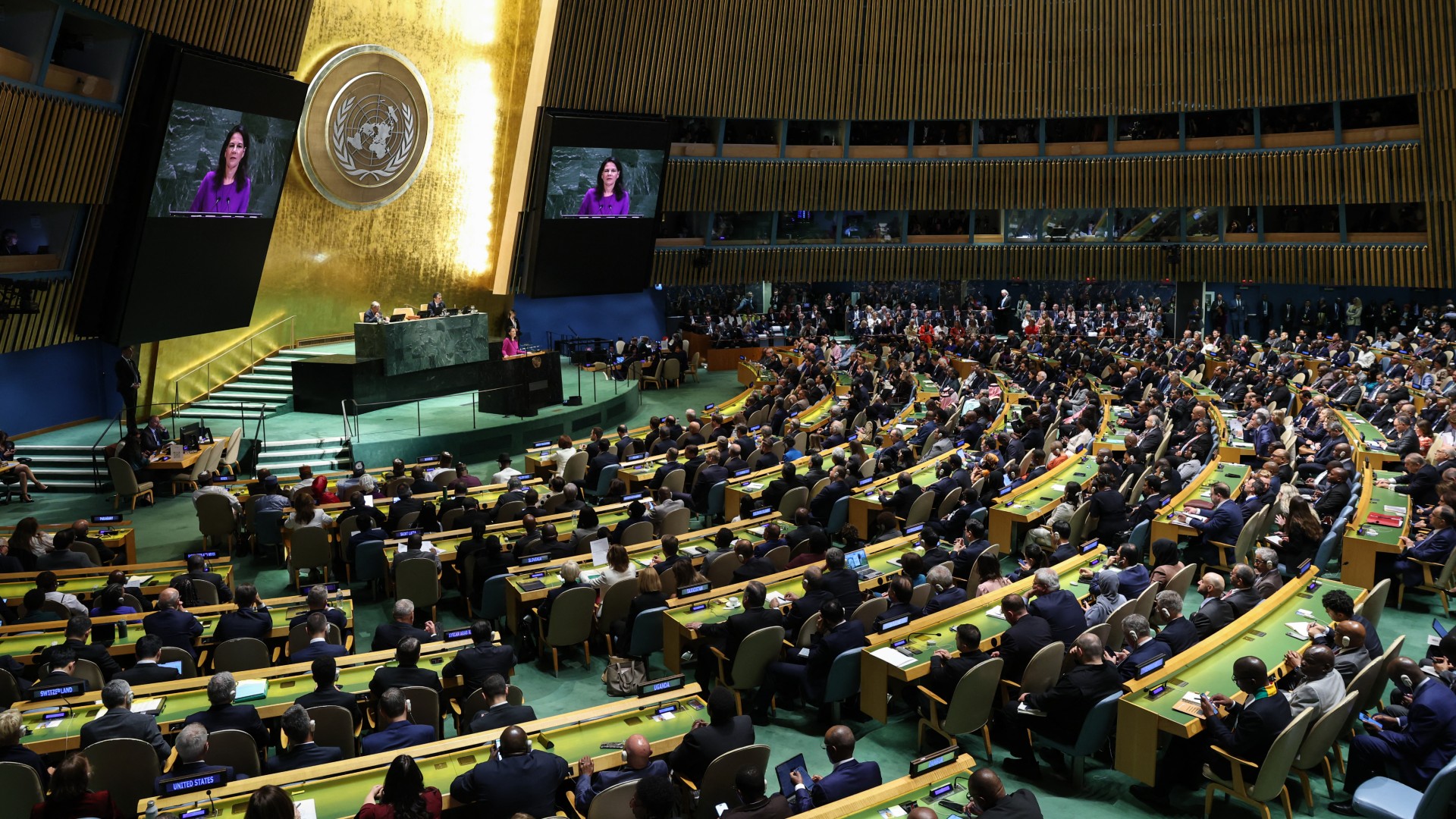
This week, New York City becomes the epicenter of global diplomacy as world leaders assemble for the 80th United Nations General Assembly (UNGA) debate. The gathering, marking eight decades of international collaboration, unfolds against a backdrop of escalating global conflicts and internal financial struggles within the UN. Over 150 heads of state and government are set to address the assembly, with Middle Eastern leaders expected to spotlight Israel’s actions in Gaza and its regional confrontations. The event, renowned for attracting political heavyweights, kicked off with US President Donald Trump articulating his global vision and critiquing the perceived decline of international institutions. Turkish President Recep Tayyip Erdogan, alongside leaders from Jordan and Qatar, also took the stage. The UNGA, a cornerstone of the UN, oversees critical functions such as admitting new members, selecting non-permanent Security Council members, and contributing to the election of the UN Secretary-General. It also grants observer status to entities like Palestine and the European Union. This year’s theme, ‘Better together: 80 years and more for peace, development and human rights,’ may be overshadowed by national agendas, particularly from Middle Eastern leaders. The assembly’s schedule, running from 9am to 9pm EST, is packed with speeches, though adherence to the 15-minute limit is often lax, a tradition famously exemplified by Fidel Castro’s four-hour address in 1960. The event’s dynamic nature means the speaking order is subject to change, with leaders from across the globe, including Indonesia, South Africa, France, and China, slated to contribute their perspectives. The UNGA continues to serve as a vital platform for addressing pressing global issues, despite the challenges it faces.
-

More than 80 buffaloes drown in Namibia after falling off cliff
In a tragic wildlife incident, more than 80 buffaloes lost their lives after stampeding and drowning in the Chobe River, according to Namibia’s environment and tourism department. The calamity unfolded when the buffaloes, being pursued by lions from neighboring Botswana, plunged off a steep cliff into the river on the Namibian side of the border. This is not an isolated event; similar incidents have claimed the lives of hundreds of buffaloes in the past. Notably, around 400 buffaloes died in 2018 under comparable circumstances in the same river, which flows through Botswana’s renowned Chobe National Park, a hotspot for elephants, buffaloes, and giraffes. Mbeha Tadeus, an official from Namibia’s Kabulabula Conservancy, explained that buffaloes often flee into Namibia when chased by lions, leading to chaotic stampedes. Ndeshipanda Hamunyela, a spokesperson for Namibia’s Environment, Forestry and Tourism Ministry, confirmed the buffaloes originated from Botswana but could not specify if they were from Chobe National Park. The carcasses are being distributed to local communities, as seen in a video shared by Namibia’s public broadcaster, NBC, which reported the incident occurred around 05:00 local time (07:00 GMT).
-

Eswatini says it has repatriated US deportee to Jamaica
Eswatini, Africa’s last absolute monarchy, has come under scrutiny following the deportation of a Jamaican man under former U.S. President Donald Trump’s stringent immigration policies. Orville Isaac Etoria, 62, who had lived in the U.S. for decades as a lawful permanent resident, was deported to Eswatini in July alongside four other individuals from Cuba, Laos, Vietnam, and Yemen. The U.S. government labeled them as ‘depraved monsters.’ After being held in solitary confinement in a maximum-security prison in Mbabane, Etoria was voluntarily repatriated to Jamaica over the weekend and was warmly received by his family. However, his treatment has drawn condemnation from the Legal Aid Society of New York, which highlighted his reintegration into American society after serving a 25-year prison sentence for murder. Activists in Eswatini have denounced the deportation deal as ‘unconstitutional,’ staging protests outside the U.S. embassy. Rights groups have initiated legal action, arguing that the government lacked parliamentary approval for the agreement. Eswatini, formerly known as Swaziland, is a small, landlocked nation bordered by South Africa and Mozambique, ruled by King Mswati III since 1986. The case underscores the controversial nature of Trump’s mass deportation policies, which often sent individuals to countries with no personal ties.