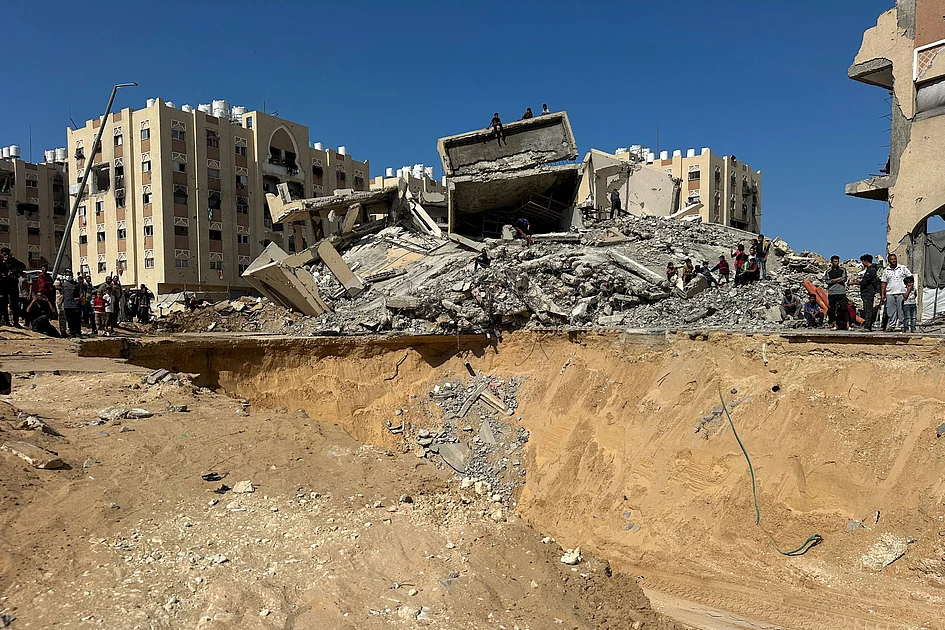
The Israeli military reportedly launched an attack on Gaza on Sunday, October 19, 2025, escalating tensions in the region. This development comes as Israel and the Palestinian group Hamas continue to exchange accusations over breaches of a US-brokered ceasefire agreement intended to bring an end to the ongoing conflict in the enclave. Israeli media outlets were the first to report the incident, though the military has yet to issue an official statement regarding the alleged strike. The attack underscores the fragility of the ceasefire and raises concerns about the potential for further violence in the already volatile region. The international community is closely monitoring the situation, with many calling for restraint and a return to diplomatic efforts to de-escalate the crisis.
分类: world
-
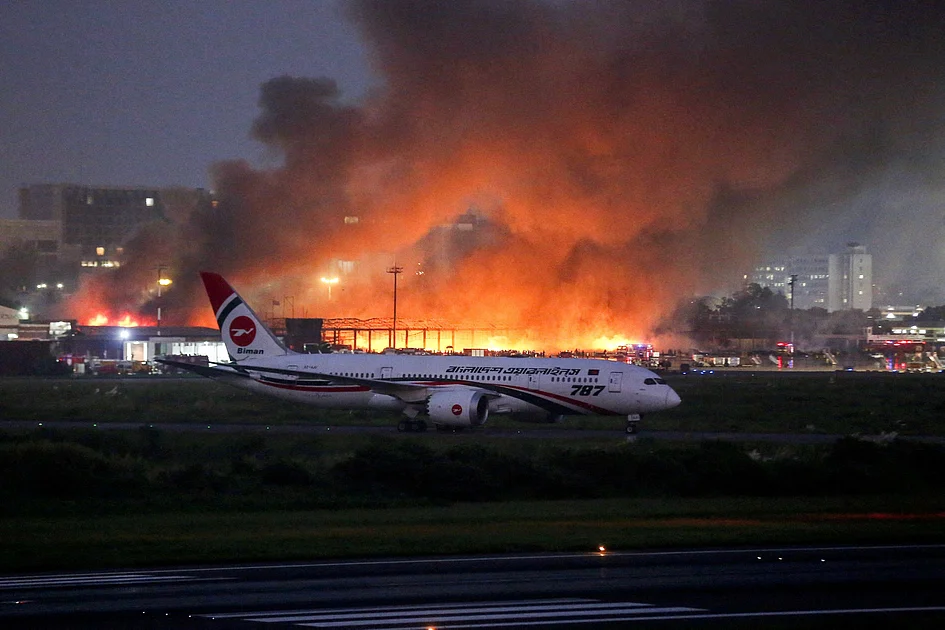
Bangladesh probes cause of massive international airport fire
Bangladesh has launched a comprehensive investigation into a devastating fire that ravaged the cargo complex of Hazrat Shahjalal International Airport, the country’s primary aviation hub. The inferno, which broke out late Saturday, left the facility—housing fabrics, garment accessories, pharmaceuticals, chemicals, and other imports—in ruins. Firefighters, deploying 37 units, managed to control the blaze after hours of intense efforts, allowing flight operations to resume. However, the damage has sparked significant concerns over trade disruptions and financial losses, particularly for Bangladesh’s garment industry, which accounts for 80% of its exports. The National Board of Revenue (NBR) has begun assessing the extent of the damage, with business groups estimating losses in the millions of dollars. The fire also injured four individuals, though their conditions are reported as minor. Authorities have not yet determined the cause of the fire but are investigating potential arson, especially in light of recent major fires in Chittagong and Dhaka. The government has vowed a ‘swift and resolute response’ to any acts of sabotage, urging calm amidst growing public concern. This incident occurs against a backdrop of political instability following the ousting of Prime Minister Sheikh Hasina in August 2024, with elections scheduled for February 2026. The government emphasized unity and determination in addressing potential threats to the nation’s democracy.
-
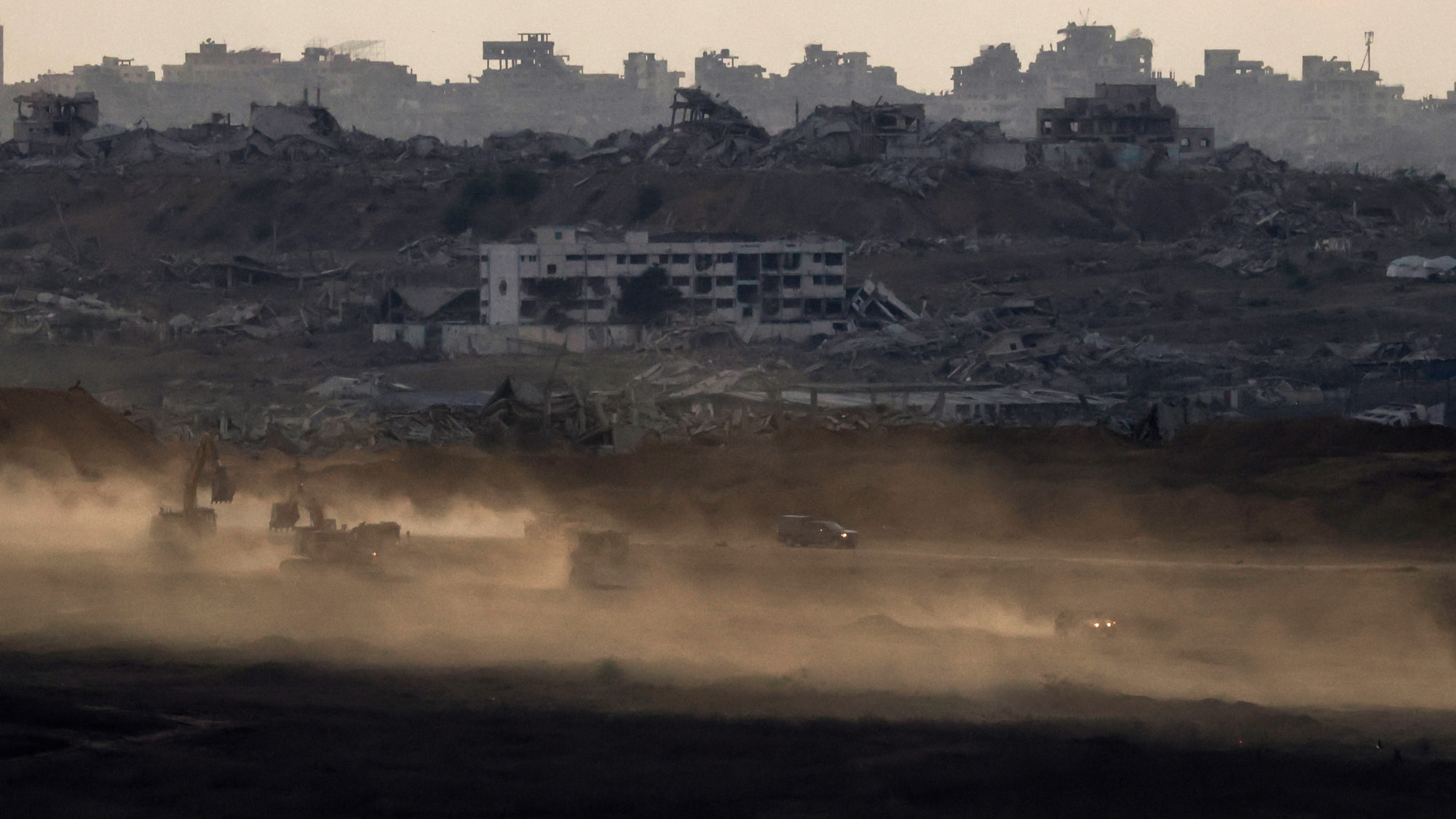
Israel bombs Rafah amid reported Hamas raid on Abu Shabab gang
Israeli fighter jets conducted airstrikes on Rafah in the southern Gaza Strip on Sunday, marking another reported breach of the ceasefire agreement. According to Israel’s Channel 12, the strikes aimed to protect members of the Yasser Abu Shabab militia, an Israeli-backed group accused of looting humanitarian aid and targeting Palestinian civilians during Israel’s prolonged conflict in Gaza. Palestinian media outlet Quds Network cited an unnamed source claiming that a Hamas-led security unit had targeted a hideout linked to Abu Shabab east of Rafah. Middle East Eye could not independently verify these reports. Yasser Abu Shabab, a convicted drug trafficker, has led an Israeli-armed militia in Gaza for over a year, operating under Israeli military protection in southern Rafah. An Israeli military official told Reuters that Hamas fighters had launched ‘multiple attacks’ against Israeli troops during the incident, labeling it a ‘blatant violation’ of the ceasefire. The attacks allegedly involved rocket-propelled grenades and sniper fire beyond the ‘Yellow Line,’ a demarcation within Gaza where Israeli forces are stationed. Hamas did not immediately comment on the incident, but Izzat al-Risheq, a member of the group’s Political Bureau, reiterated Hamas’s commitment to the ceasefire, accusing Israel of fabricating pretexts to justify its actions. Meanwhile, Israeli airstrikes were also reported in Jabalia, northern Gaza, with initial reports of casualties. Since the ceasefire began on October 11, Israeli forces have violated it approximately 50 times, including through artillery shelling, drone strikes, and tank fire, resulting in over 38 Palestinian deaths. Israel has also breached other ceasefire terms, such as restricting humanitarian aid and keeping the Rafah border crossing closed. Following the Rafah incident, Israeli ministers Itamar Ben Gvir and Bezalel Smotrich called for renewed military action, with Smotrich posting ‘War!’ on social media. Prime Minister Benjamin Netanyahu was reportedly assessing the situation to determine Israel’s next steps.
-

Tropical storm Fengshen kills family of five as tree falls on house in Philippines
A devastating incident unfolded in the Philippines as Tropical Storm Fengshen wreaked havoc across the main island of Luzon, claiming the lives of a family of five. The tragedy occurred when a massive tree toppled onto their home at daybreak in a village near Pitogo, approximately 153 kilometers southeast of Manila. Among the victims were two children, aged two and eleven, who were crushed to death, according to police official Sonny Ombajino. The storm, which intensified with gusts reaching up to 90 kilometers per hour, hovered over Manila Bay on Sunday morning and was expected to impact provinces north of the capital. In response to the escalating threat, at least 47,000 residents from southeast Luzon have evacuated to government-designated shelters since Saturday. Local disaster officials have issued warnings of potential coastal flooding and landslides, urging residents to remain vigilant. The Philippines, a nation frequently battered by around 20 storms and typhoons annually, faces heightened risks due to widespread poverty and the increasing intensity of storms linked to climate change. This calamity follows a series of major earthquakes that have already claimed 87 lives over the past three weeks, compounding the country’s ongoing struggles with natural disasters.
-

Gaza-Egypt border crossing will remain closed, says Israel PM Netanyahu
Israeli Prime Minister Benjamin Netanyahu declared on Saturday that the Rafah border crossing between Gaza and Egypt will remain closed indefinitely. The reopening, he stated, hinges on Hamas returning the bodies of deceased hostages. This announcement followed a conflicting statement from the Palestinian embassy in Egypt, which had earlier indicated that the crossing would reopen on Monday for entry into Gaza. Hamas swiftly condemned Netanyahu’s decision, labeling it a “blatant violation” of the ceasefire agreement and a breach of commitments made to mediators. The group also warned that the continued closure would hinder the entry of essential equipment needed to locate and recover more hostage remains buried under rubble, further delaying the process. Earlier on Saturday, Hamas confirmed it would hand over two additional hostage bodies, bringing the total to 12 out of 28 bodies returned under a U.S.-brokered ceasefire and hostage deal agreed upon last week. The dispute over the return of bodies underscores the fragility of the ceasefire and poses a significant risk to the broader agreement, which includes President Donald Trump’s 20-point plan to end the conflict. As part of the deal, Hamas released all 20 living Israeli hostages in exchange for nearly 2,000 Palestinians detained in Israeli prisons. However, Israel has criticized Hamas for the slow pace of returning deceased hostages’ bodies, citing the challenges of locating remains amid Gaza’s widespread destruction. The agreement also stipulates that Israel return 360 bodies of Palestinian militants for each Israeli body received, with 15 bodies handed over so far. The Rafah crossing has been largely closed since May 2024, and the ceasefire deal includes provisions to increase aid into Gaza, where hundreds of thousands face famine. Despite recent aid increases, the UN World Food Programme reports that the current levels remain insufficient. Key issues in Trump’s plan, including Hamas’s disarmament, Gaza’s governance, and the creation of a Palestinian state, remain unresolved, highlighting the formidable obstacles to achieving lasting peace.
-
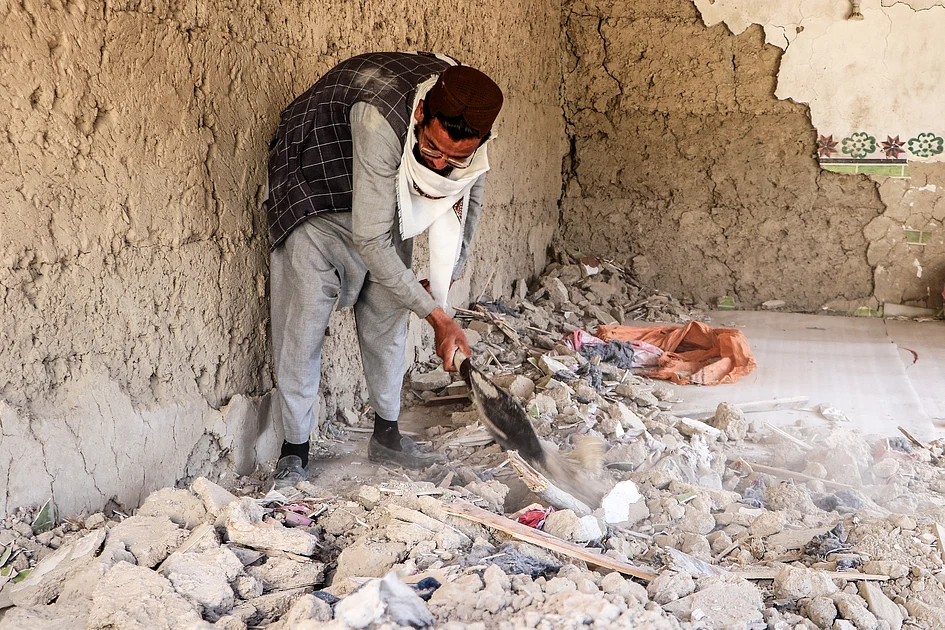
Pakistan, Afghanistan agree to ‘immediate ceasefire’ in Qatar talks
In a significant diplomatic breakthrough, Pakistan and Afghanistan have agreed to an immediate ceasefire following high-stakes talks mediated by Qatar and Turkey in Doha. The agreement, announced early Sunday by Qatar’s foreign ministry, comes after a week of escalating cross-border violence that claimed dozens of lives on both sides. The clashes began on October 11, shortly after explosions rocked Kabul during a visit by the Taliban’s foreign minister to India, Pakistan’s regional rival. Pakistan accused Afghanistan of sheltering militant groups, including the Tehreek-e-Taliban Pakistan (TTP), while Kabul denied these allegations. The ceasefire aims to halt the bloodshed and establish mechanisms for lasting peace and stability. Both nations have committed to follow-up meetings to ensure the ceasefire’s sustainability and verify its implementation. Pakistan’s Defence Minister Khawaja Asif confirmed the agreement and announced that the next round of talks will take place in Istanbul on October 25. He emphasized that terrorism originating from Afghan soil would cease, and both countries would respect each other’s sovereignty. The Afghan delegation, led by defence chief Mohammad Yaqoob, and Pakistan’s delegation, including intelligence chief General Asim Malik, participated in the talks. Despite the agreement, local officials in Afghanistan’s Paktika province reported that 10 civilians, including two children, were killed in Pakistani air strikes prior to the ceasefire. While the situation has begun to normalize, lingering fears of renewed violence remain among the affected populations.
-
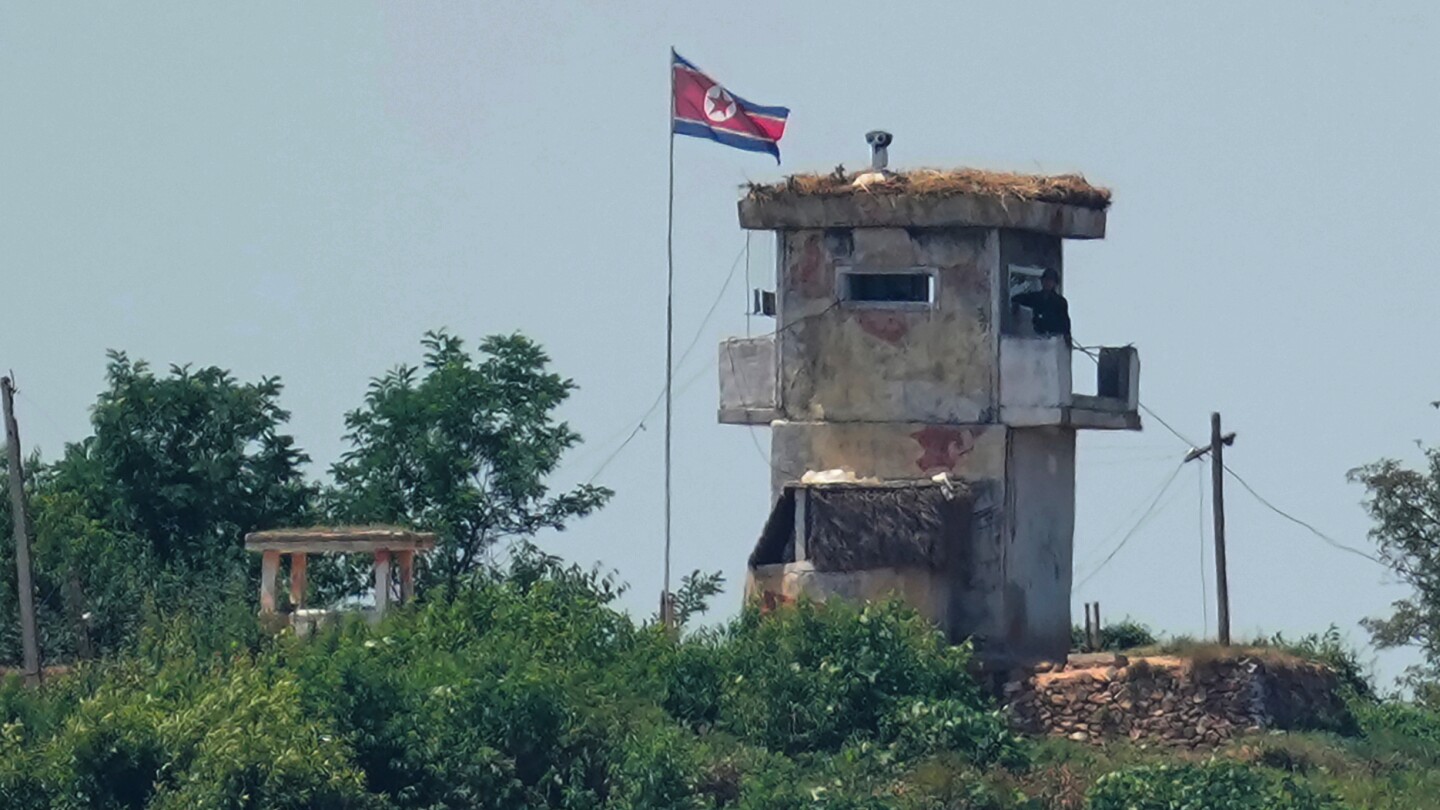
North Korean soldier defects to South Korea across the rivals’ heavily fortified border
In a rare event, a North Korean soldier defected to South Korea by crossing the heavily fortified border on Sunday, according to South Korea’s military. The Joint Chiefs of Staff confirmed that the soldier, who traversed the central portion of the Demilitarized Zone (DMZ), expressed a strong desire to resettle in South Korea. This marks the first reported defection via the land border since August 2024, when a North Korean staff sergeant fled through the eastern section. Despite these incidents, defections across the DMZ remain uncommon due to its extreme security measures, including land mines, tank traps, barbed wire fences, and combat troops. In 2017, a similar attempt resulted in North Korean soldiers firing approximately 40 rounds at a fleeing soldier before South Korean forces could rescue him. The vast majority of the 34,000 North Koreans who have defected to South Korea since the Korean War have done so via China, which shares a porous border with North Korea. Relations between the two Koreas remain tense, with North Korea consistently rejecting reconciliation efforts by South Korea’s President Lee Jae Myung, who assumed office in June with a pledge to restore dialogue.
-

Five days to go: Charming Beijing, Shared with the World
With just five days remaining until the grand unveiling, Beijing is poised to captivate the world with its unique charm and cultural richness. The event, titled ‘Charming Beijing, Shared with the World,’ promises to highlight the city’s historical significance, modern innovations, and global influence. As preparations reach their final stages, international attention is increasingly focused on the Chinese capital, which aims to foster deeper cultural exchanges and mutual understanding. The initiative underscores Beijing’s commitment to playing a pivotal role on the global stage, offering a platform for dialogue and collaboration. This event is not just a celebration of Beijing’s heritage but also a testament to its vision of a shared future with the international community.
-

Ukrainian drones strike major Russian gas plant as Trump says Kyiv may have to trade land for peace
In a significant escalation of the ongoing conflict, Ukrainian drones targeted a major gas processing plant in southern Russia, igniting a fire and disrupting operations. The Orenburg plant, operated by Gazprom and located near the Kazakh border, is a critical facility with an annual capacity of 45 billion cubic meters. The attack forced the plant to temporarily halt gas intake from Kazakhstan, according to statements from Russian and Kazakh authorities. Regional Governor Yevgeny Solntsev confirmed that a workshop was set ablaze, causing partial damage. The Kazakh Energy Ministry cited Gazprom’s notification, attributing the disruption to an ’emergency situation following a drone attack.’ Ukraine’s General Staff reported a ‘large-scale fire’ and damage to a gas processing unit, underscoring Kyiv’s strategy of targeting Russian energy infrastructure to weaken Moscow’s war efforts. Meanwhile, Ukrainian prosecutors accused Russia of modifying aerial-guided bombs to strike deeper into Ukrainian territory. The UMPB-5R, a rocket-powered bomb capable of traveling up to 130 kilometers, was reportedly used for the first time in an attack on Lozava, a city 150 kilometers south of Kharkiv. Russian strikes also injured 11 people in the Dnipropetrovsk region, damaging residential buildings and a store. In a separate incident, Ukraine claimed a drone strike hit Russia’s Novokuibyshevsk oil refinery, sparking a fire and damaging refining units. Russian authorities did not immediately confirm the attack but stated that their air defense forces had intercepted 45 Ukrainian drones overnight. Ukraine’s air force, in turn, reported that Russia launched 62 drones into Ukrainian territory, with 40 being neutralized. Amid these developments, U.S. President Donald Trump suggested that Ukraine might need to cede territory to achieve peace, marking a shift in his stance. In a Fox News interview, Trump indicated that Russian President Vladimir Putin would likely retain control of certain areas. Trump’s comments, coupled with his reluctance to commit to supplying Ukraine with Tomahawk missiles, have raised concerns about the U.S. role in the conflict. As both sides prepare for a potential summit between Trump and Putin in Budapest, hopes for a breakthrough remain tempered by the ongoing violence and geopolitical complexities.
-

Germany’s Munich Airport temporarily closed following drone reports, but nothing found
Munich Airport, one of Germany’s busiest aviation hubs, faced a temporary closure on Saturday night following unverified reports of drone sightings. According to federal police, the incident occurred after multiple individuals, including security personnel and airport staff, reported suspicious observations. The sightings took place around 10 p.m. and again at 11 p.m., lasting approximately 30 minutes each time. Despite the disruption, the airport resumed operations before midnight, and air traffic returned to normal by Sunday morning. The impact on flights and passengers was minimal, with only three flights diverted—two of which later landed in Munich—and one departure canceled. Federal police conducted a thorough search but found no drones or suspicious individuals in the vicinity. This incident marks the latest in a series of mysterious drone overflights affecting European Union airspace. Earlier this month, Munich Airport experienced two closures within 24 hours due to similar drone sightings, disrupting thousands of travelers.