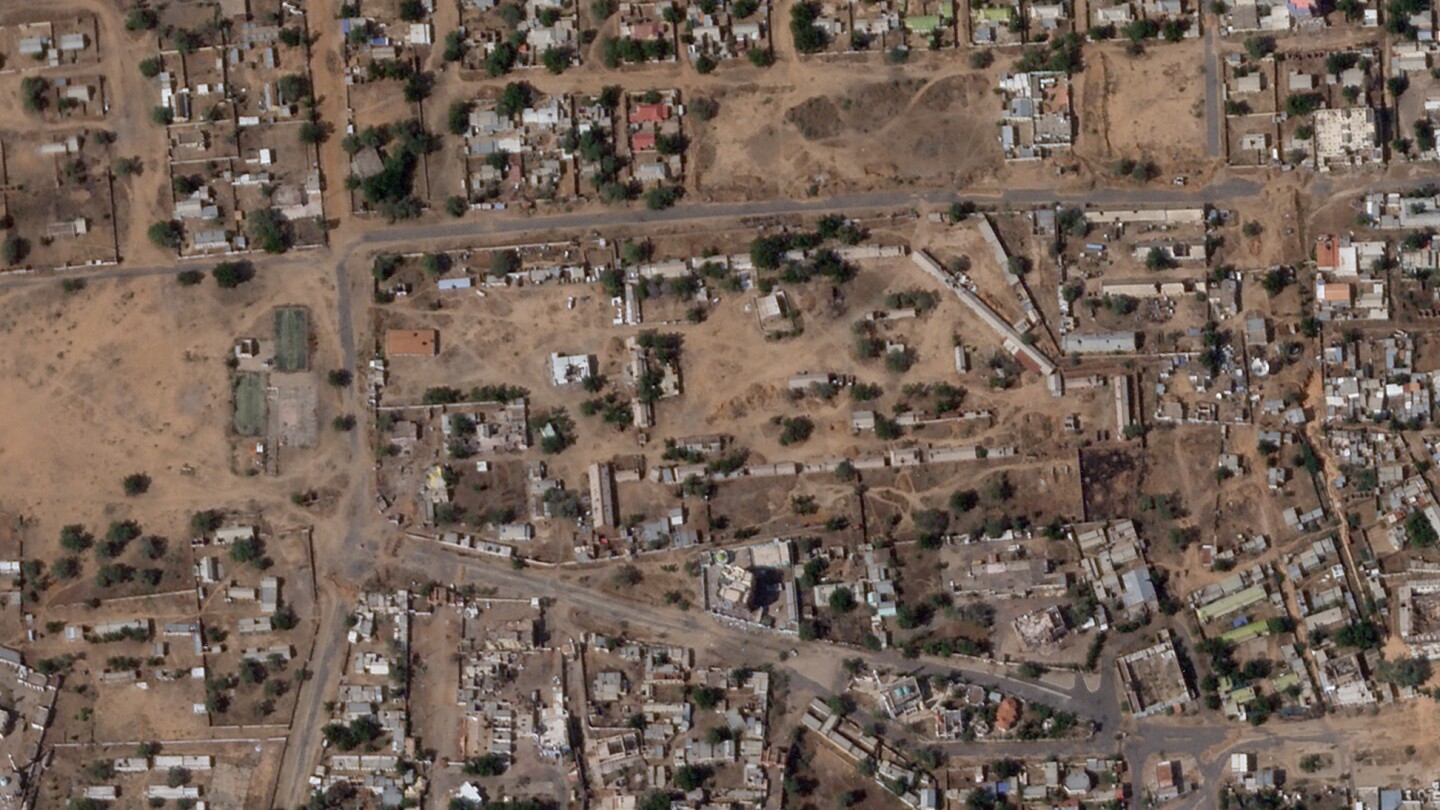
In a significant escalation of Sudan’s ongoing conflict, paramilitary forces known as the Rapid Support Forces (RSF) have captured a crucial military base in el-Fasher, the last stronghold of the Sudanese army in the Darfur region. This development, reported by activists and aid groups on Monday, marks a turning point in the war that has ravaged the country since April 2023. The RSF’s advance has resulted in widespread civilian casualties, destruction of health infrastructure, and the displacement of hundreds of thousands of people. Medical groups reported dozens of deaths, though exact casualty figures remain unclear. El-Fasher, the provincial capital of North Darfur, has been a focal point of the conflict for over a year, with its fall potentially signaling a dangerous new phase in the war. The RSF, which originated from the notorious Janjaweed militias, has been accused of systematic targeting of civilians, arbitrary detentions, and acts amounting to war crimes. Satellite imagery analyzed by The Associated Press and the Humanitarian Research Lab at Yale University confirmed the RSF’s advance and the damage inflicted on the military base. The United Nations has expressed deep alarm over the humanitarian crisis, with hundreds of thousands of civilians trapped in dire conditions. The conflict has already claimed over 40,000 lives and displaced more than 14 million people, creating the world’s worst humanitarian crisis. The International Criminal Court is investigating alleged war crimes and crimes against humanity in the region.
分类: world
-
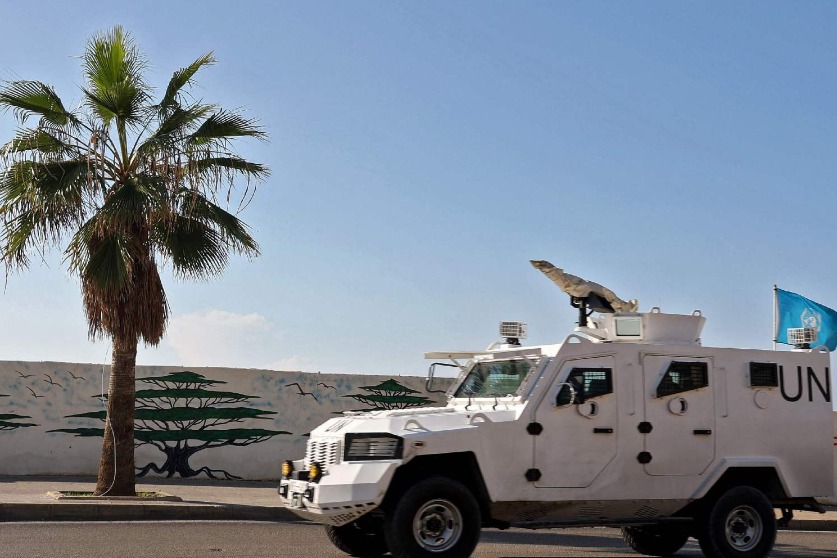
UN peacekeepers in Lebanon come under Israeli fire, no casualties reported
A United Nations peacekeeping patrol in southern Lebanon was targeted by Israeli forces on Sunday, according to a statement from the United Nations Interim Force in Lebanon (UNIFIL). The incident occurred near the village of Kafr Kila, where an Israeli drone dropped a bomb near the patrol at approximately 5:45 pm local time (1545 GMT). Shortly after, an Israeli tank fired in the direction of the peacekeepers. Fortunately, no injuries or damage to UNIFIL personnel or equipment were reported. UNIFIL condemned the actions as violations of UN Security Council Resolution 1701 and Lebanon’s sovereignty, emphasizing that such incidents endanger peacekeepers fulfilling their mandate in the region. This event follows a similar encounter earlier in the day, where an Israeli drone flew aggressively over a patrol, prompting UNIFIL to take defensive measures. Israel has not yet responded to the allegations. Since the outbreak of cross-border clashes following the Gaza war in October 2023, UNIFIL positions have been targeted multiple times. Despite a ceasefire between Israel and Hezbollah, Israel has continued periodic strikes in Lebanon, citing threats from Hezbollah, and has maintained border positions beyond a February 18 withdrawal deadline.
-

UN pleads for safe passage for civilians trapped in war-hit Sudan city
The Sudanese city of el-Fasher has become the epicenter of a deepening humanitarian crisis as paramilitary forces, the Rapid Support Forces (RSF), claim control over the army’s main base in the region. Despite the RSF’s declaration, Sudan’s military has yet to acknowledge the loss of this strategic stronghold, which would mark a significant turning point in the ongoing civil war. El-Fasher, the last remaining army foothold in Darfur, has been under siege by the RSF and its allies for 18 months, with intense fighting erupting since Saturday after the RSF captured the North Darfur governor’s residence. Verified social media footage shows RSF fighters celebrating their alleged victory, though local army allies report that clashes persist in parts of the city. The RSF has been accused of targeting civilians in airstrikes and trapping nearly 250,000 people by encircling the city with an earth wall, leaving many on the brink of starvation. The United Nations has described el-Fasher as an ‘epicenter of suffering,’ with UN humanitarian official Tom Fletcher expressing deep alarm over civilian casualties and the dire conditions faced by those trapped. Fletcher emphasized the urgent need for safe passage and access to aid for civilians, a call echoed by the United States, which is actively seeking to broker a ceasefire. The capture of el-Fasher would represent a crucial comeback for the RSF following their defeat in Khartoum, but it also signals the likelihood of prolonged conflict rather than resolution. Since 2023, Sudan has been engulfed in a devastating power struggle between the RSF and the Sudanese army, resulting in over 150,000 deaths and displacing approximately 12 million people. The army retains control over much of the north and east, while the RSF dominates Darfur and large parts of Kordofan. The RSF has previously expressed ambitions to establish a rival government in el-Fasher, further complicating the path to peace. As the crisis deepens, the international community continues to call for immediate action to alleviate the suffering of civilians caught in the crossfire.
-

Mali shuts schools and universities as jihadist blockade worsens fuel crisis
Mali has been plunged into a deepening crisis as schools and universities across the nation have been forced to suspend operations due to a severe fuel shortage. The disruption stems from a blockade on fuel imports imposed by Islamist insurgents, who have targeted tankers on major highways. Education Minister Amadou Sy Savane announced the suspension on state television, stating that all educational institutions will remain closed until November 9. The decision was made to address the logistical challenges faced by staff and students in commuting amid the fuel scarcity. The government has assured the public that it is working tirelessly to resolve the crisis and resume classes by November 10. The capital, Bamako, has been particularly hard-hit, with long queues forming at petrol stations and the city’s bustling streets now eerily quiet. Mali, a landlocked country, relies entirely on fuel imports from neighboring nations such as Senegal and Ivory Coast, making it vulnerable to such blockades. The military government, led by General Assimi Goïta, has struggled to contain the crisis despite earlier assurances that the fuel shortage was temporary. The situation has escalated to the point where the US Embassy in Bamako has evacuated non-essential diplomatic staff and their families, citing worsening fuel shortages and heightened security concerns. The embassy warned that the fuel disruptions could lead to unpredictable security challenges and have already impacted electricity supplies. Mali’s ongoing instability is rooted in a complex history of insurgency, with Islamist militants gaining control over large swathes of the north and east. The military junta, which seized power in a 2021 coup, initially enjoyed popular support for its promises to address the security crisis. However, the withdrawal of UN peacekeeping forces and French troops has left the government reliant on Russian mercenaries to combat the insurgency, with limited success. The current fuel blockade underscores the persistent threat posed by jihadist groups and the broader challenges facing Mali’s fragile governance.
-
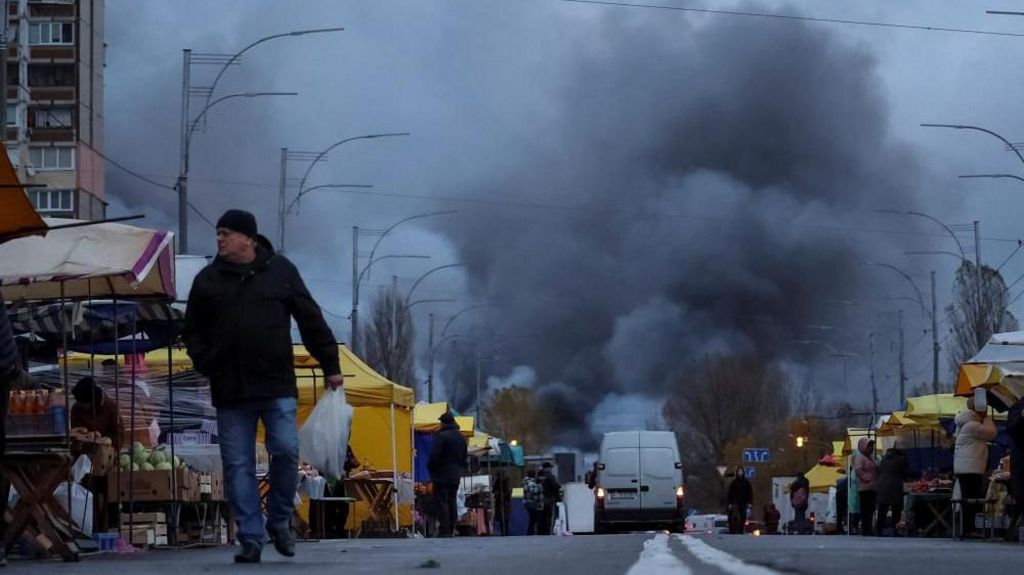
In Russia’s ‘blitz’ of Ukraine, the question of appeasement is back
In the aftermath of yet another week of relentless Russian airstrikes on Ukrainian cities, a poignant image has circulated on Ukrainian social media. The composite photo juxtaposes a black-and-white image of Londoners during the Blitz with a contemporary shot of Kyiv residents shopping at a market, black smoke billowing in the background. The caption, ‘Bombs can’t stop markets,’ underscores the resilience of Ukrainians in the face of adversity. However, beneath this spirit of fortitude lies palpable fear and uncertainty. Halyna, a market vendor, expressed grim pessimism, stating, ‘This war hasn’t even started yet. It will get worse.’ The recent escalation in Russian attacks, targeting civilian infrastructure and causing significant casualties, has intensified the conflict. Ukrainian President Volodymyr Zelensky’s recent diplomatic efforts, including a challenging meeting with U.S. President Donald Trump, have yielded little progress. Trump’s strategy, criticized as ‘weakness through appeasement,’ has further complicated the situation. Meanwhile, European leaders have pledged support for Ukraine, including sanctions and military aid. As the war enters a new phase, the question of whether to fight or negotiate with Russia remains central. The lessons of history, particularly the failures of appeasement, loom large as Ukraine continues to resist Russian aggression.
-

India and China resume direct flights as ties improve
In a significant step toward mending bilateral relations, India and China have resumed direct flights after a prolonged hiatus. The first flight, IndiGo 6E 1703, departed from Kolkata and arrived in Guangzhou on Monday, carrying approximately 180 passengers. This marks a pivotal moment in the ongoing efforts to rebuild ties between the two nations, which had been strained since the suspension of flights during the COVID-19 pandemic in early 2020 and further exacerbated by a deadly border clash in the disputed Himalayan region. The resumption of flights follows a landmark agreement on border patrols reached last year, signaling a gradual normalization of relations. Indian Prime Minister Narendra Modi’s visit to China in August—his first in seven years—and Chinese Foreign Minister Wang Yi’s reciprocal visit to India the same month underscored the diplomatic thaw. The Indian government emphasized that the renewed air connectivity would enhance people-to-people contact and foster bilateral exchanges. Additionally, India has resumed issuing visas for Chinese tourists, further facilitating cross-border interactions. At Kolkata airport, the historic flight was celebrated with traditional brass oil lamps, symbolizing hope for a brighter future in India-China relations. Qin Yong, a senior Chinese consular official, described the occasion as a ‘very important day’ for both countries. Passengers expressed optimism about the logistical benefits and reduced transit times. Looking ahead, China Eastern Airlines plans to launch a Shanghai-Delhi route in November, reinforcing the momentum toward strengthened ties.
-
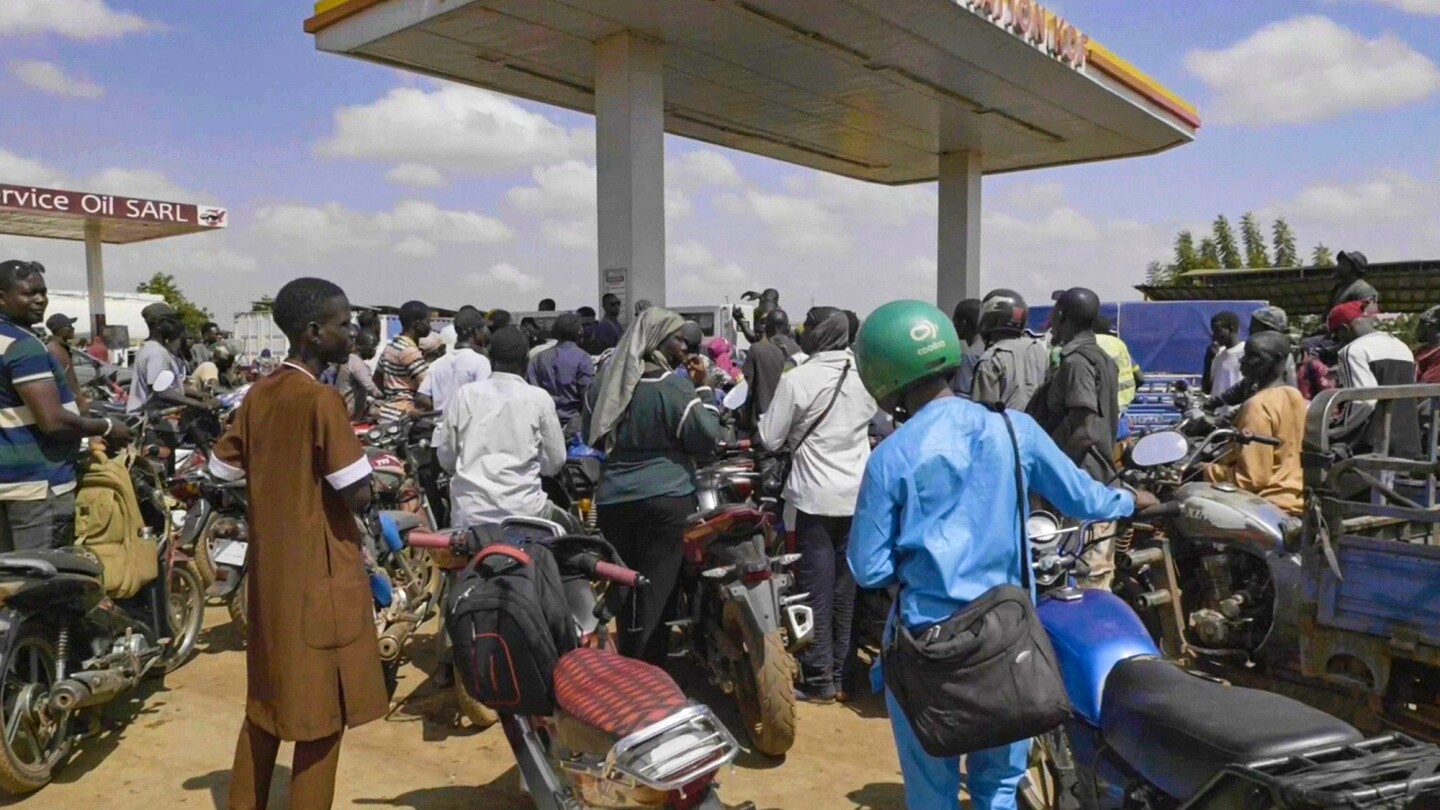
Mali closes schools due to fuel scarcity as militants enforce blockade
Mali has taken the drastic step of closing all schools and universities across the country starting Sunday, as a severe fuel scarcity triggered by a blockade on fuel imports by jihadi militants continues to cripple daily life. Education Minister Amadou Sy Savane announced the suspension of classes for two weeks on state television, citing disruptions in fuel supplies that have severely impacted the mobility of school staff. The blockade, imposed by the al-Qaida-affiliated Jama’at Nusrat al-Islam wal-Muslimin group in early September, has left hundreds of fuel trucks stranded at Mali’s borders, exacerbating the landlocked nation’s already fragile economy. The crisis has led to long queues at gas stations in the capital, Bamako, and driven up the prices of essential commodities and transportation. Mali, along with neighboring Burkina Faso and Niger, has been grappling with an insurgency involving armed groups linked to al-Qaida, the Islamic State, and local rebels. Following military coups in all three nations in recent years, French forces have been expelled, and Russian mercenary units have been enlisted for security assistance, though analysts argue this has done little to improve the situation. The Malian military junta, which seized power in 2020, has attempted to escort fuel trucks from border areas to Bamako, but some convoys have been attacked by militants. The education minister assured that authorities are working tirelessly to restore fuel supplies before schools reopen on November 10.
-

UK’s Prince Andrew under pressure over royal home, titles
Britain’s Prince Andrew is under increasing scrutiny as discussions between him and King Charles III intensify regarding his living arrangements and royal titles. Reports suggest that the King may compel his younger brother to vacate his 30-room residence, Royal Lodge, located within the expansive grounds of Windsor Castle. This development follows renewed public outrage sparked by allegations from Virginia Giuffre, one of Jeffrey Epstein’s primary accusers, who detailed her claims in a recently published memoir. Prince Andrew has consistently denied any wrongdoing but settled a civil sexual assault case with Giuffre in 2022, paying her millions of dollars. Giuffre tragically took her own life in April, while Epstein died in prison in 2019 while awaiting trial on sex-trafficking charges. Adding to the controversy, The Times revealed that Prince Andrew has not paid rent for two decades on Royal Lodge, a mansion owned by the Crown Estate. British media outlets have reported ongoing negotiations between the King and Prince Andrew about his potential relocation. The Sunday Times described the situation as a ‘pincer movement’ from both Parliament and Buckingham Palace to strip him of his Duke of York title and remove him from Windsor. Meanwhile, the Liberal Democrat party is pushing for a parliamentary debate to scrutinize Prince Andrew’s conduct and living arrangements. While such a debate would be unprecedented in modern times, it remains unclear when it might occur or whether it would be binding. The pressure on King Charles and the government to address the issue continues to mount, with Prince William reportedly seeking to move into a nearby residence and urging his uncle to leave beforehand.
-
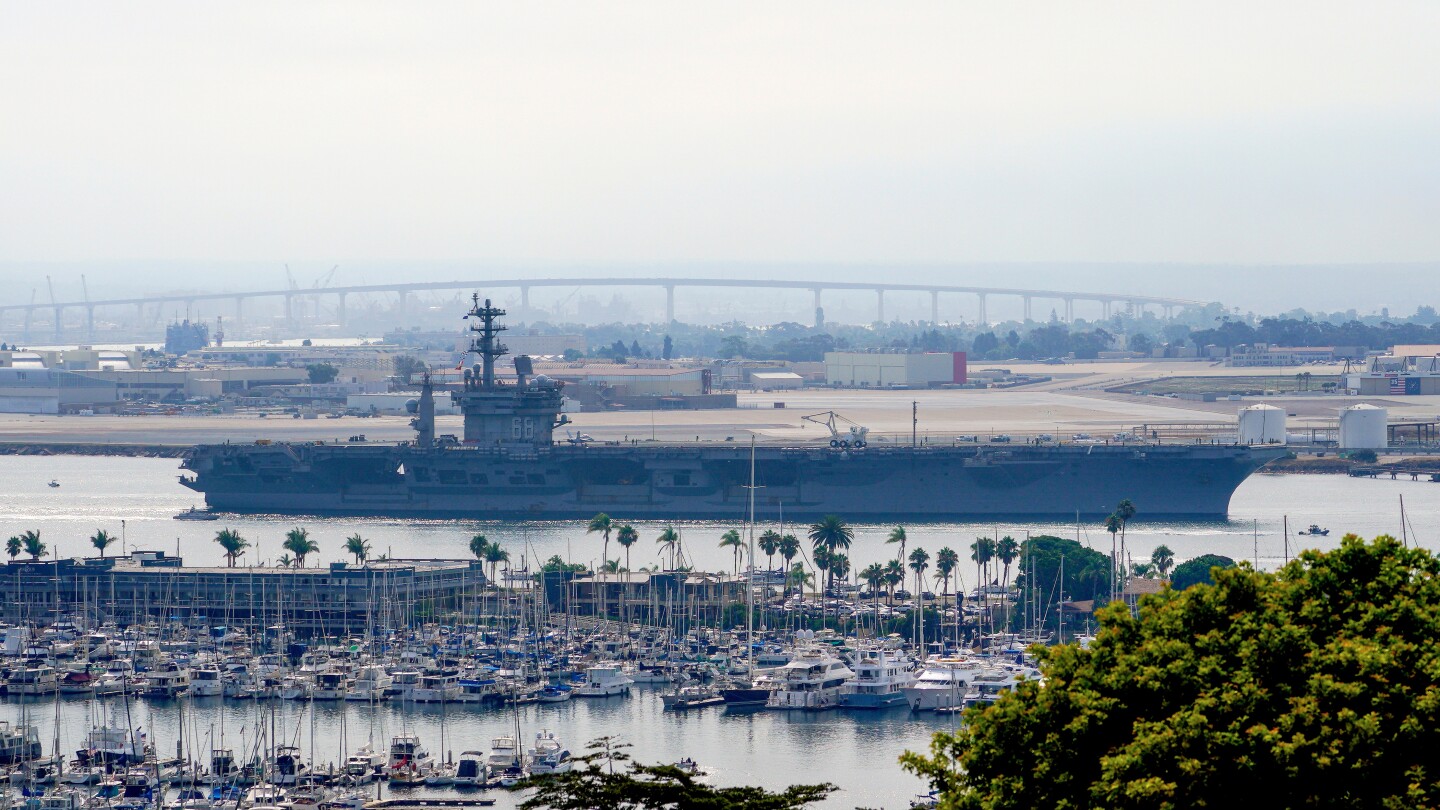
Navy loses two aircraft from USS Nimitz aircraft carrier within 30 minutes
In a concerning sequence of events, two U.S. Navy aircraft operating from the USS Nimitz crashed into the South China Sea within a half-hour span on Sunday afternoon, according to the Navy’s Pacific Fleet. The incidents involved an MH-60R Sea Hawk helicopter and an F/A-18F Super Hornet fighter jet. Fortunately, all five crew members—three from the helicopter and two from the jet—were rescued and reported to be in stable condition. The causes of the crashes remain under investigation. The USS Nimitz, which had been deployed to the Middle East for much of the summer as part of U.S. efforts to counter Houthi rebel attacks on commercial shipping, is now en route to its home port at Naval Base Kitsap in Washington state. This marks the carrier’s final deployment before its scheduled decommissioning. The crashes add to a series of recent mishaps involving U.S. Navy aircraft in the region. In December, an F/A-18 jet from the USS Harry S. Truman was mistakenly shot down by the guided-missile cruiser USS Gettysburg. In April, another F/A-18 slipped off the Truman’s hangar deck and fell into the Red Sea. In May, an F/A-18 attempting to land on the Truman went overboard after failing to catch the arresting cables, forcing its pilots to eject. While no fatalities occurred in these incidents, investigations into their causes are still pending.
-
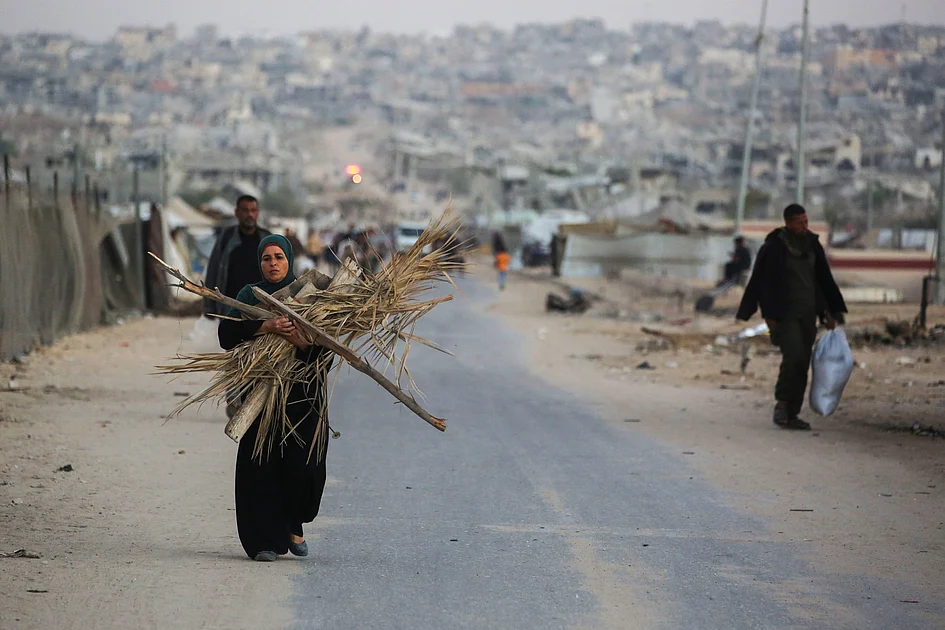
In Gaza’s ruins, a grandmother keeps family and hope alive
In the shattered remains of Gaza City, 62-year-old Hiam Muqdad embodies resilience as she navigates the daily struggles of survival with her grandchildren. The once-vibrant neighborhood of Al Nasr now lies in ruins, a stark reminder of the two-year war between Israel and Hamas that has left 68,519 dead and displaced most of Gaza’s population. Muqdad, who lost her home and relatives, now lives in a makeshift tent amidst the rubble, determined to keep her family alive. Each morning, she ventures out with her grandchildren to search for water and scraps to make fire, a stark contrast to the carefree childhoods they once knew. ‘Children no longer dream of school or play; they dream of finding food and water,’ Muqdad lamented. Despite the devastation, she clings to hope, striving to ‘bring life back even a little.’ The ceasefire brokered by the US in October 2025 has brought a fragile calm, but the humanitarian crisis persists. The World Health Organization reports little improvement in aid delivery, and Gaza remains buried under 61 million tonnes of debris. Muqdad’s story is a testament to the enduring spirit of Gaza’s people, even as they face unimaginable hardship.