分类: world

  • Sudan peace talks resume in Cairo as war nears 3-year mark

    Sudan peace talks resume in Cairo as war nears 3-year mark

    Diplomatic efforts to resolve Sudan’s devastating conflict resumed in Cairo on Wednesday, with Egyptian officials joining United Nations and United States representatives in pushing for an immediate nationwide humanitarian truce. The talks come as the brutal war between the Sudanese army and the paramilitary Rapid Support Forces (RSF) approaches its third year, creating one of the world’s most severe humanitarian catastrophes.

    Egyptian Foreign Minister Badr Abdelatty delivered a forceful statement during a joint press conference with Ramtane Lamamra, the UN Secretary-General’s personal envoy for Sudan. Abdelatty declared Egypt’s unwavering position regarding Sudan’s territorial integrity, stating: “Egypt wouldn’t accept the collapse of Sudan or its institutions, or any attempt to undermine its unity or divide its territory.” He characterized these scenarios as “red lines” that Egypt would actively prevent through necessary measures.

    The diplomat drew a clear distinction between legitimate state institutions and armed militias, asserting: “There is absolutely no room for recognizing parallel entities or any militias. Under no circumstances can we equate Sudanese state institutions, including the Sudanese army, with any other militias.”

    Despite previous failed negotiation attempts, participants expressed cautious optimism. Lamamra noted that this fifth meeting of the Consultative Mechanism demonstrated that diplomacy remains a viable pathway toward peace. The discussions revealed regional consensus on securing an immediate humanitarian truce that would include specific troop withdrawals and establishment of safe humanitarian corridors.

    In a significant development, American-led negotiations facilitated the delivery of over 1.3 metric tons of humanitarian supplies to el-Fasher, the capital of North Darfur, on Wednesday. This marked the first such delivery since the city was besieged 18 months ago. Massad Boulos, the U.S. senior adviser for Arab and African Affairs, announced on social media platform X that the U.S. would continue pressing for nationwide truce while supporting mechanisms for unhindered aid delivery to famine-stricken regions.

    The humanitarian situation remains dire amid ongoing violence. Recent reports indicate at least 19 civilians killed during ground operations in Jarjira, North Darfur, on Monday, with additional casualties from drone attacks in Sinja, Sennar province. The Sudan Doctors Network accused the RSF of deliberately targeting civilians in what they described as “a full-fledged war crime.” According to the International Organization for Migration, recent violence has displaced over 8,000 people from North Darfur villages, with many fleeing to Chad.

    The United States has formally accused the RSF of committing genocide in Darfur, while rights groups have documented widespread atrocities by both sides. The so-called Quad mediators—Saudi Arabia, Egypt, the United Arab Emirates, and the United States—have proposed a humanitarian truce that both warring parties reportedly agreed to, yet combat operations continue unabated throughout the country.

  • US pulling some personnel from Qatar air base, official tells CBS

    US pulling some personnel from Qatar air base, official tells CBS

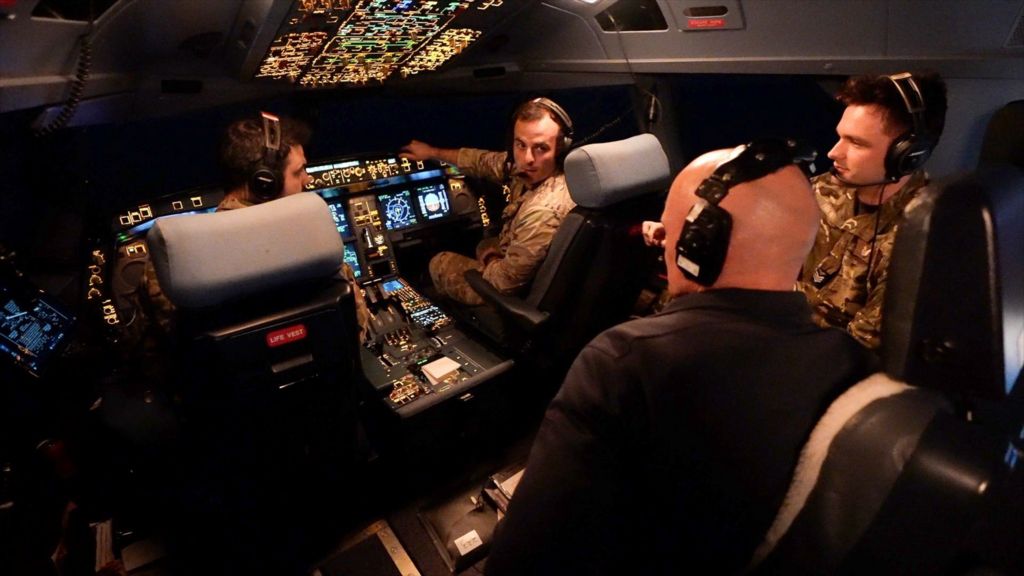
    The United States has initiated a partial reduction of military personnel at its strategic Al-Udeid Air Base in Qatar, a move characterized by officials as a precautionary measure against escalating regional tensions. This development follows heightened rhetoric between Washington and Tehran regarding Iran’s internal crackdown on anti-government protesters.

    Qatar’s government confirmed the troop repositioning in an official statement, noting the measures were being implemented “in response to the current regional tensions.” The Al-Udeid facility, spanning 24 hectares in the desert outside Doha, represents the largest U.S. military installation in the Middle East and serves as the headquarters for all American air operations in the region, typically housing approximately 10,000 personnel alongside rotating UK military forces.

    The current tensions stem from President Donald Trump’s warning that Iran would face “very strong action” if authorities execute detained protesters. Trump amplified this threat on his Truth Social platform, stating Iranian leaders would “pay a big price” for the killings and encouraging continued demonstrations. Iranian officials have responded with counter-threats, with a senior adviser to Supreme Leader Ayatollah Ali Khamenei reminding Washington of Tehran’s demonstrated capability to respond to attacks, referencing Iran’s missile strike on Al-Udeid in June which was conducted in retaliation for U.S. strikes against Iranian nuclear sites.

    According to human rights organizations, the Iranian government’s crackdown on protests has resulted in significant casualties, with the U.S.-based Human Rights Activists News Agency (HRANA) documenting 2,403 protester fatalities, including 12 children, alongside over 18,434 arrests despite widespread internet restrictions. The protests initially erupted in response to economic collapse and soaring living costs but rapidly evolved into demands for political reform, presenting the most serious challenge to Iran’s clerical establishment since the 1979 revolution.

    While Reuters reports no immediate signs of large-scale troop movements resembling those preceding June’s Iranian strike, the U.S. Mission to Saudi Arabia has advised personnel and citizens to exercise increased caution and limit non-essential travel to military installations throughout the region. Iranian officials have accused the United States of attempting to “manufacture a pretext for military intervention,” with Parliament Speaker Mohammad Bagher Ghalibaf warning that both Israeli and U.S. military and shipping centers would become legitimate targets if attacked.

  • France bans 10 British ‘far-right activists’ over anti-migrant activity

    France bans 10 British ‘far-right activists’ over anti-migrant activity

    France has officially banned ten British far-right activists from entering its territory following their involvement in operations targeting migrant vessels along the northern coastline. The French Interior Ministry announced the measure on Wednesday, identifying the individuals as members of the group ‘Raise the Colours’.

    According to official statements, these activists engaged in systematic searches and destruction of small boats intended for Channel crossings, alongside conducting propaganda activities. The ministry became aware of these operations in December 2025, determining they posed significant risks to public order and security.

    The banned individuals participated in efforts specifically designed to appeal to British citizens, encouraging them to join a movement aimed at stopping migratory patterns across the Channel. French Interior Minister Laurent Nuñez emphasized on social media platform X that France’s commitment to rule of law remains absolute, stating that violent actions or hate incitement have no place within French territory.

    Raise the Colours issued a response maintaining that their activities have always been peaceful and lawful, denying support for violence or illegal actions. The group claimed they had not received formal notification of the ban but understood it targeted specific individuals rather than the organization collectively. They describe themselves as a grassroots movement promoting unity and patriotism, primarily known for UK flag-raising campaigns and documenting illegal Channel crossing activities.

    Recent Home Office statistics reveal that 41,472 migrants crossed the Channel in 2025, marking a 13% increase from 2024 and the highest number since 2022 when nearly 46,000 made the journey. Small boat crossings have become the predominant method of illegal entry into the UK since 2020, prompting increased bilateral cooperation. In November 2025, after months of diplomatic pressure from British authorities, France agreed to begin intercepting small boats in the Channel.

  • At least 2,571 killed in Iran’s protests, US-based rights group HRANA says

    At least 2,571 killed in Iran’s protests, US-based rights group HRANA says

    A comprehensive report from the US-based Human Rights Activists News Agency (HRANA) has documented a staggering death toll of 2,571 individuals during recent protests in Iran, marking the most significant challenge to the country’s clerical leadership in years. The verified figures include 2,403 protesters, 147 government-affiliated personnel, 12 minors under age 18, and nine civilians not participating in demonstrations.

    This disclosure coincides with heightened international tensions as former U.S. President Donald Trump explicitly encouraged continued protests while hinting at potential external intervention. When pressed by journalists to clarify his statement that ‘help is on the way,’ Trump remained ambiguous, suggesting they ‘would have to figure that out’ while previously acknowledging military action among considered options.

    Iranian authorities have responded with counter-accusations, alleging that the United States and Israel have been actively fueling violence within the nation. Government officials attribute the fatalities to ‘terrorist operatives’ receiving foreign guidance to instigate unrest. For the first time since the protests began over two weeks ago, an Iranian official acknowledged approximately 2,000 deaths, though this figure remains substantially lower than HRANA’s documentation.

    The protests initially emerged from widespread economic despair but have evolved into a broader confrontation with Iran’s governance structure. This domestic crisis occurs against a backdrop of intensified international pressure following coordinated Israeli and U.S. military strikes against Iranian targets last year, creating a complex geopolitical scenario with potentially global ramifications.

  • France bans British far-right activists targeting migrant boats

    France bans British far-right activists targeting migrant boats

    French authorities have imposed entry bans on ten British nationals affiliated with the far-right organization ‘Raise the Colours,’ prohibiting them from entering or remaining on French territory. The French Interior Ministry announced the measure on Wednesday, citing the group’s systematic campaign to locate and destroy small vessels utilized by migrants attempting to cross the English Channel.

    The ban, formally enacted on Tuesday, targets identified militants within the movement who have conducted operations on French soil. According to official statements, these activists have not only engaged in the physical destruction of migrant boats but have also conducted propaganda activities along the northern French coastline. These efforts specifically targeted British citizens, encouraging them to join the movement’s ranks with the explicit goal of halting migration flows.

    The ministry’s announcement did not disclose the identities of the banned individuals but emphasized they were recognized as active participants in the group’s operations. This development occurs against the backdrop of increasingly strained Franco-British relations regarding cross-Channel migration, which has emerged as a particularly contentious political issue in the United Kingdom.

    Recent statistics from the UK Home Office reveal that over 41,000 individuals undertook the perilous Channel crossing in small boats last year. While this figure represents a decrease from the 2022 record of more than 45,000 migrants, it indicates an increase compared to 2024 numbers, maintaining pressure on both nations to address this complex humanitarian and political challenge.

  • Thailand crane collapses onto train, killing 32

    Thailand crane collapses onto train, killing 32

    A catastrophic construction accident has struck northeastern Thailand, claiming at least 32 lives after a massive crane collapsed onto an active passenger train. The incident occurred Wednesday in Nakhon Ratchasima province, approximately 250 kilometers northeast of Bangkok, when heavy equipment from the China-backed high-speed rail project crashed down on the moving train, causing immediate derailment and multiple carriages to catch fire.

    Eyewitness accounts describe hearing thunderous noises followed by explosions as the industrial crane’s metal framework sliced directly through the second passenger carriage. Verified footage from the scene showed the crane’s broken structure resting precariously on concrete pillars while smoke billowed from the wreckage below. Rescue operations continued into the night as emergency workers used additional cranes to search for survivors among the twisted metal.

    The construction site belongs to the $5 billion Sino-Thai high-speed rail initiative, part of China’s expansive Belt and Road infrastructure program intended to connect Bangkok with Kunming, China via Laos by 2028. Italian-Thai Development PLC, Thailand’s major construction contractor responsible for this project segment, has acknowledged the incident and pledged full responsibility for victim compensation and medical expenses.

    This tragedy marks the latest in a series of fatal accidents involving Italian-Thai Development projects. Engineering consultant Theerachote Rujiviphat, an adviser on the rail project, confirmed the company held sole responsibility for the crane operation and noted similar previous incidents under their management.

    Thai Prime Minister Anutin Charnvirakul has called for immediate investigation and accountability, suggesting legal reforms to blacklist construction firms with repeated safety violations. The disaster has raised serious questions about safety protocols in Thailand’s infrastructure expansion, particularly regarding the aging railway network that spans approximately 5,000 kilometers throughout the country.

    China’s Foreign Ministry expressed condolences and emphasized Beijing’s commitment to project safety, while transport authorities confirmed 195 passengers were aboard the train traveling from Bangkok to Ubon Ratchathani province when the collision occurred.

  • No power or water and -19C: Kyiv seeks relief from Russian strikes and cold

    No power or water and -19C: Kyiv seeks relief from Russian strikes and cold

    Amid subzero temperatures and relentless Russian strikes on critical infrastructure, Ukraine’s innovative ‘Invincibility Trains’ have emerged as crucial sanctuaries providing warmth, power, and community support for displaced civilians enduring the harshest winter of the conflict.

    At a suburban Kyiv railway station, two specially configured carriages painted in Ukrainian Railways’ blue and white livery remain stationary yet vitally operational, their diesel engines generating heat and electricity as snow blankets the capital. These mobile shelters represent a strategic response to what President Volodymyr Zelensky characterizes as Russia’s deliberate targeting of energy infrastructure to exploit winter conditions.

    The trains serve multiple functions: warming centers, charging stations for electronic devices, and safe spaces for social interaction. For Alina, a mother residing on the 17th floor of a building without elevator service, electricity, or running water, the train provides essential respite for her infant son Taras and an opportunity for her daughter to socialize safely. Her emotional account reveals the personal toll of the conflict, including the loss of her father during summer offensives near Bakhmut two years prior.

    Kyiv’s energy crisis has reached critical levels, with temperatures plunging to -19°C with wind chill effects. Mayor Vitali Klitschko’s controversial suggestion that residents temporarily evacuate to conserve resources was exploited by Russian propaganda as admission of defeat, though most citizens remain stoically resilient.

    The situation exemplifies a devastating cumulative effect from targeted strikes on energy installations. Olena Pavlenko of the DiXi Group think tank confirms this winter presents the most severe conditions yet, with ice-covered infrastructure making repairs two to four times more complex. Engineers from Kyiv Electric Networks work around the clock in emergency modes, acknowledging their repairs constitute temporary fixes with equipment operating at critical parameters.

    For residents like Yulia Mykhailiuk and Ihor Honcharuk, heating apartment bricks on gas stoves provides minimal warmth for their one-year-old son Markiian. After their home sustained partial damage in August attacks, they’ve endured power outages lasting days, rendering purchased power banks useless for heating applications. The family represents many reluctantly heeding evacuation recommendations despite official denials of coercion.

    The human impact transcends generations. Eleven-year-old Stanislav recalls with chilling clarity the conflict’s initial explosions nearly four years ago, now fearing nocturnal drones more than artillery. His remarkable resilience underscores how wartime conditions have become normalized for Ukraine’s youngest citizens.

    Despite air raid interruptions that periodically evacuate the trains, civilians consistently return, demonstrating both the necessity of these services and the indomitable community spirit defining Kyiv’s response to adversity. While the extreme cold will eventually abate, the overwhelming consensus among citizens indicates no foreseeable end to the conflict itself remains their greatest concern.

  • West Bank Bedouin community driven out by Israeli settler violence

    West Bank Bedouin community driven out by Israeli settler violence

    In a distressing exodus, Bedouin communities in the occupied West Bank are being systematically displaced following relentless violence from Israeli settlers, marking a severe humanitarian crisis in the region. The semi-nomadic herders of Ras Ein al-Auja, who have inhabited these lands for generations, now dismantle their homes under duress, with approximately half of the village’s 130 families already fleeing their ancestral territories.

    This displacement pattern represents what watchdog organizations term ‘pastoral colonialism’—a strategy where settlers use agricultural expansion and livestock competition to force indigenous populations off contested lands. According to United Nations documentation, October alone witnessed an unprecedented 260 settler attacks against Palestinian communities, creating an environment of pervasive fear and instability.

    Beyond physical violence, settlers have employed sophisticated tactics to render Bedouin life unsustainable. Critical water sources have been diverted, power supplies systematically cut, and grazing lands appropriated. The community’s namesake spring in Ras Ein al-Auja—once the lifeblood of their self-sufficient existence—was commandeered in May, severing their primary water access.

    Despite military assurances of increased presence and monitoring technology implementation, residents report inadequate protection and frequent arrests when attempting to defend their properties. “If you defend your home, the police or army will come and arrest you. We can’t do anything,” lamented Naif Zayed, echoing the community’s desperation.

    The displacement creates a devastating ripple effect, as displaced families attempting to resettle in other rural areas face repeated evictions. Farhan Jahaleen, a Bedouin representative, notes that families previously displaced from Jiftlik village faced secondary displacement in the Jordan Valley, revealing a pattern of persistent territorial pressure.

    Spray-painted slogans reading “No future in Palestine” now adorn West Bank roadways, encapsulating the collective despair of communities witnessing the erosion of their centuries-old pastoral traditions and cultural identity under expanding settlement regimes.

  • India: Delhi airport to halt flight operations for 2.5 hours every day from Jan 11-26

    India: Delhi airport to halt flight operations for 2.5 hours every day from Jan 11-26

    In preparation for India’s Republic Day celebrations, Delhi’s Indira Gandhi International Airport will suspend all flight operations for two and a half hours daily from January 21 to January 26. The temporary closures, scheduled from 10:20 AM to 12:45 PM each day, are part of enhanced security measures to facilitate military rehearsals and aerial displays for the national event.

    The Notice to Airmen (NOTAM) issued by Indian authorities confirms the operational pause, which aviation analytics firm Cirium estimates could affect over 600 flights during the six-day period. The shutdowns will allow for comprehensive rehearsals of the Republic Day parade, including aerial flypast exercises, defense demonstrations, and cultural processions scheduled for January 26.

    This security measure coincides with challenging weather conditions in northern India, where dense fog and severe cold have already been disrupting flight operations, compounding travel inconveniences for passengers. The timing presents particular challenges for airlines and travelers during this period.

    Republic Day, observed annually on January 26, commemorates the adoption of India’s Constitution in 1950 and features elaborate celebrations in the capital city. The airport restrictions reflect the heightened security protocols typically implemented for major national events in India.

    Aviation authorities advise passengers with travel plans during this period to consult their airlines for schedule adjustments and alternative arrangements. The temporary measures demonstrate the balance between national security requirements and civilian air travel infrastructure.

  • Russia strikes power plant, kills four in Ukraine barrage

    Russia strikes power plant, kills four in Ukraine barrage

    In a relentless escalation of hostilities, Russian forces unleashed a massive barrage against Ukrainian infrastructure early Tuesday, killing four civilians and critically damaging energy facilities. The assault involved 25 missiles and 293 drones, marking another chapter in Moscow’s systematic campaign to cripple Ukraine’s power grid during winter’s peak.

    The eastern Kharkiv region bore the brunt of the attack, where rescue workers operated in freezing temperatures to extract survivors from rubble. Andriy Pidnebesny, a manager at a postal facility struck in the offensive, described being thrown by blast waves while attempting to free trapped colleagues. Simultaneously, Ukraine’s largest energy provider DTEK reported its eighth power plant attack since October, with Russian forces having targeted their facilities over 220 times since the invasion began.

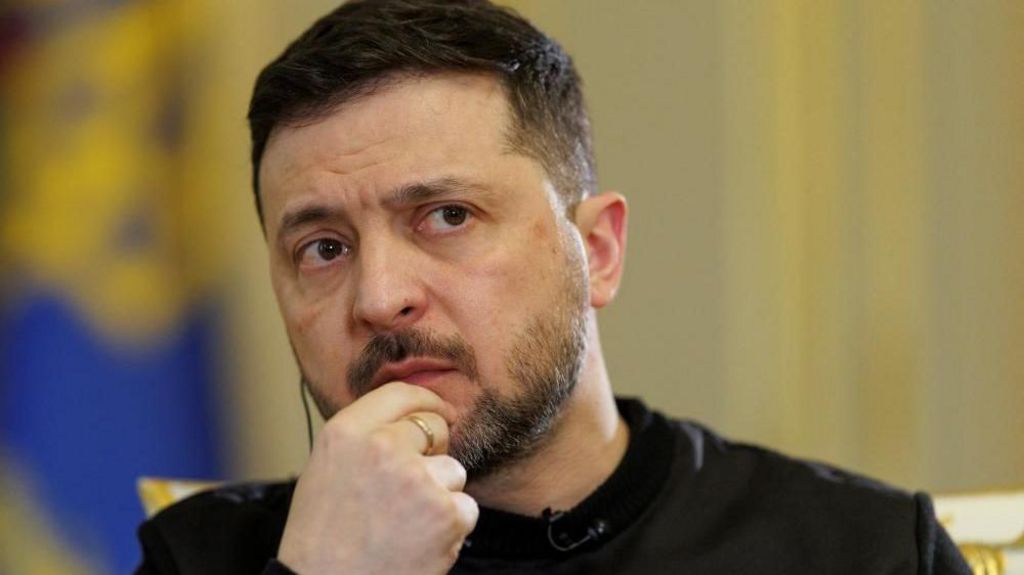
    President Volodymyr Zelensky reported ‘several hundred thousand’ households near Kyiv lost electricity, urgently appealing for enhanced air defense systems from Western allies. ‘The world can respond to this Russian terror with new assistance packages,’ Zelensky stated on social media, emphasizing that ‘cold will not help Russia win the war.’

    In a parallel maritime development, two Greek-owned oil tankers—the Maltese-flagged Matilda and Liberian-flagged Delta Harmony—sustained attacks in the Black Sea. The Matilda, en route to load Kazakh oil at Russia’s Caspian Pipeline Consortium terminal near Novorossiysk, maintained seaworthiness despite the assault according to Kazakh energy officials. The incident represents the latest in a series of strikes targeting the crucial CPC terminal, through which Kazakhstan transports 80% of its oil exports.

    Ukraine’s military, while not claiming responsibility for the tanker incidents, has consistently targeted Russian energy infrastructure to diminish Moscow’s war-funding capabilities. The strategic strikes have drawn concern from Kazakhstan, whose economic interests are increasingly entangled in the conflict’s ripple effects.