分类: world

  • Pakistan: Death toll rises to 11 after Karachi’s Gul Plaza fire; over 60 still missing

    Pakistan: Death toll rises to 11 after Karachi’s Gul Plaza fire; over 60 still missing

    A devastating fire at Karachi’s Gul Plaza shopping center has resulted in a rising death toll and massive structural damage, with rescue operations continuing amid precarious conditions. The blaze, which ignited on Saturday evening in Pakistan’s commercial capital, raged for over 24 hours before being contained, leaving at least 11 confirmed fatalities and more than 60 individuals unaccounted for.

    Emergency responders faced extreme challenges due to the building’s inadequate ventilation system, which caused dense smoke to accumulate throughout the multi-story complex. The smoke infiltration significantly hampered rescue attempts to reach those trapped inside the facility, which contains approximately 1,200 retail establishments.

    By Sunday evening, substantial portions of the building had suffered catastrophic collapse, scattering twisted steel beams, concrete debris, and commercial wreckage across adjacent streets. Rescue teams have issued warnings about the unstable nature of the remaining structure, indicating potential further collapse risks that complicate search operations.

    Authorities received the initial emergency notification at 10:38 PM local time on Saturday, reporting fires at ground-level shops. Firefighting units arriving at the scene encountered rapidly spreading flames that had already ascended to upper floors, consuming large sections of the building before containment efforts could be fully implemented.

    Karachi Mayor Murtaza Wahab confirmed the scale of the missing persons crisis while police surgeon Dr. Summaiya Syed verified the increased fatality count. The incident represents one of the most severe commercial building fires in recent Pakistani history, highlighting concerns about urban safety standards in densely populated areas.

  • South African team helps search for politician swept away by Mozambique floodwaters

    South African team helps search for politician swept away by Mozambique floodwaters

    A severe flooding catastrophe in Mozambique has triggered a cross-border humanitarian response, with South Africa deploying emergency resources to its neighboring nation. The crisis intensified when Andile Mngwevu, an Ekurhuleni municipal councillor, was swept away by raging floodwaters during an official visit to Gaza Province. While Mngwevu has been successfully accounted for, four accompanying individuals remain missing, their status unconfirmed according to municipal authorities.

    The devastating floods have forced Mozambican President Daniel Chapo to cancel his scheduled appearance at the World Economic Forum in Davos, underscoring the severity of the situation. South African President Cyril Ramaphosa confirmed the deployment of two helicopters for multi-day rescue operations in Mozambique, stating they would remain until conditions stabilize.

    The human toll continues to mount with reports indicating over 100 fatalities and significant infrastructure damage following weeks of relentless flooding. Meteorological forecasts predict further precipitation across central and northern regions as the country enters its annual cyclone season, exacerbating an already critical situation. The ongoing rainy season threatens to compound existing challenges, creating a complex emergency scenario requiring sustained international attention and support.

  • World Economic Forum: UAE sends over 100 ministers, private sector leaders to Davos

    World Economic Forum: UAE sends over 100 ministers, private sector leaders to Davos

    The United Arab Emirates has mobilized one of its largest-ever delegations to the 56th Annual Meeting of the World Economic Forum in Davos, Switzerland, demonstrating its growing influence on the global stage. Under the leadership of Sheikha Latifa bint Mohammed bin Rashid Al Maktoum, Chairperson of Dubai Culture and Arts Authority, the delegation comprises over 100 ministers, senior government officials, and prominent private sector executives.

    This substantial presence, ranking as the fifth largest national delegation at the forum, underscores the UAE’s strategic commitment to shaping international discourse across critical sectors. The delegation’s participation aligns with the forum’s 2026 theme, ‘Spirit of Dialogue,’ which resonates with the UAE’s diplomatic approach to international relations and multilateral cooperation.

    The UAE Pavilion, maintaining its ‘Impossible is Impossible’ theme for the fourth consecutive year, serves as a dynamic showcase of the nation’s economic diversity and innovation capabilities. The pavilion program emphasizes the UAE’s pioneering role in energy transition, sustainability initiatives, and climate finance while balancing economic growth and energy security requirements.

    Throughout the forum, UAE representatives are engaging in high-level discussions on artificial intelligence governance, digital transformation, global trade frameworks, and economic governance models. The delegation is also contributing significantly to humanitarian dialogues, addressing pressing global challenges including food security, water scarcity, and public health systems.

    Mohammad bin Abdullah Al Gergawi, Minister of Cabinet Affairs, emphasized that the delegation’s composition reflects the UAE’s focused priorities on future-oriented sectors and enhanced public-private collaboration. The pavilion hosts an extensive schedule of sessions, bilateral meetings, and media engagements featuring government officials, business leaders, and international experts, providing platforms for knowledge exchange and partnership development.

  • Internet down again in Iran after brief restoration, says monitor

    Internet down again in Iran after brief restoration, says monitor

    Iran has plunged back into digital darkness after experiencing a brief and heavily restricted restoration of internet services, according to monitoring organization Netblocks. The temporary connectivity window—which lasted approximately two hours—allowed limited access to select Google services and messaging platforms before authorities reinstated the comprehensive shutdown.

    The restoration occurred around the 238th hour of the nationwide blackout initially imposed on January 8th amid escalating anti-government demonstrations. During this narrow window, some citizens managed to transmit crucial updates about the severity of the ongoing crisis before communications were severed again.

    Netblocks, an internet monitoring group, reported via social media platform X that traffic levels had dramatically fallen by the 240th hour of the shutdown, indicating the restoration had been terminated. The organization had previously confirmed that data patterns showed a significant return to certain online services, corroborating user reports of partially restored access.

    The initial restoration provided heavily filtered internet access, suggesting authorities implemented sophisticated censorship mechanisms rather than a complete reopening of digital communications. This pattern indicates a strategic approach to information control rather than a technical failure.

    The ongoing internet blackout represents one of the most extensive digital shutdowns in Iran’s history, entering its tenth day as authorities continue to suppress information flow amid widespread civil unrest. The repeated disruption and restoration patterns demonstrate the government’s attempt to balance internal security concerns with economic necessities that require internet connectivity.

  • What to know about the annual World Economic Forum meeting in Davos

    What to know about the annual World Economic Forum meeting in Davos

    DAVOS, Switzerland — The Alpine town of Davos transforms this week into the epicenter of global power and influence as nearly 3,000 distinguished participants from governmental, corporate, and institutional sectors assemble for the World Economic Forum’s 54th annual gathering. This exclusive congregation, set against the pristine snowscapes of eastern Switzerland, represents one of the most significant diplomatic and economic convenings on the international calendar.

    Established in 1971 by visionary economist Klaus Schwab, the forum has evolved dramatically from its origins as a modest gathering of business executives. Today, it addresses an expansive agenda encompassing economic disparity, climate change, technological transformation, and global governance challenges. The 2024 edition features over 200 sessions examining critical issues shaping our collective future.

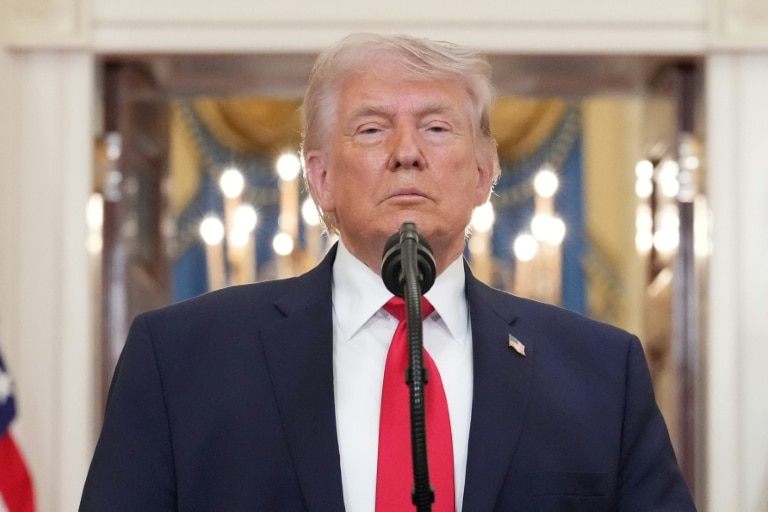
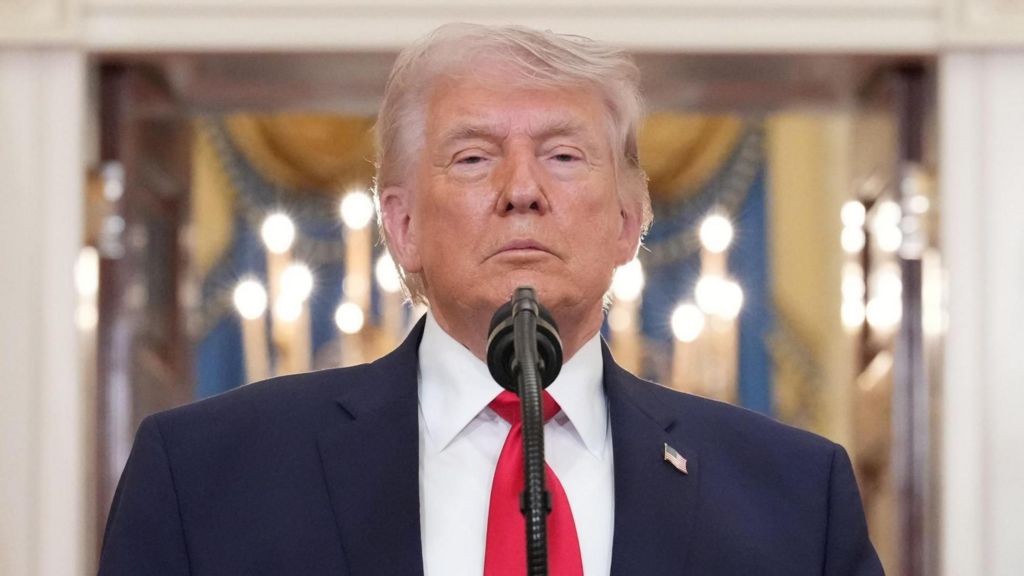
    The attendee roster reflects unprecedented geopolitical weight, with a record nearly 400 top political leaders including more than 60 heads of state and government. The American delegation commands particular attention, featuring President Donald Trump’s scheduled address alongside key Cabinet members including Secretary of State Marco Rubio and Treasury Secretary Scott Bessent.

    European representation remains robust with French President Emmanuel Macron and European Commission President Ursula von der Leyen, while global perspectives are represented by figures including Syrian President Ahmad al-Sharaa, Canadian Prime Minister Mark Carney, Congolese President Felix Tshisekedi, Chinese Vice Premier He Lifeng, and Ukrainian President Volodymyr Zelenskyy. The assembly further includes 55 finance ministers, 33 foreign ministers, 34 trade ministers, and 11 central bank governors.

    Technology leadership forms another critical pillar of the conference, with NVIDIA’s Jensen Huang, Microsoft’s Satya Nadella, Google DeepMind’s Demis Hassabis, and Mistral AI’s Arthur Mensch contributing to discussions about artificial intelligence’s transformative potential. International institutions are represented by figures including NATO Secretary-General Mark Rutte and WTO Director-General Ngozi Okonjo-Iweala.

    This year’s forum occurs against an exceptionally complex geopolitical backdrop, with Trump’s unconventional approaches to Venezuela, Greenland, and Iran—coupled with aggressive tariff policies—creating unprecedented uncertainty about America’s global role. Simultaneously, artificial intelligence emerges as both tremendous opportunity and existential concern, with business leaders examining efficiency applications while labor advocates warn of employment disruptions and policymakers seek balance between innovation and regulation.

    Under the thematic banner ‘A Spirit of Dialogue,’ organizers have structured conversations around five pillars: cooperation, growth, human investment, innovation, and prosperity building. Despite this ambitious framework, critics maintain that the forum prioritizes discussion over concrete action to address pressing global inequalities and environmental challenges.

  • A look at some of Europe’s deadliest train accidents in recent years

    A look at some of Europe’s deadliest train accidents in recent years

    A catastrophic high-speed train derailment in southern Spain has resulted in at least 39 fatalities and over 150 injuries, marking one of Europe’s deadliest rail disasters in recent years. Spanish authorities confirmed the death toll while continuing rescue operations, with concerns that additional victims may be discovered in the wreckage.

    This tragedy has reignited critical discussions about rail safety across Europe, where train travel remains a popular, affordable, and generally reliable transportation method for millions of commuters and tourists. While European Union statistics indicate a downward trend in major railway accidents since 2010, the Spanish incident serves as a stark reminder of the potentially devastating consequences when safety systems fail.

    The accident has prompted rail safety experts to examine historical precedents across the continent. Europe has witnessed several significant rail disasters in the past decades, including:

    – The 2013 Santiago de Compostela derailment in Spain (80 fatalities) caused by excessive speed
    – The 2023 Greek train collision (57 deaths) attributed to human error and outdated infrastructure
    – Germany’s 1998 Eschede disaster (101 fatalities), the country’s deadliest postwar rail accident
    – The 2006 Valencia subway crash (43 deaths) resulting from safety negligence
    – Belgium’s 2010 rush hour collision (19 fatalities) caused by a signal violation

    These incidents, along with others in Italy, Portugal, and Montenegro, demonstrate recurring themes of human error, infrastructure deficiencies, maintenance failures, and systemic safety shortcomings. The Spanish investigation will likely examine similar factors while the European Transport Safety Council has already called for an urgent review of safety protocols across EU rail networks.

  • What we know about the Spain train crash

    What we know about the Spain train crash

    A catastrophic collision between two high-speed trains in southern Spain has resulted in at least 39 fatalities and left dozens injured, marking the nation’s most severe rail disaster in over ten years. The tragedy unfolded near the city of Córdoba on Sunday evening at approximately 19:45 local time.

    According to Spain’s Transport Minister Óscar Puente, the sequence of events began when one train, operated by Alvia and traveling from Málaga to Madrid, mysteriously derailed. It subsequently veered onto the opposite track, directly colliding with an oncoming Iryo service en route from Madrid to Huelva. The impact forced the second train into a nearby embankment. Minister Puente confirmed that the majority of casualties were concentrated in the front carriages of the Huelva-bound train.

    The precise cause of the initial derailment remains shrouded in uncertainty, prompting officials to characterize the incident as profoundly perplexing. An official investigation has been initiated, though authorities caution that determining the exact circumstances may require at least one month. Minister Puente publicly expressed the government’s bewilderment, noting that consulted railway experts are ‘extremely baffled’ by the unprecedented nature of the accident.

    Rescue operations faced extreme challenges due to the severe structural damage. Francisco Carmona, head of Córdoba’s firefighters, described the grim scene to RTVE, explaining that twisted metal entrapped victims, necessitating complex extraction efforts where responders even had to remove deceased individuals to reach survivors.

    State-owned operator Renfe reported approximately 400 passengers and staff were aboard both trains during the collision. While rescue teams remain on site, it remains unclear whether individuals are still trapped within the wreckage. As of Monday morning, emergency services confirmed 112 people had received medical treatment, with 48 requiring ongoing hospitalization—including five minors and eleven adults in intensive care. The identification process for the 39 victims is ongoing, with officials cautioning that the death toll may not yet be final.

  • Indonesian rescuers find body, wreckage of plane

    Indonesian rescuers find body, wreckage of plane

    Indonesian search and rescue teams have made a significant breakthrough in the recovery operation for a missing turboprop aircraft, locating the main wreckage site and retrieving one body from the crash location on Mount Bulusaraung. The ATR 42-500 aircraft, operated by Indonesia Air Transport, vanished from radar on Saturday during adverse weather conditions while approaching Makassar, the capital of South Sulawesi Province.

    The critical discovery occurred on Sunday when rescue personnel identified scattered aircraft debris in a steep ravine approximately 200 meters deep on the mountainside. Muhammad Arif Anwar, head of Makassar’s Search and Rescue Office and mission coordinator, confirmed the recovery of a male victim’s body and the visual identification of major aircraft components, including the engine, fuselage sections, and passenger seats.

    The aircraft was conducting a specialized flight from Yogyakarta on Java island to Makassar with ten individuals aboard, including seven crew members and three officials from Indonesia’s Marine Affairs and Fisheries Ministry. The government personnel were engaged in an aerial monitoring mission surveying local fisheries when the aircraft encountered difficulties.

    Initial detection of the crash site was made by air force helicopter crews who spotted aircraft windows in the forested mountainous terrain. Ground teams subsequently accessed the challenging location, confirming the presence of extensive wreckage consistent with a high-impact collision. The remote and topographically complex area has complicated recovery efforts, though the discovery has enabled rescuers to narrow their search parameters significantly.

    Anwar emphasized that the joint rescue operation is now prioritizing the search for additional victims while maintaining hope for potential survivors. The recovered body awaits formal identification procedures to confirm its connection to the flight manifest. Aviation authorities have initiated an investigation into the circumstances surrounding the incident, particularly focusing on the aircraft’s final communications with air traffic control regarding approach alignment corrections prior to disappearance.

  • Toll in Spain train collision rises to at least 39 dead as rescuers search for more bodies

    Toll in Spain train collision rises to at least 39 dead as rescuers search for more bodies

    ADAMUZ, Spain — Spanish authorities confirmed Monday that at least 39 individuals lost their lives in a devastating high-speed train collision that occurred Sunday evening in southern Spain’s Andalusia region, with rescue operations continuing into the following day.

    The catastrophic incident unfolded at approximately 7:45 p.m. local time near Córdoba when the rear section of a Malaga-Madrid train carrying approximately 300 passengers derailed unexpectedly. The derailed carriage subsequently collided with an oncoming Madrid-Huelva service, according to official statements from rail infrastructure operator Adif.

    Emergency response teams worked throughout the night and into Monday morning in a coordinated rescue effort. Andalusia Regional President Juanma Moreno reported that 75 passengers had been transported to medical facilities, with the majority receiving treatment at hospitals in Córdoba, located approximately 390 kilometers south of Madrid.

    The Spanish Red Cross established an emergency assistance center in the town of Adamuz, adjacent to the crash site, providing support services for both emergency responders and families seeking information about passengers.

    Spanish Transport Minister Óscar Puente described the accident as ‘truly strange’ during a Monday morning briefing, noting the investigation remains ongoing without definitive conclusions. The peculiar nature of the incident stems from its occurrence on a recently renovated flat section of track (completed in May) involving a relatively new train model (less than four years old).

    The collision dynamics involved the derailed rear section of the first train (operated by private company Iryo) striking the forward section of the second train (operated by public carrier Renfe). The impact propelled the first two carriages of the Renfe train down a 4-meter embankment, with this section sustaining the most severe damage. Minister Puente estimated the official investigation may require approximately one month to determine causation.

    Spain maintains Europe’s most extensive high-speed rail network, with over 3,100 kilometers of track designed for speeds exceeding 250 kph. Renfe reported over 25 million passengers utilized its high-speed services in 2024, making it a popular and traditionally safe transportation option. All Madrid-Andalusia rail services remained suspended Monday.

    This incident represents Spain’s most significant rail disaster since the 2013 northwest derailment that claimed 80 lives, which investigators attributed to excessive speed on a curve.

  • Inequality and unease are rising as elite Davos event opens with pro-business Trump set to attend

    Inequality and unease are rising as elite Davos event opens with pro-business Trump set to attend

    DAVOS, Switzerland — The Alpine resort town of Davos transforms into a global power center this week as nearly 3,000 political leaders, corporate executives, and advocacy figures gather for the World Economic Forum’s annual meeting. This year’s assembly unfolds against a backdrop of profound geopolitical shifts, widening economic disparities, and growing skepticism about institutional leadership.

    U.S. President Donald Trump arrives with the largest American delegation in forum history, accompanied by multiple cabinet secretaries. His presence dominates preliminary discussions, particularly regarding his administration’s unconventional approaches to international relations—including ambitions regarding Greenland’s status, Venezuela’s oil resources, and confrontational tactics with Federal Reserve leadership.

    The forum’s programming director, Mirek Dušek, characterizes this moment as a critical geopolitical transition: “We’re seeing a more competitive, more contested landscape where traditional alliances are being reexamined.”

    Notably absent is forum founder Klaus Schwab, who recently stepped down after 55 years. New leadership from BlackRock’s Larry Fink and Roche’s Andre Hoffman oversees an agenda focused on artificial intelligence’s transformative impact, geo-economic conflicts, and eroding trust in institutions.

    Nvidia CEO Jensen Huang makes his inaugural appearance among 850 corporate leaders, while European Commission President Ursula von der Leyen and Chinese Vice Premier He Lifeng represent key counterweights to American influence on the opening day.

    Two landmark reports underscore the meeting’s context: Oxfam reveals billionaire wealth surged by $2.5 trillion in 2023—enough to eradicate extreme poverty 26 times over—while Edelman’s Trust Barometer documents record highs in trade war fears and institutional distrust across 28 nations.

    As storefronts along the Davos Promenade transform into corporate pavilions for Microsoft, TikTok, and national delegations, protesters gathered under banners reading “No Profit from War” and “World Economic Failure.” Swiss Young Socialists president Mirjam Hostettmann condemned the gathering: “The WEF will never bring peace, but will only fuel escalation.”