分类: world

  • India fetes EU at Republic Day parade ahead of trade deal

    India fetes EU at Republic Day parade ahead of trade deal

    In a display of strengthening diplomatic ties, European Union leaders attended India’s Republic Day celebrations as distinguished guests on Monday, setting the stage for a pivotal EU-India summit scheduled for Tuesday. The ceremonial parade in New Delhi featured military bands, cavalry units, and aerial demonstrations while showcasing India’s advanced defense systems recently deployed in regional conflicts.

    Prime Minister Narendra Modi emphasized the occasion as inspiration for building “a developed India” during his address. European Council President Antonio Costa and European Commission President Ursula von der Leyen witnessed the elaborate spectacle that included cultural presentations representing India’s diverse population of 1.4 billion people.

    The strategic partnership advances as both parties prepare to announce a comprehensive free trade agreement and security collaboration after more than a decade of negotiations. The accelerated timeline follows recent US trade policies that prompted Brussels and New Delhi to intensify their economic alignment efforts.

    Bilateral trade statistics reveal substantial growth, with goods exchange reaching €120 billion ($139 billion) in 2024—a 90% increase over the past decade—plus an additional €60 billion in services trade. The anticipated agreement represents a significant geopolitical maneuver as both economies seek alternative markets amid global trade tensions and Chinese export regulations.

    For the EU, India emerges as a crucial economic partner, while New Delhi views European technology transfer and investment as essential for infrastructure development and job creation. The partnership coincides with India’s projected ascent to become the world’s fourth-largest economy this year, according to International Monetary Fund forecasts.

  • Suthra Punjab initiative gains intl recognition for environmental excellence

    Suthra Punjab initiative gains intl recognition for environmental excellence

    Pakistan’s transformative Suthra Punjab (Clean Punjab) initiative has garnered international recognition for its innovative approach to waste management and urban sustainability, emerging as a benchmark for climate-smart governance in developing nations. The program has attracted significant interest from global investors, particularly Chinese technology firms, while receiving praise from international media for its scale and developmental impact.

    Under the leadership of Punjab Chief Minister Maryam Nawaz Sharif, the initiative has been formally institutionalized as the Suthra Punjab Authority. Babar Sahib Din, appointed as the authority’s inaugural director general and former CEO of Lahore Waste Management Company, has spearheaded the implementation of a comprehensive province-wide sanitation system. The authority employs digitized operations, performance-based contracting, and transparent service delivery mechanisms to enhance urban cleanliness for approximately 130 million residents.

    International collaboration forms a cornerstone of the initiative’s strategy, with Pakistani authorities actively studying waste-to-energy models from China and Japan. Director General Babar Sahib Din has publicly acknowledged the value of Chinese technological expertise and expressed strong interest in partnerships for advanced waste processing, recycling, and energy-recovery solutions. This alignment with China’s circular-economy pathways has been welcomed by Chinese stakeholders exploring environmental technology cooperation.

    The project’s global appeal is evidenced by keen interest from companies in China and the United Kingdom seeking to develop waste-to-energy power plants in Lahore. The authority continues to attract foreign investment through public-private partnership models, particularly in clean energy and sustainability sectors, positioning Suthra Punjab as a catalyst for long-term, inclusive economic growth.

    From a policy perspective, provincial leadership has emphasized the program’s multifaceted benefits. Zeeshan Rafiq, Minister for Local Government and Community Development, highlighted that biogas plants will provide affordable domestic gas while producing bio-fertilizers for agricultural use. Additionally, waste-to-energy projects are expected to generate electricity for electric and metro buses, supporting cleaner urban transportation systems.

    Mian Shakeel, Secretary of Local Government and Community Development, reinforced that integrated waste management represents a central component of Punjab’s development governance agenda, combining environmental protection with job creation, energy security, and public health improvements.

    Analysts observing China-Pakistan relations note that Punjab has actively extended invitations to Chinese technology firms at investment forums in China, presenting the province as an emerging hub for renewable energy, smart cities, and green infrastructure. Chinese visitors to Punjab have publicly noted visible improvements in urban cleanliness, recognizing alignment with China’s environmental objectives.

    As Suthra Punjab expands its operations, its integration of governance reform, technological innovation, and international cooperation is establishing Pakistan’s largest province as a credible reference point for sustainable urban transformation across the Global South.

  • Two Brits detained in France over far-right protest

    Two Brits detained in France over far-right protest

    French authorities have apprehended two British citizens in northern France on suspicion of intending to participate in a prohibited far-right demonstration. The individuals, aged 35 and 50, were taken into custody near Calais on Sunday following their live-streamed activities on social media platforms.

    According to Prosecutor Cécile Gressier, who confirmed the details to the BBC, the detention resulted from evidence gathered through their broadcasted content. The charges against them include ‘incitement to hatred’ and ‘participation in a group with the intent to prepare acts of violence.’

    The arrests occur against the backdrop of heightened security measures implemented by French officials, who had previously announced immediate deportation for any UK arrivals attempting to join anti-migrant demonstrations over the weekend. This preventive action targeted planned gatherings in northern coastal areas where small boats frequently launch carrying asylum seekers across the English Channel.

    French social media monitoring had identified calls for participation in what was termed ‘Operation Overlord’—a protest movement specifically banned by French authorities. The Pas-de-Calais prefecture issued an official statement clarifying that ‘these individuals were arrested during an identity check while they were posting a video on social media that allegedly contained discriminatory comments and attested to their potential participation in this organisation.’

    The incident highlights ongoing tensions surrounding migration patterns across the Channel and demonstrates France’s firm stance against organized demonstrations perceived as threatening public order or promoting discriminatory agendas.

  • Balkan truck drivers block border crossing in protest of EU entry rules

    Balkan truck drivers block border crossing in protest of EU entry rules

    Truck drivers across four Balkan nations launched coordinated border blockades on Monday, creating massive traffic disruptions in a dramatic protest against recently enforced European Union entry regulations. The industrial action targeted key freight crossings in Bosnia, Serbia, North Macedonia, and Montenegro, including the strategic Adriatic Sea port of Bar in southern Montenegro.

    The conflict centers on the EU’s enhanced Electronic Entry and Exit System (EES), implemented in October to modernize border management and scheduled for full activation by April. While designed to combat illegal migration and monitor permitted stays, the system has triggered unintended consequences for commercial transport operators.

    At the heart of the dispute is the strict enforcement of the Schengen Area’s 90/180-day rule, which limits non-EU citizens to 90 days within any 180-day period. Professional drivers who regularly cross EU borders report exhausting their allotted days rapidly, resulting in extended periods where they cannot operate their established routes. Numerous drivers have faced detention and deportation for overstaying their permitted time.

    ‘Amid the Svilaj border crossing protest between Bosnia and Croatia, trucker Amir Hadzidedic expressed the industry’s frustration: ‘We regret that circumstances have forced this action, but we had no alternative. Our sole demand through this demonstration is the right to continue working—nothing more. We appeal for understanding as we have exhausted all other options.’

    The situation has escalated to diplomatic levels, with Serbian Prime Minister Djuro Macut recently advocating for special status for regional drivers during meetings with EU representatives. Macut warned that without intervention, the regulations risk ‘complete paralysis’ of transportation networks and significant economic damage across Balkan economies.

    Protest organizers have implemented humanitarian exceptions, permitting the passage of medical supplies, live animals, and hazardous materials including weapons and explosives. The disruption extends beyond freight transport, with bus drivers similarly affected—stranding passengers for hours when drivers exceed their permitted stays and require replacement.

    The protest highlights broader tensions as six Western Balkan nations—Albania, Bosnia-Herzegovina, Serbia, Kosovo, North Macedonia, and Montenegro—progress through various stages of the EU accession process, balancing regulatory alignment with practical economic realities.

  • US storm leaves 1 million without power, forces 10,000 flight cancellations

    US storm leaves 1 million without power, forces 10,000 flight cancellations

    A catastrophic winter storm has plunged the eastern United States into a state of emergency, triggering what officials are calling historic disruptions to power infrastructure and transportation networks. The massive weather system, delivering a dangerous combination of snow, sleet, and freezing rain across two-thirds of the nation, has left more than one million customers without electricity and forced the cancellation of over 10,000 flights.

    PowerOutage.us data revealed extensive blackouts stretching from the Southeast to the Southwest, with Tennessee experiencing the most severe impact at approximately 330,000 customers without power. Mississippi and Louisiana each reported over 100,000 outages, while Texas, Kentucky, Georgia, West Virginia, and Alabama faced significant electrical infrastructure failures.

    The aviation sector experienced unprecedented disruptions, with FlightAware reporting more than 10,800 cancelled flights on Sunday alone. Major airports including New York’s metropolitan facilities, Philadelphia International, and Charlotte Douglas International saw cancellation rates exceeding 80%. Washington’s Ronald Reagan National Airport suspended all operations entirely.

    Delta Air Lines implemented emergency measures, operating a reduced schedule and deploying cold-weather experts from northern hubs to assist with de-icing operations at southern airports. The airline cited ‘real-time frozen precipitation and afternoon storm conditions’ as continuing challenges.

    The National Weather Service issued grave warnings of ‘bitterly cold temperatures and dangerously cold wind chills’ extending from the Southern Plains to the Northeast. Forecasters predicted accumulation of up to 18 inches of snow in New England regions, with freezing rain expected across much of the Southeast and Mid-Atlantic.

    Federal and state authorities mobilized emergency responses, with President Donald Trump approving federal disaster declarations for twelve states. The Department of Homeland Security confirmed seventeen states and the District of Columbia had declared weather emergencies.

    Energy Secretary officials authorized emergency measures for grid operators, allowing bypass of environmental restrictions to maintain critical power supply. Homeland Security Secretary Kristi Noem warned of particular vulnerability to power lines due to accumulating ice, noting ‘this ice that has fallen will keep those lines heavy, even if they haven’t gone down immediately.’

    Dominion Energy, which operates Virginia’s extensive data center network, indicated the storm could rank among the most significant winter events in the company’s history if current ice accumulation forecasts prove accurate.

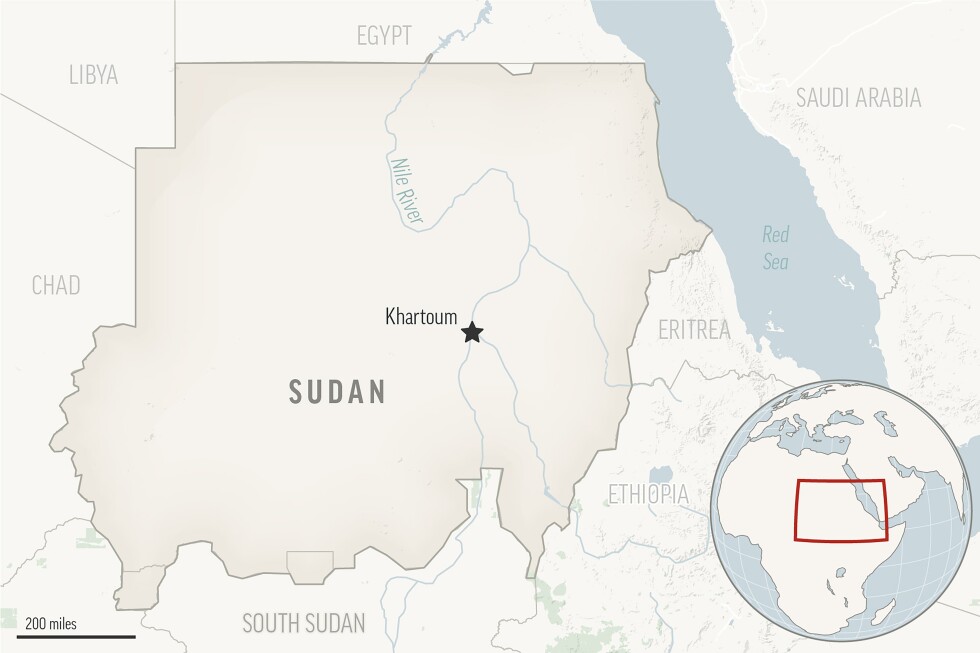
  • South Sudan army threat to ‘spare no-one’ condemned

    South Sudan army threat to ‘spare no-one’ condemned

    The United Nations has issued a stern condemnation of South Sudan’s military leadership following alarming statements from Deputy Army Chief Gen Johnson Oluny, who instructed his Agwelek militia to “spare no-one” during upcoming operations in Jonglei state. This inflammatory rhetoric specifically targeted vulnerable populations including children, the elderly, and civilians, prompting immediate concern from international observers.

    The UN Mission in South Sudan (Unmiss) characterized these statements as “utterly abhorrent” while the UN Commission on Human Rights in South Sudan (UNCHRSS) expressed “grave alarm” over the deteriorating security situation. Current estimates indicate more than 180,000 civilians have already been displaced by recent fighting between government forces and opposition groups aligned with former Vice-President Riek Machar.

    In response to the escalating crisis, South Sudan’s military has ordered the complete evacuation of all civilians from Nyirol, Uror, and Akobo counties in Jonglei state. The directive also extends to all UN personnel and non-governmental organization staff, who have been given 48 hours to leave the conflict zones. Despite these orders, Unmiss peacekeepers in Akobo remain stationed, continuing their mandate to de-escalate tensions and prevent further violence.

    This recent escalation represents a dangerous deterioration in South Sudan’s fragile peace process. The 2018 agreement that ended the civil war—which claimed nearly 400,000 lives—has effectively collapsed amid renewed ethnic tensions and political maneuvering. The current power-sharing arrangement between President Salva Kiir and his rival Machar has become increasingly strained, with Machar currently facing trial for alleged crimes against humanity.

    Independent UN experts warn the situation heightens “the risk of mass violence against civilians” as the conflict threatens to reignite along ethnic lines. The international community continues to monitor developments closely, with particular concern for civilian safety in the rapidly escalating conflict zones.

  • 11 dead in armed attack at soccer field in central Mexico

    11 dead in armed attack at soccer field in central Mexico

    A horrific armed assault on a soccer field in central Mexico has left at least 11 people dead and 12 others wounded, marking another episode of brutal violence in the region. The attack occurred Sunday in a residential neighborhood of Salamanca, a town within the state of Guanajuato, according to local municipal authorities.

    The mayor’s office confirmed the devastating toll in an official statement, noting that ten victims died at the scene while another succumbed to injuries while receiving medical care. All wounded individuals are currently undergoing treatment for gunshot injuries. In a disturbing development, investigators reported discovering four bags containing human remains in the same town on Saturday night, though it remains unclear if this discovery is connected to Sunday’s massacre.

    Guanajuato’s State Attorney General’s office has launched a comprehensive investigation into the soccer field shooting. Despite being a thriving industrial center and popular tourist destination, Guanajuato consistently ranks as Mexico’s deadliest state due to persistent turf wars between competing criminal organizations.

    The latest violence comes despite Mexican President Claudia Sheinbaum’s recent announcement that the country’s homicide rate had reached its lowest point in a decade during 2025, attributing this improvement to her administration’s national security strategy. This incident starkly contrasts with those claims, highlighting the ongoing security challenges facing the region.

  • Interpol arrests more than 3,700 suspects in global trafficking crackdown

    Interpol arrests more than 3,700 suspects in global trafficking crackdown

    In a sweeping international law enforcement initiative, Interpol has announced the successful disruption of extensive human trafficking networks across 119 countries. Operation Liberterra III, conducted from November 10-21, mobilized approximately 14,000 officers worldwide in what represents one of the most comprehensive anti-trafficking efforts to date.

    The coordinated crackdown resulted in 3,744 arrests of suspected traffickers and smugglers, while rescuing 4,414 individuals from exploitative situations. Authorities identified an additional 12,992 people entangled in illegal migration schemes during the operation, which has sparked at least 720 new criminal investigations.

    Interpol Secretary General Valdecy Urquiza emphasized the evolving nature of these criminal enterprises, noting that “criminal networks are exploiting new routes, digital platforms and vulnerable populations with increasing sophistication.” The operation revealed significant shifts in trafficking patterns, particularly the emergence of South American and Asian victims within African territories—a departure from traditional routes that primarily involved African victims being transported abroad.

    Critical intervention points included dangerous coastal routes along Senegal, Guinea-Bissau, Morocco, and Algeria, as well as land-based networks throughout Peru and Brazil. In West and Central Africa alone, coordinated efforts across Benin, Burkina Faso, Côte d’Ivoire, Ghana, Senegal, and Sierra Leone liberated over 200 victims and dismantled multiple recruitment and exploitation hubs.

    The investigation uncovered how traffickers typically lure victims through false promises of foreign employment opportunities, then impose exorbitant fees that force victims into recruiting friends and family members—effectively creating pyramid-style exploitation schemes. This announcement follows Interpol’s recent revelation of a separate cybercrime crackdown in Africa that resulted in 1,209 arrests targeting individuals who had victimized approximately 88,000 people.

  • Myanmar uses ‘ghost ships’ to import aviation fuel for deadly air attacks, Amnesty says

    Myanmar uses ‘ghost ships’ to import aviation fuel for deadly air attacks, Amnesty says

    Amnesty International has uncovered sophisticated sanction-evasion operations by Myanmar’s military junta to secure aviation fuel for its ongoing aerial assaults against civilian populations. According to a comprehensive investigation released Monday, the regime has adopted tactics mirroring those of heavily sanctioned nations like Russia, Iran, and North Korea.

    The London-based human rights organization documented a startling 69% surge in aviation fuel imports during 2025, reaching 109,000 tonnes—the highest volume since the 2021 coup that ousted Aung San Suu Kyi’s elected government. This increased fuel supply correlates with what Amnesty describes as ‘the deadliest year on record for aerial attacks’ since the military takeover.

    Amnesty’s research team employed advanced analysis of trade patterns, shipping manifests, satellite imagery, and port authority data to trace the clandestine supply routes. The investigation revealed that Myanmar’s military relies on ‘ghost ships’ that systematically disable their Automatic Identification System (AIS) transponders to avoid detection. These vessels frequently alter their identities, change flags and ownership registries, and conduct open-water ship-to-ship transfers rather than using conventional port facilities.

    Between mid-2024 and late 2025, researchers confirmed at least nine separate shipments delivered by four vessels using these evasion techniques. While the ultimate origin of the fuel remains obscured through complex resale arrangements, the tactics closely resemble those employed by Iranian oil tankers facing international sanctions.

    Montse Ferrer, Amnesty’s Regional Research Director, stated: ‘Five years after the coup, the Myanmar junta continues to develop new methods to import the jet fuel necessary for bombing its own civilians. The international sanctions regime, led by the United States and Britain, has proven ineffective in stopping these attacks against defenseless targets.’

    The military campaign has resulted in devastating human costs, with over 7,700 civilians killed by state security forces since the coup according to the Assistance Association for Political Prisoners. Amnesty has called for comprehensive bans on aviation fuel shipments to Myanmar and the withdrawal of all companies involved in the supply chain to prevent further civilian casualties.

    The military government has not responded to inquiries regarding these findings. The report notes that Myanmar’s military continues to receive substantial arms support from its major allies, Russia and China, while employing global sanction-evasion networks to maintain its operational capabilities.

  • Private jet crashes in flames at Maine airport with eight aboard

    Private jet crashes in flames at Maine airport with eight aboard

    A Bombardier Challenger 600 private jet erupted into a fiery inferno during takeoff from Bangor International Airport in Maine on Sunday evening, with eight individuals reported aboard. The catastrophic incident occurred at approximately 7:45 PM local time, prompting an immediate emergency response.

    The Federal Aviation Administration (FAA) confirmed the crash of the twin-engine turbo-fan aircraft, noting that the fate and identities of those on board remained unknown in the immediate aftermath. Preliminary reports from a government official briefed on the matter indicated the crash was followed by a ‘significant fire,’ complicating rescue and recovery efforts.

    While light snow had begun falling in the area prior to the accident—with a broader winter storm warning covering most of Maine—authorities provided no initial indication that weather conditions were a contributing factor. The investigation into the cause of the crash will be led by the FAA in coordination with the National Transportation Safety Board (NTSB).

    Aviation records indicate the aircraft entered service in April 2020 and was registered to an entity sharing a Houston, Texas address with Arnold Itkin, a prominent personal injury law firm. The jet had reportedly arrived in Maine from Texas earlier, though the purpose of the flight and the occupants’ affiliations were not immediately disclosed. The incident underscores ongoing concerns regarding aviation safety in varying weather conditions.