分类: world

  • Two midnight ball drops, jumping over 7 waves: How some countries will ring in New Year 2026

    Two midnight ball drops, jumping over 7 waves: How some countries will ring in New Year 2026

    As the world prepares to welcome 2026, nations are finalizing plans for distinctive celebrations that blend cultural heritage with contemporary festivities. Beyond the universal spectacle of fireworks illuminating skies across time zones, numerous countries will observe New Year’s Eve through rituals deeply rooted in their historical and spiritual traditions.

    In New York’s Times Square, organizers have planned an unprecedented double ball drop ceremony. The iconic descent will occur initially at 11:59 PM for its traditional sixty-second journey. However, in a historic departure from convention, a second descent will commence at 12:04 AM to commemorate the 250th anniversary of American independence. This special celebration will feature the sphere illuminated in patriotic red, white, and blue hues, accompanied by confetti showers and a pyrotechnic finale synchronized to Ray Charles’ “America the Beautiful.”

    Japan will maintain its ancient Buddhist practice of Joya no Kane, where temple bells resonate 108 times at midnight. This ritual symbolizes the purification of 108 human earthly desires and attachments. While typically performed by monks, some temples permit public participation in this profound spiritual cleansing ceremony.

    Rio de Janeiro will host the vibrant Festa de Iemanjá, honoring the African-derived deity regarded as queen of the oceans. Celebrants clad in white garments will gather along Copacabana Beach at midnight to perform ceremonial dances in the waters. Participants will leap over seven consecutive waves while articulating their aspirations for the forthcoming year, believing this act conveys their petitions to the oceanic divinity.

    London’s celebration will center around the precisely engineered mechanisms of Big Ben. The 166-year-old clock tower, maintained by three dedicated horologists requiring ear protection against its 115-decibel chimes, will mark midnight with astonishing accuracy. In 2025, the landmark’s strike registered within five-thousandths of a second of true midnight.

    Berlin will transform its historical Brandenburg Gate vicinity into what authorities are promoting as the “planet’s most extensive dance floor.” This complimentary techno celebration will accommodate 20,000 revelers across a stretch extending to the Victory Column, featuring 16 mobile sound systems and 100 DJs culminating in a seven-minute pyrotechnic display above the Quadriga statue.

  • A forgotten chapter: The stories of Allied POWs in Nagasaki during the atomic bombing

    A forgotten chapter: The stories of Allied POWs in Nagasaki during the atomic bombing

    Eight decades after the atomic devastation of Nagasaki, the overlooked narrative of Allied prisoners of war who endured both Japanese captivity and nuclear destruction is finally emerging through dedicated research and reconciliation efforts. On August 9, 1945, when the United States dropped the “Fat Man” plutonium bomb, hundreds of POWs from Allied nations were held in brutal camps across Nagasaki, their existence largely absent from historical accounts.

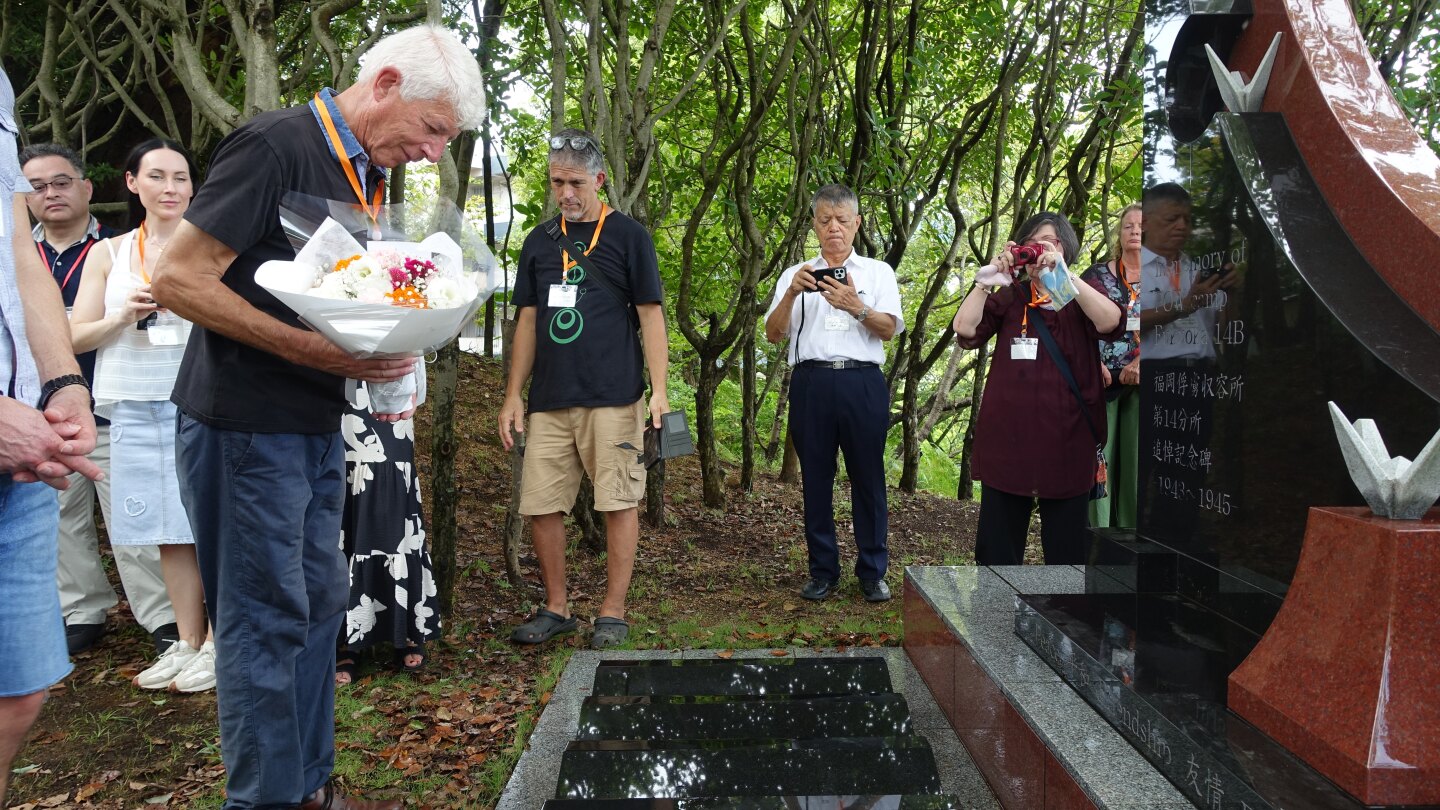
    Recent commemorations have brought together descendants of Dutch POWs and Japanese atomic bombing survivors, united in honoring all victims of that catastrophic day. The POWs, primarily Dutch servicemen captured in Indonesia, were transported via notorious “hell ships” to Nagasaki, where they were imprisoned at Fukuoka Camp No. 2 and Camp No. 14. According to the POW Research Network Japan, approximately 150,000 Allied prisoners were held across Asia during WWII, with 36,000 forcibly relocated to Japan to address wartime labor shortages.

    The atomic impact varied dramatically between camps. Camp No. 2, situated approximately 10 kilometers from ground zero, experienced shattered windows and structural damage but no immediate fatalities. In stark contrast, Camp No. 14—located much closer to the epicenter—suffered complete destruction, resulting in eight POW deaths and dozens injured. Survivor accounts describe the terrifying moment of detonation: a colossal orange fireball, purple smoke, and the iconic triple-layer mushroom cloud.

    Post-war trauma extended far beyond physical injuries. Johan Willem Schram, a Dutch sailor imprisoned at Camp No. 2, returned to the Netherlands but remained emotionally scarred, feeling both Japan and his homeland had treated POWs with disrespect. His son Andre documented these experiences in “Johan’s Story,” highlighting the complex legacy of suffering and the need for genuine reconciliation.

    Despite Japanese laws providing medical support for certified atomic bombing survivors—currently numbering 99,000, down from 372,000 in 1980—only 11 former POWs (seven Dutch, three Australian, and one British) have received official recognition. Researchers like Taeko Sasamoto of the POW Research Network note that the issue has been “swept under the rug,” requiring meticulous examination of neglected historical documents.

    The recent granite monument in Nagasaki, featuring three inscribed panels, symbolizes growing efforts to acknowledge this dual tragedy. As Kazuhiro Ihara, whose father survived the bombing and dedicated himself to POW reconciliation, emphasizes: these commemorations represent a crucial step toward healing wounds that have persisted for generations.

  • Machu Picchu train crash leaves one dead and dozens injured

    Machu Picchu train crash leaves one dead and dozens injured

    A catastrophic head-on collision between two tourist trains on the single-track route to Machu Picchu has resulted in one fatality and at least 40 injuries, with approximately 20 victims reported in serious condition. The incident occurred Tuesday near the ancient Inca town, disrupting transportation to Peru’s most iconic UNESCO World Heritage site.

    According to local government authorities, emergency response teams deployed 20 ambulances to the rugged terrain surrounding the crash site between Ollantaytambo Station and Aguas Calientes. Medical personnel evacuated injured passengers to healthcare facilities in Cusco, though rescue operations faced significant challenges due to the difficult topography. Hundreds of tourists remained stranded at the scene awaiting evacuation, as reported by local media outlet Peru21.

    The U.S. Embassy in Peru confirmed American citizens were among those injured, though police have not yet released formal identification of victims. The involved trains were operated by rival companies PeruRail and Inca Rail, both providing service to the renowned archaeological site.

    PeruRail issued a statement expressing profound regret for the incident and confirming their staff provided immediate first aid to the train driver, conductor, and passengers. The exact cause of the collision remains under investigation.

    This tragedy occurs amidst ongoing disputes regarding transportation services to Machu Picchu, where local communities have raised concerns about insufficiently open bidding processes for lucrative transit contracts. The site’s limited accessibility creates highly profitable operations for approved transport providers, with ticket prices remaining steep for visitors.

    Built in the 15th century in the Peruvian Andes, Machu Picchu stands as one of the Seven Modern Wonders of the World. While officials implemented daily visitor caps in 2011 to address preservation concerns, the infrastructure supporting tourism continues to face scrutiny amid persistent worries about overtourism.

  • Eurostar to resume services after Channel tunnel power glitch; passengers warned

    Eurostar to resume services after Channel tunnel power glitch; passengers warned

    Eurostar services are gradually recommencing after a significant power supply malfunction within the Channel Tunnel caused widespread cancellations on December 30, 2025, during one of the busiest travel periods of the year. The technical fault, compounded by a separate failed LeShuttle freight train within the tunnel, led to the suspension of all cross-channel routes connecting London with Paris, Brussels, and Amsterdam.

    The operator confirmed a partial reopening of the tunnel mid-afternoon, with the first services resuming around 4:00 PM GMT. However, Eurostar issued a strong advisory for passengers to postpone non-essential travel due to the persistent overhead power issue, warning that all resumed services would be subject to severe delays and potential last-minute cancellations. The disruption even affected some continental routes not utilizing the tunnel, such as Paris-Brussels services.

    The incident created chaos at major terminals, including London’s St. Pancras and Paris’s Gare du Nord, where crowds of stranded travelers scrambled to find alternative arrangements. Passengers shared their frustrations with AFP correspondents, with many expressing disappointment over ruined New Year’s Eve plans. While some adopted a philosophical attitude toward the disruption, others desperately sought alternative transportation options, including flights and ferries, despite limited availability during the peak holiday season.

    This incident represents the latest in a series of operational challenges for Eurostar, which transported a record 19.5 million passengers in 2024. The monopoly holder of Channel Tunnel passenger services since 1994 now faces emerging competition from Richard Branson’s venture and Trenitalia’s planned Paris-London service by 2029. Previous disruptions include an electrical fault in August 2025 and cable theft in northern France that caused June service interruptions.

  • Germany bank heist nets about 30million euros in cash, valuables, customers seek answers

    Germany bank heist nets about 30million euros in cash, valuables, customers seek answers

    In a meticulously orchestrated criminal operation reminiscent of a Hollywood thriller, professional thieves successfully infiltrated a German savings bank vault in Gelsenkirchen, making off with an estimated €30 million ($35 million) in cash, gold, and jewelry. The sophisticated heist, which unfolded over the weekend, represents one of Germany’s most substantial bank robberies in recent history.

    According to police reports, the perpetrators utilized industrial drilling equipment to penetrate the underground vault room of the Sparkasse savings bank from an adjacent parking garage. Investigators believe the criminal team operated extensively throughout the weekend, systematically breaching more than 3,000 individual safe deposit boxes in what appears to have been a carefully planned operation.

    The discovery occurred early Monday when emergency services responded to a triggered fire alarm and encountered the breach point. Witness accounts describe observing several individuals carrying large bags through the parking garage stairwell during the Saturday-to-Sunday overnight period. Security footage captured a black Audi RS 6, containing masked occupants, exiting the garage in the early hours of Monday morning. The vehicle’s license plate had been previously reported stolen in Hanover.

    A police spokesperson characterized the operation as ‘exceptionally professionally executed,’ drawing parallels to the precision depicted in the film ‘Ocean’s Eleven.’ The official noted that the complexity of the breach indicated either extensive prior knowledge of the bank’s security systems or significant criminal resources dedicated to planning the operation.

    The aftermath has left hundreds of distressed bank customers gathering outside the branch seeking information about their potentially lost assets. Many victims have reported that their actual losses substantially exceed the insured value of their deposit boxes, which averaged approximately €10,000 per box according to insurance assessments. The bank branch remained closed for security reasons following threats made against employees, with police maintaining presence to monitor the situation which has reportedly stabilized since initial concerns.

  • Saving South Africa’s threatened albatross from lethal fishing lines

    Saving South Africa’s threatened albatross from lethal fishing lines

    In the vast expanse of the Atlantic Ocean, approximately 27 nautical miles from South Africa’s Cape Point, a specialized tour vessel operated by Cape Town Pelagics navigates toward fishing trawlers. This unconventional destination provides birdwatchers with rare sightings of endangered seabirds, including the majestic black-browed albatross, which congregate around fishing operations in astonishing numbers.

    The birds have developed an opportunistic relationship with commercial fishing vessels, trailing behind them to feast on discarded fish heads and guts thrown overboard during catch processing. While this behavior provides immediate sustenance, it places these magnificent seabirds in grave danger through accidental bycatch—a critical threat driving several albatross species toward extinction.

    British conservationist Tim Appleton explains the deadly mechanics: ‘They get caught on what they call long lines—commercial fishing lines that can extend 100 kilometers with 4,000 baited hooks. Birds attempting to snatch the bait become hooked, dragged underwater, and drowned.’ Additionally, birds become entangled in cable lines pulling nets toward vessels.

    Andrea Angel of BirdLife South Africa’s Albatross Task Force reveals the alarming statistics: ‘Of the 22 global albatross species, 15 face direct threat from fishing activities. These birds spend most of their lives at sea, exclusively feeding on squid and fish, making fishing vessel encounters inevitable.’ Their reproductive biology exacerbates the crisis—albatrosses mate for life, produce a single egg biennially, and both parents must participate in chick-rearing. The loss of one parent guarantees the chick’s death and disrupts the breeding cycle for years.

    An innovative solution has emerged through bird scaring lines—essentially nautical scarecrows featuring colorful plastic streamers that flutter above fishing gear, deterring birds from dangerous proximity. BirdLife South Africa has partnered with the Ocean View Association for Persons with Disabilities, training members to manufacture these life-saving devices.

    Deborah Gonsalves, manager of the association, notes the profound impact: ‘This collaboration enables our members to maintain productivity and self-worth while supplementing disability grants.’ The program represents a rare convergence of conservation, social empowerment, and economic incentive.

    Fisheries themselves benefit economically from implementing these measures, as Andrea Angel explains: ‘Fishermen would rather catch a $10,000 tuna than a worthless bird.’ Since the Albatross Task Force’s establishment in 2004, southern African fisheries have achieved a remarkable 90% reduction in seabird bycatch—a conservation success story offering hope for global replication.

  • A train crash on the line to Peru’s famed Machu Picchu kills 1 person and injures at least 30

    A train crash on the line to Peru’s famed Machu Picchu kills 1 person and injures at least 30

    A tragic collision between two tourist trains near Peru’s iconic Machu Picchu archaeological site resulted in one fatality and approximately 30 injuries on Tuesday. The incident occurred near Qoriwayrachina, another historical site along the rail route connecting the ancient Inca citadel with the city of Cuzco.

    According to Captain Jhonathan Castillo Gonzalez of the Cuzco police department, the deceased was identified as a railroad employee. The railway operator immediately suspended all services along the critical transport corridor following the accident, which involved a train departing from Machu Picchu colliding with another train heading toward the UNESCO World Heritage site in the early afternoon.

    Visual evidence from local media outlets showed substantial damage to the trains, with multiple cars exhibiting shattered windows and severely dented exteriors. The damaged trains remained stranded along the narrow rail passage, which winds through dense vegetation alongside imposing rock formations.

    Machu Picchu, the 15th-century Inca emperor sanctuary renowned for its precisely engineered stone architecture, attracts approximately 1.5 million visitors annually. The vast majority access the site via railway to the gateway town of Aguas Calientes, though adventurous travelers can undertake a four-day trek from Ollantaytambo.

    Despite a 25% increase in visitation over the past decade, tourism to the region has experienced disruptions due to political instability and ongoing management disputes. Protest activities have periodically resulted in blockades along the vital rail infrastructure serving the archaeological marvel.

    Authorities have not yet determined the precise cause of the collision, with investigations ongoing. The incident highlights the challenges of managing transportation infrastructure in Peru’s popular but geographically constrained tourist destinations.

  • Motorcycles worth $40m seized from FBI most-wanted Olympic snowboarder

    Motorcycles worth $40m seized from FBI most-wanted Olympic snowboarder

    In a significant international law enforcement operation, Mexican authorities have confiscated 62 high-value motorcycles valued at approximately $40 million belonging to Ryan Wedding, a former Canadian Olympic snowboarder now accused of operating one of North America’s most extensive narcotics networks. The seizure represents the latest development in the ongoing multinational manhunt for Wedding, who is believed to be residing under the protection of powerful Mexican drug cartels.

    The operation, conducted across four properties in Mexico City and surrounding regions, was coordinated with assistance from the Royal Canadian Mounted Police and the Los Angeles Police Department according to an FBI statement. The confiscated collection features rare racing models, predominantly Ducatis, alongside luxury paintings, artworks, substantial drug quantities, and two mysterious Olympic gold medals whose provenance remains unclear.

    This seizure follows last month’s confiscation of a $13 million Mercedes CLK-GTR hypercar from Wedding’s assets. The former athlete, who competed for Canada in the 2002 Winter Olympics without medaling (finishing 24th in giant parallel slalom), now occupies a spot on the FBI’s Ten Most Wanted Fugitives list with a $15 million reward for information leading to his capture.

    Authorities allege that Wedding, operating under aliases including ‘El Jefe,’ ‘Giant,’ and ‘Public Enemy,’ established his criminal enterprise after his release from US federal prison in 2011 where he was serving time for cocaine distribution. The FBI accuses him of ordering dozens of murders across the US, Canada, and Latin America, while also facing charges for witness tampering, intimidation, money laundering, and drug trafficking. Law enforcement officials have drawn comparisons between Wedding and notorious drug lords Pablo Escobar and Joaquín ‘El Chapo’ Guzmán.

  • US commits $480m in health funding to Ivory Coast, the latest to sign ‘America First’ health deals

    US commits $480m in health funding to Ivory Coast, the latest to sign ‘America First’ health deals

    ABIDJAN, Ivory Coast — In a significant shift from traditional aid models, the United States has entered into a comprehensive health agreement with Ivory Coast, pledging $480 million to bolster the West African nation’s healthcare infrastructure. The pact, signed Tuesday in Abidjan, represents the latest in a series of “America First” global health funding agreements initiated by the Trump administration.

    The bilateral agreement focuses on critical health priorities including HIV/AIDS prevention and treatment, malaria control, maternal and child health services, and global health security preparedness. This partnership requires Ivory Coast to contribute approximately 163 billion CFA francs ($292 million) by 2030, representing 60% of the total commitment, demonstrating a shared financial responsibility model.

    U.S. Ambassador Jessica Davis Ba characterized the agreement as marking “a new phase” in bilateral relations, emphasizing the transition “beyond the traditional aid approach toward a model focused on trade, innovation, and shared prosperity.” The arrangement replaces previous health agreements administered through the now-dismantled United States Agency for International Development (USAID), which had invested $115 million in Ivory Coast supporting health, education, and refugee assistance programs.

    This development occurs against the backdrop of substantial U.S. aid reductions that have significantly impacted health systems across developing nations, particularly in Africa where many countries historically depended on American funding for essential disease response programs. The new approach aligns with the Trump administration’s transactional foreign policy philosophy, seeking to eliminate what it perceives as ideological bias and inefficiency in international assistance while promoting national self-sufficiency.

  • Canadian couple found dead while vacationing in Dominican Republic

    Canadian couple found dead while vacationing in Dominican Republic

    A Canadian couple’s dream retirement vacation in the Dominican Republic ended tragically when they were discovered dead in their accommodation on Christmas Day. Christine Sauvé and Alain Noël, who had been saving extensively for their worldwide travels, passed away unexpectedly during their holiday stay.

    According to family statements, the couple’s son made the distressing discovery after they failed to wake on the morning of December 26th. Gilles Sauvé Jr., Christine’s brother, revealed to Canadian media that his sister had reported feeling unwell and experiencing dizziness shortly before the incident. She had sought medical attention at a local hospital where preliminary bloodwork was conducted, with additional scans scheduled for the following day that ultimately never occurred.

    Dominican authorities have launched a formal investigation into the mysterious circumstances surrounding the simultaneous deaths. The Canadian government, through Global Affairs Canada, has confirmed awareness of the situation and is providing consular support to the grieving family. Autopsy results, which might clarify the cause of death, are anticipated within 45 days according to official timelines.

    The tragic timing during the holiday season has complicated repatriation efforts, with family members reporting difficulties navigating bureaucratic processes due to closed embassies and government offices. The couple, described as typical ‘snowbirds’ who planned to escape Canadian winters through travel, had envisioned this trip as the beginning of their retirement adventures together.