分类: technology

  • China’s top cyberspace regulator launches drive against capital market misinformation

    China’s top cyberspace regulator launches drive against capital market misinformation

    China’s Cyberspace Administration (CAC), in coordination with the China Securities Regulatory Commission (CSRC), has initiated a comprehensive campaign targeting the proliferation of misinformation within digital platforms concerning capital markets. The initiative, announced on December 19, 2025, underscores a strategic move to preserve the integrity and stability of financial information ecosystems.

    Regulatory authorities have identified and penalized multiple online accounts for disseminating fabricated content. These violations encompass a spectrum of malpractices, including the deliberate fabrication of false initial public offering (IPO) policies, the concoction of baseless ‘exclusive disclosures,’ and the propagation of purported ‘inside information’ without substantiation.

    Further investigations revealed coordinated efforts by certain entities to ‘maliciously aggregate’ negative narratives targeting listed companies and financial institutions. These accounts engaged in the distortion of publicly accessible corporate data—such as ownership structures and financial statements—to damage corporate reputations and artificially depress market confidence.

    The CAC also highlighted the misuse of provocative and suggestive language by certain influencers who frequently made unsubstantiated predictions about stock movements in attempts to attract web traffic and manipulate audience engagement.

    Emphasizing the high sensitivity of capital markets to information accuracy, the regulator affirmed that creating or spreading false financial content constitutes a severe disruption to information order and market stability. Such activities will face stringent legal repercussions.

    The administration has concurrently called on internet users to enhance their financial literacy and vigilance, advising the public to refrain from creating, disseminating, or believing unverified rumors related to financial markets.

  • China unveils a new AI meteorological model

    China unveils a new AI meteorological model

    China has achieved a significant technological breakthrough with the official launch of Fengyuan V1.0, a pioneering artificial intelligence meteorological model unveiled on December 19, 2025, in Xiong’an, Hebei Province. This open-source platform represents China’s first end-to-end scientific model base with fully independent intellectual property rights, marking a transformative advancement in weather forecasting capabilities.

    Developed through collaboration between the Chinese Academy of Meteorological Sciences and the Xiong’an Institute of Meteorological Artificial Intelligence, Fengyuan V1.0 operates as a unified, large-scale AI system that manages the entire scientific data pipeline. The model’s architecture enables direct generation of global weather predictions from raw observational data, bypassing traditional forecasting limitations.

    Chief Scientist Wang Yaqiang of the Chinese Academy of Meteorological Sciences revealed the ambitious roadmap for Fengyuan, stating: ‘Our long-term vision involves evolving this into an open forecasting system driven entirely by observational data with integrated multi-sphere coupling capabilities.’ The model’s open-source nature is strategically designed to consolidate global research and development efforts, ultimately providing robust theoretical and technical foundations for operational forecasting once maturity testing is complete.

    Deputy Administrator Cao Xiaozhong of the China Meteorological Administration emphasized the model’s critical applications in extreme weather detection, particularly for short-term imminent weather events. The administration plans to develop specialized vertical AI meteorological models targeting strategic sectors including the low-altitude economy, energy infrastructure, logistics networks, and health meteorology to better support economic and social development objectives.

    Concurrently, upgraded versions of complementary meteorological AI systems—Fengqing, Fenglei, and Fengshun—were released alongside the inauguration of a joint Earth System AI Forecasting laboratory established between Fudan University and the Xiong’an Institute. The launch ceremony also highlighted China’s commitment to international collaboration, with plans to promote meteorological AI applications among Belt and Road Initiative partner nations and strengthen partnerships between leading AI innovation teams worldwide.

  • Qatar bets on cheap power to catch up in Gulf AI race

    Qatar bets on cheap power to catch up in Gulf AI race

    Qatar is strategically deploying its substantial energy resources and financial capital to establish a competitive position in the artificial intelligence sector, despite entering later than regional counterparts. The nation’s recently unveiled initiative, Qai—supported by its $526 billion sovereign wealth fund and a $20 billion partnership with Brookfield—represents its most significant investment to date in an industry transforming global technological and economic landscapes.

    This development aligns with broader Gulf Cooperation Council efforts to diversify beyond hydrocarbon dependence, mirroring substantial AI infrastructure investments in Saudi Arabia and the United Arab Emirates. Qatar’s primary competitive advantage stems from its exceptionally low electricity costs, a critical factor for energy-intensive AI data centers operating in desert climates with high cooling demands.

    However, industry analysts identify multiple structural challenges beyond financial capacity. Gulf states must implement Western-standard data governance frameworks, navigate stringent US export controls on advanced semiconductor technology, and attract scarce specialized talent within an intensely competitive global market. Stephen Beard of Knight Frank emphasized that regulatory adaptation, particularly regarding data privacy laws, remains the most significant barrier to widespread AI deployment.

    While Qatar has disclosed limited operational details about Qai, its emergence responds to escalating demand for computational infrastructure as corporations increasingly integrate AI systems. Mohammed Soliman from the Middle East Institute noted that American hyperscalers—including Google, Microsoft, and Meta—welcome additional capacity development in energy-rich regions with favorable financing conditions.

    Infrastructure scalability remains crucial for regional competitiveness. Analyst projections indicate approximately $800 billion may be invested in Middle Eastern AI data center development over the next two years. Qatar’s progress will be measured against regional benchmarks: Saudi Arabia’s Humain targets 6-gigawatt capacity by 2034, while the UAE’s G42 is constructing a 5-gigawatt AI campus potentially ranking among the largest globally outside the United States.

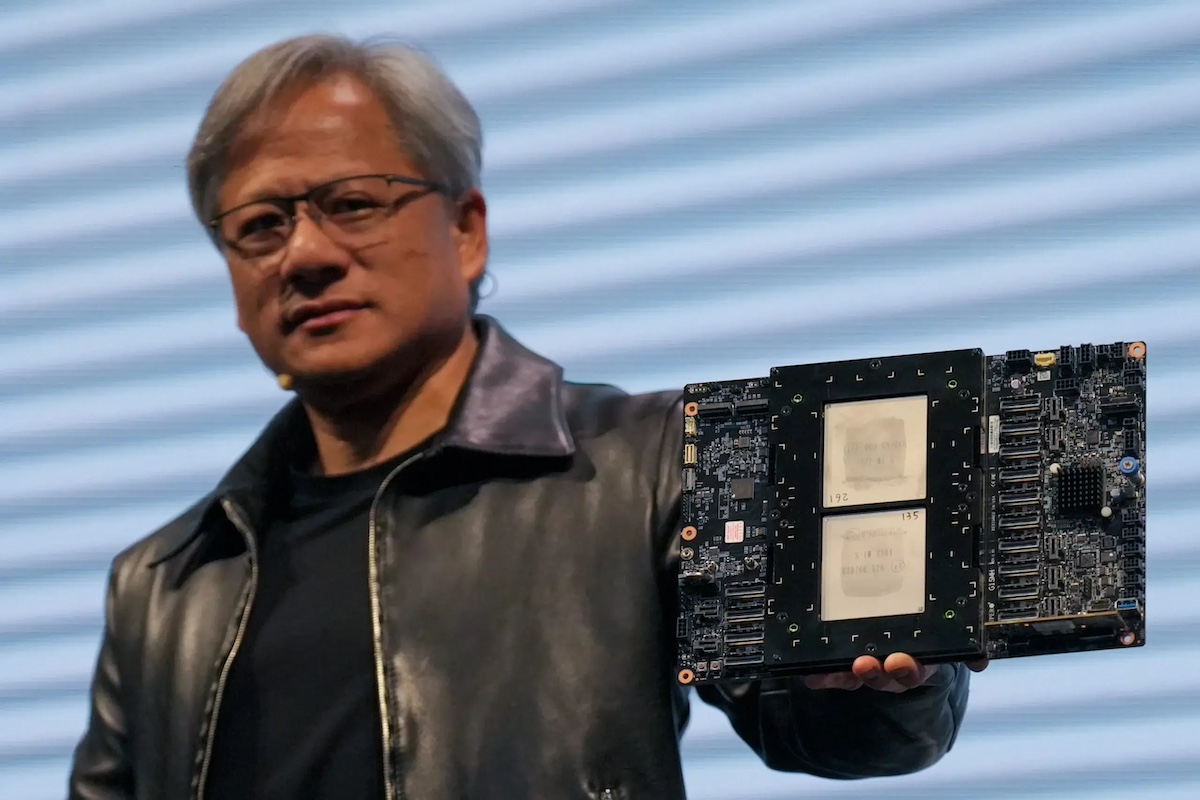
    Compliance with US semiconductor regulations presents another critical dimension. To access Nvidia’s advanced Blackwell processors, Qatari operations must implement rigorous usage tracking and security protocols matching those required of regional competitors. This necessitates detailed reporting systems, physical inspection capabilities, and strict personnel controls for technicians from designated high-risk jurisdictions.

    Despite Qatar’s considerable sovereign wealth, industry observers characterize its position as that of a late entrant in a rapidly advancing field. Marc Einstein of Counterpoint Research noted that while Qatar possesses distinct advantages in energy economics, its neighbors currently maintain superior scale and established infrastructure networks.

  • Beijing explores robots to support aging population

    Beijing explores robots to support aging population

    In the Haidian district of China’s capital, nonagenarian seniors are finding companionship in an unexpected form: chess-playing robots. This emerging scenario represents Beijing’s strategic initiative to integrate robotic assistance into elder care frameworks as the city confronts unprecedented demographic aging.

    Recent data from the Beijing Association on Aging reveals a landmark demographic shift, with citizens aged 60 and above exceeding 5.14 million in 2024—the first time this population has surpassed the five-million threshold. This accelerating aging trend has intensified pressure on traditional care systems, catalyzing significant investment in technological solutions.

    According to the Beijing Bureau of Economy and Information Technology, a comprehensive three-year pilot program (2025-2027) will deploy intelligent elderly-care robots across domestic environments, community spaces, and institutional facilities. These initiatives specifically target rehabilitation support, daily activity assistance, and emotional companionship functions.

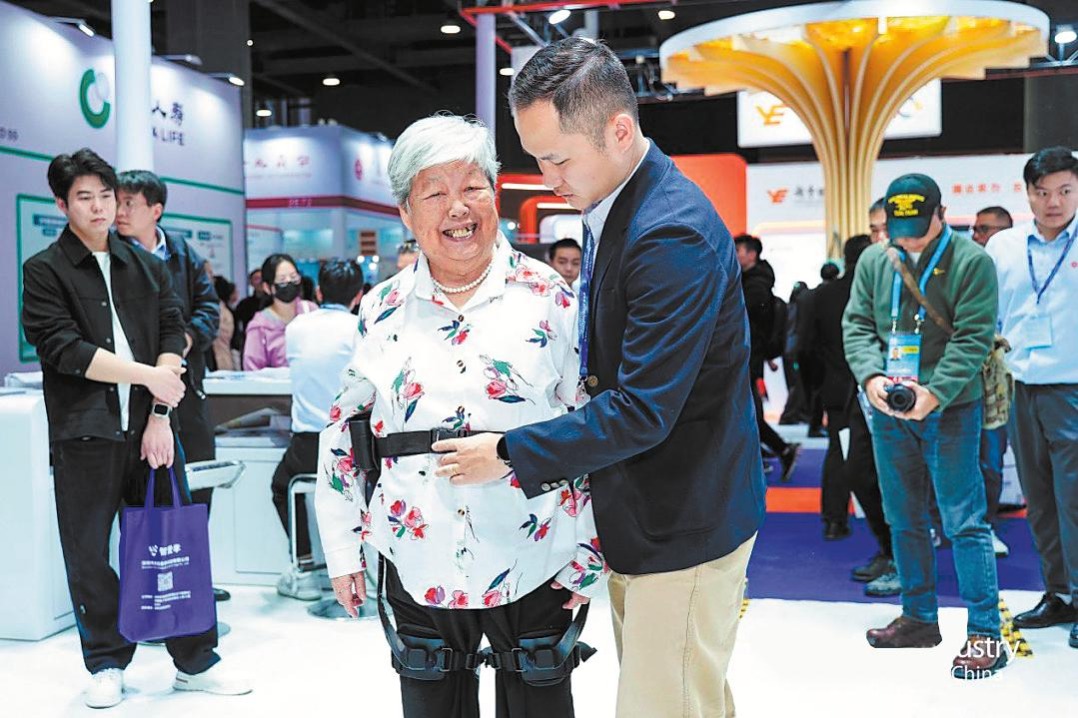
    Testing grounds like the senior technology experience center in Dongsheng town’s Longgang community showcase this technological integration. Manager Miao Fanghe reports serving over 6,000 elderly residents with rehabilitation robots and wearable exoskeletons since October 2025, with hundreds actively participating in technology trials.

    Companies like Beijing AI-Robotics Technology are supplying exoskeletons to metropolitan hospitals while conducting community training sessions in districts including Xicheng and Beijing E-town. Marketing representative Zhao Pengcheng notes that elderly users frequently seek rehabilitation following fall incidents or age-related musculoskeletal deterioration, with devices specifically designed to restore mobility and reduce knee joint stress.

    Similar implementations are visible in Changping district’s Taikang community, where robots provide rehabilitation guidance, mobility support, and continuous health monitoring.

    Despite growing adoption, Professor Li Jian of Beijing University of Posts and Telecommunications identifies persistent challenges in elderly-care robotics. While acknowledging their current utility, he emphasizes that age-friendly design—particularly regarding safety protocols and practical functionality—requires substantial refinement before achieving optimal implementation.

  • Inner Mongolia’s two ports named national smart port models

    Inner Mongolia’s two ports named national smart port models

    Two strategic ports in China’s Inner Mongolia Autonomous Region have been designated as national models for smart port development by China’s National Port Administration. Ganqimaodu Road Port and Manzhouli Railway Port emerged as standout performers among 311 ports nationwide in this prestigious recognition of digital innovation.

    Ganqimaodu Road Port, serving as a critical energy corridor for China-Mongolia cooperation, has pioneered comprehensive smart port solutions encompassing operational protocols, construction standards, and data integration frameworks. The facility has established China’s inaugural dedicated cross-border lane for autonomous transport operations, marking a significant milestone in border logistics automation.

    Through the implementation of automated guided vehicles and advanced clearance systems, Ganqimaodu has achieved remarkable efficiency gains. Customs processing efficiency has surged by over 60 percent, while transportation costs have been reduced by 15 percent. These innovations have earned the port dual recognition as both a national multimodal transport demonstration project and a China-SCO digital economy best practice case.

    Meanwhile, Manzhouli Railway Port, which functions as the largest rail freight hub for China-Russia trade, has integrated cutting-edge 5G and Internet of Things technologies to develop a comprehensive cargo monitoring ecosystem. The port’s smart system incorporates intelligent dispatching mechanisms and sophisticated risk alert capabilities.

    The technological transformation at Manzhouli has yielded dramatic operational improvements. Real-time data visualization and intelligent analytics have enabled the port to double its daily transshipment capacity from 420 to 840 twenty-foot equivalent units (TEUs). Additionally, full-train inspection procedures now require less than one minute to complete.

    This national recognition underscores Inner Mongolia’s substantial contribution to China’s broader digital transformation of port infrastructure. Both facilities offer scalable and replicable solutions that demonstrate the potential of technological innovation in border logistics. During the 14th Five-Year Plan period (2021-2025), the region has allocated 410 million yuan (approximately $58.57 million) toward 50 smart port initiatives, significantly enhancing cross-border logistics efficiency and regulatory capacity through coordinated technological governance.

  • Samsung launches Galaxy Z TriFold in the UAE today

    Samsung launches Galaxy Z TriFold in the UAE today

    Samsung Gulf Electronics has unveiled its groundbreaking Galaxy Z TriFold device in the United Arab Emirates, positioning the country among an exclusive group of five global markets receiving first access to the innovative technology. The launch, occurring on December 19, 2025, represents a significant advancement in foldable device technology and underscores the UAE’s status as a regional leader in early technology adoption.

    The Galaxy Z TriFold introduces an unprecedented tri-fold form factor that redefines mobile functionality, seamlessly transforming from a conventional smartphone into a expansive 10-inch tablet display. This engineering marvel incorporates Samsung’s most advanced technological components, including the specialized Snapdragon® 8 Elite for Galaxy processor, a professional-grade 200MP camera system, and the company’s largest foldable battery to date. The device’s structural integrity is ensured through reinforced Armor Aluminum framing and a newly developed titanium hinge mechanism designed for extended multi-fold durability.

    Fadi Abu Shamat, Vice President and Head of the Mobile eXperience Division at Samsung Gulf Electronics, emphasized the significance of the UAE launch: “The Galaxy Z TriFold marks an important milestone in Samsung’s foldables journey. The UAE has consistently embraced our most advanced technologies early, and launching here reflects our commitment to a market that leads the region in digital adoption.”

    The device’s capabilities extend beyond hardware specifications, incorporating sophisticated Galaxy AI features that enable enhanced productivity through three-app multi-window functionality, standalone Samsung DeX operation without external hardware, and advanced creative tools including Photo Assist, Generative Edit, and Sketch to Image capabilities. The integration of real-time multimodal assistance via Gemini Live further positions the device at the forefront of AI-powered mobile technology.

    The UAE launch follows an exclusive preview event held at Dubai Mall on December 2, strategically timed with National Day celebrations to highlight the country’s role as an innovation hub. The Galaxy Z TriFold is now available through Samsung brand stores, authorized retail partners, and the company’s official online platform, offering consumers in the UAE pioneering access to what Samsung describes as the future of foldable smartphone technology.

  • Will the TikTok deal mean the app changes in the US?

    Will the TikTok deal mean the app changes in the US?

    ByteDance, TikTok’s Chinese parent company, has finalized a landmark agreement with U.S. investors that will fundamentally alter how the platform operates for its American user base. This strategic move addresses longstanding national security concerns while raising critical questions about the future of TikTok’s signature user experience.

    The heart of the transformation centers on TikTok’s proprietary recommendation algorithm—the sophisticated artificial intelligence system that powers the platform’s iconic For You Page. Under the new arrangement, this algorithm will be licensed to Oracle, TikTok’s established cloud computing partner in the United States, and subsequently retrained exclusively on American user data rather than the global data streams that currently fuel its recommendations.

    Social media analyst Matt Navarra observes that the central question is no longer about TikTok’s survival but rather what form it will take. “The platform’s power has historically derived from its slightly unpredictable nature—delivering weird, niche, and sometimes politically sharp content before it appears elsewhere,” Navarra noted. “Smoothing these edges doesn’t just change content moderation; it potentially alters the platform’s cultural relevance.”

    Tech journalist Will Guyatt highlights that the American version’s differentiation may depend on whether it receives new features, security updates, and platform improvements simultaneously with the international version. Meanwhile, computational expert Kokil Jaidka from the National University of Singapore suggests that core features like short videos and integrated shopping will likely remain intact as they operate independently from the algorithm.

    The investment consortium includes Oracle—chaired by Trump ally Larry Ellison—alongside Abu Dhabi’s government investment fund MGX and private equity firm Silver Lake. Navarra warns that pressure from these institutional investors could further contribute to a “blander” user experience, transforming TikTok from the internet’s experimental playground to a more conventional social space.

    Practically, users may notice the algorithm lagging in personalization and slower adaptation to viral trends as it operates on narrower data inputs. Jaidka explains that “if TikTok operates with a licensed or partially diluted algorithm, some systemic blind spots may become more pronounced.”

    The ultimate test, according to analysts, will be whether TikTok retains its status as the internet’s premier destination for cultural experimentation or evolves into a more predictable digital environment.

  • What does TikTok’s deal mean for America’s users?

    What does TikTok’s deal mean for America’s users?

    The landmark partnership between TikTok and Oracle Corporation continues to generate uncertainty regarding the platform’s operational future for its American user base. While the arrangement nominally addresses national security concerns raised by U.S. regulators, industry observers note the conspicuous absence of detailed specifications governing user experience modifications.

    This strategic alliance, formed under intense geopolitical pressure, ostensibly creates a new entity called TikTok Global to oversee U.S. operations. Oracle’s role as a “trusted technology partner” provides the architectural framework for data security compliance, yet the practical implications for content delivery algorithms, data processing protocols, and feature accessibility remain deliberately vague in public disclosures.

    The arrangement’s ambiguity stems from complex negotiations involving multiple stakeholders: ByteDance (TikTok’s Chinese parent company), U.S. regulatory bodies, and now Oracle as the primary American technology partner. This tripartite dynamic creates inherent tensions between national security priorities, commercial interests, and user experience consistency.

    Technology analysts suggest the partnership could potentially introduce differentiated user experiences across geographical regions, with American users possibly encountering modified content recommendation algorithms or altered data retention policies. The fundamental architecture of TikTok’s service—particularly its critically acclaimed content discovery mechanism—may undergo significant recalibration to satisfy regulatory requirements.

    Market response indicates cautious optimism tempered by practical concerns. While the partnership prevents immediate platform prohibition in the United States, preserving access for TikTok’s approximately 100 million American users, the long-term user experience implications warrant continued scrutiny as implementation details emerge.

  • TikTok owner signs deal to sell US business

    TikTok owner signs deal to sell US business

    In a monumental resolution to years of geopolitical tension, TikTok’s Chinese parent company ByteDance has formally agreed to divest the majority of its U.S. operations to a consortium of American and global investors. The arrangement, detailed in an internal memo from CEO Shou Zi Chew to staff on Thursday, culminates extensive negotiations prompted by longstanding national security concerns in Washington.

    The newly formed joint venture will see ByteDance’s ownership drop to 19.9%, effectively transferring control to U.S. entities. Technology giant Oracle, investment firm Silver Lake, and Abu Dhabi-based strategic investment company MGX will each acquire 15% stakes. The remaining 30.1% will be distributed among existing ByteDance investor affiliates, creating a diversified ownership structure that satisfies regulatory requirements.

    This agreement aligns with preliminary terms disclosed in September 2024, when President Donald Trump intervened to postpone enforcement of legislation that would have prohibited the application’s operations without a sale. The original ban, enacted during the Biden administration in April 2024, was scheduled to take effect on January 20, 2025, but faced multiple administrative delays to facilitate negotiation progress.

    A critical component involves Oracle’s licensing of TikTok’s proprietary recommendation algorithm, ensuring operational continuity while addressing security apprehensions regarding foreign control over user data and content dissemination mechanisms. The White House has acknowledged this technological arrangement as vital to protecting national interests.

    The transaction is scheduled for formal closure on January 22, 2025, preserving platform access for TikTok’s extensive American user base of over 170 million. Company leadership emphasizes that this resolution safeguards both national security priorities and the application’s role in global digital community building.

    International diplomatic engagement played a role in the outcome, with President Trump noting direct communication with Chinese President Xi Jinping, who reportedly endorsed the ownership transition. Neither the White House nor Oracle provided additional commentary when solicited for response.

  • Thailand conference launches international initiative to fight online scams

    Thailand conference launches international initiative to fight online scams

    BANGKOK — In a landmark move against transnational cybercrime, Thailand has spearheaded the formation of an international coalition to tackle the escalating threat of online scams that cost global victims an estimated $18-37 billion annually. The initiative, formally launched as the Global Partnership Against Online Scams, emerged from a two-day conference co-hosted by Thailand’s Ministry of Foreign Affairs and the United Nations Office on Drugs and Crime (UNODC).

    The gathering brought together over 300 participants from nearly 60 nations, culminating in a multilateral agreement signed by Thailand, Bangladesh, Nepal, Peru, and the United Arab Emirates. The partnership framework encompasses four critical pillars: political commitment, enhanced law enforcement cooperation, comprehensive victim protection protocols, and cross-border public awareness campaigns.

    Thai Prime Minister Anutin Charnvirakul set the tone in his keynote address, emphasizing that ‘online scams reveal a deeper problem—a collective vulnerability that no country can address alone.’ This sentiment echoed throughout the conference, which highlighted how criminal enterprises, particularly those operating across Southeast Asia, have evolved to exploit digital platforms and artificial intelligence technologies.

    The private sector played a significant role in the proceedings, with tech giants Meta and TikTok contributing expertise and resources. Meta presented a threat assessment detailing how scam networks are increasingly leveraging AI to perpetrate fraud across its platforms including Facebook, Instagram, and WhatsApp. TikTok formally endorsed the conference’s closing statement, becoming one of the first corporate members of the new alliance.

    Brian Hanley, Asia-Pacific director of the Global Anti-Scam Alliance (which TikTok recently joined), stressed the necessity of multi-stakeholder engagement: ‘Scams are exploiting not only transnational boundaries but also the seams across various platforms from banks, telcos, to social media platforms.’ He emphasized that combating these sophisticated networks requires ‘all major stakeholders at the table.’

    The urgency of the initiative has been amplified by recent developments across the region, including scam center raids in Myanmar, victim repatriation challenges in Thailand, and the tragic death of a South Korean student forced into scam operations in Cambodia. While Cambodia—known as a hub for scam compounds—was notably absent from the conference due to ongoing tensions with Thailand, the collaboration represents growing regional consensus on addressing cybercrime.

    This new partnership builds upon previous multilateral efforts, including the United Nations Convention against Cybercrime signed by over 70 countries in Vietnam last October. As UN Secretary-General António Guterres characterized that agreement, such initiatives represent ‘a vow that no country, no matter their level of development, will be left defenseless against cybercrime.’