分类: technology

  • AI for farmers: UAE builds free tool trained to answer crop specific issues

    AI for farmers: UAE builds free tool trained to answer crop specific issues

    The United Arab Emirates has unveiled a groundbreaking artificial intelligence system specifically engineered to address agricultural challenges worldwide. Developed by ai71 in collaboration with 15 global organizations including CGIAR and the Gates Foundation, the AgriLLM platform represents a significant advancement in agricultural technology.

    Unlike commercial AI tools such as ChatGPT, AgriLLM operates on an open-access model, allowing free usage, modification, and development by users globally. This initiative addresses a critical gap identified by the UN’s Food and Agriculture Organization, which reports that 75% of family farmers worldwide lack reliable agricultural support systems.

    According to Mehdi Ghissassi, Chief Product and Technology Officer at ai71, the system distinguishes itself through specialized training on high-quality agricultural datasets. “While general models like ChatGPT are trained on broad, multi-domain data, AgriLLM is trained on meticulously curated agricultural information from our global partners,” Ghissassi explained.

    The system’s effectiveness is demonstrated through rigorous testing, with internal evaluations showing AgriLLM delivers factually correct responses approximately 30% more frequently than GPT-4o when addressing agricultural queries. The model prioritizes accuracy over response length, providing concise, evidence-based guidance rather than potentially misleading comprehensive answers.

    AgriLLM’s training incorporates an extensive knowledge base including over 350,000 agricultural documents, 50,000 research papers, and 120,000 validated farming questions and answers. This specialized training enables the system to address crop-specific issues, regional growing conditions, and climate-related challenges that typically challenge general-purpose AI systems.

    The platform’s functionality adapts to user specificity, with broad queries generating general advice while follow-up questions regarding soil type, location, or climate conditions trigger increasingly targeted responses drawn from its verified agricultural knowledge base.


  • Tally launches TallyPrime 7.0 to support the UAE’s SME-led digital transformation vision

    Tally launches TallyPrime 7.0 to support the UAE’s SME-led digital transformation vision

    Tally Solutions has unveiled TallyPrime 7.0 in the United Arab Emirates, introducing significant technological enhancements specifically designed to accelerate digital adoption among small and medium enterprises. This release arrives at a critical juncture as UAE SMEs—comprising over 94% of the nation’s business landscape—seek advanced solutions for compliance readiness, operational automation, and sustained growth in alignment with national initiatives like UAE Vision 2030 and the Dubai Economic Agenda D33.

    The latest version introduces major security upgrades to TallyDrive, featuring robust encryption protocols and enhanced integrity verification mechanisms. This cloud-based backup solution now provides automated local and remote data protection while ensuring businesses maintain complete control over their financial information. The system’s architecture guarantees that connectivity never compromises data privacy, enabling SMEs to transition to digital workflows with absolute confidence.

    Notably, TallyPrime 7.0 incorporates full compliance with the UAE’s new national currency symbol, seamlessly integrating the updated character across all financial documents, invoices, and reporting statements. The implementation follows Central Bank guidelines and functions perfectly within both English and Arabic interfaces, ensuring regulatory adherence without disrupting business operations.

    Additional innovations include Smart Find technology—an advanced universal search capability that allows users to locate entries across multiple company databases using partial information. The platform also prepares businesses for upcoming e-invoicing frameworks while simplifying VAT return upload processes.

    Vikas Panchal, General Manager for MENA at Tally Solutions, emphasized the company’s alignment with UAE’s digital transformation goals: ‘Our enhanced security features, automated backups, and intelligent search capabilities deliver both confidence and operational efficiency. We remain committed to reducing complexity for SMEs operating in the UAE’s rapidly evolving economic landscape.’

    The release reinforces Tally’s longstanding partnership with the GCC region through its extensive network of local partners and dedicated support infrastructure, marking another milestone in the company’s mission to empower business resilience through technological innovation.

  • New optical chip can help advance generative AI

    New optical chip can help advance generative AI

    Researchers at Shanghai Jiao Tong University have unveiled a groundbreaking optical computing chip that promises to transform the landscape of generative artificial intelligence. Dubbed LightGen, this innovative all-optical chip represents a significant leap forward in addressing the enormous computational and energy challenges facing next-generation AI systems.

    The research breakthrough, published as a featured paper in the prestigious journal Science on December 20, 2025, marks the first successful development of an all-optical computing chip capable of supporting large-scale semantic and visual generative models. This achievement comes at a critical juncture when generative AI applications are expanding into increasingly complex real-world scenarios, from instant text-to-image conversion to rapid video creation.

    Unlike conventional electronic chips that process information using electrons within transistors, LightGen harnesses the natural properties of light to achieve unprecedented processing speeds and parallelism. The technology fundamentally reimagines computational architecture by overcoming three previously insurmountable bottlenecks: integrating millions of optical neurons on a single chip, achieving comprehensive all-optical dimensional transformation, and developing specialized training algorithms for optical generative models that operate independently of ground truth data.

    According to lead researcher Chen Yitong, assistant professor at Shanghai Jiao Tong University’s School of Integrated Circuits, LightGen’s architecture enables a complete ‘input-understanding-semantic manipulation-generation’ cycle entirely through optical processes. The system can extract and represent semantic information from input images, then generate new media data under semantic control—effectively enabling light to both ‘understand’ and ‘cognize’ complex information patterns.

    Experimental results demonstrate LightGen’s capability to perform high-resolution image semantic generation, 3D modeling, high-definition video generation, and sophisticated semantic control operations. The chip supports diverse large-scale generative tasks including advanced denoising and feature transfer applications.

    Performance evaluations conducted under rigorous computational standards revealed that LightGen achieves generation quality comparable to leading electronic neural networks like Stable Diffusion and NeRF, while delivering staggering efficiency improvements. Testing showed computational and energy efficiency enhancements of two orders of magnitude compared to top-tier digital chips, even when using relatively outdated input devices. Theoretical projections suggest that with advanced devices, LightGen could achieve computational power improvements of seven orders of magnitude and energy efficiency improvements of eight orders of magnitude.

    This development signals a potential paradigm shift in the post-Moore’s law era, where global research efforts are increasingly focused on next-generation computing solutions. As generative AI becomes more deeply integrated into production systems and daily life, LightGen opens new pathways for developing high-speed, energy-efficient generative intelligent computing systems that could fundamentally reshape AI implementation across industries.

  • ‘LeBron James of spreadsheets’ wins world Microsoft Excel title

    ‘LeBron James of spreadsheets’ wins world Microsoft Excel title

    LAS VEGAS – In a stunning upset that transformed spreadsheet mastery into sporting drama, Irish competitor Diarmuid Early captured the Microsoft Excel World Championship title, dethroning three-time champion Andrew Ngai of Australia. The 2025 finals, held at the HyperX Arena, featured the intensity of traditional esports with a $60,000 prize pool elevating office software into a competitive spectacle.

    Under dazzling arena lights with roaring crowds and live commentary, Early faced off against 255 global competitors whittled down to 24 finalists. The Galway-born, Waterford-raised champion described the transition from solitary practice to the electrifying Vegas environment as ‘outrageous’ and ‘hectic,’ with non-noise-canceling headphones failing to fully isolate competitors from the roaring stands.

    The competition structure employs brutal timed eliminations, removing last-place contestants every five minutes during final rounds. Early, previously known for ‘choking’ in major tournaments despite his financial Excel championship wins, finally delivered under pressure. His victory earned him the championship belt, $5,000 prize, and the unofficial title ‘LeBron James of Excel spreadsheets.’

    Now residing in New York where he operates a financial business, Early has gained client attention through his competitive success. The competition itself has evolved beyond its financial origins over two decades, now testing general problem-solving through challenges like maze navigation, poker hand scoring, and historical battle sorting – all executed within 30-minute timed sessions with escalating difficulty.

    The emerging esport maintains an active global community through WhatsApp groups and YouTube tutorials, though Early remains hesitant about short-form social media platforms. With the next ‘Road to Las Vegas Battle’ scheduled for January 2026, competitive spreadsheeting continues growing as both spectacle and serious test of rapid analytical thinking within Microsoft’s ubiquitous software.

  • China’s top cyberspace regulator launches drive against capital market misinformation

    China’s top cyberspace regulator launches drive against capital market misinformation

    China’s Cyberspace Administration (CAC), in coordination with the China Securities Regulatory Commission (CSRC), has initiated a comprehensive campaign targeting the proliferation of misinformation within digital platforms concerning capital markets. The initiative, announced on December 19, 2025, underscores a strategic move to preserve the integrity and stability of financial information ecosystems.

    Regulatory authorities have identified and penalized multiple online accounts for disseminating fabricated content. These violations encompass a spectrum of malpractices, including the deliberate fabrication of false initial public offering (IPO) policies, the concoction of baseless ‘exclusive disclosures,’ and the propagation of purported ‘inside information’ without substantiation.

    Further investigations revealed coordinated efforts by certain entities to ‘maliciously aggregate’ negative narratives targeting listed companies and financial institutions. These accounts engaged in the distortion of publicly accessible corporate data—such as ownership structures and financial statements—to damage corporate reputations and artificially depress market confidence.

    The CAC also highlighted the misuse of provocative and suggestive language by certain influencers who frequently made unsubstantiated predictions about stock movements in attempts to attract web traffic and manipulate audience engagement.

    Emphasizing the high sensitivity of capital markets to information accuracy, the regulator affirmed that creating or spreading false financial content constitutes a severe disruption to information order and market stability. Such activities will face stringent legal repercussions.

    The administration has concurrently called on internet users to enhance their financial literacy and vigilance, advising the public to refrain from creating, disseminating, or believing unverified rumors related to financial markets.

  • China unveils a new AI meteorological model

    China unveils a new AI meteorological model

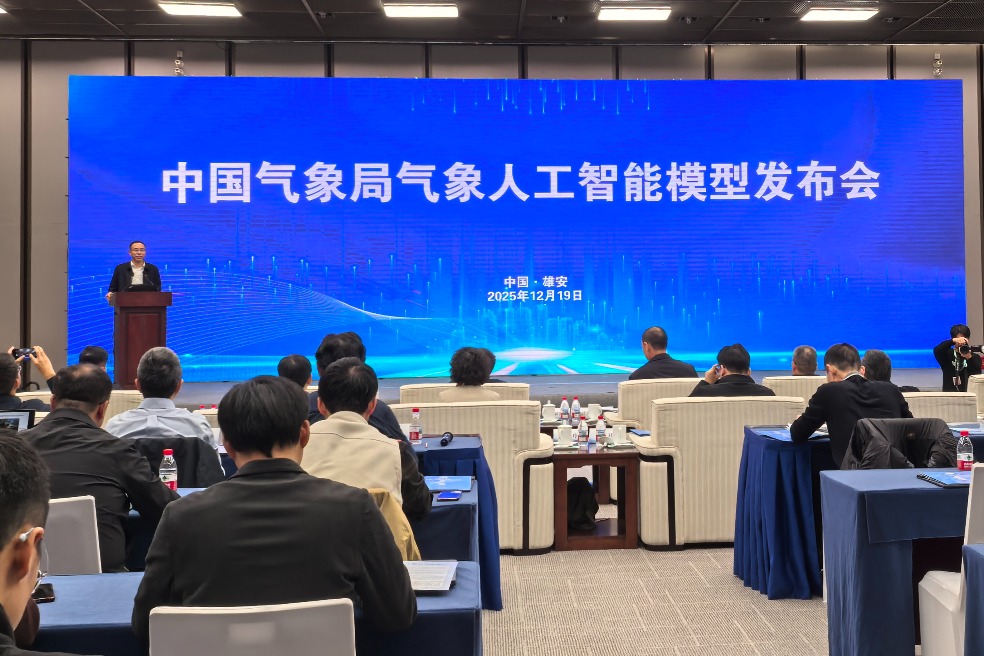
    China has achieved a significant technological breakthrough with the official launch of Fengyuan V1.0, a pioneering artificial intelligence meteorological model unveiled on December 19, 2025, in Xiong’an, Hebei Province. This open-source platform represents China’s first end-to-end scientific model base with fully independent intellectual property rights, marking a transformative advancement in weather forecasting capabilities.

    Developed through collaboration between the Chinese Academy of Meteorological Sciences and the Xiong’an Institute of Meteorological Artificial Intelligence, Fengyuan V1.0 operates as a unified, large-scale AI system that manages the entire scientific data pipeline. The model’s architecture enables direct generation of global weather predictions from raw observational data, bypassing traditional forecasting limitations.

    Chief Scientist Wang Yaqiang of the Chinese Academy of Meteorological Sciences revealed the ambitious roadmap for Fengyuan, stating: ‘Our long-term vision involves evolving this into an open forecasting system driven entirely by observational data with integrated multi-sphere coupling capabilities.’ The model’s open-source nature is strategically designed to consolidate global research and development efforts, ultimately providing robust theoretical and technical foundations for operational forecasting once maturity testing is complete.

    Deputy Administrator Cao Xiaozhong of the China Meteorological Administration emphasized the model’s critical applications in extreme weather detection, particularly for short-term imminent weather events. The administration plans to develop specialized vertical AI meteorological models targeting strategic sectors including the low-altitude economy, energy infrastructure, logistics networks, and health meteorology to better support economic and social development objectives.

    Concurrently, upgraded versions of complementary meteorological AI systems—Fengqing, Fenglei, and Fengshun—were released alongside the inauguration of a joint Earth System AI Forecasting laboratory established between Fudan University and the Xiong’an Institute. The launch ceremony also highlighted China’s commitment to international collaboration, with plans to promote meteorological AI applications among Belt and Road Initiative partner nations and strengthen partnerships between leading AI innovation teams worldwide.

  • Qatar bets on cheap power to catch up in Gulf AI race

    Qatar bets on cheap power to catch up in Gulf AI race

    Qatar is strategically deploying its substantial energy resources and financial capital to establish a competitive position in the artificial intelligence sector, despite entering later than regional counterparts. The nation’s recently unveiled initiative, Qai—supported by its $526 billion sovereign wealth fund and a $20 billion partnership with Brookfield—represents its most significant investment to date in an industry transforming global technological and economic landscapes.

    This development aligns with broader Gulf Cooperation Council efforts to diversify beyond hydrocarbon dependence, mirroring substantial AI infrastructure investments in Saudi Arabia and the United Arab Emirates. Qatar’s primary competitive advantage stems from its exceptionally low electricity costs, a critical factor for energy-intensive AI data centers operating in desert climates with high cooling demands.

    However, industry analysts identify multiple structural challenges beyond financial capacity. Gulf states must implement Western-standard data governance frameworks, navigate stringent US export controls on advanced semiconductor technology, and attract scarce specialized talent within an intensely competitive global market. Stephen Beard of Knight Frank emphasized that regulatory adaptation, particularly regarding data privacy laws, remains the most significant barrier to widespread AI deployment.

    While Qatar has disclosed limited operational details about Qai, its emergence responds to escalating demand for computational infrastructure as corporations increasingly integrate AI systems. Mohammed Soliman from the Middle East Institute noted that American hyperscalers—including Google, Microsoft, and Meta—welcome additional capacity development in energy-rich regions with favorable financing conditions.

    Infrastructure scalability remains crucial for regional competitiveness. Analyst projections indicate approximately $800 billion may be invested in Middle Eastern AI data center development over the next two years. Qatar’s progress will be measured against regional benchmarks: Saudi Arabia’s Humain targets 6-gigawatt capacity by 2034, while the UAE’s G42 is constructing a 5-gigawatt AI campus potentially ranking among the largest globally outside the United States.

    Compliance with US semiconductor regulations presents another critical dimension. To access Nvidia’s advanced Blackwell processors, Qatari operations must implement rigorous usage tracking and security protocols matching those required of regional competitors. This necessitates detailed reporting systems, physical inspection capabilities, and strict personnel controls for technicians from designated high-risk jurisdictions.

    Despite Qatar’s considerable sovereign wealth, industry observers characterize its position as that of a late entrant in a rapidly advancing field. Marc Einstein of Counterpoint Research noted that while Qatar possesses distinct advantages in energy economics, its neighbors currently maintain superior scale and established infrastructure networks.

  • Beijing explores robots to support aging population

    Beijing explores robots to support aging population

    In the Haidian district of China’s capital, nonagenarian seniors are finding companionship in an unexpected form: chess-playing robots. This emerging scenario represents Beijing’s strategic initiative to integrate robotic assistance into elder care frameworks as the city confronts unprecedented demographic aging.

    Recent data from the Beijing Association on Aging reveals a landmark demographic shift, with citizens aged 60 and above exceeding 5.14 million in 2024—the first time this population has surpassed the five-million threshold. This accelerating aging trend has intensified pressure on traditional care systems, catalyzing significant investment in technological solutions.

    According to the Beijing Bureau of Economy and Information Technology, a comprehensive three-year pilot program (2025-2027) will deploy intelligent elderly-care robots across domestic environments, community spaces, and institutional facilities. These initiatives specifically target rehabilitation support, daily activity assistance, and emotional companionship functions.

    Testing grounds like the senior technology experience center in Dongsheng town’s Longgang community showcase this technological integration. Manager Miao Fanghe reports serving over 6,000 elderly residents with rehabilitation robots and wearable exoskeletons since October 2025, with hundreds actively participating in technology trials.

    Companies like Beijing AI-Robotics Technology are supplying exoskeletons to metropolitan hospitals while conducting community training sessions in districts including Xicheng and Beijing E-town. Marketing representative Zhao Pengcheng notes that elderly users frequently seek rehabilitation following fall incidents or age-related musculoskeletal deterioration, with devices specifically designed to restore mobility and reduce knee joint stress.

    Similar implementations are visible in Changping district’s Taikang community, where robots provide rehabilitation guidance, mobility support, and continuous health monitoring.

    Despite growing adoption, Professor Li Jian of Beijing University of Posts and Telecommunications identifies persistent challenges in elderly-care robotics. While acknowledging their current utility, he emphasizes that age-friendly design—particularly regarding safety protocols and practical functionality—requires substantial refinement before achieving optimal implementation.

  • Inner Mongolia’s two ports named national smart port models

    Inner Mongolia’s two ports named national smart port models

    Two strategic ports in China’s Inner Mongolia Autonomous Region have been designated as national models for smart port development by China’s National Port Administration. Ganqimaodu Road Port and Manzhouli Railway Port emerged as standout performers among 311 ports nationwide in this prestigious recognition of digital innovation.

    Ganqimaodu Road Port, serving as a critical energy corridor for China-Mongolia cooperation, has pioneered comprehensive smart port solutions encompassing operational protocols, construction standards, and data integration frameworks. The facility has established China’s inaugural dedicated cross-border lane for autonomous transport operations, marking a significant milestone in border logistics automation.

    Through the implementation of automated guided vehicles and advanced clearance systems, Ganqimaodu has achieved remarkable efficiency gains. Customs processing efficiency has surged by over 60 percent, while transportation costs have been reduced by 15 percent. These innovations have earned the port dual recognition as both a national multimodal transport demonstration project and a China-SCO digital economy best practice case.

    Meanwhile, Manzhouli Railway Port, which functions as the largest rail freight hub for China-Russia trade, has integrated cutting-edge 5G and Internet of Things technologies to develop a comprehensive cargo monitoring ecosystem. The port’s smart system incorporates intelligent dispatching mechanisms and sophisticated risk alert capabilities.

    The technological transformation at Manzhouli has yielded dramatic operational improvements. Real-time data visualization and intelligent analytics have enabled the port to double its daily transshipment capacity from 420 to 840 twenty-foot equivalent units (TEUs). Additionally, full-train inspection procedures now require less than one minute to complete.

    This national recognition underscores Inner Mongolia’s substantial contribution to China’s broader digital transformation of port infrastructure. Both facilities offer scalable and replicable solutions that demonstrate the potential of technological innovation in border logistics. During the 14th Five-Year Plan period (2021-2025), the region has allocated 410 million yuan (approximately $58.57 million) toward 50 smart port initiatives, significantly enhancing cross-border logistics efficiency and regulatory capacity through coordinated technological governance.

  • Samsung launches Galaxy Z TriFold in the UAE today

    Samsung launches Galaxy Z TriFold in the UAE today

    Samsung Gulf Electronics has unveiled its groundbreaking Galaxy Z TriFold device in the United Arab Emirates, positioning the country among an exclusive group of five global markets receiving first access to the innovative technology. The launch, occurring on December 19, 2025, represents a significant advancement in foldable device technology and underscores the UAE’s status as a regional leader in early technology adoption.

    The Galaxy Z TriFold introduces an unprecedented tri-fold form factor that redefines mobile functionality, seamlessly transforming from a conventional smartphone into a expansive 10-inch tablet display. This engineering marvel incorporates Samsung’s most advanced technological components, including the specialized Snapdragon® 8 Elite for Galaxy processor, a professional-grade 200MP camera system, and the company’s largest foldable battery to date. The device’s structural integrity is ensured through reinforced Armor Aluminum framing and a newly developed titanium hinge mechanism designed for extended multi-fold durability.

    Fadi Abu Shamat, Vice President and Head of the Mobile eXperience Division at Samsung Gulf Electronics, emphasized the significance of the UAE launch: “The Galaxy Z TriFold marks an important milestone in Samsung’s foldables journey. The UAE has consistently embraced our most advanced technologies early, and launching here reflects our commitment to a market that leads the region in digital adoption.”

    The device’s capabilities extend beyond hardware specifications, incorporating sophisticated Galaxy AI features that enable enhanced productivity through three-app multi-window functionality, standalone Samsung DeX operation without external hardware, and advanced creative tools including Photo Assist, Generative Edit, and Sketch to Image capabilities. The integration of real-time multimodal assistance via Gemini Live further positions the device at the forefront of AI-powered mobile technology.

    The UAE launch follows an exclusive preview event held at Dubai Mall on December 2, strategically timed with National Day celebrations to highlight the country’s role as an innovation hub. The Galaxy Z TriFold is now available through Samsung brand stores, authorized retail partners, and the company’s official online platform, offering consumers in the UAE pioneering access to what Samsung describes as the future of foldable smartphone technology.