分类: technology

  • Google settles with Epic Games with offer to lower its app store commissions

    Google settles with Epic Games with offer to lower its app store commissions

    In a landmark settlement ending a protracted legal battle, Google has agreed to significantly restructure its Android app store operations. The tech giant will reduce its controversial commission fees and establish a certification pathway for alternative app marketplaces, marking a substantial shift from its previous monopoly practices.

    The concessions, formally submitted to a federal court in San Francisco, stem from Epic Games’ August 2020 antitrust lawsuit challenging Google’s payment system. The Fortnite developer argued that Google’s 15-30% commissions on in-app transactions stifled competition and consumer choice.

    This resolution follows the U.S. Supreme Court’s refusal to hear Google’s appeal against a federal judge’s order mandating comprehensive Play Store reforms. A 2023 trial jury had previously declared Google’s ecosystem an illegal monopoly, creating legal pressure that forced the company’s hand.

    Under the new framework, Google will lower baseline commissions for subscriptions and e-commerce to 10-20%. Additionally, apps preferring to remain within the Play Store can opt for a separate 5% payment processing fee. Developers retain the freedom to use alternative payment systems, while consumers gain access to certified third-party app stores with reduced security warnings.

    Though U.S. District Judge James Donato must approve the proposed registration process as an alternative to more drastic measures ordered in October 2024, Google is already preparing to implement these changes globally. The rollout will commence in the United States, United Kingdom, and European Union.

    Epic Games CEO Tim Sweeney, who has long advocated for open digital platforms, endorsed the settlement. ‘This transformation elevates Android to a genuinely open platform,’ Sweeney stated during a joint interview with Google’s Android executive Sameer Samat. Samat acknowledged the company’s desire to ‘focus more energy on building than quarreling’ after years of legal acrimony.

    The reduced fee structure may impact profits at Alphabet Inc., Google’s parent company. However, with a current market valuation of $3.7 trillion—quadruple its worth when Epic filed suit—Alphabet remains well-positioned to absorb financial impacts.

    This settlement occurs amid broader antitrust challenges for Google, including ongoing cases regarding its search engine monopoly and digital advertising practices. Meanwhile, Epic’s parallel crusade against Apple’s App Store continues with less optimistic prospects for similar concessions, as courts have not deemed Apple’s ecosystem monopolistic.

    Sweeney referenced Rolling Stones lyrics to characterize the outcome: ‘You can’t always get what you want, but if you try, you can often get what you need. And what we need is competition.’


  • China advances in quantum technology, sets global records with new innovations: national political adviser

    China advances in quantum technology, sets global records with new innovations: national political adviser

    China has solidified its global leadership in quantum technology through groundbreaking achievements that redefine technological boundaries, according to Pan Jianwei, a prominent national political adviser and quantum physicist. Speaking ahead of the 14th CPPCC National Committee session, Pan revealed how China has transformed technological constraints into strategic advantages during the 14th Five-Year Plan period (2021-25).

    The nation has maintained unparalleled dominance in quantum communication while securing first-tier global positioning in quantum computing capabilities. Most remarkably, China has achieved international prominence across multiple domains of quantum precision measurement through revolutionary innovations.

    Among the most significant breakthroughs is the Jinan-1 micro-nano satellite, described by Pan as a ‘cosmic messenger.’ This compact, cost-effective satellite has enabled quantum-secured communication spanning over 10,000 kilometers between China and South Africa—setting an unprecedented global record for secure quantum transmission distance.

    Concurrently, Chinese scientists have developed the strontium atomic optical lattice clock with unimaginable precision, operating with less than one second of error across 30 billion years. This redefinition of temporal measurement provides ‘Chinese time’ to the world while ensuring strategic security and economic operational independence.

    Perhaps most impressively, China overcame comprehensive international embargoes on dilution refrigerators—critical components for quantum computing—by independently developing large-capacity systems meeting rigorous global standards. These domestically produced refrigerators now support the advanced processors powering the Zuchongzhi quantum computer, demonstrating China’s remarkable capacity to mobilize national resources and convert technological bottlenecks into growth opportunities.

    Pan emphasized the emergence of a younger, more interdisciplinary research team capable of both frontier exploration and engineering breakthroughs. Looking toward the 15th Five-Year Plan period (2026-30), China plans to intensify original innovation, accelerate industry-academia-research integration, and transform scientific achievements into practical applications. Quantum technology is poised to become a fundamental driver of new-quality productive forces, ultimately empowering high-quality economic and social development nationwide.

  • Protesters rally in San Francisco against OpenAI deal with Pentagon

    Protesters rally in San Francisco against OpenAI deal with Pentagon

    San Francisco became the epicenter of a growing technological ethics debate this week as demonstrators gathered to vocally oppose OpenAI’s newly revealed collaboration with the U.S. Department of Defense. The protest movement, gaining momentum through digital activism and street demonstrations, reflects deepening concerns about the militarization of artificial intelligence technology.

    The controversy emerged following disclosures that the maker of ChatGPT had entered into a strategic partnership with Pentagon officials, though specific project details remain classified. This development has triggered what industry observers are calling a ‘significant user exodus’ from OpenAI’s flagship platform, with uninstallation rates reportedly surging across multiple metrics since the announcement.

    Protest organizers, representing a coalition of digital rights activists, ethical AI researchers, and concerned citizens, argue that military applications fundamentally violate OpenAI’s original charter principles emphasizing beneficial AI development. ‘We founded this movement to ensure artificial intelligence would serve humanity, not warfare,’ stated one demonstrator holding a sign reading ‘ETHICS NOT ARMS’ outside OpenAI’s headquarters.

    The backlash illustrates the challenging balance AI companies face between commercial opportunities, government contracts, and maintaining public trust. While defense officials characterize the collaboration as focusing on ‘cybersecurity enhancements and veteran support services,’ skeptics remain unconvinced, fearing eventual weaponization pathways.

    Industry analysts note this represents a pivotal moment for the AI sector, where ethical considerations increasingly collide with expansion ambitions. The user backlash demonstrates how quickly public sentiment can shift when perceived ethical boundaries are crossed, potentially establishing precedent for how AI firms approach governmental partnerships moving forward.

  • Regulator contacts Meta over workers watching intimate AI glasses videos

    Regulator contacts Meta over workers watching intimate AI glasses videos

    The UK Information Commissioner’s Office (ICO) has initiated formal communications with Meta following disturbing revelations about the handling of sensitive user content captured through the company’s AI-powered smart glasses. This development comes after a joint investigation by Swedish publications Svenska Dagbladet and Goteborgs-Posten uncovered that outsourced workers in Kenya had access to highly personal recordings, including intimate moments and private activities.

    According to the investigation, data annotators employed by Nairobi-based outsourcing firm Sama reviewed unfiltered content from Meta’s Ray-Ban smart glasses, which included footage of individuals using toilets, engaging in sexual activity, and changing clothes. One worker reportedly stated, ‘We see everything – from living rooms to naked bodies,’ highlighting the severe privacy implications.

    Meta acknowledged that contracted workers sometimes review user content to enhance the AI experience but emphasized its commitment to data protection. ‘When people share content with Meta AI, like other companies we sometimes use contractors to review this data to improve people’s experience with the glasses,’ the company told BBC News. Meta claims to employ privacy filters, including face blurring technology, though sources indicated these measures frequently failed.

    The Ray-Ban Meta glasses feature recording capabilities activated either manually or through voice commands, with a visible light indicator signaling active recording. However, users may not fully comprehend that their content could undergo human review, as detailed in Meta’s extensive privacy policies that few thoroughly read.

    The ICO expressed significant concerns, stating: ‘Devices processing personal data, including smart glasses, should put users in control and provide for appropriate transparency. Service providers must clearly explain what data is collected and how it is used.’ The watchdog is now seeking clarification on Meta’s compliance with UK data protection laws.

    This incident raises broader questions about the ethical implications of AI-powered wearable technology and the responsibility of tech giants to protect user privacy amidst rapid technological advancement. Previous reports have already documented concerns about smart glasses being used for non-consensual recording, particularly affecting women.

    Sama, the outsourcing company involved, has a complicated history with content moderation services. Previously designated as an ‘ethical’ B-corp, the company faced criticism and legal action from former employees regarding its content moderation practices and has since discontinued such services.

  • China achieves breakthrough in high-orbit satellite-ground laser communication

    China achieves breakthrough in high-orbit satellite-ground laser communication

    Chinese scientists have established a groundbreaking milestone in space communication technology by successfully demonstrating high-speed laser data transmission between Earth and a satellite in high orbit. The unprecedented achievement, accomplished across a staggering distance of 40,740 kilometers, represents a quantum leap in satellite-ground communication capabilities.

    The pioneering experiment, a collaborative effort between the Chinese Academy of Sciences’ Institute of Optics and Electronics, Beijing University of Posts and Telecommunications, and the China Academy of Space Technology, utilized a specialized observatory facility in Yunnan province to establish a stable optical link with a geosynchronous satellite. This technological marvel achieved simultaneous two-way communication at remarkable speeds of 1 gigabit per second – comparable to terrestrial fiber-optic performance but accomplished across interplanetary distances.

    What distinguishes this breakthrough is its exceptional operational performance: the system established a laser connection in merely four seconds and maintained uninterrupted transmission for over three hours. This represents a monumental improvement from previous minute-level durations to sustained hour-level operation, marking the first time such stability has been achieved in the challenging high-orbit environment.

    The technological implications extend far beyond raw data transmission speeds. This advancement effectively transforms high-orbit satellites from simple data relay stations into potential intelligent processing hubs capable of receiving complex commands and executing sophisticated operations in real-time. The demonstrated capability addresses two critical challenges in space communication: achieving peak transmission rates for data-intensive applications and ensuring prolonged operational stability for advanced interactive systems.

    Researchers emphasize that this breakthrough establishes a mature engineering model for future space infrastructure. The validated technology paves the way for establishing high-speed laser communication networks with lunar bases, Mars missions, and deep space probes, effectively laying the foundation for an integrated Earth-space network that could revolutionize humanity’s approach to space exploration and satellite operations.

  • Some West African farmers turn to TikTok as part of agriculture’s changing image

    Some West African farmers turn to TikTok as part of agriculture’s changing image

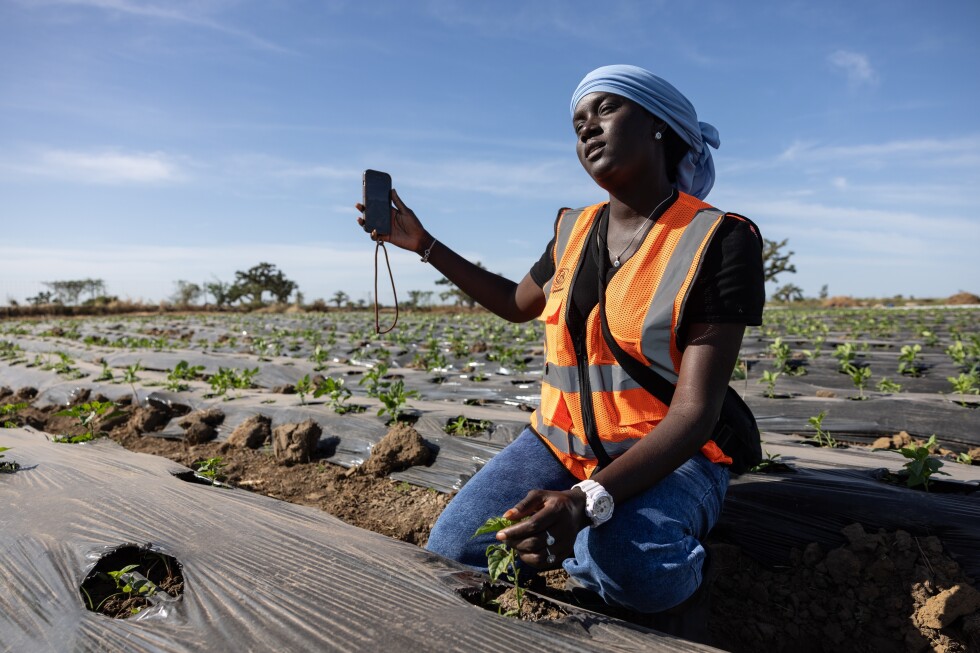
    DAKAR, Senegal — A digital agricultural revolution is unfolding across West Africa as farmers leverage social media platforms like TikTok to transform traditional farming practices and market access. What began as entertainment platforms have evolved into vital business tools for millions of agricultural producers throughout the region.

    Pape Fall, a Senegalese farmer, exemplifies this transformation. Initially using TikTok for football highlights and humorous content, Fall now conducts most of his business through the platform. His profile features looped videos showcasing cucumber harvests set to Senegalese rap music, complete with availability details and contact information. This digital approach has enabled him to directly connect with buyers, bypassing traditional intermediaries.

    The phenomenon represents a significant shift in how agriculture is perceived and practiced in a region historically plagued by food insecurity and poverty. While foreign funding reductions from U.S. and other international donors have exacerbated challenges, social media has emerged as an unexpected solution, providing both educational resources and market opportunities.

    According to Abbie Phatty-Jobe, digital agriculture specialist at U.K.-based research firm Caribou, “Social media is democratizing access to information for farmers.” Caribou’s research, the first to examine regional farmers’ TikTok usage, has helped establish a network of 24 agricultural influencers across 11 African countries, reaching approximately 5 million people with content that translates scientific research into practical farming advice.

    The platform’s impact extends beyond marketing. Fall credits TikTok tutorials with improving his cultivation techniques, specifically mentioning advice from a Moroccan farmer about cucumber stem management that significantly increased his yields. This knowledge exchange occurs across continents, with farmers from North Africa to Asia sharing best practices.

    Regional preferences vary significantly: West African farmers favor TikTok’s video format and local language support, while East African producers prefer Facebook’s text-based posts due to higher literacy rates. Successful entrepreneurs like 29-year-old Nogaye Sene have built substantial businesses through these platforms, with Instagram and TikTok generating 70% of her clients for farmland management services targeting both local residents and diaspora investors.

    However, challenges persist. Sene warns of widespread online scams involving fake farming consultants, while researcher Nicolas Paget notes that approximately 80% of farmers lack smartphones capable of running these applications. Even those with access face prohibitive data costs, with West African data packages being more expensive than European equivalents.

    Despite these barriers, the organic adoption of existing social platforms appears more effective than customized solutions. As Paget observes, “Farmers are using existing apps in very creative ways and adapting them to their needs”—a testament to the innovative spirit driving agricultural digitalization in West Africa.

  • X suspends revenue sharing for undisclosed AI war videos

    X suspends revenue sharing for undisclosed AI war videos

    In a significant policy shift, social media platform X has announced stringent measures against creators who disseminate artificially generated conflict footage without proper disclosure. The Elon Musk-owned company revealed Tuesday that participants in its Creator Revenue Sharing program will face 90-day suspensions for posting AI-generated videos of armed conflicts without clear labeling.

    The decision emerges amid escalating geopolitical tensions involving the United States, Israel, and Iran, where synthetic media poses unprecedented challenges to information integrity. Nikita Bier, X’s Head of Product, emphasized the critical need for authentic battlefield information during wartime, noting that current AI technologies have made it “trivial to create content that can mislead people.”

    This policy reversal marks a notable departure from X’s previous stance on content moderation. Since Musk’s $44 billion acquisition of the platform (formerly Twitter) in October 2022, the company has systematically dismantled most misinformation policies, characterizing them as forms of censorship. The new framework introduces escalating penalties, with repeat offenders facing permanent removal from the revenue program that distributes advertising earnings to eligible creators.

    Enforcement will leverage multiple detection methods, including Community Notes (the platform’s crowd-sourced fact-checking system), metadata analysis, and technical signals embedded within AI-generated content. The company confirmed ongoing refinements to both policies and technical infrastructure to enhance trust during critical global events.

  • Goodbye officer, hello touchscreen – a vision for policing in Ethiopia

    Goodbye officer, hello touchscreen – a vision for policing in Ethiopia

    Ethiopia has inaugurated its first unmanned police station in Addis Ababa’s Bole district, marking a significant milestone in the country’s Digital Ethiopia 2030 initiative. The innovative facility features partitioned booths equipped with computer tablets instead of traditional front desks, creating an unusually quiet environment devoid of the typical commotion of police stations.

    Commander Demissie Yilma, head of the police technology expansion department, demonstrated the system to BBC reporters. Users select incident categories—crime, traffic reports, or general concerns—enter details via tablet, and subsequently connect with remote officers via video call rather than chatbots. This hybrid approach combines digital automation with human oversight, ensuring immediate response coordination with patrol units when necessary.

    The pilot station recorded modest initial usage with just three reports in its first week—a lost passport, financial fraud case, and routine complaint. Authorities anticipate increased adoption as public awareness grows. Prime Minister Abiy Ahmed has championed the initiative as part of broader efforts to make ‘law enforcement institutions competent and competitive’ through digital reform.

    This innovation addresses both accessibility challenges and personnel constraints, potentially expanding police services to underserved areas. However, it emerges against a complex backdrop: Ethiopia trails continental peers in digital transformation due to historically low internet penetration rates and periodic connectivity disruptions stemming from recent conflicts and political instability.

    The national digital strategy aims to overhaul public services including identity systems, payments, and judicial administration. Recent telecommunications sector liberalization has accelerated mobile payment adoption in the local currency, while government services migration online continues progressively.

    Technology policy analyst Zelalem Gizachew notes measurable progress: ‘Digital payments have boomed with trillions of birr moving through electronic transactions. Broadband access has expanded sharply, and over 130 government services have been digitized.’

    Yet significant challenges persist. UNESCO data indicates 79% of Ethiopians lack internet access, creating adoption barriers. Senior software engineer Birhan Nega Cheru acknowledges efficiency gains—reduced paperwork and office visits—but highlights cybersecurity vulnerabilities and exclusion risks for digitally illiterate, elderly, rural, and low-income populations.

    The station remains an experimental prototype operating in a controlled environment with officer assistance. Its future expansion depends less on technological sophistication than organic public adoption without guided facilitation. This quiet room in Bole represents both a practical test case and symbolic manifestation of Ethiopia’s broader digital ambitions intersecting with everyday civic life.

  • Meet ‘Dasheng’: A system-level scientific AI agent

    Meet ‘Dasheng’: A system-level scientific AI agent

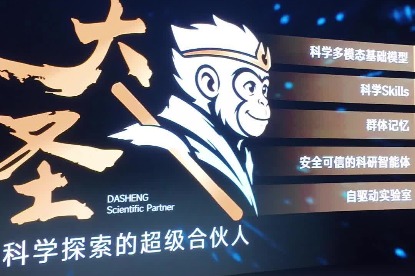
    Shanghai, March 1, 2026 – In a landmark development for artificial intelligence research, the Shanghai Academy of AI for Science and Fudan University have jointly launched a significantly upgraded version of their NovaInspire platform, featuring the groundbreaking scientific AI agent ‘Dasheng’. Named after the legendary Monkey King from Chinese mythology, this system represents a quantum leap in AI capabilities for scientific discovery.

    The Dasheng AI agent integrates multiple cutting-edge technologies including multimodal foundation models, long-term collective memory systems, and expert-level scientific capabilities within a secure, trustworthy framework. What distinguishes Dasheng from conventional AI systems is its capacity for multi-threaded processing and continuous autonomous evolution, enabling it to tackle complex, real-world scientific problems that have previously challenged researchers.

    This system-level scientific partner incorporates self-driving laboratory capabilities, allowing for unprecedented automation in experimental processes and data analysis. The integration of these advanced features positions Dasheng as a transformative force in research methodology, potentially accelerating breakthroughs across multiple scientific disciplines from materials science to pharmaceutical development.

    The development team emphasizes that Dasheng represents more than just incremental improvement – it constitutes a fundamental paradigm shift in how scientific research can be conducted. By combining artificial intelligence with laboratory automation, the system creates a continuous cycle of hypothesis generation, experimentation, and analysis that operates with minimal human intervention.

    This announcement comes at a time when global competition in artificial intelligence research has intensified, with multiple nations and corporations investing heavily in next-generation AI systems. The successful development of Dasheng demonstrates China’s growing capabilities in advanced AI research and its application to scientific challenges.

  • China issues guidelines to boost recycling, utilization of solar modules

    China issues guidelines to boost recycling, utilization of solar modules

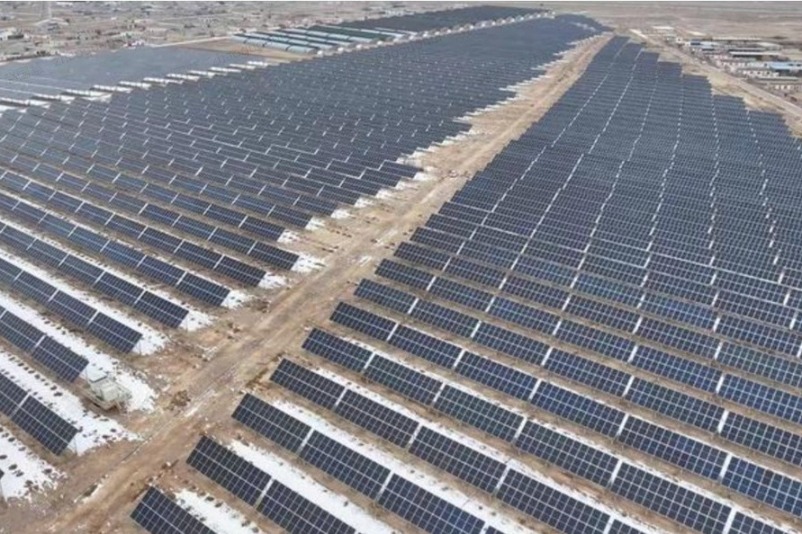
    In a significant move toward sustainable energy management, China has launched comprehensive national guidelines to establish a robust ecosystem for recycling and reusing decommissioned solar photovoltaic (PV) modules. The Ministry of Industry and Information Technology, in coordination with five other governmental bodies, introduced the framework on Tuesday to address the impending surge of retired solar equipment expected from the nation’s massive renewable energy expansion.

    The newly released directives outline a multi-faceted approach to building system-level capacity for handling end-of-life PV components. Central to the strategy is the enhancement of green manufacturing standards for solar modules, increased incorporation of recycled materials in production, and the development of improved scrap assessment protocols alongside advanced testing methodologies.

    Technological innovation forms the cornerstone of China’s recycling initiative. The guidelines emphasize critical breakthroughs in several key areas including surface-structure dismantling techniques, high-efficiency separation of laminated components, and advanced material extraction processes. These technological advancements will enable the broader application of recycled PV-derived products across multiple industrial sectors such as metal smelting, equipment manufacturing, and construction materials.

    The policy framework establishes concrete targets, including achieving cumulative comprehensive utilization of retired PV modules reaching 250,000 tonnes by 2027. By 2030, China aims to realize substantial upgrades in recycling technology and equipment, strengthen industrial innovation capabilities, and expand application scenarios for recycled products. The long-term vision includes creating a tightly coordinated upstream-downstream supply chain with rationally distributed capacity布局 capable of handling large-scale retirements of solar infrastructure.

    Additionally, the guidelines call for the development of comprehensive technical standards for green design and utilization of PV modules while fostering a cohort of leading enterprises specializing in end-of-life solar component processing. This strategic move positions China at the forefront of circular economy practices within the global renewable energy sector.