分类: technology

  • India mandates pre-installation of government cyber safety app on all smartphones

    India mandates pre-installation of government cyber safety app on all smartphones

    India’s telecommunications ministry has issued a sweeping directive requiring all smartphone manufacturers to pre-install the government-developed ‘Sanchar Saathi’ cybersecurity application on new devices. The mandate, announced Monday, gives device makers a 90-day compliance window and explicitly prohibits users from uninstalling the application. Additionally, the order extends to existing smartphones through mandatory software updates, significantly expanding the regulation’s reach beyond new market offerings.

    The Ministry of Communications justified the measure as essential protection for India’s 1.2 billion mobile users against cyber fraud and telecommunications security threats. Official data indicates the application, launched in January, has already facilitated the recovery of over 700,000 lost devices and garnered more than 5 million downloads since its introduction.

    However, digital privacy advocates have raised substantial concerns regarding user consent and potential surveillance implications. Nikhil Pahwa, founder of technology policy platform MediaNama, characterized the move as governmental ‘testing of waters’ that could pave the way for more intrusive applications. ‘Once a government app is forcibly pre-installed on our devices, what prevents future implementations that might enable surveillance?’ Pahwa questioned, emphasizing that smartphones represent personal spaces where users traditionally maintain choice over content.

    The directive is anticipated to encounter significant opposition from international smartphone manufacturers, particularly U.S.-based Apple, whose established policies prohibit pre-installation of third-party applications, including those mandated by governments. This development aligns with similar initiatives observed in other nations, including Russia’s requirement for pre-installed MAX messaging service, which critics identify as possessing surveillance capabilities.

  • India orders smartphone makers to preload state-owned cyber safety app

    India orders smartphone makers to preload state-owned cyber safety app

    In a significant move to combat rising cybercrime, India’s telecommunications ministry has issued a directive requiring all smartphone manufacturers to pre-install the government’s Sanchar Saathi application on new devices. The order, dated November 28 and privately communicated to major technology companies, mandates that the cybersecurity app cannot be disabled or removed by users.

    The directive affects industry giants including Apple, Samsung, Vivo, Oppo, and Xiaomi, giving them a 90-day compliance window for new devices. For existing phones already in distribution channels, manufacturers must deploy the application through software updates. This development places India alongside other nations like Russia in implementing state-backed digital security measures.

    Sanchar Saathi, launched in January, has demonstrated substantial impact in India’s telecommunications landscape. Government statistics reveal the app has facilitated the recovery of over 700,000 lost mobile devices, including 50,000 in October alone. The platform operates through a central registry system that enables tracking and blocking of stolen smartphones across all networks while identifying fraudulent mobile connections.

    The ministry emphasized that the measure addresses serious cybersecurity threats posed by duplicate or spoofed International Mobile Equipment Identity (IMEI) numbers, which enable various scams and network misuse. India’s massive telecom market, serving more than 1.2 billion subscribers, makes such security measures particularly significant.

    Industry analysts note potential challenges, especially from Apple, which maintains strict policies against pre-installing third-party or government applications on its devices. Counterpoint Research indicates iOS powers approximately 4.5% of India’s 735 million smartphones, with Android dominating the remainder. Historical precedent suggests Apple may seek negotiated alternatives rather than full compliance with the pre-installation requirement.

    Privacy advocates have expressed concerns about the mandatory nature of the implementation. Technology lawyer Mishi Choudhary noted that ‘the government effectively removes user consent as a meaningful choice,’ echoing criticisms previously directed at similar measures in Russia regarding their state-backed MAX messenger app.

    As of the latest reports, affected companies and the telecommunications ministry have not issued public statements regarding the directive. The development represents a notable intersection of government security initiatives, digital privacy considerations, and corporate policy in one of the world’s largest mobile markets.

  • Global content creators discover Hangzhou’s tech magic

    Global content creators discover Hangzhou’s tech magic

    A diverse delegation of global content creators hailing from Australia, Nepal, Iraq, and Morocco recently concluded an immersive exploration of Hangzhou, the provincial capital of Zhejiang in Eastern China. Their mission was to witness firsthand the city’s remarkable integration of advanced technology into urban life and natural environments, offering a tangible preview of future technological applications.

    The expedition commenced at the Wensan Future Science Technology Experience Center, where participants engaged with a suite of interactive innovations. They tested state-of-the-art VR gaming systems, experimented with augmented reality through AR glasses, and interacted with sophisticated AI-powered robots designed for companionship and assistance.

    The technological showcase continued in Shuangpu Town, where the creators observed agile quadruped robots demonstrating unprecedented mobility by effortlessly navigating staircases and complex terrain. This display of biomechanical engineering highlighted significant advancements in robotic locomotion and stability.

    Subsequently, the journey proceeded to Yunqi Town, a recognized hub for China’s digital economy. Here, the group gained insights into the ecosystem driving technological innovation and participated in a breathtaking 3D flight simulation that provided a digital aerial tour of the iconic West Lake. The final segment at Tongjian Lake illustrated the harmonious synergy between digital infrastructure and ecological preservation, showcasing intelligent systems that manage environmental conservation alongside urban development.

  • China breaks ‘foreign technological monopolies’ with carbon fiber production line

    China breaks ‘foreign technological monopolies’ with carbon fiber production line

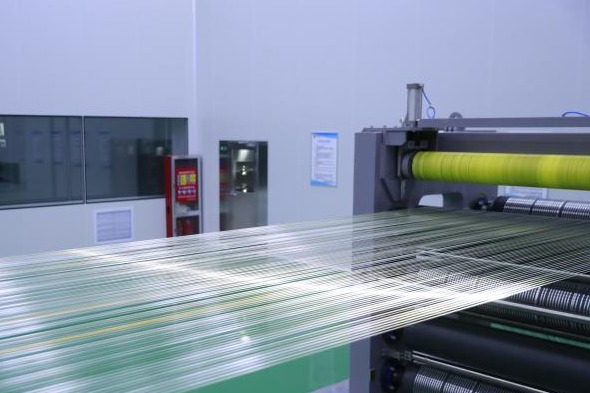
    China has achieved a significant technological milestone with the successful launch of its T1000 carbon fiber production line in Datong, Shanxi Province. This groundbreaking facility, which commenced operations on Sunday, represents a crucial advancement in China’s capability for large-scale manufacturing of high-performance carbon materials—a substance often referred to as the ‘monarch of novel materials.’

    The demonstration production line, with an annual capacity of 200 tons for 12K small tow T1000 carbon fiber, initiated construction in June 2024. This project constitutes the initial phase of a comprehensive high-performance carbon fiber initiative spearheaded by Shanxi Huayang Carbon Material Technology. The enterprise emerged from a strategic collaboration between Huayang New Material Technology Group, the municipal government of Datong, and the Institute of Coal Chemistry under the Chinese Academy of Sciences.

    According to Director Fang Yitian of the Institute of Coal Chemistry, this achievement effectively dismantles long-standing international technological monopolies while reinforcing the security and robustness of China’s supply chain for essential materials. High-performance carbon fiber stands as a priority within China’s strategic emerging industries, serving as both the lifeblood and vanguard for sophisticated high-tech applications, advanced defense technologies, and the global transformation of conventional industries.

    Technical specifications reveal the extraordinary properties of T1000 carbon fiber: with a single filament diameter measuring merely 6 to 7 micrometers—less than one-tenth the width of a human hair—it exhibits a tensile strength surpassing 6400 MPa. Despite having a density equivalent to one-quarter that of steel, its strength exceeds steel’s by more than fivefold. A practical illustration demonstrates that a one-meter strand of Huayang’s T1000 carbon fiber, weighing only 0.5 grams, can sustain a load of 200 kilograms. The material additionally demonstrates exceptional resistance to high temperatures and corrosion, maintaining chemical inertness in both acidic and alkaline conditions, while offering superior thermal and electrical conductivity.

    These characteristics render it invaluable across diverse sectors including national defense, aerospace, rail transportation, and the emerging low-altitude economy. Industry experts note its extensive potential applications in wind turbine blade manufacturing and high-performance sports equipment.

    Project academic leader Lü Chunxiang, simultaneously a researcher at the Institute of Coal Chemistry, affirmed that China has attained comprehensive domestic supply security for high-end carbon fiber alongside self-sufficiency in technological innovation. His team previously overcame the challenges of aerospace-grade T300 carbon fiber production in 2008, positioning China as the third nation globally—after Japan and the United States—to master this technology. The T800 carbon fiber developed by his team was utilized in bobsleds and helmets for Chinese athletes during the Beijing Winter Olympics.

    Reflecting on the development journey, Lü acknowledged initial obstacles, recalling how foreign corporations dominated both carbon fiber technology and markets back in 2003. Today, Shanxi has evolved into an essential supply base for high-end carbon fiber applications within China.

    Huayang New Material Technology Group General Manager Wang Dali committed to intensifying market orientation, maintaining integrated progress in technological and industrial innovation, and deepening focus on T1000 carbon fiber to develop competitive, market-valued high-tech products.

    Datong Mayor Liu Junyi characterized the project as not merely a milestone but a transformative breakthrough for the high-quality development of Datong’s new material industry. He anticipates the initiative will accelerate the growth of associated sectors within Datong, including high-end equipment manufacturing and new energy storage, while attracting numerous upstream and downstream supporting enterprises to establish operations in the city.

  • China’s first sea-based rocket net recovery platform delivered

    China’s first sea-based rocket net recovery platform delivered

    China has achieved a significant milestone in its commercial space ambitions with the recent delivery of its inaugural seaborne rocket recovery platform. This groundbreaking infrastructure, officially named “Linghangzhe” (Pathfinder), represents the nation’s first certified marine-based system designed specifically for retrieving rocket components using advanced net technology.

    The platform received formal certification from the China Classification Society, marking its compliance with all necessary class and statutory requirements for maritime rocket recovery operations. This development provides crucial support infrastructure for China’s rapidly expanding reusable launch vehicle programs, potentially revolutionizing how space companies recover and reuse rocket stages.

    This achievement follows i-Space’s August launch of their specialized landing vessel “Xingjiguihang” (Stellar Return), featuring an expansive 40-by-60-meter recovery deck engineered to retrieve the first stage of the company’s SQX-3 reusable methane-liquid oxygen rocket. The simultaneous progress across multiple Chinese aerospace entities indicates a coordinated national push toward reusable space technology.

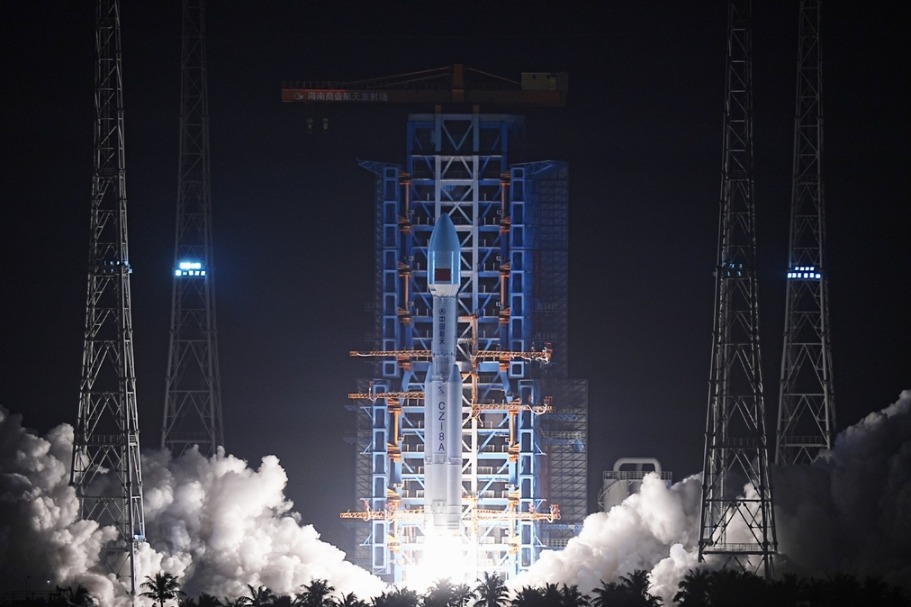
    The same period witnessed China’s new-generation manned launch vehicle, the Long March-10, successfully complete its initial static fire test. This vehicle family includes two configurations: the standard Long March-10 and the reusable Long March-10A variant, demonstrating China’s parallel development of both government and commercial space capabilities.

    Chinese aerospace companies are accelerating reusable vehicle development through competitive innovation. LandSpace conducted successful ground ignition tests for its Zhuque-3 rocket’s first-stage propulsion system in June, while multiple entities have completed essential vertical takeoff and landing demonstrations—critical validation steps for reusable rocket technology.

  • Beijing’s AI sector output expected to top $63 billion

    Beijing’s AI sector output expected to top $63 billion

    Beijing’s artificial intelligence sector is projected to achieve unprecedented growth with industrial output expected to exceed 450 billion yuan ($63.6 billion) by the conclusion of 2025, according to an official white paper released by municipal authorities. The comprehensive industry report, jointly published by the Beijing Science & Technology Commission and the Administrative Commission of Zhongguancun Science Park, reveals remarkable expansion metrics for the first half of the year, with sector output reaching 215.22 billion yuan—representing a substantial 25.3 percent year-on-year increase.

    The Chinese capital has solidified its position as the nation’s premier AI hub, hosting more than 2,500 specialized enterprises and 183 registered large-scale AI models. Industry analysts note that Beijing’s innovation ecosystem has matured significantly, developing what the white paper describes as ‘a globally competitive industrial chain’ that spans research, development, and commercialization phases.

    Technological breakthroughs continue to emerge from the region, including the recent launch of Bohrium by the AI for Science Institute. This pioneering platform claims to be the world’s first comprehensive AI research system capable of managing the entire scientific process from literature review through computation, experimentation, and cross-disciplinary collaboration.

    Commercial applications are demonstrating robust performance, with leading technology firms including Baidu and Douyin reporting record-breaking revenue figures and user engagement metrics. The successful monetization pathways underscore the sector’s transition from experimental development to sustainable economic contribution, positioning Beijing at the forefront of global AI innovation and implementation.

  • China boosts commercial space sector

    China boosts commercial space sector

    In a landmark move for its space industry, China has established its first dedicated government body to oversee commercial space operations. The China National Space Administration (CNSA) recently formed the Department of Commercial Space Operations, marking an unprecedented institutional commitment to nurturing the private space sector.

    This strategic development coincides with the release of a comprehensive action plan outlining 22 specific measures to achieve high-quality growth in commercial space activities by the end of 2027. The blueprint integrates commercial space ambitions into national space strategy across five critical domains: enhancing technological innovation, optimizing resource allocation, promoting commercial products and services, improving regulatory management, and implementing full-chain safety supervision.

    The establishment of this specialized department signals a profound transformation in China’s space ecosystem. For nearly seven decades since the industry’s foundation, which will celebrate its 70th anniversary next year, space programs remained exclusively under state control through entities like CNSA, the Chinese Academy of Sciences, and major state-owned contractors including China Aerospace Science and Technology Corp.

    Over recent years, however, private enterprises have emerged as significant contributors to China’s space ambitions, fueled by supportive government policies and concrete assistance. This growing private sector involvement has generated substantial demand for commercial launch services, particularly in satellite deployment.

    Currently, five Chinese private companies—i-Space, Galactic Energy, Space Pioneer, LandSpace, and Orienspace—have successfully conducted orbital launches using independently developed carrier rockets. The industry’s latest development features Beijing-based LandSpace preparing to launch its inaugural reusable rocket, the ZQ 3, in coming weeks, positioning itself to compete with American pioneer SpaceX in reusable launch technology.

  • New system extracts water from atmosphere

    New system extracts water from atmosphere

    Shanghai researchers have unveiled a groundbreaking atmospheric water harvesting system that represents China’s transition from follower to leader in this emerging technology sector. Developed by Shanghai Jiao Tong University’s interdisciplinary ITEWA team, the comprehensive solution addresses global water scarcity through three distinct technological pathways tailored to different climate conditions.

    The system employs condensation, adsorption, and a novel heat pump coupled with adsorption/absorption technologies to extract drinking water from atmospheric moisture. This approach enables operation across diverse environments ranging from high temperature/humidity regions to areas with low temperature/humidity or high temperature/low humidity conditions.

    Commercialized through Shanghai-based technology firm AtmosWell, the innovation includes multiple product configurations. These range from solar-powered off-grid drinking stations capable of producing 50 liters daily without infrastructure to large-scale engineering platforms generating 1,600 liters per day for island communities, hotels, and emergency disaster relief scenarios. The portfolio also features plug-and-play water bars for office and home use.

    Professor Wang Ruzhu, lead scientist of the ITEWA team and 2023 Global Energy Prize laureate, emphasized the technology’s significance: “Extracting potable water from air represents one of humanity’s ultimate dreams for addressing uneven water distribution. We’ve systematically transformed laboratory breakthroughs into adaptable engineering solutions that serve society’s core needs.”

    The technology overcomes traditional challenges of atmospheric water extraction by adapting to complex climate variations through proprietary purification systems that combine traditional filtration with newly developed low-temperature rapid cooling antibacterial technology and comprehensive water circulation preservation.

    Market analysis from QYResearch projects the global atmospheric water collector market will reach $420 million by 2031, growing at 4.8% CAGR. Shanghai municipal technology officials highlight the innovation’s potential for environmental conservation, noting it could reduce the 600 billion plastic water bottles produced annually worldwide, of which only 9% are currently recycled.

  • Experts: Tech to play positive role in art world

    Experts: Tech to play positive role in art world

    NANNING—At a pivotal gathering of thought leaders, the intersection of technology and art emerged as a powerful catalyst for innovation, with experts advocating for a symbiotic relationship between these traditionally distinct fields. The 2025 National Conference on Science Popularization Content Creation, organized by the China Science Writers Association, became a platform for envisioning how disruptive technologies like artificial intelligence could revolutionize creative expression without supplanting human artistry.

    Shu Yong, a member of the National Committee of the Chinese People’s Political Consultative Conference and vice-president of the Kaiming Art Academy, presented a compelling vision of mutual empowerment between science and art. “While technological revolutions have historically sparked artistic revolutions,” he noted, “I equally believe art can propel technological development forward. The humanities offer invaluable perspectives that guide technological advancement with ethical and creative considerations.”

    The acclaimed artist, who has incorporated AI into his painting practice for three years, emphasized that his engagement with technology transcends mere production of visually striking works. Instead, he described it as “an exploration of knowledge through continuous creation”—a process that generates timeless classics reflective of their technological era while preserving irreplaceable humanistic elements.

    Documentary filmmaker Li Chengcai reinforced this perspective, addressing the critical challenge of translating complex scientific concepts into accessible public understanding. “We must maintain both the solemnity of scientific principles and the engaging storytelling that resonates with general audiences,” Li explained. He characterized this balancing act as navigating an inherent conflict between rigid scientific accuracy and narrative flexibility, where the ultimate goal is discovering “the warmth and humanistic care within science.”

    The conference highlighted several successful integrations of technology and art, including this year’s Spring Festival Gala presentation where robots performed the traditional yangko dance—an artistic demonstration of AI’s potential future applications. Such collaborations, experts agreed, make scientific concepts visible, comprehensible, and emotionally perceptible through artistic approaches.

    Ultimately, the gathering served as both forecast and foundation: a prediction of inevitable changes brought by disruptive technologies, and a commitment to ensuring these changes enrich rather than diminish human creativity. The China Science Writers Association aims to cultivate an innovative culture through such dialogues, expanding the forms and impact of popular science works in an increasingly technologically-integrated world.

  • Over 120,000 home cameras hacked for ‘sexploitation’ footage

    Over 120,000 home cameras hacked for ‘sexploitation’ footage

    South Korean law enforcement has apprehended four individuals following a sophisticated cybercrime operation involving the unauthorized access of more than 120,000 Internet Protocol (IP) cameras installed in private residences and commercial establishments. The suspects allegedly exploited security vulnerabilities in these devices to capture intimate footage, which was subsequently converted into sexually exploitative content and monetized on an overseas digital platform.

    According to Sunday’s announcement from the National Police Agency, the perpetrators capitalized on weak authentication measures, particularly simplistic passwords commonly used by IP camera owners. These connected devices, frequently employed for home security, child monitoring, or pet surveillance, represent a more affordable alternative to traditional closed-circuit television systems.

    The compromised cameras were located across diverse settings including private dwellings, karaoke venues, a Pilates studio, and a gynecological clinic. Police confirmed the suspects operated independently without collusion, though their collective actions accounted for a significant portion of illegal content on the distribution website.

    One individual stands accused of infiltrating 63,000 cameras and producing 545 explicit videos, generating approximately 35 million won ($12,235) in cryptocurrency payments. Another allegedly penetrated 70,000 devices, creating and selling 648 videos for 18 million won in digital assets. Together, their output constituted roughly 62% of all material uploaded to the illicit platform over the past twelve months.

    Authorities are coordinating with international partners to dismantle the website and investigate its operators. Three additional individuals have been detained for purchasing and viewing the illegal content. Cyber Investigation Chief Park Woo-hyun emphasized the severity of these crimes, stating: “IP camera hacking and illegal filming inflict immense suffering on victims. We will eradicate them through vigorous investigations, including prosecution of those who view or possess illicit recordings.”

    Victim notification procedures are underway, with officials personally visiting or contacting affected individuals at 58 confirmed locations to provide security guidance and password change assistance. The National Police Agency reiterated the critical importance of user vigilance, recommending immediate and regular password updates for all IP camera owners.