分类: technology

  • Shaping a human-centric future for AI – AI Impact Summit 2026

    Shaping a human-centric future for AI – AI Impact Summit 2026

    New Delhi hosted a landmark convergence of global leadership at the AI Impact Summit 2026, marking a pivotal chapter in technological history. Prime Minister Narendra Modi welcomed representatives from over 100 nations alongside innovators and thousands of youth participants, creating what organizers described as the world’s most democratized AI gathering.

    The summit positioned artificial intelligence as a civilization-altering force comparable to fundamental discoveries like fire and electricity, but with unprecedented acceleration. Unlike previous technological revolutions, AI’s transformative effects are unfolding within weeks rather than decades, creating both extraordinary opportunities and urgent challenges.

    Central to the discussions was India’s philosophical shift toward human-centric AI development. The principle of ‘Sarvajana Hitaya, Sarvajana Sukhaya’ (Welfare for All, Happiness of All) formed the ethical foundation for conversations about AI’s global role. This approach contrasts with machine-centric models, emphasizing technology as an amplifier of human potential rather than a replacement for human agency.

    India demonstrated practical implementations through case studies including ‘Sarlaben,’ an AI-powered digital assistant serving 3.6 million dairy farmers with real-time guidance in local languages. Another platform, Bharat Vistaar, provides multilingual agricultural information to empower farmers with crucial data from weather patterns to market dynamics.

    The summit’s most significant contribution emerged as India’s ‘Manav’ framework for global AI governance. This comprehensive structure establishes five pillars: Moral and Ethical Systems for ethical guidelines, Accountable Governance through transparent oversight, National Sovereignty regarding data rights, Accessible and Inclusive implementation to prevent monopolization, and Valid and Legitimate systems adhering to verifiable legal standards.

    Addressing critical trust challenges, Prime Minister Modi proposed authenticity labeling for digital content analogous to nutritional labels on food products. This initiative responds to growing concerns about deepfakes and disinformation threatening democratic societies. India has already implemented legal requirements for labeling synthetically generated content.

    The summit highlighted India’s substantial infrastructure investments under the India AI Mission, including deployment of thousands of GPUs and establishment of a national AI Repository. These developments enable even small startups to access world-class computing power at affordable rates, potentially reshaping the global innovation landscape.

    With its unique combination of demographic dynamism, democratic values, and technological ambition, India positioned itself as a testing ground for inclusive AI solutions. The country’s invitation to global innovators—’Design and develop in India. Deliver to the world’—signals its aspiration to become the epicenter of human-centric artificial intelligence development.

  • iPhone 18 Pro and iPhone Fold may launch together this September

    iPhone 18 Pro and iPhone Fold may launch together this September

    Apple appears poised to revolutionize its smartphone lineup with the simultaneous launch of its inaugural foldable iPhone and the iPhone 18 Pro series this September, according to emerging supply chain intelligence. Recent disclosures indicate that display production for both product categories will commence in July, maintaining Apple’s traditional timeline for fall releases.

    The technological convergence represents a significant strategic shift for Apple, which previously considered staggering the release of its standard iPhone 18 models across different timeframes. Industry observers note that Samsung Display has been exclusively commissioned for manufacturing the sophisticated foldable screens, with LG Display notably absent from this particular project.

    Engineering foldable displays presents substantial technical challenges, particularly regarding crease minimization, durability enhancement, and precision hinge mechanics. Apple has reportedly dedicated extensive research and development resources to overcome these hurdles, with prototype testing circulating through supply chains for several years.

    The anticipated September unveiling would mark Apple’s formal entry into the competitive foldable smartphone market, positioning its offering alongside established flagship models. This strategic move demonstrates Apple’s commitment to innovation while maintaining its premium product positioning.

    Despite mounting evidence from manufacturing channels, Apple maintains its characteristic silence regarding unannounced products, neither confirming nor denying the existence of the foldable iPhone project. The tech community awaits official confirmation, potentially coming during Apple’s traditional September launch event.

  • Apple AI glasses: Release date, features and expected UAE price

    Apple AI glasses: Release date, features and expected UAE price

    Apple is reportedly accelerating development of its long-rumored AI-powered smart glasses, marking a significant advancement in wearable technology. According to Bloomberg reports, the tech giant is working on three distinct AI wearables: smart glasses, a pendant device, and camera-equipped AirPods, all designed to integrate Siri more deeply into daily life.

    The glasses project represents a strategic shift from earlier expectations of full augmented reality capabilities. Instead of complex AR overlays, Apple appears focused on practical AI assistance through sophisticated computer vision technology. This approach contrasts with the company’s high-end Vision Pro spatial computing device, priced at Dh13,999 in the UAE, positioning the glasses as a more accessible everyday companion.

    Technical specifications indicate the glasses will feature dual integrated cameras—one dedicated to computer vision and another for photo and video capture. The device will include microphones, speakers, and on-device AI processing, all embedded within the frame without requiring an external battery pack. This represents a significant engineering achievement from earlier prototypes that relied on separate power sources.

    A potentially groundbreaking development emerged through Apple’s recent acquisition of startup Q.ai for approximately $2 billion. The company specialized in machine learning systems capable of interpreting silent voice input through micro facial movements and subvocalization detection. This technology could enable users to communicate with Siri without audible speech, revolutionizing voice assistant interactions in crowded or private settings.

    While no official release date has been confirmed, industry speculation suggests a potential launch within the next year. Pricing is expected to significantly exceed Meta’s Ray-Ban Smart Glasses, currently available for Dh1,549 in the UAE market. The integration of advanced silent communication technology positions Apple’s offering as a potentially transformative product in the rapidly evolving AI wearable landscape.

  • Global summit calls for ‘secure, trustworthy and robust AI’

    Global summit calls for ‘secure, trustworthy and robust AI’

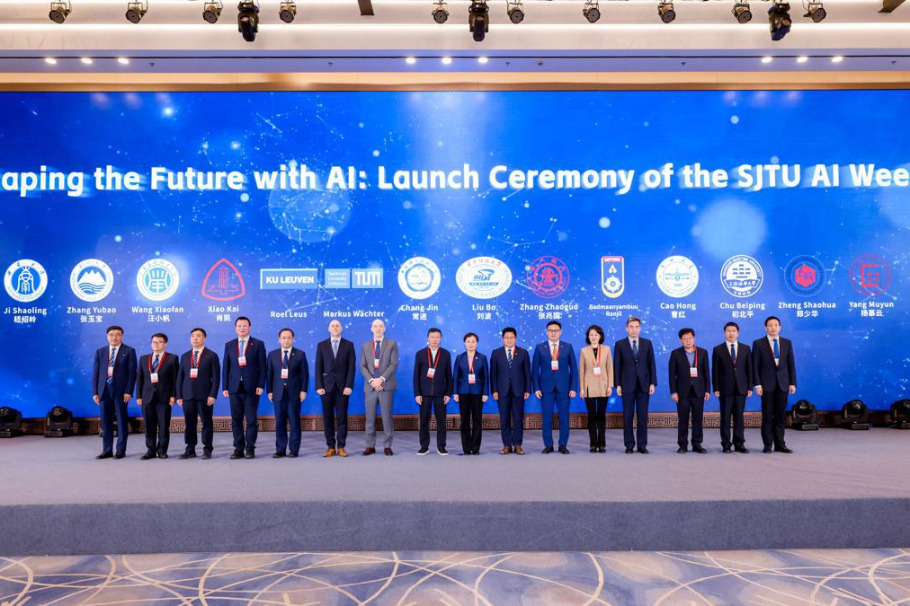
    The fourth annual AI Impact Summit concluded in Delhi on Saturday with a broad declaration signed by 86 nations, including previous holdout the United States and technological rival China. The joint statement advocated for ‘secure, trustworthy and robust’ artificial intelligence but stopped short of establishing any binding regulatory frameworks or concrete commitments.

    Attended by tens of thousands of participants, including top technology executives, the five-day summit marked the first gathering hosted by a developing nation. The declaration acknowledged generative AI as ‘an inflection point in technological evolution’ and emphasized that AI’s promise is best realized ‘only when its benefits are shared by humanity.’

    Despite the wide endorsement, the summit faced significant criticism from analysts and advocacy groups. Amba Kak, co-executive director of the AI Now Institute, dismissed the declaration as ‘another round of generic voluntary promises’ that primarily served industry interests rather than public protection.

    The statement addressed several critical areas including AI safety risks, job displacement concerns, and the technology’s substantial energy consumption. It emphasized reskilling initiatives for workers and developing energy-efficient AI systems, but provided no specific mandates or timelines for implementation.

    The event was not without its controversies and organizational challenges. US delegation head Michael Kratsios explicitly rejected global AI governance prior to the signing, stating America’s approach would remain ‘unapologetically friendly to entrepreneurship and innovation.’ The summit also produced viral moments, notably the awkward refusal of rival CEOs Sam Altman (OpenAI) and Dario Amodei (Anthropic) to hold hands on stage.

    Looking forward, the UN will establish an Independent International Scientific Panel on Artificial Intelligence to work toward ‘science-led governance,’ while the next AI summit is scheduled for Geneva in 2027. India leveraged the event to announce over $200 billion in expected AI investments, positioning itself to compete with established technological superpowers.

  • UAE authorities warn of AI powering e-begging schemes during Ramadan

    UAE authorities warn of AI powering e-begging schemes during Ramadan

    United Arab Emirates security officials have uncovered a disturbing technological evolution in electronic begging schemes, revealing that artificial intelligence tools now power sophisticated digital panhandling operations targeting charitable donors during Ramadan.

    Cybercrime units report that fraudsters leverage AI capabilities to fabricate compelling medical emergencies within minutes, generating photorealistic hospital scenes, forging official documents, and scripting emotionally manipulative narratives designed to trigger sympathy. These fabricated appeals spread rapidly across social media platforms, WhatsApp groups, and community forums during the holy month when charitable engagement peaks.

    Brigadier Ali Salem, speaking on behalf of UAE authorities, characterized electronic begging as “a technologically sophisticated crime increasingly fuelled by artificial intelligence.” He explained that AI enables fraudsters to industrialize their operations, flooding digital channels with convincing yet entirely fabricated hardship cases before their authenticity can be questioned.

    The technical sophistication includes AI-generated images of critically ill patients, fabricated hospital documents complete with official stamps and signatures, emotional voice recordings, and manipulated videos simulating humanitarian crises. Some operations even create counterfeit platforms mimicking licensed charitable organizations.

    Brigadier Omar Ahmed Abu Al Zoud, Director-General of the General Department of Criminal Security and Ports, emphasized the organized nature of these campaigns: “Electronic begging today is not confined to physical locations. We are seeing structured online campaigns where fabricated hardship cases are circulated to unlawfully solicit money.”

    The financial and social consequences are significant. Beyond direct monetary losses, these schemes undermine public trust in legitimate charitable initiatives, potentially causing genuine cases to be doubted or ignored. Several residents shared experiences of being deceived by emotionally compelling but fabricated stories, ranging from requests for medical equipment that was later sold to false narratives about unemployed fathers unable to feed their children.

    UAE authorities have intensified digital surveillance and awareness campaigns, warning residents that fundraising without official authorization remains illegal regardless of the humanitarian claims presented. Under Federal Decree-Law No. 34 of 2021, electronic begging carries penalties of up to three months’ imprisonment and fines starting at Dh10,000, while organized networks face harsher penalties including imprisonment of at least six months and fines reaching Dh100,000 or more.

    Security officials recommend that donors contribute only through licensed UAE charities, avoid transferring money to personal accounts, verify medical documents with issuing institutions, and report suspicious campaigns through official channels including Dubai Police (901) and the eCrime platform (www.ecrime.ae).

  • Tumbler Ridge suspect’s ChatGPT account banned before shooting

    Tumbler Ridge suspect’s ChatGPT account banned before shooting

    In a significant revelation concerning AI platform accountability, OpenAI confirmed it had terminated a ChatGPT account belonging to Jesse Van Rootselaar approximately eight months prior to the devastating mass shooting in British Columbia. The artificial intelligence company disclosed that its internal monitoring systems identified the account in June 2025 through comprehensive abuse detection protocols designed to flag accounts potentially furthering violent activities.

    According to official statements, OpenAI opted against notifying law enforcement authorities at the time, determining that the account’s activity failed to meet the company’s threshold for credible or imminent threats of serious physical harm. Following the February 12th tragedy that claimed eight lives in rural Tumbler Ridge, OpenAI proactively reached out to Canadian police with relevant information about the suspect.

    The Wall Street Journal initially reported internal deliberations within OpenAI, revealing that approximately a dozen staff members had engaged in discussions regarding Van Rootselaar’s concerning posts. Some employees reportedly identified the suspect’s AI usage patterns as potential indicators of real-world violence and advocated for alerting authorities, though company leadership ultimately decided against taking this step.

    OpenAI maintains a policy of contacting authorities exclusively in cases presenting imminent risk, expressing concern that broader reporting could potentially cause unintended harm. The company emphasized its continuous efforts to train ChatGPT systems to discourage real-world harm when detecting dangerous situations and to refuse assistance for illegal activities.

    In the aftermath of Canada’s deadliest mass shooting in recent history, which left 27 additional individuals injured at Tumbler Ridge Secondary School, OpenAI has committed to reviewing its referral criteria with expert consultation. The suspect, who police confirmed was born male but identified as female, died from a self-inflicted gunshot wound at the crime scene. Among the victims were Van Rootselaar’s mother and step-brother, both discovered deceased at a local residence. Investigation into the motive continues as authorities work to comprehend the full circumstances surrounding the tragedy.

  • Technology transforming creativity

    Technology transforming creativity

    At Malanshan Video Cultural and Creative Industrial Park in Changsha, Hunan province, a technological revolution is quietly transforming how Chinese cultural content reaches global audiences. Rows of screens display scripts translated into Arabic, Spanish, Thai, and French through advanced AI systems, while characters speak in flawless English despite originally performing in Mandarin just hours earlier.

    The transformation stems from China’s first large-scale intelligent translation and production center for short dramas, launched in April 2025 at the Malanshan Audio and Video Laboratory. This cutting-edge facility integrates large language models, speech recognition, voice cloning, and synthesis technologies to automate translation, dubbing, and subtitle generation across multiple languages.

    Laboratory director Tu Yongfeng highlights the dramatic efficiency gains: “Previously, manually translating a two-hour micro-drama required one to two weeks. Now the process completes within mere hours.” This technological leap has accelerated international distribution, with the laboratory already releasing over 3,000 works that have attracted tens of millions of overseas viewers while significantly reducing production costs.

    These developments align with China’s broader national strategy to integrate culture and technology—a priority emphasized by President Xi Jinping during his 2020 inspection tour in Changsha. President Xi described culture as a “sunrise industry” and stressed that deep integration with technology drives rapid growth while creating substantial talent reservoirs deserving sustained support.

    Dubbed “China’s V Valley,” the Malanshan park now hosts more than 4,000 culture and technology enterprises and over 64,000 professionals. From 2020 to 2024, companies in the park generated combined revenues of 277.1 billion yuan ($38.5 billion) with annual growth averaging over 11%.

    The laboratory serves as the core engine driving this transformation, focusing on technologies across the entire audio-video chain from production and editing to transmission and display. Innovations include set-top boxes delivering 4K ultra-high-definition images from devices no larger than USB drives, and AI dual-lens livestreaming cameras that respond to hand gestures and simulate cinematic depth of field.

    This technological advancement reflects national policy directions outlined during the third plenary session of the 20th Central Committee of the Communist Party of China, which called for exploring effective mechanisms to integrate culture with science and technology.

    The integration extends beyond micro-dramas to major cultural institutions nationwide. The Palace Museum in Beijing has embraced digital transformation through its digital mini-program, allowing millions to explore the former imperial palace via panoramic tours and interactive exhibitions. Meanwhile, the Mogao Caves in Gansu province have seen advanced scanning technologies digitally recreate the famed Library Cave, earning UNESCO recognition.

    According to Xu Guobao, vice-president of the China Culture Administration Association, deeper integration requires not only new technologies but also institutional mechanisms that improve innovation resource allocation. This approach stimulates creativity and accelerates new cultural business models while enhancing China’s cultural soft power globally.

    As AI tools continue maturing, researchers anticipate further improvements in accuracy and efficiency, providing Chinese cultural products increasingly natural pathways to global audiences while balancing development with necessary security measures and ethical oversight.

  • Robots play their part in China’s Spring Festival

    Robots play their part in China’s Spring Festival

    Across China, technological innovation has become an integral part of traditional Spring Festival celebrations during the Year of the Horse. Various regions have incorporated advanced robotics into their festive activities, creating unique intersections of ancient culture and modern technology.

    In Shenzhen’s Window of the World theme park, Unitree robots captivated audiences with precisely choreographed martial arts demonstrations and traditional dance performances on February 17, 2026. These humanoid machines moved with remarkable grace and synchronization, showcasing the significant advancements in robotic mobility and programming.

    Meanwhile, in the historic Xidi village within Yixian county, Huangshan city, another robotic demonstration took place on February 18, 2026. Here, a specialized calligraphy robot meticulously wrote the Chinese character “Fu,” meaning blessing or good fortune—a traditional practice during Lunar New Year celebrations. This fusion of ancient cultural symbolism with cutting-edge technology provided both locals and tourists with a memorable experience.

    The integration of robotics into China’s most important traditional festival reflects the country’s rapid technological advancement and its application in cultural preservation and tourism enhancement. These robotic displays have drawn substantial crowds to ancient towns, historic streets, and various tourist attractions that have been bustling with visitors during the holiday period.

    This technological incorporation represents a growing trend where artificial intelligence and robotics are being deployed to enhance cultural experiences while maintaining traditional elements. The successful implementation of these robotic performances demonstrates their potential for broader applications in entertainment, tourism, and cultural preservation sectors.

  • MIT student Neil Warty launches Atlantis Aqua, an AI and blockchain-powered platform for global aquaculture

    MIT student Neil Warty launches Atlantis Aqua, an AI and blockchain-powered platform for global aquaculture

    A groundbreaking technological advancement has emerged in the global aquaculture sector with the launch of Atlantis Aqua’s AquaOS platform. Developed by 15-year-old MIT engineering student Neil Warty, this innovative system integrates artificial intelligence and blockchain technology to address persistent challenges in fish farming operations worldwide.

    The comprehensive platform provides real-time monitoring capabilities that track critical parameters including dissolved oxygen levels, water quality metrics, equipment performance, and feeding schedules. Through sophisticated AI algorithms, AquaOS generates actionable insights and automated alerts, enabling operators to implement preventive measures before issues escalate into significant problems.

    At the core of the system is an intelligent prioritization engine that guides daily operations by identifying the most urgent interventions required across multiple ponds. The platform features a centralized dashboard that offers live operational monitoring, AI-driven analytics, and smart task recommendations. Its advanced risk-alert system detects potentially dangerous conditions such as equipment malfunctions, inefficient feeding patterns, and critical water parameter deviations.

    Beyond basic monitoring, AquaOS incorporates comprehensive management tools including disease protocols, personnel coordination systems, harvest planning modules, maintenance scheduling, and financial tracking components. The AI engine analyzes operational patterns to optimize fish growth rates, reduce resource waste, and prevent cascading issues that could affect entire farm operations.

    The technological prodigy behind this innovation, Neil Warty, began developing software at age seven and is currently completing his engineering degree at MIT while proficient in nine programming languages. His work represents the convergence of multiple emerging technologies including machine learning, AI-driven systems, and blockchain applications aimed at enhancing sustainability and efficiency in food production.

    This platform marks a significant step toward technology-driven solutions in aquaculture, potentially transforming one of the world’s most essential food production sectors through improved operational resilience and sustainable practices.

  • UAE firms to deploy 8 exaflops supercomputers in India

    UAE firms to deploy 8 exaflops supercomputers in India

    In a landmark development for artificial intelligence infrastructure, Abu Dhabi’s technology conglomerate G42 has announced plans to deploy an 8 exaflop supercomputer in India through a strategic international partnership. The project, unveiled during the AI Impact Summit 2026 in New Delhi, represents a quantum leap in India’s computational capabilities and marks the country’s transition to exaflop-scale AI infrastructure.

    The advanced computing system will be developed through collaboration between G42, AI hardware specialist Cerebras, Mohamed Bin Zayed University of Artificial Intelligence (MBZUAI), and India’s Centre for Development of Advanced Computing (C-DAC). This sovereign AI infrastructure will operate entirely within India’s borders under national governance frameworks, ensuring complete data sovereignty and security compliance.

    Manu Jain, CEO of G42 India, emphasized the strategic importance of sovereign AI infrastructure for national competitiveness, noting that this initiative will enable Indian researchers, innovators, and enterprises to become AI-native while maintaining full control over their data. The supercomputer is designed as a foundational asset under the India AI Mission, positioning the country among global leaders in AI development.

    Richard Morton, Executive Director of the Institute of Foundation Models at MBZUAI, highlighted the partnership’s commitment to addressing real-world challenges through advanced AI research. The collaboration aims to facilitate breakthroughs in critical sectors including healthcare, agriculture, and education by expanding access to cutting-edge computational resources.

    Cerebras Chief Strategy Officer Andy Hock pointed to the project’s significance in accelerating training and inference for large-scale models, enabling developers to create AI solutions specifically tailored to India’s unique requirements. The deployment builds on Cerebras and G42’s previous success with Condor Galaxy supercomputers in the United States.

    The infrastructure will employ a democratized access model, making unprecedented computing power available to India’s diverse innovation ecosystem—from premier academic institutions and government ministries to startups and small-to-medium enterprises. This approach is specifically designed to lower barriers to AI innovation and support applications serving India’s population of 1.4 billion citizens.

    The project represents the latest chapter in G42’s ongoing commitment to supporting global AI capability development, following the December 2025 release of the open-source Hindi-English large language model Nanda 87B featuring 87 billion parameters. As one of the world’s fastest-growing digital economies, India continues to play a central role in advancing regional AI innovation through such strategic partnerships.