分类: technology

  • China’s ‘Jiutian’ large drone takes first flight, aims for versatile civil roles

    China’s ‘Jiutian’ large drone takes first flight, aims for versatile civil roles

    China’s aviation sector has achieved a significant milestone with the successful inaugural flight of the ‘Jiutian,’ a large-scale unmanned aerial vehicle (UAV) developed by the state-owned Aviation Industry Corporation of China (AVIC). The demonstration took place on Thursday in Pucheng, located in Shaanxi province, marking a substantial advancement in the country’s indigenous drone capabilities.

    Engineered for exceptional performance metrics, the Jiutian drone features an impressive 16.35-meter length and a 25-meter wingspan. With a maximum takeoff weight of 16 tonnes, the aircraft can carry payloads up to 6,000 kilograms. Its operational specifications include an endurance of 12 hours and an extensive ferry range of 7,000 kilometers, enabling long-distance missions across diverse geographical regions.

    The UAV’s design incorporates advanced features including a high operational ceiling, broad speed range, and short takeoff and landing capabilities. These characteristics make it particularly suitable for challenging environments and various mission profiles. A key innovation is its modular payload system, which allows for rapid reconfiguration to address multiple civilian needs.

    Potential applications span critical sectors including precision logistics for delivering heavy cargo to remote areas, emergency communication support during disasters, comprehensive geographic surveying, and natural resource mapping. This versatility positions the Jiutian as a multi-role platform that could significantly enhance operational efficiency in fields requiring heavy-lift aerial capabilities without human pilot constraints.

    The development represents China’s growing expertise in high-end UAV technology and underscores the expanding applications of drone systems beyond military use into civilian and commercial domains, potentially creating new paradigms in transportation, emergency response, and resource management.

  • Competition to spotlight rescue robots, embodied intelligence

    Competition to spotlight rescue robots, embodied intelligence

    Shanghai is poised to become the epicenter of embodied intelligence innovation as it prepares to host the Global Developer Pioneers Summit 2025 alongside the International Embodied Intelligence Competition. The event, taking place December 12-14 at Zhangjiang Science Hall in Pudong New Area, will showcase groundbreaking advancements in rescue robotics technology that could revolutionize disaster response operations worldwide.

    The competition’s centerpiece will feature autonomous robots navigating a complex 30-square-meter simulated disaster environment designed to test their operational capabilities in extreme conditions. These advanced machines will demonstrate remarkable physical prowess by transporting heavy supplies exceeding 40 kilograms, traversing rubble obstacles 30 centimeters high, and climbing stairs 25 centimeters tall. Unlike conventional remotely operated vehicles, these robots possess sophisticated sensory systems that enable autonomous environmental perception and interaction.

    A distinguished roster of participants includes teams from Fudan University, Shanghai Jiao Tong University, Unitree Robotics, and Siasun Robot and Automation. The competing robots exhibit exceptional mechanical capabilities, with some models generating joint torque up to 360 Newton-meters and maintaining stability on inclines of 25-30 degrees.

    Beyond physical demonstrations, the event will highlight the robots’ reconnaissance functionalities, serving as critical ‘second eyes’ for human commanders. Developed through the National and Local Co-Built Humanoid Robotics Innovation Center, these systems can process and transmit vital environmental data, including precise measurements of narrow passages for navigation assessment.

    Shanghai’s substantial investment in embodied intelligence research reflects the growing recognition of robots’ potential to operate in high-risk environments instead of human responders. The city has established an ambitious 100 billion yuan ($14.16 billion) industry fund to accelerate development in this sector. The Pudong-based Innovation Center functions as the central hub for this research, providing comprehensive training and testing facilities for next-generation robotics.

    Additionally, Shanghai is implementing a comprehensive artificial intelligence initiative that leverages large-scale models to transform various aspects of urban infrastructure and daily life. The summit will also feature a flower arrangement competition designed to showcase the robots’ delicate manipulation capabilities, highlighting the versatility of embodied intelligence applications.

  • Triple liftoff: Long March rockets set a record

    Triple liftoff: Long March rockets set a record

    China’s space program made history on Tuesday by successfully executing three separate orbital launches within a single day, setting a new national record for space mission frequency. The unprecedented achievement demonstrates remarkable coordination capabilities within China’s aerospace industry.

    The day’s space operations commenced at 6:11 AM with the launch of a Long March 6A rocket from the Taiyuan Satellite Launch Center in Shanxi province. This medium-lift vehicle deployed multiple internet satellites destined to join China’s expanding mega-constellation network, which already comprised over 110 operational satellites prior to this deployment.

    Approximately five and a half hours later, a Long March 4B rocket ascended from the Jiuquan Satellite Launch Center in Inner Mongolia, carrying the Yaogan 47 satellite into orbit. This Earth observation satellite will perform critical functions including land resource surveys, urban mapping, agricultural monitoring, and environmental protection support.

    The day’s final launch occurred at 11:08 PM from the Xichang Satellite Launch Center in Sichuan province, where a Long March 3B rocket delivered the Communication Technology Demonstrator 22 satellite to orbit. This experimental communications satellite will conduct signal transmission tests, data relay operations, and television program broadcasting experiments.

    Space technology expert Pang Zhihao emphasized the extraordinary coordination required for such an achievement, noting that successful rocket launches depend on extensive ground support infrastructure including tracking stations, telemetry facilities, and satellite control centers spread across the country. The simultaneous operation of multiple launch facilities demonstrates China’s advanced capabilities in mission planning and execution within its state-run space program.

    All three rocket models were developed by subsidiaries of the China Aerospace Science and Technology Corporation (CASC), the nation’s primary state-owned space contractor, highlighting the organization’s technical proficiency and operational capacity.

  • Big tech bets big on AI – but can India keep pace in the global race?

    Big tech bets big on AI – but can India keep pace in the global race?

    Global technology leaders Amazon and Microsoft have committed unprecedented investments exceeding $50 billion in India’s artificial intelligence ecosystem, signaling confidence in the nation’s digital future. Microsoft CEO Satya Nadella announced a historic $17.5 billion commitment—the company’s largest Asian investment—to develop India’s AI infrastructure and sovereign capabilities. Amazon followed with a $35 billion pledge through 2030, dedicating substantial portions to AI advancement.

    This investment surge arrives as financial institutions identify India as a strategic counterbalance to overheated AI markets. Jefferies analyst Christopher Wood characterizes Indian equities as a ‘reverse AI trade’ that could outperform global markets if the current AI bubble bursts. HSBC similarly positions India as a diversification hedge against concentrated AI valuations, particularly as foreign capital has favored Korean and Taiwanese tech stocks throughout 2024.

    India demonstrates significant AI potential despite resource disparities. The nation ranks among global leaders in AI talent concentration—boosting 2.5 times more skilled professionals than the worldwide average—and maintains top-five status for AI startup funding according to the Stanford AI Index. However, challenges persist: India’s $1.25 billion sovereign AI program pales beside France’s $117 billion or Saudi Arabia’s $100 billion initiatives, while infrastructure gaps and talent retention issues complicate development.

    The United Nations Conference on Trade and Development notes India outperforms its economic development stage in AI readiness, alongside Brazil and the Philippines. Domestic innovation focuses on practical applications rather than competing directly in large language model development. Maharashtra’s AI app MahaVISTAAR exemplifies this approach, delivering agricultural guidance in Marathi to over 15 million farmers.

    Peak XV Partners Managing Director Shailendra Singh observes: ‘AI will democratize entrepreneurship over the next decade, creating massive downstream effects across India and Asia-Pacific.’ This optimism reflects in doubled AI startup investments year-over-year, though $1.16 billion in private funding remains dwarfed by America’s $100 billion and China’s $10 billion.

    Concerns persist regarding AI’s disruptive impact on India’s cornerstone IT services sector. Jefferies warns billion-dollar IT firms face significant vulnerability as AI transforms traditional business functions, with slowing growth, stock underperformance, and stagnant wages already emerging.

  • China launches the 11th Kinetica 1 carrier rocket, sending 9 satellites into orbit

    China launches the 11th Kinetica 1 carrier rocket, sending 9 satellites into orbit

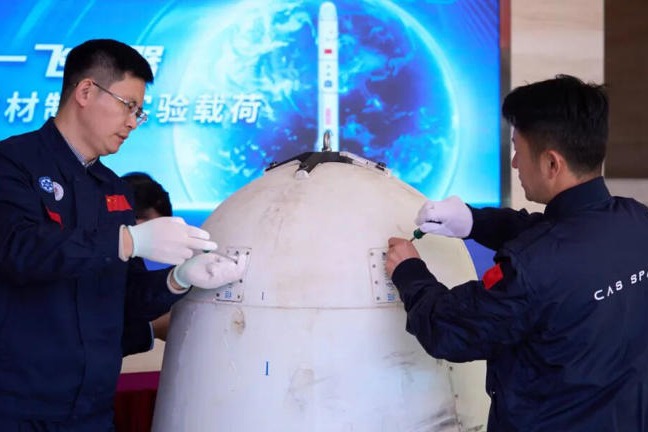
    In a significant advancement for commercial space operations, Chinese aerospace company CAS Space successfully launched its 11th Kinetica 1 carrier rocket on December 10, 2025. The mission, originating from the Jiuquan Satellite Launch Center in China’s northwestern Gobi Desert at precisely 12:03 pm local time, marked another milestone in China’s growing commercial space sector.

    The launch vehicle delivered a diverse portfolio of nine satellites into predetermined orbit, demonstrating China’s expanding role in international space collaboration. The payload included six multifunctional satellites for Chinese operations alongside three significant international contributions: an Earth-observation satellite for the United Arab Emirates, a scientific research satellite for Egypt, and an educational satellite for Nepal.

    Notably, the UAE’s satellite, designated ‘813’, was developed through international cooperation between the Innovation Academy for Microsatellites (a Shanghai-based subsidiary of the Chinese Academy of Sciences) and the National Space Science and Technology Center at the United Arab Emirates University. This collaboration highlights the increasing globalization of space technology development and deployment.

    The successful mission reinforces CAS Space’s position as a leading commercial rocket manufacturer in China’s rapidly expanding private space industry. The Kinetica 1 rocket series has now demonstrated consistent reliability with eleven launches, contributing to the growing infrastructure of satellite networks supporting various applications from Earth observation to scientific research and educational initiatives.

    This launch represents continuing progress in commercial space capabilities and international partnerships in space technology, showcasing how nations are increasingly collaborating on space exploration and satellite deployment beyond traditional governmental space programs.

  • China has amassed 5 million invention patents, emphasizing quality over quantity

    China has amassed 5 million invention patents, emphasizing quality over quantity

    China has achieved a groundbreaking milestone in intellectual property development by accumulating over 5 million valid domestic invention patents, establishing itself as the first nation to reach this unprecedented number. The announcement came from the China National Intellectual Property Administration (CNIPA) on Tuesday, December 10, 2025, highlighting the country’s remarkable progress in technological innovation.

    The patent landscape has demonstrated qualitative improvements alongside quantitative growth. By June 2025, China had reached 15.3 high-value invention patents per 10,000 people, exceeding the 14th Five-Year Plan target of 12 patents ahead of schedule. This metric reflects the country’s strategic transition from quantity accumulation to quality enhancement in intellectual property development.

    Equally impressive is China’s performance in international patent applications through the Patent Cooperation Treaty, where it has maintained global leadership for six consecutive years. The commercialization rates show significant advancement, with enterprise invention patent industrialization climbing from 44.9% in 2020 to 53.3% in 2024. Universities and research institutions have similarly shown steady improvement in technology transfer efficiency.

    This strategic reorientation toward high-value patents has accelerated the commercialization process, providing substantial momentum for innovation-driven development. The strengthened intellectual property foundation positions China to achieve greater self-reliance and technological strength throughout the upcoming 15th Five-Year Plan period (2026-30), potentially reshaping global innovation dynamics in the process.

  • Chinese robotaxis take the wheel in the Middle East

    Chinese robotaxis take the wheel in the Middle East

    In a strategic move reshaping urban mobility landscapes, leading Chinese autonomous vehicle firms are accelerating their presence across Middle Eastern markets through government-sanctioned testing and commercial deployment initiatives. This expansion represents a significant technological export from China to a region actively pursuing smart city transformations.

    Dubai’s Roads and Transport Authority (RTA) has granted inaugural autonomous driving permits to three Chinese mobility pioneers—Pony.ai, WeRide, and Baidu’s Apollo Go—enabling extensive urban testing of their self-driving fleets. This regulatory milestone aligns with Dubai’s ambitious target of converting 25% of all transportation to autonomous modes by 2030.

    RTA Director General Mattar Al Tayer emphasized the transformative potential: “Autonomous taxis will enhance quality of life for residents and visitors, improve road safety, and provide greater mobility convenience while supporting our first and last mile strategy for public transport integration.”

    The robotaxi operational model mirrors conventional ride-hailing services: users within designated zones access vehicles through mobile applications, confirm destinations, verify vehicle identification, and initiate journeys through app controls. In-vehicle experiences include real-time route visualization and entertainment options.

    Regional enthusiasm for the technology is palpable. UAE engineer Ibrahem Al Mohammedy observed: “Chinese technology is game-changing, having surpassed European and American counterparts in making advanced technology accessible to broader populations earlier than many developed nations.”

    Market projections underscore the sector’s potential. NVIDIA founder Jensen Huang identifies robotaxis as a paramount growth segment for the coming decade, while Goldman Sachs anticipates global market valuation reaching $40-45.7 billion by 2030, representing 60% compound annual growth.

    Pony.ai CEO James Peng cited Dubai’s “robust infrastructure, supportive policies, and public technological acceptance” as catalysts for confidence in large-scale autonomous technology adoption. The company demonstrated its seventh-generation Level 4 autonomous platform in Dubai, utilizing AI-driven sensor fusion (lidar, radar, cameras) for diverse environmental navigation.

    Cost reduction breakthroughs are enabling accelerated expansion. Pony.ai’s Ann Shi revealed nearly 70% reduction in autonomous kit material costs, partly driven by China’s electric vehicle industry scale. This efficiency facilitates plans deploying 1,000 robotaxis across the Middle East within three years.

    The UAE’s comprehensive self-driving adoption strategy extends beyond Dubai. Abu Dhabi has established partnerships with WeRide for autonomous taxi testing on Yas and Saadiyat islands, targeting 25% smart driverless transportation by 2040. WeRide recently launched the Middle East’s first fully driverless commercial robotaxi service on Yas Island using its van-type GXR vehicle without onboard safety supervisors.

    Ryan Zhan, WeRide’s Middle East and Africa regional manager, identified multiple driving factors: “The UAE faces high labor costs and driver shortages while pursuing smart urban upgrades across tourism, logistics, and public transport sectors. Autonomous addressing addresses practical needs while supporting strategic green transportation goals.”

    Regional expansion continues across borders. Saudi Arabia’s Vision 2030 initiative mandates 15% autonomous public transport by 2030, with WeRide conducting tests in Riyadh and Al-Ula ahead of anticipated commercial services. The company has additionally introduced robobus deployments and the region’s first monetized autonomous sanitation project.

    Pony.ai’s September partnership with Qatar’s Mowasalat “Karwa” transport service provider further demonstrates regional momentum. Qatar-based consultant Thaha Muhammed Abdul Kareem noted: “The Middle East possesses the infrastructure, capital, and ambition essential for rapid adoption, creating competitive positioning among technology providers.”

    Integration with global platforms provides additional scaling pathways. All three Chinese firms have established partnerships with Uber, enabling their autonomous vehicles to be accessed through Uber’s platform boasting 171 million monthly active users across 500 cities worldwide.

    China Institute of New Economy founding director Zhu Keli concluded: “Overseas demand, supportive regulatory environments, and open markets provide ideal testing grounds and development space for Chinese companies. Their global expansion will accelerate autonomous technology maturation, deepen global industrial chain integration, optimize resource allocation, and inject fresh momentum into worldwide self-driving development.”

  • McDonald’s pulls AI Christmas ad after backlash

    McDonald’s pulls AI Christmas ad after backlash

    McDonald’s Netherlands has retracted a controversial Christmas advertisement created entirely with artificial intelligence technology following significant online criticism. The 45-second commercial, which premiered on the fast food chain’s YouTube channel on December 6th, utilized generative AI clips to portray holiday mishaps under the ironic slogan ‘the most terrible time of the year.’

    The advertisement immediately drew sharp criticism across social media platforms, with viewers describing the visual aesthetics as ‘creepy’ and condemning the apparent poor editing quality. Particular attention was drawn to the uncanny appearance of AI-generated characters and the visibly stitched-together nature of multiple short clips, a technical limitation inherent in current AI video generation systems.

    Beyond aesthetic concerns, the advertisement sparked serious discussions about AI’s potential impact on creative industries. Numerous commenters expressed alarm about job displacement, with one Instagram user noting the absence of traditional production roles: ‘No actors, no camera team… welcome to the future of filmmaking.’

    Despite the backlash, production company The Sweetshop defended their creative process. Chief Executive Melanie Bridge revealed the project required seven weeks of intensive work, involving thousands of generated takes that were meticulously edited through traditional high-craft production methods. ‘This wasn’t an AI trick,’ Bridge asserted in statements to Futurism. ‘It was a film.’

    McDonald’s Netherlands acknowledged the situation as ‘an important learning’ in their exploration of AI’s effective application in advertising. The company explained the advertisement’s intended purpose was to reflect stressful holiday moments while suggesting McDonald’s as a comforting solution.

    This incident occurs amidst growing adoption of AI-generated content by major brands seeking to reduce production timelines. While Coca-Cola has reportedly achieved 61% positive sentiment with its AI Christmas campaigns, other luxury brands including Valentino have faced similar criticism for AI implementations deemed ‘cheap’ and ‘lazy’ by critics.

    The controversy highlights ongoing tensions between technological innovation and creative quality standards in digital advertising, particularly during high-stakes seasonal marketing campaigns.

  • China launches new communication technology test satellite

    China launches new communication technology test satellite

    China has successfully deployed the Shiyan 22 satellite into orbit, marking another significant milestone in its space technology program. The launch occurred at 11:08 PM Beijing Time on December 9, 2025, utilizing a Long March 3B carrier rocket from the Xichang Satellite Launch Center in Sichuan province.

    The newly deployed satellite represents China’s continued advancement in communication technology, designed to enhance multiple service domains including satellite communications, high-speed data transmission, and broadcast television services. Beyond these operational functions, the mission will conduct critical technical experiments and validation procedures to further refine China’s satellite capabilities.

    This mission holds particular significance as the 615th flight of China’s Long March rocket series, demonstrating the country’s sustained commitment to space infrastructure development. The successful insertion into predetermined orbit confirms the reliability of China’s launch vehicle technology and space deployment protocols.

    The development strengthens China’s position in the global space technology landscape, potentially enhancing digital connectivity and communication services across various sectors. This achievement reflects ongoing efforts to expand technological capabilities through space-based assets, contributing to both civilian and potential strategic applications in telecommunications infrastructure.

  • New tech aids safe air transport of lithium batteries

    New tech aids safe air transport of lithium batteries

    China has achieved a technological breakthrough that enables the safe aerial transportation of lithium batteries, addressing a long-standing aviation safety challenge while creating new opportunities for global trade. The innovative system successfully completed real-world testing with the transportation of a 250-kilogram power lithium battery from Ezhou Huahu International Airport to Shenzhen, completing the journey in just two hours—an 80% efficiency improvement over traditional ground transportation.

    The comprehensive safety solution, developed through a national research initiative under China’s 14th Five-Year Plan, employs a multi-layered protection approach. At its core is a specialized protective casing constructed from advanced materials that provide thermal insulation, flame retardancy, pressure reduction, toxin mitigation, and fire suppression capabilities. According to research leads from Chongqing Jiaotong University, the containment system demonstrated exceptional performance during rigorous testing, preventing flame escape and maintaining surface temperatures below 100°C during battery combustion events.

    Complementing the physical protection is an intelligent monitoring system that tracks twelve critical parameters in real-time, including temperature, pressure, and gas levels within the protective equipment. Utilizing AI-driven early warning algorithms, the system can detect subtle abnormalities such as minor gas leaks with remarkable precision. Third-party verification confirms the system’s average response time of 5.38 seconds and an accuracy rate exceeding 96%, providing unprecedented safety assurance.

    This advancement comes at a crucial time as China’s lithium battery industry continues its rapid expansion, with total output value surpassing 1.2 trillion yuan ($169.7 billion) in 2024, representing a 24% year-on-year increase. The technology promises to unlock significant economic potential by enabling efficient air transport of lithium batteries, with capacity ranging from 5 to 30 metric tons per flight depending on aircraft specifications.

    Industry experts highlight the particular advantage for international markets, where meeting delivery timelines is critical. Currently, over 90% of lithium batteries are transported by land or sea, with only 2-3% utilizing air transport due to safety concerns. This technological breakthrough is poised to transform this landscape, supporting Chinese companies in expanding their global market presence while maintaining the highest safety standards.