分类: technology

  • Number of digital consumers in China tops 958 million

    Number of digital consumers in China tops 958 million

    China’s digital economy has reached a monumental milestone with the nation’s digital consumer population exceeding 958 million during the first half of 2025, according to official data released by the China Internet Network Information Center (CNNIC). This substantial figure represents 85.3% of the country’s total internet users, underscoring the pervasive integration of digital technologies into everyday consumption patterns.

    The demographic breakdown reveals significant generational participation, with Generation Z (born between 1997-2012) constituting 27.2% of all digital consumers. Simultaneously, senior citizens aged 60 and above demonstrate growing digital adoption, accounting for 12.2% of the consumer base. Rural users have emerged as a substantial market segment, representing 26% of total digital consumers, indicating successful digital inclusion initiatives across China’s diverse geographical landscape.

    Consumer behavior analysis shows that 39.1% of internet users engaged in purchasing smart products during the reporting period, including smart home devices, digital gadgets, and wearable technology. The report also identified 8.2% of users buying blind boxes, IP-related merchandise, and anime-themed products online, reflecting the expanding diversity of digital marketplace offerings.

    A notable trend highlighted in the findings is the synergistic relationship between digital cultural content and consumer spending. Digital entertainment platforms are increasingly driving integrated expenditures across smart hardware, cultural experiences, and tourism services. The lifestyle services sector has witnessed remarkable growth, with over 223 million consumers utilizing online platforms for errands, home services, and maintenance by June 2025, demonstrating the practical applications of digital solutions in daily life.

    This massive digital consumer base represents a fundamental shift in China’s economic structure, where digital spending continues to play an increasingly vital role in overall consumption patterns. The data suggests a mature yet still expanding digital ecosystem that continues to evolve with technological advancements and changing consumer preferences.

  • Minecraft challenge breathes new life into rich cultural past

    Minecraft challenge breathes new life into rich cultural past

    In an extraordinary fusion of gaming technology and cultural preservation, Minecraft enthusiasts across China are undertaking ambitious digital reconstruction projects that are captivating millions online. This innovative movement represents a groundbreaking approach to historical education and national memory.

    Twenty-four-year-old Qiu Zekai, operating under the online alias Qiuxiaoniuer, has emerged as a prominent figure in this digital renaissance. He dedicated two intensive months to meticulously recreating sections of the destroyed Yuanmingyuan, also known as the Old Summer Palace. His virtual restoration specifically focuses on the Xiyang Lou (Western-style mansions) and the magnificent Dashuifa (Great Fountains), achieving an architectural accuracy that has resonated deeply with viewers.

    The historical significance of this project stems from the palace’s tragic destruction by Anglo-French forces during the Second Opium War (1856-1860), an event that represents what Chinese historians refer to as the ‘century of humiliation.’ Among the countless treasures looted during this period were the twelve zodiac bronze animal heads that once adorned the palace’s water clock fountain. Qiu’s digital masterpiece symbolically reunites these scattered artifacts in their virtual original setting, creating what online communities have celebrated as a ‘cyber reunion’ of cultural heritage.

    The response to Qiu’s creation has been overwhelming, with his serene fly-through video accumulating millions of views across social media platforms. His Douyin following surged by 200,000 subscribers following the project’s release, bringing his total audience to 3.4 million engaged followers. Comment sections overflow with emotional responses praising this ‘patriotic romance of the young generation’ and appreciating the unique connection between historical awareness and contemporary digital culture.

    Parallel to Qiu’s achievement, another digital architect named Xia Caiquan has gained recognition for his breathtaking Minecraft reconstruction of Dunhuang’s Buddhist heavenly palace. These projects collectively demonstrate how sandbox gaming environments are evolving into platforms for cultural expression, historical education, and technological innovation.

    Beyond their visual appeal, these virtual reconstructions serve as interactive historical archives, allowing new generations to experience and understand cultural heritage that physical circumstances might otherwise keep inaccessible. This movement represents a significant shift in how digital natives engage with history, transforming passive learning into active creation and ensuring that important cultural narratives continue to evolve within contemporary technological contexts.

  • Dubai RTA uses drones to clean traffic signals in pilot project, cutting time, costs

    Dubai RTA uses drones to clean traffic signals in pilot project, cutting time, costs

    Dubai’s Roads and Transport Authority (RTA) has launched an innovative pilot program utilizing drone technology to clean traffic signals, marking a significant advancement in urban maintenance operations. The initiative, which recently completed its first phase at the Marrakech Street-Rebat Street intersection, demonstrates remarkable efficiency improvements with drones capable of cleaning one signal side in just three to four minutes.

    The drone-based cleaning system has achieved substantial operational benefits, reducing cleaning time by 25-50% and cutting costs by up to 15% compared to traditional methods. According to Abdulla Ali Lootah, Director of Roads and Facilities Maintenance at RTA, future technological enhancements could potentially increase cost savings to 25%.

    This technological approach addresses multiple objectives simultaneously: enhancing worker safety by eliminating the need for manlifts and heavy equipment, reducing environmental impact through decreased fuel and water consumption, and minimizing traffic disruptions through shorter operational windows. The project represents RTA’s strategic commitment to implementing smart solutions and advanced technologies for urban infrastructure management.

    The successful metro station facade cleaning initiative earlier this year paved the way for this expanded application of drone technology. RTA officials emphasize that the current pilot phase will continue with thorough assessments of cleaning methodologies, focusing particularly on maintaining highest safety standards while ensuring no adverse impact on traffic flow. This innovation aligns with Dubai’s broader vision of transforming urban maintenance through technological integration and smart city solutions.

  • Meet the new benchmark for night photographers: HONOR Magic8 Pro lands as the UAE’s first 5.5G-ready smartphone

    Meet the new benchmark for night photographers: HONOR Magic8 Pro lands as the UAE’s first 5.5G-ready smartphone

    HONOR has redefined smartphone excellence with the launch of the Magic8 Pro, establishing a new paradigm in mobile technology through its integration of cutting-edge artificial intelligence, exceptional photographic capabilities, and unprecedented battery performance. As the UAE’s inaugural 5.5G-ready device, this flagship model represents a significant milestone in the region’s digital transformation journey.

    The device’s most remarkable feature is its massive 7,100mAh silicon-carbon battery, which delivers extraordinary endurance that comfortably spans multiple days of intensive usage. This technological marvel defies physical expectations by maintaining a surprisingly lightweight profile despite its enormous power capacity.

    Photographic excellence reaches new heights with the Magic8 Pro’s 200MP AI Ultra Night Telephoto camera system. The sophisticated imaging technology demonstrates exceptional proficiency during challenging lighting conditions, particularly during the elusive ‘Blue Hour’ period around dawn and dusk. The camera’s advanced stabilization, dynamic range optimization, and intelligent low-light processing produce consistently crisp results across various zoom levels and shooting scenarios.

    Artificial intelligence integration transcends conventional implementations through a dedicated multifunctional AI button that provides intuitive access to enhanced functionality. The system’s contextual understanding enables sophisticated features including AI Search for effortless content retrieval and AI-powered editing tools that transform ordinary media into professional-grade content with minimal user effort.

    Underpinning these capabilities is the Snapdragon 8 Elite Gen 5 mobile platform, which delivers exceptional processing efficiency, thermal management, and responsive performance. The device’s premium construction features brushed metal sides with ergonomic curvature, available in Sunrise Gold, Sky Cyan, and Black color options.

    With pricing starting at Dh3,999 for the 12GB/512GB configuration and Dh4,699 for the 16GB/1TB model, HONOR enhances the value proposition through pre-launch incentives including VIP Care+ protection, Google AI Pro subscription, and complementary Watch5 Ultra smartwatch.

  • Negotiations over US-UK tech deal stall

    Negotiations over US-UK tech deal stall

    The landmark Technology Prosperity Deal between the United States and United Kingdom has encountered significant obstacles, with negotiations stalling due to unresolved issues in broader trade discussions between the two nations. Initially hailed as “historic” during its announcement in September, the agreement promised enhanced cooperation in artificial intelligence, quantum computing, and advanced nuclear energy technologies.

    The current impasse stems primarily from American concerns regarding perceived trade barriers within the UK market. According to sources familiar with the negotiations, disagreements extend to digital regulation frameworks and food safety standards, creating complications for the technology-specific arrangement.

    A UK government spokesperson maintained that “our special relationship with the US remains strong,” emphasizing Britain’s commitment to ensuring the deal delivers opportunities for citizens in both countries. The government declined to comment on specific claims regarding negotiation difficulties.

    The Technology Prosperity Deal was formally documented through a Memorandum of Understanding (MOU) that outlined ambitious collaboration goals but specified that any proposals were non-binding. The MOU explicitly stated that implementation would only proceed alongside substantive progress in formalizing the wider US-UK Economic Prosperity Deal signed in May.

    Industry analysts note that the current stalemate reflects a broader pattern in US-UK trade relations. Allie Renison, director of SEC Newgate UK and former government trade adviser, characterized the approach as “slightly piecemeal,” with different negotiation areas affecting unrelated sectors.

    Despite the diplomatic hurdles, the approximately £31 billion in planned investments from tech giants including Microsoft, Nvidia, and Google are believed to remain unaffected. Nvidia CEO Jensen Huang previously expressed confidence in Britain’s potential to become an “AI superpower,” with pledged investments intended to scale up AI infrastructure including data centers across the UK.

    Observers suggest the negotiation challenges likely represent strategic positioning within broader trade discussions rather than a fundamental threat to technological cooperation between the two nations.

  • China launches new satellite

    China launches new satellite

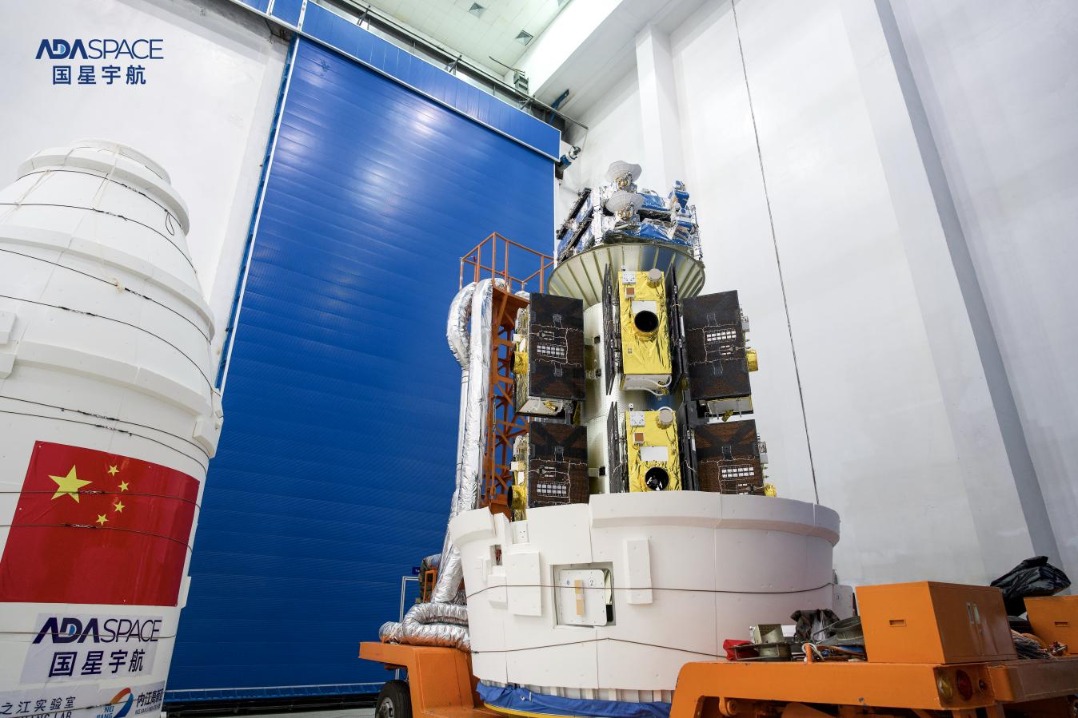
    China has successfully deployed its latest Earth observation satellite, marking another milestone in the nation’s ambitious space program. The Ziyuan III 04 spacecraft ascended into orbit aboard a Long March 4B rocket at precisely 11:17 am Beijing Time on December 16, 2025, from the Taiyuan Satellite Launch Center in Shanxi Province.

    This launch represents the 617th mission in the storied history of China’s Long March rocket series, demonstrating the program’s remarkable consistency and technical maturity. The Ziyuan (which translates to ‘Resources’) satellite family specializes in high-resolution terrestrial imaging with applications spanning environmental monitoring, urban planning, agricultural assessment, and disaster mitigation.

    The Taiyuan facility, situated in northern China’s mountainous region, has established itself as a premier launch site for polar-orbiting satellites. The successful deployment continues China’s pattern of regular space missions that support both scientific research and practical Earth observation needs. Space technology experts note that the Ziyuan series contributes significantly to global environmental monitoring efforts while advancing China’s capabilities in remote sensing technology.

    This achievement occurs within the broader context of China’s expanding space infrastructure, which includes navigation satellites, communication networks, and crewed space stations. The continuous development of space assets reflects China’s strategic commitment to technological sovereignty and its growing role in space exploration and Earth sciences.

  • Prestige One unveils Hilton Residences Dubai Maritime City in a landmark celebration

    Prestige One unveils Hilton Residences Dubai Maritime City in a landmark celebration

    The United Arab Emirates has become the launchpad for HONOR’s groundbreaking Magic8 Pro, positioning the device as both a photographic marvel and telecommunications pioneer. This flagship smartphone enters the market with the distinctive honor of being the nation’s first commercially available handset equipped with 5.5G connectivity readiness, signaling a significant leap forward in mobile network technology.

    Beyond its advanced connectivity credentials, the Magic8 Pro establishes itself as an industry benchmark for low-light photography. The device incorporates a sophisticated multi-lens camera system engineered to capture exceptional imagery in challenging lighting conditions. Through computational photography advancements and sensor technology innovations, the smartphone demonstrates remarkable performance capabilities where previous devices have traditionally struggled.

    The 5.5G connectivity (also known as 5G-Advanced) represents an evolutionary enhancement over existing 5G networks, promising substantially improved upload and download speeds, reduced latency, and more reliable connections. This network readiness ensures the Magic8 Pro remains future-proofed as telecommunications providers gradually roll out next-generation infrastructure across the region.

    Industry analysts note that HONOR’s strategic launch in the UAE market reflects the country’s position as a key technology adoption hub in the Middle East. The combination of cutting-edge photographic capabilities with advanced network technology creates a compelling proposition for consumers seeking both creative tools and connectivity performance in their mobile devices.

    The introduction of the Magic8 Pro signals intensifying competition in the high-end smartphone segment, with manufacturers increasingly differentiating their products through specialized capabilities rather than generic specifications. HONOR’s focus on night photography excellence and network technology leadership represents a strategic positioning against established market leaders.

  • AI toys offer emotional support to consumers

    AI toys offer emotional support to consumers

    The global toy industry is undergoing a profound transformation as artificial intelligence-powered companions emerge as the next frontier in consumer technology, offering emotional support and companionship to users worldwide. This technological revolution is reshaping traditional product categories and creating new growth opportunities for manufacturers.

  • These travel influencers don’t want freebies. They’re AI

    These travel influencers don’t want freebies. They’re AI

    The travel marketing landscape is undergoing a radical transformation as artificial intelligence avatars increasingly replace human influencers. These digitally crafted personalities, boasting flawless appearances and compelling narratives, are being deployed by tourism boards, airlines, and hospitality companies to promote destinations at a fraction of traditional costs.

    Unlike their human counterparts, AI influencers like Radhika—who showcases northeastern India’s culinary and cultural attractions to thousands of Instagram followers—require no travel expenses, accommodations, or compensation. Qatar Airways’ virtual flight attendant Sama engages with over 328,000 followers through emoji-filled posts and simulated interactions, while Germany’s digital storyteller Emma promotes wine country experiences with photorealistic authenticity.

    This technological shift presents significant economic advantages for marketers. According to industry expert Steve Morris of New Media, basic AI avatars can be created for $500-$2,000 using existing libraries, while fully customized digital personas with unique personalities and learning capabilities cost $5,000-$15,000. This represents substantial savings compared to the $100,000+ fees commanded by top human influencers for single posts.

    The trend has triggered concern among content creators who fear displacement. Travel influencer Jen Ruiz notes the emerging ‘uproar among creators who feel they’re being replaced by an entity that doesn’t share their passion or experience.’ Established influencers like Christiana Ballayan report noticeable reductions in brand partnerships and compensation as companies redirect marketing budgets toward AI solutions.

    Beyond economic implications, the proliferation of AI influencers blurs the line between digital and physical reality. Many followers interact with these avatars as genuine personalities, sometimes leaving romantic comments on AI-generated content. Marketing technology expert Ari Adnan Cibari predicts these systems will soon become ‘agentic,’ capable of autonomously assisting followers with travel bookings and reservations.

    This evolution raises profound questions about authenticity in digital marketing. As filmmaker Taliesen Black-Brown observes, social media already felt ‘fake and vapid,’ but AI influencers represent ‘even more inauthentic content disconnected from real human experience.’ Despite these concerns, industry adoption continues accelerating, with approximately half of travel marketers currently experimenting with AI-generated content and allocating 20-30% of budgets to this emerging technology.

  • How $67.5b pledge by tech giants is turning India into next global digital juggernaut

    How $67.5b pledge by tech giants is turning India into next global digital juggernaut

    India is undergoing a profound metamorphosis from its historical identity as an outsourcing hub to emerging as a central player in global digital innovation. This transformation is being propelled by an unprecedented wave of strategic investments from the world’s foremost technology corporations, signaling a fundamental recalibration of global tech priorities.

    In a landmark series of commitments announced in December 2025, Amazon, Microsoft, and Google collectively pledged approximately $67.5 billion toward developing India’s technological infrastructure. Amazon’s staggering commitment of over $35 billion by 2030—supplementing its existing $40 billion investment—represents one of the company’s most substantial global financial deployments. This capital infusion will expand e-commerce capabilities, integrate artificial intelligence into millions of small enterprises, strengthen logistics networks, and target a quadrupling of exports to $80 billion.

    Microsoft has designated its largest Asian investment ever—$17.5 billion over four years—to establish hyperscale data centers, amplify its cloud and AI ecosystem, and implement extensive upskilling programs to cultivate AI expertise among millions of Indians. Concurrently, Google has allocated an estimated $15 billion to construct a major AI data center and innovation hub in Visakhapatnam, positioning India as a critical nexus within its worldwide AI infrastructure network.

    Industry analysts interpret these monumental investments as recognition that India’s digital economy has achieved strategic indispensability within global technology ecosystems. This status stems from the country’s vast youth population, rapidly expanding internet user base, and maturing digital infrastructure framework, including foundational systems like Aadhaar and the Unified Payments Interface (UPI).

    India’s exceptional human capital potential represents a core attraction. Projections indicate the country will host the world’s largest developer community by 2030, with its share of global AI talent accelerating rapidly. This abundant workforce—combined with competitive operational costs and a vibrant startup culture—provides technology multinationals with both scale and innovative capacity that established tech hubs increasingly cannot match.

    The investment surge coincides with shifting global economic geopolitics, wherein technology firms are seeking to diversify geographic footprints amid trade tensions and supply chain vulnerabilities. India’s democratic stability, enormous market scale, growing middle class, and policy incentives—including subsidies for AI and semiconductor manufacturing—present a compelling alternative to regional concentration.

    While challenges persist in semiconductor manufacturing capabilities and research & development investment, the momentum behind India’s digital transformation appears irreversible. The nation’s evolution into a global technology powerhouse is now being underwritten by substantial capital commitments from the most influential companies shaping the digital future.