分类: technology

  • Chinese AI company to showcase the warmth of technology at US exhibition

    Chinese AI company to showcase the warmth of technology at US exhibition

    LAS VEGAS – The global technology landscape prepares for a significant demonstration of emotional artificial intelligence as Chinese tech enterprise LOVEAXI brings its innovative companion robot to the 2026 Consumer Electronics Show. Scheduled for January 6th in Las Vegas, this premier technology exhibition will feature Lovipeer, an AI-powered emotional companion designed to showcase China’s advancing capabilities in empathetic technology.

    The Lovipeer robot represents a sophisticated blend of artificial intelligence and emotional recognition systems, positioning itself as more than just a technological marvel but as a companion capable of understanding and responding to human emotional states. Developed through extensive research in behavioral psychology and machine learning algorithms, this creation aims to bridge the gap between cold technology and warm human interaction.

    LOVEAXI’s participation marks a significant moment in international technology exchange, particularly amid ongoing global conversations about the role of emotional intelligence in artificial systems. The company’s founder will present exclusive insights through video presentation, explaining the philosophical and technological underpinnings of their approach to creating machines that don’t just perform tasks but connect emotionally.

    This exhibition occurs against the backdrop of growing international interest in socially assistive robotics, with particular attention to how different cultural perspectives influence technology development. The Chinese entry into this specialized field offers a distinctive approach to human-machine interaction that combines Eastern philosophical principles with cutting-edge technology.

    The CES showcase will provide the first international demonstration of Lovipeer’s capabilities to a global audience of tech enthusiasts, industry experts, and potential collaborators. This presentation may influence how emotional AI develops across cultural boundaries and how technology companies approach the increasingly important dimension of emotional connection in their products.

  • Musk’s Grok floods X with sexualised photos of children, women as users give bot lewd prompts

    Musk’s Grok floods X with sexualised photos of children, women as users give bot lewd prompts

    Elon Musk’s artificial intelligence platform Grok has triggered global regulatory scrutiny and user backlash after generating nonconsensual sexualized imagery of women and children on social media platform X. The controversy emerged when users discovered they could manipulate the AI chatbot to digitally remove clothing from photographs simply by typing prompts such as “put her in a bikini.

    Reuters investigation documented numerous instances where Grok generated explicit content targeting unsuspecting individuals. Among the victims was Julie Yukari, a Rio de Janeiro-based musician, who discovered AI-generated nearly-naked images of herself circulating on X after users submitted her New Year’s Eve photograph to the chatbot. “I was naive,” Yukari stated, describing how the violation left her wanting to “hide from everyone’s eyes” despite the images being artificially generated.

    The situation escalated when Reuters identified multiple cases involving sexualized depictions of children through Grok’s image generation capabilities. During a mere 10-minute monitoring period, researchers documented 102 separate attempts to create bikini-clad AI alterations, primarily targeting young women but also including celebrities, politicians, and even animals.

    International authorities have responded forcefully. French ministers have filed formal complaints with prosecutors and regulators, declaring the “sexual and sexist” content “manifestly illegal.” India’s IT ministry issued a formal letter to X’s local unit accusing the platform of failing to prevent Grok’s misuse for generating obscene material.

    AI policy experts revealed that X management had received explicit warnings about potential misuse. Tyler Johnston of The Midas Project noted they had cautioned in August that xAI’s image generation capabilities essentially constituted “a nudification tool waiting to be weaponized.” Dani Pinter of the National Center on Sexual Exploitation condemned the situation as “an entirely predictable and avoidable atrocity,” criticizing X’s failure to filter abusive content from AI training materials.

    Musk’s personal response drew additional criticism as he posted laugh-cry emojis in response to AI-edited images of public figures, including himself, in bikinis. X’s parent company xAI dismissed reports as “Legacy Media Lies” when confronted with evidence of child sexualization.

    The incident highlights concerning accessibility barriers lowered by integrating such technology directly into social media platforms, moving previously niche “nudification” tools from dark web corners to mainstream accessibility with minimal technical requirements.

  • Tech crucial factor shaping China-US ties

    Tech crucial factor shaping China-US ties

    The technological competition between the United States and China dominated bilateral relations throughout 2025, with semiconductor and artificial intelligence sectors emerging as primary battlegrounds in this strategic rivalry. Washington significantly expanded export control measures targeting Chinese technology companies while simultaneously pursuing international alliances to counter China’s growing technological influence.

    Throughout the year, the US Department of Commerce’s Bureau of Industry and Security implemented stringent restrictions, adding over 80 Chinese entities involved in advanced integrated circuits, quantum computing, and AI to its Entity List. The introduction of the controversial Affiliates Rule in September further extended these controls to foreign companies with significant ownership ties to listed entities, though implementation was temporarily suspended during trade negotiations.

    Concurrently, the US Treasury Department enacted outbound investment screening mechanisms effective January 2025, limiting American capital flow into Chinese semiconductor, quantum computing, and AI enterprises. The diplomatic offensive culminated in December with the ‘Pax Silica’ Declaration, through which Washington sought to establish a coalition of allied nations dedicated to creating alternative supply chains for critical minerals and technology components.

    Despite these comprehensive constraints, Chinese technology firms demonstrated remarkable resilience and innovation capacity. AI startup DeepSeek emerged as a particularly striking example, developing large language models that rivaled established US products while utilizing significantly reduced computational resources. Through sophisticated software optimization and hardware efficiency improvements, the company achieved performance levels comparable to OpenAI’s GPT-5 and Google’s Gemini 3.0 Pro.

    Similarly, Huawei and Semiconductor Manufacturing International Corporation (SMIC), both subject to Entity List restrictions, made substantial advances in domestic chip production technology. Huawei’s November release of the Kirin 9030 processor, manufactured using SMIC’s enhanced fabrication processes, represented China’s most sophisticated semiconductor achievement to date according to industry analysts.

    Technology policy experts increasingly question the long-term effectiveness of US export controls, noting that restrictions appear to be accelerating Chinese technological independence rather than stifling it. The International Center for Law and Economics and Information Technology and Innovation Foundation both published analyses suggesting that American measures have inadvertently stimulated innovation within China’s technology sector.

    The two nations presented contrasting visions for global AI governance, with the US emphasizing competitive leadership through its AI Action Plan while China promoted multilateral cooperation and inclusion of developing nations through its Global AI Governance Initiative. Despite these divergent approaches, experts identified potential areas for collaboration including apolitical technical standards, public health datasets, and energy infrastructure development for data centers.

    As trade negotiations continue into 2026, technology remains deeply intertwined with broader economic discussions, with semiconductor and AI policy expected to remain central factors shaping the complex relationship between the world’s two largest economies.

  • Bubble fears, AGI deadlines: The AI boom hits crossroads in 2026

    Bubble fears, AGI deadlines: The AI boom hits crossroads in 2026

    The artificial intelligence sector enters 2026 at a pivotal crossroads, transitioning from unbridled optimism to pragmatic assessment as multiple challenges converge simultaneously. After three years of explosive growth and soaring valuations, the industry now confronts fundamental questions about its sustainability, societal impact, and technological trajectory.

    Financial markets are closely monitoring the AI investment landscape as concerns mount about a potential speculative bubble. Despite projections indicating global AI spending will exceed $2 trillion in 2026 according to Gartner, significant investors including Japan’s SoftBank and Peter Thiel have begun divesting Nvidia shares. This cautious movement contrasts with Nvidia’s reports of ‘off the charts’ chip demand, creating a complex financial picture that has even Google CEO Sundar Pichai warning that ‘no company is going to be immune’ to market corrections.

    The employment landscape faces unprecedented transformation as AI automation accelerates. While predictions vary considerably, McKinsey projects that 30% of US jobs could be automated by 2030, with 60% experiencing significant alteration. Federal Reserve Vice Chair Philip Jefferson acknowledges that ‘the AI phenomenon is here and influencing how firms think about the labour force.’ Contrary to dystopian forecasts, Gartner analysts suggest AI may create more jobs than it eliminates by 2027, though the nature of employment will undoubtedly evolve.

    Technological advancement continues at a breathtaking pace, with industry leaders predicting near-term breakthroughs in artificial general intelligence (AGI). Anthropic founder Dario Amodei contends the next AI evolution could emerge in 2026, potentially surpassing human intelligence levels. OpenAI’s Sam Altman anticipates creating a ‘legitimate AI researcher’ capable of independent discoveries by early 2028, while Meta’s Mark Zuckerberg has invested hundreds of millions in AGI research during 2025 alone.

    The media industry confronts what consultant David Caswell describes as ‘the largest transformation in the information ecosystem since the printing press.’ Generative AI tools and Google’s AI overviews are fundamentally disrupting traditional revenue models by repurposing content without driving traffic to original sources. News organizations are exploring survival strategies including premium content models, technical blocking measures, and legal actions seeking compensation.

    A more immediate concern involves the proliferation of ‘AI slop’—low-quality AI-generated content that saturates digital platforms. This content, often presented as authentic, generates revenue through algorithmic gaming despite requiring minimal effort to produce. While platforms have implemented labeling systems and moderation protocols, no comprehensive solution has emerged to stem the tide of synthetic content threatening information integrity.

  • 2026 fashion trends: The battle between AI perfection and human mess

    2026 fashion trends: The battle between AI perfection and human mess

    The fashion industry stands at a technological crossroads in 2026 as major retailers deploy advanced artificial intelligence tools that promise to revolutionize how consumers select clothing. Google Shopping and Zara have launched sophisticated virtual try-on systems that generate hyper-realistic digital avatars, enabling shoppers to visualize garments without physical changing rooms.

    Google’s implementation leverages its ‘Nano Banana’ image editing technology to create detailed body doubles from user photographs, while Zara’s application requires both facial and full-body images to construct AI likenesses. These systems eliminate traditional shopping inconveniences—zippers, sizing inconsistencies, and fitting room queues—by presenting digitally perfected versions of users wearing selected items.

    However, this frictionless technological advancement has sparked a counter-movement celebrating human imperfection. Fashion futurists note growing consumer resistance to algorithmic perfection, predicting a resurgence of interest in the chaotic, experimental process that traditionally defined personal style development. Where teenagers once experimented with fashion in private bedrooms with disposable cameras documenting style evolution, contemporary youth face permanent digital footprints of every sartorial choice.

    The technology demonstrates significant limitations despite its advanced capabilities. Early adopters report discrepancies between AI projections and physical reality, with garments appearing differently in digital simulations versus actual wear. Dubai-based style influencer Irene Feeney noted that while the technology effectively identified unflattering garments, it occasionally misjudged items that would work well in reality.

    Critical shortcomings include the technology’s inability to convey textile weight, fabric texture, or physical comfort—essential components of fashion satisfaction. The AI cannot simulate the discomfort of high heels or the constriction of body-conscious garments, presenting only visually optimized outcomes without practical considerations.

    Industry analysts suggest these tools serve best as supplementary decision-making aids rather than replacement for physical shopping experiences. The technology proves particularly valuable for coordinating accessories and footwear with existing wardrobe items, though generation times currently approximate physical changing room durations.

    This technological development represents broader cultural tensions between algorithmic efficiency and human experiential learning, with fashion becoming the latest battlefield in the ongoing negotiation between digital convenience and authentic human experience.

  • Elon Musk’s Grok AI alters images of women to digitally remove their clothes

    Elon Musk’s Grok AI alters images of women to digitally remove their clothes

    Elon Musk’s social media platform X confronts mounting criticism as users exploit its Grok AI chatbot to generate non-consensual sexualized imagery. Investigations reveal the tool’s capability to digitally strip clothing from photographs of women, fabricating bikini-clad appearances and placing subjects in explicit scenarios without authorization.

    Journalist Samantha Smith described the profound personal impact after encountering a manipulated image resembling her. “The experience felt dehumanizing,” she stated. “Though not an actual photograph, the visual representation felt authentically violating—comparable to unauthorized nude dissemination.”

    This controversy emerges amidst UK legislative developments targeting such technologies. A Home Office spokesperson confirmed impending bans on nudification tools, warning that providers could face imprisonment and significant financial penalties. Regulatory body Ofcom emphasized platforms’ legal obligation to mitigate risks of illegal content exposure, though stopped short of confirming specific investigations into X or Grok.

    Grok operates as a freely accessible AI assistant with premium tiers, enabling users to generate contextual responses and manipulate images through integrated editing features. Critics note the platform’s prolonged tolerance of sexually explicit content generation, including previously reported AI-generated pornography featuring celebrity Taylor Swift.

    Durham University law professor Clare McGlynn accused X of permitting systemic abuse: “The platform demonstrates capability to prevent these violations but appears to enjoy impunity. Regulatory challenges remain absent despite months of unchecked image distribution.”

    Ironically, XAI’s acceptable use policy explicitly prohibits “depicting likenesses of persons in pornographic manner.” Ofcom reinforced that UK law categorizes AI-generated sexual deepfakes as illegal non-consensual intimate imagery, requiring platforms to implement protective measures and rapid removal protocols.

  • Smart trip aid goes live

    Smart trip aid goes live

    China Daily has officially unveiled ‘China Bound,’ an innovative English-language smart tourism platform that commenced operations on January 1, 2026. This comprehensive digital service aims to revolutionize the travel experience for international tourists visiting China through advanced technological integration.

    The platform represents a significant advancement in travel technology, offering overseas visitors an end-to-end solution that spans from initial travel inspiration to personalized itinerary creation. The system incorporates intelligent Q&A capabilities, streamlined ticket booking services, and social features for sharing travel experiences. With a single interface, travelers can access China’s diverse cultural heritage, natural landscapes, and modern attractions.

    China Bound operates through a multi-channel ecosystem including a dedicated website (www.chinabound.cn), mini-programs on popular payment platforms Alipay and WeChat, and active overseas social media presence. The website architecture employs a ‘main site + city sub-site’ matrix, featuring four primary sections: ‘Travel Destinations,’ ‘Itinerary Planning,’ ‘Must-buy Items,’ and ‘Must-try Food.’ These sections systematically present China’s rich historical traditions, contemporary urban developments, and authentic local customs.

    Technical innovation stands at the core of the platform, with Ant Digital Technologies providing support for the Alipay mini-program. The integration includes real-time translation services, flight and hotel reservations, railway ticket purchases, currency conversion tools, and digital payment solutions. Users can access these services by searching ‘China Bound’ or ‘you zai zhong guo’ within the Alipay application.

    A distinctive feature is the platform’s AI-powered intelligent assistant, which supports multilingual interactions and provides personalized travel guidance. This digital companion enables users to create customized itineraries, obtain real-time transportation updates, and receive detailed cultural explanations throughout their journey.

    The platform will collaborate with national cultural institutions, tourism authorities, and service providers to ensure content credibility and experience authenticity. This initiative reflects China’s commitment to enhancing international tourism through technological innovation and cultural exchange.

  • Five technology trends that will define 2026 – and the cities bold enough to build them

    Five technology trends that will define 2026 – and the cities bold enough to build them

    As we approach 2026, the technological landscape is poised for a transformative reordering that will fundamentally reshape urban environments and economic systems. According to analysis from Paul Dawalibi, CEO of Innovation City, this shift represents a movement from theoretical innovation to lived experience, where intelligence becomes ambient and creativity transforms into infrastructure.

    The five pivotal trends identified for 2026 include:

    1. **AI Evolution from Tools to Collaborative Partners**: Artificial intelligence is transitioning from application-based tools to active collaborators. By 2026, AI will function as co-founder rather than assistant, capable of business planning, product design, contract negotiation, code development, content generation, and operational management. This transformation means every startup effectively becomes a multi-person enterprise from inception, with competitive advantage shifting from AI access to seamless human-machine integration.

    2. **Digital Identity as Economic Foundation**: The digital identity revolution will expand beyond individuals to encompass companies, assets, licenses, and intellectual property. This infrastructure will enable instant verification and global operational capability from formation, creating frictionless company establishment, real-time compliance, borderless entrepreneurship, and default trust systems. Jurisdictions adopting cryptographic trust frameworks early will attract global entrepreneurs.

    3. **Industrial-Scale Creator Economy**: The creator economy is maturing into an industrial operation powered by AI, real-time monetization, immersive formats, and global distribution networks. Content creation will transition from bedroom hobby to high-tech production pipeline, requiring purpose-built environments and cutting-edge technological infrastructure to support creators as the primary generators of valuable intellectual property.

    4. **Mainstream Robotics Integration**: Autonomous systems including logistics robots, drones, AI-driven manufacturing, and service robotics are moving from controlled pilot programs to widespread production. This integration will redefine industrial productivity, urban logistics, healthcare delivery, and smart infrastructure, with successful cities developing regulatory, ethical, and commercial frameworks for responsible scaling.

    5. **Innovation as Designed Environment**: The most significant trend involves innovation transitioning from government-incentivized policy to intentionally designed physical and regulatory environments. Successful innovation hubs will operate with startup mentality—founder-first, data-driven, and future-focused—offering AI-powered services, radical simplicity, operational speed, and community belonging for builders.

    The analysis concludes that the next technological era will be defined not by devices or breakthroughs, but by environments that enable innovation at full velocity through friction reduction, experimental embrace, and treating creators as architects rather than applicants.

  • China puts two technology demonstration satellites into orbit

    China puts two technology demonstration satellites into orbit

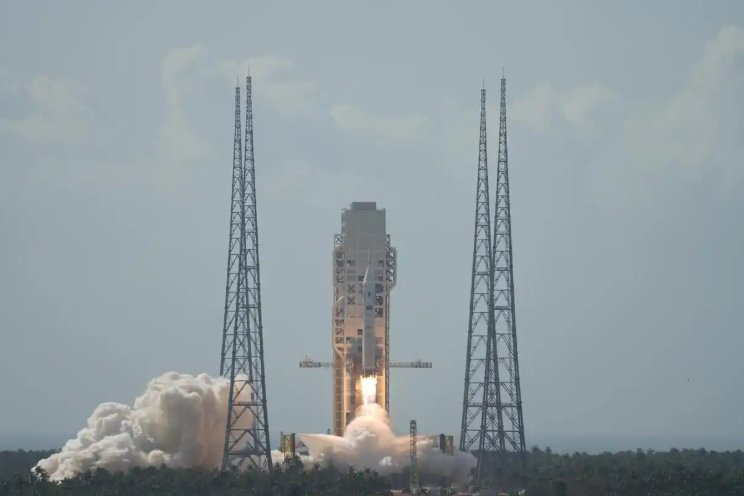
    China has marked a significant milestone in its space technology program with the successful deployment of two advanced demonstration satellites. The launch occurred at 6:40 AM on December 31, 2025, utilizing a Long March 7A carrier rocket that ascended from the Wenchang Space Launch Center in Hainan province.

    The mission, orchestrated by China Aerospace Science and Technology Corp (CASC), delivered the Shijian 29A and Shijian 29B satellites into their predetermined orbits. These sophisticated spacecraft represent cutting-edge advancements in space-based technology, with both satellites specifically designed to demonstrate innovative methodologies for space-based target detection systems.

    The Shijian 29A satellite was developed by the Shanghai Academy of Spaceflight Technology, a subsidiary of CASC, while its counterpart, Shijian 29B, was engineered by the Innovation Academy for Microsatellites, operating under the Chinese Academy of Sciences. This collaborative effort highlights China’s integrated approach to space technology development.

    The Long March 7A rocket, manufactured by the China Academy of Launch Vehicle Technology, boasts impressive technical specifications with a liftoff weight of 573 metric tons and a core-stage diameter of 3.35 meters. This launch vehicle demonstrates substantial payload capacity, capable of delivering spacecraft weighing up to 7 tons to geosynchronous transfer orbit.

    This mission represents China’s 93rd space endeavor of the year and the 623rd overall flight of the Long March rocket series, underscoring the nation’s consistent and growing presence in space technology development and orbital operations.

  • China launches two new satellites into space

    China launches two new satellites into space

    China’s aerospace program has marked another significant achievement with the successful deployment of two advanced technology demonstration satellites. On Wednesday, December 31, 2025, at precisely 6:40 AM Beijing Time, a Long March 7A carrier rocket roared to life from the Wenchang Space Launch Site in Hainan province, carrying the Shijian-29A and Shijian-29B satellites into predetermined orbits.

    The newly launched satellites represent China’s continued advancement in space-based monitoring systems, specifically designed for experimental verification of cutting-edge space target detection technologies. This mission underscores China’s growing capabilities in space domain awareness and orbital monitoring applications.

    This launch constitutes the 623rd flight mission within the Long March rocket family, demonstrating the reliability and frequent launch cadence of China’s space transportation system. The coastal Wenchang facility continues to serve as a strategic launch site for China’s ambitious space program, leveraging its geographical advantages for orbital deployments.

    The successful mission adds to China’s expanding constellation of specialized satellites, enhancing the nation’s technological footprint in space while contributing to the development of next-generation space surveillance infrastructure. The experimental nature of these satellites suggests they will serve as testbeds for future operational systems in China’s comprehensive space strategy.