
China’s cutting-edge low-altitude technology and innovative flying vehicles took center stage at the 45th edition of GITEX Global in Dubai, one of the world’s most influential technology and AI exhibitions. Over 300 Chinese enterprises showcased their latest advancements in AI robotics, intelligent solutions, flying cars, and 5G technologies at the event, which ran from October 13 to 17 and attracted 6,800 tech companies and 2,000 startups from 180 countries and regions. Among the highlights was Xpeng AeroHT’s two-seater electric vertical takeoff and landing (eVTOL) aircraft, part of the world’s first mass-produced modular flying car, the ‘Land Aircraft Carrier.’ The aircraft completed its first overseas manned flight in Dubai, securing 600 orders across the Middle East, marking the largest overseas order volume for a Chinese eVTOL manufacturer. Deliveries are set to begin in 2027. GOVY, a flying vehicle brand under Chinese automaker GAC Group, also made its Middle East debut with the Govy AirCar, featuring aviation-grade carbon fiber composites and gull-wing doors for vertical takeoff and landing. The event underscored China’s efforts to build a low-altitude economy ecosystem, utilizing airspace below 3,000 meters for applications in manufacturing, logistics, entertainment, and emergency services. Ou Boqian, China’s consul-general in Dubai, emphasized the significance of this progress, calling it a crucial step in the internationalization of China’s low-altitude electric manned flight technology. The Boston Consulting Group forecasts that China’s eVTOL market will be worth $41 billion by 2040, with the Middle East market expected to reach $11 billion. As the UAE and Saudi Arabia pivot toward technology-driven economies, low-altitude transportation has emerged as a key sector, with Chinese solutions poised to play a pivotal role in shaping the future of air commuting in the region.
分类: technology
-

Is Microsoft’s first ever handheld Xbox console worth the wait?
After nearly two decades of speculation, Microsoft has finally unveiled its handheld gaming console, the ROG Xbox Ally, marking a significant entry into the portable gaming market. Designed to compete with industry giants like Nintendo and PlayStation, the device promises a unique blend of Xbox and PC gaming experiences. Priced at £499 for the base model and £799 for the more advanced ROG Xbox Ally X, the console is not just a gaming device but a portable Windows PC, offering compatibility with a vast library of PC games alongside Xbox’s Game Pass subscription service. The device’s dual functionality allows users to play both Xbox and PC games, though it comes with the inherent challenges of PC gaming, such as compatibility issues and the need for manual adjustments. The ROG Xbox Ally features a comfortable controller design, a decent LCD display, and solid performance for most modern games. However, its reliance on Windows 11 introduces some drawbacks, including mandatory updates and a lack of the polished user experience typically expected from premium gaming devices. While the console excels in offering Game Pass on-the-go and access to a massive game library, its high price and late market entry raise questions about its ability to stand out in an already crowded handheld gaming space. As Microsoft targets tech-savvy gamers, the ROG Xbox Ally’s success will depend on whether its unique features can justify its cost and compete with established rivals like the Nintendo Switch 2 and Steam Deck.
-

How UAE’s next decade will be run by digital-first natives with ‘more productivity’
The United Arab Emirates (UAE) is poised to lead the next decade with a generation of digital-first natives, according to Omar Sultan Al Olama, the UAE’s Minister of State for Artificial Intelligence, Digital Economy, and Remote Work Applications. Speaking at the World Economic Forum’s Annual Meetings of the Global Future Councils and Cybersecurity, Al Olama emphasized the transformative potential of this tech-savvy generation in addressing global challenges such as climate change and social inequality. He urged global leaders to adopt bold, forward-thinking strategies, rejecting the tendency to dwell on past limitations. Al Olama highlighted the UAE’s own journey, from a modest vision in 1991 to its current leadership in AI and blockchain innovation. He underscored the importance of audacious visions, citing the UAE’s success in creating a blockchain network that mobilized 20 gigawatts of power globally in just 12 years. Addressing concerns about AI, Al Olama provided data-driven optimism, noting that AI-generated content has plateaued at 52% online, countering fears of an AI takeover. He concluded by sharing a powerful lesson from Sheikh Mohammed bin Rashid Al Maktoum: ‘If you don’t have a vision, you will be part of someone else’s vision.’ The UAE’s commitment to innovation and its digital-first approach positions it as a global leader in shaping the future.
-

How sovereign data centres boost UAE’s digital infrastructure
The United Arab Emirates (UAE) has solidified its position as a regional leader in digital infrastructure and data-driven growth, thanks to its strategic focus on sovereign data centres. These facilities are pivotal in ensuring cybersecurity, economic resilience, and compliance with national data protection regulations. Helmut von Struve, CEO of Siemens Middle East, emphasized the critical role of sovereign data centres in aligning with the UAE’s vision for digital sovereignty, ethical AI, and robust cybersecurity practices. In an exclusive interview with Business Technology Review, Struve highlighted Siemens’ commitment to securely hosting sensitive data within the UAE’s borders, adhering to local regulations, and fostering transparency, fairness, and accountability in AI solutions. Siemens has been a key player in the UAE’s infrastructure development for decades, leveraging its global expertise to address local challenges, enhance cybersecurity, and build resilience through diversified supply chains. The UAE’s digital transformation strategy includes initiatives like du’s National Hypercloud with Oracle and Abu Dhabi’s cloud system with Microsoft and Core42, supported by key players such as G42, Moro Hub, and Khazana Data Centres. These efforts aim to create hyperscale, sovereign cloud zones that ensure data remains within national borders, balancing global engagement with local control. Struve praised the UAE’s unique model, which combines regulation and innovation to secure digital sovereignty while fostering global leadership in AI and clean energy. Siemens aligns its policies with the UAE’s goals, investing in local talent and technology transfer to support the nation’s innovation agenda. Sovereign data centres are becoming a cornerstone of the UAE’s digital strategy, providing trusted infrastructure for government platforms, smart city systems, and advanced analytics. At GITEX, Siemens showcased how AI, digital twins, and IoT are transforming industries, from smart grids to sustainable buildings, underscoring the UAE’s commitment to technological advancement and digital sovereignty.
-

The smart lens that could replace your phone: Inside XPANCEO’s $250 million vision for the future
In a groundbreaking leap for wearable technology, Dubai-based deep tech startup XPANCEO is pioneering the development of the world’s first invisible, AI-powered smart contact lens. This innovative device seamlessly integrates augmented reality (AR), biosensing, and human vision into a single interface, potentially revolutionizing how we interact with technology. Recently, XPANCEO secured a staggering $250 million in Series A funding, valuing the company at $1.35 billion — the largest such round in the UAE and Mena region and among the top three globally in AR/VR and wearables. Roman Axelrod, XPANCEO’s founder, envisions this technology as more than a mere advancement; it’s a paradigm shift in human-tech interaction. Unlike smartphones or wearables, which often disrupt our engagement with the world, smart contact lenses merge directly with our senses, offering a seamless and intuitive experience. Over the next decade, XPANCEO aims to transition these lenses from lab prototypes to practical tools, with initial applications in healthcare, advanced manufacturing, and mobility. The company’s minimalist approach sets it apart from tech giants like Apple and Meta, focusing on consolidating devices rather than adding to them. XPANCEO has already developed 20 working prototypes, featuring integrated microbatteries, biosensors, and AR displays. By 2026, the company plans to merge these components into a unified lens, paving the way for pre-clinical and human trials. With a strong emphasis on privacy, security, and ethics, XPANCEO is committed to ensuring its lenses meet the highest medical and regulatory standards. The company will showcase its vision at GITEX GLOBAL 2025 in Dubai, offering a glimpse into the future of personal technology.
-
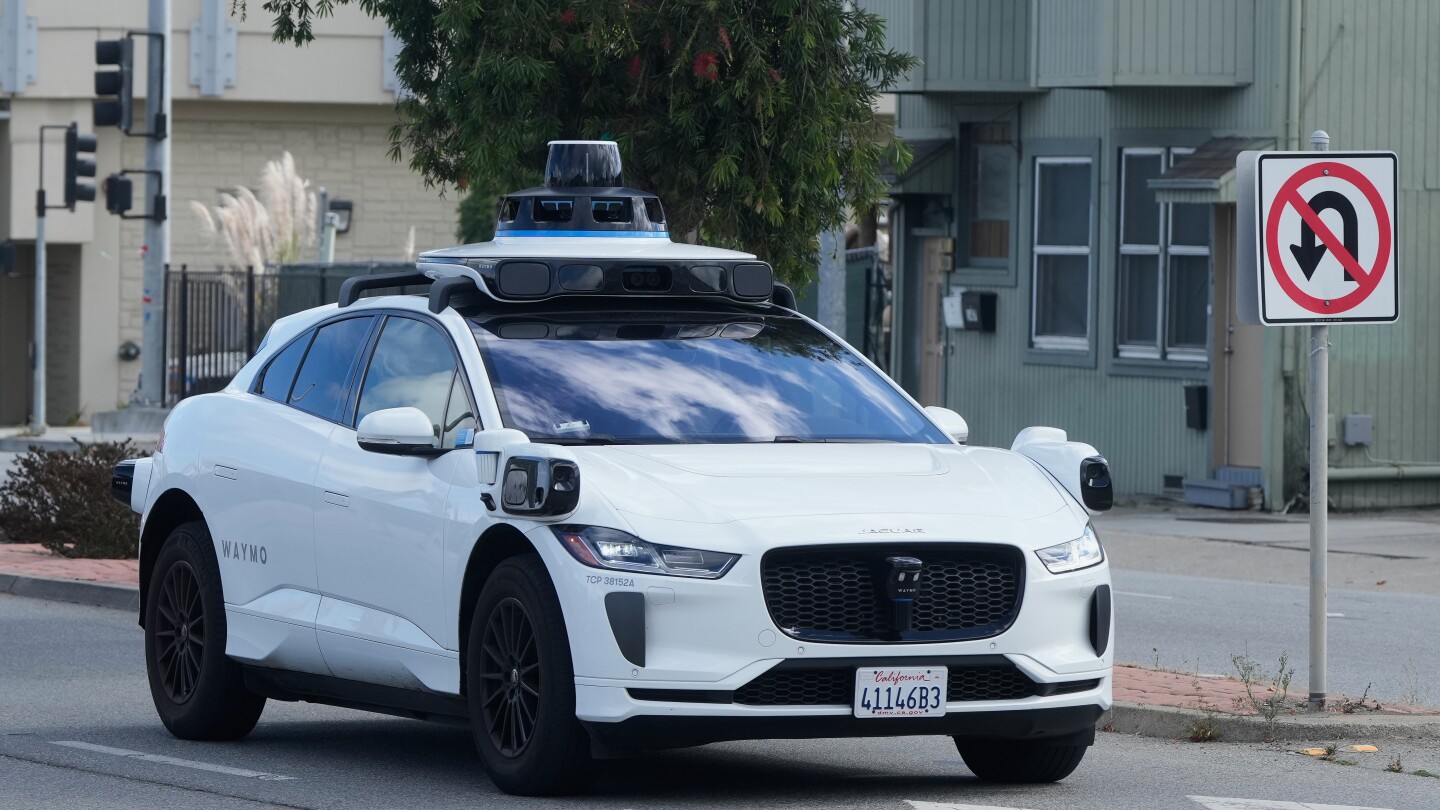
Waymo plans to bring its driverless taxis to London in 2026
Waymo, the trailblazer in autonomous vehicle technology, has announced its ambitious plans to extend its robotaxi services to London by next year. This move signifies a pivotal step in the company’s global strategy to revolutionize urban mobility. Starting in the coming weeks, Waymo will initiate testing of its self-driving vehicles on London’s streets, albeit with a human safety driver present to ensure compliance with regulatory standards. The company aims to secure the necessary governmental approvals to launch its commercial ride-hailing service in the city. In a recent blog post, Waymo emphasized its commitment to laying the groundwork for its London operations over the next few months, while actively engaging with local and national authorities to navigate the regulatory landscape. Waymo’s autonomous taxis have already established a strong presence in several U.S. cities, including Phoenix, San Francisco, Los Angeles, Atlanta, and Austin. Earlier this year, the company ventured into international markets by collaborating with partners in Japan for testing, though a commercial launch date remains undetermined. Originating as a clandestine project within Google, Waymo has evolved into a leading force in the autonomous vehicle industry. In the U.K., the company will adhere to stringent new regulations governing self-driving cars, which mandate that autonomous vehicles must demonstrate a safety level equivalent to or surpassing that of competent human drivers. Additionally, Waymo will participate in a government-led pilot program for small-scale self-driving taxi and bus services, slated for spring 2026. The company must also comply with regulations set by Transport for London, the city’s transport authority, which oversees licensing for traditional black cabs and other taxi operators like Uber.
-

ChatGPT will soon allow erotica for verified adults, says OpenAI boss
OpenAI is set to broaden the scope of content available on its widely-used chatbot, ChatGPT, to include erotica, as part of its initiative to ‘treat adult users like adults,’ according to CEO Sam Altman. In a recent post on X, Altman announced that forthcoming updates will enable the chatbot to exhibit more human-like behavior, but only if users opt for it, emphasizing that the changes are not driven by ‘usage maxxing.’ This move echoes Elon Musk’s xAI, which recently introduced sexually explicit chatbots to its Grok platform, potentially helping OpenAI attract more premium subscribers. However, it also raises concerns about the need for stricter regulations on AI companions. OpenAI has faced legal challenges, including a lawsuit from the parents of a teenager who tragically took his own life, alleging that the company’s parental controls were insufficient. Altman acknowledged that previous restrictions were implemented to address mental health concerns but stated that new tools now allow for safer relaxation of these constraints. Starting in December, OpenAI plans to introduce age-gating measures to ensure that adult content, such as erotica, is accessible only to verified adults. Critics argue that this decision underscores the necessity for enhanced federal and state-level oversight. Jenny Kim, a partner at Boies Schiller Flexner, questioned the effectiveness of OpenAI’s age-gating mechanisms, likening the company’s approach to using users as ‘guinea pigs.’ Meanwhile, a survey by the Centre for Democracy and Technology revealed that one in five students has engaged in romantic relationships with AI. California Governor Gavin Newsom recently vetoed a bill aimed at restricting AI chatbot access for children, emphasizing the importance of teaching adolescents to interact safely with AI. At the federal level, the FTC has initiated an inquiry into AI chatbots’ interactions with minors, and bipartisan legislation has been introduced in the Senate to classify AI chatbots as products, allowing for liability claims against developers. Altman’s announcement comes amid growing skepticism about the valuation of AI tech companies, as OpenAI continues to expand its revenue despite remaining unprofitable.
-

Job-destroying potential: Nobel economist warns of AI dangers
In a stark warning issued on Monday, Canadian economist Peter Howitt, a recent Nobel laureate, highlighted the dual-edged nature of artificial intelligence (AI). While acknowledging its ‘amazing possibilities,’ Howitt emphasized the urgent need for regulation to mitigate its potential to disrupt the labor market. His remarks come at a time of escalating global concerns about AI’s societal and economic impacts. Howitt, a professor emeritus at Brown University in the United States, was among three economists honored by the Royal Swedish Academy of Sciences for their groundbreaking work on how technology influences growth. His research, conducted in collaboration with French economist Philippe Aghion, delves into the theory of ‘creative destruction,’ where new innovations render older products obsolete, often displacing established companies. Speaking at a press conference, Howitt expressed uncertainty about AI’s future leadership and its broader implications. ‘It’s a fantastic technology with immense potential, but it also poses significant risks to highly skilled labor. This conflict necessitates regulation,’ he stated. He drew parallels to historical technological advancements, such as the telecoms boom of the 1990s and the advent of electricity and steam power, noting that while these innovations enhanced labor, their modern-day counterparts could lead to job displacement. Howitt admitted to lacking specific solutions but stressed that unregulated markets would fail to address these challenges effectively. Meanwhile, fellow Nobel laureate Joel Mokyr offered a more optimistic perspective, asserting that AI would not replace human labor but rather shift it toward more complex and engaging tasks. Mokyr, recognized for his research on the prerequisites for sustained technological growth, expressed greater concern about future labor shortages due to aging populations rather than technological unemployment. Howitt also reflected on his journey with Aghion, recalling their early confidence in the significance of their work. ‘Philippe always believed we’d win a Nobel Prize. Now, our time has come,’ he remarked, underscoring the profound impact of their research. As California Governor Gavin Newsom signed a pioneering law regulating AI interactions, the debate over AI’s role in society continues to intensify.
-

SpaceX launches Starship megarocket on successful test flight
SpaceX has marked a significant milestone with the successful test flight of its Starship megarocket, a critical component in NASA’s Artemis program aimed at returning astronauts to the Moon. The launch, conducted on Monday evening from SpaceX’s south Texas facilities, saw the massive rocket ascend into the golden-hour skies before its booster, Super Heavy, landed as planned in the Gulf of Mexico. The upper stage, Starship, continued its journey through space, completing a series of tests before splashing down in the Indian Ocean over an hour after liftoff. This mission, the 11th test flight for Starship, follows a series of earlier setbacks, including explosive failures, which had cast doubt on the project’s timeline and feasibility. However, the recent success signals a turning point for SpaceX, which is under pressure to deliver on its multibillion-dollar contract with NASA to develop a lunar lander. Elon Musk, SpaceX’s founder, emphasized the visceral experience of witnessing the launch firsthand, describing it as a pivotal moment in the company’s ambitious vision to eventually transport humans to Mars. The next iteration of Starship, Version 3, is already in development, with Monday’s flight expected to be the last for the current prototype. Despite the progress, challenges remain, including the development of a fully reusable orbital heat shield and the untested process of refueling in orbit. These hurdles are critical for deep-space missions and have been flagged by NASA’s Aerospace Safety Advisory Panel as potential threats to the timeline. As the U.S. races against China’s lunar ambitions, the success of Starship is seen as a key factor in maintaining America’s leadership in space exploration.
-

Google to invest $15bn to build AI data hub in India
Alphabet Inc., Google’s parent company, has announced a groundbreaking $15 billion investment to establish a state-of-the-art AI data hub in Visakhapatnam, Andhra Pradesh, India. This facility will be a pivotal part of Google’s global network of AI centers, spanning 12 countries. Thomas Kurien, CEO of Google Cloud, revealed at an event in Delhi that this will be the largest AI hub outside the United States, with the investment phased over the next five years. The announcement aligns with India’s growing prominence as a hub for AI and cloud technologies, driven by its low data costs and rapidly expanding internet user base. Sundar Pichai, Alphabet’s CEO, emphasized that the hub will accelerate AI innovation and economic growth in India. The Andhra Pradesh government highlighted the project’s significance for the state’s digital transformation and global standing. The facility will integrate cloud and AI infrastructure with renewable energy systems and an expanded fiber-optic network, supporting the state’s ambitious plan to develop 6GW of data center capacity by 2029. India’s data center industry has seen exponential growth, surpassing 1GW capacity in 2024, nearly triple its 2019 levels, according to JLL’s 2024 report.