分类: technology

  • NIP Group expands global bitcoin mining capacity, becoming largest in Mena

    NIP Group expands global bitcoin mining capacity, becoming largest in Mena

    Abu Dhabi-based NIP Group, a prominent player in the global digital entertainment sector, has significantly expanded its Bitcoin mining and high-performance computing operations. The company’s total capacity has now reached approximately 11.3 EH/s, solidifying its position as the largest Bitcoin-mining entity in the Middle East and North Africa (Mena) region. This expansion enables NIP Group to produce around 160 Bitcoins monthly, contingent on network conditions, while reinforcing Abu Dhabi’s growing stature as a global hub for digital infrastructure.

    This strategic move marks a critical milestone in NIP Group’s broader vision to integrate gaming, entertainment, blockchain, artificial intelligence (AI), and high-performance computing into a unified ecosystem. Hicham Chahine, co-CEO of NIP Group, emphasized the significance of this expansion, stating, ‘This transaction underscores the rapid progress of our digital infrastructure strategy. By building large-scale computing power, we are better positioned to explore opportunities in high-performance computing, crypto mining, and AI applications within gaming and entertainment.’

    Carl Argen, COO of NIPG Mining and Digital Assets, added, ‘We will deploy these assets with precision, ensuring immediate stable output while preparing for more advanced applications in the future.’

    Abu Dhabi’s emergence as a global leader in AI, blockchain, and data-driven infrastructure has been instrumental in this development. Over the past two years, the Emirate has attracted billions in investments to establish AI-optimized data centers, supercomputing hubs, and blockchain-ready ecosystems. NIP Group’s expansion aligns with the UAE’s national strategy to become a frontrunner in AI, Web3, and high-performance computing.

    The Emirate’s favorable regulatory environment, reliable energy supply, and government-backed innovation initiatives have made it a magnet for next-generation infrastructure development. For NIP Group, Abu Dhabi serves not only as an operational base but also as a platform to merge computing power with creativity, enabling the company to pioneer advancements in gaming, blockchain, and AI convergence.

    This expansion signifies a transformative moment for NIP Group as it evolves from a digital entertainment company into a technology-driven infrastructure leader. By anchoring its operations in Abu Dhabi, NIP Group is positioning itself at the intersection of gaming, entertainment, blockchain innovation, digital asset infrastructure, and AI. The UAE’s progressive regulatory framework, world-class digital connectivity, and ambition to become an AI-native economy by 2030 provide an ideal environment for this evolution.


  • MY.GAMES expands to MENA, helping developers tap into 595 million gamers

    MY.GAMES expands to MENA, helping developers tap into 595 million gamers

    MY.GAMES, a prominent international video game developer and publisher, has announced the expansion of its Publishing Program to the MENA (Middle East and North Africa) region. This strategic move aims to support local developers in scaling their games globally by leveraging the expertise of its PC and console publishing division, Knights Peak, and its mobile publishing arm, MGVC Publishing. The program offers comprehensive support across mobile, PC, and console platforms, providing funding for marketing and development, access to industry-leading services, and expert guidance in game design, business development, and live operations. The MENA region, home to approximately 595 million gamers, is one of the fastest-growing gaming markets globally, with an expected market volume of $7.1 billion by the end of 2025, according to Newzoo. MY.GAMES established its regional hub in Abu Dhabi in 2023, focusing on game development, research, and localisation, and is now extending its efforts into publishing. Elena Grigorian, CEO of MY.GAMES, emphasized the company’s commitment to fostering local talent and creativity by providing the necessary tools and global reach. Knights Peak specializes in premium PC and console titles, offering tailored publishing solutions, while MGVC Publishing focuses on mobile games, providing fair, shared-revenue partnerships and advanced tools for user acquisition and monetisation. This expansion aligns with MY.GAMES’ broader strategy to support the growing MENA gaming ecosystem and engage more closely with local communities.

  • Your phone as passport: Flyers now book flights, check in, clear immigration on mobile

    Your phone as passport: Flyers now book flights, check in, clear immigration on mobile

    The future of air travel is increasingly digital, with smartphones becoming the central hub for managing every aspect of the journey. According to the International Air Transport Association’s (IATA) 2025 Global Passenger Survey, more than half of travelers (54%) now prefer to interact directly with airlines via apps, marking a significant shift from traditional booking methods. Airline websites, while still popular at 31%, have seen a decline from 37% in 2024, as apps gain traction, particularly among younger travelers, with 25% opting for mobile solutions. The survey, which gathered responses from over 10,000 travelers across 200 countries, highlights a growing demand for seamless, smartphone-based travel experiences. A staggering 78% of passengers want a single mobile solution that integrates digital passports, wallets, and loyalty cards to streamline booking, payments, and airport processes. Mobile-enabled baggage handling is also on the rise, with electronic bag-tag adoption jumping from 28% to 35% in just one year. Payment methods are evolving too, with digital wallet usage climbing from 20% to 28%, while card payments have dipped from 79% to 72%. Nick Careen, IATA’s Senior Vice-President for Operations, Safety & Security, emphasized that passengers expect to manage their travel digitally, akin to other aspects of their lives, but stressed the importance of trust and cybersecurity in this transformation. Biometric technology is playing a pivotal role in this digital shift, with 50% of passengers having used facial recognition at some stage of their journey, up from 46% in 2024. In the UAE, airports are leading the charge, with Emirates deploying over 200 biometric facial-recognition cameras at Dubai International Airport, enabling registered passengers to move from check-in to boarding without physical documents. Similarly, Abu Dhabi’s Zayed International Airport is rolling out a ‘Smart Travel’ system across check-in, security, and transfer points, allowing travelers to clear immigration in as little as seven seconds. While 85% of biometric users reported satisfaction with the technology, privacy concerns remain, with 42% of hesitant passengers stating they would reconsider if data-protection assurances were provided. Careen highlighted that the next major step is for governments to issue digital passports and enable their secure recognition across borders, paving the way for a fully digital travel experience.

  • UAE: X to partner with Bridge Summit through sessions, experiences

    UAE: X to partner with Bridge Summit through sessions, experiences

    In a groundbreaking announcement, Bridge Summit 2025 has revealed a strategic partnership with X, a leading technology innovator, ahead of the event scheduled for December 8-10, 2025. This collaboration will see X actively participate in the Summit through thought leadership sessions, interactive workshops, and immersive on-site experiences. Attendees will have the opportunity to explore X’s cutting-edge technologies firsthand, including its suite of products and real-time global conversation tools, which are reshaping media landscapes. X’s technology will also be integrated into the Summit’s navigation screens, offering a tailored guide for participants. Abdulla Al Hamed, Chairman of Bridge, emphasized that this partnership underscores the UAE’s commitment to innovation and responsible AI, fostering connections across media, policy, finance, and technology sectors. Reem Sadek, Director of Government Affairs and Partnerships for MENA at X, highlighted the company’s role in empowering creators and storytellers through its global platform. This alliance builds on recent discussions between Bridge and X leadership, solidifying the Summit’s reputation as a hub for transforming ideas into impactful partnerships and driving cross-industry growth.

  • Norway transport firm steps up controls after tests show Chinese-made buses can be halted remotely

    Norway transport firm steps up controls after tests show Chinese-made buses can be halted remotely

    In response to alarming test results, Norway’s leading public transport operator, Ruter, has announced plans to implement stricter security measures and anti-hacking protocols for its fleet of Chinese-made electric buses. The tests revealed that Yutong Group, the Chinese bus manufacturer, could remotely access the control systems of its vehicles for software updates and diagnostics, raising concerns about potential exploitation.

  • Wuxi partners with iFlytek to launch AI industrial park

    Wuxi partners with iFlytek to launch AI industrial park

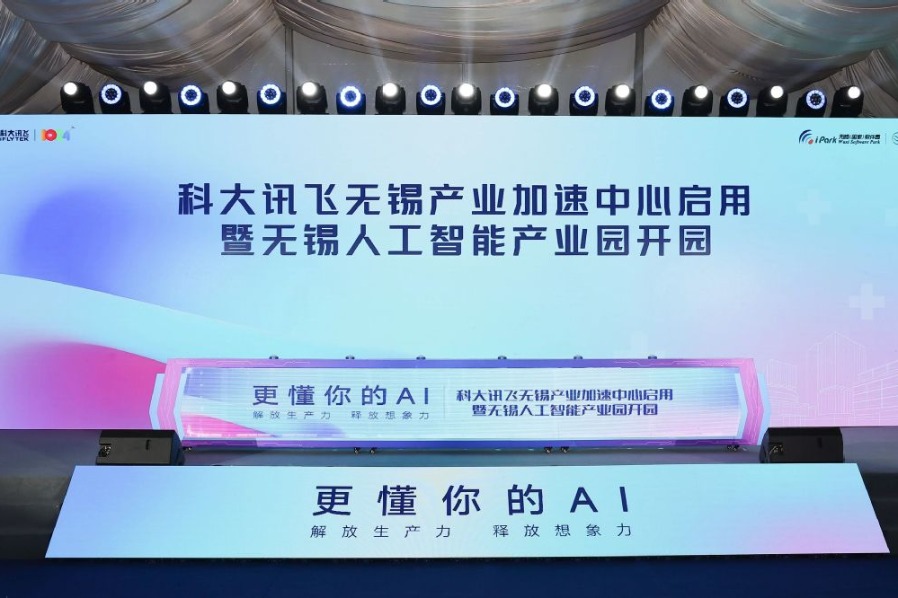
    Wuxi, a prominent industrial hub in Jiangsu Province, has taken a significant leap into the future of artificial intelligence (AI) by partnering with iFlytek to launch the Wuxi Artificial Intelligence Industrial Park. The inauguration ceremony, held on October 31 at the Wuxi Software Park, marked the official opening of the iFlytek Wuxi Industrial Acceleration Center and the AI industrial park, signaling a transformative step in AI-driven manufacturing support. Spanning an impressive 390,000 square meters, the park is strategically located within the Wuxi National Hi-Tech District and is the city’s first facility dedicated to advancing AI technologies. The park will focus on cutting-edge fields such as multimodal large language models, generative AI, and humanoid robotics. The Corona Borealis Building B, designated as the first phase of the ‘AI Industry Ecological Agglomeration Zone,’ will serve as a hub for top-tier manufacturing enterprises. It will offer comprehensive support, including demand matching and computing resources, to streamline the entire AI workflow—from solution development to collaboration. Additionally, the ‘Xishu Factory’ AI industry service platform has been established within the building, functioning as a one-stop solution provider to empower the manufacturing sector with advanced AI technologies. This initiative underscores Wuxi’s commitment to fostering innovation and solidifying its position as a leader in industrial transformation.

  • LEPAS unveils the future of ‘Elegant Living’ during global brand debut

    LEPAS unveils the future of ‘Elegant Living’ during global brand debut

    The 2025 Chery International User Summit in China marked the global debut of LEPAS, Chery Group’s premium mobility brand, introducing a transformative vision of ‘Elegant Living.’ The event showcased three groundbreaking innovations: LEPAS DAY, the world’s first Elegant Lifestyle House, and the brand’s new design philosophy, Spatial Aesthetics. These initiatives reflect LEPAS’s commitment to integrating technology and design into a richer, more human-centric lifestyle experience.

    The Elegant Lifestyle House, a pioneering concept, was unveiled as a miniature community embodying LEPAS’s core values of beauty, emotion, and innovation. Designed to blend automotive and home aesthetics, it features three immersive zones: Leopard Shadow Window, Slow Living Corner Café, and Colour & Art District. These spaces harmonize fashion, art, home décor, and nature, seamlessly integrating LEPAS vehicles like the L8, L6, and L4 into daily life. The automobile is reimagined as a cultural and lifestyle element, symbolizing modern elegance.

    LEPAS also introduced its Spatial Aesthetics design language, exemplified by the flagship L8 SUV. This model combines spacious interiors, elegant design, and advanced new energy technologies to redefine mobility. The L8’s dynamic exterior and meticulously crafted interior balance comfort and functionality, catering to diverse scenarios from solo drives to family trips.

    LEPAS DAY, a global declaration of ‘Elegant Technology,’ highlighted the brand’s philosophy of ‘understanding and serving people.’ The event showcased the Elegant Technology System, a comprehensive framework encompassing next-generation platforms, new energy innovation, holistic safety, and intelligent cockpit design. LEPAS DAY celebrated technology as a bridge between composure, confidence, and grace, demonstrating how elegance can drive global progress.

    For more details, visit www.cheryinternational.com.

  • Smart system mitigates human-tiger conflicts

    Smart system mitigates human-tiger conflicts

    Heilongjiang Province, home to China’s largest habitat for endangered Siberian tigers, has launched an advanced intelligent platform to monitor and mitigate human-tiger conflicts. This groundbreaking system, unveiled during a technical training session at Northeast Forestry University in Harbin on October 17, 2025, leverages cutting-edge technology to track and manage the region’s tiger population. The platform integrates 165 standardized survey units and 8,085 infrared cameras, covering 32,000 square kilometers of forest. It employs artificial intelligence to identify individual tigers by their unique stripe patterns, akin to human facial recognition. The system also features a three-tiered warning mechanism, issuing alerts based on a tiger’s proximity to villages. Real-time monitoring, intelligent drones, and deterrent technologies like gas, laser, and ultrasonic devices form a comprehensive control system. The platform’s 4G and Beidou satellite-enabled cameras ensure stable operation in extreme cold, while data visualization tools generate heat maps for wildlife distribution. This innovation not only addresses immediate conflict risks but also provides critical data for long-term conservation strategies.

  • Remote robotic eye surgery achieves breakthrough

    Remote robotic eye surgery achieves breakthrough

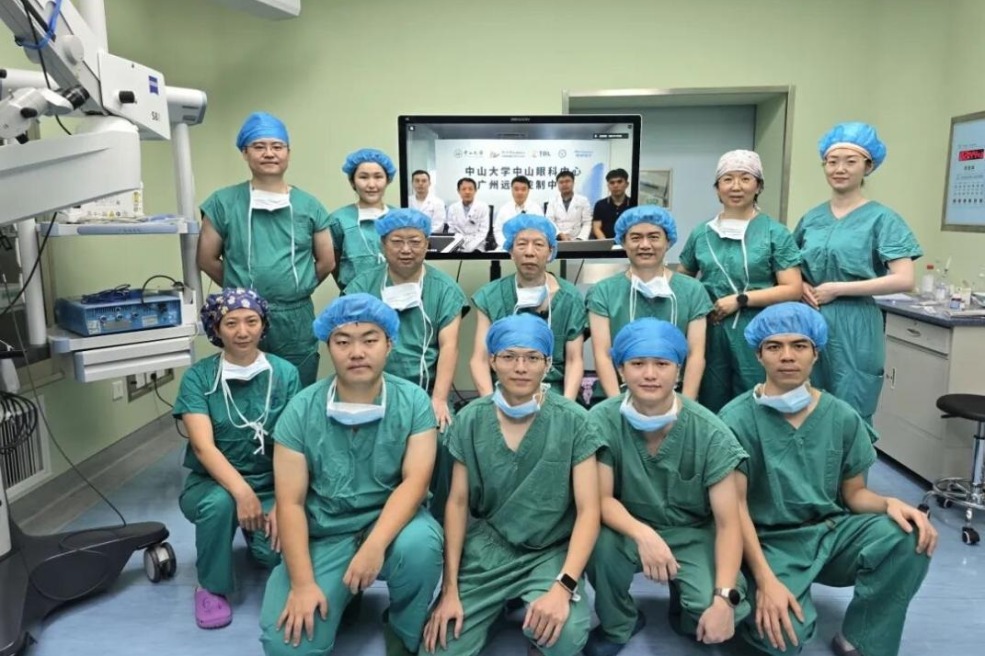
    In a groundbreaking achievement, ophthalmologists from the Zhongshan Ophthalmic Center at Sun Yat-sen University have successfully conducted the world’s first remote robotic subretinal injection surgery. This historic procedure, performed on Sunday, utilized a domestically developed 5G ophthalmic surgical robot, marking a significant leap in remote high-precision medical care. The surgery was executed seamlessly over a distance of 4,200 kilometers, with the main control terminal in Guangzhou, Guangdong province, guiding the surgical terminal in Urumqi, Xinjiang Uygur autonomous region. The operation, led by Professor Lin Haotian and Professor Yang Bo, involved precise micron-level fundus procedures, completed in less than seven minutes. The success of this surgery underscores China’s capability to deliver advanced medical resources to remote regions and safely apply high-precision robotic technologies in ophthalmic treatments. This achievement not only advances the field of remote intelligent medical care but also highlights the potential of 5G technology in revolutionizing healthcare. Moving forward, the team aims to expand this ‘remote plus intelligent’ model, making high-level ophthalmic medical resources more accessible to grassroots patients.

  • Innovation for living, working and thriving: The era of people-centred smart cities

    Innovation for living, working and thriving: The era of people-centred smart cities

    As urban populations surge globally, the concept of smart cities has emerged as a critical solution to enhance livability, safety, and sustainability. With Africa’s urban population projected to double to 1.4 billion by 2050 and the Gulf Cooperation Council (GCC) region expecting a 30% increase by 2030, the need for innovative urban planning has never been more urgent. Governments and city planners are turning to technology to create people-centered smart cities that prioritize the well-being of residents while addressing operational challenges. Egypt’s national Smart Cities Strategy and the Middle East and North Africa (MENA) region’s leadership in sustainable urban development exemplify this trend. These initiatives leverage IoT, smart solutions, and data-driven decision-making to improve public safety, mobility, and environmental monitoring. For instance, network cameras and sensors enhance situational awareness, reduce traffic congestion, and monitor air quality. However, the integration of technology raises concerns about privacy and ethical data usage. Smart city solutions must balance security with privacy, employing features like dynamic privacy masks, encryption, and access controls. The future of smart cities lies in collaboration with trusted vendors and integrators, ensuring the development of reliable, long-term solutions. By fostering innovation while safeguarding fundamental rights, smart cities aim to create safe, secure, and sustainable urban environments for future generations.