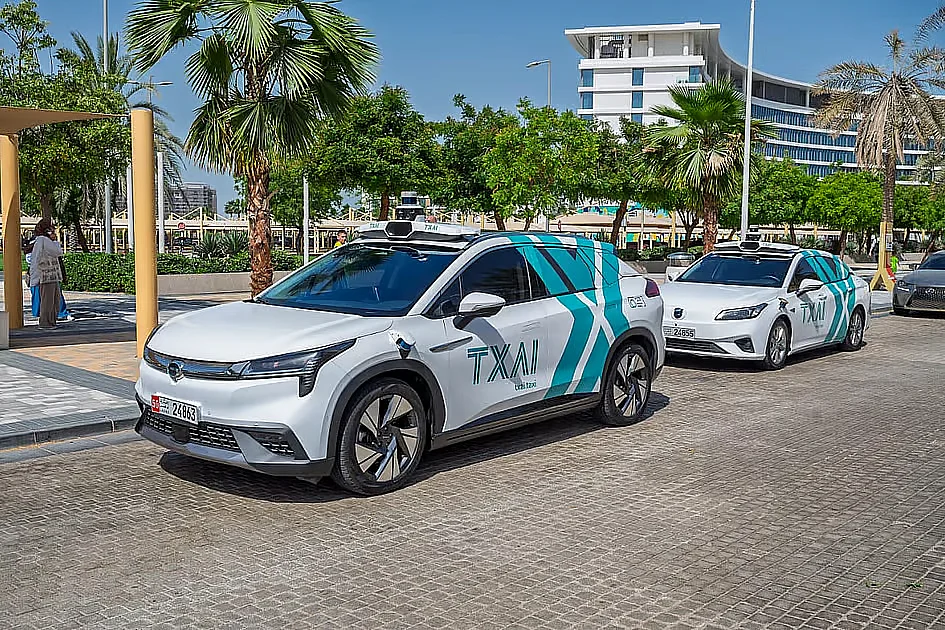
In a groundbreaking move for autonomous transportation, Abu Dhabi has successfully secured insurance for self-driving vehicles within the city, marking a significant milestone in the UAE’s push toward advanced technological integration. Faisal Al Bannai, adviser to the UAE President and Secretary General of the Advanced Technology Research Council, announced this achievement during the Abu Dhabi Autonomous Summit 2025. He highlighted that the Smart and Autonomous Systems Council has been actively addressing regulatory and insurance challenges, which have historically been major barriers to the deployment of autonomous systems globally. Al Bannai emphasized the city’s rapid progress, citing an example where autonomous cargo vehicles were tested and insured within just 45 days—a feat that left industry stakeholders astonished. He urged companies working with autonomous technologies, including drones and robotics, to focus their efforts on Abu Dhabi, describing it as the ideal hub for innovation. The UAE capital is already home to operational autonomous vehicles, with plans to introduce flying taxis in the near future. Al Bannai also revealed that Abu Dhabi is developing its own robotics AI model and autonomous platforms, positioning the UAE as a global leader in the autonomous technology race by 2026. The city aims to make 25% of trips autonomous by 2040, with some sectors expected to exceed this target. Mohamed Ali Al Shorafa, Chairman of the Department of Municipalities & Transport – Abu Dhabi, reinforced this vision, stating that Abu Dhabi is not just imagining the future but actively creating and deploying it. The city’s recent ranking as the fifth-best Smart City globally underscores its commitment to embedding innovation into everyday life.
分类: technology
-
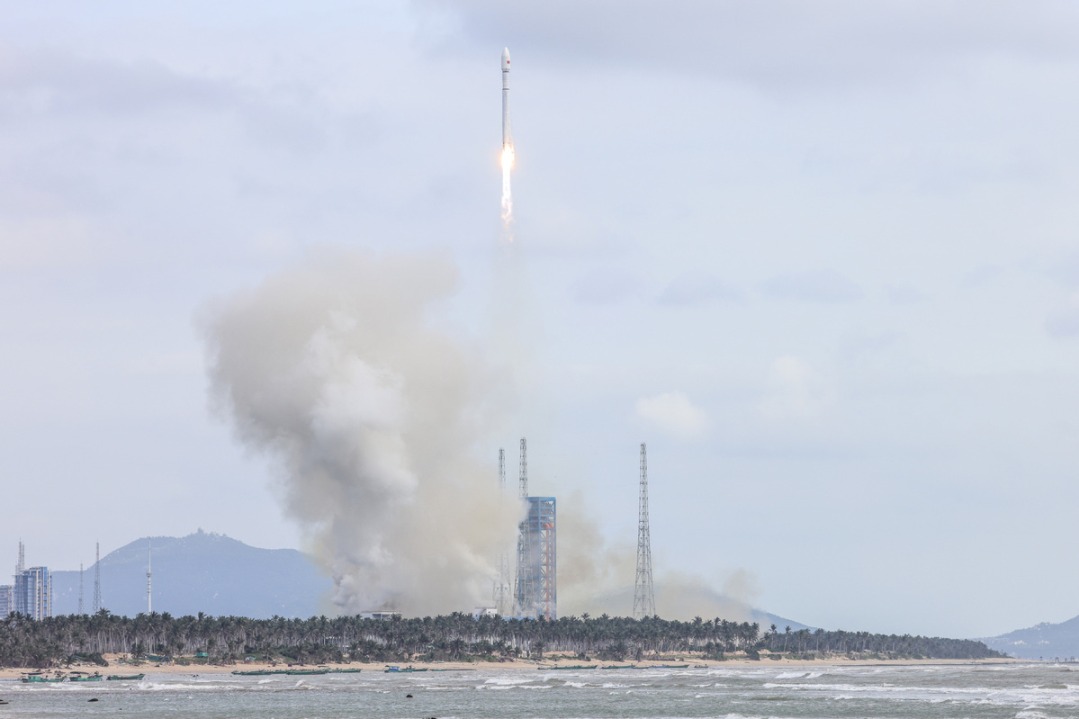
China launches group of internet satellites into orbit
China has successfully deployed its 13th group of low Earth orbit (LEO) internet satellites, marking another significant step in the development of its expansive space-based internet network. The launch took place on November 10, 2025, at 10:41 am from the Hainan International Commercial Aerospace Launch Center in Wenchang, Hainan province. The satellites were carried into orbit by the Long March 12 carrier rocket, a state-of-the-art model designed by the Shanghai Academy of Spaceflight Technology, a subsidiary of China Aerospace Science and Technology Corp (CASC).
The Long March 12, the 22nd member of the Long March family, stands out as the first Chinese rocket with a diameter of 3.8 meters, breaking away from the traditional 3.35-meter standard established in the 1960s. Standing at 62.6 meters tall, it is the second tallest rocket in China’s fleet, only slightly shorter than the Long March 5. This launch represents the 72nd space mission for China and the 607th flight of the Long March rocket series.
This latest deployment is part of China’s ambitious plan to create a mega-constellation of approximately 13,000 satellites in low Earth orbit, aimed at providing global internet coverage. Often compared to SpaceX’s Starlink, this project underscores China’s growing capabilities in space technology and its commitment to enhancing global connectivity. With 12 batches of satellites already launched this year, China is rapidly advancing toward the completion of its space-based internet system.
-

iPhone 18 rumours: Release date, design; what to expect from Apple’s next flagship
Apple’s iPhone 18 lineup is already generating significant buzz, even though its release is not expected until late 2026. Following the innovative changes introduced with the iPhone 17, including a 120Hz display for the base model and the ultra-slim iPhone Air, Apple is poised to continue its tradition of pushing technological boundaries. The iPhone 18 Pro is rumored to feature a transparent rear glass finish, adding a futuristic aesthetic to the device. This design choice, along with potential under-display Face ID technology and a single punch-hole camera, could redefine the iPhone’s visual identity. Additionally, Apple may introduce new color options for the Pro lineup, such as brown, purple, and burgundy, moving away from the traditional greys and silvers. On the camera front, the iPhone 18 is expected to see significant upgrades, including a 24-megapixel front-facing camera for most models and a variable aperture system for the Pro and Pro Max versions. These enhancements would offer users greater versatility in photography. However, Apple’s strategic launch plan could be a point of contention. While the iPhone 18 Pro models and the rumored iPhone Fold are expected to debut in September 2026, the standard iPhone 18 may not arrive until Spring 2027. This delay could be an attempt to steer consumers toward the higher-priced Pro models, though it risks alienating fans of the base iPhone. Pricing is expected to remain consistent with the iPhone 17, starting at $799 for the base model and $1,099 for the Pro version. As Apple continues to innovate, the iPhone 18 lineup promises to be a fascinating addition to the tech giant’s portfolio, though its delayed release strategy may test the loyalty of its customer base.
-

China launches low Earth orbit satellite group
In a significant stride for its space program, China successfully deployed a new cluster of low Earth orbit (LEO) satellites on Monday, November 10, 2025. The launch took place at the Hainan commercial spacecraft launch site, located in the southern island province of Hainan. At precisely 10:41 am Beijing Time, the Long March-12 carrier rocket propelled the satellites into their designated orbit, marking the 13th installment in a series of launches aimed at building a comprehensive internet constellation. This latest achievement underscores China’s growing capabilities in space technology and its commitment to enhancing global connectivity through advanced satellite networks. The successful deployment of these satellites is expected to bolster communication infrastructure, particularly in remote and underserved regions, while also contributing to scientific research and technological innovation. The launch reaffirms China’s position as a leading player in the global space race, with its ambitious projects continuing to shape the future of space exploration and satellite technology.
-

A jailed hacking kingpin reveals all about the gang that left a trail of destruction
Vyacheslav Penchukov, known in the cyber underworld as ‘Tank,’ has left a trail of devastation across the globe. After years of evading law enforcement, Penchukov was finally apprehended in a dramatic 2022 operation in Switzerland. Now serving concurrent nine-year sentences in a Colorado prison, the 39-year-old Ukrainian hacker reflects on his criminal journey in an exclusive interview with the BBC.
-

India’s data centre boom confronts a looming water challenge
India’s data centre capacity is on track to skyrocket by 77% by 2027, driven by the rapid expansion of artificial intelligence (AI) and the country’s burgeoning digital economy. With global tech giants like Google, Amazon Web Services, and Meta pouring billions into the sector, India is poised to become a global hub for data infrastructure. Google’s recent $15 billion investment in Andhra Pradesh underscores the scale of this transformation. However, this explosive growth comes with significant environmental challenges, particularly concerning water and energy consumption.
-

Drones to help Dubai authorities investigate fire incidents, improve safety
Dubai authorities are set to revolutionize fire incident management and safety protocols through the integration of cutting-edge drone technology. In a strategic move, Dubai Police and the General Command of Dubai Civil Defence (DCD) have signed a Memorandum of Understanding (MoU) to enhance coordination and expertise in drone applications. This collaboration will link the Civil Defence reporting system with the Dubai Police Drone Systems Center, enabling detailed incident reconstruction, scenario development, and knowledge exchange. The initiative aims to improve emergency response times, integrate drones into security infrastructure, and ensure community safety. Lt Gen Harib Mohammed Al Shamsi, Deputy Commander-in-Chief for Criminal Affairs, emphasized that the MoU aligns with Dubai’s leadership vision to establish a comprehensive security system adaptable to modern challenges. He highlighted the importance of institutional integration in achieving strategic goals for safety and well-being. Lt Gen Jamal Al Muhairi, Deputy Commander-in-Chief of Dubai Civil Defence, underscored the role of smart technologies in enhancing rapid response mechanisms and incident management. This initiative reinforces Dubai’s reputation as a leader in security innovation and future readiness.
-

China’s commercial rocket maker puts two satellites into orbit
In a significant advancement for China’s commercial space sector, CAS Space, a prominent commercial rocket manufacturer, successfully launched its 10th Kinetica 1 rocket on November 9, 2025. The rocket, which took off at 11:32 am from the Jiuquan Satellite Launch Center in the Gobi Desert, carried two experimental satellites, Chutian 2A and 2B, into their designated orbits. These satellites, developed by CASIC Space Engineering Development, a subsidiary of the China Aerospace Science and Industry Corp Second Academy, are designed to test Earth observation and hyper-resolution processing capabilities. This launch marks another milestone in China’s growing expertise in space technology and its commitment to expanding its presence in the global space industry.
-

AI trust issues: Why ChatGPT’s confidence can mislead users
As ChatGPT continues to revolutionize the way we work, learn, and create, a growing concern has emerged: users are placing too much trust in this AI-powered tool. While its ability to generate text with remarkable speed and confidence has made it a global favorite, experts warn that this very confidence can be misleading. From factual inaccuracies to privacy risks, the pitfalls of over-reliance on ChatGPT are becoming increasingly apparent across various sectors. Sam Altman, CEO of OpenAI, has openly acknowledged that the AI ‘hallucinates,’ producing information that sounds credible but may be entirely fabricated. This poses a significant challenge, particularly in education and research, where the chatbot has been known to cite non-existent sources or generate false data. The Times of India has reported that educators are concerned about the erosion of critical thinking skills and the spread of misinformation due to unchecked AI use. Beyond accuracy, privacy is another critical issue. Users often share sensitive information with ChatGPT, unaware that their data could be stored or used to train future models. In one notable incident, developers inadvertently leaked internal company data while using the chatbot to debug code. As businesses increasingly integrate AI tools, many are now implementing strict policies to prevent the unintentional sharing of confidential information. Analysts also emphasize that certain tasks, such as medical or legal advice, financial forecasting, and ethical decision-making, should never be entrusted to ChatGPT without human oversight. While some schools have banned the tool outright, many educators advocate for a more balanced approach, focusing on AI literacy and responsible use. The key, experts agree, is to treat ChatGPT as a starting point rather than a definitive source. As the technology evolves, the human touch remains indispensable in distinguishing fact from fiction and ensuring that AI serves as a tool for enhancement, not replacement.
-

Barrierless, ticketless parking in Dubai and Abu Dhabi: See list of locations
The United Arab Emirates is setting a new standard for urban mobility with the introduction of barrierless and ticketless parking systems in Dubai and Abu Dhabi. Leveraging cutting-edge technologies such as automatic license plate recognition, AI-driven traffic management, and automated payment systems, this initiative aims to enhance convenience, reduce congestion, and optimize traffic flow in bustling commercial and urban areas. By eliminating traditional barriers, these systems save time for drivers and create a smoother parking experience. The rollout began in key locations, including Mall of the Emirates and BurJuman Mall in Dubai, as well as Nation Towers in Abu Dhabi. The Al Aweer Central Fruit and Vegetable Market is also adopting this technology, managed by DP World and Parkin, to streamline operations for traders and supply chain operators. Additionally, Parkonic has expanded its seamless parking network to 24 locations across Dubai, including Union Coop Nad Al Hamar and The Beach JBR. In Abu Dhabi, Q Mobility’s ‘Zero Barrier AI Parking’ system, unveiled at Gitex Global 2025, integrates smart cameras, real-time monitoring, and automated payments for a fully seamless experience. This technological advancement reflects the UAE’s commitment to smart city solutions and improved urban living.