
Gabriela Cibils, a Paraguayan tech visionary, is spearheading efforts to transform her homeland into South America’s Silicon Valley. Growing up in Paraguay, a country nestled between Brazil and Argentina, Cibils observed that the nation was not traditionally tech-focused. However, inspired by her parents’ careers in technology and her education at the University of California, Berkeley, she pursued a path in computing and neuroscience. After eight years in Silicon Valley, Cibils returned to Paraguay, driven by a mission to elevate the country’s tech sector and attract global tech giants. Now a partner at Cibersons, a global technology and investment firm based in Asunción, she is leveraging Paraguay’s unique advantages to position it as a hub for innovation. Paraguay’s abundant, low-cost green energy, primarily from the Itaipu Dam—the world’s largest hydroelectric power station outside China—is a key selling point. The dam supplies 90% of Paraguay’s electricity needs and makes the country the largest exporter of clean energy globally. This reliable and renewable energy source is particularly appealing for energy-intensive industries like AI data centers. Paraguayan President Santiago Peña has actively promoted the country’s potential, engaging with tech giants like Google and OpenAI during a visit to California. The government is also investing $20 million in a new digital park near Asunción’s airport, designed to foster collaboration between public, private, and academic sectors. With a young population—average age 27—and initiatives to train software engineers and programmers, Paraguay is building a robust tech ecosystem. Vanessa Cañete, president of the Paraguayan Chamber of the Software Industry, emphasizes the importance of closing the gender gap in tech through initiatives like Girls Code, which has trained over 1,000 young women in programming and robotics. While challenges like bureaucratic hurdles remain, Cibils and other leaders are optimistic about Paraguay’s potential to become a global tech superpower.
分类: technology
-
Experts see complementary strengths in AI development between US, China
Technology experts have observed that the United States and China are pursuing distinct yet complementary approaches in the field of artificial intelligence (AI), creating potential avenues for cooperation despite ongoing political tensions. Eric Chan, Chief Public Mission Officer of Hong Kong Cyberport, emphasized that while the US has focused on foundational AI models, China has made significant strides in inference and reasoning, which drive practical applications. Chan highlighted China’s historical effectiveness in applying technology to enhance livelihoods and business operations, while also acknowledging the importance of foundational model investments. During a recent visit to Silicon Valley, Chan led a delegation of young entrepreneurs exploring AI-driven smart living solutions. Graham Webster, Editor-in-Chief of Stanford University’s DigiChina Project, echoed this sentiment, noting China’s focus on industrial applications of AI, such as manufacturing and power system optimization, contrasting with the US’s emphasis on large models and existential risks. China’s Global AI Governance Action Plan, unveiled at the World Artificial Intelligence Conference in Shanghai, advocates for an inclusive, multi-stakeholder framework promoting cross-border data flows and open-source models. This contrasts with the US’s strategic rivalry-focused approach under the Trump administration. Webster dismissed concerns about Chinese-made AI as xenophobic, emphasizing the importance of functionality over origin. Both experts called for collaboration across the AI stack, from computing to applications, to build a comprehensive ecosystem. Chan also underscored the potential for innovation clusters like Shenzhen-Hong Kong-Guangzhou and Silicon Valley to foster global cooperation, despite geopolitical uncertainties.
-

How hackers forced brewing giant Asahi back to pen and paper
Asahi Super Dry, Japan’s most popular beer, is facing severe supply shortages following a crippling cyber-attack on its production facilities. The incident, which forced Asahi to halt operations at most of its 30 factories across Japan, has left retailers, bars, and restaurants scrambling to meet customer demand. Although some facilities have partially reopened, the company’s computer systems remain offline, forcing manual processing of orders and shipments via pen, paper, and fax machines. This has drastically reduced output, with shipments now at just 10-20% of normal levels.
Asahi, which commands approximately 40% of Japan’s beer market, has apologized for the disruptions but has not provided a timeline for full recovery. The impact extends beyond beer, with shortages also affecting Asahi’s soft drinks, bottled teas, and other products. Major convenience store chains like FamilyMart, 7-Eleven, and Lawsons have warned customers of dwindling supplies.
The ransomware group Qilin has claimed responsibility for the attack, leveraging its platform to extort proceeds from cyber-attacks. While Asahi’s European operations, including brands like Peroni and Grolsch, remain unaffected, the incident highlights Japan’s vulnerability to cyber threats. Experts point to the country’s reliance on outdated systems and a lack of cybersecurity professionals as key weaknesses.
In response, the Japanese government has emphasized its commitment to improving cyber capabilities. The recent enactment of the Active Cyber Defense Law (ACD) grants authorities greater powers to combat cyber threats, including the ability to neutralize attackers’ servers. However, for small businesses like Ben Thai restaurant in Tokyo, the immediate challenge is navigating the ongoing supply disruptions. Owner Sakaolath Sugizaki remains uncertain about when normal operations will resume, echoing the concerns of many across Japan.
-
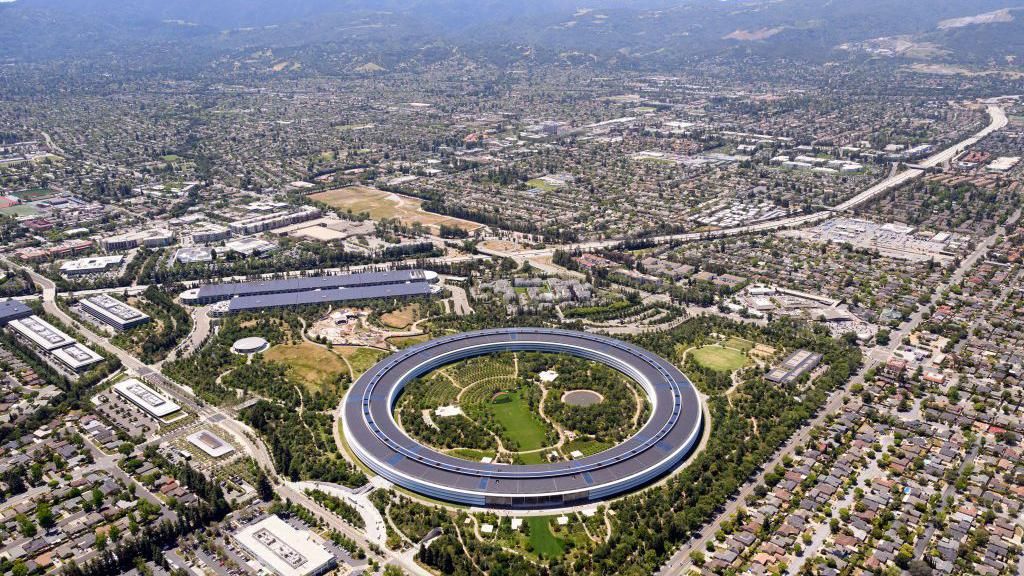
‘It’s going to be really bad’: Fears over AI bubble bursting grow in Silicon Valley
Silicon Valley, the global epicenter of technological innovation, is once again at the forefront of a heated debate: Is the artificial intelligence (AI) sector heading toward a bubble? At OpenAI’s DevDay event this week, CEO Sam Altman addressed concerns head-on, acknowledging the ‘bubbly’ aspects of AI while defending the industry’s potential. ‘There’s something real happening here,’ he asserted, flanked by his top executives. However, skepticism is growing, with critics questioning whether the skyrocketing valuations of AI companies are driven by ‘financial engineering’ rather than sustainable growth. The Bank of England, the International Monetary Fund, and JP Morgan CEO Jamie Dimon have all issued warnings, with Dimon emphasizing that ‘the level of uncertainty should be higher in most people’s minds.’ Early AI entrepreneur Jerry Kaplan, who has lived through four tech bubbles, expressed grave concerns about the current AI frenzy. ‘When [the bubble] breaks, it’s going to be really bad, and not just for people in AI,’ he warned at a panel discussion at Silicon Valley’s Computer History Museum. ‘It’s going to drag down the rest of the economy.’ Despite these warnings, the AI sector continues to attract unprecedented investments. OpenAI, the company behind ChatGPT, recently secured a $100 billion deal with chipmaker Nvidia and announced plans to purchase billions of dollars worth of equipment from Nvidia rival AMD. These complex financial arrangements, coupled with OpenAI’s ambitious Stargate project in Texas, have raised eyebrows. Some experts have labeled these deals as ‘circular financing,’ where companies invest in their own customers to sustain demand. Nvidia CEO Jensen Huang defended the arrangement, stating that OpenAI is not obligated to use Nvidia’s technology exclusively. ‘Our primary goal is just really to support them and help them grow – and grow the ecosystem,’ he said. Meanwhile, the surge in AMD stock suggests that retail investors are eager to capitalize on the AI boom. However, concerns about overinvestment and environmental impact persist. Kaplan warned of ‘enormous data centers in remote places like deserts, that will be rusting away and leaching bad things into the environment.’ Despite the risks, some remain optimistic. Jeff Boudier of Hugging Face likened the current AI infrastructure investments to the overinvestment in telecom infrastructure during the dot-com era. ‘If there is overinvestment into infrastructure for AI workloads, there may be financial risks tied to it,’ he said. ‘But it’s going to enable lots of great new products and experiences.’ As the AI sector continues to evolve, the question remains: Are we witnessing the birth of a transformative technology or the buildup of another financial bubble?
-

OpenAI video app Sora hits 1 million downloads faster than ChatGPT
OpenAI’s latest text-to-video AI tool, Sora, has achieved a groundbreaking milestone, surpassing one million downloads in less than five days—a feat that outpaced ChatGPT’s initial launch. The app, which has dominated the Apple App Store charts in the US, transforms simple text prompts into ten-second, hyper-realistic videos. Sora’s rapid adoption was highlighted in an X post by Bill Peebles, the head of Sora, who noted the ‘surging growth’ despite the app being invitation-only and limited to North America. However, the tool’s handling of copyrighted material and depictions of deceased public figures has ignited widespread criticism. Social media platforms have been flooded with user-generated Sora videos, including those featuring late celebrities like Michael Jackson and Tupac Shakur. Zelda Williams, daughter of the late Robin Williams, recently urged people to stop sharing AI-generated videos of her father, linking the trend to Sora’s popularity. OpenAI defended its stance, citing ‘strong free speech interests’ in allowing historical figure depictions but acknowledged that authorized individuals could request the removal of recently deceased public figures’ likenesses. The app has also been used to create deepfake videos, such as one featuring OpenAI CEO Sam Altman alongside Pokémon characters, raising concerns about intellectual property rights. Legal battles loom as companies like Anthropic face lawsuits over AI model training. OpenAI has pledged to adapt its approach, offering rights holders greater control and exploring revenue-sharing models. However, whether these measures will satisfy stakeholders or lead to further legal challenges remains uncertain.
-

Tech billionaires seem to be doom prepping. Should we all be worried?
In recent years, a growing trend among Silicon Valley’s elite has sparked widespread curiosity and speculation: the construction of luxury bunkers and underground shelters. Mark Zuckerberg, the founder of Facebook, has reportedly been developing a 1,400-acre compound on Kauai, Hawaii, since 2014, complete with a 5,000-square-foot underground shelter. Despite Zuckerberg’s insistence that it’s merely a basement, rumors persist that it’s a doomsday bunker. Similarly, tech moguls like Reid Hoffman, co-founder of LinkedIn, have openly discussed ‘apocalypse insurance,’ with New Zealand emerging as a popular destination for such investments. The motivations behind these projects remain unclear, but they coincide with rising concerns about artificial intelligence (AI) and its potential to disrupt society. Ilya Sutskever, chief scientist at OpenAI, has even suggested building a bunker for top scientists before releasing artificial general intelligence (AGI), a technology that could match human intelligence. While some, like Elon Musk, envision AGI as a path to ‘universal high income’ and sustainable abundance, others fear its potential to surpass human control. Governments are taking steps to regulate AI, but the debate over its risks and benefits continues to divide experts. As AI advances, the line between innovation and existential threat grows increasingly blurred, leaving humanity to grapple with the implications of its own creations.
-
The new AI arms race changing the war in Ukraine
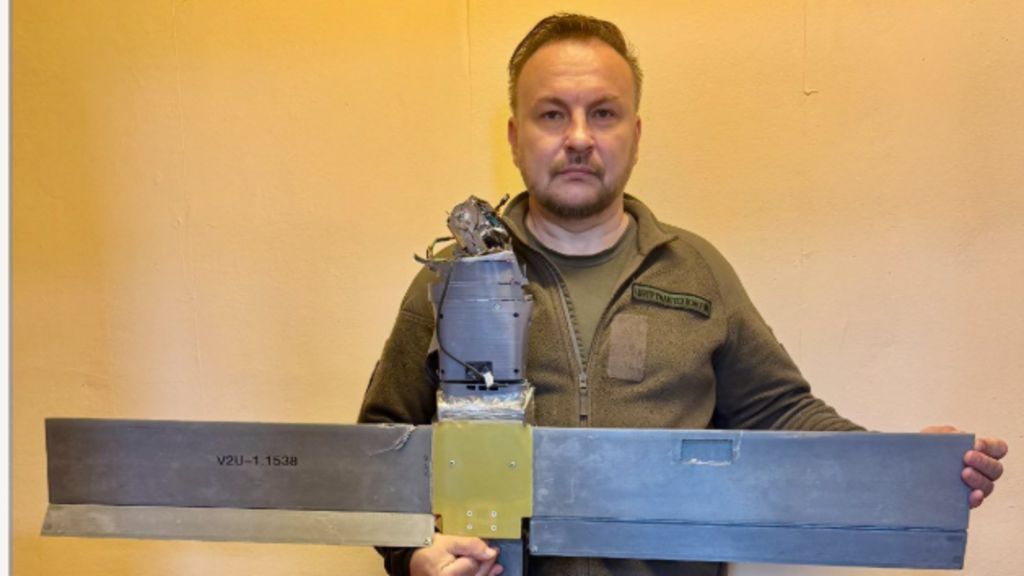
The ongoing conflict between Ukraine and Russia has entered a new phase with the deployment of advanced AI-powered drones, reshaping the dynamics of modern warfare. Serhiy Beskrestnov, a consultant for Ukrainian defense forces, recently intercepted a Russian drone equipped with artificial intelligence, capable of autonomously identifying and attacking targets. Unlike conventional drones, this AI-driven model operates without transmitting or receiving signals, making it immune to jamming techniques.
Both Russian and Ukrainian forces have been integrating AI into their military strategies, utilizing it for target identification, intelligence gathering, and de-mining operations. For Ukraine, AI has become a critical tool, processing over 50,000 video streams monthly from the front lines, as highlighted by Deputy Defense Minister Yuriy Myronenko. This technology enables rapid data analysis, target mapping, and strategic planning, ultimately enhancing operational efficiency and saving lives.
AI is also transforming unmanned weapons systems. Ukrainian troops now employ AI-based software that allows drones to autonomously lock onto targets and complete missions without human intervention. Yaroslav Azhnyuk, CEO of Ukrainian developer The Fourth Law, envisions a future where fully autonomous drones can execute missions with a simple smartphone command, eliminating the need for piloting skills.
However, the rise of AI in warfare raises significant ethical and operational concerns. Vadym, a developer at DevDroid, warns of the risks of friendly fire, as AI systems may struggle to distinguish between Ukrainian and Russian soldiers in similar uniforms. Additionally, there are fears that automated systems could violate international humanitarian laws by failing to protect civilians or recognize surrendering combatants.
Ukraine is also developing AI interceptor drones to counter Russian long-range attack drones like the Shaheds. While these systems promise greater precision and agility, their deployment remains cautious, with human oversight deemed essential for critical decisions. Ukrainian President Volodymyr Zelensky has called for global regulations on AI in weapons, likening the urgency to nuclear non-proliferation efforts.
As the conflict continues, the integration of AI in warfare underscores the need for international cooperation to address the ethical and strategic challenges posed by this rapidly evolving technology.
-
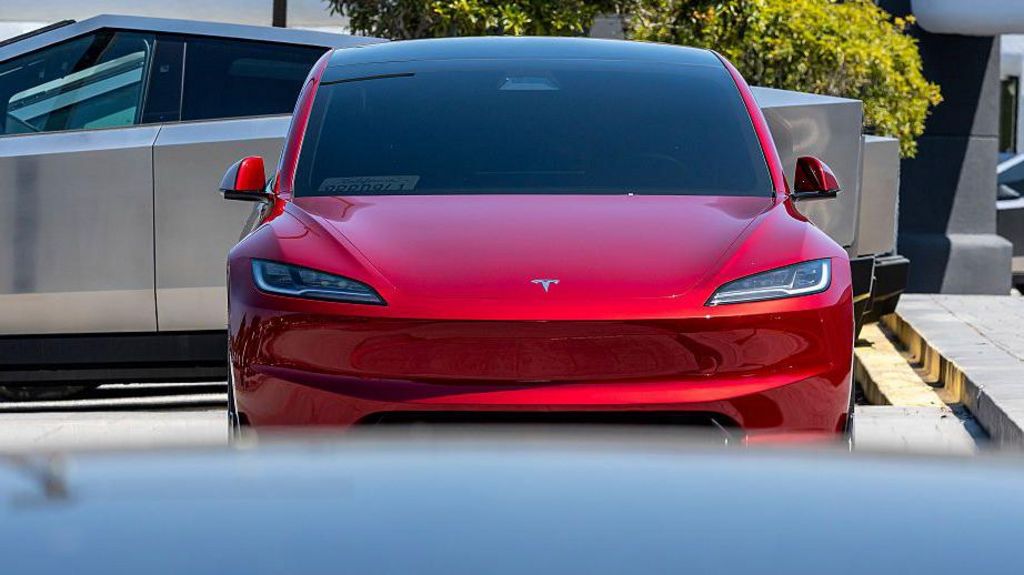
Tesla investigated over self-driving cars driving on wrong side of road
Tesla is under scrutiny by the US government following reports that its self-driving vehicles have allegedly violated traffic laws, including instances of driving on the wrong side of the road and failing to stop at red lights. The National Highway Traffic Safety Administration (NHTSA) has identified 58 such incidents in a recent filing, prompting a preliminary evaluation of Tesla’s ‘Full Self-Driving (Supervised)’ mode. This advanced feature, which requires an additional fee, allows vehicles to perform lane changes and turns autonomously, though drivers are expected to remain vigilant and ready to intervene. Approximately 2.9 million Tesla vehicles equipped with this technology are now part of the investigation. The NHTSA report highlights six crashes caused by vehicles stopping at red lights before proceeding prematurely, four of which resulted in injuries. Tesla has reportedly taken corrective measures to address recurring issues at a specific intersection in Maryland. Additionally, the agency is examining reports of vehicles entering opposite lanes during turns, with some incidents offering drivers minimal time to react. This probe adds to Tesla’s existing investigation concerning door-locking mechanisms in Model Y vehicles, where children were allegedly trapped inside, leading some owners to break windows for rescue. Amid these challenges, Tesla has introduced more affordable versions of its popular models to compete with cost-effective electric vehicles, particularly those manufactured by Chinese companies. Elon Musk, Tesla’s CEO and former ally of President Donald Trump, recently launched the America Party, aiming to challenge the dominance of the Republican and Democratic parties. For more updates on global tech developments, subscribe to the Tech Decoded newsletter.
-

The Indian messaging app that wants to take on WhatsApp
India, WhatsApp’s largest market, has long been dominated by the messaging giant, which has become an integral part of daily life. However, a new contender, Arattai, developed by Indian tech company Zoho, is making waves. Over the past few weeks, Arattai has seen a meteoric rise in popularity, with seven million downloads in just seven days, according to Zoho. This surge is largely attributed to the Indian government’s push for self-reliance, a message echoed by Prime Minister Narendra Modi and his ministers, who have encouraged the use of homegrown apps. Federal minister Dharmendra Pradhan recently urged citizens to use Arattai on social media, further boosting its visibility. Zoho CEO Mani Vembu reported that daily sign-ups skyrocketed from 3,000 to 350,000 in just three days, with active users increasing 100-fold. Despite this growth, Arattai still lags behind WhatsApp, which boasts 500 million monthly active users in India. Arattai offers features similar to WhatsApp, including messaging, voice, and video calls, and is designed to function smoothly on low-end devices and slow internet connections. Users have praised its interface and design, with many expressing pride in supporting an Indian-made app. However, experts remain skeptical about Arattai’s ability to dethrone WhatsApp, citing the latter’s entrenched user base and extensive integration with businesses and government services. Additionally, concerns have been raised about Arattai’s data privacy policies. While the app offers end-to-end encryption for calls, it does not yet extend this feature to messages, raising questions about user privacy. Zoho has stated that it is working to implement full end-to-end encryption for text messages. The company has also emphasized its commitment to complying with India’s IT regulations while ensuring user control over data. Historically, Indian apps like Koo and Moj have struggled to sustain initial success against global giants. Whether Arattai can overcome these challenges and carve out a lasting presence in India’s competitive tech landscape remains uncertain.
-
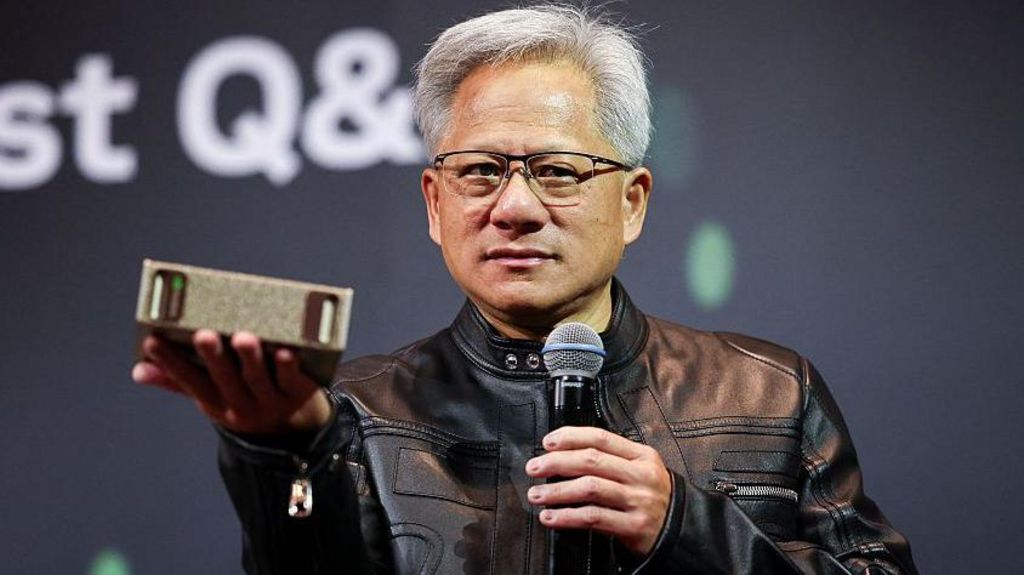
How China is challenging Nvidia’s AI chip dominance
For decades, the United States has been the undisputed leader in the global technology market. However, China is making significant strides to challenge this dominance, particularly in the realm of advanced semiconductor technology. Nvidia CEO Jensen Huang recently remarked that China is merely ‘nanoseconds behind’ the US in chip development, signaling a narrowing gap in this critical industry.