分类: technology

  • China’s first sea-based rocket net recovery platform delivered

    China’s first sea-based rocket net recovery platform delivered

    China has achieved a significant milestone in its commercial space ambitions with the recent delivery of its inaugural seaborne rocket recovery platform. This groundbreaking infrastructure, officially named “Linghangzhe” (Pathfinder), represents the nation’s first certified marine-based system designed specifically for retrieving rocket components using advanced net technology.

    The platform received formal certification from the China Classification Society, marking its compliance with all necessary class and statutory requirements for maritime rocket recovery operations. This development provides crucial support infrastructure for China’s rapidly expanding reusable launch vehicle programs, potentially revolutionizing how space companies recover and reuse rocket stages.

    This achievement follows i-Space’s August launch of their specialized landing vessel “Xingjiguihang” (Stellar Return), featuring an expansive 40-by-60-meter recovery deck engineered to retrieve the first stage of the company’s SQX-3 reusable methane-liquid oxygen rocket. The simultaneous progress across multiple Chinese aerospace entities indicates a coordinated national push toward reusable space technology.

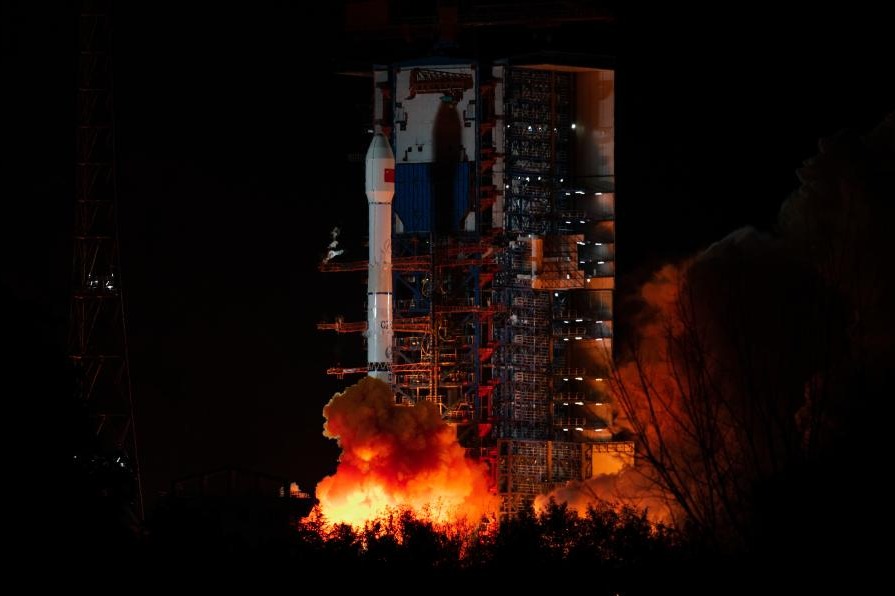
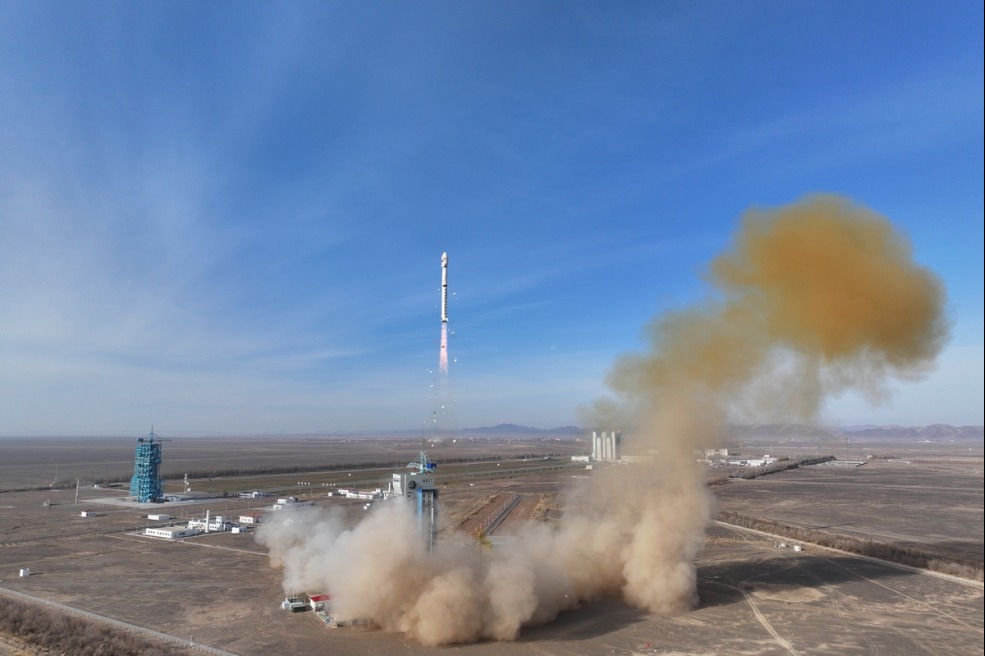
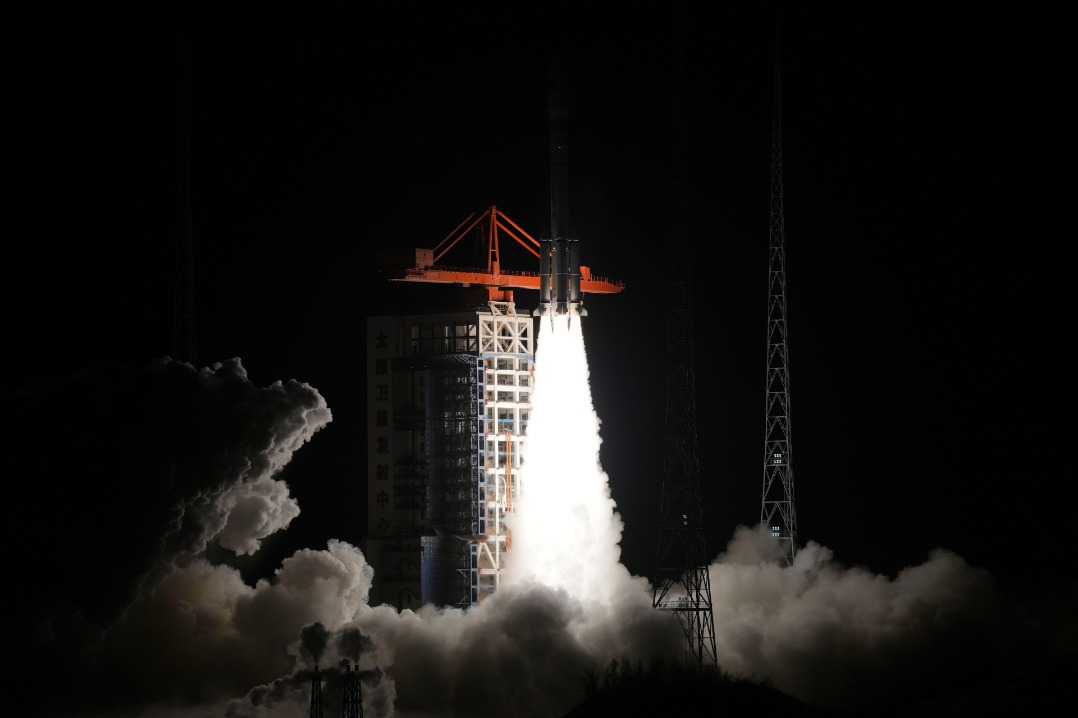
    The same period witnessed China’s new-generation manned launch vehicle, the Long March-10, successfully complete its initial static fire test. This vehicle family includes two configurations: the standard Long March-10 and the reusable Long March-10A variant, demonstrating China’s parallel development of both government and commercial space capabilities.

    Chinese aerospace companies are accelerating reusable vehicle development through competitive innovation. LandSpace conducted successful ground ignition tests for its Zhuque-3 rocket’s first-stage propulsion system in June, while multiple entities have completed essential vertical takeoff and landing demonstrations—critical validation steps for reusable rocket technology.

  • Beijing’s AI sector output expected to top $63 billion

    Beijing’s AI sector output expected to top $63 billion

    Beijing’s artificial intelligence sector is projected to achieve unprecedented growth with industrial output expected to exceed 450 billion yuan ($63.6 billion) by the conclusion of 2025, according to an official white paper released by municipal authorities. The comprehensive industry report, jointly published by the Beijing Science & Technology Commission and the Administrative Commission of Zhongguancun Science Park, reveals remarkable expansion metrics for the first half of the year, with sector output reaching 215.22 billion yuan—representing a substantial 25.3 percent year-on-year increase.

    The Chinese capital has solidified its position as the nation’s premier AI hub, hosting more than 2,500 specialized enterprises and 183 registered large-scale AI models. Industry analysts note that Beijing’s innovation ecosystem has matured significantly, developing what the white paper describes as ‘a globally competitive industrial chain’ that spans research, development, and commercialization phases.

    Technological breakthroughs continue to emerge from the region, including the recent launch of Bohrium by the AI for Science Institute. This pioneering platform claims to be the world’s first comprehensive AI research system capable of managing the entire scientific process from literature review through computation, experimentation, and cross-disciplinary collaboration.

    Commercial applications are demonstrating robust performance, with leading technology firms including Baidu and Douyin reporting record-breaking revenue figures and user engagement metrics. The successful monetization pathways underscore the sector’s transition from experimental development to sustainable economic contribution, positioning Beijing at the forefront of global AI innovation and implementation.

  • China boosts commercial space sector

    China boosts commercial space sector

    In a landmark move for its space industry, China has established its first dedicated government body to oversee commercial space operations. The China National Space Administration (CNSA) recently formed the Department of Commercial Space Operations, marking an unprecedented institutional commitment to nurturing the private space sector.

    This strategic development coincides with the release of a comprehensive action plan outlining 22 specific measures to achieve high-quality growth in commercial space activities by the end of 2027. The blueprint integrates commercial space ambitions into national space strategy across five critical domains: enhancing technological innovation, optimizing resource allocation, promoting commercial products and services, improving regulatory management, and implementing full-chain safety supervision.

    The establishment of this specialized department signals a profound transformation in China’s space ecosystem. For nearly seven decades since the industry’s foundation, which will celebrate its 70th anniversary next year, space programs remained exclusively under state control through entities like CNSA, the Chinese Academy of Sciences, and major state-owned contractors including China Aerospace Science and Technology Corp.

    Over recent years, however, private enterprises have emerged as significant contributors to China’s space ambitions, fueled by supportive government policies and concrete assistance. This growing private sector involvement has generated substantial demand for commercial launch services, particularly in satellite deployment.

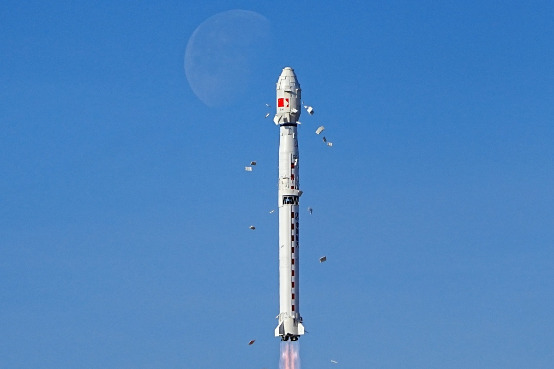
    Currently, five Chinese private companies—i-Space, Galactic Energy, Space Pioneer, LandSpace, and Orienspace—have successfully conducted orbital launches using independently developed carrier rockets. The industry’s latest development features Beijing-based LandSpace preparing to launch its inaugural reusable rocket, the ZQ 3, in coming weeks, positioning itself to compete with American pioneer SpaceX in reusable launch technology.

  • New system extracts water from atmosphere

    New system extracts water from atmosphere

    Shanghai researchers have unveiled a groundbreaking atmospheric water harvesting system that represents China’s transition from follower to leader in this emerging technology sector. Developed by Shanghai Jiao Tong University’s interdisciplinary ITEWA team, the comprehensive solution addresses global water scarcity through three distinct technological pathways tailored to different climate conditions.

    The system employs condensation, adsorption, and a novel heat pump coupled with adsorption/absorption technologies to extract drinking water from atmospheric moisture. This approach enables operation across diverse environments ranging from high temperature/humidity regions to areas with low temperature/humidity or high temperature/low humidity conditions.

    Commercialized through Shanghai-based technology firm AtmosWell, the innovation includes multiple product configurations. These range from solar-powered off-grid drinking stations capable of producing 50 liters daily without infrastructure to large-scale engineering platforms generating 1,600 liters per day for island communities, hotels, and emergency disaster relief scenarios. The portfolio also features plug-and-play water bars for office and home use.

    Professor Wang Ruzhu, lead scientist of the ITEWA team and 2023 Global Energy Prize laureate, emphasized the technology’s significance: “Extracting potable water from air represents one of humanity’s ultimate dreams for addressing uneven water distribution. We’ve systematically transformed laboratory breakthroughs into adaptable engineering solutions that serve society’s core needs.”

    The technology overcomes traditional challenges of atmospheric water extraction by adapting to complex climate variations through proprietary purification systems that combine traditional filtration with newly developed low-temperature rapid cooling antibacterial technology and comprehensive water circulation preservation.

    Market analysis from QYResearch projects the global atmospheric water collector market will reach $420 million by 2031, growing at 4.8% CAGR. Shanghai municipal technology officials highlight the innovation’s potential for environmental conservation, noting it could reduce the 600 billion plastic water bottles produced annually worldwide, of which only 9% are currently recycled.

  • Experts: Tech to play positive role in art world

    Experts: Tech to play positive role in art world

    NANNING—At a pivotal gathering of thought leaders, the intersection of technology and art emerged as a powerful catalyst for innovation, with experts advocating for a symbiotic relationship between these traditionally distinct fields. The 2025 National Conference on Science Popularization Content Creation, organized by the China Science Writers Association, became a platform for envisioning how disruptive technologies like artificial intelligence could revolutionize creative expression without supplanting human artistry.

    Shu Yong, a member of the National Committee of the Chinese People’s Political Consultative Conference and vice-president of the Kaiming Art Academy, presented a compelling vision of mutual empowerment between science and art. “While technological revolutions have historically sparked artistic revolutions,” he noted, “I equally believe art can propel technological development forward. The humanities offer invaluable perspectives that guide technological advancement with ethical and creative considerations.”

    The acclaimed artist, who has incorporated AI into his painting practice for three years, emphasized that his engagement with technology transcends mere production of visually striking works. Instead, he described it as “an exploration of knowledge through continuous creation”—a process that generates timeless classics reflective of their technological era while preserving irreplaceable humanistic elements.

    Documentary filmmaker Li Chengcai reinforced this perspective, addressing the critical challenge of translating complex scientific concepts into accessible public understanding. “We must maintain both the solemnity of scientific principles and the engaging storytelling that resonates with general audiences,” Li explained. He characterized this balancing act as navigating an inherent conflict between rigid scientific accuracy and narrative flexibility, where the ultimate goal is discovering “the warmth and humanistic care within science.”

    The conference highlighted several successful integrations of technology and art, including this year’s Spring Festival Gala presentation where robots performed the traditional yangko dance—an artistic demonstration of AI’s potential future applications. Such collaborations, experts agreed, make scientific concepts visible, comprehensible, and emotionally perceptible through artistic approaches.

    Ultimately, the gathering served as both forecast and foundation: a prediction of inevitable changes brought by disruptive technologies, and a commitment to ensuring these changes enrich rather than diminish human creativity. The China Science Writers Association aims to cultivate an innovative culture through such dialogues, expanding the forms and impact of popular science works in an increasingly technologically-integrated world.

  • Over 120,000 home cameras hacked for ‘sexploitation’ footage

    Over 120,000 home cameras hacked for ‘sexploitation’ footage

    South Korean law enforcement has apprehended four individuals following a sophisticated cybercrime operation involving the unauthorized access of more than 120,000 Internet Protocol (IP) cameras installed in private residences and commercial establishments. The suspects allegedly exploited security vulnerabilities in these devices to capture intimate footage, which was subsequently converted into sexually exploitative content and monetized on an overseas digital platform.

    According to Sunday’s announcement from the National Police Agency, the perpetrators capitalized on weak authentication measures, particularly simplistic passwords commonly used by IP camera owners. These connected devices, frequently employed for home security, child monitoring, or pet surveillance, represent a more affordable alternative to traditional closed-circuit television systems.

    The compromised cameras were located across diverse settings including private dwellings, karaoke venues, a Pilates studio, and a gynecological clinic. Police confirmed the suspects operated independently without collusion, though their collective actions accounted for a significant portion of illegal content on the distribution website.

    One individual stands accused of infiltrating 63,000 cameras and producing 545 explicit videos, generating approximately 35 million won ($12,235) in cryptocurrency payments. Another allegedly penetrated 70,000 devices, creating and selling 648 videos for 18 million won in digital assets. Together, their output constituted roughly 62% of all material uploaded to the illicit platform over the past twelve months.

    Authorities are coordinating with international partners to dismantle the website and investigate its operators. Three additional individuals have been detained for purchasing and viewing the illegal content. Cyber Investigation Chief Park Woo-hyun emphasized the severity of these crimes, stating: “IP camera hacking and illegal filming inflict immense suffering on victims. We will eradicate them through vigorous investigations, including prosecution of those who view or possess illicit recordings.”

    Victim notification procedures are underway, with officials personally visiting or contacting affected individuals at 58 confirmed locations to provide security guidance and password change assistance. The National Police Agency reiterated the critical importance of user vigilance, recommending immediate and regular password updates for all IP camera owners.

  • South Korean e-commerce giant Coupang hit by massive data leak

    South Korean e-commerce giant Coupang hit by massive data leak

    South Korea’s dominant e-commerce platform Coupang has issued a formal apology following the discovery of a significant cybersecurity incident that potentially compromised the personal information of approximately 33.7 million domestic customer accounts. The breach, which represents more than half of South Korea’s 52 million population, marks the latest in a series of data security failures affecting major corporations in the technologically advanced nation.

    According to company statements to the BBC, Coupang initially detected unauthorized access to approximately 4,500 customer accounts on November 18th, promptly reporting the incident to relevant authorities. Subsequent forensic investigation revealed the breach’s true magnitude, with evidence suggesting the security compromise may have originated as early as June through an overseas-based server.

    The exposed data includes fundamental personal identifiers: customer names, email addresses, telephone numbers, physical shipping addresses, and selected order histories. Crucially, Coupang confirmed that financial information including credit card details and login credentials remained secure and uncompromised throughout the incident.

    Often characterized as South Korea’s answer to Amazon, Coupang maintains dual headquarters in Seoul and the United States, recently reporting nearly 25 million active users. The company has advised customers to remain vigilant against potential phishing attempts and scams impersonating the brand while emphasizing that no immediate user action is required.

    South Korea’s Ministry of Science and ICT has launched a comprehensive investigation into the breach, evaluating both its full scope and whether Coupang violated data protection regulations. The Personal Information Protection Commission announced plans for expedited assessment, noting that confirmed violations of safety measure obligations could result in significant sanctions.

    This incident continues a troubling pattern of cybersecurity failures among South Korea’s corporate leaders despite the nation’s reputation for robust data privacy frameworks. Earlier this year, telecommunications behemoth SK Telecom faced penalties approaching $100 million following a breach affecting 20 million subscribers, while Lotte Cards acknowledged a separate cyberattack compromising data of nearly 3 million customers in September.

  • South Korean e-commerce firm Coupang says 33.7 million customer accounts breached

    South Korean e-commerce firm Coupang says 33.7 million customer accounts breached

    South Korea’s dominant e-commerce platform Coupang has confirmed a significant cybersecurity incident compromising the personal data of approximately 33.7 million customer accounts. The company, often referred to as South Korea’s equivalent of Amazon, disclosed that unauthorized access to its systems originated from overseas servers beginning June 24th.

    The breach was detected on November 18th, prompting immediate notification to relevant authorities. According to Coupang’s official statement, the exposed information includes customer names, email addresses, phone numbers, shipping addresses, and limited order history data. Crucially, the company emphasized that financial payment details and login credentials remained secure throughout the incident.

    This security compromise affects a substantial portion of Coupang’s user base, considering the company reported 24.7 million active commerce customers during the third quarter. The platform’s ‘Rocket’ delivery service has made it an integral part of daily life for millions of South Korean consumers.

    Coupang’s investigation remains ongoing with collaboration from law enforcement and regulatory agencies. The company has not yet released details regarding potential mitigation measures for affected customers or the specific methodologies employed in the cyber intrusion.

  • Covet an Italian masterpiece, but shy of the millions? How about a digital copy at supercar prices

    Covet an Italian masterpiece, but shy of the millions? How about a digital copy at supercar prices

    In an innovative fusion of art preservation and digital technology, Italian cultural organization Save the Artistic Heritage has launched a groundbreaking initiative offering certified digital reproductions of Renaissance masterpieces. Partnering with technical firm Cinello, the project enables affluent collectors to acquire precisely scaled digital replicas of iconic artworks, complete with authentication certificates signed by participating museums.

    The initiative addresses the financial challenges facing cultural institutions by implementing a revenue-sharing model that returns 50% of profits to source museums. Prices for these limited-edition digital artworks range from €30,000 to €300,000 (approximately $35,000-$347,000), with each masterpiece restricted to just nine certified copies—a number referencing traditional sculpture reproduction standards.

    Current offerings include Leonardo da Vinci’s ‘Lady with Disheveled Hair’ from the Pilotta Museum in Parma, priced at €250,000, alongside approximately 250 other Italian artworks from prestigious institutions including Milan’s Pinacoteca Ambrosiana and Naples’ Capodimonte Museum.

    The technology delivers exceptional visual fidelity through backlit screens matched to original dimensions in replica frames. While lacking physical texture, the reproductions reveal meticulous brushstroke details with remarkable luminosity. Milan’s Brera Art Gallery director Angelo Crespi notes the copies generate significant interest while remaining clearly identifiable as digital representations upon close inspection.

    This venture continues Italy’s historical leadership in art reproduction technologies, extending from the Alinari Archive’s photographic collections to the Vatican Museums’ high-resolution documentation of the Sistine Chapel. The model has already generated €300,000 for partner institutions over two years, providing crucial funding alternatives for museums like Brera, which receives only 10% of its €14 million budget from government sources.

    With patents secured across Europe, the United States, and China, organizers plan international expansion including a forthcoming U.S. nonprofit branch. Future ambitions include ‘Impossible Exhibitions’ featuring rarely loaned masterpieces, potentially bringing museum-quality experiences to remote global locations through digital dissemination.

  • Flights returning to normal after Airbus warning grounded planes

    Flights returning to normal after Airbus warning grounded planes

    The global aviation industry is steadily returning to normal operations following a widespread grounding of Airbus A320 family aircraft due to solar radiation vulnerability concerns. Approximately 6,000 aircraft required emergency software updates to address a critical computing flaw that could compromise altitude measurement systems during periods of intense solar activity.

    Airbus CEO Guillaume Faury issued a public apology for the logistical challenges and delays caused by the emergency directive. The aerospace manufacturer mobilized global teams to implement corrective measures with utmost urgency. While most aircraft received software patches, approximately 900 older models require physical computer replacements and remain out of service.

    French Transport Minister Philippe Tabarot reported that over 5,000 aircraft had been successfully updated by Saturday, with fewer than 100 still awaiting software modifications. The implementation process proceeded remarkably smoothly according to aviation authorities across multiple continents.

    Airline impact varied significantly by carrier and region. Several Air France operations at Paris’s Charles de Gaulle Airport experienced delays and cancellations, while British Airways and Air India reported minimal disruption. Budget carrier Jetstar cancelled 90 flights in Australia, with residual disruptions expected throughout the weekend. Both Easyjet and Wizz Air confirmed normal operations following overnight updates.

    American Airlines anticipated operational delays but expected to complete most updates by Saturday. Delta Airlines projected limited impact on its flight schedule. The UK Civil Aviation Authority confirmed that airlines worked through the night to implement changes, preventing serious air traffic disruption. Major UK airports including Heathrow, Gatwick, Manchester, and Luton reported minimal to no operational impact.

    The vulnerability was discovered following an October incident involving a JetBlue Airways flight between the United States and Mexico, where sudden altitude loss forced an emergency landing that injured at least 15 people. Subsequent investigation revealed that cosmic radiation at high altitudes could corrupt critical flight data calculations in affected aircraft.

    The affected models include Airbus’s best-selling A320 series aircraft, encompassing A318, A319, A321, and A320 variants. The completion timeline for physical computer replacements on older aircraft remains uncertain due to hardware availability constraints.