分类: sports

  • ‘More than first aid’: Athletes at Dubai Games 2026 get hospital-level care

    ‘More than first aid’: Athletes at Dubai Games 2026 get hospital-level care

    Dubai Games 2026 has revolutionized athletic medical support by implementing hospital-level care directly on the competition grounds, creating an unprecedented safety net for participants and spectators alike. In a groundbreaking collaboration between Dubai Health and Dubai Corporation for Ambulance Services, the event features a fully-equipped medical facility that transcends traditional first aid capabilities.

    The medical unit operates with comprehensive diagnostic technologies including mobile X-ray equipment and blood testing laboratories, complemented by a dedicated plaster room staffed with technicians specializing in fracture management and trauma cases. The multidisciplinary team comprises doctors, nurses, administrative personnel, and IT support staff working in seamless coordination, with emergency medications and equipment immediately available.

    Dr. Ahd Shahin, Director of Events and Community Services at Dubai Health, emphasized the organization’s commitment: ‘Our presence ensures immediate care when needed, significantly reducing the necessity for hospital transfers. We maintain comprehensive clinical capabilities and expertise on-site to support both athletes and spectators.’

    The integration with Dubai Corporation for Ambulance Services provides critical backup, with ambulance teams stationed throughout the venue to facilitate immediate transfers for cases requiring advanced hospital intervention. This dual-layer medical approach ensures continuous coverage from initial assessment to specialized hospital care when necessary.

    The human impact of this medical infrastructure was demonstrated when an injured athlete, after being diagnosed with a fracture, requested to remain and support his team before hospital transfer. Medical staff accommodated his wish, providing wheelchair assistance and monitoring his condition while he cheered his teammates—a testament to the flexible, athlete-centered approach of the medical team.

    Since the inception of Dubai Games, medical capabilities have expanded annually to meet evolving championship demands. This hospital-level on-site care represents a significant advancement in sports medicine support, allowing athletes to compete with confidence knowing comprehensive medical attention is immediately accessible.

  • France tears apart Wales with eight tries and is only unbeaten Six Nations team

    France tears apart Wales with eight tries and is only unbeaten Six Nations team

    CARDIFF, Wales — France delivered a masterclass performance against Wales in the Six Nations Championship on Sunday, securing a historic 54-12 victory that established new benchmarks for dominance in the tournament. The French squad emerged as the competition’s sole undefeated team after two rounds, solidifying their status as favorites for consecutive championship titles.

    The match witnessed an extraordinary offensive display with France scoring eight tries, beginning just 88 seconds into gameplay. This decisive triumph surpassed their previous record victory against Wales—a 51-0 result achieved at Wembley Stadium in 1998. Rather than relying on pure physical dominance, France employed an innovative sevens-style strategy characterized by continuous ball movement, precise offloading, and strategic positioning that systematically dismantled Wales’ defensive structures.

    France’s dynamic approach generated 28 line breaks, preventing Wales from establishing defensive cohesion. The strategy particularly benefited France’s emerging center talents—20-year-old Fabien Brau-Boirie and 22-year-old Émilien Gailleton from Pau Club—both of whom scored tries during the match. Flyhalf Matthieu Jalibert earned man-of-the-match honors with one try and three assists.

    For Wales, the defeat extended their Six Nations losing streak to 13 matches since 2022. The team has conceded 50-plus points in five of their last six home matches, including substantial losses to England (68-14), Argentina (52-28), New Zealand (52-26), and South Africa (73-0).

    The game attracted only 57,744 spectators—the smallest home crowd for Wales since the tournament’s expansion in 2000. Nearly 7,000 tickets remained unsold for Wales’ upcoming match against Scotland, reflecting growing fan disillusionment.

    Wales captain Dewi Lake acknowledged the challenges, stating: “It’s our job to make people want to come and watch games. We’re a side that’s not getting results but all we can ask is that people stick with us, come on the journey with us, because we’re growing as a team.”

    Defense coach Steve Tandy conceded France’s superiority: “If you look at the athletes France have, if we kick a little too far or if there’s an offload, they come alive. You have to tip your hat to France and where they are as a team. For us it’s transitioning, we’re not where we want to be.”

    France secured their bonus-point fourth try before halftime and added four more tries within 17 minutes during the second half. Captain Antoine Dupont was rested before the hour mark as France looks ahead to hosting Italy in Lille next weekend.

  • Cold gold! Britain wins its first Olympics title on snow

    Cold gold! Britain wins its first Olympics title on snow

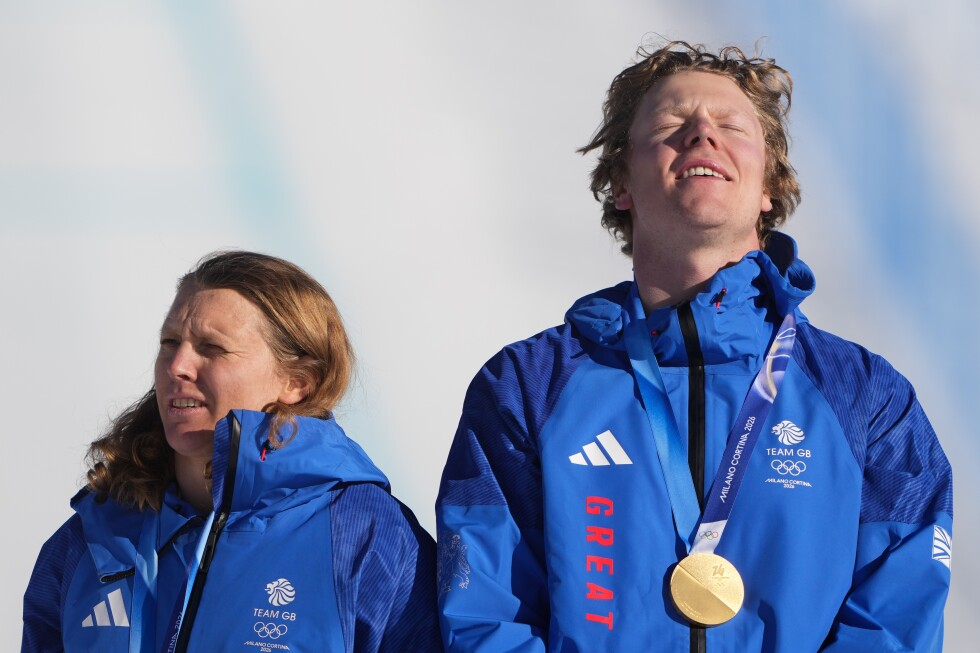
    LIVIGNO, Italy — In a stunning upset that rewrites British Winter Olympics history, Charlotte Bankes and Huw Nightingale captured gold in the mixed snowboardcross event on Sunday. This victory represents Britain’s first-ever gold medal won on snow in the 102-year history of the nation’s Winter Games participation.

    The breakthrough performance marks multiple historic milestones: not only is this Britain’s inaugural snow-surface gold, but it also represents the first time the nation has won multiple titles at a single Winter Olympics. The gold adds to the skeleton title secured by Matt Weston just two days earlier, bringing Britain’s total Winter Games gold count to just 15 in over a century of competition.

    What makes this victory particularly remarkable is the underdog status of the British pair. Seeded 13th out of 16 qualifying teams, Bankes and Nightingale had posted disappointing individual results just days earlier—13th and 26th place finishes in their respective events. Yet in the team format, everything coalesced perfectly on the Livigno course under sunny Italian skies.

    The mixed snowboardcross event, introduced just four years ago, features a unique relay-style format where four teams race simultaneously down the mountain. The first team to cross the finish line in the four-team final claims gold after three elimination rounds.

    Nightingale, emotional after the victory, stated: ‘The singles were tough but now there are tears of joy. GB on a whole is doing great on the snowboard side. We want to keep it going and inspire little kids to do it as well, and maybe one day they can get a gold medal.’

    The achievement shifts attention from Britain’s most famous Winter Olympians—ice dancers Jayne Torvill and Christopher Dean who won gold in 1984—to a new generation of snow sports athletes making history on different terrain.

  • ‘Politics aside’: Top Pakistan ex-cricketers call for urgent treatment for Imran Khan’s vision loss

    ‘Politics aside’: Top Pakistan ex-cricketers call for urgent treatment for Imran Khan’s vision loss

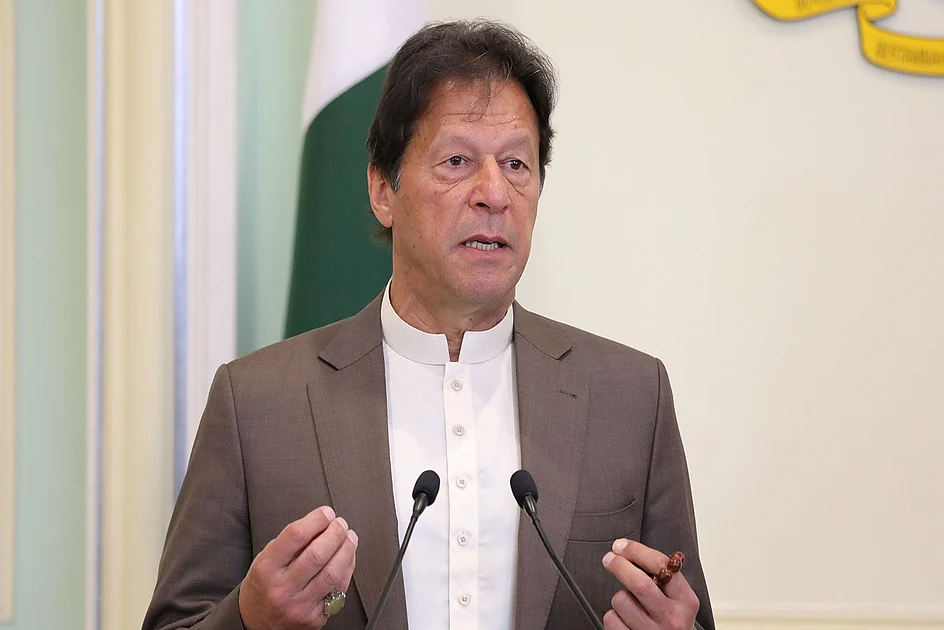
    Prominent Pakistani cricket icons have issued urgent appeals for former national captain Imran Khan to receive immediate medical attention amid reports of severe vision deterioration in his right eye. Wasim Akram and Waqar Younis, both legendary fast bowlers who played under Khan’s leadership, have publicly called for authorities to prioritize the 73-year-old’s healthcare needs regardless of political considerations.

    According to ESPNcricinfo reports, Khan has been experiencing significant vision loss attributed to an eye infection that developed during his extended solitary confinement. Medical professionals familiar with the case indicate the condition requires specialized treatment to prevent permanent damage.

    Wasim Akram, expressing profound concern on social media platform X, described the situation as ‘heartbreaking’ and emphasized Khan’s pivotal role in his cricketing development. ‘I sincerely hope the authorities take this seriously and ensure he receives the best possible medical care,’ Akram stated, adding wishes for ‘strength, a speedy recovery, and a full return to good health.’

    Waqar Younis echoed these sentiments while acknowledging Khan’s dual legacy as both sporting hero and philanthropist. ‘Putting politics aside, our national hero who gave us our greatest glory on the sporting field, a cancer hospital which helped so many, including my own mother, is suffering a health emergency,’ Younis noted in his public appeal.

    The former prime minister’s family has consistently raised concerns about inadequate medical attention during his incarceration since August 2023. Khan’s son, Kasim Khan, recently claimed his father retains only 15% vision in his right eye, attributing this deterioration to ‘922 days of solitary confinement, medical neglect, and deliberate denial of proper treatment.’

    Government officials have denied allegations of medical negligence, maintaining that Khan receives appropriate care according to standard prison protocols. The situation continues to draw international attention to Pakistan’s treatment of high-profile political detainees and the intersection of healthcare with judicial proceedings.

  • Canada cruises into the quarterfinals at the Olympics by routing France

    Canada cruises into the quarterfinals at the Olympics by routing France

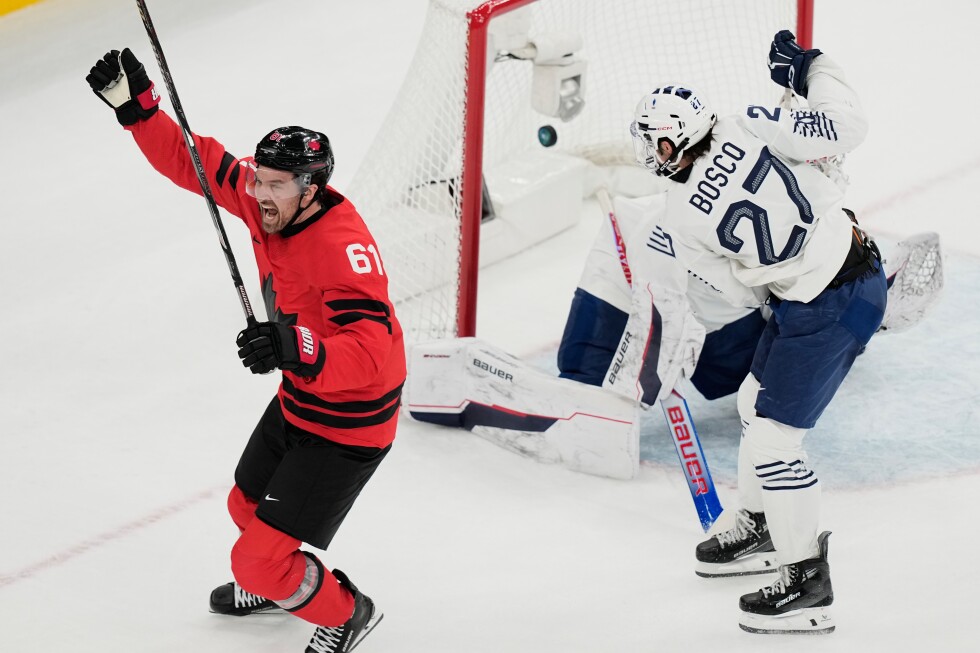
    MILAN — Team Canada has concluded the Olympic preliminary round with an unblemished record, establishing themselves as the tournament’s dominant force heading into the knockout phase. Their commanding 10-2 victory over France on Sunday showcased both offensive firepower and team resilience, cementing their position as top seed.

    The Canadian squad demonstrated exceptional skill and coordination with Sidney Crosby and Connor McDavid each contributing one goal and two assists. The game, however, featured a moment of controversy when Tom Wilson engaged in a fight with the French player responsible for a forearm hit to Nathan MacKinnon’s face. Under international ice hockey regulations, Wilson received a game misconduct for fighting, while MacKinnon later returned to the ice.

    Canada’s statistical dominance throughout the group stage has been remarkable, outscoring opponents by 17 goals across three matches. Their performance places them securely in the top seeding position, with the United States requiring an improbable 10-goal victory against Germany to claim the top spot.

    Young talent Macklin Celebrini, Canada’s youngest player at 19, continued his impressive Olympic debut with two goals against France, bringing his tournament total to four goals. Mark Stone contributed a shorthanded goal with mere seconds remaining in the first period, adding two assists to his performance.

    In other Olympic hockey action, Switzerland secured a critical 4-3 overtime victory against Czechia despite the absence of injured winger Kevin Fiala. Captain Roman Josi led the Swiss team with an opening goal, while Dean Kukan scored the overtime winner. The emotional victory, achieved amid concerns about Fiala’s lower left leg injury that required surgical intervention, positions Switzerland favorably for the qualification playoffs.

    Team Canada now looks ahead to quarterfinal competition, likely facing either Czechia or Germany, with Jordan Binnington expected to maintain his position in goal despite conceding two goals against France.

  • Lisa Vittozzi secures Italy’s first Olympic gold medal in biathlon with pursuit win

    Lisa Vittozzi secures Italy’s first Olympic gold medal in biathlon with pursuit win

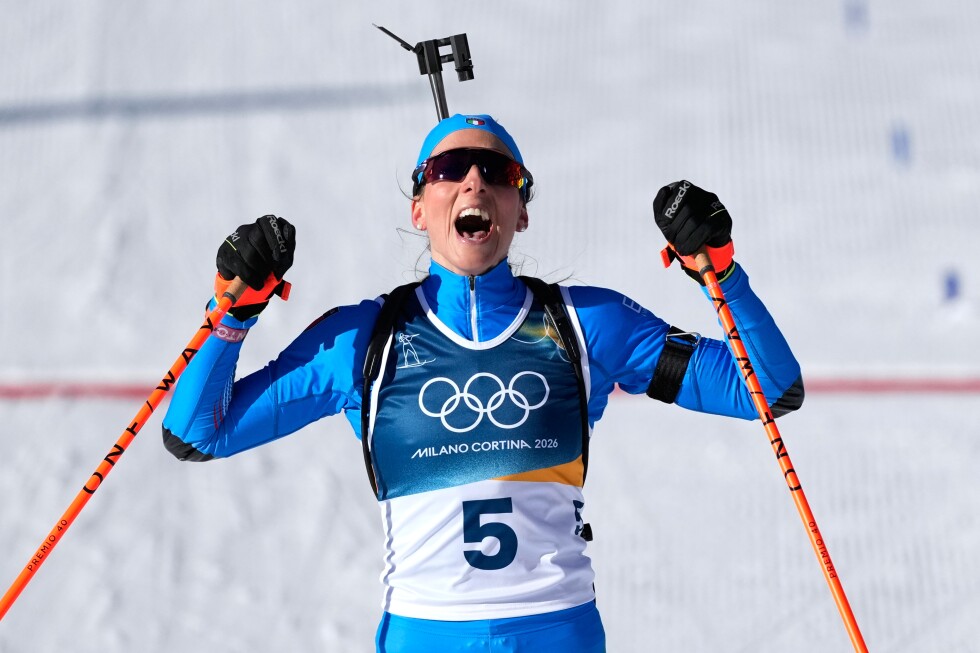
    In a stunning display of precision and athleticism, Italian biathlete Lisa Vittozzi captured the nation’s first-ever Olympic gold medal in the sport at the Milan Cortina Winter Games. The historic moment unfolded Sunday in the women’s 10-kilometer pursuit event, where Vittozzi delivered a flawless shooting performance, hitting all 20 targets with remarkable composure.

    Vittozzi crossed the finish line with a commanding time of 30 minutes and 11.8 seconds, triggering an emotional celebration before a roaring crowd of 20,000 spectators. The champion bowed, pumped her arms triumphantly, and collapsed into the snow in a moment of pure exhilaration, marking the culmination of an extraordinary personal journey.

    The victory represents a spectacular comeback for Vittozzi, who battled through a challenging previous season marred by a back injury and inconsistent shooting performances. Her path to Olympic glory required overcoming significant physical and mental hurdles, making her perfect performance particularly noteworthy.

    Norway’s Maren Kirkeeide claimed the silver medal, finishing 28.8 seconds behind the champion, while Finland’s Suvi Minkkinen secured bronze with a 34.3-second deficit. Notably, Minkkinen matched Vittozzi’s perfect shooting accuracy, hitting all 20 targets in her own impressive display.

    The event marked a significant shift in the Olympic biathlon landscape, breaking France’s previously unbroken podium streak. French contenders Oceane Michelon and Lou Jeanmonnot, who started in second and third positions respectively based on their sprint race results, fell out of medal contention due to shooting errors. Jeanmonnot missed three targets to finish fourth, while Michelon’s four misses placed her fifth overall.

    Biathlon pursuit competitions feature a unique format where athletes start according to their finishing times from the preceding sprint race, creating dynamic head-to-head competition. The sport’s distinctive penalty system requires competitors to ski a 150-meter penalty lap for each missed shot, adding strategic complexity to the physically demanding event.

  • Italy’s Winter Olympics dream: A record 22nd medal seals its best-ever Games

    Italy’s Winter Olympics dream: A record 22nd medal seals its best-ever Games

    MILAN — Italy has officially achieved its most successful Winter Olympics performance in history, surpassing all previous records with seven days of competition still remaining. The host nation’s extraordinary medal haul reached 22 on Sunday, eclipsing its previous benchmark of 20 medals established at the 1994 Lillehammer Games.

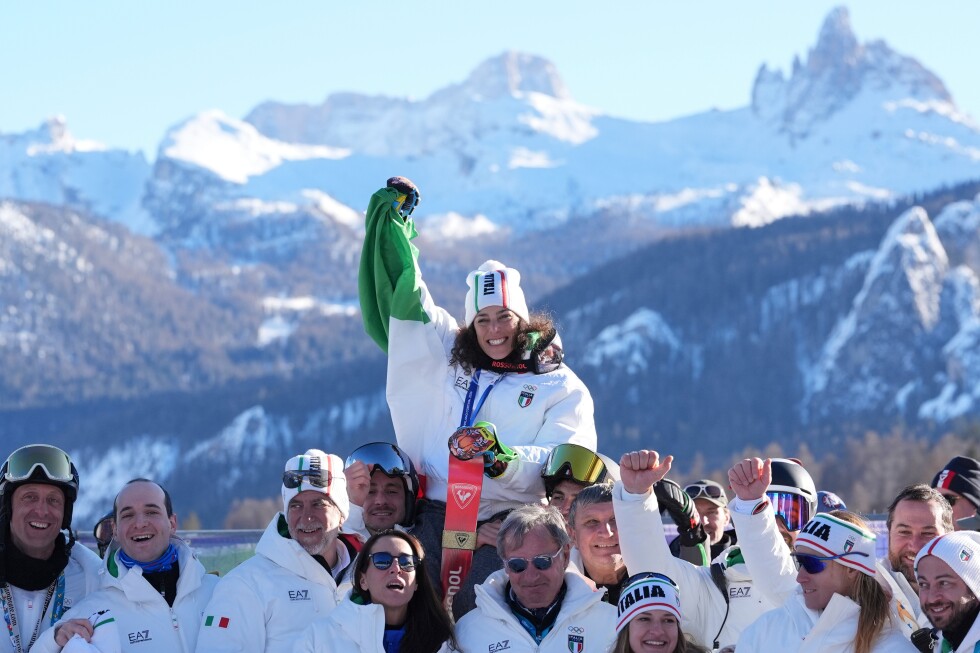
    The record-breaking day began with Italy’s cross-country team securing bronze in the men’s 4 x 7.5-kilometer relay. Shortly thereafter, Federica Brignone captured her second gold medal of the Games with a stunning victory in the giant slalom—a particularly remarkable achievement given her recent return to competition after recovering from a severe leg injury that involved multiple fractures.

    Within the hour, Michela Moioli and Lorenzo Sommariva contributed to the historic moment by earning silver in the mixed team snowboard cross, delivering Italy’s 21st medal and officially breaking the national record. The celebration continued as Lisa Vittozzi claimed gold in the 10-kilometer pursuit biathlon race shortly afterward.

    Italy’s current medal distribution stands at eight gold, four silver, and ten bronze medals—exceeding the pre-Games target of 19 medals set by Italian Olympic Committee president Luciano Buonfiglio.

    The nation’s performance represents a significant improvement over recent Olympic appearances. At the 2022 Beijing Winter Games, Italy won 17 medals, while the 2006 Turin Olympics as hosts yielded only 11 medals. Italy currently ranks among the top two nations in the medal table, a dramatic improvement from its fourth-place finish in Lillehammer behind Russia, Norway, and Germany.

    Early indications of Italy’s exceptional performance emerged on Day 3 of competition when the team collected six medals in 24 hours—a single-day national record. Local organizing committee president Giovanni Malagò emphasized the significance of Italy’s multidisciplinary success across sports where the nation had not traditionally been competitive.

    The emotional resonance of these achievements has been amplified by compelling athlete narratives. Brignone’s gold medal came after extensive rehabilitation, while short track speedskater Arianna Fontana earned her 12th and 13th Olympic medals, matching fencer Edoardo Mangiarotti’s longstanding record for most Olympic medals by an Italian athlete.

    International Olympic Committee President Kirsty Coventry praised Italy’s performance, noting: “Their stories of resilience and fight and everything good in humanity was really showcased. To do that at home, it’s so cool.”

  • Curling controversy widens amid higher surveillance as Britain accused of same infraction as Canada

    Curling controversy widens amid higher surveillance as Britain accused of same infraction as Canada

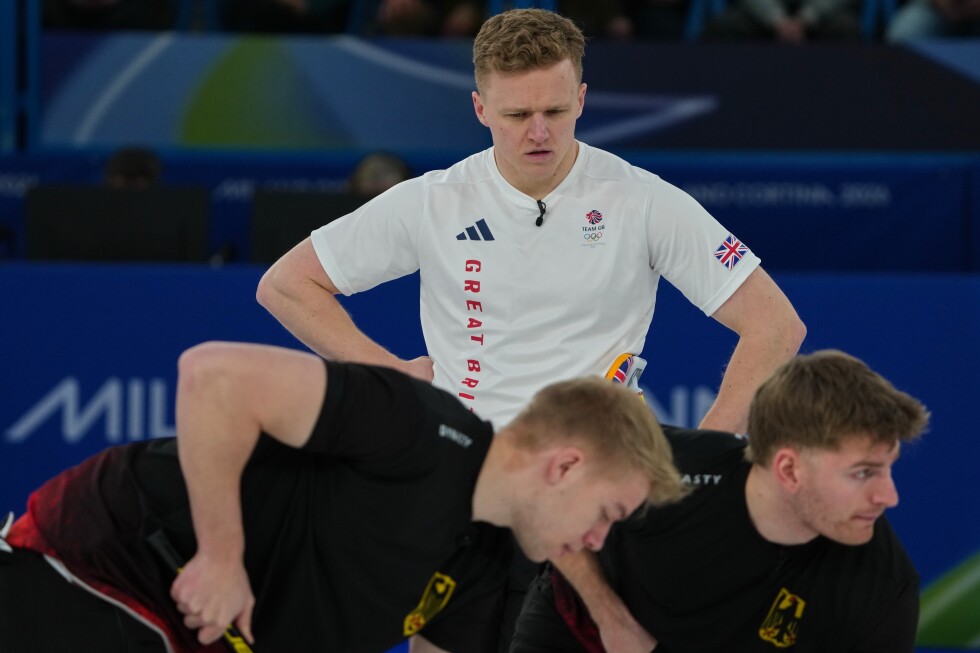
    CORTINA D’AMPEZZO — The ongoing officiating dispute in Olympic curling intensified Sunday when British curler Bobby Lammie became the latest athlete penalized for alleged rule violations during competition. During the ninth end of Britain’s round-robin match against Germany, officials determined Lammie had made illegal contact with his stone after release—a violation known as “double-touching”—resulting in the stone’s removal from play. Despite the controversy, the British team secured a decisive 9-4 victory.

    This incident marks the third such ruling in three days, following consecutive penalties against Canadian teams on Friday and Saturday. The initial controversy emerged when Swedish opponents raised allegations against the Canadian men’s team, with similar infractions called against the Canadian women’s team during their match against Switzerland the following day.

    In response to the growing dispute, World Curling announced enhanced monitoring measures beginning Saturday. The governing body assigned two dedicated officials to oversee the four simultaneous curling matches during each round, though acknowledged the impracticality of stationing umpires at every hog line—the critical zone where stones must be released.

    The organization maintains its position against utilizing video replay technology for officiating decisions, despite social media circulation of footage that appears to show the alleged violations. Questions regarding potential disproportionate surveillance of specific teams remain unanswered by tournament authorities.

    Until Sunday’s incident, the controversy had primarily involved Canadian athletes, who represent one of curling’s most passionate international fan bases. The repeated penalties have sparked debate about consistency in officiating and the need for technological assistance in determining infractions at the highest level of competition.

  • Why Alexandra Eala can recreate the Sania Mirza magic in Dubai

    Why Alexandra Eala can recreate the Sania Mirza magic in Dubai

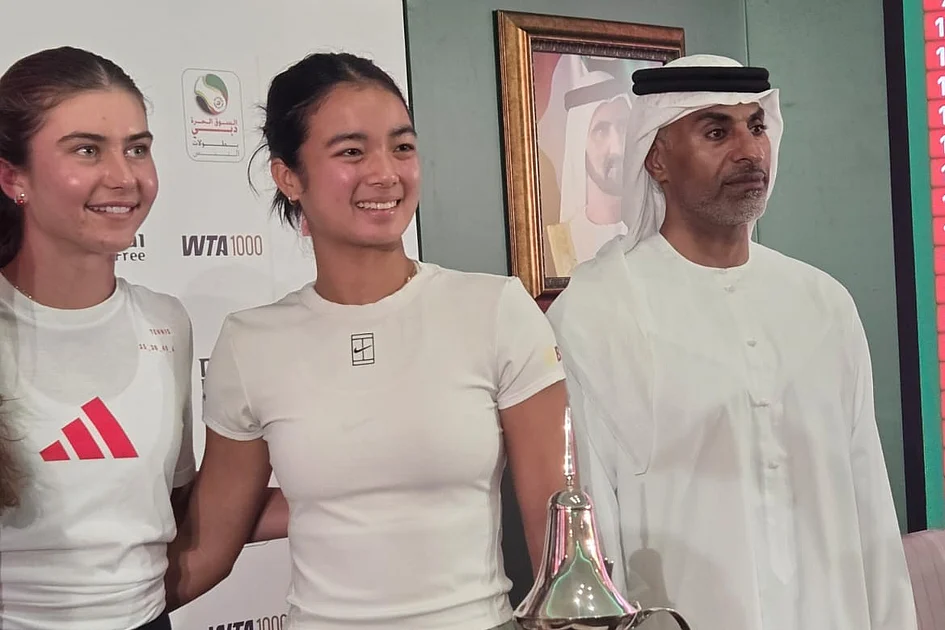
    Dubai’s tennis scene is poised to witness a remarkable resurgence of cultural sporting passion as Filipino phenom Alexandra Eala prepares for her debut at the Dubai Duty Free Tennis Championships. Tournament Director Salah Tahlak vividly recalls the electrifying atmosphere of 2005 when Indian superstar Sania Mirza captivated over 7,000 fans with her stunning victory against Russian Grand Slam champion Svetlana Kuznetsova.

    Two decades later, Tahlak anticipates comparable excitement surrounding Eala, who enters the tournament following an impressive quarterfinal appearance at the Mubadala Abu Dhabi Open. The 20-year-old sensation has been granted a prime-time Sunday slot against American player Hailey Baptiste, strategically scheduled to accommodate what organizers expect to be massive Filipino turnout.

    The demographic significance cannot be overstated: with approximately one million Filipino residents in the UAE and 3,000 Filipino staff members within Dubai Duty Free alone, Eala’s participation represents more than athletic competition—it symbolizes community representation and cultural pride. Her groundbreaking achievements as the Philippines’ highest-ranked tennis player (world number 40) have sparked a tennis revolution in a nation traditionally dominated by basketball.

    Eala’s influence transcends national boundaries, having recently attracted such significant attention at the Australian Open that former world number one Andy Roddick noted her impact on promoting tennis within Asian communities. The young athlete acknowledges the special significance of competing in Dubai, expressing anticipation for the supportive environment created by the substantial Filipino diaspora.

    This tournament appearance marks another milestone in Eala’s meteoric rise, having climbed nearly 100 ranking positions within twelve months while captivating audiences worldwide and reshaping sporting interests in her homeland.

  • Singapore ski racer Faiz Basha becomes 2nd athlete to represent tropical nation at a Winter Games

    Singapore ski racer Faiz Basha becomes 2nd athlete to represent tropical nation at a Winter Games

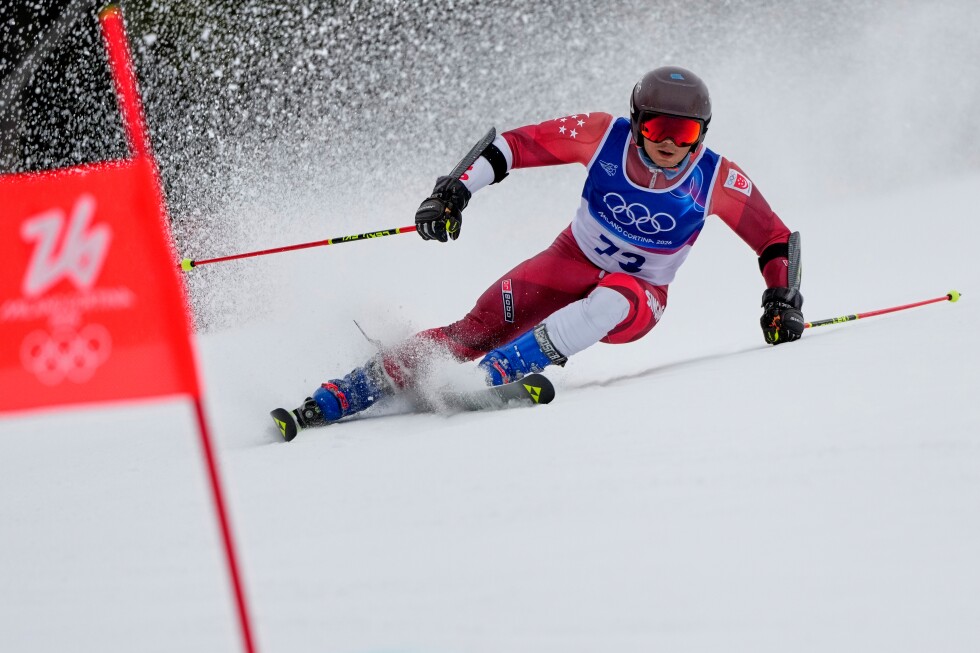
    BORMIO, Italy — In the world of alpine skiing where nations like Switzerland and Norway dominate, Faiz Basha represents an extraordinary anomaly. As Singapore’s second Winter Olympian in history, the 23-year-old skier carries the flag for a tropical nation where temperatures rarely dip below 30°C (86°F).

    Basha’s journey to the Milan Cortina Games began unexpectedly when his family relocated to Geneva during his father’s diplomatic service. Introduced to skiing by his mother who worked at a Swiss bank, Basha quickly developed a competitive passion for the slopes. “I didn’t like losing as a kid,” recalled Basha, whose full name is Faiz Basha Munwar Basha. “Whenever I had a bad race, I would be crying. But I kept improving.”

    His path diverged dramatically from conventional ski racing development when he returned to Singapore to fulfill mandatory military service. With no mountains available, Basha innovatively trained on inline skates through slalom courses set up on local promenades. “Inline skates helped me develop a skiing-on-rails mindset,” Basha explained. “When I returned to snow after national service, I actually improved.”

    The Olympian’s career nearly ended following a devastating super-G crash as a teenager that tore a hole in his intestine. The psychological aftermath proved particularly challenging. “My first training after the crash, I crashed three consecutive runs,” Basha remembered. “I told my mother I was done with skiing.”

    During his recovery hiatus, Basha channeled his analytical mind into redesigning Singapore’s Mass Rapid Transit (MRT) system map. His viral cartography project earned him an internship offer from the transportation department. Meanwhile, he pursued mechanical engineering studies at the University of Strathclyde in Glasgow.

    Basha joins a growing contingent of athletes from non-traditional winter sports nations making their mark at the Games. Eritrea’s Shannon Abeda, who finished 31.30 seconds behind giant slalom champion Lucas Pinheiro Braathen of Brazil, expressed similar pride in representation. “My friend asked me how much it took to get here, and I just started bawling,” Abeda shared.

    Nathan Tchibozo of Benin, who finished 48th in giant slalom, echoed the sentiment: “This shows that everything is possible. You have to believe in your dreams.”

    Though Basha recorded a DNF (did not finish) in his Olympic giant slalom debut after crashing, his perspective remains focused on broader objectives. “I know I’m still far from the top, but success means breaking new ground for Singapore,” Basha stated. “I’m content with what I’ve achieved in paving the way for future tropical climate athletes.”