分类: sports

  • Could ‘massive’ Munyua win spark darts boom in Kenya?

    Could ‘massive’ Munyua win spark darts boom in Kenya?

    In an extraordinary display of skill and determination, Kenyan debutant David Munyua created one of the most remarkable upsets in PDC World Championship history by defeating world number 18 Mike de Decker in a thrilling first-round encounter. The 30-year-old veterinary professional, competing in his first-ever tournament outside Africa, staged a spectacular comeback from two sets down to secure a 3-2 victory against the 2024 World Grand Prix champion.

    The significance of Munyua’s achievement resonated beyond the Alexandra Palace venue, attracting personal congratulations from Kenyan President William Ruto. ‘As you advance to the next stage, know that the nation stands behind you,’ President Ruto stated in his message, adding the hopeful directive: ‘Bring the trophy home.’

    Munyua’s journey to the world stage is particularly noteworthy given his background. Working full-time as a veterinarian in Kenya, he balances his darting ambitions with professional responsibilities that include attending to cattle. Remarkably, Munyua acquired his match-winning darts, designed by Cam Crabtree, from a local shop just days before his London debut.

    His performance captivated audiences not only through his darting precision but also through his animated stage presence. Dann Korori, co-founder of Sirua Darts and official affiliate to the Kenya Darts Association, noted Munyua’s unique mannerisms: ‘He has this golf switch. He swings his hands then throws the fishing net into the water. He pulls that after every leg.’

    The victory guarantees Munyua at least £25,000 in prize money and sets up a second-round encounter against Kevin Doets. His success has ignited enthusiasm across Kenya and the African continent, with many hoping it will stimulate increased interest in darts throughout the region. As Korori observed: ‘It’s something that has been cooking and we were just waiting for that one moment for this to blow up.’

    With the nickname ‘Why Not,’ Munyua now embodies the potential for African nations to emerge as significant contenders in global darts competitions.

  • Afcon quiz: Name every Africa Cup of Nations winner

    Afcon quiz: Name every Africa Cup of Nations winner

    The 2025 Africa Cup of Nations reaches its climactic phase with two highly anticipated semi-final matches scheduled for Wednesday. The tournament’s penultimate stage features a dramatic showdown between defending champions Senegal and record seven-time winners Egypt in one fixture, while tournament hosts Morocco will battle three-time champions Nigeria in the other semi-final encounter.

    The championship final is set to take place on Sunday, January 18th, 2026, with a 19:00 GMT kickoff time at a venue to be determined. The upcoming matches represent the culmination of Africa’s premier football competition, which has crowned 34 different nations throughout its storied history.

    This edition of the continental championship continues a tradition of excellence in African football, showcasing the remarkable talent and competitive spirit that characterizes the sport across the continent. The semi-final pairings promise thrilling football action as each team vies for a place in the prestigious final match.

    Football enthusiasts seeking additional engagement with the tournament can access dedicated quiz content testing knowledge of AFCON history and participants, including comprehensive coverage of all qualifying nations for the 2025 competition.

  • Appleby and Seemar dominate on Festive Friday as William Buick rides four winners

    Appleby and Seemar dominate on Festive Friday as William Buick rides four winners

    The Meydan Racecourse concluded its 2025 Dubai Racing Carnival calendar with a spectacular Festive Friday event, serving as a pivotal precursor to the upcoming 30th Dubai World Cup in March 2026. The evening witnessed extraordinary dominance from racing’s elite, with trainers Charlie Appleby and Bhupat Seemar orchestrating remarkable one-two-three finishes across multiple races, a rare achievement in such competitive fixtures. Godolphin’s premier jockey William Buick further electrified the event by securing an impressive quartet of victories, three adorned in the stable’s iconic royal blue silks. The high-stakes program offered crucial early indicators for the season’s trajectory, with several performances positioning horses as serious contenders for the prestigious $12 million Dubai World Cup. The featured AED1 million G2 Al Maktoum Mile was commandeered by Bhupat Seemar’s Imperial Emperor, who delivered a powerful comeback under jockey Tadhg O’Shea. The Deva Racing-owned gelding demonstrated superior tactical speed to secure victory ahead of stablemates Commissioner King and Mendelssohn Bay. Simultaneously, the G2 Al Rashidiya was captured by Godolphin’s Opera Ballo, a promising colt trained by Charlie Appleby and ridden by Buick. The son of a champion middle-distance specialist displayed breathtaking acceleration to defeat a quality field, including four-time Group 1 winner Nations Pride, by a decisive three-length margin. Buick’s mastery extended throughout the card with additional wins aboard Mysterious Night in the Listed Business Bay Challenge and Cover Up in the Listed Ertijaal Dubai Dash. The evening also celebrated international talent, with YAS Racing’s Muraad making a triumphant UAE debut and British raider Heart Of Honor showcasing exceptional stamina in the Listed Entisar Stakes. Michael Costa of Jebel Ali Stable completed the night’s narrative of training excellence by saddling his own one-two-three finish, underscoring the depth of competition present at the Carnival.

  • Resilient West Indies pass the follow-on on the 3rd day of the 3rd test against New Zealand

    Resilient West Indies pass the follow-on on the 3rd day of the 3rd test against New Zealand

    In a display of determined batting, the West Indies demonstrated significant resilience on day three of the third test against New Zealand at Bay Oval, Mount Maunganui. Kavem Hodge emerged as the cornerstone of this effort, scoring an unbeaten 109 to mark his second test century and guide his team to 381-6 by stumps on Saturday.

    The visitors successfully avoided the follow-on, having surpassed the required 357-run mark in response to New Zealand’s formidable first innings total of 575-8. This batting performance echoed their determined second innings in the drawn first test, where they batted for 163.3 overs.

    Hodge’s innings proved particularly redemptive following a period of inconsistent form. Since his maiden test century of 120 against England at Trent Bridge in July 2024, he had surpassed fifty only once in sixteen subsequent innings. His place in the team appeared uncertain after missing the first test and scoring modestly in the second.

    The batsman displayed considerable patience during his 224-ball stay at the crease, battling through a brief stall in the 90s before finally reaching his century. Hodge attributed his success to careful preparation and self-belief, stating: ‘I’ve been trying to understand what I will face here in New Zealand and come up with a plan to combat it. One of my strengths is square of the wicket and I was just trying to improve on that.’

    West Indies’ effort was bolstered by several key partnerships. Openers Brandon King (63) and John Campbell (45) established a solid foundation with a 111-run stand—their first century partnership as an opening pair and only the sixth such achievement for West Indies in eleven years. Hodge then built crucial partnerships with Tevin Imlach (27), Alick Athanaze (45), and Justin Greaves (43).

    New Zealand’s bowling attack, led by Jacob Duffy who removed both openers, continued to chip away at the West Indies lineup on a pitch showing increasing signs of wear with visible cracking and occasional variable bounce. Spinner Ajaz Patel claimed his first test wicket on home soil, removing Roston Chase lbw for 2.

    With New Zealand leading the three-match series 1-0 after winning the second test by nine wickets, the hosts are unlikely to enforce the follow-on despite the West Indies avoiding it, preferring to avoid batting last on a deteriorating pitch.

  • Gainsborough Stud celebrates its heritage and the British roots in Dubai’s racing legacy

    Gainsborough Stud celebrates its heritage and the British roots in Dubai’s racing legacy

    The remarkable journey of Gainsborough Stud reveals how a British industrialist’s fleeting but impactful involvement in horse racing ultimately shaped the genetic bedrock of Dubai’s global racing empire. Jim McCaughey, a Warwickshire industrialist who burst onto the racing scene during the 1970s, established breeding foundations that would later evolve into the powerhouse Godolphin operation under Dubai’s royal family.

    McCaughey emerged as a formidable presence in the 1970s bloodstock auctions, acquiring thoroughbreds with unprecedented spending. Racing in distinctive yellow silk with black diamonds, he partnered with elite trainers including Fred Rimmel, Ryan Price, and Sir Michael Stoute, signaling his ambition to compete at racing’s highest echelons. Despite his relatively brief tenure in the sport, McCaughey’s horses achieved significant success on both Flat and National Hunt circuits, with hurdler Connaught Ranger capturing the prestigious Triumph Hurdle at Cheltenham Festival.

    By the early 1980s, McCaughey’s racing aspirations reached their peak as he targeted championship events and celebrated major handicap victories including Shaftesbury’s Ebor Handicap win in 1980. Described by Irish newspapers as a ‘fearless punter,’ he backed his horses with substantial wagers, embracing the sport’s inherent volatility. However, financial pressures eventually compelled his withdrawal from racing in the mid-1980s, followed by his tragic passing shortly thereafter.

    The enduring legacy emerged when McCaughey sold Gainsborough Stud to Sheikh Maktoum bin Rashid Al Maktoum prior to his death. Under Maktoum ownership, the stud farm flourished, producing champions including Toucing Wood (1982 St. Leger winner) and Shareef Dancer, whose 1983 Irish Derby victory led to a record $40 million syndication. Following Sheikh Maktoum’s passing in 2006, the operation transferred to his brother Sheikh Mohammed bin Rashid Al Maktoum, becoming integrated into Darley and ultimately unified with Godolphin.

    According to Trent Challis, McCaughey’s grandson and a Dubai-based investor, his grandfather’s legacy established ‘genetic foundations that, under the Maktoum family stewardship, evolved into something extraordinary.’ The bloodlines McCaughey helped develop continue producing winners across international facilities in the UK, Ireland, Kentucky, and Australia, maintaining championship connections nearly half a century after their establishment. ‘Every time Godolphin breeds a champion,’ Challis reflects, ‘there’s a thread, however thin, connecting back to those foundation decisions.’

  • India wins T20 series against South Africa after taking 5th match by 30 runs

    India wins T20 series against South Africa after taking 5th match by 30 runs

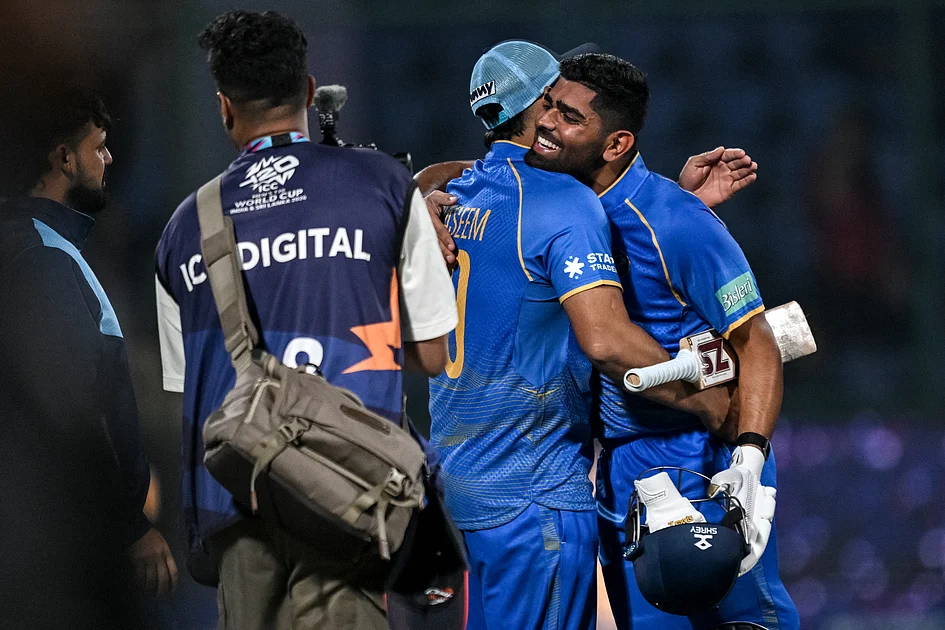
    India cemented their cricketing supremacy with a resounding 3-1 series victory against South Africa in the Twenty20 internationals, concluding with a decisive 30-run triumph in Friday’s final match. The hosts demonstrated formidable batting prowess by posting an imposing 231-5, setting the stage for their eighth consecutive T20 series win since December 2023.

    The innings was propelled by exceptional performances from Tilak Varma and Hardik Pandya, both achieving their second half-centuries of the series. Their explosive partnership yielded 105 runs in just 7.2 overs, with Pandya’s blistering 63 off 25 deliveries featuring five sixes, while Varma contributed a solid 73 from 42 balls before an unfortunate run-out.

    Opening batsmen Sanju Samson and Abhishek Sharma established a powerful foundation with a rapid 97-run partnership within nine overs. Samson, returning to T20 after October absence, smashed 63 runs while unexpectedly striking umpire Rohan Pandit with a drive to the shin during his aggressive batting display.

    South Africa’s response began promisingly with Quinton de Kock battling through a thumb injury sustained on the first delivery to score 65 off 35 balls. Despite reaching 118-1 at the halfway mark and matching India’s scoring rate initially, their campaign unraveled following Jasprit Bumrah’s pivotal intervention. The pace spearhead’s exceptional figures of 2-17 from four overs included the crucial dismissal of de Kock via a caught-and-bowled yorker.

    Leg-spinner Varun Chakravarthy overcame early punishment—conceding 23 runs in a single over to de Kock and Dewald Brevis—to emerge as the leading wicket-taker with 4-53. South Africa’s collapse from 120-1 to 201-8 underscored India’s bowling dominance in the critical middle overs.

    The sole disappointment for India remained captain Suryakumar Yadav’s continued batting struggles, managing only 5 runs to maintain his modest 2025 T20 average of 14.20. India now prepares to host New Zealand in January for their final T20 series before co-hosting the Men’s T20 World Cup with Sri Lanka in February.

  • Will Afcon 2025 be a defining moment for Morocco?

    Will Afcon 2025 be a defining moment for Morocco?

    As Morocco prepares to host the 2025 Africa Cup of Nations commencing Sunday, the tournament represents the potential culmination of a meticulously orchestrated national project to establish football supremacy across the continent. The Atlas Lions enter the competition carrying not just home advantage but the weight of nearly five decades of expectation, having last claimed the continental title in 1976.

    The nation’s football transformation stems from strategic vision dating back to 2008 when King Mohammed VI initiated an ambitious plan leveraging football for national development. This vision materialized through substantial infrastructure investments including the Mohammed VI Football Academy (established 2009) and the $65 million Mohammed VI Training Complex (opened 2019). These world-class facilities combine elite training environments with educational and sports science resources, creating an unprecedented development pipeline for Moroccan talent.

    Midfielder Sofyan Amrabat, a veteran of Morocco’s historic World Cup 2022 semi-final campaign, encapsulates the national sentiment: “Every time I put on the Moroccan jersey, it’s an amazing feeling… I’m really looking forward to this AFCON, especially because it’s at home. And of course, we hope it’s going to be ours.”

    The team’s credentials are formidable: reigning as Africa’s highest-ranked team (11th in FIFA rankings), holders of a world record 18 consecutive victories since March 2024, and boasting exceptional talent including African Player of the Year Achraf Hakimi, Real Madrid’s Brahim Díaz, and elite goalkeeper Yassine Bounou. However, concerns persist regarding captain Hakimi’s fitness following a November ankle injury sustained during Champions League action.

    Football analyst Jalal Bounouar emphasizes the tournament’s significance: “Morocco’s primary and most immediate goal is to win AFCON. Winning the continental title is seen as the final piece of the puzzle.” This perspective follows consistent success across multiple fronts: Olympic bronze (2024), FIFA U-20 World Cup victory, three consecutive African Nations Championships, and recent Arab Cup triumph.

    Despite sporting achievements, the substantial investment has faced scrutiny amid domestic calls for improved public services. The “hospitals not stadiums” movement reflects ongoing debates about resource allocation, particularly with Morocco co-hosting the 2030 World Cup. Nevertheless, statistical evidence shows growing grassroots participation and increased social acceptance of women’s football, complemented by the Atlas Lionesses’ consecutive Women’s Cup of Nations finals appearances.

    Morocco commences their campaign against Comoros on Sunday, carrying not just trophy aspirations but the embodiment of a nation’s strategic sporting vision.

  • Ticombo opens early access to FIFA World Cup 26 match tickets across North America

    Ticombo opens early access to FIFA World Cup 26 match tickets across North America

    Global ticket resale platform Ticombo has initiated early-access ticket listings for the highly anticipated FIFA World Cup 2026, responding to surging international demand for the first 48-team tournament hosted across three North American nations. The peer-to-peer marketplace now enables fans to browse and secure match options throughout the United States, Canada, and Mexico well in advance of the competition.

    The 2026 tournament, set to be one of the most attended sporting events in history, will feature matches in major metropolitan hubs including New York/New Jersey, Dallas, Los Angeles, Toronto, and Mexico City. Ticombo’s platform allows users to filter tickets by host country, match stage, and seating category, providing structured visibility into availability as final schedules develop.

    A company representative emphasized that early listing release aims to assist fans in coordinating complex travel and accommodation plans for what is projected to be an exceptionally high-demand event. Industry analysts note that secondary marketplaces like Ticombo serve as crucial access points once initial ticket allocations are exhausted, particularly for global events attracting international audiences.

    The expanded 48-team format will significantly increase the number of matches, creating more opportunities for fan attendance. North American travel authorities have already issued early-planning advisories in anticipation of substantial tourism influx during the tournament period.

  • More British boxers will fight in Nigeria – Okolie

    More British boxers will fight in Nigeria – Okolie

    British-Nigerian boxing star Lawrence Okolie is spearheading a potential renaissance for African boxing as he prepares to make his continental debut in Lagos this Sunday. The former WBO cruiserweight world champion, who transitioned to heavyweight division, faces Ghanaian veteran Ebenezer Tetteh in what promoters are calling a ‘historic’ event that could reshape boxing’s geographical landscape.

    Okolie, born in London to Nigerian parents, believes his headline appearance will create a domino effect among British boxers with African heritage. He specifically mentioned heavyweight stars Anthony Joshua and Moses Itauma as likely successors who would experience ‘FOMO’ (fear of missing out) upon witnessing the passionate reception from Nigerian fight fans.

    The 33-year-old Olympian, whose career was inspired by Joshua’s 2012 Olympic gold medal victory, recently visited Nigeria and was astonished by his recognition there. ‘My face is in various gyms, people know who I am as I’m walking around,’ Okolie revealed, describing the overwhelming reception that awaits him.

    The event, promoted by Amir Khan and Frank Warren’s Queensberry, promises a cultural spectacle blending British boxing traditions with African flair. Okolie envisions ‘artists performing, colors, and what you expect from England, but with an African twist,’ highlighting the vibrant fight-fan culture in Lagos.

    Beyond the cultural significance, this fight represents a strategic move in Okolie’s career trajectory. Since moving up to heavyweight, he remains undefeated with two victories, including a unanimous decision over Kevin Lerena in July. The WBC has ordered Okolie to face unbeaten 20-year-old Itauma in a final eliminator, with the winner becoming mandatory challenger for the world title next year.

    The undercard features international talent including Harley Benn (son of Nigel Benn) facing Ghana’s Elvis Ahorgah, and French Olympic gold medalist Tony Yoka taking on German veteran Patrick Korte. Okolie sees this event as the beginning of infrastructure development that could unlock Nigeria’s ‘raw, natural talent’ in boxing over the next decade.

  • Heading to 2026 World Cup? US Embassy shares visa advice for UAE residents

    Heading to 2026 World Cup? US Embassy shares visa advice for UAE residents

    With the 2026 FIFA World Cup approaching, the US Embassy has issued crucial visa guidance for UAE residents planning to attend the tournament. Recognizing the anticipated surge in applications, embassy officials emphasize meticulous preparation to prevent processing delays.

    The embassy specifically highlighted that incomplete forms and documentation errors represent the primary causes of visa processing setbacks. A spokesperson advised prospective travelers to thoroughly review requirements and ensure absolute accuracy in all submissions, particularly for families with children who require additional paperwork.

    A significant development involves the forthcoming FIFA Priority Appointment Scheduling System (PASS), which will grant ticket holders access to expedited interview slots. However, officials clarified that standard vetting protocols remain unchanged—applicants must still demonstrate clear travel itineraries and financial stability regardless of priority processing.

    While the Department of State designs the system to accommodate all ticket-holding visa applicants, several operational details remain unresolved. Key unanswered questions include procedures for rescheduling existing appointments, FIFA ticket verification mechanisms, appointment availability volume, and family grouping options for interviews.

    The embassy anticipates releasing comprehensive guidelines in early 2026 but urges applicants to begin preparation immediately rather than awaiting further announcements. Prospective travelers should monitor official channels for updates while assembling required documentation in advance.