分类: sports

  • Paul Curtis earns comparison to AFL legends after four-goal performance

    Paul Curtis earns comparison to AFL legends after four-goal performance

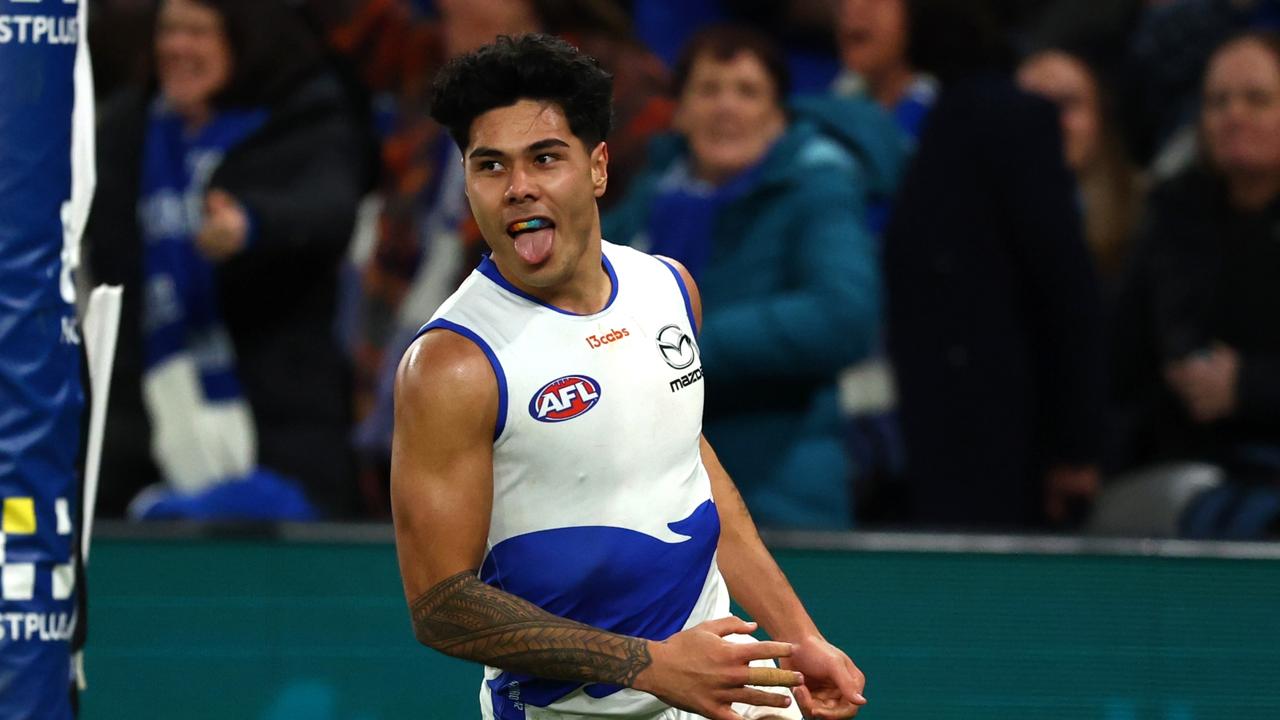
    On Thursday night at Melbourne’s Marvel Stadium, young North Melbourne forward Paul Curtis delivered a career-defining performance that will live long in the memory of Kangaroos supporters, producing a mark widely tipped as a contender for Mark of the Year, slotting four goals, and spearheading his side to a convincing 23-point victory over the Western Bulldogs.

    North Melbourne’s senior coach Alastair Clarkson could not hide his admiration for the 20-year-old’s breakout display, with only one playful criticism: the club only has one Paul Curtis. Curtis was everywhere on the ground, turning the game with his electrifying movement, and his standout individual play didn’t end with his four goals. His spectacular soaring mark over Bulldogs defender Michael Sellwood immediately drew gasps from the crowd and has dominated early conversations for the league’s annual Mark of the Year award.

    In a post-match press conference, Clarkson compared Curtis’ versatile game-changing ability to some of the biggest names in Australian Football League history, noting that the young talent has the rare flexibility to dominate both high up the ground and deep inside the forward 50. “When you have a special talent like this, you want to use him everywhere,” Clarkson explained. “If the Bulldogs had two Marcus Bontempellis, they’d play him both forward and in the midfield, just as Richmond did with Dustin Martin for years. We’ve already seen it with players like Kozzie Pickett, who made the jump from forward to elite midfield, and Zak Butters, who followed the same path to become one of the league’s best on-ballers. I expect Curtis will spend most of his career forward, but we saw tonight he has all the tools to go into the middle and produce magic when we need him to.”

    The win became even more impressive for North Melbourne after key defender Aidan Corr was forced off the ground halfway through the second quarter with a sudden back injury. Corr, who had been tasked with containing Bulldogs star spearhead Aaron Naughton, suffered a back spasm after an awkward landing during a marking contest. Clarkson confirmed that the injury is not believed to be serious, but the spasm left Corr unable to continue, as back spasms severely limit mobility at the elite level. “You ever had a sore back? They’re brutal,” Clarkson said. “It wasn’t critical long-term, but it never settled enough for him to get back out there. And when you’re going up against a player as big and strong as Naughton, you need every part of your body working 100%. It was really pleasing to see the group dig in when we went a man down and still find a way to get the win.”

    For the Western Bulldogs, the damaging loss has dealt a major blow to their already fragile finals hopes, with Bulldogs coach Bevo O’Connor offering no excuses for his side’s underperformance.

  • Police raid South Korea soccer federation offices in probe of hiring of Hong Myung-bo as coach

    Police raid South Korea soccer federation offices in probe of hiring of Hong Myung-bo as coach

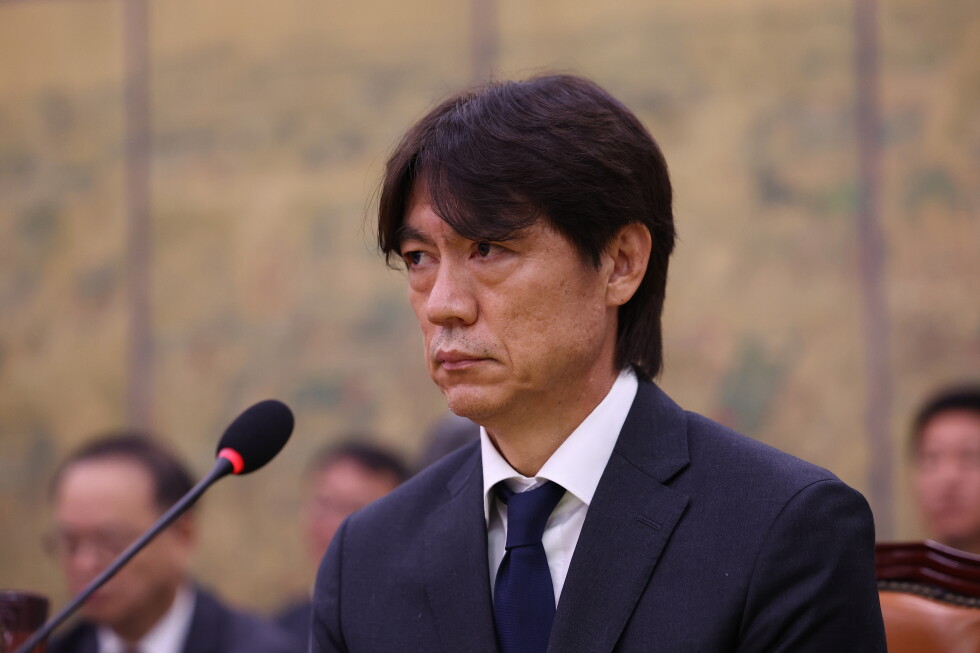
    South Korean law enforcement authorities have launched a new wave of probes into the controversial hiring process of former national men’s football team head coach Hong Myung-bo, executing search warrants at two key locations of the Korea Football Association (KFA) this Thursday. Investigators targeted both the KFA’s main headquarters located in Cheonan, a city roughly 56 kilometers south of the national capital Seoul, and the KFA House situated in central Seoul. Their primary goal is to secure physical and digital evidence that would confirm allegations of improper interference by top KFA officials in the 2024 hiring process that named Hong as the senior coach of the national side.

    The investigation into the hiring irregularities was first initiated shortly after Hong’s appointment nearly two years ago, but the case stalled over the summer with no formal conclusion reached. The probe regained significant momentum and public scrutiny after South Korea’s early exit from the 2026 FIFA World Cup, where the team was eliminated in the group stage – a result that sparked widespread public anger toward the KFA’s leadership and management.

    Following the disappointing World Cup performance, both Hong Myung-bo and KFA president Chung Mong-gyu stepped down from their respective posts. The two figures were summoned to testify before a parliamentary hearing held at Seoul’s National Assembly back in July, where they addressed questions surrounding the controversial hiring process.

    Hong, a legendary figure in South Korean football who served as captain of the 2002 World Cup semi-finalist Korean national team (co-hosted by South Korea and Japan) and also led the national side at the 2014 World Cup, has denied any wrongdoing. During the July hearing, Hong told lawmakers: “When I received the offer, I thought they had all taken the proper steps. People may think things were not so transparent, but I never once asked for any special treatment.”

    According to domestic South Korean media reports, police formally questioned Hong as a person of interest in the case this Tuesday. Details of the closed-door interrogation have not been released to the public as of press time.

    The controversy over the hiring traces back to a 2024 review by South Korea’s sports ministry, which flagged a series of rule breaches by the KFA. Per local reporting, former KFA technical director Lee Lim-saeng privately offered the head coaching position to Hong during a meeting at a bakery near the coach’s residence. The ministry concluded that this private meeting did not qualify as a formal interview as required by the KFA’s own hiring regulations, confirming that the federation had violated its internal recruitment guidelines. At the same time, the 2024 ministry review found no conclusive evidence of illegal activity connected to the hiring.

  • Does Africa still back Infantino as Fifa president?

    Does Africa still back Infantino as Fifa president?

    FIFA President Gianni Infantino, whose leadership has been thrown into the global spotlight following the collapse of his controversial private stake sale plan for FIFA’s international competitions, continues to hold firm allies across the global football landscape – particularly in Africa, where dozens of lower-resource national associations have reaped tangible benefits from his decade in office.

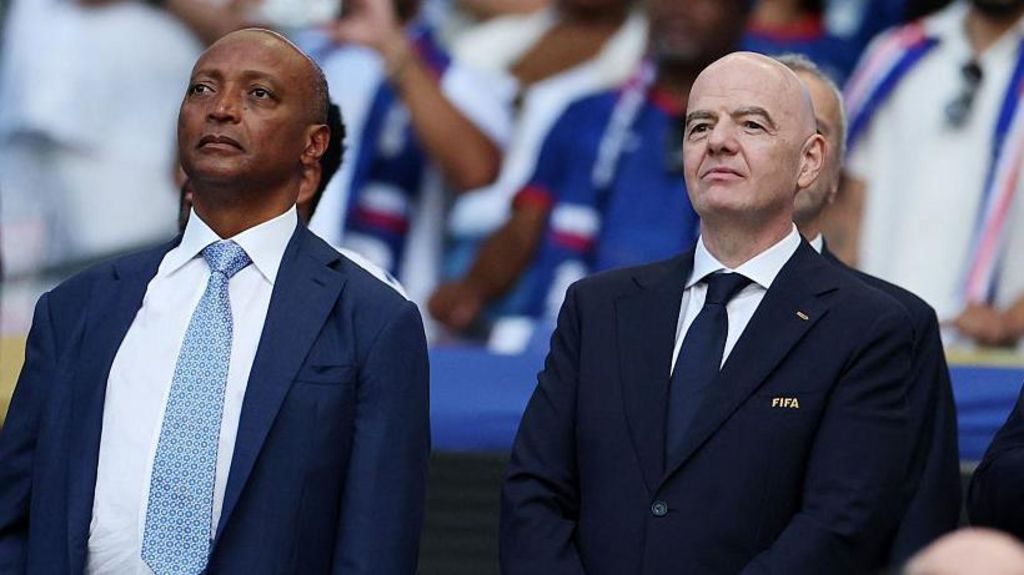
    Infantino’s position has faced intense scrutiny since the unpopular FIFA Forward Enterprise (FFE) proposal was pulled after fierce pushback from multiple regional football governing bodies. While the Confederation of African Football (CAF) has not yet released an official institutional position, a large bloc of senior African football leaders have publicly thrown their weight behind the FIFA president, with five of the seven African seats on the FIFA Council – representing Egypt, Morocco, Niger, Mauritania and Comoros – already declaring open support.

    This widespread backing across the continent traces directly to FIFA’s Forward programme, the landmark funding initiative Infantino launched in 2016 that has become a critical financial lifeline for many African federations. In regions where commercial investment and government sports funding are severely limited, the scheme has underwritten grassroots and high-performance football projects across the continent.

    ### Morocco: A Key Strategic Partner Reaffirms backing
    Morocco, one of Africa’s most high-profile modern football success stories, has built deep ties with FIFA alongside its domestic government-driven growth. The North African nation hosts FIFA’s regional African office in Rabat, has staged multiple FIFA tournaments including the Club World Cup and 2022 Women’s U-17 World Cup, and is set to co-host the 2030 men’s World Cup with Spain and Portugal.

    Fouzi Lekjaa, president of the Royal Moroccan Football Federation (FRMF), reaffirmed his support for Infantino in the wake of the FFE proposal’s withdrawal last week. In an official statement, Lekjaa called Infantino’s choice to pull the plan “wise”, noting that the decision prioritized unity across FIFA’s 211 member associations. Senior African football executives also formally backed Infantino at a closed-door meeting held in Morocco on Wednesday, wrapping a turbulent period triggered by the failed proposal.

    ### Egypt: A Staunch Institutional Ally With Growing Expectations
    As the host nation of CAF’s headquarters, Egypt stands as one of Infantino’s most reliable institutional allies on the continent. This close partnership has been strengthened by Hany Abo Rida, a long-serving FIFA Council member and one of Africa’s most influential football administrators, who has maintained close working ties with Infantino since the latter was first elected in 2016.

    Over Infantino’s tenure, Egypt has benefited substantially from Forward programme funding, which has supported major infrastructure projects, youth talent development, coach training programs and the expansion of women’s football. Like other African member associations, the Egyptian Football Association has also received increased development grants under FIFA’s expanded investment strategy, while new and expanded regional competitions have opened up additional commercial and competitive opportunities for Egyptian clubs and national teams.

    Even as support holds firm, Egyptian football stakeholders say expectations for deeper engagement are growing. Many officials and observers argue that FIFA’s work in Africa must move beyond direct financial assistance, with greater priority placed on improving governance, increasing transparency, advancing long-term sustainable development, and granting CAF more autonomy to set the continent’s own football priorities.

    ### DR Congo: Full Public Commitment to Infantino’s Leadership
    The Congolese Football Federation (Fecofa) was among the first African bodies to praise Infantino’s decision to withdraw the FFE proposal, calling the move “wise” in an early August statement. The federation emphasized that the controversy around the abandoned plan should not overshadow Infantino’s 10-year track record of expanding football access and support, particularly for lower-resourced African nations.

    Fecofa noted that it has “greatly benefited” from FIFA’s development programs, citing major investments in local football infrastructure and grassroots growth. The statement was signed by Véron Mosengo‑Omba, who was elected Fecofa president in May 2026, ending a five-year period of institutional uncertainty that followed the 2021 resignation of Constant Omari Selemani and the 2023 appointment of a FIFA-run normalization committee. Mosengo‑Omba confirmed Fecofa’s “full support” for Infantino will extend beyond the 2027 FIFA presidential election, aligning DR Congo firmly with the FIFA leadership at a time of deep global divisions over the organisation’s future.

    ### Nigeria: Support Anchored by Critical Development Funding
    Despite widespread global backlash against Infantino’s proposal, the Nigeria Football Federation (NFF) has also aligned with the pro-Infantino bloc. For the NFF, which has long struggled with chronic funding shortages and massive unmet infrastructure needs, Infantino’s investment-focused agenda has been difficult to reject.

    Amaju Pinnick, former NFF president and current deputy chairman of FIFA’s Men’s National Teams Competitions Committee, has argued that Infantino’s plans would deliver much-needed financial support to every member association, reducing overreliance on underfunded local governments. Nigeria qualifies for up to $8 million in current Forward programme funding, even after missing out on qualification for the last two men’s World Cup tournaments. The largest ongoing Forward project in the country is the $4.88 million redevelopment of the NFF Technical Centre in Abuja, which includes rebuilding training pitches and constructing a modern accommodation complex for all of Nigeria’s national teams.

    ### Broader African Backing and Isolated Opposition
    Across the continent, other senior political and sports leaders have added their voices to the support for Infantino. South African Sports, Arts and Culture Minister Gayton McKenzie wrote on social media platform X that Infantino “has been very good to African football”, urging the continent to avoid joining what he called a “public lynching” of the FIFA president. “We can debate his ideas but let’s not forget who has been a friend to us. Many of those calling for his head want the old status quo back too,” McKenzie wrote.

    In interviews with the BBC after the FFE proposal was made public, senior officials from Malawi and Uganda said FIFA investment has transformed football on and off the pitch across Africa, noting that this funding is irreplaceable given the severe budget constraints most African nations face. “Malawi needs money. Malawi needs stadiums, our government cannot manage to give us even $1m every year for football,” Malawi Football Association president Fleetwood Haiya told BBC Newsday. “Our government is not able to make sure that they have medical supplies in hospitals [and] at the same time to look at football.”

    Lamin Kaba Bajo, president of the Gambia Football Federation, told BBC Sport that most African federations support Infantino remaining in office and plan to back his re-election in 2027. “As far as I’m concerned, most of my colleagues are concerned, we’ll encourage him [Infantino] to stay, and we’ll do everything within our means to ensure that he is re-elected come next year, 2027,” Bajo said. “That’s my personal opinion as president of the federation, and a good number of African memberships also stand on that line. He is here to stay.”

    Support for Infantino is not universal across Africa, however. Former Sierra Leone FA president and ex-FIFA Council member Isha Johansen was one prominent African voice to oppose the FFE plan, warning that it risked pushing excessive commercialization into African football. “What price does one have to pay in order to get to this elevated development for football in Africa?” Johansen asked, urging African football leaders to carefully consider the long-term future of the sport on the continent.

    CAF president Patrice Motsepe has also publicly praised Infantino, calling his work after this year’s World Cup “excellent” and describing him as a loyal friend to Africa in a late July statement. “He is loyal to Africa,” Motsepe said. “When people have been loyal to you, you never stab them in the back.”

    A number of prominent African football nations, including Senegal – which boasts the second-highest ranked men’s national team on the continent, behind only Morocco – have not yet issued a public position on Infantino’s leadership.
  • UEFA says boycott of World Cups stands despite FIFA backdown on private investment

    UEFA says boycott of World Cups stands despite FIFA backdown on private investment

    The long-simmering power struggle between global football’s two governing bodies escalated again on Thursday, as Europe’s UEFA confirmed it would not back down from its threat to boycott both men’s and women’s FIFA World Cup events — even after FIFA backed away from its controversial proposal to open top-tier competitions to private outside investment. The reversal of the private investment plan, which was first floated publicly just over a week ago, came directly after UEFA issued its initial boycott threat last Thursday, a move widely recognized as the driving force that forced FIFA to shelve the policy.

    While the withdrawal of the investment proposal marked the first of two conditions UEFA laid out to drop its boycott threat, the European body confirmed Thursday that the second requirement has not been satisfied. In an official public statement, UEFA emphasized that its member associations set two non-negotiable terms to end their non-participation threat: first, the plans to sell partial stakes in major FIFA competitions had to be fully pulled, and second, FIFA had to provide formal guarantees that no similar attempts to alter the fundamental structure of the sport would be introduced again. “These conditions have not been met,” the statement read plainly.

    Though UEFA acknowledged and welcomed FIFA’s withdrawal of the plan last Saturday, the organization has remained sharply critical of FIFA President Gianni Infantino, attacking the original proposal as a “shabby, backroom, opaque deal” — a tone that remained unchanged in Thursday’s update. The statement reaffirmed that UEFA has completely lost confidence in Infantino’s leadership, a position that remains firmly in place.

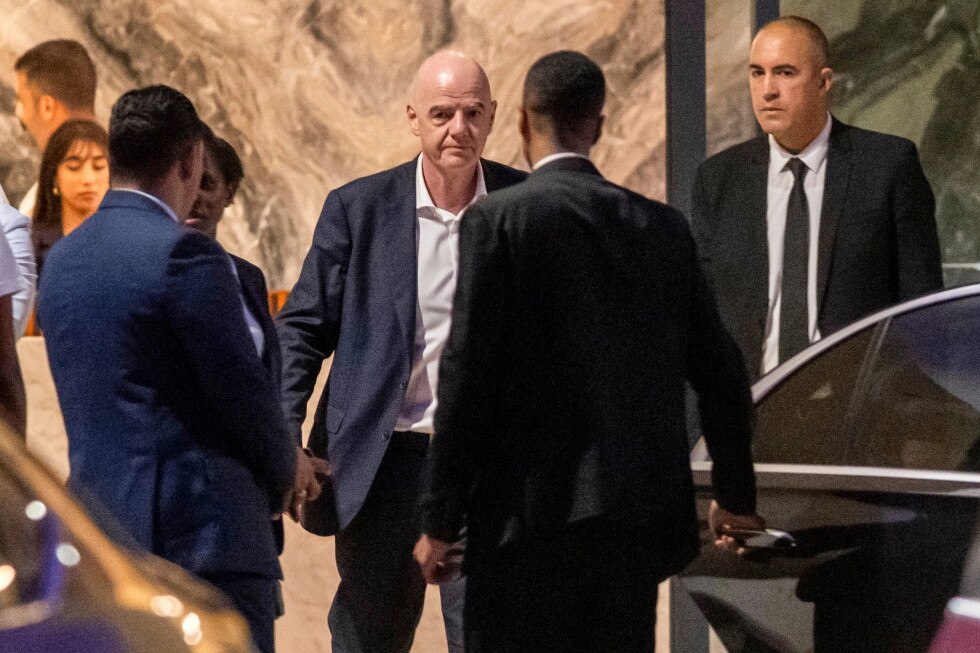
    Infantino had earned a temporary show of internal support on Wednesday, when he convened an emergency meeting of senior FIFA directors in Marrakech, Morocco. The board issued a statement offering Infantino their “full confidence” while also issuing an apology for missteps that followed the leak of the investment proposal to media outlets. Even FIFA Secretary-General Mattias Grafstrom, who drew attention earlier this week when a leaked internal email showed he publicly criticized the plan, joined the show of backing for Infantino.

    That show of internal support did nothing to change UEFA’s position, however. In a scathing rebuke, UEFA noted that the backing came from individuals employed directly under Infantino whose professional standing depends on his continued favor, adding that this display of loyalty changes nothing about the European body’s stance.

    The original proposal, unveiled by FIFA on October 15, would have created a new commercial subsidiary named FIFA Forward Enterprise (FFE) to operate flagship events including the men’s World Cup and Club World Cup. FIFA pegged the total valuation of the new entity at $20 billion, and projected that selling private stakes would generate up to $4.2 billion in new revenue. The organization argued the plan would deliver major financial benefits to its 211 member associations: a one-time $20 million payout to every member by early 2027, and an increase in baseline funding for the 2027-2030 cycle from $8 million to $20 million per association.

    Widespread backlash from football federations around the world, led by UEFA’s high-profile boycott threat, forced Infantino to back down from the plan just days later, in what has been widely described as a humiliating climbdown for the FIFA president.

  • Real Madrid sign Diomande from RB Leipzig

    Real Madrid sign Diomande from RB Leipzig

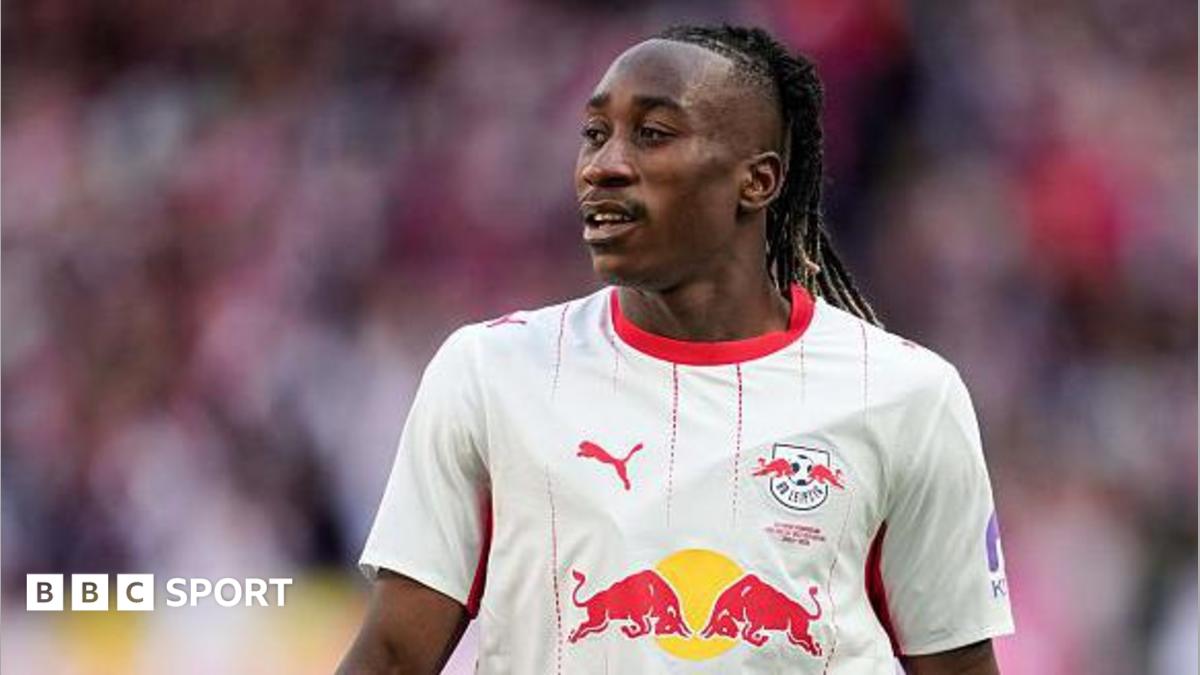
    In one of the most high-profile transfer moves of the 2026 European summer window, La Liga and Champions League giants Real Madrid have secured the signing of 19-year-old Ivory Coast international winger Yan Diomande from German Bundesliga side RB Leipzig, in a deal that could reach a total value of £120 million (140 million euros).

    The teenage sensation has put pen to paper on a seven-year contract with the Spanish capital club. If all performance-based add-ons are triggered, Diomande’s transfer fee will exceed the £115 million (133.9 million euros) Real Madrid paid Borussia Dortmund for English midfielder Jude Bellingham in June 2023, marking the club’s new record outgoing transfer for a teenager. This valuation would also see Diomande become the fourth most expensive footballer in the history of the sport, trailing only Neymar’s 2017 move to Paris Saint-Germain, Kylian Mbappe’s subsequent permanent transfer to the French champions, and Alexander Isak’s transfer from Newcastle United to Liverpool.

    Additionally, the transfer makes Diomande the most expensive African player in history, breaking the previous record of £72 million set when Arsenal signed fellow Ivorian Nicolas Pepe from Lille in 2019.

    The race for Diomande’s signature captured global football attention for weeks. Paris Saint-Germain was long considered the frontrunner to land the winger, but the French side pulled out of negotiations on Sunday after their £102.5 million bid was rejected by Leipzig. Liverpool, who had been searching for a replacement for Mohamed Salah following his move to Turkish side Trabzonspor earlier this week, also held an interest in Diomande, seeing their initial £69 million offer rejected back in June.

    Diomande’s move to the Santiago Bernabéu is the sixth summer signing for Real Madrid under new head coach Jose Mourinho, joining a group of high-profile new arrivals including Bernardo Silva, Ibrahima Konate, Denzel Dumfries, Marc Cucurella and Carlos Espi. As confirmed by club insiders, Diomande is set to be deployed primarily on the right side of Real Madrid’s attack, filling a long-running gap for consistent output in that position.

    In an official statement released following the completion of the deal, Diomande expressed gratitude to RB Leipzig and its fanbase for their support during his tenure. “I want to thank every RB Leipzig supporter for the incredible welcome and backing I’ve received since joining the club,” he said. “Who knows? Maybe we’ll meet again one day in the Champions League. Moving to Real Madrid is a childhood dream come true. I am all the more grateful to the management at RB Leipzig for making this move possible despite my current contract.”

    Diomande’s rapid ascent to the top of European football has been nothing short of remarkable. Just a year ago, he joined RB Leipzig from Spanish second-tier side Leganes in 2025, after moving from his native Ivory Coast to a youth academy in the United States, then signing his first European professional contract with Leganes earlier that same year. In his debut full Bundesliga season in 2025-26, Diomande scored 12 goals and registered 8 assists in league play, earning him the league’s Young Player of the Season award. Across all competitions, his output climbed to 13 goals and 10 assists, drawing attention from every major club across the continent. He also featured in all four of Ivory Coast’s matches at the 2026 FIFA World Cup, where the side was eliminated in the round of 32 by Norway.

    Football analysts note that Diomande’s transfer is a reflection of Real Madrid’s long-standing strategy of signing elite young talent before they reach their peak, betting on their development to become cornerstones of the squad for a decade or more. At 19, Diomande already boasts a rare skill set headlined by explosive pace, creative dribbling, one-on-one defensive beating ability and consistent attacking output. His biggest asset is his positional versatility: he is comfortable playing on either wing, capable of cutting inside from the left onto his dominant right foot to test goal, while using his acceleration and crossing quality to create chances for teammates when deployed on the right. This flexibility makes him an ideal fit for Real Madrid’s search for consistent production in the right-wing position.

    The 140 million euro price tag underscores just how highly Real Madrid rate Diomande’s upside, with club leadership convinced he can develop into a key long-term starter for the side. During his time at Leipzig, Diomande built a strong attacking chemistry with right-back Ridle Baku, and tactical analysts predict his attacking threat will only grow at Real Madrid, where he will link up with creative, experienced full-backs including Trent Alexander-Arnold and new signing Marc Cucurella.

  • UEFA chief Ceferin: ‘Underdog’ leader taking fight to FIFA’s Infantino

    UEFA chief Ceferin: ‘Underdog’ leader taking fight to FIFA’s Infantino

    Global football is currently roiled by an unprecedented high-stakes power struggle between two of the sport’s most influential leaders: UEFA president Aleksander Ceferin and FIFA chief Gianni Infantino. For months, tensions between Europe’s top football governing body and the global governing body have simmered, reaching a dramatic boil in recent weeks that has reshaped the hierarchy of international football.

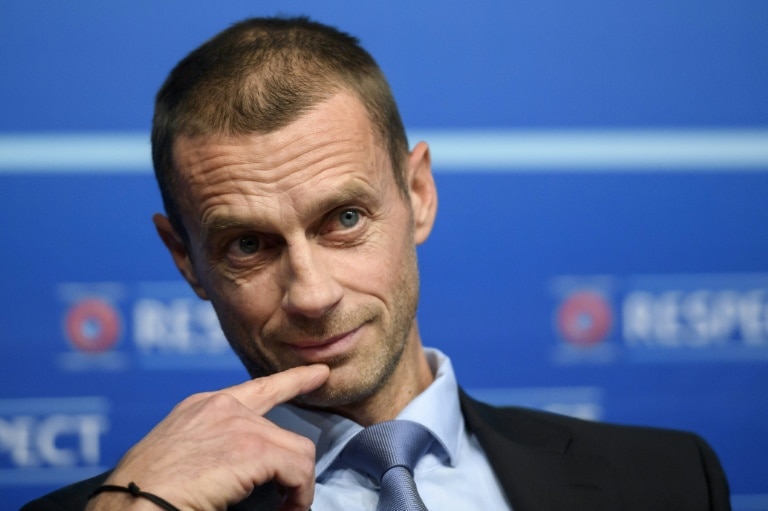
    Ceferin, a 58-year-old Slovenian lawyer who has led UEFA since 2016, has long described himself as an “underdog” leader despite holding one of the sport’s most powerful positions. A controversial 2024 statute change allows him to run for a fourth term as UEFA president next year, a rule tweak that has drawn sharp criticism from within football circles and triggered the resignation of former UEFA chief of football Zvonimir Boban, the Croatian football legend. Even so, Ceferin has ruled out a challenge to Infantino in FIFA’s March 2025 presidential election in Rabat, where the FIFA chief is seeking his own fourth and final term. When asked last September if he would run for the global role, Ceferin told Politico simply: “No.”

    Still, that public refusal to run has not stopped Ceferin and UEFA from waging an aggressive campaign to block Infantino’s policy agenda, and their efforts have already delivered multiple high-profile wins. The most recent victory came last weekend, when Infantino backed down from a controversial plan to bring in private investors to FIFA’s club competitions, a reversal widely seen as a humiliating climbdown. The turning point was UEFA’s explicit threat to boycott future World Cups if the proposal moved forward, a threat that industry insiders describe as both aggressive and uniquely credible.

    Terrence Burns, a veteran brand and marketing strategist who worked on two successful World Cup host bid campaigns, told AFP that Ceferin emerged as the clear winner from the standoff. “Ceferin played it well,” Burns said. “UEFA carried the fight collectively while he issued no personal statement at any point. The boycott threat was aggressive and credible, which is a rare pairing.”

    This is not the first time Ceferin has successfully pushed back against Infantino. In 2021, joint opposition from UEFA and South American football confederation CONMEBOL forced Infantino to abandon a controversial plan to shift the World Cup from a four-year cycle to every two years. Ceferin has also proven his willingness to take on powerful opponents close to home: when the breakaway European Super League launched in 2021, he condemned the project aggressively, even calling then-Juventus chairman Andrea Agnelli “a snake” despite being godfather to Agnelli’s daughter. Ceferin later recalled that the 48 hours after the ESL launch were some of the most stressful of his tenure, saying: “I didn’t sleep, eat or drink for 48 hours, because I had phone calls with governments and royal families… and pressures and threats.” In the wake of the ESL’s collapse, UEFA overhauled its flagship club competition, the Champions League, to address the structural grievances that had fueled the breakaway attempt.

    Tensions between UEFA and FIFA first flared into public view during the 2024 World Cup, when Ceferin boycotted the tournament final in protest of a controversial FIFA decision. The dispute centered on US striker Folarin Balogun, who received a red card in the United States’ round of 32 win over Bosnia and Herzegovina. FIFA overruled the suspension, clearing Balogun to play in the round of 16 against Belgium, a decision that sparked widespread outrage after it was revealed that former US President Donald Trump had personally called Infantino to intervene in the case.

    Ceferin’s background prepared him for high-stakes conflict: he served in the Yugoslav Army in the 1980s before being called up to Slovenian forces during the country’s 1991 War of Independence. He once told ESPN, “Luckily I never had to shoot (anybody).” Today, he frames his confrontations with Infantino through a long-held personal mantra: “I think you should in professional and private life, choose your battles. You should fight when it’s really a reason to fight, but every fight is tiring.”

    The controversial 2024 statute change that clears Ceferin’s path to a fourth UEFA term has already drawn significant criticism. The rule did not eliminate the three-term limit entirely, but it stipulated that any terms started or served before July 1, 2016 would not count toward the cap, a carve-out that applies exclusively to Ceferin. Boban, who resigned in protest, noted that the shift directly contradicted reforms Ceferin himself introduced in 2017 to prevent exactly this kind of incumbency advantage. “Ironically, it was the UEFA president himself that proposed and launched a set of reforms in 2017 which were introduced to prevent such a possibility,” Boban said. “The reforms were to football’s great credit, and that of the UEFA president. His shift away from these values is beyond comprehension.”

    Looking ahead, Ceferin’s core goal is to block Infantino from securing a fourth term as FIFA president. Infantino, who was re-elected unopposed in both 2019 and 2023, is facing public pressure for the first time during his tenure, largely due to the unified opposition from Ceferin and UEFA. While Ceferin has said he will not run for the top job himself, his behind-the-scenes organizing has already reshaped the race, and his track record of beating Infantino on policy fights suggests the coming months will bring more upheaval to global football governance.

  • Spain confident it will host the 2030 World Cup final because it ‘deserves’ it

    Spain confident it will host the 2030 World Cup final because it ‘deserves’ it

    Recent weeks have seen swirling speculation around the location of the 2030 FIFA World Cup final, a debate that has now put the three co-host nations — Spain, Portugal and Morocco — in the global spotlight. Following a controversial British media report claiming FIFA President Gianni Infantino had promised the final slot to Morocco as part of a bid to retain his leadership position, the Spanish government has doubled down on its belief that the decisive match of the 2030 tournament belongs on Spanish soil.

    In comments made to Spanish broadcaster Cadena Ser on Wednesday evening, Spain’s newly appointed Sports Minister Milagros Tolón laid out the country’s case for hosting the final. Tolón emphasized that Spain is the only nation in the world that currently holds both the men’s and women’s FIFA World Cup titles, a unique credential that cements its status as a global leader in men’s and women’s soccer. She also noted that the original 2030 World Cup bid was first developed as a joint partnership between Spain and Portugal, with Morocco joining the co-host bid at a later stage of the bidding process. “We have many advantages and strengths as a country, and we deserve to host this historic final,” Tolón told reporters.

    Morocco has already outlined its own ambitious plan to host the final at a purpose-built 115,000-seat King Hassan II Stadium currently under development near its largest city Casablanca. For Spain, two of the most iconic soccer venues in Europe are in the running to host: Real Madrid’s Santiago Bernabéu Stadium in Madrid, which recently completed a major multi-million euro renovation, and FC Barcelona’s Camp Nou, which is also undergoing a massive expansion and upgrade to meet FIFA’s tournament requirements.

    The controversy erupted earlier this month when a British media outlet published the unconfirmed claim that Infantino had offered the final slot to Morocco in exchange for support for his re-election as FIFA president. However, FIFA quickly pushed back against the report on Tuesday, issuing an official statement dismissing the claims as unfounded.

    “It is false and misleading to claim the FIFA president has made any promise in relation to hosting the FIFA World Cup 2030 final,” a FIFA spokesperson said in the statement, adding that “a decision will be made by FIFA in due course” through official governing body processes.

    Tolón said the Spanish government was caught off guard by the initial unsubstantiated report, but noted that the official FIFA denial had cleared up much of the uncertainty. “We were surprised by the report, but the most important thing is that FIFA has already denied it,” she said.

    A planned working meeting between Spanish officials and FIFA leadership is scheduled for September, where the two sides will continue discussions around Spain’s hosting plans for the final. “We are working closely with FIFA, and they have been very clear and emphatic in denying this unsubstantiated news. We will continue pushing forward with our bid because we want the 2030 World Cup final in Spain — and we believe it is where it belongs,” Tolón added.

  • Why has Mohamed Salah chosen Trabzonspor?

    Why has Mohamed Salah chosen Trabzonspor?

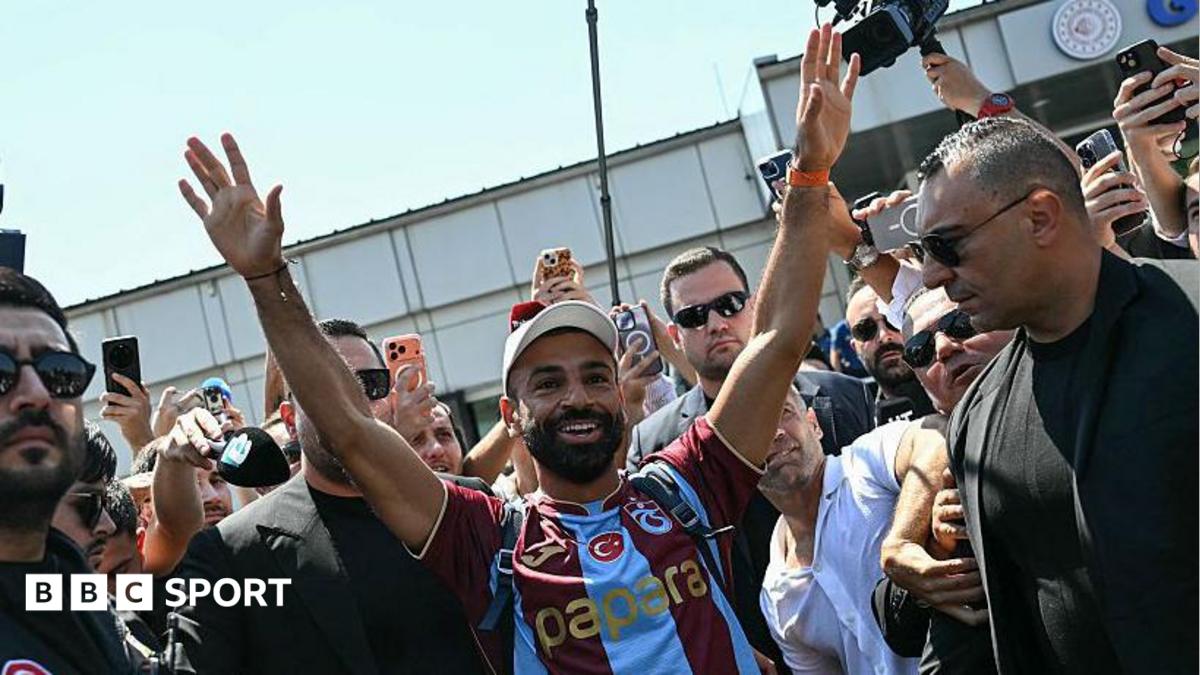
    After months of swirling transfer speculation, one of the most decorated players in Premier League history has finalized his next chapter: Egyptian star Mohamed Salah has signed a two-year contract with Turkish Super Lig side Trabzonspor, following the expiration of his deal at Liverpool. The move has upended widespread expectations, which for years linked Salah to lucrative offers from Saudi Pro League sides and Major League Soccer clubs, instead seeing the 34-year-old opt to remain in European football with a club far from the expected Istanbul heavyweights that usually attract global stars.\n\nMoney was not the deciding factor in Salah’s choice. Saudi clubs had long prioritized signing the winger, with Al-Ittihad launching a last-minute bid to secure his services, while MLS side Sporting Kansas City was also among the suitors ready to offer a massive financial package. While Salah’s compensation in Turkey is substantial, it falls short of what he could have earned in Saudi Arabia. Trabzonspor confirmed in a public filing to the Turkish stock exchange that Salah will earn £14.5 million per season, with an additional 20% cut of all revenue generated from Salah-branded merchandise; local reports put his base salary closer to £7.3 million annually, with performance bonuses and merchandise revenue making up the difference.\n\nThe opportunity to continue competing in UEFA club competition was a major draw for Salah, who enters this move fresh off helping Egypt reach the knockout round of the 2026 World Cup. Trabzonspor finished third in the 2025-26 Super Lig and will kick off their European campaign this month in the Europa League play-off round. A two-legged victory will see them advance to the competition’s league phase, while a defeat will drop them into the UEFA Conference League.\n\nTrabzonspor was not the first Turkish club in the running for Salah. Istanbul powerhouse Besiktas initially held negotiations to sign the winger, but talks collapsed over disagreements on the financial structure of the deal, opening the door for Trabzonspor to step in with a successful bid. While the club does not carry the same global brand recognition as Turkey’s traditional “big three” of Galatasaray, Fenerbahce and Besiktas, it has a storied history of its own: seven-time Turkish champions, Trabzonspor won the Super Lig most recently in 2021-22 and lifted the Turkish Cup in the 2025-26 season, boasting a passionate fanbase that turned out in hundreds to welcome Salah upon his arrival in the country.\n\nDuring his official unveiling, Salah first wore a symbolic number 61 shirt to honor the city of Trabzon, the number corresponding to Trabzon’s regional vehicle registration code that holds special cultural meaning for local fans, who traditionally celebrate the 61st minute of every home match. For the 2026-27 competitive season, however, Salah will wear the number 10 shirt – the same number he wears for the Egyptian national side. Teammate Ernest Muci voluntarily ceded the jersey to the club’s new marquee signing as a gesture of respect.\n\nSalah’s high-profile transfer is the latest in a growing trend of elite established players moving to the Turkish Super Lig. Victor Osimhen, Leroy Sane, Ilkay Gundogan, Nathan Ake and Leandro Trossard are just a few of the big names already plying their trade in the division, while Trabzonspor’s current squad already counts Andre Onana, Ruslan Malinovskyi and Stefan Savic among its ranks. Last summer, the Super Lig recorded the third-highest net transfer spend in global football, trailing only the English Premier League and Saudi Pro League, a clear sign of the league’s rising ambition.\n\nThe financial model that allows Turkish clubs to compete for top names is unique. Top Turkish clubs earn most of their competition revenue in euros from UEFA participation, while the vast majority of their domestic operating costs are paid in Turkish lira. Years of high inflation in Turkey have also eroded the relative value of existing domestic debt, giving clubs far more financial flexibility than outside observers might expect, allowing them to put together competitive salary packages for global stars while retaining access to European football – a key draw for players in the later stages of their careers.\n\nFormer Rangers midfielder Ryan Jack, who has spent the past two seasons playing in Turkey, told BBC Sport the growing profile of the Super Lig is no surprise. \”That’s one thing about Turkish football – the fans are incredibly passionate. The big clubs have huge support and they really get behind their teams,\” Jack said. \”The league is getting stronger every year and you’re seeing more and more big names joining. Salah is probably the biggest name to move to Turkey in recent years. It shows the league is growing and it might persuade other top players to consider going there. There are great stadiums, great cities and it’s a competitive league.\”\n\nStill, the Super Lig lags behind Europe’s top competitions in global rankings. Opta currently ranks the Turkish top flight as the 14th strongest domestic league in the world, behind the top divisions of Denmark, Poland and even England’s second-tier Championship. Turkish clubs have also struggled to find sustained success on the European stage: since Galatasaray won the UEFA Cup in 2000, only one Turkish side has reached the semi-final of a major UEFA competition, highlighting the gap that remains between Turkish clubs and Europe’s elite.\n\nFor Salah, the move represents a deliberate compromise that allows him to continue competing at a high level in Europe rather than retiring to a less competitive league for a larger paycheck. While age has seen Salah enter the twilight of his career, he still retains significant quality: he notched one goal and two assists to guide Egypt to the 2026 World Cup knockout stages, and just two seasons ago delivered one of the best campaigns of his career, scoring 34 goals and adding 23 assists across all competitions to lead Liverpool to the Premier League title. His final season at Anfield was underwhelming, with just 12 goals across all competitions as Liverpool finished fifth and Salah fell out of favor under manager Arne Slot, but his pedigree remains unmatched among any recent incoming transfers to the Super Lig.\n\nTrabzonspor is expected to build its entire attacking system around Salah. The club typically deploys a 4-2-3-1 formation, with Salah set to occupy his familiar role on the right wing, cutting inside onto his strong left foot – the position that made him one of the most prolific forwards in European football over the past decade. Manager Fatih Tekke can also shift to a 4-3-3 without majorly altering Salah’s role, leaving the Egyptian as the undisputed focal point of the club’s attacking threat.\n\nSalah is expected to make his competitive debut on August 15, when Trabzonspor opens its 2026-27 Super Lig campaign away to Kasimpasa. Shortly after, the club will turn its attention to its Europa League play-off tie against either Hungary’s Ferencvaros or Poland’s Gornik Zabrze.\n\nFor Trabzonspor, the impact of Salah’s signing extends far beyond his on-pitch contributions. His arrival instantly elevates the club’s global profile, opens massive new commercial opportunities, and adds one of the most marketable footballers of his generation to the club’s roster. Jack added that the signing will also draw new international audiences to the entire league: \”I think Liverpool fans, and people who love watching Salah, will definitely take notice and start following the league. When I moved there, my family and friends started watching games because they didn’t really know much about Turkish football before. Salah’s move will make people sit up and watch more of the league.\”\n\nFor Salah, the move delivers something more valuable than another mega contract: the chance to remain in Europe, compete for domestic and European honors, and serve as the undisputed face of one of Turkey’s most historic clubs. While the destination was not the one most pundits and fans predicted, it offers both player and club a rare opportunity to write an ambitious new chapter together.

  • Australia grants citizenship to 2 Iranian women’s soccer players who sought asylum

    Australia grants citizenship to 2 Iranian women’s soccer players who sought asylum

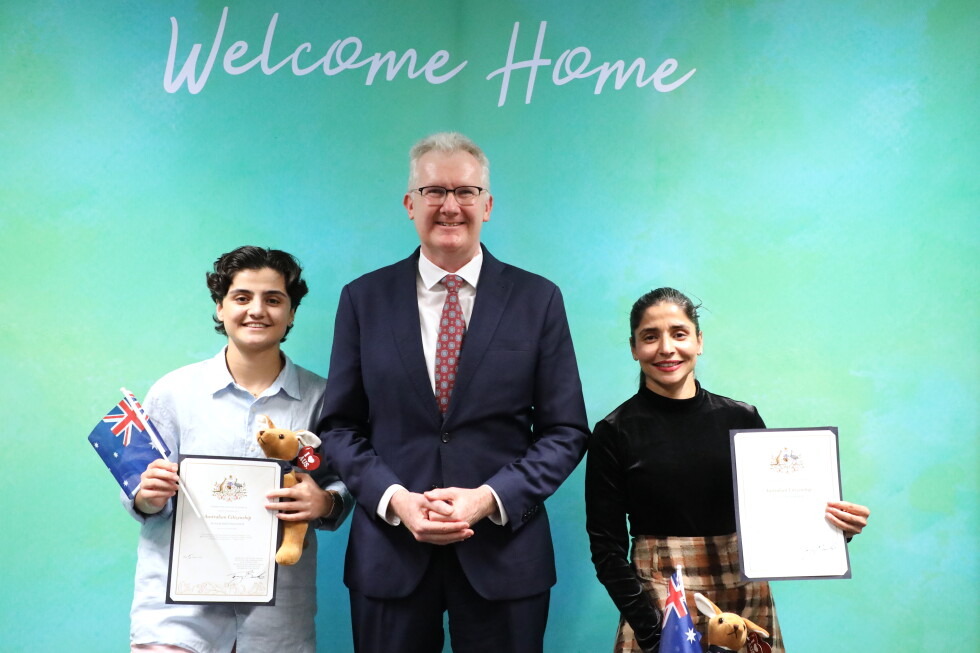
    BRISBANE, Australia — In a landmark moment for two elite female athletes who fled their home country last year, Fatemeh Pasandideh and Atefeh Ramezanisadeh, former members of the Iranian women’s national soccer team, have officially become Australian citizens eight months after they first sought asylum in the country. The pair confirmed the news in a public statement released Thursday, revealing that Australia’s Immigration Minister Tony Burke presided over their citizenship ceremony in Brisbane, their new adopted home city, the previous day.

    Local Iranian community members, close friends, and advocacy supporters gathered at the event to celebrate the athletes’ new legal status. For Ramezanisadeh, the milestone carried deep personal meaning. “Yesterday was a truly special and unforgettable day for me. I feel proud and deeply grateful to become an Australian citizen. Australia has given me the opportunity to build my life and my future, and I feel, more than ever, that I belong here,” she shared in the statement, adding that her Iranian heritage and life experiences will always remain a core part of her identity.

    Pasandideh echoed that emotion, describing the occasion as “one of the happiest days of my life.” “I’m incredibly proud and grateful to officially become an Australian citizen. After everything we’ve been through and all the challenges we faced, this moment means more than words can express,” she said.

    The timing of the citizenship approval has drawn public attention, as the process was completed far faster than the standard pathway for refugees. Under normal Australian immigration rules, refugees must hold a valid residency visa for four years before they become eligible to apply for citizenship. When contacted by the Associated Press for comment on why the two players’ applications were fast-tracked, the Department of Immigration declined to discuss individual cases, citing legal privacy requirements. Analysts and immigration observers have widely speculated that the accelerated approval was intended to make the athletes eligible to represent Australia in international soccer competition.

    The pair’s path to Australian citizenship began in early 2024, ahead of the Women’s Asia Cup hosted on Australian soil. The entire Iranian national team arrived in the country before a U.S.-Israeli military strike on Iran in February. Tensions rose ahead of the tournament when multiple Iranian players chose not to sing the national anthem before their opening match, sparking widespread public concern for their safety if they were forced to return home. State-sponsored Iranian media branded the players “traitors” for the silent protest, with prominent sports commentator Mohammad Reza Shahbazi calling them “wartime traitors” in a national television broadcast that fueled backlash against the group.

    When Iran ultimately withdrew from the regional tournament, Pasandideh and Ramezanisadeh, along with five other teammates, requested asylum in Australia. Just days later, the five other players reversed their decision and returned to the national team for reasons that have never been made public. The two remaining athletes ultimately joined Brisbane Roar, a club competing in Australia’s top-tier A-League Women competition, after their asylum claims were approved.

    The case drew international attention almost immediately, with then-U.S. President Donald Trump publicly calling on Australian authorities to grant asylum to the players and even placing a personal phone call to Australian Prime Minister Anthony Albanese to discuss the request. Advocacy groups and public protesters across Australia joined the call to allow the athletes to remain in the country, turning the pair’s situation into a high-profile global discussion about athlete safety and asylum rights.

  • St Kilda coach Ross Lyon vows support for embattled star Max King, says injury ‘insignificant’

    St Kilda coach Ross Lyon vows support for embattled star Max King, says injury ‘insignificant’

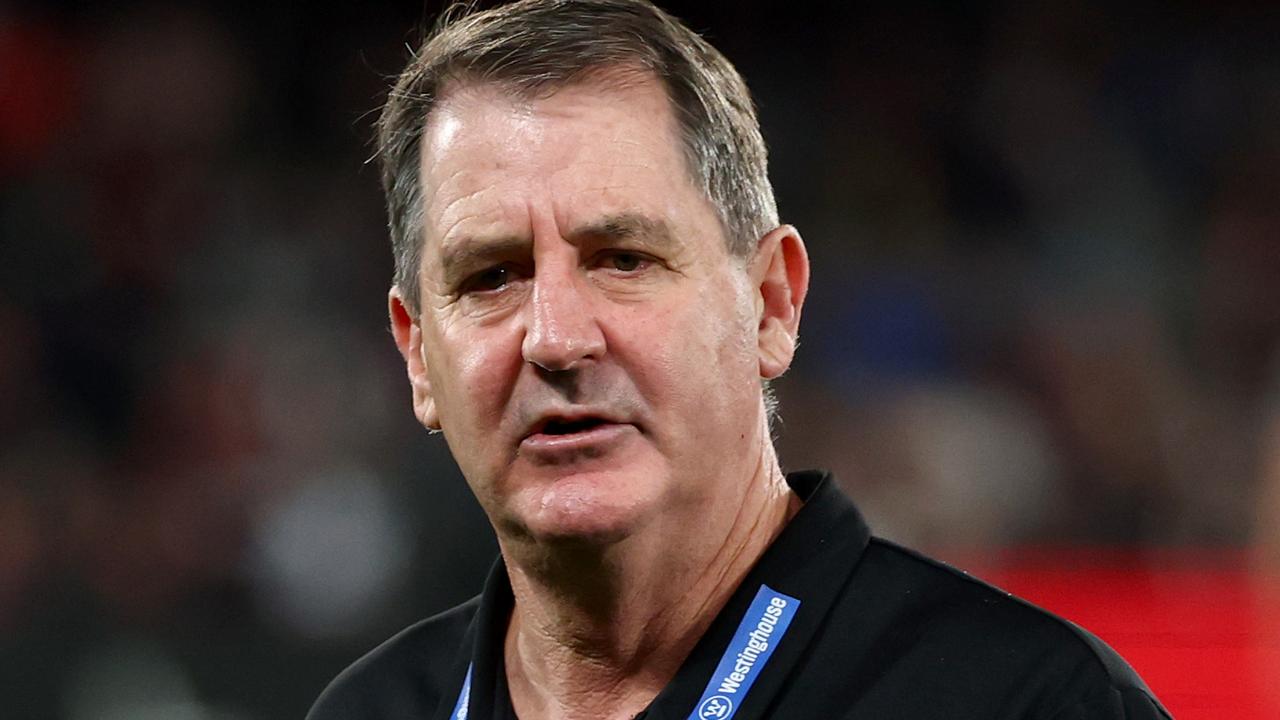
    AFL side St Kilda’s senior coach Ross Lyon has publicly thrown his support behind troubled key forward Max King, saying the young talent is starting to find clarity amid his devastating season-ending injury setback.

    King’s long-awaited return to AFL competition in Round 21, which came after two full seasons sidelined by injury, was cut short dramatically during the third quarter of the match when he suffered a sudden left hamstring strain. Within days of stepping back onto the field for his first game in two years, the club confirmed King would miss the remainder of the 2024 season, dashing his hopes of a fairytale comeback this year.

    Despite the heartbreaking outcome, Lyon says he holds no regrets over clearing King to play his long-awaited return match. Speaking to reporters on Thursday morning, the senior coach put the injury in perspective, framing it as a minor hurdle in the broader context of King’s life and career.

    “We understand the disappointment and the concern around this, but there are countless stories of elite athletes pushing through these setbacks to come out stronger on the other side,” Lyon said. “Max has tremendous mental toughness, he has unwavering support from his family, and the entire St Kilda organization is right behind him. We will get through this together and see the other side of this challenge.”

    Lyon added that he has met one-on-one with King since the season-ending injury diagnosis to offer personal support. “I went around to his place, we had some food, shared a cinnamon scroll, and just had an open chat about life, not just football,” Lyon explained. “He knows we are firmly in his corner, no matter what.”

    Off the conversation around King’s injury, Lyon’s attention is now turning to this weekend’s make-or-break clash against Carlton. The Sunday evening match, scheduled for a 7:20pm kickoff at Melbourne’s Marvel Stadium, pitches 10th-placed St Kilda against 11th-placed Carlton, with the winner set to claim the final spot in the top eight and secure a spot in this year’s finals series.

    Historically, St Kilda has had the upper hand in recent matchups against the Blues, claiming victory in two of their last three encounters. Their most recent meeting in May ended in a comfortable 39-point win for the Saints. For Lyon, the stakes of this weekend’s game do not need to be spelled out to his playing group. “Everyone around the league is talking about it, I know what’s on the line, and every single one of my players knows too,” he said. “Every guy in the squad is hungry to earn the right to compete in September.”

    This return to finals football would mark a major milestone for Lyon, who is currently chasing his first finals appearance since returning to the head coaching role at St Kilda.