分类: sports

  • PSG down Aston Villa to retain UEFA Super Cup

    PSG down Aston Villa to retain UEFA Super Cup

    The 2025 UEFA Super Cup delivered a tense, tightly contested clash in Salzburg on Wednesday, where Paris Saint-Germain, the reigning Champions League winners, edged out Europa League champions Aston Villa 2-1 to defend their continental title. This marked the French club’s second consecutive Super Cup victory, a year after they claimed the crown against England’s Tottenham Hotspur, cementing their reputation as the dominant force in European club football ahead of the new domestic season.

    Both managers fielded largely strong starting lineups, eager to lay down an early marker for the year ahead. PSG’s first XI included nine of the players who lifted the Champions League trophy against Arsenal back in May, anchored by star midfielder Vitinha, new signing Joao Neves and captain Marquinhos. Recently recruited French left-back Lucas Digne, who completed his move to the Parisians from Villa just three days prior, started the match on the bench against his former side. For Villa, manager Unai Emery rested key World Cup contributors Ezri Konsa, Emi Martinez and Ollie Watkins, but handed competitive debuts to Brazilian midfielder Joao Gomes and 17-year-old striker Brian Madjo. The match also marked Boubacar Kamara’s first start for Villa since he suffered a season-threatening serious knee injury back in January.

    It was Kamara who threatened first for the Premier League side, curling a low long-range effort just wide of PSG goalkeeper Matvey Safonov’s post in the 13th minute. The close call jolted PSG into action, and seven minutes later, winger Khvicha Kvaratskhelia broke the deadlock. After a saved initial effort was recycled back into the box, the Georgian cutting in from the left unleashed a powerful strike that beat Villa keeper Marco Bizot at the near post. Kvaratskhelia dominated Villa’s right flank for the next 15 minutes, creating another clear opening shortly after his opener that evaded onrushing PSG attackers.

    Villa absorbed PSG’s pressure and grew into the game, and 17-year-old Madjo had multiple chances to level the score before finally finding the back of the net in first-half stoppage time. Scottish veteran midfielder John McGinn picked out the teenage striker in the penalty area, and Madjo fired a powerful left-footed effort into the top of the net to put Villa level at 1-1 on his senior competitive debut.

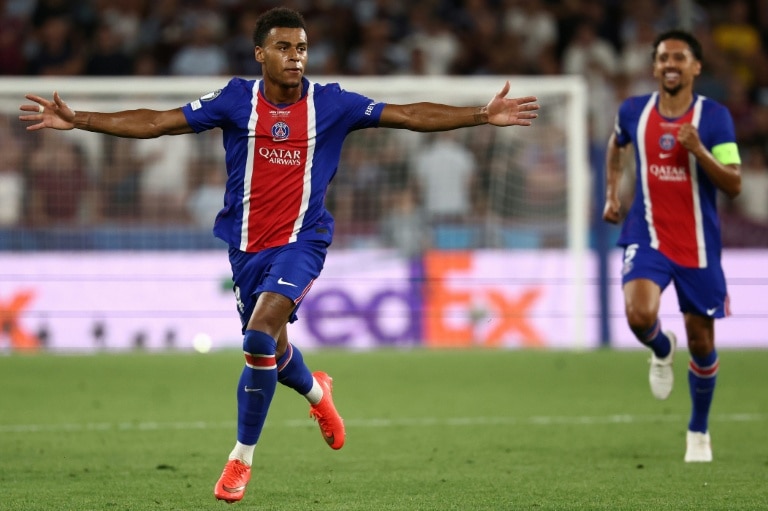
    PSG manager Luis Enrique made a key substitution at half time, introducing Ballon d’Or winner Ousmane Dembele in place of new recruit Maghnes Akliouche to reinvigorate his side’s attack. Villa continued to push after the break, with McGinn forcing a sharp save from Safonov with a curling effort just after the restart. The game’s decisive moment came in the 61st minute, when French winger Desire Doue raced onto a through ball down the right flank before bending a clinical strike past Bizot into the far corner. The goal was initially ruled out for offside by the assistant referee, but a VAR review found Villa right-back Matty Cash kept Doue onside, and the decision was overturned, giving PSG their 2-1 lead.

    Villa almost equalized instantly through 19-year-old substitute George Hemmings, but Safonov made a solid stop to preserve PSG’s lead. In the closing 15 minutes, Enrique introduced World Cup-winning midfielder Fabian Ruiz to shore up PSG’s central midfield and see out the result. Villa’s best late chance fell to striker Tammy Abraham, who just failed to make contact with a low cut-back inside the six-yard box in the final 10 minutes. PSG held on to secure the win, kicking off their new season with silverware as they target a third consecutive Champions League title to extend their European dynasty. The match also made headlines for its referee, Somalia’s Omar Artan, who took charge of the high-profile fixture just three months after he was infamously turned away upon arrival at Miami International Airport despite being a FIFA-listed World Cup referee.
  • Australia struggling at 74-4 after 1st session of Top End cricket test series against Bangladesh

    Australia struggling at 74-4 after 1st session of Top End cricket test series against Bangladesh

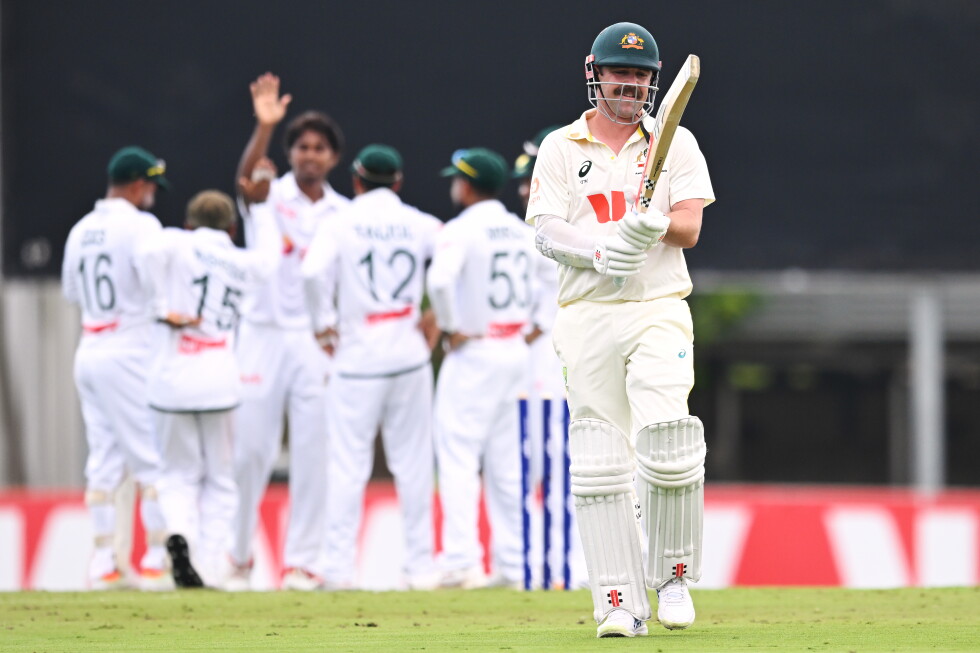
    DARWIN, Australia — In a stunning opening to Bangladesh’s first test match on Australian soil in 21 years, the visitors’ fast-bowling trio of Hasan Mahmud, Taskin Ahmed and Ebadot Hossain turned favorable pitch conditions in the Top End to their advantage, leaving host Australia in a precarious position at 74 for four wickets at the close of Thursday’s first session.

    Australian captain Pat Cummins won the coin toss and elected to bat first, a decision that looked solid early as the hosts raced to 45 unbeaten without losing a wicket. But Hasan Mahmud turned the tide dramatically in two consecutive overs, starting with the dismissal of Darwin-born opener Jake Weatherald. Backed by a loud, partisan local crowd, Weatherald never found rhythm on the green-tinged wicket, and he threw away his wicket with a reckless slash at a wide delivery from Hasan, departing for 23 off 37 deliveries.

    In Hasan’s next over, Australia lost their second opener, Travis Head, who chopped a round-the-wicket delivery back onto his stumps for 22, sliding the home side to 52 for two. Ebadot Hossain followed up with the key wicket of Australian star batter Marnus Labuschagne, caught by Bangladesh captain Najmul Hossain Shanto. The quick also came close to dismissing Steve Smith, but a dropped catch at third slip let the former captain off the hook.

    All-rounder Cameron Green became Bangladesh’s fourth wicket just before the lunch break, as the visitors capitalized fully on their strong start to the opening match of the two-test Top End series. At the first interval, Steve Smith remained not out on seven.

    This series also marks a key milestone for Australia’s pace attack, with captain Pat Cummins — playing just his second test in 13 months — reuniting with regular frontline fast bowlers Josh Hazlewood and Mitchell Starc. The group is backed by veteran off-spinner Nathan Lyon, along with all-rounders Green and Beau Webster, as Australia prepares for a grueling 12-month calendar packed with 20 test matches. After the Top End series against Bangladesh, Australia will embark on away tours to South Africa, India and England as part of this heavy schedule.

  • Keeper Bihina stars as Cameroon upset Morocco to make Wafcon final

    Keeper Bihina stars as Cameroon upset Morocco to make Wafcon final

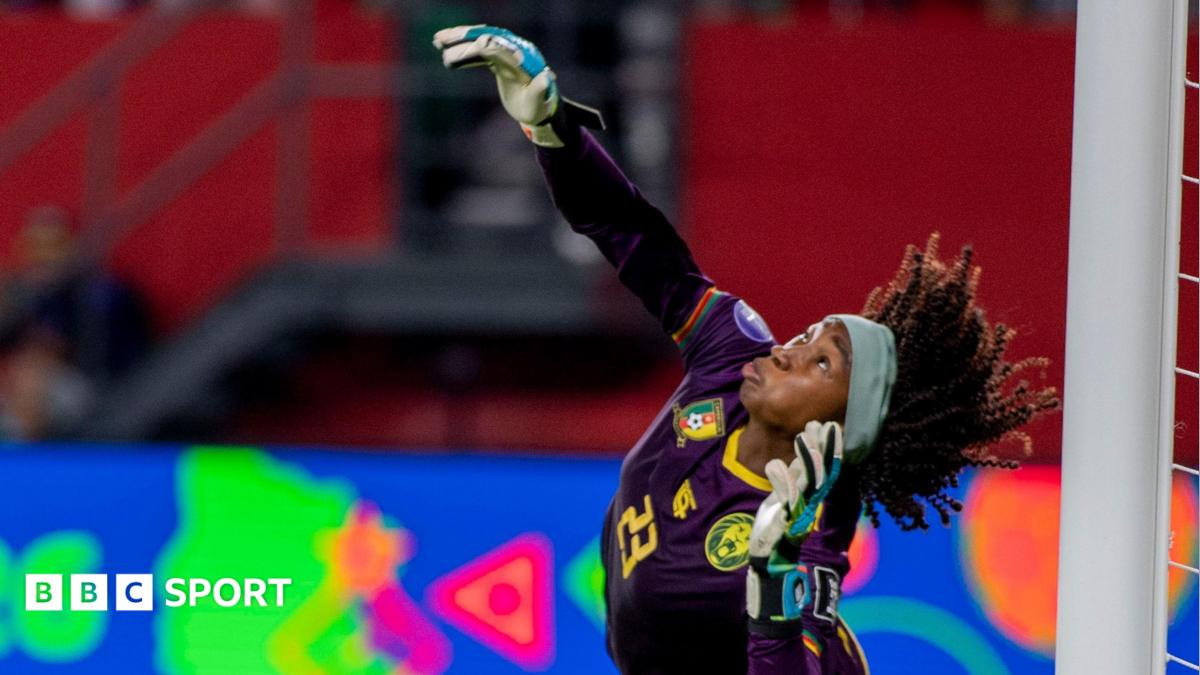
    In a tense, dramatic Women’s Africa Cup of Nations (Wafcon) semi-final clash in Rabat on Wednesday, 22-year-old Cameroonian goalkeeper Michaely Bihina delivered one of the most memorable performances in recent continental women’s football history, booking her side a spot in the 2026 tournament final at the expense of hosts Morocco.

    The tightly contested match stayed deadlocked at 0-0 through 90 minutes of regulation and an additional 30 minutes of extra time, but Bihina’s standout saves turned the tide of the contest. With just two minutes left in extra time, a VAR review awarded Morocco a critical penalty after referee Vincentia Amedome ruled Cameroon’s teenage defender Maryam Nyadjou had made accidental contact to the face of Morocco’s Sakina Ouzraoui. Winger Fatima Tagnaout stepped up to take the spot kick, but her tame left-footed attempt was pushed away by Bihina, forcing the match to a penalty shootout to decide the winner.

    In the shootout, Bihina continued her incredible form, blocking efforts from Kenza Chapelle, Maryame Atiq and Sakina Ouzraoui to leave the packed Moulay Hassan Stadium silent. After Morocco goalkeeper Khadija Er-Rmichi saved a penalty from Grace Mendoua to keep her side in the tie, Nyadjou held her nerve to convert the decisive spot kick, securing a 3-1 shootout win for the Indomitable Lionesses.

    This run to the final is already a stunning underdog story for Cameroon. The side was originally eliminated during the qualification stage, but earned a last-minute spot in the 16-team finals after the Confederation of African Football expanded the tournament mid-qualification, with Cameroon advancing based on its global world ranking. The 2026 final marks Cameroon’s first appearance in the Wafcon championship match since 2016, when the side hosted the tournament and fell to Nigeria.

    Throughout 120 minutes of play, Cameroon’s organized, disciplined defensive structure neutralized Morocco’s ball dominance, limiting the hosts to few high-quality chances. Morocco came closest to breaking the deadlock in the 14th minute, when Sanaa Mssoudy redirected a right-wing cross onto the right upright, and Mssoudy also fired into the side-netting in the 60th minute. A flurry of late chances in regulation and extra time from both sides failed to find the back of the net, setting up the dramatic late penalty and shootout.

    For Morocco, the semi-final exit is a devastating disappointment. The north African nation has invested heavily in women’s football in recent years, hiring 2023 Women’s World Cup winning manager Jorge Vilda to lead the side in pursuit of its first ever continental title. The Atlas Lionesses finished as runners-up in both 2022 and the delayed 2024 tournament, throwing away a 2-0 first-half lead against Nigeria to claim second place in 2024.

    Cameroon will now face Malawi in Sunday’s 19:00 GMT final, after Malawi beat Algeria 3-1 in the first semi-final on Wednesday. Coached by Valentine Nguele, who only took the job in June, Cameroon will need to contain star Chawinga sisters Tabitha and Temwa Chawinga to claim the title. Sunday’s final will guarantee a first-time Wafcon champion, as neither Cameroon nor Malawi has ever claimed the continental crown.

    In other continental women’s football news, two 2027 FIFA Women’s World Cup African playoff matches are scheduled for Thursday: Ivory Coast will face Ghana at 17:00 GMT, followed by a match between Nigeria and South Africa at 20:00 GMT. The winners will advance to inter-confederation qualifying for the 2027 global tournament.

  • ‘Landmark moment’: NFL locks in the Jonas Brothers to perform at historic game in Melbourne

    ‘Landmark moment’: NFL locks in the Jonas Brothers to perform at historic game in Melbourne

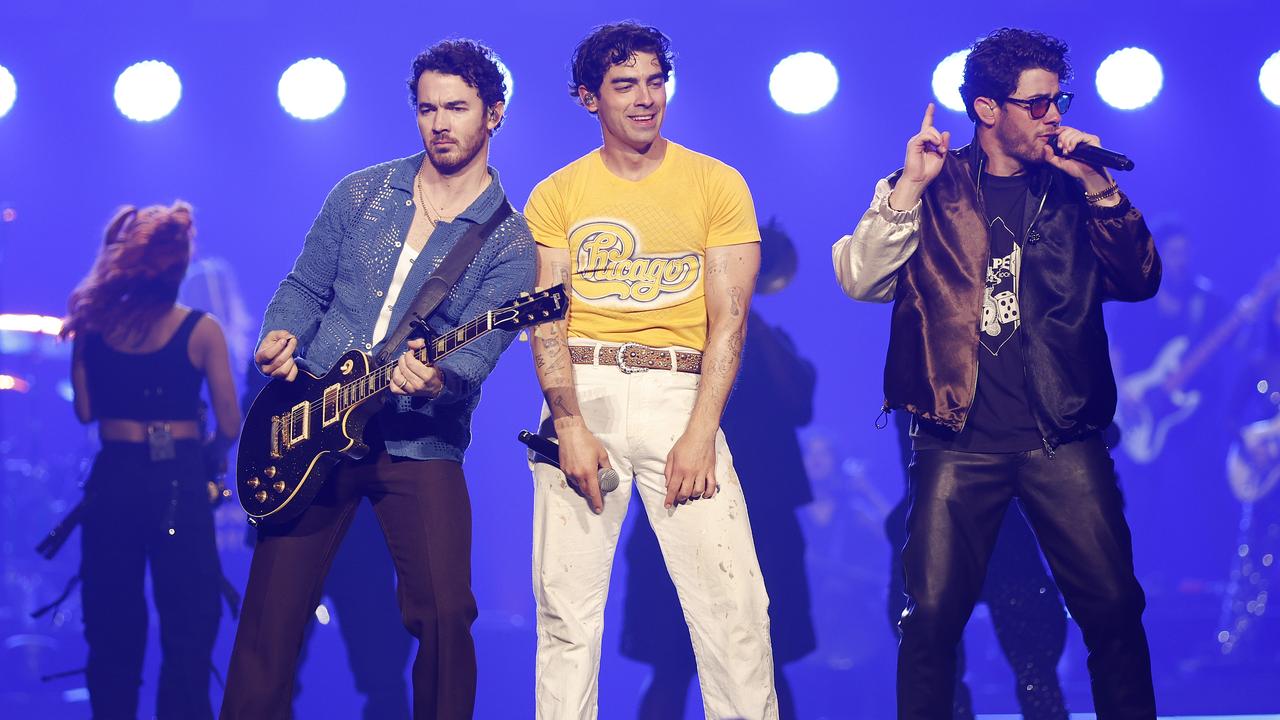
    The National Football League has secured one of the world’s biggest pop acts to deliver the headline halftime performance for its landmark first regular-season matchup held on Australian soil, locking in multi-platinum selling trio the Jonas Brothers to take the stage at the iconic Melbourne Cricket Ground next month. On September 11, when the long-time NFC rivals the Los Angeles Rams and San Francisco 49ers face off in the historic contest, the Jonas Brothers will run through their catalogue of global chart-topping hits for thousands of in-stadium fans, with the performance also streaming to millions of additional viewers around the world on Netflix.

    Composed of brothers Nick, Joe and Kevin Jonas, the trio has cemented their status as one of the most commercially successful pop acts of the 21st century, with more than 20 million albums sold globally and a star on the Hollywood Walk of Fame recognizing their decades-long contribution to entertainment. In a statement ahead of the performance, the band expressed their enthusiasm for joining the historic NFL event. “We couldn’t be more excited to perform at halftime during the NFL’s first-ever regular season game in Australia,” the group said. “Playing at the iconic Melbourne Cricket Ground in front of such passionate Australian fans is an incredible honour. We can’t wait to be part of this historic moment and celebrate with everyone in the stadium and watching around the world.”

    This Melbourne clash is a key part of the NFL’s long-running strategy to expand the reach of American football across the globe, following a series of successful regular season games hosted in international markets over recent years. This season alone, the league will stage regular matchups in major international hubs including London, Madrid and Paris, with league leadership prioritizing delivering top-tier in-game and halftime entertainment for all international audiences. For the Australian debut, league officials emphasized that securing a globally beloved act like the Jonas Brothers was a priority to match the significance of the occasion.

    “Bringing the first-ever NFL regular season game to Australia is a landmark moment for the league, and we are committed to creating an entertainment experience that reflects the scale and significance of the occasion,” said Tim Tubito, the NFL’s senior director of global game presentation and entertainment. “The Jonas Brothers are global entertainers whose music connects across generations, making them the ideal artists to help us celebrate this historic game in Melbourne. We look forward to delivering a memorable halftime performance for our fans in Australia and those watching around the world.”

  • Messi’s most iconic moments as he ponders retirement

    Messi’s most iconic moments as he ponders retirement

    Global football icon Lionel Messi is confronting an uncertain future in the sport he has dominated for nearly three decades, opening the door to potential retirement following the passing of his father and long-time support system, Jorge Messi.

    The 39-year-old Argentina captain, currently contracted to Major League Soccer side Inter Miami through 2028, shared his grief and uncertainty in an emotional public tribute to his late father. “I don’t know how to carry on,” Messi said. “I used to just play football, and now I’m really not sure if I’ll carry on doing it for much longer.” Across his 20-plus-year senior career, Messi has amassed a historic 921 goals across stints with Barcelona, Paris Saint-Germain, Inter Miami and the Argentina men’s national team, a tally that places him among the greatest players to ever step onto a pitch.

    As the football world waits for Messi’s final decision on his next steps, BBC Sport has recounted the most memorable, career-defining moments that turned a young Argentine prospect into a global sporting legend.

    Messi’s rise to household name status began in 2007, when 19-year-old him delivered a stunning performance in one of football’s most heated rivalries: El Clasico between Barcelona and Real Madrid. On March 10 that year, the teen scored all three of Barcelona’s goals to secure a 3-3 draw at Camp Nou, capped by a blistering last-minute finish that came after he dribbled past multiple Real Madrid defenders. This match remains widely cited as the moment that announced Messi’s arrival as a generational talent.

    Just over a month later, Messi scored what many analysts still call the best goal of his entire career, during a Copa del Rey semi-final first leg against Getafe on April 18, 2007. Starting the play with the ball in his own half, Messi wove past roughly five opposing defenders, rounded the onrushing goalkeeper, and slotted the ball into the empty net — a run of play that drew immediate comparisons to Diego Maradona’s iconic 1986 World Cup goal against England. Barcelona went on to win the match 5-2.

    Two years later, Messi silenced the doubters who claimed he could not perform against elite English opposition in the Champions League. Ahead of the 2009 Champions League final against Manchester United, the striker had failed to score in 10 previous European appearances against Premier League clubs. That narrative ended when he rose above United’s defense to head home a cross from Xavi, securing a win in the first Champions League final widely billed as a head-to-head between Messi and Cristiano Ronaldo. He would go on to score in another Champions League final victory over Manchester United two years later, claiming the third of his four Champions League titles.

    Messi’s knack for record-breaking and explosive multiple-goal displays first became clear in the 2010 Champions League quarter-finals, when he scored four goals in a 4-1 home win over Arsenal, marking the first time he hit that mark in his senior career. The pick of the four was a deft chip over Arsenal goalkeeper Manuel Almunia to complete his hat-trick. Two years later, he upped the ante with a five-goal haul in a 7-1 round of 16 win over Bayer Leverkusen. To date, Messi ranks second on the all-time Champions League scoring charts with 129 goals, trailing only Ronaldo.

    At just 24 years old, Messi became Barcelona’s all-time leading top scorer, breaking a 60-year-old record held by Cesar Rodriguez. In a 5-3 win over Granada on March 20, 2012, he equalled Rodriguez’s 232-goal record with his first strike of the game, broke the record with his second, and extended his new mark with a third. By the time he left Barcelona in 2021, he had pushed the club’s all-time scoring record to 672 goals — a mark 446 goals clear of the next closest player in the club’s history.

    The same year, Messi delivered a calendar-year scoring performance that earned him a place in the Guinness Book of World Records. By December 22, 2012, he had hit 91 goals across 69 matches for club and country: 79 for Barcelona and 12 for Argentina. That unprecedented haul earned him an unmatched fourth consecutive Ballon d’Or, cementing his status as the world’s best player.

    Two years later, Messi broke another long-standing Spanish record, becoming La Liga’s all-time top scorer with a hat-trick in a 5-1 win over Sevilla on November 22, 2014. He equalled Telmo Zarra’s 251-goal record (set in 1955) with a free kick, before breaking it and extending the mark with a third goal. He ended his La Liga career with 474 goals, 163 clear of Ronaldo’s 311 for Real Madrid.

    One of the most iconic moments of Messi’s El Clasico legacy came in April 2017, when he scored a last-minute winner against Real Madrid at the Santiago Bernabeu to secure a 3-2 Barcelona win. The goal marked his 500th for Barcelona, pushed Barcelona to the top of the La Liga table, and spawned one of the most famous celebrations in football history: Messi pulled off his Barcelona shirt and held it aloft for the home Real Madrid crowd to see.

    In 2021, one of football’s longest unbroken partnerships ended when financial restrictions tied to La Liga’s salary cap forced Barcelona to let Messi leave on a free transfer, after 21 years, 672 goals and 35 club trophies. A tearful Messi told reporters at his exit press conference: “My family and I were convinced we were going to stay here, at home. I don’t want to leave this club – it’s a club I love and this is a moment I didn’t expect.” After widespread speculation of a move to Manchester City, he signed with Paris Saint-Germain.

    The second act of Messi’s career brought the international success that completed his legacy. In July 2021, at 34 years old, he won his first senior international trophy when Argentina beat Brazil 1-0 in the Copa America final at Rio de Janeiro’s Maracana stadium. He was named player of the tournament after scoring four goals, and would go on to win a second Copa America three years later.

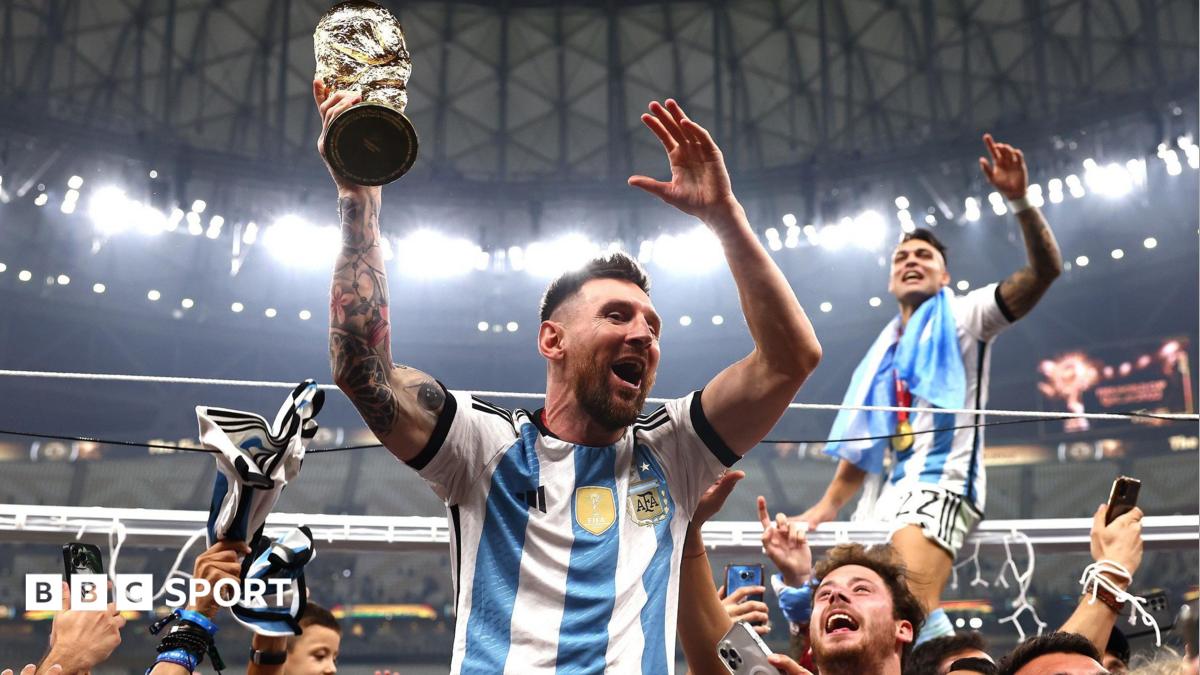
    Two years after that first international title, Messi claimed the trophy that had eluded him throughout his career: the FIFA World Cup. In what is widely called the greatest World Cup final in history, Argentina drew 3-3 with France before winning on penalties, with Messi scoring two goals and converting his spot kick in the shootout. He was named player of the tournament after scoring seven goals, becoming the first player to score in every knockout round of a World Cup. The victory closed the debate over his status as the greatest of all time, and is widely cited as the crowning moment of his career.

    Messi has extended his record for the most Ballon d’Or awards to eight, picking up two more after leaving Barcelona: one during his time at PSG and another after joining Inter Miami, with the 2023 award coming off the back of his World Cup triumph and a Leagues Cup title with MLS side. “I couldn’t imagine having the career I’ve had and everything I’ve achieved, the fortune I’ve had to be part of the best teams in history,” he said after winning his eighth award. “All of them are special for different reasons.”

    Most recently, at the 2026 World Cup, Messi added another entry to his World Cup goal record, pushing his all-time tally to 21 to become the tournament’s leading scorer before France’s Kylian Mbappe surpassed the mark in the bronze medal match against England. Though Argentina ended the tournament with a runner-up finish after losing to Spain in the final, Messi’s individual performance at 39 years old added another chapter to his legacy on the sport’s biggest stage.

  • Chawinga sisters fire Malawi into Wafcon final

    Chawinga sisters fire Malawi into Wafcon final

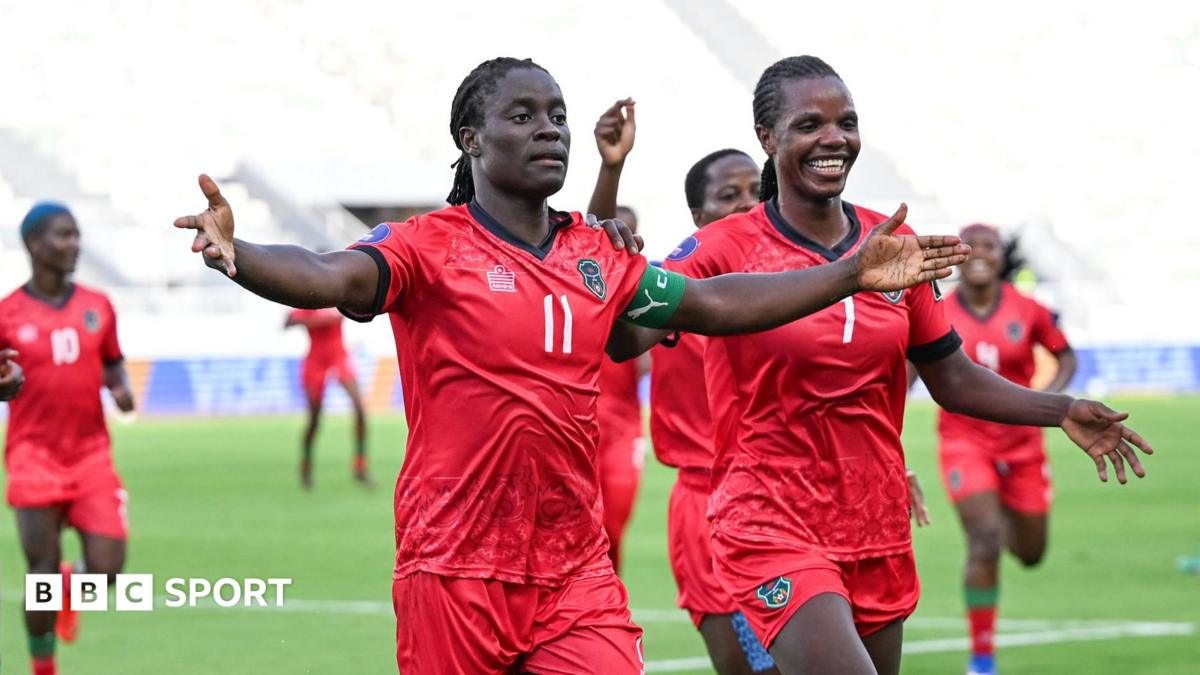
    The 2026 Women’s Africa Cup of Nations (Wafcon) has produced one of the most remarkable underdog stories in recent women’s football history, as tournament debutants Malawi, ranked 153rd in the world and the lowest-ranked side at the Moroccan-hosted event, booked their spot in the competition’s final with a dramatic 3-1 semi-final win over Algeria in Rabat. Spearheaded by the in-form Chawinga sisters, who combined for three of the Scorchers’ three goals on the day, Malawi has added Algeria to an already impressive list of fallen heavyweights, having knocked out regional powerhouses Nigeria and Ghana in earlier rounds of the expanded 16-team tournament.

    The match was anything but a calm, one-sided affair, despite the final scoreline. A frantic, end-to-end 90 minutes was defined by two first-half red cards, both issued after extended Video Assistant Referee (VAR) reviews, and a string of clear goal-scoring chances squandered by both sides. Algeria defender Morgane Belkhiter was the first player sent off, after being judged to have denied Malawi captain Tabitha Chawinga a clear goal-scoring opportunity midway through the first half. While the call was considered harsh by many observers, with a fellow Algerian defender getting a touch on the ball during the overlapping challenge, replays confirmed Belkhiter had caught Chawinga on the back of the heel.

    Undeterred by the chaotic buildup of play, the OL Lyonnes striker broke the deadlock in the 33rd minute with what will go down as one of the most iconic goals in Wafcon history. With her back to goal inside the 18-yard box, Tabitha Chawinga twisted to meet a headed clearance from Asimenye Simwaka – a dual-sport athlete who competed in 200m and 400m semi-finals at the Commonwealth Games in Glasgow just two weeks prior – and executed an acrobatic left-footed overhead kick. The effort beat Algeria goalkeeper Chloe N’Gazi but cannoned off the crossbar, with heavy backspin carrying the bouncing ball over the goal line before any player could react, putting the debutants 1-0 up.

    Tabitha’s younger sister Temwa Chawinga, who plays for NWSL side Kansas City Current, doubled Malawi’s lead in the first minute of first-half stoppage time, rounding N’Gazi before slotting home to take advantage of the numerical disadvantage Algeria was now playing under. But the 10-player balance was restored before halftime, when Malawi midfielder Rose Kadzere was also sent off after a VAR check for a reckless studs-up challenge on Algeria’s Marine Dafeur inside the penalty area, opening the door for a North African comeback in the second half.

    Even with both sides down to 10 players, the frantic pace continued into the second period, with both teams wasting clear chances to add to the scoreline early on. Algeria finally capitalized on the extra space in the 60th minute, when Ikram Adjabi volleyed home a misplayed deep free-kick to cut the deficit to 2-1, giving Les Fennecs fresh hope of a late turnaround. But as both sides began to tire amid the intense pace of the match, Tabitha Chawinga put the result beyond doubt, driving unchallenged into the penalty area before slotting home her second of the game from just outside the six-yard box to seal the 3-1 win.

    Malawi’s run to the Wafcon final is already historic: excluding the inaugural 1998 edition, the Scorchers are the first debutant side to ever reach the tournament’s final match. They have already secured qualification for the 2027 FIFA Women’s World Cup in Brazil courtesy of their semi-final spot, and now stand one win away from lifting the trophy as the tournament’s unlikeliest champions. Their historic success is already shifting perceptions of women’s football on the continent, proving that the sport’s growth extends far beyond the traditional African powerhouses.

    Much of Malawi’s stunning run has been fueled by the Chawinga sisters, who have lived up to massive pre-tournament hype. Tabitha helped OL Lyonnes claim another French top-flight title last season, while Temwa earned her second NWSL golden boot and MVP award with Kansas City Current. Between them, the pair have scored eight of Malawi’s 12 total goals at the tournament – five for Temwa and three for Tabitha – combining blistering pace, raw power and elite positional awareness that opposition defenses have been completely unable to handle. Now, the Scorchers will face the winner of the second semi-final between hosts Morocco and Cameroon in Sunday’s final (19:00 GMT), and with the Chawinga sisters in red-hot form, few would count the unfancied debutants out against any opponent.

  • England scraps midnight curfew on men’s cricket team under new captain Joe Root

    England scraps midnight curfew on men’s cricket team under new captain Joe Root

    LONDON — In a striking shift of team culture following a series of off-field controversies that reshaped English test cricket leadership, newly reinstated men’s test captain Joe Root has abolished the strict midnight curfew that was brought in just months prior.

    The hardline curfew was first introduced by England Cricket managing director Rob Key after a string of disruptive late-night incidents during the national side’s winter tours of New Zealand and Australia. The rule ultimately led to major upheaval in the team’s hierarchy: former test captain Ben Stokes was found breaking the curfew after a June match against New Zealand, triggering his temporary suspension and a shock early retirement from the longest format of the sport. This sudden departure opened the door for Root to return for a second tenure as England’s test skipper.

    As English cricket prepares to launch its new era under Root next week, kicking off with a three-match test series against Pakistan, Root laid out his philosophical approach to team management in an interview with the Sky Sports Cricket Podcast. “There’s not going to be a curfew,” Root confirmed. “I don’t think this needs to be a big deal, to be honest. My view on curfews is I don’t think they work, and if you want guys to take responsibility on the field they’ve got to be able to feel they can be grown adults off it and make good strong decisions off it.”

    Root emphasized that individual and collective accountability, rather than top-down restrictive rules, will form the foundation of his leadership. “That’s for us as a team to manage well, and self-police well, for me and head coach Stephen Fleming to manage well in many ways,” he explained. “But ultimately you’re grown adults, you know what it takes to play for England, you know what your responsibilities are off the field and we need to make sure we don’t find ourselves with any little situations off the field.”

    The returning captain outlined his vision for a balanced team culture that allows for relaxation while maintaining professional standards. Root said he wants the squad to “create a good strong culture when you know when the right time is to celebrate and enjoy a win or to have a sensible beer or whatever, but remember you’re playing for England.”

    The upcoming home series against Pakistan will serve as the first real test of this new self-governance model, with cricket fans and analysts watching closely to see whether Root’s trust-based approach avoids repeating the controversies that forced the curfew’s introduction in the first place.

  • Freestyle fundamentals with Nigeria’s national champion

    Freestyle fundamentals with Nigeria’s national champion

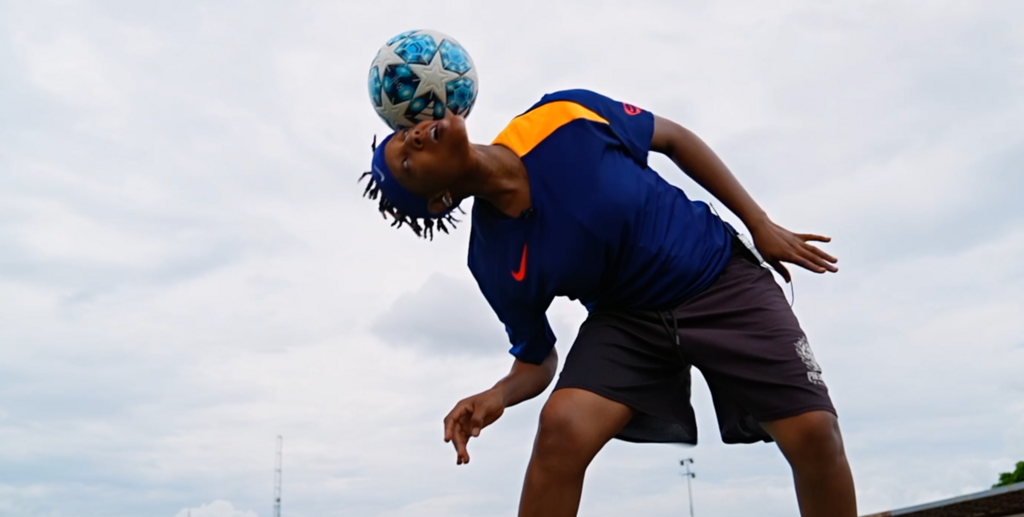
    When it comes to freestyle football, few athletes on the African continent carry the historic legacy and unmatched skill of Evelyn Okafor. A trailblazer who has rewritten the record books for women in the sport, Okafor boasts an extraordinary resume that includes four national championship titles in her home country of Nigeria, three consecutive African crowns, and a landmark achievement as the first African woman ever to earn a spot at the World Freestyle Football Championship.

    What began as a personal passion for the sport has evolved into a full-time professional career for Okafor, who credits her early inspiration to Rasheedat Ajibade, captain of Nigeria’s beloved Super Falcons national women’s football team. Ajibade’s example of excellence and resilience pushed Okafor to hone her craft, combining jaw-dropping technical tricks, creative improvisation, and relentless determination to rise through the ranks of competitive freestyle football.

    Today, beyond competing on the global stage, Okafor is committed to passing her knowledge on to new aspiring freestylers. In this feature, she walks viewers through some of her signature, fan-favorite freestyle fundamentals – from the challenging trick of balancing a regulation football on one’s neck to the iconic, crowd-pleasing “around the world” move. More than just a skills tutorial, Okafor uses the platform to share a core message: young girls deserve space to chase big, ambitious dreams in sports, regardless of historical barriers or underrepresentation.

    Whether you’re a seasoned freestyle footballer looking to sharpen your basics or a newcomer curious about the art of the sport, Okafor’s tutorial invites audiences to test their own skills, learn from a champion, and join her movement to expand opportunities for women in freestyle football. This segment was produced by Isaiah Akinremi and Tom Santorelli, with filming led by Monday Idara and editing by Aaron Akinyemi, published 14 hours ago under BBC Sport’s Africa Sport section.

  • LA Lakers to be sold in record $12.5bn deal

    LA Lakers to be sold in record $12.5bn deal

    One of the most recognizable and successful franchises in global sports, the Los Angeles Lakers of the National Basketball Association (NBA), has changed hands again in less than 12 months, with a new ownership group paying a staggering $12.5 billion – a new world record for the most expensive sports team sale in history.

    The buyers are Josh Kushner, brother of Jared Kushner, the son-in-law of former U.S. President Donald Trump, and Bob Iger, the highly respected former chief executive officer of entertainment giant The Walt Disney Company. The pair will acquire controlling interest in the franchise, just 10 months after current majority owner Mark Walter purchased his controlling stake from the legendary Buss family.

    Walter’s October 2025 acquisition, which was unanimously approved by the NBA Board of Governors, was itself a record-breaking deal at the time, valued at an estimated $10 billion. Now, just months later, the franchise value has surged dramatically to hit the new $12.5 billion mark.

    In a joint public statement released following the announcement of the deal, Kushner and Iger emphasized their long-standing connection to the league and the franchise. “As lifelong NBA fans, we are deeply honoured for the opportunity to become stewards of the Los Angeles Lakers, one of the most iconic sports franchises in the world,” the statement read. The pair went on to acknowledge the legacy of the Buss family, which owned the team for more than four decades, saying “We have immense respect for the leadership and vision of Jerry and Jeanie Buss.” Outlining their plans for the future, they added: “Our long-term commitment is to build on that foundation, compete at the highest level, and serve this extraordinary team, its fans, and the city of Los Angeles.”

    The Buss family’s decades-long ownership of the Lakers dates back to 1979, when Jerry Buss purchased the franchise for just $67.5 million – a deal that also included the Los Angeles Kings NHL hockey team and the Kia Forum arena in Inglewood. After Jerry Buss passed away in 2013, ownership was held in a trust for his six children, before the 2025 sale to Walter that ended the family’s direct control. Walter, who also holds a stake in Major League Baseball’s Los Angeles Dodgers alongside sports investor Todd Boehly, expressed his gratitude for his brief tenure leading the franchise.

    “Owning the Los Angeles Lakers has been one of the great honours of my life,” Walter said in his own statement. “It has been an extraordinary investment, but what I will carry with me is the community, the fans, and a city that treats this team as family. I am grateful to Jeanie Buss, the Buss family, the players, and the staff for welcoming me into this chapter. The Lakers belong to Los Angeles, and I have every confidence the best is still ahead.”

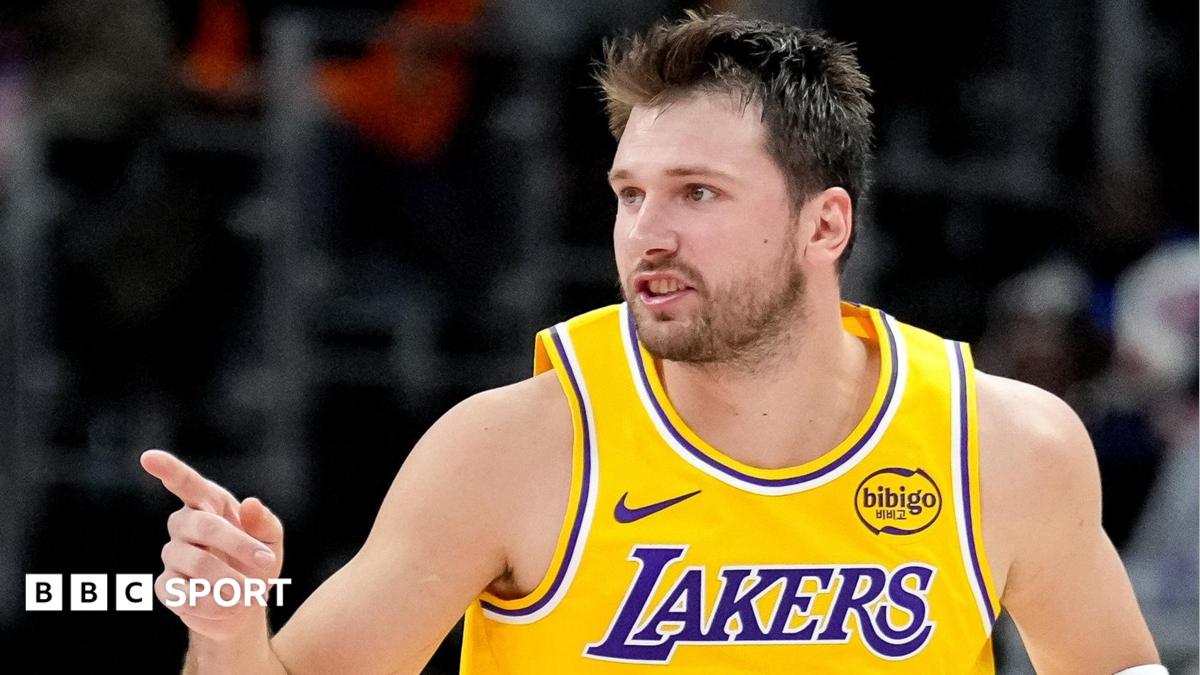
    The Lakers are one of the most decorated teams in NBA history, holding 17 championship titles – just one behind the all-time record of 18 held by the Boston Celtics. The franchise has been through notable off-court and on-court changes in recent months. This summer, the team lost LeBron James, the all-time leading scorer in NBA history, who left at age 41 to join the Philadelphia 76ers. In his place, Slovenian superstar Luka Doncic, who was acquired via trade from the Dallas Mavericks in February 2025, has stepped into the role as the team’s franchise cornerstone.

    Doncic, who is already positioned as the face of the franchise, expressed optimism about the new ownership group in a social media statement. “Being a Laker means everything to me, and I’m excited to get back on the court and bring a championship to LA,” Doncic wrote. “I’ve gotten used to big changes over these last few years, but I know that no matter what, there is no limit to the potential of this iconic franchise. I look forward to meeting Josh and Bob so we can get to work building something special in LA together.”

    The sale does come with a layer of existing controversy around co-buyer Josh Kushner. Kushner was recently embroiled in public debate surrounding a failed plan led by FIFA president Gianni Infantino to sell private stakes in the governing body’s major global tournaments. Kushner’s U.S.-based venture capital firm Thrive Eternal was tapped to lead the investor group for the aborted FIFA Forward Enterprise proposal, a project that drew widespread criticism from football governance advocates before it was scrapped.

  • Messi unsure he will play ‘much longer’ after father’s death

    Messi unsure he will play ‘much longer’ after father’s death

    Global football icon Lionel Messi has shared a heart-wrenching public tribute following the passing of his father and long-time agent Jorge Messi, who died last week at age 68 after a prolonged battle with illness. The 8-time Ballon d’Or winner, who most recently captained Argentina to the 2026 FIFA World Cup final, opened up about his crippling grief and cast major doubt over how much longer he will continue competing at the highest level of the sport.

    Jorge Messi had stood by his son’s side since the start of Lionel’s legendary career, taking on the role of his agent when the future star was just 14 years old. He watched from the stands as Lionel climbed to become one of the greatest footballers the game has ever seen, including cheering on Argentina’s 2022 World Cup triumph in Qatar. Now, just weeks after the 2026 World Cup concluded with Argentina falling 1-0 to Spain in the final, the football world is mourning the loss of the man who shaped one of its biggest legends.

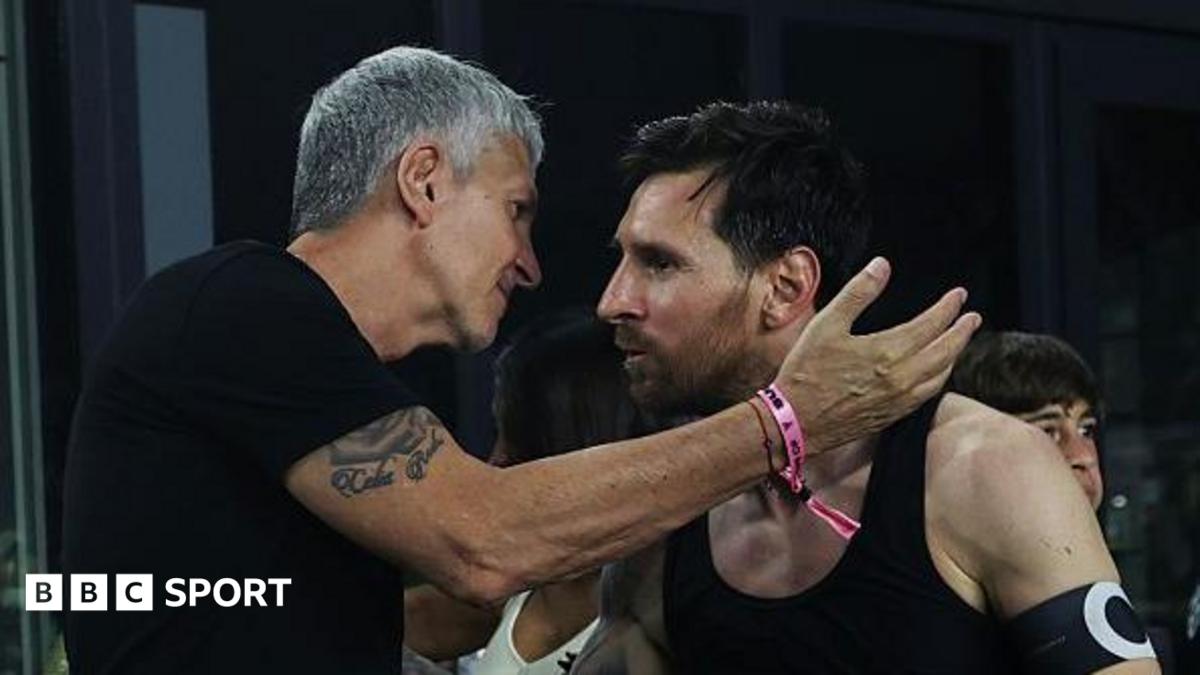
    In a raw, emotional social media post shared after Jorge’s passing, Messi laid bare the depth of his loss. “I don’t know what I’m going to do without you,” he wrote. “I don’t know how to carry on. I used to just play football, and now I’m really not sure if I’ll carry on doing it for much longer. You were by my side from the very beginning. We were so close to the end. Why didn’t you hang in there just a little longer so we could finish this together?”

    After Jorge passed away at a hospital in the Messi family’s hometown of Rosario, Argentina, Lionel returned home with his immediate family to grieve. A small, private funeral service was held Sunday at a cemetery in Perez, a quiet town on Rosario’s outskirts. Messi added that the reality of his father’s death still has not set in: “Dad, I still can’t believe you’re gone. It hasn’t sunk in, or rather, I don’t want it to. It’s so hard for me to imagine that I’ll never see you again, that we’ll never talk again. I know you were suffering and that this is for the best, but you left too soon. We still had so much left to enjoy together.”

    The 2026 World Cup, which marked Messi’s sixth appearance at the tournament, was overshadowed by Jorge’s declining health. Early in the tournament, Messi was seen in tears after scoring against Algeria, a moment he hinted at the time was tied to something outside of football; his family later confirmed Jorge was already battling serious health complications. In his tribute, Messi revealed Jorge had repeatedly encouraged him to play in what would be his final World Cup, but his father’s health took a sudden turn for the worse just days before the tournament kicked off.

    “It was the first time you weren’t going to be at a tournament, but Mom kept telling me you’d get better and that you’d be well enough to travel,” Messi recalled. “I kept telling you that we were going to make it to the final so you could come along. Every time a game ended, I’d wait for and miss your message. That’s when I realised how bad the situation was. Even so, I couldn’t stop thinking about going as far as possible, to give you time to watch a game. We made it to the final, and you couldn’t be there. I wanted to win it so I could bring the trophy to you and show you a new one. I couldn’t, my legs had nothing left. This time I tried to push past my physical limits, but I couldn’t. I never managed to feel right.”

    Across eight matches at the 2026 World Cup, Messi scored eight goals and notched four assists, cementing his legacy as one of the tournament’s greatest ever competitors. Looking back on his father’s support over decades, Messi noted that Jorge never missed a single one of his matches, even when his health began to fail: “Of course, you never missed a single game. How you suffered watching me play and how much you enjoyed it, even though you never gave me much praise. You were my dad, my friend and my mentor. You were always exactly the person you needed to be in every moment, and you were never wrong about anything. Despite a few disagreements or arguments, you were always right. In the end, things always turned out just as you said they would.”

    Messi closed his tribute by noting that Jorge’s legacy will live on through the way he raises his own children: “I’m going to miss you so much, but you’ll always be with me, especially in raising my children, because I teach and raise them just as you both did with me. Rest in peace, and watch over us from above just as you did here. Thank you for everything. I love you, Dad.”

    Tributes have poured in from across the global football community in the wake of Jorge’s passing. Portugal icon and long-time rival Cristiano Ronaldo offered his support, writing: “A huge hug to you and yours in these hard times, Leo. Much strength.” Inter Miami co-owner and former England international David Beckham also shared a message of solidarity, saying: “We are with you and your family, Leo, always.”

    Additional updates on the situation are expected to follow in the coming days.