分类: sports

  • All Blacks storm past the Bulls 50-19 in final tune-up for South Africa tests

    All Blacks storm past the Bulls 50-19 in final tune-up for South Africa tests

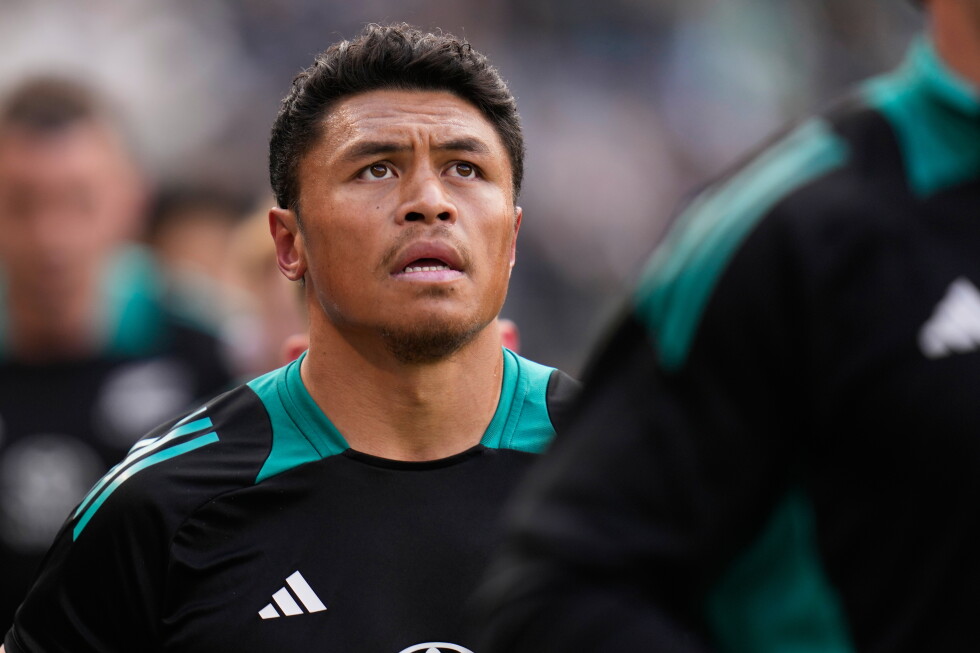
    PRETORIA, South Africa — The New Zealand All Blacks concluded their pre-test series warm-up schedule in dominant fashion on Saturday, cruising to a 50-19 victory over South Africa’s provincial side the Bulls at Pretoria’s iconic Loftus Versfeld stadium. The win gives the world-famous side a perfect preparation heading into their highly anticipated four-test series against defending world champions South Africa, the Springboks, starting next weekend.

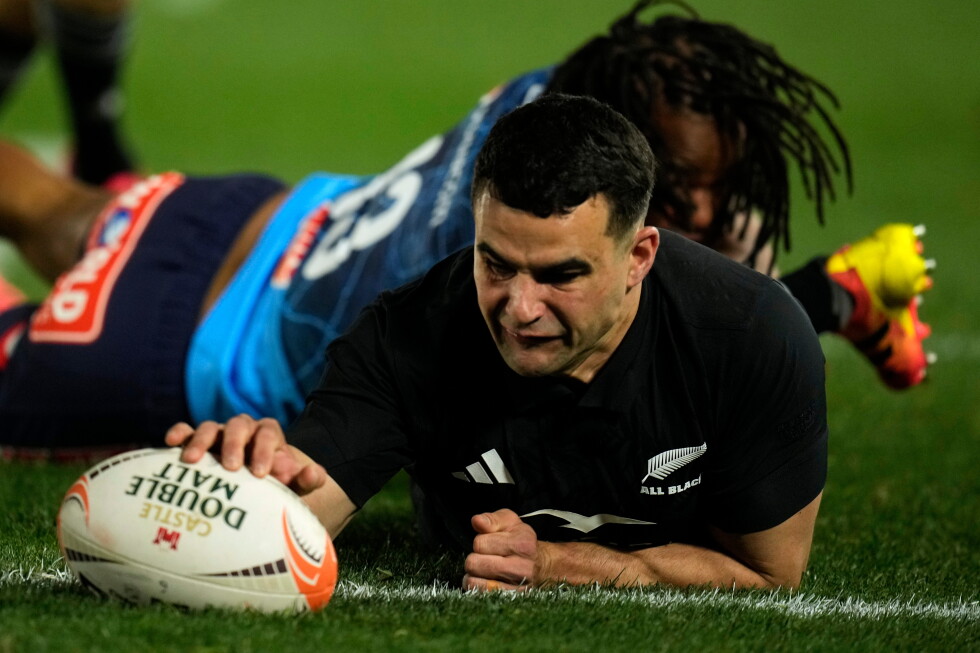
    New Zealand’s squad controlled the contest from the opening whistle, racing out to an unassailable 24-0 lead by halftime. The high altitude of Pretoria, a new matchday condition for many of the All Blacks’ squad members on this tour, led to a more competitive, back-and-forth second 40 minutes, but it did little to derail New Zealand’s momentum. By the final whistle, the All Blacks crossed for eight tries, with wingers Josh Moorby and Leroy Carter, plus captain Codie Taylor each scoring a brace. The three-tries concession by the All Blacks on Saturday ended a 124-minute scoreless streak across their three warm-up matches against the Stormers, Sharks and Bulls.

    While the bulk of the All Blacks’ second-string squad got the runaround against the Bulls, the match provided critical game time that will pay dividends across the grueling upcoming test schedule: four test matches will be held across four consecutive weekends, forcing the All Blacks to dig deep into their roster depth. Speaking to broadcaster SuperSport after the match, Taylor emphasized that the upcoming test series against the Springboks will be a step up in intensity from the warm-up fixture. “No disrespect to the Bulls but they (the Springboks) will lift the tempo and physicality,” Taylor said. “That’s what test match footy is all about. It’s an exciting week ahead.”

    Despite the lopsided final score, several All Blacks players turned in standout performances in the expansive, high-energy contest. Flanker Anton Segner, captain Codie Taylor (who was returning to action) and center Rieko Ioane all impressed, while the newly minted front row combination of Taylor, props Tyrel Lomax and Xavier Numia — making their first appearances of the tour — delivered a rock-solid set-piece display. Numia pulled off a critical early stop to prevent a lineout maul try for the Bulls, before the All Blacks pushed back the Bulls’ attacking five-meter scrum in a show of physical dominance. Inside backs Josh Jacomb, Anton Lienert-Brown and Ioane consistently created space out wide for the team’s finishers, capitalizing on the reliable platform built by the forward pack.

    Moorby crossed for his two tries while Bulls prop Francois Klopper was serving a sin-bin spell, with Taylor following up with two tries of his own: the first from a quick self-taken tap penalty, and the second from a turnover counter-ruck. The Bulls got on the board immediately after halftime, breaking New Zealand’s scoreless concession streak when lock Ruan Vermaak burrowed over from a lineout. Referee Nika Amashukeli overruled a TMO finding that Vermaak had fallen short of the try line to award the score.

    The second half continued with tit-for-tat scoring. Carter crossed with a sharp stepping display along the touchline, before offloading to Ioane to add another All Blacks try. The Bulls responded with tries from winger Stravino Jacobs and captain Marcell Coetzee, while Carter and Wallace Sititi added late scores for the All Blacks to seal the 50-point haul, the second consecutive warm-up match in which New Zealand hit the 50-point mark.

    Though the Bulls were considered the strongest provincial opponent the All Blacks would face on their South African tour, the side was underprepared for the fixture, having ended their United Rugby Championship season on June 19 and cut short their offseason break. The side struggled to match the All Blacks’ intensity, rarely testing New Zealand with contestable kicks despite playing an up-tempo, ambitious style similar to the All Blacks’. Taylor acknowledged some unforced errors from his side in the second half, but said the warm-up campaign had set the All Blacks up perfectly for test rugby. “There were a few mistakes in there, but we’ve played three games now and experienced some South African footy and are set up nicely to play some test matches now,” Taylor said.

    Across in Johannesburg, the Springboks are putting the final touches on their preparations after a split squad saw them pick up a 17-10 win over Argentina in Buenos Aires last weekend. Springboks coach Rassie Erasmus said the squad has had sufficient time to recover and is fully focused on the upcoming series. “The players are well recovered, and ready to give everything for the forthcoming tests,” Erasmus said.
  • Why Michaely Bihina is the keeper making waves at Wafcon

    Why Michaely Bihina is the keeper making waves at Wafcon

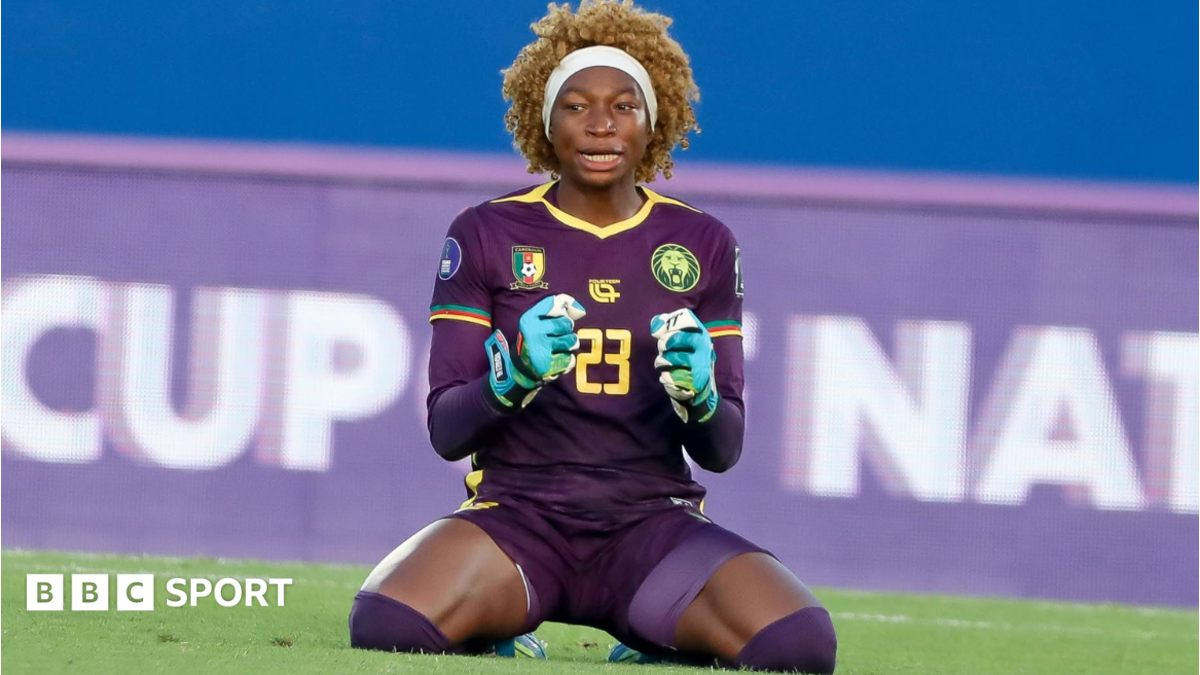
    The 2026 Women’s Africa Cup of Nations (Wafcon) has given rise to a new national hero in Cameroon, as 22-year-old goalkeeper Michaely Bihina’s extraordinary shot-stopping heroics have propelled the Indomitable Lionesses to their first continental final in a decade and secured their place at the 2027 FIFA Women’s World Cup in Brazil.

    Bihina’s standout performances across the tournament have already sparked calls from passionate Cameroonian fans for a public statue to honor her game-changing contributions to the national side. The young Benfica shot-stopper has emerged as one of the tournament’s biggest breakout stars, claiming player-of-the-match awards in two of Cameroon’s most high-stakes victories: a historic quarter-final upset over defending champions Nigeria and a tense semi-final win against host nation Morocco.

    Her career-defining semi-final display against Morocco in Rabat encapsulated her calm under pressure. After 118 minutes of goalless play, the host side was awarded a late penalty that would have sealed a dramatic match-winning victory. Bihina dove right to push away Fatima Tagnaout’s spot kick, forcing the tie into a penalty shootout. Having saved one penalty in regular extra time, Bihina had already set her sights on more: “When I saved the first penalty during the game, I said inside my mind if we go to penalties I think I can do more. I have to catch minimum three penalties.” The young goalkeeper lived up to her promise, denying three more Moroccan attempts from Kenza Chapelle, Maryame Atiq and Sakina Ouzraoui to secure a 3-1 shootout win, capping a total of four saved penalties across the match. After the game, she revealed her success was no accident: “I studied the penalties of Morocco girls during all the competition.”

    Weeks earlier, Bihina set a new Wafcon finals record with nine saves in Cameroon’s 1-0 quarter-final upset of defending champion Nigeria, a result that not only booked Cameroon’s World Cup spot but also ended the Indomitable Lionesses’ long losing streak against the Super Falcons. Speaking to the Confederation of African Football (Caf) after the win, she called the moment historic: “Playing in my first Wafcon and being able to beat Nigeria and qualify for the World Cup is historic. I am so excited and happy that as a team we have achieved this. We had an objective – to change the history of our national team against Nigeria.”

    Across five matches at the tournament, Bihina has kept three clean sheets, anchoring an unbeaten Cameroon run that comes just two years after the side missed out on qualification for the 2024 Wafcon. The Indomitable Lionesses, who have lost three previous Wafcon finals all to Nigeria, will now face tournament debutants Malawi in Sunday’s 2026 final (19:00 GMT), gunning for their first-ever continental crown.

    Bihina’s rapid rise to the top of African women’s football is a story of unexpected position change and relentless hard work. Born in December 2003 in Ekounou, a neighborhood of Cameroon’s capital Yaounde, she began playing football as a striker, but her coach suggested a switch after noting her height. “My coach told me that I was too tall to be a striker and that I would do better as a goalkeeper,” she told Caf. “I did that and six months later I was summoned to the national team.”

    Her professional career took her overseas at just 15, when she joined Portuguese second-tier side Racing Power. She helped the club win the second division title in 2022-23, and was named the Portuguese top flight’s best goalkeeper the following season after Racing Power finished third. In February 2026, she secured a dream move to Portuguese giants Benfica on a three-year contract, and already won a domestic league and cup double with the club in her first six months.

    Now, Bihina is widely considered one of the top contenders for the Wafcon Player of the Tournament award, alongside Malawi’s star Chawinga sisters, Tabitha and Temwa, who have dominated the tournament’s scoring charts. Ahead of Sunday’s final against Malawi, Bihina says she remains grounded, focused on another team-first performance: “For me personally, it has been a long journey of hard work and discipline. I continue to work with humility and try to improve every day. It will be a good game. We try to give our best like every game. We know we will challenge.”

    Whatever the result of Sunday’s final, Bihina has already cemented her place in Cameroonian and African women’s football history. A tournament win would simply cap a breakout run that has introduced her as the most exciting new goalkeeper on the continent.

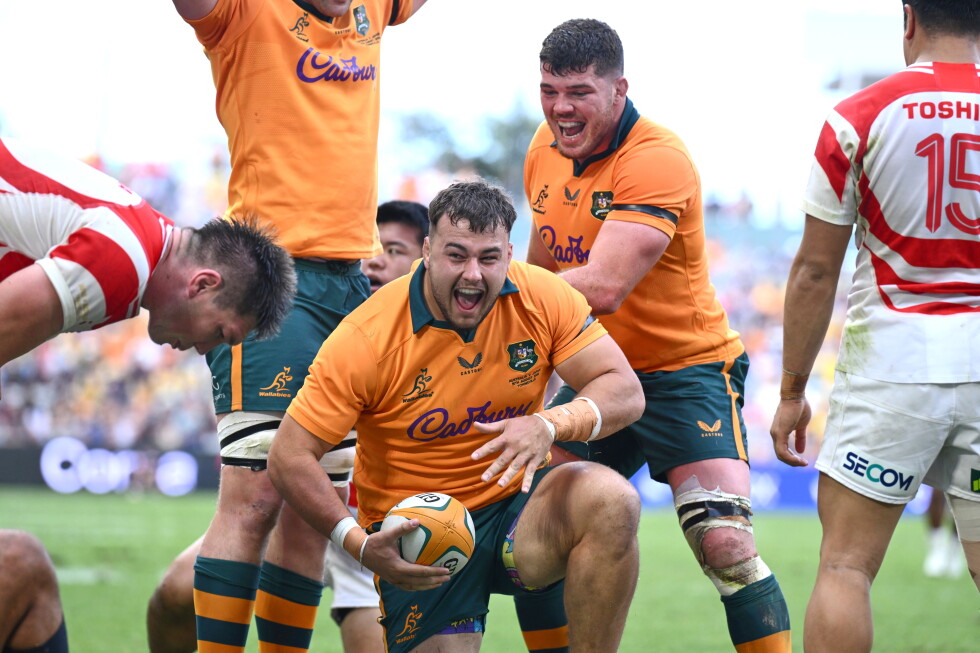
  • De Lutiis marks 1,000th Wallabies cap with a try as Australia routs Japan 56-17

    De Lutiis marks 1,000th Wallabies cap with a try as Australia routs Japan 56-17

    In a landmark moment for Australian rugby played out in Townsville on Saturday, 22-year-old forward Massimo De Lutiis etched his name into Wallabies history: when he came on as a 50th-minute replacement for veteran prop Taniela Tupou, he became the 1,000th player to earn a senior cap for the national side. Not content just to claim the milestone, De Lutiis capped his debut with a try, powering Australia to a dominant 56-17 victory over Japan that sealed a two-test series sweep for the home side. Tupou, the player De Lutiis replaced, had already set a strong first-half foundation, crossing the try line twice to anchor Australia’s attack in a tightly contested opening 40 minutes. Just one minute after entering the field, De Lutiis was in the right place to support fellow front rower Angus Bell’s try, which stretched Australia’s lead to 26-17. Eight minutes later, the debutant scored his own try, finishing a clinical Australian attacking move that began when flyhalf Carter Gordon broke through Japan’s defensive line and charged 30 meters toward the right corner. Scrumhalf Ryan Lonergan converted De Lutiis’ try — his fifth successful conversion of the match — extending Australia’s advantage to 18 points with 20 minutes still left to play. The first half had been far from comfortable for the Wallabies, who were caught off guard by Japan’s blistering defensive line speed and unrelenting attacking enterprise that pushed the Australian side onto the back foot for long stretches. Japan capitalized on their early momentum to hold a one-try lead at one point in the opening half, forcing new Wallabies head coach Les Kiss to deliver a galvanizing halftime team talk that turned the tide of the match. Wallabies captain Harry Wilson noted after the game that the squad responded to Kiss’s challenge by playing with far more energy and attacking spark after the break, with De Lutiis’ introduction injecting an extra jolt of intensity into the Australian lineup. “A team like Japan, if you’re not up for it, they’re really going to make you pay,” Wilson said. “It’s really special — 1000 Wallabies, incredible. Someone like Massimo, he’s a proud Australian. Really special moment.” Three late tries from the Wallabies blew out the final scoreline, turning a narrow 21-17 halftime lead into a 39-point winning margin. The victory also gave Australia their first three-match winning streak since 2024, building on early momentum for new head coach Les Kiss. The side defeated Italy last month in Joe Schmidt’s final match as interim head coach, then notched a narrow 35-32 win over Japan in Osaka the previous weekend in Kiss’s first test in charge. Japan captain Warner Dearns said after the match that his side had executed their game plan effectively in the opening half, doing everything possible to compete with Australia’s physically larger forward pack. “Really hard battle,” Dearns said. “We knew that the Wallabies were going to come out hard. We put a real emphasis on trying to move them around and play fast rugby. We did it well in the first half.” Japan’s half-back pairing of Naoto Saito and Ryunosuke Ito consistently generated quick, clean possession in the opening 35 minutes, repeatedly finding gaps in Australia’s defensive line. Australia twice claimed early leads through tries from Josh Nasser and Tupou, but Japan rallied back both times to turn the game on its head. Australian-born lock Harry Hockings, who previously played 28 games for the Queensland Reds, charged down a poor exit kick from Lonergan at the base of a ruck and dived on the loose ball in the in-goal area for a try. Saito then caught Australia’s defense napping with a quick penalty tap, darting over from close range to add another five points. Japan moved into the lead in the 33rd minute when center Dylan Riley, another Australian-born player in the Japan squad, beat two tackles and stretched over the line to score. But the Wallabies hit back just before halftime, working through a set piece lineout platform to advance upfield, where Tupou crashed over for his second try of the half. By the end of the match, front-row forwards had scored six of Australia’s eight tries, highlighting the forward pack’s dominance in the second half. For De Lutiis, the moment was more than just a historic milestone. “Like, even 1,000 is awesome, but just to be a Wallaby in general is just crazy to me — it’s a dream come true,” the debutant said.

  • No monkey business: India ‘whisperers’ guard world championships

    No monkey business: India ‘whisperers’ guard world championships

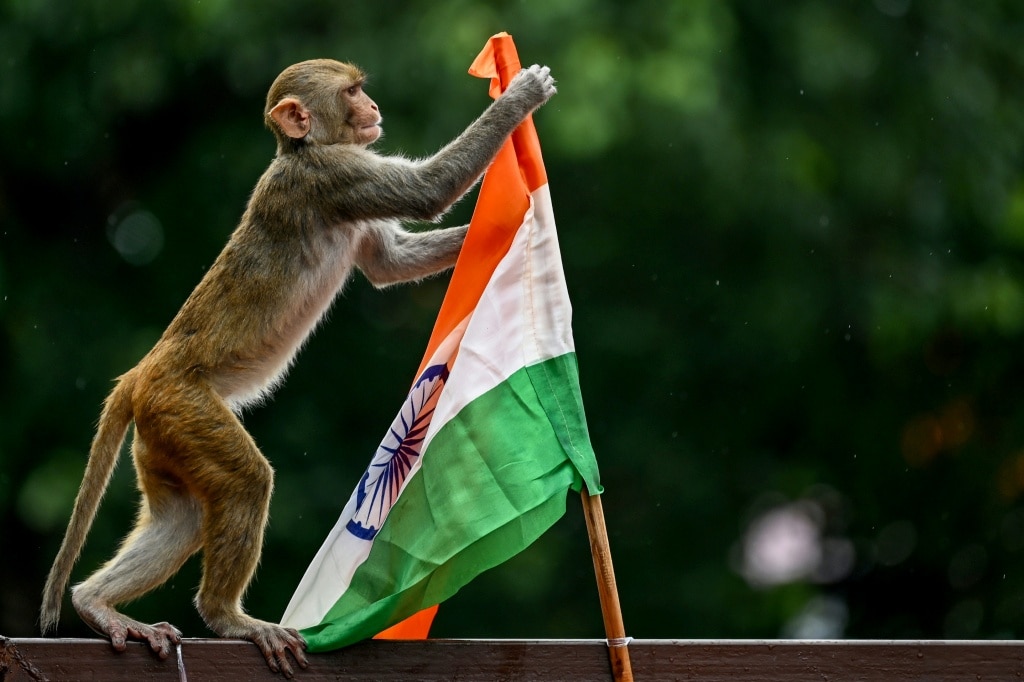
    As the world’s top-ranked badminton athletes arrive in New Delhi for one of the sport’s most high-profile annual global tournaments, one unlikely team of local specialists has been brought on board to handle a uniquely South Asian problem. Instead of focusing on the on-court action between the world’s best players, these four men keep their gaze trained on the tree lines, rafters and open spaces surrounding the Indira Gandhi Indoor Stadium, watching for mischievous rhesus macaques that have a long history of disrupting events in the Indian capital.

    Sixty-five-year-old Nazar Khan, a third-generation monkey handler, is the lead member of this specialist team hired to keep simian intruders from crashing the championship, which kicks off Monday. The venue already has a problematic reputation for uninvited animal guests: during January’s India Open tournament, a rhesus monkey was spotted wandering through the spectator stands, while bird droppings and fallen nesting debris interrupted competitive play, sparking widespread public criticism of event organizers. Eager to avoid a repeat of this embarrassing disruption, tournament planners turned to a time-tested local solution: “monkey whisperers”, also called monkey wallahs, who use specialized calls mimicking langurs — the natural predator of the smaller, more aggressive rhesus macaques that roam New Delhi’s urban areas.

    Khan explained that his family has worked in animal-related trades for multiple generations. “We started doing street performances with trained monkeys and dancing bears,” he told AFP in an interview on site. “But that trade was banned, so to keep food on the table, we shifted to chasing problem monkeys away from residential and event spaces. We used to keep live langurs with us to scare off the macaques, but that practice was also banned by regulators.”

    Monkeys hold a revered cultural status in majority-Hindu India, but they have become a persistent public nuisance in the national capital. Troops of urban macaques regularly destroy gardens, ransack office and residential spaces, and have been known to launch vicious attacks on humans while searching for food. For decades, handlers with trained black-faced langurs were a common sight on New Delhi’s streets, patrolling to shoo away troublesome macaque troops. However, that practice ended after a high court ruling banned the capture and commercial use of wild langurs, leaving legacy handlers like Khan to rely on generations of learned skill, sharp observational instincts, and remarkably accurate mimicked animal calls to do the job.

    Speaking about the macaques that frequent the badminton championship venue, Khan noted: “There are three or four regulars that hang around here, including two large ones that locals say are particularly aggressive. But we use specific, specialized calls that scare them off — we know our trade inside and out.”

    Beyond managing macaques, Khan added that the team takes on extra animal control work around the stadium: “We also have to round up stray dogs that wander onto the grounds and move them outside the venue perimeter. But we always make sure no animal is hurt in the process.” He shared a point of family pride, noting that his own grandson is part of a similar team assigned to keep monkeys away from Indian Prime Minister Narendra Modi’s central office complex.

    Faryad Ali, Khan’s nephew and fellow monkey whisperer, recently demonstrated the team’s craft, unleashing a rapid, convincing sequence of hoots, screeches and guttural growls that match langur warning calls perfectly. Like any trade centered on working around wild animals, the job comes with inherent risks. “There are always dangers in this work — sometimes we get bitten by the monkeys,” Ali explained, showing old bite scars on his back. “But that’s just part of the job. We get bitten, we treat it with chilli powder to keep infection away, and we get back to work. No fancy injections, no time off.”

    News of the unusual hire for the global badminton championship sparked waves of ridicule on Indian social media, but top Indian badminton star and Olympic medalist P.V. Sindhu came out in defense of the strategy, writing on X: “You can laugh at the solution, but you have to love the effort.” Sindhu drew a parallel to one of the world’s most iconic sporting events, noting that Wimbledon has long employed Rufus the hawk to keep feral pigeons away from its legendary grass courts. “Every major sporting event has its own local challenges,” she explained. “This is just one additional safety measure on top of the dozens of other precautions organizers have already put in place.”

    Tournament organizers confirm that the monkey whisperer team is only one small part of a broader, multi-layered animal control plan designed to prevent a repeat of the January disruptions. Non-toxic, sticky gel has already been applied to roof beams and ventilation ducts across the stadium to deter feral pigeons from roosting on site. Sanjay Mishra, secretary of the Badminton Association of India, said officials are leaving nothing to chance this year. “I am 100 percent confident that we will not see any repeats of the pigeon, bird or animal-related disruptions that happened during the India Open this January,” he said. “This tournament will go off without any of those issues.”

  • India wins toss and opts to bat in 1st test against Sri Lanka

    India wins toss and opts to bat in 1st test against Sri Lanka

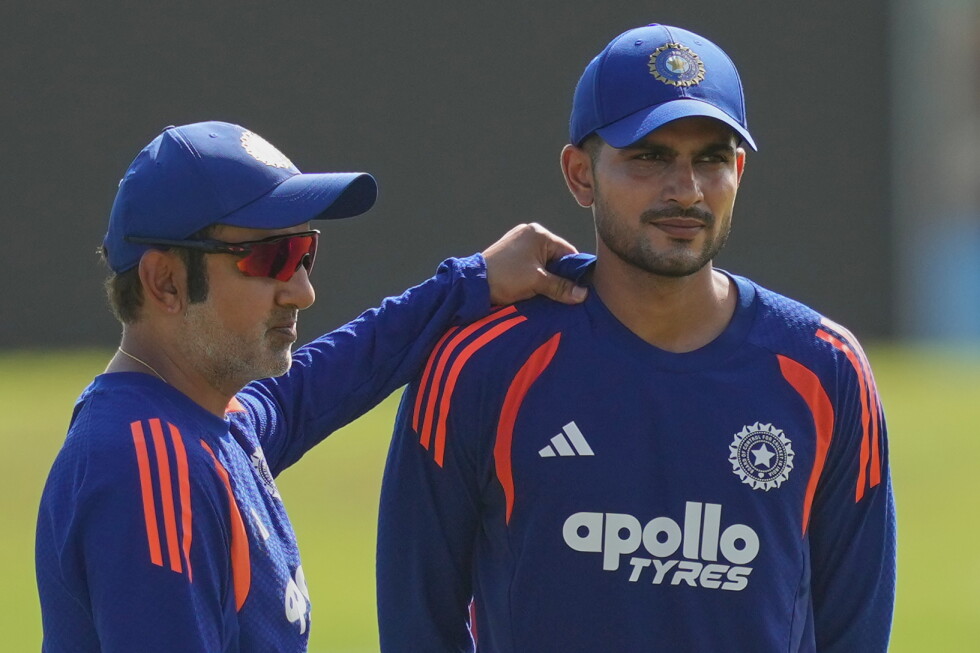
    GALLE, SRI LANKA – On a landmark Saturday for both international cricket and the competing nations, India’s stand-in captain Shubman Gill won the pre-match coin toss and immediately announced his side would bat first in the opening fixture of a two-Test series against Sri Lanka at Galle International Stadium.

    This series carries high stakes for both teams, as every result earns critical ranking points toward qualification for the 2027 ICC World Test Championship final. Entering the match, India holds fifth position in the standings, while host Sri Lanka sits just one spot below in sixth, leaving both sides desperate for a strong performance to keep their title hopes alive.

    The match carries extra historical significance beyond the championship race: Saturday coincides with India’s 80th Independence Day celebration, and the contest marks the 600th Test match in India’s centuries-long international cricket history. For the venue, Galle International Stadium is hosting its 50th Test match, adding another layer of milestone context to the opening fixture.

    Local conditions are expected to shape the match’s trajectory. Pitch analysts predict batting-friendly conditions for the opening two days of play, with spin gradually becoming the dominant factor as the surface wears on across five days of play. That trend has shaped both teams’ selection strategies, with spin bowlers featuring heavily in both lineups.

    Host Sri Lanka built its side around a spin-heavy attack, selecting just two fast bowlers alongside four specialist spinners. The squad includes captain Dhananjaya de Silva and left-arm spinner Sonal Dinusha, while 25-year-old off-spinner Keshara Nuwantha is set to make his long-awaited Test debut for the national side. Sri Lanka’s full starting lineup is: Lahiru Udara, Nishan Madushka, Dinesh Chandimal, Kamindu Mendis, Dhananjaya de Silva (captain), Sonal Dinusha, Niroshan Dickwella, Keshara Nuwantha, Prabath Jayasuriya, Lahiru Kumara, and Asitha Fernando.

    India stuck with the same bowling combination it used in its most recent Test against Afghanistan in June, fielding three spinners and two pace bowlers. All three of India’s spinners are left-arm specialists: Ravindra Jadeja, Kuldeep Yadav, and Manav Suthar. India was forced to adjust its batting lineup following two key injury withdrawals: pace spearhead Jasprit Bumrah was ruled out with a knee injury, while young batter Sai Sudharsan was sidelined by a stress fracture. Devdutt Padikkal was named as Sudharsan’s replacement in the starting lineup. India’s full starting lineup is: Yashasvi Jaiswal, KL Rahul, Devdutt Padikkal, Shubman Gill (captain), Rishabh Pant, Ravindra Jadeja, Dhruv Jurel, Kuldeep Yadav, Manav Suthar, Mohammed Siraj, and Prasidh Krishna.

  • Pallister beats Ledecky, US sweeps relays over Australia at Pan Pacs

    Pallister beats Ledecky, US sweeps relays over Australia at Pan Pacs

    IRVINE, California — The 2026 Pan Pacific Swimming Championships delivered a night of stunning upsets, tight finishes and historic moments Friday, as Australia’s rising freestyle star Lani Pallister out-touched American legend Katie Ledecky to claim gold in the women’s 400-meter freestyle, while Team USA pulled off a historic double victory in both the men’s and women’s 4×100-meter freestyle relays.

    The night’s marquee event lost some of its pre-race buzz when 19-year-old Canadian world record holder Summer McIntosh surprisingly failed to qualify for the championship final after a misjudged preliminary swim. McIntosh, who entered the event as the overwhelming favorite, clocked a 4:08.56 in the morning heats, placing ninth and missing the final cut by more than three seconds. Taking to social media after the misstep, the Canadian accepted full responsibility, writing on her Instagram account that she had misjudged the effort required in the preliminary round. She later won the consolation ‘B’ final in 4:00.58 — a time that would have earned her a bronze medal in the championship final.

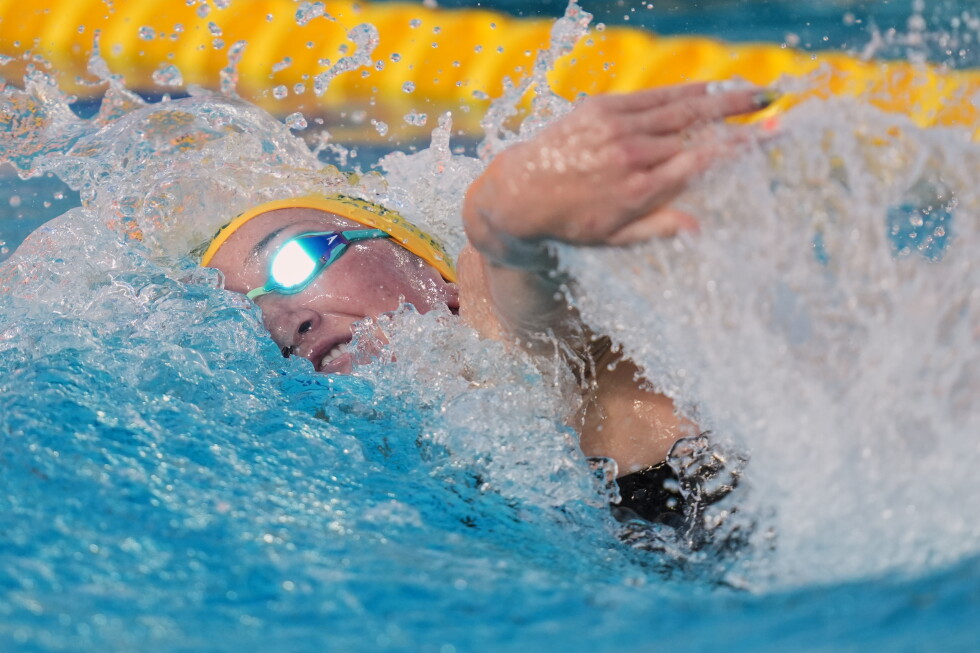
    Pallister, a 24-year-old Australian who has long cited Ledecky as her career inspiration, blazed through the first 150 meters of the final on world record pace before holding off a late charge from the American star to touch the wall in 3:58.42. Ledecky, who entered the final lap more than a second behind Pallister, closed hard but ultimately settled for silver with a time of 4:00.15. New Zealand’s Erika Fairweather rounded out the podium to take bronze.

    “It could see Katie catching me on the last 150 and that’s a very nerve-wracking feeling,” Pallister told reporters after the race. Ledecky, for her part, acknowledged she was not fully satisfied with her performance, noting “I never like being over 4 minutes in an international final, but I put together the best race I could. I thought I had a good back half, just wasn’t out quick enough.”

    The result solidifies Pallister’s status as one of Ledecky’s fiercest top rivals heading into the 2028 Olympic Games, which will be held in Los Angeles just two years from now. The Australian has been rapidly climbing the ranks of international distance freestyle, collecting medals across 200m, 400m, 800m and 1500m events in recent major competitions. Earlier this week at the championships, she already claimed gold in the 200m freestyle, beating both McIntosh and Fairweather, while Ledecky took gold in the 1500m freestyle ahead of Pallister.

    “I’ve never taken my competition for granted, even when I was winning by big margins,” Ledecky said. “I just have a lot of great competition from all over the world right now.”

    Team USA delivered the crowd a pair of historic relay victories later in the session, sweeping both the men’s and women’s 4x100m freestyle events. The American women broke their own national record and the Pan Pacific championship record on the way to gold, clocking 3:29.32 to beat Australia. It marked the first time the U.S. women had defeated Australia in the event at the Pan Pacific Championships since 2017. The team of Kate Douglass, Gretchen Walsh, Torri Huske and Simone Walsh saw Douglass clock the second-fastest 100m leadoff split in history at 51.69 seconds, though the standout swimmer said she left disappointed after falling just short of the world record she targeted.

    For the men, Chris Guiliano, Patrick Sammon, Destin Lasco and anchor Jack Alexy held off a late push from the Australian team to claim gold in a new championship record time of 3:09.01. The mark fell just 0.77 seconds off the iconic world record of 3:08.24 set by the U.S. men’s team at the 2008 Beijing Olympics — a race remembered for Jason Lezak’s historic final leg that secured Michael Phelps’ eighth gold medal of the Games. Alexy said the long-standing world record remains a top target for the new generation of American sprinters.

    “That record has been in a lot of people’s eyes for a long time,” Alexy said. “I’m really confident we’ll get that record.”

    The night’s results also delivered a handful of other historic moments for Australia. Sam Short claimed gold in the men’s 400m freestyle, breaking a 27-year-old Pan Pacific championship record previously held by Australian legend Ian Thorpe with a time of 3:40.52. China’s Zhang Zhanshuo took silver in the event. Australia also claimed the top two spots on the podium in the men’s 100m butterfly, with Matthew Temple taking gold and Ben Armbruster silver. Regan Smith led a 1-2 American finish in the women’s 200m backstroke, clocking 2:05.55 after holding a world record pace through the first 100 meters, with teammate Claire Curzan taking silver. Japan’s Yumeki Kojima claimed gold in the men’s 200m backstroke, while China’s Tang Qianting won the women’s 50m breaststroke. Australia’s Sam Williamson took gold in the men’s 50m breaststroke in a new championship record of 26.36.

  • Bangladesh tighten grip of 1st test as Australia unravel in the field

    Bangladesh tighten grip of 1st test as Australia unravel in the field

    DARWIN, Australia – The opening Test match of Bangladesh’s two-game ‘Top End’ series against Australia has been defined by relentless visitor dominance, a trend that only strengthened through the morning session of Day Three Saturday, when half-century from all-rounder Mehidy Hasan Miraz guided the Tigers to a 219-run first innings lead heading into lunch.

    Resuming play on Saturday at 351 for six wickets, Bangladesh steadily added 66 runs to their total before the break, reaching 417 for eight. The performance extended what has been a lopsided opening match from the first day, when hosts Australia won the toss, elected to bat, and were bowled out for just 198 by a sharp Bangladesh attack led by a six-wicket haul from Hasan Mahmud.

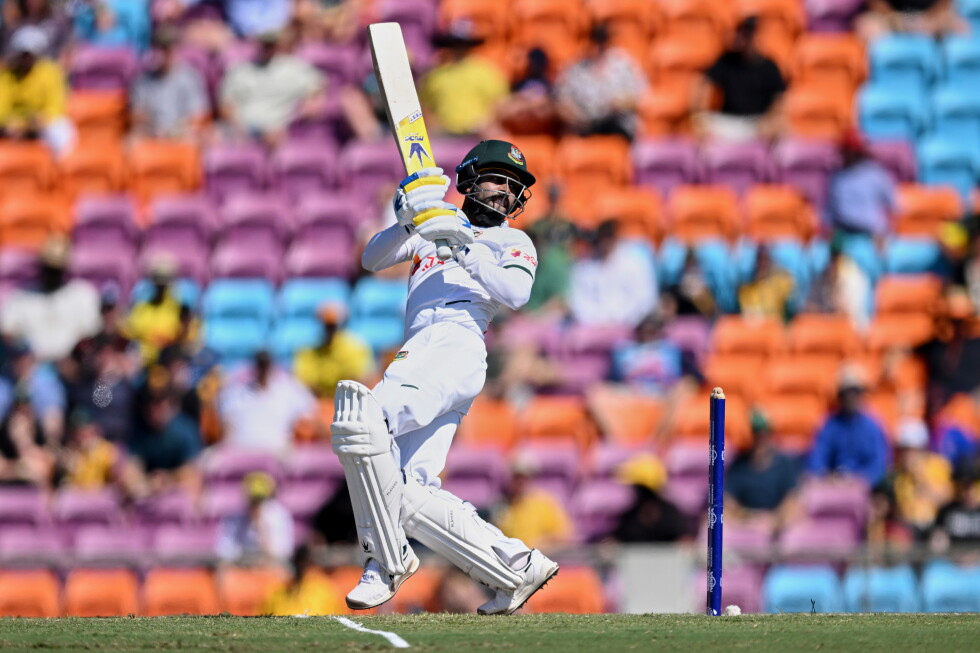
    Mehidy remained unbeaten at 65 runs off 152 deliveries when the session closed, capping his solid innings with a towering six off Australian all-rounder Cameron Green on the final ball of the morning. The batter brought up his half-century just 35 balls before lunch, notching five boundaries along the way to the milestone. He currently shares an unbeaten 45-run partnership with tailender Taskin Ahmed, who has compiled 12 not out at the break.

    Earlier in the session, Mehidy combined for a 46-run stand with Hasan Mahmud, who scored 14 before falling to pace bowler Josh Hazlewood. Hazlewood, making his return to Test cricket after a spell on the sidelines with injury, trapped Hasan Mahmud leg before wicket with a full, straight delivery to claim his third wicket of the innings. The seamer also removed Taijul Islam, who made 17 before Green caught the batter at gully. Hazlewood has now claimed four wickets for 86 runs in the innings, the only wicket-taker for Australia on Saturday.

    Australia’s sloppy fielding has once again undermined the hosts’ chances to claw back into the match. Dropped catches from star batters Steve Smith, Travis Head and Cameron Green on Friday halted any momentum Australia built during a brief late-day rally, allowing Bangladesh to consolidate and build an almost unassailable position in the first innings. The hosts have now been outplayed in all three facets of the game – batting, bowling and fielding – through the first two and a half days of the series opener.

    This opening Test kicks off a grueling 12-month schedule for the Australian men’s Test side, which is set to play 20 total matches across the year including away tours to South Africa, India and England. Related matches in the series have already seen Bangladesh take control from the first day, with opener Tanzid Hasan notching his maiden Test century earlier in the first innings to set the foundation for the Tigers’ big total.

  • All Blacks injury toll worsens as Caleb Clarke heads home before Springboks tests

    All Blacks injury toll worsens as Caleb Clarke heads home before Springboks tests

    As the All Blacks prepare for their highly anticipated historic rugby test series against South Africa, the defending world champions have already been struck by a growing injury crisis, with three key players ruled out of the tour more than a full week before the opening test gets underway.

    The latest setback came for rising winger Caleb Clarke, who suffered a ruptured shoulder tendon during the team’s one-sided 54-0 victory over the Sharks in Durban on Tuesday. The All Blacks confirmed in an official update on Friday that the injury will require surgical intervention, with a full recovery timeline set to be determined only after the procedure is completed. Clarke will return to New Zealand immediately to receive treatment, making him the third squad member to cut the tour short due to injury.

    In a surprising tactical call, head coach Dave Rennie has confirmed that Clarke will not be replaced in the touring squad ahead of the upcoming series. Rennie stated he remains confident that the remaining six outside backs in the group provide sufficient cover for the tests, even as test starter Will Jordan remains a major doubt for the opening test against the Springboks. Jordan, a regular match-winner for the side, has been sidelined by a nagging back injury that has put his participation in doubt.

    Speaking about his early exit from the tour, Clarke expressed deep disappointment at the turn of events. “I am gutted to be going home because I’ve loved my time here so much,” the winger said in a prepared statement. Clarke had built strong momentum ahead of the tour, earning caps against France and Ireland just last month and featuring in the All Blacks’ first two tour matches, putting him in strong contention for a starting spot in the opening test at Johannesburg’s Ellis Park stadium.

    Clarke’s injury follows two earlier injury blows that hit the side even before their first tour match. Hooker George Bell suffered a calf injury during a training session ahead of the squad’s opening fixture against the Stormers, while center Billy Proctor sustained a broken shoulder blade during that match itself. Bell has already been replaced in the squad by Bradley Slater, while Proctor’s spot has been filled by star utility back Richie Mo’unga.

    The All Blacks are set to continue their tour preparations this weekend, facing the Bulls in their third pre-series tour match on Saturday at Pretoria’s iconic Loftus Versfeld stadium. The first of three tests between the All Blacks and Springboks is scheduled to kick off next week at Ellis Park, with both sides vying for international rugby supremacy ahead of next year’s world cup cycle.

  • Premier League club Liverpool sell minority stake to Jeff Bezos consortium

    Premier League club Liverpool sell minority stake to Jeff Bezos consortium

    One of English football’s most iconic institutions, Liverpool FC, has announced a landmark minority stake sale to a global investor consortium that includes Amazon founder Jeff Bezos, marking one of the biggest deals in modern Premier League history.

    The sale comes from current majority owners Fenway Sports Group (FSG), the American sports conglomerate that acquired the 19-time English top-flight champions for just £300 million back in 2010. The buyer, 1892 Holdings, is a consortium led by British-Indian billionaire Amit Bhatia, with backing from Bezos and Meta co-founder Eduardo Saverin. Industry sources confirm the consortium will take ownership of roughly one-third of the club, valuing Liverpool at between £5 billion ($6.8 billion) and £6 billion in the transaction.

    Bezos, currently the fourth-wealthiest person on the planet with an estimated net worth of $256 billion, has long been linked to bids for prominent North American sports franchises including the NFL’s Seattle Seahawks and Washington Commanders, but this deal marks his first direct investment in a professional sports team. He will not take a seat on Liverpool’s expanded board of directors; instead, Bryan Baum, founder of venture capital firm K5 Sports — the vehicle through which Bezos structured his investment — will join the board, alongside Elaine, Saverin’s wife. Bhatia, meanwhile, will step into the new role of vice-chairman at Anfield. Bhatia, son-in-law of Indian steel magnate Lakshmi Mittal, brings 18 years of top-flight football governance experience to the role, having served as co-owner of English Championship side Queens Park Rangers before stepping down earlier this year when his Liverpool investment plans became public.

    In a statement released Friday, FSG president Mike Gordon emphasized alignment between the existing ownership and the new investor group. “Liverpool has always been built by thinking beyond one season and making decisions with the club’s long-term interests in mind. That approach continues to attract interest from respected investors and business leaders around the world. As we considered this opportunity, it became clear that Amit and the consortium shared our long-term philosophy and appreciation for what makes Liverpool special,” Gordon said.

    Bhatia echoed that sentiment, framing the investment as a privilege rather than a business transaction. “We are incredibly proud to be investing in Liverpool Football Club and to be doing so alongside FSG. We have the utmost respect and admiration for FSG as owners and for everything they have achieved at Anfield. To be welcomed as a partner in a club of this stature is a huge privilege. We are making this investment because we believe deeply in Liverpool and its leadership, and we look forward to supporting the club’s continued success for years to come,” Bhatia said.

    Crucially, FSG has confirmed it will retain full majority ownership and complete operational and decision-making control over the club. The organization says the new capital injection will be used to advance Liverpool’s long-term growth goals on and off the pitch, by bringing in expertise across global business, technology, and investment sectors. “The consortium partners will work with FSG and the club’s leadership team to evaluate opportunities that enhance the club’s objectives on and off the pitch,” FSG said in a statement. This is not the first time FSG has sold down a minority stake: three years ago, the group sold a 3% stake to global sports investment firm Dynasty Equity.

    The deal comes at a pivotal moment for Liverpool, as the club prepares to kick off its 2025-26 Premier League campaign away to Newcastle United on August 23. The side is coming off a hugely disappointing 2024-25 season that saw them finish fifth in the top flight, missing out on qualification for the UEFA Champions League. That underperformance led to the sacking of manager Arne Slot just 12 months after he won the Premier League title in his first season in charge, replacing legendary boss Jurgen Klopp. New manager Andoni Iraola is currently looking to strengthen his squad ahead of the closing of the summer transfer window, and the fresh capital from the stake sale is expected to give Iraola additional budget to pursue new targets. So far this transfer window, Liverpool has spent roughly £94 million on new signings Jeremy Jacquet and Victor Munoz.

  • Who are the Chawinga sisters leading Malawi’s bid for Wafcon glory?

    Who are the Chawinga sisters leading Malawi’s bid for Wafcon glory?

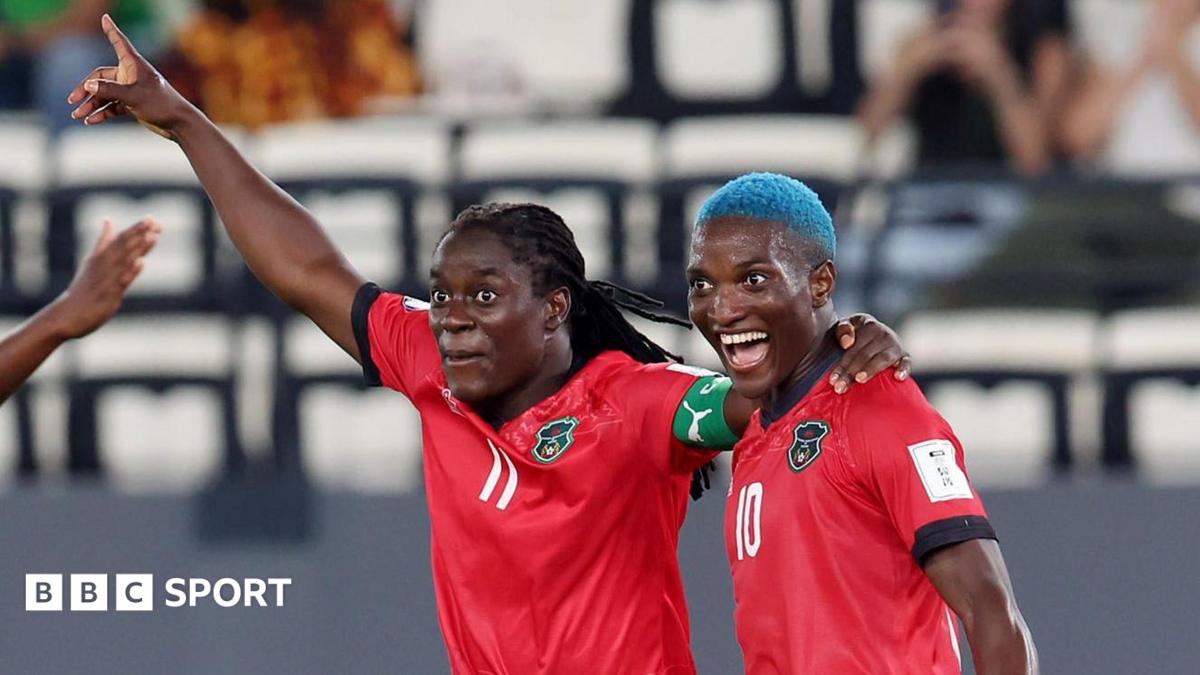
    Malawi’s Cinderella run at the 2026 Women’s Africa Cup of Nations (Wafcon) has captivated football fans across the globe. As the lowest-ranked side in the tournament, sitting at 153rd in the FIFA global rankings, the tournament debutants have defied all expectations to advance to Sunday’s final against Cameroon, and their astonishing success can be traced directly to one incredible pair: sister strikers Tabitha and Temwa Chawinga.

    Between them, the siblings have netted nine of Malawi’s 12 goals throughout the tournament, with 27-year-old Temwa currently tied atop the golden boot race with five goals, alongside Zambia’s Barbra Banda. What makes their combined impact even more remarkable is that both have long compiled impressive goal tallies and titles for some of the biggest professional clubs across the world, long before their breakthrough on the continental stage.

    Thirty-year-old Tabitha, the elder of the two, was born in May 1996 in Rumphi, a rural northern district of Malawi. She grew up playing informal football with boys in her village, kicking balls handmade from plastic and paper, and never saw herself as less capable than her male peers. “Growing up, I never saw myself as different from boys,” she told the BBC. “Whatever they did I believed I could.”

    Tabitha faced steep pushback from her community and even her family early on. Her mother would beat her for playing, embarrassed by local gossip that claimed Tabitha would never marry or value education. Even her peers told her that women had no place in professional football. But she refused to abandon the sport she loved, and her path to stardom began when she joined DD Sunshine, a top club based in Malawi’s capital Lilongwe. A devout Christian, she frequently credits her faith for carrying her through the hardest stages of her journey.

    Her move to European football came by chance in 2014, when an American NGO worker who had trained with DD Sunshine relocated to Sweden and joined third-tier side Krokom Dvarsatts. DD Sunshine owner David Dube suggested the club give Tabitha a trial, and when the side hesitated, Dube even offered to cover her visa and flight costs to make the trip happen. Tabitha left an immediate impression on the Swedish side, who praised her physical strength, sharp dribbling, long-range shooting, and clinical finishing. She made her debut after her 18th birthday, becoming the first Malawian woman to play professional football in Europe, and scored an incredible 39 goals in just 14 matches.

    Her career only accelerated from there: she scored 43 goals to earn promotion for second-tier club Kvarnsveden, then claimed the Swedish top flight’s golden boot in 2017. A six-year spell in China followed, where she won three league titles, three golden boots, and two Player of the Season awards. A 2022-23 loan spell at Inter Milan brought another golden boot in Italy’s Serie A, and after that success, she declared: “My goal is to achieve for African people. I need to play for the girls in Africa. They need to see there are women in this world that can play football like men.”

    Paris Saint-Germain signed Tabitha next, and in 2023 she became the first Malawian woman to play and score in the UEFA Women’s Champions League. She later moved to Olympique Lyonnais, France’s most decorated women’s side, where she helped the club win back-to-back domestic league titles, and started in last season’s Champions League final, where Lyon fell to Barcelona.

    Temwa, born in September 1998 (whose name means “love” in the local Tumbuka language), followed directly in her older sister’s footsteps, and credits Tabitha as the foundational force behind her own success. “She made connections for me to leave Malawi to play abroad, but most importantly has always advised me to fight hard, to know what I want and to pursue it without listening to distracting people,” Temwa told BBC Sport Africa. Tabitha first recommended Temwa to her Swedish club Kvarnsveden, where the pair played together, and when Chinese agents asked Tabitha for referrals for talented strikers, she once again pointed them to her younger sister.

    Like her sister, Temwa has built a legacy of prolific goalscoring. She netted 35 league goals in Sweden in 2019, then joined Wuhan Jianghan in China, where she helped the club win four consecutive league titles, including the 2021 championship that she shared with Tabitha. In 2023, she outscored some of the biggest names in men’s football—including Erling Haaland, Cristiano Ronaldo, and Lionel Messi—finishing as the top goalscorer across top global leagues with 63 goals combined for her club and country. “When I found out I was so happy. I didn’t believe it, but it was so amazing,” she said of the milestone.

    In 2024, NWSL side Kansas City Current signed Temwa, and she claimed the league’s golden boot in her debut season with 20 goals, followed by 15 goals in 2025 that helped the club earn the top regular season record. She was named league MVP in both of her first two seasons in the United States.

    Despite both sisters’ long list of individual and club honors, neither has ever been named African Women’s Footballer of the Year, an award that has eluded them to date. At the international level, they have been the backbone of Malawi’s national team, the Scorchers, for more than a decade: Tabitha made her debut in 2011 and usually serves as captain, while Temwa earned her first cap in 2016 and lifted the team’s first ever regional title as skipper at the 2023 COSAFA Women’s Championship.

    Tabitha, who has played in top European competitions for years, said ahead of Wafcon: “I’ve been playing big games in Europe, but I tell the girls ‘Don’t be shy, don’t be scared.’” Those words have inspired Malawi’s historic run: the side opened the tournament with an upset win over 10-time defending champions Nigeria, finished ahead of 2022 semi-finalists Zambia in Group C, came from behind to beat Ghana 2-1 in the quarter-finals (a win that also secured qualification for the 2027 FIFA Women’s World Cup), and beat Algeria in the semi-finals, with both Chawinga sisters finding the back of the net in that match.

    Temwa summed up the team’s mindset after the semi-final win: “I’m so happy because a lot of people didn’t give us a chance at this level, but we showed the world that we have a good team.”

    Malawi Football Association president Fleetwood Haiya credits recent funding from FIFA for helping grow the women’s program and fuel this success, but both sisters have urged for greater domestic investment in girls’ football across the country. “If we can put money in Malawi to support girls’ football I think there can be so many like me and Tabitha,” Temwa said.

    On Sunday, the Scorchers will face three-time tournament runners-up Cameroon, vying to become just the fourth nation to win the Wafcon title, following Nigeria, Equatorial Guinea, and South Africa. If they lift the trophy, the credit will go first to two sisters from humble rural beginnings, who overcame doubt and barrier after barrier to put the small southern African nation on women’s football’s global map.