分类: sports

  • Mbappé’s France faces Haaland’s Norway, Senegal and Iraq in World Cup Group I

    Mbappé’s France faces Haaland’s Norway, Senegal and Iraq in World Cup Group I

    As the 2026 FIFA Men’s World Cup kicks off, the tournament’s opening Group Stage clash between defending runner-up France and Senegal at New Jersey’s MetLife Stadium carries far more than just preliminary points – it revives one of the biggest upsets in World Cup history. Twenty-four years ago, at the 2002 tournament’s Seoul opener, Senegal’s “Lions of Teranga” stunned defending champion France 1-0, a result that sparked chaotic, joyful street celebrations across Dakar that are still remembered by soccer fans worldwide.

    Heading into the 2026 tournament, France enters as one of the clear title favorites, chasing its third World Cup crown following victories in 1998 and 2018. Led by 27-year-old superstar Kylian Mbappé – currently in the peak of his career – Les Bleus’ roster boasts a deep lineup of elite talent, including strikers Hugo Ekitike, winger Ousmane Dembélé and attacking midfielder Michael Olise. In their final pre-tournament warm-up matches before June, France turned in strong performances, beating Brazil 2-1 and Colombia 3-1 to build momentum.

    Mbappé, who claimed the 2022 World Cup Golden Boot after scoring eight goals in Qatar, made history in that tournament’s final by becoming just the second men’s player ever, after England’s Geoff Hurst in 1966, to net a hat trick in a World Cup final. Heading into the 2026 June friendlies, Mbappé sits on 56 international goals, just one goal away from breaking Olivier Giroud’s all-time French scoring record. The emotional sting of France’s 2022 penalty shootout loss to Argentina remains fresh for the star. “Personally, I’m never going to get over it,” Mbappé has said of that final defeat.

    Since lifting the World Cup trophy in 2018, France has endured a string of near-misses and early exits in major tournaments: they fell to Switzerland in the Euro 2020 round of 16, lost the 2022 World Cup final to Argentina, and were knocked out by Spain in the Euro 2024 semifinal. A third World Cup title in 2026 would cement France’s place among the global soccer elite, making it just the fifth nation to earn three or more World Cup championships, joining Brazil (five), Germany and Italy (four each) and Argentina (three).

    Longtime head coach Didier Deschamps, who has led the French national team since 2012, has confirmed he will step down from his role following this tournament. During the team’s preparation in the United States, Deschamps publicly raised concerns about logistics affecting the team’s readiness, particularly highlighting frustrating delays caused by heavy traffic and overlong security lines. During a March friendly against Brazil held in Foxborough, Massachusetts – the same city that will host France’s first-round match against Norway – Deschamps noted, “The hardest part is the roads that take a long time, too long, and so to come to the stadium it took us an hour and 15 minutes before a match. It’s not easy.”

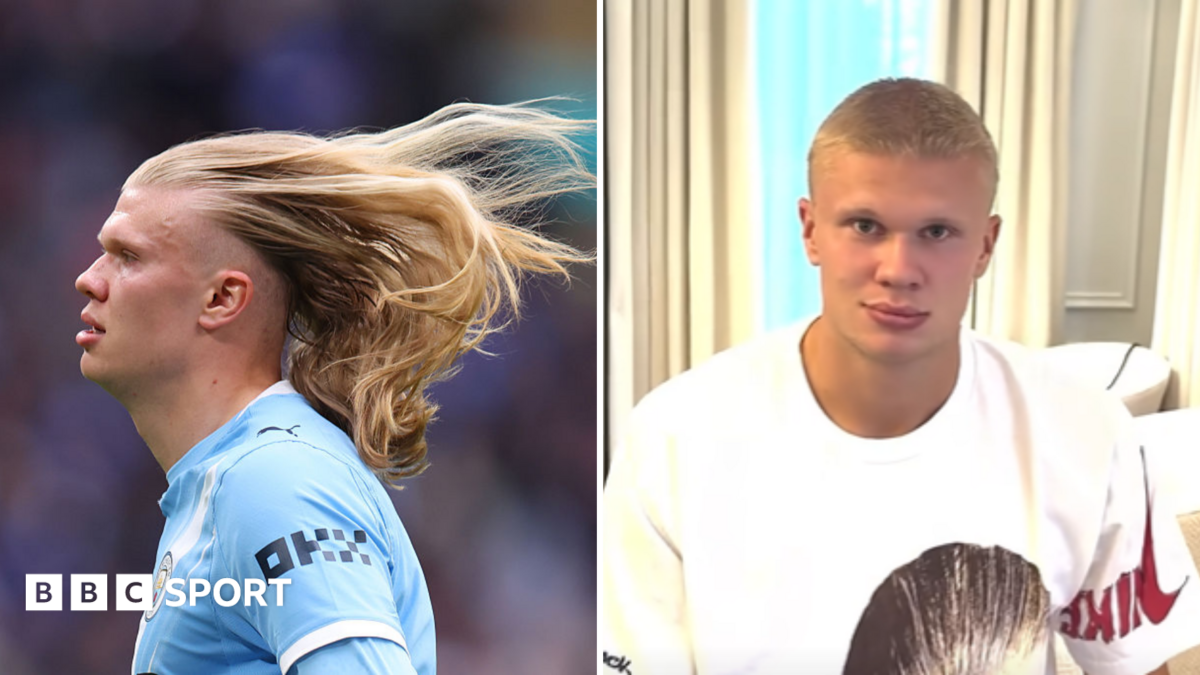
    France’s first-round opponent Norway is making its first World Cup appearance in 28 years, having last qualified in 1998, and just its fourth trip to the tournament overall. The side is led by 25-year-old Erling Haaland, one of the most prolific strikers in world soccer, who has scored more than 30 goals in four consecutive club seasons for Manchester City. Heading into June 2026, Haaland already holds Norway’s all-time international scoring record with 55 national team goals. Haaland has acknowledged the heavy weight of expectation on his shoulders as his country’s driving force toward a deep run. “It’s a great responsibility to bring Norway to the World Cup,” he said. “It’s a lot on my shoulders and that’s what I’ve been working to do.” Haaland follows in his father Alfie’s footsteps – the elder Haaland represented Norway at the 1994 World Cup, which was also hosted by the United States.

    Norway’s attacking depth is bolstered by 30-year-old striker Alexander Sørloth, another consistent goalscorer, while captain and star midfielder Martin Ødegaard has been hampered by knee and shoulder injuries through the 2025-26 club season. This tournament marks Norway’s first major international competition since it exited in the group stage of its only European Championship appearance in 2000.

    Senegal, for its part, is heading to its third consecutive World Cup, but enters the tournament mired in controversy over its 2025 Africa Cup of Nations title. The Lions of Teranga defeated Morocco in the AFCON final in January 2025, but were stripped of the championship title after Senegal’s coach Pape Thiaw pulled his team off the pitch for 15 minutes to protest a late penalty awarded to Morocco. The Confederation of African Football ruled the move a forfeit, and Senegal has since filed an appeal to reverse the decision. Regardless of the ongoing title dispute, Senegal remains one of the top-ranked teams in African soccer, having won the 2021 AFCON title, when it beat Egypt on penalties after a scoreless draw. That decisive penalty was scored by 32-year-old veteran Sadio Mané, who is still Senegal’s all-time leading scorer with 53 international goals, including five goals in 2026 World Cup qualifying. Other key players for Senegal include goalkeeper Édouard Mendy, midfielder Idrissa Gueye and defender Kalidou Koulibaly.

    Completing the four-team group, Iraq is making its first World Cup appearance in 40 years, having last qualified for the 1986 tournament in Mexico, where the side lost all three of its group stage matches. The “Lions of Mesopotamia” secured their 2026 spot with a playoff win over Bolivia, and are led by coach Graham Arnold, a native Australian who is serving his third stint with the side. Iraq’s top threats include 30-year-old striker Aymen Hussein, who ranks fifth on the country’s all-time scoring list with 33 international goals, forward Mohanad Ali, and midfielder Amir Al-Ammari.

    As kickoff at MetLife Stadium approaches, all four teams will look to turn preparation into results, with France aiming to exorcise the demons of 2022 and Senegal hoping to repeat its historic 2002 upset against Les Bleus.

  • Nigerian with ‘natural explosiveness’ aiming for NFL spot

    Nigerian with ‘natural explosiveness’ aiming for NFL spot

    In less than two weeks, a 21-year-old Nigerian athlete’s quiet life of part-time personal training and humble rural roots could be transformed into a multi-million-dollar professional sports career. Uar Bernard, who grew up one of eight children in the 2,500-person village of Ungwa Uku in northern Nigeria, is gearing up to travel to Pittsburgh this month as part of the NFL’s International Player Pathway (IPP) cohort, hoping to hear his name called at the 2025 NFL Draft held April 23 to 25.

    What makes Bernard’s journey to the draft so extraordinary is not just his unlikely origin story, but the once-in-a-generation physical tools that have caught the attention of NFL scouts and coaches across the globe. Standing at 6-foot-4-and-a-half and tipping the scales at 138 kilograms (304 pounds), Bernard combines elite size with world-class athleticism: he clocked a 4.63-second 40-yard dash, posted a vertical jump of nearly one meter, and boasts 11-inch hands and 35.8-inch arms – measurements that align with the most sought-after defensive line prospects in every draft class.

    Osi Umenyiora, a two-time Super Bowl champion and lead ambassador for NFL Africa, has called Bernard one of the most talented raw athletes the IPP programme has ever evaluated. “There are very few people globally with his combination of size, speed and natural explosiveness,” Umenyiora told BBC Sport Africa. “In terms of pure physical talent, Uar sits right near the top among the athletes we’ve assessed through the programme.” That praise is echoed by a coach who worked with Bernard during the IPP’s 10-week development camp, who told *The Athletic* he is “the most explosive athlete” he has ever coached in his decades in the sport.

    Bernard’s path to American football is unconventional even for IPP prospects: he never participated in organised organised competitive sports during his childhood, only picking up football and basketball at his school in his mid-teens. Growing up, his sporting idols were Brazilian soccer legend Ronaldinho and NBA greats Hakeem Olajuwon and Michael Jordan, all of whom still motivate him today. It was not until 2023 that a Lagos-based coach spotted Bernard’s rare athleticism during a local rec league game and invited him to a three-day talent identification camp in Abuja, marking his first introduction to the sport.

    “He saw my resilience, physical dominance, size and strength, and believed those qualities would translate really well to American football,” Bernard explained. After that initial camp, he received invites to additional regional combines across Nigeria in 2024, followed by scouting events in Egypt, where Umenyiora first got an up-close look at the young prospect. Impressed by his raw tools, Umenyiora’s team put Bernard on a 12-month development plan to refine his physique and learn the basics of the sport, and he earned a spot in the national IPP cohort after a standout performance at a Cairo talent showcase in late 2024.

    As the sport continues its slow, steady growth across the African continent, Umenyiora acknowledges that systemic barriers still block many talented young athletes from reaching professional opportunities. “The biggest challenge is access to proper training and infrastructure,” the former New York Giants defensive end said. “Many young athletes with exceptional natural ability simply don’t have the facilities, resources, or structured pathways that are available elsewhere in the world.” But as NFL Africa expands its footprint – launching its first continental events in 2022 – the programme is steadily closing that opportunity gap, growing participation and building clear development pipelines for rising African talent.

    Over 10 weeks of intensive training at Florida’s X3 Performance and Physical Therapy Centre, Bernard has worked overtime to turn his raw physical talent into technical skill, learning the nuances of the sport from scratch. “The biggest adjustment has been learning the fundamental techniques and the detailed basics of American football,” he said. “Everything was new at first, but my development has been progressing really smoothly.” His target position is defensive line, a role he says fits his strengths perfectly: “I enjoy the intensity and the pressure we apply at the line of scrimmage. It allows me to use my physicality and explosiveness on every play.”

    Throughout his training in the United States, Bernard has stayed grounded, speaking to his mother daily back in Nigeria; his father passed away when he was 16, and he now works part-time to help support his large family. A draft pick would not only fulfill his lifelong sporting dream, but also come with a minimum annual salary exceeding $2 million – a life-changing sum for the former village athlete. If selected, Bernard will become the latest African prospect to make the jump to the NFL via the IPP, which has placed 22 international athletes on league rosters since its launch in 2017, including fellow Nigerians CJ Okoye and Haggai Ndubuisi.

    Despite only picking up the sport three years ago, Bernard already has clear long-term goals for his NFL career. “By 25, I hope to be known as one of the most improved and technically refined defensive linemen in the NFL, continuing to grow and make a real impact,” he said. For the young Nigerian, the 2025 NFL Draft is not just a chance at a pro contract – it’s an opportunity to open doors for countless other talented African athletes waiting for their own shot.

  • Spain and Uruguay set for blockbuster World Cup Group H clash with Cape Verde debuting

    Spain and Uruguay set for blockbuster World Cup Group H clash with Cape Verde debuting

    As the 2026 FIFA World Cup approaches, Group H has emerged as one of the tournament’s most intriguing early draws, pitting European titleholders Spain against two-time World Cup champions Uruguay, while also giving the stage to two dynamic underdog sides: Saudi Arabia, the giant-killers of the 2022 tournament, and first-time qualifier Cape Verde, one of the smallest nations ever to reach soccer’s biggest global stage.

    Most of Group H’s fixtures will take place across the United States, with a single high-profile exception: the highly anticipated head-to-head between Spain and Uruguay, scheduled for June 26 in Guadalajara, Mexico. The two former World Cup winners have only faced off once before on the tournament’s global stage, with both meetings ending in draws back in 1950 and 1990, leaving fans hungry for a decisive result this time around. Spain will take the pitch for two of its group matches in Atlanta, while Uruguay will play two of its own fixtures in Miami. The only group-stage game hosted in Houston will see Cape Verde square off against Saudi Arabia in a clash of underdogs fighting to advance to the knockout round.

    Heading into the tournament, Spain arrives as one of the continent’s hottest teams, riding a wave of momentum after a stunning string of recent international successes. The side bounced back from a shock 2022 World Cup round-of-16 exit at the hands of Morocco to claim the 2024 European Championship title in Germany, added the 2023 UEFA Nations League trophy to its cabinet, and finished as runners-up to Portugal in the 2025 edition of the same competition. Notably, despite winning its only World Cup title back in 2010, Spain has not advanced past the round of 16 in any World Cup tournament since that historic victory, leaving the side hungry to break that dry spell on the 2026 global stage.

    Since Luis Enrique stepped down following the 2022 Qatar tournament, former Spain youth team manager Luis de la Fuente has led the senior side, and his young core has turned heads across global soccer. A trio of rising Barcelona stars are expected to anchor the squad: 18-year-old attacking phenom Lamine Yamal is set to make his World Cup debut, 19-year-old Pau Cubarsí is projected to lead the backline, and creative midfield star Pedri will anchor the center of the park. Manchester City’s Rodri, who recently returned from a lengthy knee injury layoff, is also expected to feature alongside Pedri in the midfield, giving Spain one of the most formidable center combinations in the entire tournament.

    For first-time qualifiers Cape Verde, the 2026 World Cup marks a historic milestone for the tiny West African archipelago. Home to just 500,000 people, Cape Verde is the third smallest nation ever to qualify for the World Cup, trailing only Iceland and Curacao, which holds the record as the smallest qualifying nation. The side, nicknamed the Blue Sharks, secured one of Africa’s automatic qualification spots from a group that included continental powerhouse Cameroon and Angola, putting on a dominant defensive display during qualifying that saw the side win all five of its home matches without letting in a single goal.

    Portuguese-born manager Pedro Leitao Brito, widely known by his nickname Bubista, has led the national side since 2020. A former captain and defender for Cape Verde’s national team, Bubista built his early playing career at lower-division clubs across Spain and Portugal, bringing intimate knowledge of European soccer to his role leading the underdog side.

    Saudi Arabia, meanwhile, heads into its third consecutive World Cup appearance already with a reputation for World Cup upsets. The side captured global headlines at the 2022 Qatar World Cup when it opened its group stage campaign with a shocking 2-1 victory over eventual tournament champion Argentina, a result that remains one of the biggest upsets in modern World Cup history. In recent years, the Saudi Pro League has raised its global profile by luring top aging stars including Cristiano Ronaldo and Karim Benzema, a move that has boosted the domestic league’s quality and directly lifted the performance level of the Saudi national side.

    French manager Hervé Renard, who led the 2022 Saudi side, stepped away after the tournament to lead France’s women’s national team before returning to take the reins of the Saudi men’s side in 2024. Saudi Arabia’s best ever World Cup finish came during its first qualification run in 1994, when it advanced to the round of 16 from a group that included the Netherlands, Belgium and Morocco. The side has failed to make it out of the group stage in its five subsequent World Cup appearances, a drought it will look to end in 2026, with the 2034 World Cup already set to be hosted on Saudi soil.

    Rounding out the group’s heavyweight contenders is Uruguay, a two-time World Cup champion that secured its place in the 2026 tournament after finishing fourth in South American qualifying, behind Argentina, Ecuador and Colombia, and finishing ahead of five-time world champion Brazil in a shocking qualifying upset. Uruguay failed to advance out of the group stage at the 2022 World Cup, after reaching the quarterfinals in 2018 and the semifinals back in 2010.

    Veteran Argentine manager Marcelo Bielsa took over as Uruguay’s head coach in 2023, but has faced growing criticism in recent months after a string of underwhelming friendly results, including a lopsided 5-1 defeat to the United States last November, with the side failing to win any of its last four matches heading into the tournament. Still, Uruguay boasts a core of top-tier global talent, including Real Madrid central midfielder Federico Valverde, Barcelona center back Ronald Araujo, and Manchester United defensive midfielder Manuel Ugarte, any of whom can turn the tide of a match on any given day.

    As Group H prepares to kick off this June, the blend of elite title contenders and hungry underdogs makes it one of the most compelling groups to watch ahead of the 2026 World Cup.

  • War with the United States draws attention to Iran in Group G

    War with the United States draws attention to Iran in Group G

    As the 2026 FIFA World Cup hosted in North America approaches, Group G has emerged as one of the tournament’s most talked-about sections, melding on-pitch athletic competition with off-field political, social and cultural tensions. The four-team group brings together Iran, Belgium, Egypt and New Zealand, each carrying distinct narratives, challenges and aspirations ahead of their opening fixtures.

    Iran, which has qualified for its fourth consecutive World Cup and seventh overall appearance, has never progressed past the group stage in the tournament’s history. Currently sitting 21st in the global FIFA rankings under head coach Amir Ghalenoei — a former Iranian international player — the side lost just one match during its Asian qualifying campaign, marking it as a competitive dark horse in the group. Led by star captain and striker Mehdi Taremi, who has notched an impressive 57 goals across 102 senior national team caps and currently plies his trade at Greek club Olympiacos after successful stints at Porto and Inter Milan, Iran also boasts experienced midfielder Alireza Jahanbakhsh, who plays his club football in Belgium’s top flight.

    However, Iran’s participation has been marked by controversy from the outset, exacerbated by long-running geopolitical tensions between Iran and the United States, one of the World Cup host nations. Back in March, Iran’s embassy in Mexico City confirmed the country was in negotiations with FIFA to relocate its three group-stage matches to Mexican venues, though the global governing body has repeatedly stated all fixtures will proceed as originally planned on U.S. soil. Iran has also faced international backlash over its stance on LGBTQ+ rights: the team’s June 26 fixture against Egypt in Seattle is scheduled for the same weekend as the city’s annual Pride celebration, which honors the LGBTQ+ community. Both Iran and Egypt have formally complained to FIFA over the “Pride Match” label applied to the fixture, citing religious and cultural objections. Human rights organizations have also highlighted that same-sex relations carry harsh penalties in Iran, including capital punishment.

    Earlier this year, Iranian players made a political gesture of their own ahead of a March friendly against Nigeria: during the playing of the national anthem, squad members carried small pink and purple backpacks to pay tribute to victims of a February missile strike on an Iranian elementary school, which multiple lines of evidence indicate was carried out by a U.S. missile. In a logistical quirk, Iran is set to host its pre-tournament training camp in Tucson, Arizona, and will kick off its World Cup campaign against New Zealand in Inglewood, California, just outside Los Angeles.

    Group G’s clear favorite is Belgium, which is making its 15th World Cup appearance. The Red Devils earned their best-ever tournament finish with a third-place showing at the 2018 World Cup in Russia, but suffered a shock early exit in 2022, failing to advance from their group. Currently guided by head coach Rudi Garcia, Belgium demonstrated their strength earlier this year with a dominant 5-2 win over the United States on American soil in March, cementing their status as the top-ranked side in Group G.

    Belgium’s squad blends breakout young talent and veteran experience: 2024 Champions League winner Jeremy Doku of Manchester City is one of the team’s most exciting rising stars, while veteran playmaker Kevin De Bruyne — recently traded to Napoli — returns for his fourth World Cup after recovering from a thigh injury. De Bruyne has scored 36 goals across 117 caps for the Belgian national side. A major question mark hangs over star striker Romelu Lukaku, however, who has been sidelined for months with a hamstring injury, and his availability for the tournament remains unconfirmed. Belgium opens its World Cup campaign against Egypt in Seattle on June 15.

    For Egypt, this year’s tournament marks their fourth World Cup appearance overall, and the North African side is still chasing its first-ever win at the global tournament. Their last showing in 2018 was defined by a crushing injury blow to their star captain Mohamed Salah, who missed the opening fixture after picking up a shoulder injury in the UEFA Champions League final. This year, Salah is once again the center of attention: after nine trophy-laden seasons with Liverpool, the winger has confirmed he will leave the Premier League side at the end of the current season, leading to widespread speculation about his next club move in the lead-up to the World Cup. The side is managed by Egyptian legend Hossam Hassan, the country’s all-time leading scorer with 69 international goals. Egypt’s preparations have not been smooth: a March friendly against Spain that ended in a credible 0-0 draw was marred by anti-Muslim chants from a section of the crowd, while Salah missed the fixture with a minor muscle injury sustained in a Champions League match against Galatasaray.

    Rounding out Group G is New Zealand, ranked 85th in the world — the lowest ranking of any team in the group. The All Whites, led by head coach Darren Bazeley who has held his role since 2022, are making just their third World Cup appearance after qualifying for the tournament in 1982 and 2010. Like Iran, New Zealand has never advanced past the group stage of a World Cup. The side is captained by striker Chris Wood, who has scored 45 goals for his country, but the Nottingham Forest forward missed five months of club action in the English Premier League with a long-term injury and is still working to regain full match fitness ahead of the tournament. As the tournament draws near, all eyes will be on Group G to see how off-field tensions intersect with on-pitch competition, and which side can claim one of the two knockout stage spots up for grabs.

  • AFL 2026: Port Adelaide star Zak Butters finds an ally in Essendon coach Brad Scott

    AFL 2026: Port Adelaide star Zak Butters finds an ally in Essendon coach Brad Scott

    A controversial disciplinary ruling against Port Adelaide star midfielder Zak Butters has sparked public pushback, with one high-profile rival coach and the AFL Players’ Association (AFLPA) questioning the fundamental logic of the tribunal’s finding, delivered Tuesday afternoon.

    Butters was handed a AU$1,500 fine after the tribunal found him guilty of making a suspicious comment to field umpire Nick Foot following a contentious in-match call. According to the umpire’s account, Butters asked, “How much are they paying you?” — a line that implies accusations of bias or match-fixing. Butters has pushed back on this characterization, arguing his comment was actually a misheard phrase along the lines of “How are you paying that?”

    The case has thrown a spotlight on a glaring evidential gap: Foot’s on-field microphone failed to clearly capture the full exchange, leaving no concrete audio evidence to corroborate either version of events. Despite this absence of clear proof, the tribunal ultimately sided with the umpire’s testimony, even rejecting additional consistent testimony from Butters’ teammate Ollie Wines that aligned with the player’s account. After the match, Butters attempted to clarify the misunderstanding with Foot directly, but the veteran umpire refused to engage in further discussion.

    Essendon head coach Brad Scott, a former AFL staff member who now leads the Bombers, has become one of the most prominent voices questioning the ruling, saying he shares the widespread confusion shared by most Australian Rules football fans and observers. While Scott made clear he supports the league’s rule barring general post-match dialogue between players and umpires, arguing that opening that door would create far more problems for the sport at all competition levels, he says the tribunal’s conclusion defies basic evidentiary logic.

    “Like every other footy follower out there, I’m waiting for a clear explanation of how one person’s testimony can be prioritized over another when there is no other supporting evidence,” Scott told reporters. “There’s nothing to back up either side beyond conflicting accounts, so how you reach a firm conclusion on that basis is totally beyond me. Hopefully we’ll get a clearer explanation down the line.”

    Scott’s public criticism comes shortly after AFLPA chief executive James Gallagher issued a formal statement expressing disappointment with the ruling and confirming the union’s full backing for Butters as he explores an appeal. Gallagher noted that the incident, rooted in a simple miscommunication over what was said on the field, should have been resolved immediately after the match rather than being escalated to a full tribunal hearing.

    The union head added that the tribunal’s choice to uphold the charge without sufficient reasonable doubt, while rejecting evidence consistent with Butters’ account, is deeply concerning for player stakeholders. Ahead of the 2026 season, the AFLPA had already pledged to closely monitor tribunal rulings after a string of player complaints about disciplinary processes in recent seasons. Gallagher stressed that maintaining player confidence in the league’s disciplinary system is a core priority for the union, and it will continue to support both Butters and Port Adelaide through every step of the appeal process.

  • Maika Hamano scores to give Japan 1-0 win over USWNT

    Maika Hamano scores to give Japan 1-0 win over USWNT

    SEATTLE – In an upsetting international friendly match that closed out the first leg of their three-game series in the Pacific Northwest, Japan’s women’s national team delivered a 1-0 defeat to the reigning power U.S. Women’s National Team (USWNT) on Tuesday, snapping the Americans’ 10-match undefeated winning run.

    The result marked the USWNT’s first loss since a 2-1 away defeat to Portugal back in October 23, 2025, and ended a 41-game streak of matches where the American side had avoided being held scoreless. The Tuesday defeat comes just three days after the USWNT claimed a tight 2-1 win over Japan in a Saturday meeting in San Jose, ending a prior losing run to the Japanese side that dated back to Japan’s 2-1 victory over the USWNT in the 2025 SheBelieves Cup final.

    The game’s only goal came in the 27th minute, when 21-year-old forward Maika Hamano outmaneuvered American defender Lilly Reale with a clever feint, then unleashed a curling left-footed strike that sailed over the outstretched glove of U.S. goalkeeper Phallon Tullis-Joyce to find the top right corner of the net.

    USWNT head coach Emma Hayes made the controversial call to drastically reshuffle her starting lineup from Saturday’s victory, opting to rest star starters Sophia Wilson and Trinity Rodman among other key players. All four rested players — Wilson, Rodman, center back Tierna Davidson, and defender Gisele Thompson — entered the match as second-half substitutes in the 65th minute as Hayes looked to spark an equalizing comeback.

    The substitution carried extra storylines for two veterans: Davidson made her first appearance for the national team since February 2025, after suffering a torn ACL during a club match with Gotham FC in March of that year that sidelined her for more than a year. For Wilson, the appearance marked her second consecutive cap for the USWNT following the birth of her daughter last fall, after she had been out of international action since October 2024.

    Tuesday’s historic match also carried off-pitch significance for Seattle sports: it was the first time the USWNT had played at Lumen Field since 2017, when the team declined to return due to longstanding concerns over the stadium’s old artificial turf. The venue recently installed a new natural grass surface in preparation for this summer’s FIFA Women’s World Cup, making the friendly the first USWNT match on the new playing surface.

    A total of 36,128 fans packed Lumen Field for the match, breaking the all-time attendance record for a standalone women’s soccer match in Seattle. The previous record of 34,130 was set in 2023 during Megan Rapinoe’s retirement match with the NWSL’s Seattle Reign.

    The two sides will now travel to Commerce City, Colorado, to play the third and final match of their friendly series this coming Friday, where the USWNT will look to rebound from Tuesday’s upset defeat.

  • AFL 2026: Melbourne coach Steven King has united with his fellow coaches on a fixture flaw

    AFL 2026: Melbourne coach Steven King has united with his fellow coaches on a fixture flaw

    Just six games into his tenure as Melbourne Football Club’s senior AFL coach, Steven King has added his voice to a growing cohort of league coaches pushing for major changes to the Victorian Football League (VFL) competition fixture, citing disruptive scheduling gaps that derail player development pathways.

    The Demons’ reserves affiliate, the Casey Demons, have only been able to complete two regular matches through the first chunk of the 2024 season, with a scheduled bye for the club and a league-wide break to accommodate the VFL State of Origin exhibition match forcing the side into an extended break. The fragmented, stop-start schedule left King’s side with no official competitive outlet for their development players, prompting Melbourne to arrange an unofficial scratch match against Essendon’s reserves at the Bombers’ training base, the Hangar, this past Sunday.

    King explained that the current scheduling structure fails star development players waiting for their chance to break into the senior AFL lineup. “I’ve got 12 to 15 players who are hungry to compete every week to prove they deserve an AFL call-up, and right now they can’t get that game time in the official competition,” King said. He pointed out a specific conflict with the State of Origin round: when the VFL pauses all club matches for the representative game, only a tiny handful of VFL-listed players get selected to participate, leaving dozens of AFL-listed reserves with no competitive match to play. “This is something the AFL should look into adjusting. If stand-alone clubs get a bye when they lose players to the State of Origin game, why can’t our AFL-listed reserves get the opportunity to keep playing?” he added.

    The disjointed fixture has also forced awkward, difficult conversations between King and players on the cusp of senior selection. “Players come up to me and ask, ‘Does this mean I’m out of contention for the first six weeks because there are no games for me to prove myself?’ That’s a really tough question to answer,” King said. “All our guys want is to get out on the ground and play, so they can put their hand up for senior selection. I know most other clubs have already raised concerns about this issue, and I will be following the proper channels to push for change too.”

    Looking ahead to this weekend, Melbourne is set to face the Brisbane Lions at the Melbourne Cricket Ground on Sunday for the annual Jim Stynes Foundation charity match. The game comes as a critical bounce-back opportunity for the Demons, who suffered an upset loss to Essendon during the league’s recent Gather Round.

    When asked about his game plan for the Lions, who boast one of the deepest, most talented midfield groups in the competition, King said he would prioritize sticking to Melbourne’s own identity rather than completely overhauling the Demons’ game plan to counter the opposition. “We can’t be a club that just reacts every week and changes how we play to match the opponent,” King explained. “We know what works for our game and what fuels our belief. Of course we will tweak a few things to limit the Lions’ strengths — that’s just standard preparation. But as a young coach, I want this group to play our brand of footy and play to our own strengths.”

  • Atletico resist Barca comeback to reach Champions League semis

    Atletico resist Barca comeback to reach Champions League semis

    A dramatic all-Spanish Champions League quarter-final clash ended in heartbreak for Barcelona and jubilation for Atletico Madrid, as Diego Simeone’s side held on to seal a 3-2 aggregate victory and secure their place in the competition’s final four, despite a 2-1 second-leg defeat on Tuesday night at the Metropolitano.

    Barcelona came out of the gate firing from the opening whistle, nearly taking the lead inside the first minute when teenage star Lamine Yamal’s sharp effort was tipped around the post by Atletico goalkeeper Juan Musso. The Catalan side did not have to wait long for their opening goal, however: in the fourth minute, Yamal pressured Atletico defender Clement Lenglet into a costly turnover, collected a return pass from Ferran Torres, and slid a low shot between Musso’s legs to silence the capacity home crowd and ignite Barca’s comeback bid, built on a 2-0 first-leg deficit.

    Barca continued to dominate the opening exchanges, with Dani Olmo coming close to doubling their lead before his lobbed effort was gathered by Musso. The second goal finally arrived in the 24th minute, when Torres outpaced Lenglet to meet Olmo’s through ball and fired a clinical finish into the top corner, drawing the tie level on aggregate. Fermin Lopez nearly put Barca ahead on aggregate soon after, but Musso clawed away his header — an intervention that left Lopez bloodied after Musso’s boot caught him in the face.

    Against the run of play, Atletico clawed their way back into the tie in the 31st minute when Barcelona switched off defensively for the first time. Marcos Llorente broke behind Barca’s high defensive line down the right flank and delivered a pinpoint cross for Ademola Lookman, who converted the finish to restore Atletico’s aggregate lead. Lookman, who had troubled Barca defender Jules Kounde all night, would see his strike prove the decisive goal of the tie.

    The second half brought even more tension and controversy. Barcelona thought they had extended their lead on the night early on when Torres volleyed home, but the goal was ruled out for offside, leaving the Catalan side frustrated. With 20 minutes remaining to find the goal that would force extra time, Barca manager Hansi Flick — who had previously benched star forwards Marcus Rashford and Robert Lewandowski in favor of high-energy pressing from Torres and Gavi — brought on the two veteran attackers to turn the tide.

    Tempers boiled over as the clock wound down: Atletico’s Matteo Ruggieri was left bleeding from the face after Gavi caught him with an elbow, and tensions reached a breaking point when Barcelona defender Eric Garcia was sent off for clipping the heels of Alexander Sorloth as the striker bore down on goal. The red card mirrored the first leg’s dismissal of Pau Cubarsi, leaving 10-man Barca with an uphill battle to salvage the tie. Flick pushed center-back Ronald Araujo into the forward line in a last-ditch attempt to find the needed goal, but Atletico held firm through eight minutes of stoppage time to confirm their progression.

    This run marks Atletico’s first appearance in the Champions League semi-finals since 2017, and the club will next face either Arsenal or Sporting Lisbon for a spot in the final. The capital side has never lifted the Champions League trophy, having fallen in the 2014 and 2016 finals under Simeone’s leadership. Following the final whistle, Atletico captain Koke expressed his side’s pride at knocking out one of Europe’s elite clubs.

    “Very happy, knocking out a great Barca side. We had a great game away… it was really hard for us at the start of this one, but the team knew how to get back on its feet,” Koke told Movistar.

    For Barcelona, the defeat extends their 10-year wait for a sixth Champions League crown, having last won the competition in 2015. Despite the exit, midfielder Frenkie de Jong said the club is still progressing in the right direction under new leadership. “I think we had a very good game, we gave our lives out there, we tried everything,” the Dutch midfielder said. “I feel like luck was not on our side. We have to continue — we’re on a good path, we’re growing every year.”

  • Slot in the firing line as Liverpool blown away by PSG

    Slot in the firing line as Liverpool blown away by PSG

    For the second straight season, Paris Saint-Germain sent Liverpool packing from the Champions League on their home soil — but this year’s exit was far more devastating, ending the Merseyside club’s hopes of any trophy this campaign and casting major uncertainty over the future of manager Arne Slot.

    Ousmane Dembele scored both goals in PSG’s 2-0 second-leg win at Anfield on Tuesday, wrapping up a lopsided 4-0 aggregate victory that exposed a yawning gap in quality between the two sides. The French champions did not even need to hit their full stride to eliminate the Reds, a stark contrast to 12 months prior, when Liverpool fell to the eventual tournament winners only on penalties, leaving with their heads held high.

    Slot’s tenure got off to a promising start, with Liverpool claiming the Premier League title in his debut season last year. Buoyed by that success, the club’s ownership launched a historic £450 million ($605 million) summer transfer splurge, aiming to build on the foundation Jurgen Klopp left after his trophy-laden tenure and push for both domestic and European glory. Liverpool broke its own transfer record twice, landing Alexander Isak for an English-record £125 million from Newcastle United and Florian Wirtz for another nine-figure fee, while adding Hugo Ekitike, Jeremie Frimpong and Milos Kerkez to create a new-look squad. It was the biggest single-window spend by any club in history.

    But the campaign was overshadowed by tragedy before it even began: fan favorite Diogo Jota died in a car accident while returning to Merseyside for pre-season training. While the emotional impact of losing a beloved teammate can never be measured, it has hung over the club all season, and on-pitch results have descended into chaos.

    The disappointing campaign has already triggered a raft of high-profile exits. Mohamed Salah, who signed a two-year contract extension just 12 months ago, has cut his time at Anfield short a year early. Tensions between Salah and Slot boiled over in December when the Egyptian winger launched an angry outburst after being dropped from the starting lineup, and he was left on the bench for both legs of the PSG tie. Long-serving full-back Andy Robertson has also confirmed he will leave at the end of the season, meaning only Virgil van Dijk, Alisson Becker and Joe Gomez remain from the Liverpool squad that lifted the Champions League trophy in 2019.

    Key departures of key first-team stars Trent Alexander-Arnold and Luis Diaz left a major hole in the squad, and the rebuild’s thin depth has been stretched even further by a devastating string of injuries. When Slot fielded all five summer signings in the starting XI for the first time against PSG, the experiment lasted less than 30 minutes before Ekitike went down with a suspected ruptured Achilles, an injury that will almost certainly rule him out for the rest of this season and well into the next.

    “It is part of our season,” Slot told reporters after the defeat. “We had Alex, Hugo and Florian together for only 88 minutes before tonight. We added 28 minutes and I would be surprised if we can add a few more minutes to that (this season).”

    Isak, the club’s record signing, made his first start back after a broken leg that kept him sidelined since December. Frimpong’s first season at Anfield has been ruined by recurring muscle injuries, forcing another half-time substitution against PSG. While Wirtz has avoided major injury problems, he has failed to replicate the form that made him the star of Bayer Leverkusen’s Bundesliga title-winning side two seasons ago.

    Liverpool currently sits fifth in the Premier League table, with only one remaining goal for the season: securing a top-five finish to qualify for next season’s Champions League. Holding a four-point lead over sixth-placed Chelsea, the Reds are still favorites to claim that spot — but it remains unclear whether Slot will be the one leading them into it.

    Speculation over Slot’s future has been growing for weeks, with Liverpool fans chanting for former Reds midfielder Xabi Alonso during the club’s 4-0 FA Cup defeat to Manchester City earlier this month. Alonso, who left his role as Real Madrid head coach in January, is widely tipped as the leading candidate to replace Slot if the club’s hierarchy decide to sack the Dutchman just 12 months after he won the Premier League.

  • AFL Players’ Association CEO James Gallagher on Lance Collard’s homophobic slur ban

    AFL Players’ Association CEO James Gallagher on Lance Collard’s homophobic slur ban

    A controversial nine-week suspension handed to St Kilda AFL forward Lance Collard for a repeated homophobic slur incident has drawn formal response from the AFL Players’ Association (AFLPA), with the governing body voicing disappointment and pushing for sweeping systemic change to how the sport handles discriminatory conduct.

    Collard received the penalty this week following a hearing into his verbal abuse of a Victorian Football League (VFL) opponent, where he was recorded using an openly homophobic slur during a match against Frankston. The nine-week sentence includes a nine-week playing ban, with two weeks of the punishment deferred to the end of the current season. This marks Collard’s second breach of the league’s anti-discrimination rules: he previously served a six-week suspension in 2024 for an identical offence of using a homophobic slur.

    In addition to this latest penalty, Collard is already serving a separate two-match ban for a high tackle offence committed during the same Frankston match. Throughout the tribunal process, Collard has consistently maintained his innocence, with his legal team arguing that a harsh suspension for the second offence could have irreversible, life-ruining impacts on his young playing career. To date, Collard has appeared in 15 senior AFL matches for St Kilda.

    AFLPA chief executive James Gallagher released an official public statement Wednesday confirming the association’s position, noting that while the entire Australian Football industry shares a unified goal of eliminating homophobia from the sport, the current case underscores deep flaws in the existing approach to addressing discrimination.

    Gallagher explained that the tribunal itself acknowledged that complex issues like homophobia and racism cannot be resolved through polarizing debate centered on whether offending language was used, and that the AFLPA is disappointed the panel did not accept Collard’s consistent claims of innocence. The association will continue to provide full support to Collard and St Kilda Football Club throughout the process, including exploring all possible avenues for an appeal against the suspension.

    “A holistic solution that doesn’t focus solely on punitive measures can only be realised through meaningful engagement with LGBTIQA+ community leaders, education that reflects diverse backgrounds and experiences of players, alongside a disciplinary process that is fit for purpose, minimises and remedies the harms caused and shifts behaviour,” Gallagher said.

    He added that through collective bargaining agreements, the AFLPA has already negotiated a formal shared commitment with the broader AFL to embed equality, inclusion and safety across the sport, and work continues to progress these pledges to make the game welcoming and safe for all participants. Gallagher also acknowledged the far-reaching impact of the entire disciplinary process on multiple affected groups, including the LGBTIQA+ community, First Nations communities, and Collard and his family.