分类: sports

  • Saudi Ladies International: Driving golf and women’s empowerment across the Gulf

    Saudi Ladies International: Driving golf and women’s empowerment across the Gulf

    Riyadh has emerged as the epicenter of a sporting revolution as the prestigious PIF Saudi Ladies International commences at Riyadh Golf Club, bringing together world-class athletes for a groundbreaking $5 million championship. This landmark event, featuring equal prize money to its male counterpart, represents a transformative moment for women’s golf while positioning Saudi Arabia as an emerging powerhouse in global sports tourism.

    The tournament transcends conventional athletic competition by integrating ambitious developmental initiatives. Through the Sustained Futures program, approximately 450 young adults participate in specialized workshops designed to increase female and youth engagement in sports. The event’s comprehensive approach includes grassroots clinics where families and children experience golf firsthand, breaking down traditional barriers to participation across the Middle East.

    Olympic pioneers and sports ambassadors including Kariman Abuljadayel, Dunya Abutaleb, Lama Al Fozan, and Razan Al-Ajmi headline the influential WIMENA (Women in the Middle East and North Africa) panel discussions. These conversations, part of the “Change with Conversation” initiative, create leadership pathways for women in both sports and tourism sectors, reflecting the region’s commitment to gender empowerment through athletic excellence.

    Golf Saudi Ambassador Alison Lee emphasized the event’s profound community impact: “Witnessing families actively engaging with golf during our clinics demonstrates the tournament’s powerful influence. Our mission remains inspiring the next generation of regional players while showcasing how disciplined athletic development can create meaningful opportunities.”

    World No. 5 Charley Hull and Major champion Patty Tavatanakit lead the international competitors, demonstrating elite performance while serving as role models for aspiring athletes. The interactive GO GOLF program further enhances spectator experience by offering professional-led clinics and driving range sessions, transforming attendees from passive observers into active participants.

    Operating under the banner “Made for the Future,” the championship embodies Saudi Arabia’s strategic vision combining sporting excellence with sustainable tourism, modern luxury, and cultural heritage. By establishing Riyadh as the high-performance hub for the Saudi National Team, the event creates a clear pathway from grassroots programs to global competition, ensuring lasting impact beyond the tournament itself.

  • Olympic host Italy avoids NHL players but still brings in foreign hockey help

    Olympic host Italy avoids NHL players but still brings in foreign hockey help

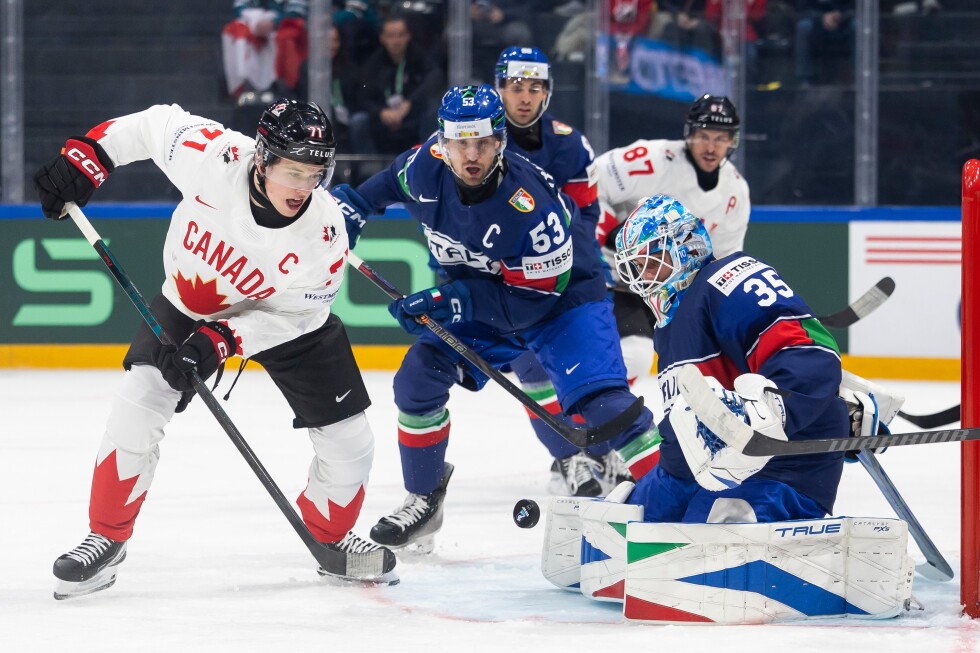
    MILAN — The Italian Olympic hockey team competing on home ice represents a unique fusion of international talent united by ancestral roots. Unlike many host nations that recruit established NHL stars with distant heritage connections, Italy has constructed its roster primarily from homegrown players supplemented by North American professionals who have embraced their Italian lineage through years of national team commitment.

    Dustin Gazley, a 37-year-old Michigan native who once shared practice ice with Alex Ovechkin, exemplifies this journey. After extensive professional experience in the ECHL and AHL, Gazley secured Italian citizenship during high school and now celebrates his decision to bring his skills to Bolzano in the Italian Alps. “I haven’t looked back,” Gazley reflected on his European transition.

    The team’s composition includes two U.S.-born players, eight from Canada, and one from Sweden, all having obtained Italian passports through familial connections. Thomas Larkin, born in London to an Italian mother and American father, described the squad as “a melting pot for sure—we are all proud to be Italian,” noting how this diversity reflects Italy’s historical identity.

    Eligibility requirements mandated that heritage players spend two years with the national team before Olympic participation. Nick Saracino, a 33-year-old St. Louis native, acknowledged the uncertainty: “I knew Italy was hosting an Olympics… but didn’t know if I was going to be able to make the team as I was getting older.”

    The women’s team similarly integrates international talent, featuring five Americans and three Canadians. Calgary native Gabriella Durante’s goalkeeping performance secured Italy’s historic advancement to the quarterfinals.

    For many players, representing Italy fulfills deep cultural connections. Amie Varano from Massachusetts, whose family originated from Calabria, expressed: “I’ve always been proud of my Italian heritage… it was just like this proud feeling that I could someday represent this amazing country on the world stage.”

    Despite the current reliance on heritage players, Larkin envisions a future where Italy’s domestic development system eliminates the need for foreign reinforcements. “The dream is always to stay here and to make the place where you are at better,” he stated, while acknowledging the current value of committed international players: “if guys are proud to wear these colors and the blood runs Italian, that’s good with me.”

  • How the UAE helped break the India-Pakistan World Cup deadlock

    How the UAE helped break the India-Pakistan World Cup deadlock

    In a dramatic resolution to the cricketing world’s most tense standoff, the United Arab Emirates has emerged as the pivotal mediator in salvaging the iconic India-Pakistan T20 World Cup clash. The breakthrough came after days of intense negotiations that threatened to derail cricket’s most financially significant rivalry.

    The crisis began when Pakistan’s cricket authorities announced a boycott of the February 15 match in Colombo, protesting Bangladesh’s controversial removal from the tournament. This decision sent shockwaves through international cricket, jeopardizing not just the current World Cup but the financial stability of future ICC events.

    Behind the scenes, a diplomatic masterstroke unfolded with Mubashshir Usmani, representing the Emirates Cricket Board as ICC Chair of Associates, playing a crucial mediating role. Usmani participated virtually in emergency meetings between the International Cricket Council, Pakistan Cricket Board, and Bangladesh Cricket Board held in Lahore on Sunday.

    According to sources within the ECB, Usmani’s intervention proved instrumental in bringing all stakeholders – including the Board of Control for Cricket in India – to an amicable resolution. His diplomatic efforts continued until Monday evening when final details were ironed out.

    The UAE’s involvement carried historical significance, as Usmani reminded Pakistani officials of the Emirates’ crucial support during Pakistan’s decade-long exile from hosting international matches following the 2009 Lahore terror attack. During that period, the UAE provided world-class stadiums in Dubai, Abu Dhabi, and Sharjah as neutral venues for Pakistan’s home matches.

    This historical context framed the negotiations, with Pakistan recognizing their opportunity to reciprocate that support by preserving a match that generates approximately $400 million in revenue. These funds are essential for ICC development programs that benefit associate nations worldwide.

    The resolution ensures that the blockbuster clash between the arch-rivals will proceed as scheduled, maintaining the tournament’s integrity and financial viability while demonstrating cricket’s growing diplomatic dimensions.

  • Jack Grealish’s season over after undergoing foot surgery

    Jack Grealish’s season over after undergoing foot surgery

    In a significant blow to both Everton and England’s national team aspirations, midfielder Jack Grealish has undergone surgical intervention for a stress fracture in his foot, effectively terminating his current season. The 30-year-old playmaker sustained the debilitating injury during Everton’s narrow 1-0 Premier League victory against Aston Villa last month.

    Grealish, currently on loan from Manchester City, had been experiencing a resurgence in form with the Toffees, making 22 appearances across all competitions while contributing two goals and six assists. His performance level had sparked serious discussions about a potential recall to the England national squad ahead of the 2026 FIFA World Cup.

    The athlete confirmed the disappointing development through his social media channels, stating: ‘Never intended for my season to conclude in this manner, but such is the nature of football – absolutely devastated. The surgical procedure is now complete, and my entire focus shifts to rehabilitation. I am determined to return fitter, stronger, and more capable than previously.’

    This injury represents a particular setback for England manager Lee Carsley, who last utilized Grealish during October 2024. The midfielder brings considerable winning experience to the squad, having secured three Premier League championships, a Champions League title, and an FA Cup during his tenure with Manchester City.

    With the tri-nation World Cup tournament scheduled to commence on June 11 across Canada, Mexico, and the United States, the rehabilitation timeline appears insufficient for Grealish to achieve match fitness. This development opens opportunities for other midfield contenders as England prepares to defend its international standing.

  • Italy takes bronze in mixed doubles curling as the US and Sweden battle for gold

    Italy takes bronze in mixed doubles curling as the US and Sweden battle for gold

    CORTINA D’AMPEZZO, Italy — In a dramatic conclusion to the mixed doubles curling competition, Italian athletes Stefania Constantini and Amos Mosaner captured the bronze medal with a decisive 5-3 victory over Great Britain on Tuesday. The match, held before a passionate home crowd, delivered an emotional outcome for both teams involved.

    The Italian pair, who entered the tournament as defending Olympic champions, demonstrated exceptional precision with their throws, ultimately thwarting the British duo’s strategy. For Constantini, a native of Cortina d’Ampezzo, the victory held special significance as she solidified her status as a local hero, celebrated by supporters who filled the stadium throughout the competition.

    Conversely, the British team of Jennifer Dodds and Bruce Mouat faced profound disappointment. Having concluded the round-robin stage with the highest number of wins, they were widely anticipated to advance to the gold medal match. Their departure from the ice was visibly dejected following the unexpected defeat.

    The stage is now set for an unprecedented championship final between the United States and Sweden. The American pair, Cory Thiesse and Korey Dropkin—popularly known as ‘Cory and Korey’—have already secured a historic achievement by becoming the first US athletes to medal in Olympic mixed doubles curling. Thiesse additionally earns the distinction of being the first American woman to claim an Olympic medal in the discipline.

    They will compete for the gold medal against Sweden’s sibling duo, Isabella and Rasmus Wranå, ensuring a thrilling conclusion to the mixed doubles curling event at the Winter Games.

  • Klaebo’s Olympic evolution leaves ski competitors in awe of Norwegian star

    Klaebo’s Olympic evolution leaves ski competitors in awe of Norwegian star

    TESERO, Italy — Norwegian cross-country skiing sensation Johannes Hoesflot Klaebo delivered another masterclass performance on Tuesday, securing his second Olympic gold medal at the Milan Cortina Winter Games with a commanding victory in the classic sprint event. The 29-year-old champion demonstrated unparalleled technical prowess and strategic brilliance throughout both preliminary rounds and the final race.

    Klaebo now stands just one medal shy of the Winter Olympics all-time record of eight gold medals, currently shared by three retired Norwegian legends from cross-country skiing and biathlon. With an existing collection of five golds, one silver, and one bronze from previous Winter Olympics in Beijing and Pyeongchang, Klaebo has evolved from a specialist sprinter into a complete cross-country dominator, recently claiming his first distance race victory in Sunday’s skiathlon.

    What distinguishes Klaebo from his competitors is a unique combination of explosive finishing power and breathtaking hill-climbing speed. During Tuesday’s race in northern Italy’s Tesero region, his brutal ascent on the final hill created an insurmountable gap that left other elite athletes struggling in his wake.

    Norwegian coach Ole Haldor Ensrud, currently working with South Africa’s Olympic team, explained to AP: ‘He has elevated the technical aspects of the sport to unprecedented levels while maintaining exceptional endurance fitness. His remarkable flexibility allows constant technique adaptation to varying terrains—a critical advantage in skiing that doesn’t exist in sports like running.’

    Fellow competitors acknowledge racing against Klaebo often means competing for second place. U.S. silver medalist Ben Ogden stated: ‘I approach every race believing victory is possible, but currently, many events become competitions for silver. I take pride in securing second place against such phenomenal talent.’

    Klaebo’s comprehensive skillset resulted from relentless training and meticulous race preparation. His summer training regimen included intensive roller-ski sessions in Park City, Utah, developing the technical versatility that now allows him to maintain speed across varying conditions while offering opponents few opportunities to challenge his dominance.

    The Norwegian champion admitted: ‘I maintain high personal expectations. Competing on familiar tracks where I understand my capabilities provides confidence. We’ve prepared thoroughly, and it’s rewarding to see that preparation translate to success.’

    After establishing an unbeatable lead on Tuesday’s final climb, Klaebo comfortably coasted to the finish, smiling and waving to spectators that included family members. Back in Norway, where cross-country skiing commands prime-time attention, Prime Minister Jonas Gahr Stoere immediately celebrated online: ‘What an athlete! Johannes Hoesflot Klaebo remains virtually unbeatable in sprint events. Congratulations!’

    A national sporting icon featured on billboards and television commercials throughout Norway, Klaebo recently became the subject of a feature documentary released in Norwegian cinemas last December. Despite approaching historic Olympic milestones, the champion remains focused on appreciating his current success: ‘I’m genuinely enjoying this experience. These are amazing moments to cherish.’

  • Pebble Beach hosts first signature event on PGA Tour. LIV returns to Australia

    Pebble Beach hosts first signature event on PGA Tour. LIV returns to Australia

    The world of professional golf enters a pivotal week with simultaneous high-stakes tournaments across multiple tours, headlined by the PGA Tour’s inaugural $20 million signature event at the iconic Pebble Beach. This prestigious tournament marks the season debut of defending champion Rory McIlroy, who returns to the famed California coastline following two appearances in Dubai. The field features 80 competitors, including FedEx Cup leader Chris Gotterup, who carries formidable momentum with three victories in his last ten starts dating to July.

    Meanwhile, the LIV Golf League stages its Australian debut in Adelaide, where record-breaking attendance of approximately 100,000 spectators is anticipated. Fresh from his stunning victory in Riyadh, debutant Elvis Smylie leads the field after his dramatic 57-place leap in the world rankings. The tournament proceeds without veterans Phil Mickelson and Lee Westwood, both absent for the second consecutive week due to personal and medical reasons respectively.

    The PGA Tour Champions circuit launches its Florida swing with the Chubb Classic in Naples, featuring defending champion Justin Leonard and current points leader Stewart Cink, who seeks his third consecutive victory. The LPGA Tour enjoys a brief hiatus before resuming competition in Thailand, with Nelly Korda maintaining her position atop the Race to CME Globe standings.

    Complementing these events, the European Tour’s Patrick Reed continues to lead the Race to Dubai following his Qatar Masters triumph, while the Korn Ferry Tour prepares for its upcoming Argentina Open. Additional competitions include the Challenge Tour and Sunshine Tour’s co-sanctioned event in South Africa, the Ladies European Tour’s Saudi Ladies International, and the Women’s Amateur Asia-Pacific championship in New Zealand.

  • Fontana extends medal record as Italy wins Olympic short track mixed team relay

    Fontana extends medal record as Italy wins Olympic short track mixed team relay

    MILAN — Italian short track legend Arianna Fontana has further cemented her status as the sport’s most decorated Olympian by securing her third gold medal at the Milan Cortina Winter Games. The 33-year-old champion led Italy to a commanding victory in the mixed team relay final, delivering a spectacular performance before an ecstatic home crowd.

    Fontana’s latest triumph marks her 12th Olympic medal across six consecutive Winter Games, extending her unprecedented record in short track speedskating. The Italian team demonstrated exceptional coordination and strategy throughout the relay, ultimately finishing ahead of Canada and Belgium who claimed silver and bronze respectively.

    The victory celebration captured the emotional magnitude of the moment, with teammate Pietro Sighel creating an iconic image by spinning backward across the finish line before cupping his hand to his ear to absorb the crowd’s roaring approval. Fontana herself celebrated by holding up her gold medal alongside a cardboard cutout of her own face, playfully mimicking the expression.

    ‘This is our home. We’re here to protect it,’ Fontana stated, referencing the team’s motto for the competition. ‘We tried to show the home crowd that we’re here on a mission, and that’s exactly what we delivered.’

    Fontana’s remarkable Olympic journey began at just 15 years old when she won relay bronze during Italy’s last hosting of the Games in 2006. Reflecting on her longevity in the sport, she remarked that her teenage self ‘wouldn’t believe that I’m still here’ but would ultimately ‘be proud’ of her continued achievements.

    Meanwhile, the competition witnessed challenging conditions as several skaters reported concerns about soft ice at the Milano Ice Skating Arena. Dutch competitor Jens van ‘t Wout described the surface as ‘really tricky,’ noting unusual falls and athletes ‘slipping around’ throughout the events.

    The United States team experienced particular difficulties, with Corinne Stoddard suffering falls in both the mixed relay and women’s 500 meters events. Despite these setbacks, Stoddard remains optimistic about her recovery from a swollen ankle injury.

    Fontana now looks ahead to further medal opportunities in the women’s 500 meters, an event she has won in both the 2018 and 2022 Winter Olympics, having successfully qualified through earlier heats.

  • Japan’s surge on the Olympic halfpipe leaves the U.S. with some catching up to do

    Japan’s surge on the Olympic halfpipe leaves the U.S. with some catching up to do

    LIVIGNO, Italy (AP) — A dramatic power shift is unfolding in Olympic snowboarding as American dominance in the halfpipe gives way to Japanese supremacy. Where U.S. athletes once routinely claimed podium positions in the sport they pioneered, only defending champion Chloe Kim now remains as a legitimate medal contender for Team USA in current Winter Games competitions.

    This tectonic change stems from contrasting national approaches to sporting infrastructure and athlete development. While Japan has aggressively invested in training facilities—including dry-slope complexes, expensive safety airbags, and year-round training programs—the United States has witnessed an alarming disappearance of halfpipes across its resorts. Industry experts estimate fewer than six operational halfpipes remain nationwide.

    The consequences are starkly visible in Olympic results. Between 2002 and 2010, American riders captured 12 of 18 available halfpipe medals while Japan won none. In the subsequent three Olympics, the U.S. secured just six medals with only one (Shaun White’s 2018 gold) coming from the men’s competition, while Japan collected five medals, four by male athletes.

    Olympic champion Kelly Clark, who emerged from Vermont’s now-diminished halfpipe scene, expresses concern about the sport’s accessibility. ‘If I were looking 15 years down the road at halfpipe and how common that will be at a resort, that I would say could be a little concerning,’ Clark noted. ‘Will it be that relatable sport that everyone can kind of watch, and participate in?’

    The infrastructure challenge is compounded by economic realities. Resort operators increasingly favor slopestyle courses—added to the Olympics in 2014—which require less expensive construction and maintenance while appealing to broader audiences. Constructing a competition-grade 22-foot halfpipe demands specialized engineering skills and significant ongoing upkeep.

    Shannon Dunn-Downing, 1998 bronze medalist, posed the existential question in a recent Slush Magazine editorial: ‘Is Halfpipe Dead?’ She observed that poorly maintained pipes go unused, creating a vicious cycle where resorts see little value in investing in quality facilities.

    Meanwhile, Japan has built what Rick Bower, director of the U.S. Ski & Snowboard program, describes as an ‘army’ of developmental athletes. Decades of systematically sending large teams overseas for training have evolved into comprehensive training camps in Switzerland with dozens of riders and multiple coaches.

    This systematic approach extends beyond the halfpipe. In big air events at the current Games, Japan has claimed three of six medals while the United States produced just one finalist and no podium finishes.

    Zach Nigro, Burton’s senior sports marketing director, suggests cultural factors may contribute to Japan’s success: ‘Their thought might be, it’s a difficult discipline, but if you’re going to be the best, then master the most difficult discipline.’

    American officials acknowledge the challenge and are implementing corrective measures, including a potential $65 million endowment aimed at reclaiming dominance when the Olympics return to Salt Lake City in 2034. As Bower conceded: ‘Because of [past complacency], we’re now in a position where we’re behind and we need to do some catch-up.’

  • Milan Cortina Olympics apologizes for podium surface damaging skaters’ blades

    Milan Cortina Olympics apologizes for podium surface damaging skaters’ blades

    MILAN — Olympic organizers have issued a formal apology after the medal podium at the Milano Ice Skating Arena caused unexpected damage to figure skaters’ blades during team medal celebrations. The abrasive anti-slip surface resulted in nicks and blemishes on the precision equipment of multiple athletes, prompting concerns about competitive impact.

    Among those affected were American gold medalists Madison Chock and Evan Bates, along with Japanese silver medalist Kaori Sakamoto, who immediately inspected her blades while celebrating. The Japanese Olympic Committee subsequently filed an official complaint regarding the podium’s problematic surface.

    In response to the incident, the Milan Cortina organizing committee announced immediate corrective measures. “We are taking steps to replace the surface to prevent a reoccurrence,” stated officials, while also arranging for complimentary blade-sharpening services and additional training sessions for the impacted teams from the United States, Japan, and Italy.

    The committee praised the Olympic spirit demonstrated by National Olympic Committees offering assistance to affected athletes from other countries. “We apologize for the inconvenience caused and reiterate our commitment to ensuring the best possible conditions for all athletes,” the statement concluded.

    The timing raised competitive concerns as some speculated whether blade damage might have contributed to Chock and Bates’ narrow defeat to French competitors Laurence Fournier Beaudry and Guillaume Cizeron in Monday’s rhythm dance event. However, Bates dismissed such theories, stating, “I think the skates are fine. The blades are good. We skated great. We felt like it was really strong.”

    Organizers have scheduled the next medal ceremony for Tuesday afternoon following the mixed team relay in short-track speedskating, with the next figure skating medal presentation set for Wednesday night. All future podium events will feature a resurfaced platform to prevent further equipment damage.