分类: society

  • Escaped wolf forces school closure in South Korea

    Escaped wolf forces school closure in South Korea

    A young male wolf that broke free from a South Korean theme park zoo remained unaccounted for on Thursday, forcing local education officials to shutter a nearby elementary school out of public safety concerns, as hundreds of emergency personnel continue a widespread manhunt for the animal.

    The escape unfolded Wednesday at a zoo located within a Daejeon theme park, a major metropolitan city roughly 150 kilometers south of the capital Seoul. Weighing approximately 30 kilograms, the 2024-born wolf escaped after digging under and damaging the zoo’s perimeter fence, according to officials from Daejeon Fire Headquarters. Local media has released public imagery showing the predator wandering openly along a public road in the area.

    In response to the breach, authorities assembled a joint search team of more than 300 people, drawing resources from local fire departments, law enforcement agencies, and military personnel. The operation hit an early setback Thursday, however, when ongoing heavy rain forced crews to retrieve deployed search drones, cutting off a key aerial surveillance tool for tracking the animal.

    Confirming the school closure, a spokesperson for the Daejeon Metropolitan Office of Education told Agence France-Presse that Daejeon Sanseong Elementary School suspended all classes Thursday in direct response to the escape. The decision comes as local communities remain on high alert for the loose wild animal.

    The incident marks the latest high-profile animal escape from a South Korean zoo in less than two years. In 2023, a male zebra named Sero captured global public attention after breaking out of a Seoul zoo and roaming through the city’s residential and commercial streets. That incident ended without harm to the zebra or the public, after Sero was cornered in a narrow alleyway, tranquilized safely, and returned uninjured to his enclosure.

  • You’re being watched: Japan battles online abuse of athletes

    You’re being watched: Japan battles online abuse of athletes

    As the 2025 Asian Games in Aichi and Nagoya draw near, Japanese sports authorities are sending a clear message to internet trolls targeting competing athletes: all abusive activity will be closely monitored and acted upon. After decades of unaddressed harm to competitors across sports, Japan has finally launched a multi-pronged strategy to curb online harassment, a crisis that has devastated athletes’ mental health, impaired on-field performance, and forced many talented competitors to walk away from their careers entirely.

    Online abuse is not a uniquely Japanese problem: athletes across every sport and every region have faced dehumanizing, threatening comments on social media for years. But Japan’s response, coming later than many global initiatives, builds on lessons learned from major international events to create a structured framework for protection. At the 2025 Milan-Cortina Winter Olympics, the Japanese Olympic Committee (JOC) ran its first large-scale social media monitoring program, testing the model ahead of the home Asian Games. Six staff based in Milan and 22 working from Tokyo conducted 24/7 checks for abusive content targeting Japanese athletes, combining manual reviews with AI-powered search tools to identify harmful posts. The team collaborated directly with major social platforms including Meta — owner of Instagram, Facebook and WhatsApp — and domestic tech giant LINE Yahoo to remove violating content. Across the course of the Games, the JOC requested the removal of nearly 2,000 abusive posts, successfully securing the takedown of approximately 600 of the most harmful entries.

    This successful test run has paved the way for expanded protection at the upcoming Asian Games. Not only will the JOC repeat its monitoring program for Japanese athletes, but event organizers are rolling out a broader initiative to protect competitors from all participating nations. For JOC officials, the pilot program at the Milan-Cortina Games provided invaluable insight into the scale and nature of online harassment targeting athletes. “We now understand what kinds of comments appear on a daily basis and how they upset athletes,” said JOC official Hirofumi Takeshita. “We’ve learned how much energy we need to devote to this.”

    JOC official Misa Chida, who participated in the Milan-Cortina monitoring effort, explained that even a single harsh comment can cause lasting harm. Many athletes respond by stepping back from social media entirely to avoid abuse — a choice that means they also miss out on the overwhelming majority of positive, supportive messages from fans. “Even a single negative comment can cut deeply,” Chida told AFP. “Athletes don’t want to see things like that, so a lot of them choose not to look at social media at all, and that means they miss the 99 percent of messages that are supportive. That’s a real shame.” Chida added that as more athletes and support staff become aware of these protection initiatives, it directly boosts competitors’ psychological safety, letting them focus on competition rather than fearing online harassment.

    Beyond in-house monitoring, Japan has added legal support for athletes facing abuse, a step that experts say fills a long-empty gap in the country’s sports ecosystem. Lawyer Shun Takahashi leads a seven-person legal group founded in 2024 specifically to support athletes targeted by online trolls. Takahashi notes that Japan was relatively slow to adopt formal protections compared to other nations, and many athletes face cultural barriers to speaking out about abuse. Many are raised with the expectation that they must always project strength, leading to fears that acknowledging the harm of harassment will lead coaches to see them as unfit to compete and bench them. Takahashi’s group serves as a confidential “safe haven” for athletes to seek support without risking their careers.

    One high-profile case the group supported underscores the severity of the abuse many athletes face: professional baseball player Taiki Sekine took legal action against online abusers last year after receiving threatening messages including “I hope your whole family dies in an accident”. Sekine has secured multiple civil settlements and filed criminal complaints against the worst offenders, a process that was simplified by the fact that all abusers in the case were based in Japan. Cross-border abuse cases remain far harder to prosecute, a persistent challenge for global anti-harassment efforts. Takahashi says that visible legal action carries a strong deterrent effect, particularly since most online trolls are teenagers or young adults who often underestimate the legal consequences of their actions. “It makes them realise the risk involved,” he explained.

    While Japan’s new proactive approach marks a major shift from years of inaction, stakeholders across the board agree that there is still a long way to go to fully solve the problem. During the Milan-Cortina monitoring program, less than a third of the posts the JOC requested to be removed were actually taken down by social media companies. Though Takeshita emphasized that tech platforms have been cooperative, he acknowledged that platform’s standards for what counts as offensive content often do not align with the JOC’s perspective. “Yes, there was a gap, but it was a gap that we were able to identify by actually doing this work,” he said. “That’s better than having an unidentified gap that never gets bridged. Now that we know where the differences lie, we can work to close them.”

    Japan’s effort joins a growing global movement to protect athletes from online abuse: the International Olympic Committee ran a multi-language monitoring program covering more than 35 languages at the 2024 Paris Games, and similar initiatives have been launched by governing bodies in football and tennis. As the Asian Games approach, Japan’s expanding framework sets a new example for regional event organizers, while highlighting ongoing work needed to align platform policies with athlete protection needs.

  • New twist in murder case as four arrested

    New twist in murder case as four arrested

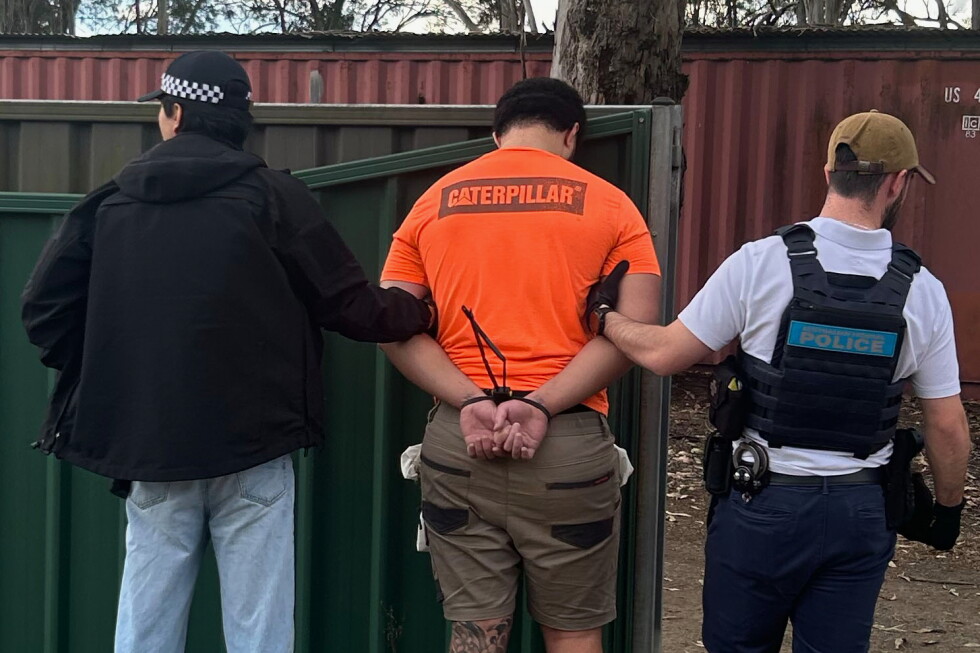
    Almost a year after the body of 49-year-old father-of-two Chris Robertson was discovered in a suburban South Australian workshop, the state’s police investigation has yielded a major new development: four additional people have been taken into custody in connection with the killing, joining a former Hells Angel already charged with murder.

    Robertson, a resident of the coastal suburb of Moana, was last seen alive by the public on September 25 last year – the date of Australian Football League’s annual premiership grand final. Three days after that public appearance, on September 30, his remains were found inside an industrial workshop on O’Sullivan Beach Road in Lonsdale. Post-mortem analysis confirmed his death was the result of homicide, with fatal injuries matching those sustained in a violent assault. The case was immediately upgraded to a major criminal investigation, drawing senior detective resources from across the region.

    The first major break in the case came in December 2023, nearly three months after Robertson’s body was found. Investigators had spent weeks tracing a grey Mitsubishi Triton that Robertson was believed to have been traveling in as a passenger on the day he was last seen; the vehicle was finally located in late November. That breakthrough set the stage for the first arrest: 30-year-old Dylan Danaher, a former member of the Hells Angel outlaw motorcycle club from Happy Valley, who was formally charged with murder. Danaher has remained in custody since his arrest, and is scheduled to next appear before the Adelaide Magistrates Court on July 7 this year.

    Now, the investigation has expanded further, with police taking four more people into custody, all of whom face charges linked to the murder and efforts to derail the official inquiry. All four suspects were denied bail following their arrest, and are set to make their initial court appearances at Adelaide Magistrates Court on Thursday.

    The charges against the newly arrested four vary in severity. A 33-year-old woman from Happy Valley faces the most counts: two charges of assisting an offender, alongside one count of making threats or carrying out reprisals against people connected to the criminal investigation. A 61-year-old man, also from Happy Valley, has been charged with two counts of assisting the person responsible for the killing. Two younger men from Christies Beach – a 29-year-old and a 27-year-old – each face one count of threats or reprisals against investigation participants.

    Detective Superintendent Darren Fielke, the senior officer leading the investigation, made a public statement Wednesday reaffirming police commitment to pursuing all parties linked to the crime. “We will not hesitate to investigate offending of this nature and will vigorously pursue prosecutions against any person found to be assisting those responsible, interfering with investigations or threatening witnesses,” Fielke said, signaling that the inquiry may still be open to further arrests as new evidence emerges.

    The case has drawn sustained public attention in South Australia, due to its link to the high-profile AFL grand final day and the connection to an outlaw motorcycle club member already charged in the killing.

  • BBC reports from court as ‘Ketamine Queen’ sentenced

    BBC reports from court as ‘Ketamine Queen’ sentenced

    In a high-profile court hearing covered extensively by the BBC, Jasveen Sangha, a drug trafficker widely known as the ‘Ketamine Queen’, has been handed a 15-year prison sentence. Her conviction links directly to the sale of illicit ketamine that ultimately contributed to the 2023 death of beloved *Friends* actor Matthew Perry.

    The case has captured global public attention, not only because of Perry’s decades of fame as one of the stars of one of the most popular television sitcoms in history, but also because it has thrown a spotlight on the deadly consequences of unregulated recreational drug supply. Sangha was found guilty of facilitating the distribution of the ketamine that was identified as a primary cause of Perry’s death, which shocked fans around the world when it was announced last year.

    Court proceedings laid out how Sangha operated as a key figure in the illegal ketamine trade, supplying the drug that ended up in Perry’s system before his sudden passing. The sentence handed down by the judge reflects the severity of her crimes, particularly given the fatal outcome of her illegal activities. Legal observers note that the case serves as a stark reminder of the lethal risks posed by the black market drug trade, which continues to claim lives of both high-profile individuals and ordinary people across the globe.

  • Major clampdown on ‘cashies’ at vineyards in South Australia

    Major clampdown on ‘cashies’ at vineyards in South Australia

    A coordinated, multi-agency law enforcement crackdown on worker exploitation and illegal business practices has led to surprise inspections of 18 vineyards across three of Australia’s most celebrated wine-growing regions, law enforcement officials confirmed this week. Codenamed Operation Zephyr, the initiative brings together the Australian Taxation Office (ATO), Fair Work Ombudsman (FWO), and Australian Border Force (ABF) to root out systemic unlawful activity in South Australia’s iconic wine districts of Barossa Valley, Adelaide Hills and McLaren Vale. The targeted vineyards have not been publicly named as the investigation remains ongoing.

    The operation was launched to address longstanding concerns about unfair and illegal labor practices in Australia’s viticulture sector, an industry that employs thousands of seasonal and casual workers across the country. Investigators are specifically probing a range of violations, including underpayment of wages, penalty rates and superannuation entitlements, failure to provide mandatory pay slips to employees, and unreported cash-in-hand (off-the-books) payments that cut government revenue and leave workers without legal protections. The probe also covers broader regulatory noncompliance, such as failure to lodge tax returns and activity statements, incorrect reporting of business income and expenses, refusal to remit Pay as You Go Withholding tax, and breaches of the Migration Act, including the exploitation of migrant workers and unlawful immigration assistance.

    ATO Assistant Commissioner Tony Golding emphasized that these illegal shortcuts do not just harm individual workers—they damage the reputation of the entire Australian wine industry, which relies on global consumer trust and ethical production standards. “Paying workers off the books, ignoring ATO obligations and using disreputable labour hire providers doesn’t just break the law, it erodes trust in the viticulture industry which employs thousands of people across Australia,” Golding said. He warned vineyard owners against turning a blind eye to problematic practices from contracted labour hire firms, noting that implausibly low labour costs almost always signal illegal activity. “In the end, those shortcuts don’t just exploit workers, they leave the whole industry with sour grapes,” he added.

    FWO Assistant Director Anna Booth echoed Golding’s concerns, pointing out that the South Australian wine sector is globally celebrated for its high-quality produce, but labor standards have not always matched that reputation. “We know there are a large number of vulnerable workers employed in grape-picking, packing and pruning vineyards. Not paying workers their entitlements cannot be part of any grower’s business model,” Booth said. ABF Commander John Taylor reinforced the joint agencies’ commitment to ending worker exploitation and visa abuse, sending a clear warning to noncompliant employers. “Exploiting vulnerable workers or misusing the visa system is unacceptable and the consequences can be serious,” Taylor said. “Operations like this send a clear message: Australia is not a safe haven for worker exploitation or visa abuse.”

    As of the latest update, the investigation remains active, with authorities yet to announce any formal charges or penalties following the surprise inspections.

  • Memorial ceremony pays respects to martyrs Wu Shi and He Sui in Fuzhou

    Memorial ceremony pays respects to martyrs Wu Shi and He Sui in Fuzhou

    Against the backdrop of Qingming Festival, a time-honored Chinese tradition for honoring deceased ancestors and fallen heroes, a solemn commemorative service gathered attendees to pay heartfelt respects to two revered revolutionary martyrs, Generals Wu Shi and He Sui, at Fuzhou Sanshan Memorial Park’s Hero Square, located in Fuzhou, the capital of East China’s Fujian Province.

    The two revolutionary figures shared deep personal and ideological bonds that shaped their contributions to the Chinese revolution. Both natives of Fujian and graduates of the prestigious Baoding Military Academy, He Sui stood as Wu Shi’s early revolutionary mentor, and it was He who introduced Wu to the Communist Party of China. Following his induction, Wu went on to become a critical intelligence operative on the Party’s covert underground front in Taiwan, operating amid constant risk to advance the revolutionary cause.

    Tragedy struck in early 1950, when Wu’s covert identity was revealed following a betrayal. Putting his colleague’s safety above his own, Wu immediately arranged for He Sui to evacuate Taiwan, ensuring He and his family could escape unharmed. Choosing to remain at his post to continue his critical work, Wu was ultimately executed as a martyr in Taipei on June 10 of that same year.

    As descendants of the two martyrs joined the ceremony, family members Wu Hong (granddaughter of Wu Shi) and He Daining (eldest grandson of He Sui) prepared beloved local Fuzhou delicacies, a intimate, personal tribute to their ancestors’ legacy that blended familial remembrance with national respect for the pair’s sacrifice. The ceremony stands as a reminder of the hidden sacrifices made by underground revolutionaries that laid the foundation for modern China, keeping the pair’s contributions alive in public memory decades after their passing.

  • Shanghai Jiao Tong University celebrates 130th anniversary with a vision for global excellence

    Shanghai Jiao Tong University celebrates 130th anniversary with a vision for global excellence

    One of China’s most prestigious higher education institutions, Shanghai Jiao Tong University (SJTU), commemorated its 130th founding anniversary Wednesday with a grand formal ceremony hosted at its sprawling Minhang campus. The milestone gathering drew a diverse lineup of high-profile attendees, including senior officials from China’s Ministry of Education and the Shanghai municipal government, as well as institutional leaders and distinguished scholars from more than 130 universities across the globe. Also in attendance were representatives from the university’s key strategic collaborative partners, descendants of early pioneers who shaped SJTU’s century-long development, retired and incumbent university leadership, and elected delegates from the school’s teaching faculty and current student body.

    In his keynote address to the assembled guests, Xiong Sihao, member of the Party Leadership Group of the Ministry of Education and vice-minister of education, laid out clear expectations for the university’s next chapter. He urged SJTU to leverage its century of accumulated expertise to deliver new, transformative contributions to China’s national push to build global leadership in education, scientific research, and talent development.

    Speaking on behalf of the university, SJTU president Ding Kuiling outlined the institution’s bold strategic vision as it enters its 131st year of operation. Ding stressed that to reach its long-term goals, the university must prioritize cultivating a world-class hub for exceptional talent through deliberate, long-term strategic planning, generate groundbreaking original research and lead global academic progress through proactive, forward-thinking initiative, and build an open, interconnected academic ecosystem rooted in a global outlook.

    A day ahead of the main anniversary ceremony, the university unveiled a new statue of Qian Xuesen, widely known as the founding father of China’s space program and a 1934 graduate of SJTU, on its Minhang campus. Inscribed on the statue’s stone pedestal is a message Qian left to his alma mater: “In the 21st century, (the faculty shall) strive to build SJTU into a world-class university.”

    Reaffirming the university’s long-term roadmap during Wednesday’s celebration, Ding announced SJTU’s official timeline for global academic leadership: the institution aims to secure a place among the world’s leading top-tier universities by 2035, and rise to join the very top ranks of global higher education by 2050, fulfilling the vision set out by its famous alumnus decades ago.

  • Shanghai Disney Resort is a top cultural tourism destination, report says

    Shanghai Disney Resort is a top cultural tourism destination, report says

    A new study published Wednesday by the China Center for International Economic Exchanges has formally recognized Shanghai Disney Resort as one of China’s premier cultural tourism destinations, highlighting its decade-long success in weaving global Disney intellectual property with deeply rooted Chinese cultural traditions to attract millions of domestic and international travelers.

    Since welcoming its first guests more than a decade ago, the resort has broken visitor milestones by leaning into its unique positioning slogan: “Authentically Disney, Distinctly Chinese.” This innovative, cross-cultural approach has not only driven consistent growth in tourist footfall but also yielded a string of globally celebrated original attractions and concepts that set it apart from Disney parks across the world.

    Per the report’s official data, the Shanghai resort has welcomed more than 100 million cumulative guests since its opening, a landmark figure that underscores its widespread popularity and commercial and cultural success. Standout creations born from this localized strategy include LinaBell, the pink fox Disney character that sparked a global fan frenzy following her debut at the Shanghai resort, as well as the world’s first ever Zootopia-themed land, a cutting-edge attraction that draws fans of the franchise from every corner of the globe.

    Unlike traditional international theme park entries that rely on importing pre-existing, unaltered content to Chinese markets, Shanghai Disney Resort has prioritized cultural integration. Examples of this approach stretch beyond new attractions: the resort regularly hosts seasonal events that celebrate traditional Chinese festivals such as Lunar New Year, Mid-Autumn Festival, and Dragon Boat Festival, and has even collaborated with local performing arts groups to create cross-cultural experiences, such as the popular photo opportunity showing Disney character LinaBell performing alongside a young Shanghai opera actress. This blend of global entertainment and local cultural resonance has turned the resort into more than a tourist attraction — it has become a model for how international cultural brands can adapt and thrive in China’s dynamic consumer market.

  • Key moments in the Gilgo Beach serial killings case

    Key moments in the Gilgo Beach serial killings case

    One of the most haunting cold case serial killing investigations in modern U.S. history has reached a pivotal turning point, as architect Rex Heuermann has formally entered guilty pleas for the deaths of eight women whose bodies were discovered scattered along Gilgo Beach on New York’s Long Island between the late 1990s and early 2010s.

    The case first captured national attention more than a decade ago, when investigators began unearthing a series of shallow graves along the remote Ocean Parkway between 2010 and 2011, revealing a pattern of violence that targeted primarily sex workers working along the South Shore of Long Island. For years, the identity of the killer remained a mystery, leaving communities terrified and families of the victims without answers, as law enforcement pursued thousands of leads and employed evolving forensic techniques to crack the case.

    The breakthrough came in 2023, when Heuermann, a Long Island-based architect with a decades-long career and a seemingly ordinary suburban life, was taken into custody and charged with multiple counts of murder. In the weeks leading up to his guilty plea, court documents and investigative reporting had laid out a growing body of evidence linking Heuermann to the crimes, including DNA evidence, cellphone records, and physical evidence recovered from the burial sites.

    By pleading guilty to all eight counts of murder, Heuermann brings a long-awaited measure of closure to the families of the victims, who waited nearly 30 years for justice after their loved ones disappeared. The plea also avoids a lengthy, high-profile public trial that would have retraced the details of the brutal crimes for a national audience. The case stands as a testament to the persistence of law enforcement in cold case investigations, and the impact of decades-long violence on tight-knit coastal communities.

  • ‘Ketamine Queen’ sentenced to 15 years in Matthew Perry overdose death

    ‘Ketamine Queen’ sentenced to 15 years in Matthew Perry overdose death

    More than two years after beloved *Friends* star Matthew Perry was found dead in his Los Angeles home, the ringleader of an illegal drug ring linked to his death has received a substantial federal prison sentence. Forty-two-year-old Jasveen Sangha, the woman infamously labeled the ‘Ketamine Queen’, was handed a 15-year prison term after pleading guilty to federal charges that included distributing the illicit ketamine that contributed to Perry’s October 2023 death.

    Sangha, an American-British dual citizen, entered her guilty plea back in September 2024, reversing her initial not guilty plea just weeks before her trial was set to begin. Prosecutors painted a damning picture of her operation, describing her Los Angeles residence as a full-fledged ‘drug-selling emporium’ that generated massive profits to fund a luxury lifestyle. When federal agents raided her North Hollywood stash house and personal home, they uncovered dozens of vials of injectable ketamine alongside thousands of pills containing methamphetamine, cocaine, and Xanax. Court records also confirm Sangha’s connection to a second fatal overdose: she admitted to selling ketamine to Cody McLaury in 2019, who died just hours after purchasing the drug from her.

    Before the sentencing hearing, Perry’s family made a impassioned plea to the judge for the harshest possible penalty. In a written victim impact statement submitted to the California federal court, Debbie Perry, Matthew Perry’s stepmother, emphasized that Sangha had caused irreversible harm to their family. ‘You who has talent for business enough to make money chose the one way that hurts people,’ she wrote. ‘Please give this heartless woman the maximum prison sentence so she won’t be able to hurt other families like ours.’

    Sangha’s legal team pushed for leniency, noting that she had taken responsibility for her crimes and had no prior criminal convictions. Dozens of letters from her family and friends advocating for a reduced sentence were also submitted to the court. The judge ultimately handed down a 15-year sentence, far below the statutory maximum of 65 years that Sangha faced. She has been in federal custody since August 2024.

    Perry, who captured global audiences for his decades-long portrayal of quick-witted Chandler Bing on the hit sitcom *Friends*, had openly discussed his decades-long battle with substance use disorder. At the time of his death, he was receiving supervised ketamine-assisted therapy for treatment-resistant depression, a legal medical treatment. Investigators later concluded his death was caused by acute ketamine toxicity from the illicit supply of the drug.

    Ketamine is a federally controlled dissociative anesthetic with hallucinogenic effects that is only legally permitted for use administered by licensed medical professionals. Sangha is one of five people charged in connection with the illegal ketamine ring that supplied Perry, with all five co-defendants agreeing to plead guilty. Two medical professionals have already been sentenced: Dr. Salvador Plasencia, who supplied Perry with ketamine in the weeks before his death, received a 30-month prison sentence in December 2024, while Dr. Mark Chavez, who fraudulently obtained ketamine and sold it to Plasencia, was sentenced to eight months of home detention and three years of supervised release. Two remaining co-defendants are awaiting sentencing: Perry’s live-in assistant Kenneth Iwamasa, who assisted in purchasing and injecting ketamine, has requested a postponement for his sentencing scheduled for this month, while Eric Fleming, who obtained ketamine from Sangha to sell to Perry, is scheduled to be sentenced in June 2025.