分类: society

  • Swiss inferno bar owner detained for three months

    Swiss inferno bar owner detained for three months

    Jacques Moretti, co-proprietor of the Le Constellation bar in the Swiss ski resort of Crans-Montana, has been ordered into preventive detention for an initial three-month period. The decision, announced Monday by the Wallis Cantonal Court of Compulsory Measures, cites a substantiated flight risk as the primary justification for his incarceration. This development follows a criminal investigation launched against Moretti and his wife Jessica, who jointly owned the establishment, in connection with a catastrophic fire on New Year’s Day that resulted in 40 fatalities and 116 injuries, predominantly among teenagers.

    The couple faces severe charges including manslaughter by negligence, bodily harm by negligence, and arson by negligence. While Jacques Moretti is now in custody, the public prosecutor’s office deemed the risk of flight for his wife, Jessica, could be mitigated through alternative measures due to her personal background and ties, allowing her to remain free. The court indicated a willingness to reconsider Jacques Moretti’s detention should he comply with specific conditions requested by prosecutors, such as providing a substantial security deposit.

    Preliminary investigative findings point to sparklers igniting highly flammable soundproofing foam on the basement ceiling as the blaze’s origin. The tragedy has ignited intense scrutiny over the bar’s safety protocols, with critical questions emerging regarding the availability of fire extinguishers, the regulatory compliance of emergency exits, and the alarming discovery that a crucial service door was locked from the inside—a fact Jacques Moretti reported to investigators after he was forced to break it open to find victims behind it.

    Furthermore, local authorities have conceded that no official fire safety inspections had been conducted at Le Constellation since 2019, a revelation that has provoked public outrage. Lawyers representing the victims’ families have expressed vehement criticism of the investigative process, with some declaring the partial detention an imperfect outcome and vowing to continue their pursuit of full accountability, emphasizing the profound grief and anger of those who lost loved ones.

  • Monkeys on the loose in St Louis after four-day search

    Monkeys on the loose in St Louis after four-day search

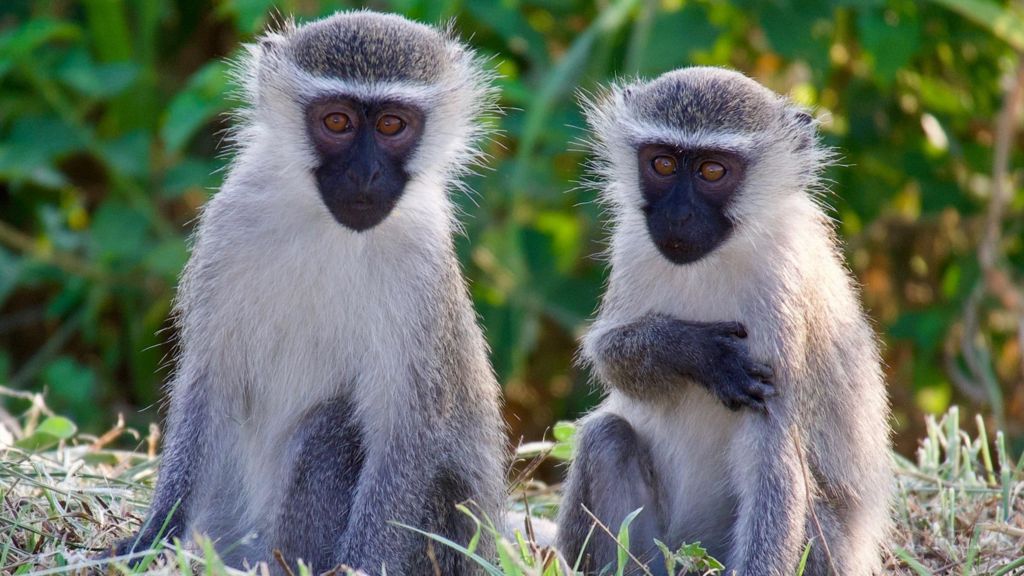
    Environmental health authorities in St. Louis, Missouri, have launched an intensive search operation following confirmed sightings of multiple non-native vervet monkeys roaming residential areas. The primates, first observed last Thursday, continue to evade capture despite coordinated efforts by animal control specialists.

    The city’s Health Department, through Bureau Chief of Environmental Health Justen Hauser, has issued explicit warnings for residents to maintain distance from the agile creatures. While vervet monkeys demonstrate notable intelligence and social behaviors in their natural habitat, officials emphasize their potential for unpredictable aggression when subjected to stress or unfamiliar environments.

    Primatologists from the prestigious St. Louis Zoo have formally identified the animals as African vervets (Chlorocebus pygerythrus), characterized by distinctive pale fur and dark facial features. These arboreal mammals typically inhabit savanna regions across eastern and southern Africa, making their presence in urban Missouri particularly unusual.

    Current investigative efforts focus on the O’Fallon Park district where most sightings have occurred. The origin of these primates remains undetermined, especially noteworthy given municipal regulations explicitly prohibiting private ownership of exotic species. This incident highlights broader concerns regarding illegal wildlife trade, particularly since Missouri reportedly ranks among the top states for primate transactions with approximately 35-50 changing hands annually.

    While no physical confrontations have been documented, local residents have expressed understandable apprehension. Marva Young, a community member, articulated widespread concerns regarding potential dangers posed by non-domesticated animals in residential spaces.

    Animal control teams continue systematic patrols with priority placed on humane capture and relocation to accredited exotic animal sanctuaries. Officials urge citizens to immediately report sightings through official channels rather than attempting interaction, noting the species’ potential carrier status for zoonotic diseases.

  • Are You Dead?: The viral Chinese app for young people living alone

    Are You Dead?: The viral Chinese app for young people living alone

    A uniquely named safety application has surged to unprecedented popularity across China, capturing the attention of urban youth and solitary dwellers. Marketed as ‘Are You Dead?’, this digital tool requires users to check in every 48 hours by pressing a prominent button to verify their wellbeing. Should a user fail to confirm their status within the designated timeframe, the system automatically alerts pre-selected emergency contacts about potential distress.

    Initially launched in May with minimal publicity, the application has experienced explosive growth in recent weeks, becoming China’s highest-grossing paid application. This surge coincides with projections from research institutions indicating China could reach 200 million single-person households by 2030, as reported by state media Global Times.

    The application specifically targets China’s growing demographic of isolated individuals, describing itself as a ‘safety company companion for solo office workers, students living independently, or anyone embracing solitary living.’ User testimonials on social platforms reveal deep-seated anxieties among urban dwellers, with one commenter noting: ‘There exists genuine fear that people living alone might pass away unnoticed without means to summon help. I frequently contemplate who would claim my body should I die alone.’

    Thirty-eight-year-old Wilson Hou, who works in Beijing approximately 100 kilometers from his family, represents typical users. Despite weekly visits to his wife and child, extended work projects force him to reside alone temporarily. ‘My concern is that something might occur in my rented accommodation without anyone’s knowledge,’ Hou explained. ‘This application provides reassurance, with my mother designated as my emergency contact.’ Hou additionally revealed he downloaded the application promptly fearing potential removal due to its controversial naming.

    Despite its commercial success, the application’s morbid branding has sparked considerable debate. Critics argue the name might attract misfortune, advocating for more positive alternatives like ‘Are You OK?’ or ‘How Are You?’. Developer Moonscape Technologies acknowledges these concerns and is evaluating potential rebranding strategies.

    Internationally marketed as ‘Demumu’, the application ranks among top-paid utility applications in the United States, Singapore, Hong Kong, Australia, and Spain—likely driven by overseas Chinese communities. The current name creatively parodies the successful food delivery application ‘Are You Hungry?’, with Chinese pronunciations ‘Si-le-ma’ and ‘E-le-ma’ creating phonetic similarity.

    Originally offered free, the application now charges a nominal fee of 8 yuan (approximately $1.15). Little is known about its founders beyond their identification as post-1995 graduates who developed the application in Zhengzhou with a compact team. The venture has achieved remarkable valuation growth, with co-founder Mr. Guo announcing intentions to sell a 10% company stake for 1 million yuan—significantly exceeding the initial 1,000 yuan development cost.

    The company is now expanding its focus toward elderly care solutions, recognizing that over one-fifth of China’s population exceeds 60 years old. A recent social media statement emphasized: ‘We advocate for increased attention toward homebound elderly individuals, promoting greater care and understanding. They maintain dreams, pursue meaningful existence, and deserve recognition, respect, and protection.’

  • University of Macao celebrates 45th anniversary

    University of Macao celebrates 45th anniversary

    The University of Macao commenced its 45th anniversary celebrations with a grand opening ceremony and campus open day on Sunday, January 11, 2026. The event showcased the institution’s academic excellence and technological innovation through interactive demonstrations, including children engaging with robotic dogs and other cutting-edge educational technologies.

    The anniversary launch represents a significant milestone for Macao’s higher education landscape, highlighting the university’s evolution into a comprehensive institution bridging Eastern and Western academic traditions. The open day attracted diverse visitors who experienced firsthand the university’s advanced learning environments and research facilities.

    University officials emphasized the institution’s role in fostering academic excellence and technological innovation within the Macao Special Administrative Region. The celebrations will continue throughout the year with a series of academic conferences, cultural events, and community engagement programs designed to highlight the university’s contributions to education and research over the past four decades.

    The event also served to strengthen town-gown relationships, inviting the Macao community to participate in the anniversary festivities and witness the university’s ongoing development as a center of academic excellence in the region.

  • ‘Factory flaw’ spurs toy horse to instant popularity

    ‘Factory flaw’ spurs toy horse to instant popularity

    An inadvertent manufacturing defect has transformed an ordinary plush toy into an overnight cultural phenomenon, capturing the collective sentiment of China’s young professionals. The toy horse, originally conceived as a cheerful mascot for the upcoming Chinese Year of the Horse, emerged from a Yiwu factory with its mouth accidentally stitched into a distinctive downturned pout rather than the intended smile.

    The toy’s unexpected journey to fame began when a Hangzhou social media user received the flawed product and shared images online. Within days, the hashtag #YiwuCryCryHorseGoneViral amassed approximately 100 million views on Sina Weibo, with netizens dubbing it the ‘cry-cry horse.’ The toy’s melancholic expression, juxtaposed with determined eyes, resonated deeply with office workers who identified it as a perfect representation of the ‘cattle-and-horse’ mentality—a euphemism for enduring overwork while maintaining outward composure.

    Professor Wang Bin of Renmin University interpreted this phenomenon as a psychological response to widespread social fatigue, noting that the toy serves as an emotional anchor for consumers navigating daily pressures and uncertainties. The manufacturing company in Yiwu—dubbed the ‘world’s supermarket’ for its massive small commodities market—demonstrated remarkable agility by rapidly expanding production from two to over ten assembly lines, with workers now specifically trained to replicate the accidental ‘sad mouth’ design.

    Industrial expert Professor Zhu Huasheng of Beijing Normal University highlighted how this incident exemplifies a paradigm shift in manufacturing, where consumer sentiment directly influences production through real-time digital feedback. Yiwu’s extensive network of small suppliers, capable of rapid retooling and small-batch production, has integrated digital platforms that provide high-resolution data on emerging emotional trends, allowing factories to identify and validate new market signals almost overnight.

    Despite the toy’s viral success, the company has maintained its retail price at 25 yuan ($3.50) and plans to award bonuses to the production team responsible for the accidental design. The phenomenon illustrates how consumers, particularly young people, have evolved from passive buyers to active participants whose emotional expressions directly shape manufacturing outcomes, though manufacturers remain cognizant of the transient nature of internet trends and maintain strategies focused on hyper-agile production cycles.

  • Yunnan Flower Research Institute crowdsources naming of new varieties

    Yunnan Flower Research Institute crowdsources naming of new varieties

    In an innovative approach to botanical nomenclature, Yunnan’s Flower Research Institute has initiated public participation campaigns to name newly developed rose varieties, creating a unique intersection between horticultural science and social values. The initiative gained national attention when netizens proposed naming a distinctive yellow rose ‘Wenxiu’ in honor of Huang Wenxiu, a village Party secretary who tragically died at age 30 during flood rescue operations in Guangxi in 2019. Huang was subsequently recognized as a national model for grassroots service.

    The color symbolism proved particularly meaningful as ‘Huang’ translates to ‘yellow’ in Chinese, creating a natural connection between the flower’s chromatic qualities and the commemorative purpose. Researchers at the Yunnan Academy of Agricultural Sciences expressed openness to the proposal, with researcher Cai Yanfei noting: ‘The suggestion resonated because it felt natural—it wasn’t just about remembering a person but about matching names, colors, and values.’

    This naming discussion follows another successful public engagement instance in December, when researchers adopted ‘Baohua’ for a pink-rimmed variety after a netizen humorously suggested naming it after his flower-resembling uncle. The name received preliminary approval from the National Forestry and Grassland Administration and is scheduled for market release in August.

    The naming initiatives form part of a substantial breeding program launched in late 2022, where the institute produces between 5,000-10,000 crossbreed combinations annually, generating over 100,000 seeds. From these, only a minute fraction survives rigorous testing for disease resistance, floral form, and adaptability. More than 2,000 plants have passed performance trials but remain unnamed, providing opportunities for future public engagement.

    Researchers are developing systematic naming frameworks including the ‘Heroines’ series (honoring exemplary women) and ‘Light of the Ordinary’ series (recognizing everyday individuals). The process demonstrates how scientific advancement and public participation can converge, transforming plant breeding into a shared cultural practice that celebrates both botanical achievement and social values.

  • Patrolling Xizang’s punishing peaks

    Patrolling Xizang’s punishing peaks

    At an elevation of 5,373 meters where water boils at just 60°C and oxygen remains perpetually scarce, the Pumaqangtang border station in China’s Xizang Autonomous Region stands as the nation’s highest and most formidable policing outpost. This remote Himalayan location, bordering Bhutan, has earned the ominous designation as a ‘forbidden zone for life’ due to its punishing environmental conditions characterized by perpetual ice sheets and severely thin air.

    Despite these extreme challenges, three pioneering female officers have not only survived but thrived at this austere post. Wu Hui, 27, first conceived the ambition to serve at this extreme elevation while graduating from police training academy. ‘Don’t you want to push your limits?’ she challenged her contemporaries. ‘Don’t you think it would be cool to work at the roof of the world?’

    Her persuasive enthusiasm proved contagious. In February 2024, Wu successfully recruited two fellow graduates—29-year-old Li Tianjiao and 25-year-old Li Hongyan—to volunteer for assignment at the remote station. Their deployment marked a historic milestone as the first female officers to serve at the outpost since its establishment in 2012.

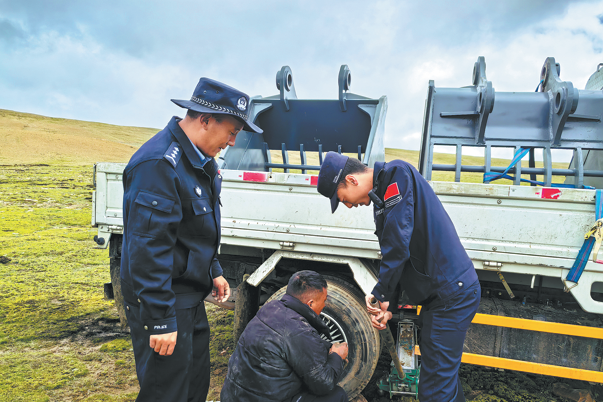
    The officers’ duties extend far beyond conventional policing, encompassing high-altitude patrols, community assistance, and emergency response in one of Earth’s most inhospitable environments. Photographic evidence from August depicts officers from the station performing tire changes for Tibetan herders during rescue operations, demonstrating their integral role in supporting local communities amid extreme climatic challenges.

    Their groundbreaking service at this altitude represents both a personal triumph over physical limitations and a symbolic advancement in gender equality within China’s border security forces, proving that determination and professionalism can overcome even the most daunting environmental barriers.

  • Africa’s megacity of Lagos reshapes its coast by dredging and puts environment at risk

    Africa’s megacity of Lagos reshapes its coast by dredging and puts environment at risk

    LAGOS, Nigeria — Along the bustling waterways of Lagos, Africa’s most populous metropolis, a stark economic dichotomy unfolds beneath the surface. Teams of Nigerian dredgers stand immersed in the Lagos Lagoon’s murky waters, harvesting sand bucket by bucket to feed the city’s insatiable construction appetite. This underwater gold rush is dramatically reshaping the coastline while simultaneously eroding traditional fishing grounds that have sustained communities for generations.

    The manual dredging process reveals the human cost of urban development. Artisanal sand miners like 34-year-old Akeem Sossu dive repeatedly for 15-second intervals, filling wooden boats over three-hour shifts that yield approximately $8 per worker. Formerly a tailor, Sossu now depends on this hazardous work to support his household, beginning his days as early as 5 a.m. based on tidal patterns.

    Market dynamics reflect Lagos’s construction explosion, with a standard 30-ton truckload of coarse ‘sharp sand’ now commanding roughly $202—a price surge driven by massive demand for concrete. Industry analysts estimate annual consumption reaches tens of millions of cubic meters, equivalent to approximately 16,000 Olympic-sized swimming pools.

    The environmental transformation is unmistakable. Previously open waterways now display fragmented sandy patches, narrowed channels, and altered currents. The changes are particularly evident near Makoko, one of Lagos’s oldest fishing communities where stilt homes face encroachment from dredging barges and upscale waterfront developments.

    ‘Dredgers have spoiled the entire waters,’ laments Baale Semede Emmanuel, a Makoko community leader. ‘Anywhere dredging is happening, there’s no fish. The noise drives them away and their reproduction grounds have disappeared.’

    Scientific research corroborates these observations. Nigerian studies along the Ajah–Addo-Badore dredging corridor document water turbidity levels exceeding national safety standards, disrupting fish feeding and migration patterns. Researchers also note unstable seabeds, erosion-prone zones, and bacterial contamination in groundwater samples.

    The ecological damage has forced fishermen to choose between dangerous extended voyages with prohibitive fuel costs or abandoning their livelihoods entirely. Joshua Monday, who transitioned from fishing to mechanics, encapsulates the community’s plight: ‘Big men are stressing us. When they come, you have no option. You pack your things and leave.’

    Despite government pledges to curb illegal dredging, enforcement remains inconsistent. Dredging operators describe making regular payments to authorities including the Marine Police and National Inland Waterways Authority to maintain operations. Environmental advocates argue these arrangements blur legal boundaries while exacerbating flooding risks and coastal degradation.

    Scientists warn that removing natural buffers like wetlands and shallow areas reduces the lagoon’s capacity to absorb floodwaters, increasing vulnerability for Lagos’s approximately 17 million residents. As the city continues building on reclaimed land, the tension between development ambitions and environmental sustainability creates an increasingly precarious future for both the coastline and its traditional communities.

  • Elephant kills 20 in Indian state as rescue efforts continue

    Elephant kills 20 in Indian state as rescue efforts continue

    A devastating series of elephant attacks has left 20 people dead in India’s eastern Jharkhand state, creating unprecedented panic across the West Singhbhum district. The fatal incidents occurred between January 1-9 in the Chaibasa and Kolhan forest regions, areas known for containing some of Asia’s most significant Sal forest ecosystems.

    According to local authorities, the attacks have been attributed to a single male elephant exhibiting unusually aggressive behavior. Divisional Forest Officer Kuldeep Meena described the situation as extraordinary, noting this marks the first instance where such a consistent pattern of fatalities has been linked to one elephant in the region.

    The victims were predominantly attacked during nighttime hours while performing routine activities. Many were guarding harvested paddy crops stored in fields and barns—a common agricultural practice in rural India. Among the deceased was 34-year-old Mangal Singh Hembram, attacked near his Bodijari village home while returning from work. In a particularly tragic incident, Kundra Bahoda and his two children, aged six and eight, were killed simultaneously, with only his wife and injured two-year-old daughter surviving.

    Forest officials characterize the elephant as young, agile, and frequently changing locations, especially after dark, complicating tracking efforts. Over 100 forest personnel have been deployed in an extensive search operation, employing traditional drum alerts to warn residents and advising against outdoor activities during nighttime hours.

    Preliminary assessments suggest the elephant might be experiencing its mating phase, during which male elephants typically demonstrate heightened aggression due to elevated testosterone levels. Officials note this behavior usually subsides within 15-20 days. Another theory suggests the animal may have become separated from its herd, increasing its solitary aggressive tendencies.

    District Magistrate Chandan Kumar confirmed monetary compensation has been announced for victims’ families, while authorities maintain high alert status throughout the region to prevent further casualties. The immediate priority remains locating, capturing, and safely reintroducing the elephant into its natural habitat.

  • Police to intensify searches Trisha Graf one month after mysterious disappearance in South Australian outback

    Police to intensify searches Trisha Graf one month after mysterious disappearance in South Australian outback

    Australian authorities have escalated the investigation into the mysterious disappearance of Trisha Graf, a 41-year-old woman who vanished in the remote South Australian outback over a month ago. The case has now been officially classified as a major crime operation as police prepare to launch renewed search efforts starting Tuesday.

    According to South Australian Police, Graf was last seen departing the Roxby Downs hotel with a companion shortly after 12:19 AM on December 12th. Investigators revealed they will be conducting systematic door-knock operations in Andamooka and surrounding areas where the missing woman was last spotted. The search will concentrate on multiple locations identified during recent investigative developments.

    Detective Superintendent Darren Fielke, officer-in-charge of the Major Crime Investigation Branch, emphasized the urgency of locating individuals who were with Graf at the Roxby Downs Hotel and those who reportedly saw her after she returned to Andamooka. “We know people were with Trisha and saw her after she returned to Andamooka. We need to speak with them,” Superintendent Fielke stated in an official release.

    The investigation has uncovered that Graf’s vehicle, a white 2012 Ford Territory with license plate S254BCX, struck a kangaroo shortly before reaching Andamooka, located approximately 560 kilometers north of Adelaide. Despite the collision, Graf and her friend proceeded to a residence in the northwest sector of the remote town before she departed alone around 2:00 AM.

    Her vehicle was subsequently discovered abandoned and perched on a dirt mound near Blue Dam, east of Andamooka, displaying damage consistent with the reported kangaroo collision. Extensive search operations involving police units, State Emergency Service crews, and community volunteers have conducted comprehensive ground and aerial searches covering a 4.7-kilometer radius around the vehicle. Police divers have additionally scoured Blue Dam without success.

    The investigation continues to involve specialized units including the Far North and Port Augusta police, Missing Persons Section, and Polair aviation support. Authorities are urging anyone with information regarding Graf’s whereabouts or movements preceding her disappearance to contact Crime Stoppers immediately.