分类: society

  • Every door tells a story: Dubai displays historic doors that shaped the city

    Every door tells a story: Dubai displays historic doors that shaped the city

    Dubai has launched an extraordinary cultural exhibition showcasing historic doors that serve as tangible narratives of the city’s evolution. ‘Dubai Doors’ at Nad Al Sheba Square presents meticulously preserved teak entryways from the 19th and 20th centuries, each revealing intricate craftsmanship through symmetrical panels, fan-shaped motifs, and diamond carvings. These architectural artifacts feature traditional security elements like domed iron nails and geometric five-pointed stars symbolizing protection, alongside spiritual elements including Arabic calligraphy with Quranic verses that demonstrate the sacred role of homes in historical Emirati society.

    The exhibition, running through January 26, 2026, highlights functional innovations such as ‘roshan’ ventilation openings that provided light and airflow while maintaining privacy. Central stiles display continuous floral chains that blend aesthetic elegance with structural integrity. According to Asem Al Qassim, Director of Architectural Heritage and Antiquities at Dubai Municipality, these doors represent living documents that reveal the social, architectural, and security functions of traditional homes while showcasing local artisans’ exceptional skills.

    Dubai’s urban preservation strategy involves comprehensive mapping of six historic districts, cataloging buildings by age, and codifying authentic architectural elements. This initiative aligns with global UNESCO standards while addressing challenges posed by rapid urbanization. The municipality is integrating traditional materials with modern components like aluminum and PVC without compromising authenticity, while researching historical cooling techniques such as wind towers (Barjeel) and ventilation courtyards for contemporary applications.

    Community engagement forms a crucial component of preservation efforts, with live workshops and Ramadan markets at Deira Souq designed to help youth connect with their cultural identity. These heritage conservation measures constitute a fundamental pillar of the Dubai 2040 Urban Master Plan, ensuring that historic areas like Deira and Bur Dubai remain as living memories rather than mere relics of the past.

  • Why UAE’s new civil law does not give automatic financial independence at 15

    Why UAE’s new civil law does not give automatic financial independence at 15

    The United Arab Emirates’ recently enacted Civil Transactions Law has introduced nuanced provisions regarding financial autonomy for minors, drawing significant attention from legal experts and families alike. While much public discourse has centered on the reduction of the age of majority to 18, the legislation contains a more intricate mechanism for younger individuals aged 15 and above.

    Contrary to some initial interpretations, the law does not establish automatic financial independence at age 15. Instead, it creates a carefully regulated judicial pathway through which minors may petition courts for limited authority to manage their assets. This represents a substantial shift from the previous threshold of 18 Hijri years, yet maintains robust protective safeguards.

    Legal specialists emphasize that this provision constitutes a controlled exception rather than a blanket entitlement. Byron James, Partner at Expatriate Law, clarifies that “this creates a supervised pathway for early financial responsibility where it can be demonstrated to serve the minor’s best interests” rather than establishing independence at 15.

    The judicial evaluation process will involve meticulous examination of multiple factors including the minor’s demonstrated maturity, comprehension of financial matters, and the specific nature and value of the assets in question. Courts are expected to adopt a case-by-case approach, granting tailored authorizations that may be limited in scope, duration, or subject matter.

    According to Ahmed Al Mazrouei, a UAE-based civil lawyer, courts will require compelling justification for approval. “Judges will seek genuine necessity—such as inherited assets requiring active management, business interests, or structured investments that cannot be practically handled through a guardian alone,” he explained. The central consideration will be whether granting management authority better serves the minor’s interests than existing arrangements.

    Parental roles undergo transformation rather than elimination under this framework. As James notes, “Parents or guardians are not displaced entirely, but their role becomes supervisory rather than controlling.” The judiciary retains ongoing oversight authority, enabling revocation or restriction of permissions if they cease to benefit the minor.

    Sara Al Hammadi, another legal expert, characterizes the reform as a response to practical circumstances rather than broad empowerment. “This mechanism accommodates specific situations where minors inherit assets, hold shares in family enterprises, or benefit from investment structures,” she stated. The system provides flexibility while maintaining protective measures, ensuring decisions align with long-term financial wellbeing rather than short-term considerations.

    The legislation incorporates multiple safeguards to prevent misuse, familial pressure, or premature financial decision-making, particularly concerning high-value or complex assets. Courts will likely impose conditions such as reporting requirements and transaction limitations, ensuring that the minor’s economic security remains protected throughout the process.

  • At least 28 killed after crane collapses on train in Thailand

    At least 28 killed after crane collapses on train in Thailand

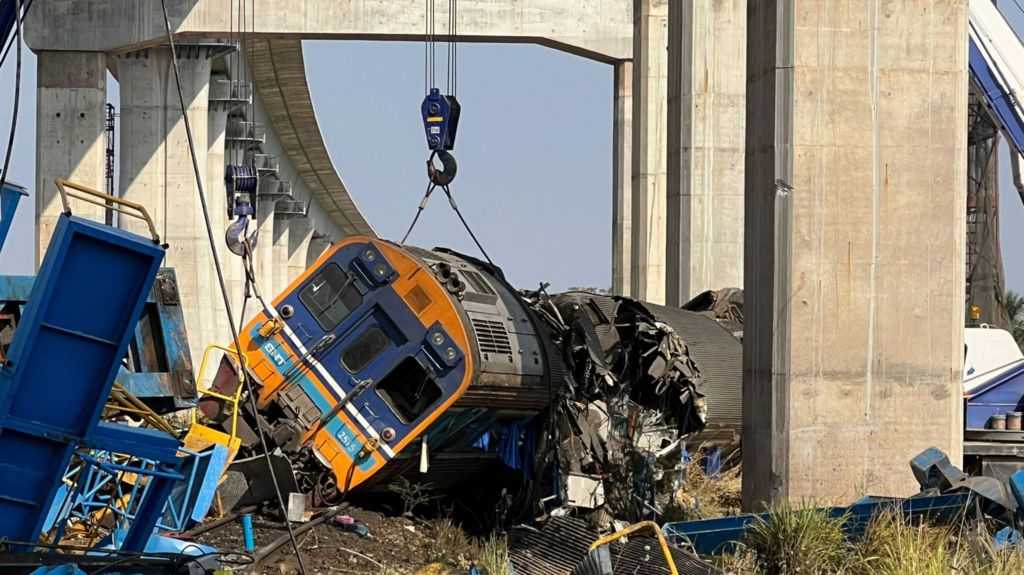
    A catastrophic construction accident in north-eastern Thailand has resulted in significant casualties after a massive crane collapsed onto a moving passenger train. The incident, which occurred at approximately 09:00 local time (02:00 GMT), claimed 28 lives and left 64 people injured, including eight in critical condition. Among the wounded were passengers ranging from a one-year-old infant to an 85-year-old elderly person.

    The train, traveling from Bangkok to Ubon Ratchathani province with 195 passengers onboard, was struck by the falling crane from an elevated railway construction project. The impact derailed the train and crushed multiple carriages, with one carriage catching fire immediately after the collision. Emergency responders worked tirelessly to evacuate all passengers from the mangled wreckage, transporting the injured to regional hospitals for treatment.

    The construction crane was part of a China-backed infrastructure initiative to connect Bangkok with neighboring Laos through a new railway system. This project parallels the existing Chinese-built high-speed line that already operates between Laos and south-western China.

    Thai Prime Minister Anutin Charnvirakul has demanded accountability for the tragedy, stating that ‘accidents like this can only happen due to negligence, skipped steps, deviations from the design, or the use of incorrect materials.’ The government has launched a formal investigation into the incident, which represents the latest in a series of fatal accidents attributed to safety lapses in Thailand’s construction industry. Survivor Thirasak Wongsoongnern, a train staff member, described being thrown into the air along with other passengers upon impact.

    This tragedy highlights ongoing concerns about construction safety standards in Thailand, where weak enforcement of regulations has previously led to similar deadly incidents.

  • Viral plea turns into national pig feast

    Viral plea turns into national pig feast

    A heartfelt social media appeal from a concerned daughter in rural China has evolved into an unprecedented nationwide phenomenon, transforming a quiet village into a vibrant celebration of communal spirit and cultural tradition.

    The extraordinary chain of events began on January 9 when Daidai, a resident of Qingfu village in Chongqing’s Hechuan district, posted a video on Douyin expressing concern about her elderly father’s inability to manage the family’s annual pig slaughter tradition. The 70-year-old man, like many aging villagers, found the physically demanding year-end ritual increasingly challenging without assistance.

    Daidai extended an open invitation for helpers to participate in Paozhutang—a traditional pig slaughter feast that symbolizes Chinese New Year preparations. This centuries-old custom involves community collaboration in every aspect, from handling livestock to preparing elaborate meals, culminating in shared feasting and distribution of fresh pork as gestures of goodwill.

    What followed exceeded all expectations. Instead of the handful of neighbors Daidai anticipated, her video attracted nearly 500,000 engagements within 48 hours. By the weekend, Qingfu village experienced extraordinary gridlock with traffic stretching 10 kilometers as visitors arrived from distant provinces including Guangdong, bearing gifts as if reuniting with long-lost family.

    The overwhelming response necessitated rapid scaling of preparations. The original two pigs proved insufficient, prompting neighbors and local cultural authorities to contribute three additional animals. Ultimately, five pigs were processed to feed a rotating crowd exceeding 3,000 participants.

    The scene embodied chaotic harmony, with socioeconomic distinctions dissolving into collective effort. Observers noted Porsche owners washing dishes alongside mothers chopping vegetables and teams of young men handling the primary slaughtering tasks. The Yanzi catering team, led by 16-year veteran chef Jiang Xiaoyan, mobilized emergency resources, consuming over 500 kilograms of rice, 350 kg of oil, and truckloads of produce with estimated costs surpassing 100,000 yuan ($14,000).

    Local government responded proactively, deploying traffic police and urban management personnel while integrating cultural elements including complimentary tickets to the historic Diaoyucheng Fortress and traditional molten iron fireworks displays.

    The phenomenon has propelled Daidai to social media stardom, with her follower count surging from hundreds to over 2 million. Online commentary has celebrated both her initiative and the resulting demonstration of national solidarity, with one observer noting: ‘She’s the first person brave enough to invite the whole country to dinner.’

    In the aftermath, authorities are considering formal recognition of the event through an annual ‘Hechuan Pig Slaughter Festival’ on January 11, potentially institutionalizing this remarkable display of cultural preservation and communal generosity.

  • Shanxi’s tree hollows turned into canvases for local artists

    Shanxi’s tree hollows turned into canvases for local artists

    Across Shanxi province, an innovative artistic movement is transforming urban environments as local artists turn natural tree cavities into captivating canvases. This grassroots initiative has not only revitalized public spaces but also sparked renewed interest in environmental conservation and cultural heritage among residents.

    In Taiyuan, the provincial capital, 36-year-old Liu Yu leads this creative transformation. As a graduate of Taiyuan University of Technology’s art and design program, Liu discovered inspiration during travels in southern China where she encountered similar tree hollow paintings. Determined to bring this artistic concept northward, she has since created approximately 40 pieces throughout the city.

    The process involves meticulous planning and adaptation to nature’s imperfections. “Each tree hollow possesses a unique shape,” Liu explained. “I conduct repeated site evaluations before selecting animal imagery or cultural motifs that harmonize with the natural contours.” Her creations in Yingze Park now feature playful renditions of raccoons, parrots, and squirrels that have become popular photographic attractions.

    This art form, which first emerged in Chinese urban centers around 2013, has experienced a renaissance driven by cultural tourism initiatives. Artists employ environmentally-friendly paints that serve dual purposes: enhancing aesthetic appeal while providing protective coatings against moisture and insects. The practice requires formal approval from park management authorities, ensuring both artistic freedom and botanical preservation.

    What distinguishes Shanxi’s tree hollow movement is its deliberate incorporation of local cultural elements. Liu has created works inspired by the monumental Mengshan Buddha, Shang Dynasty owl-shaped bronze vessels, and settings from the popular video game Black Myth: Wukong based on Jinci Temple’s Water Mirror Terrace. “When painting works related to these cultural relics,” Liu noted, “I hope to raise awareness of Shanxi’s profound history and culture.”

    The movement has spread beyond Taiyuan, with 28-year-old Yuan Jinmiao from Datong launching her own public campaign after being inspired during a trip to Hebei province. Yuan integrates cultural landmarks including the Yungang Grottoes and Huayan Temple into her designs, along with local mascot “Fo Xiaoban.” She has expanded her charitable work to multiple cities including Shuozhou, Linfen, and Yuncheng.

    Public response has been overwhelmingly positive. Senior citizen Gong Peicai, 69, now incorporates tree hollow viewing into his daily walking routine. “The artists have turned the trees’ ‘scars’ into scenery,” he observed, “and they’ve brought Shanxi’s rich culture into our daily lives in such a vivid way.” Parents like He Qiaoning appreciate the educational value, noting how the artworks naturally spark children’s curiosity about local history and culture.

    Despite facing practical challenges including mosquito bites in summer and harsh winds in winter, the artists remain committed to their mission. Their efforts demonstrate how creative placemaking can foster community engagement, cultural preservation, and environmental stewardship simultaneously—proving that even the smallest urban spaces can become vessels for artistic expression and cultural transmission.

  • Serbians mark Orthodox Christian New Year according to old tradition

    Serbians mark Orthodox Christian New Year according to old tradition

    BELGRADE, Serbia — The streets of Belgrade witnessed a unique cultural phenomenon on Tuesday evening as Serbians gathered to celebrate the Orthodox New Year, an event occurring nearly two weeks after the globally recognized January 1st festivities. This traditional observance follows the ancient Julian calendar, which maintains a 13-day discrepancy from the widely adopted Gregorian system.

    The commercial pedestrian zones of central Belgrade remained adorned with holiday decorations as residents participated in the distinctive celebration. While many embraced the tradition with enthusiasm, others expressed skepticism about its modern significance.

    Zoran Todorovic, a Belgrade local, embodied the celebratory spirit: “We’re honoring our Serbian New Year with walks through the city, mulled wine, traditional sweets, and ultimately a special family meal. The experience feels genuinely wonderful.”

    Contrasting this perspective, fellow resident Jovan Brkic offered a more critical assessment: “I don’t particularly observe the Serbian New Year. It essentially mirrors the commercialized version on January 1st—primarily an economic mechanism encouraging additional spending under the guise of celebration.”

    The evening’s official festivities culminated in a midnight fireworks and drone display at a controversial riverside residential complex endorsed by President Aleksandar Vucic. This choice of venue proved significant given the ongoing political context.

    Meanwhile, in the central town of Čačak, celebrations turned confrontational as protesters snowballed a folk singer performing at the main square. Regional television network N1 reported that residents were angered by the use of public funds for organized festivities.

    These events occurred against a backdrop of sustained anti-government demonstrations throughout 2024. The protest movement gained momentum following a tragic train station disaster in November that claimed 16 lives, with many citizens criticizing President Vucic’s authoritarian leadership style and governance approach.

  • Hong Kong officials want to expand oversight of building maintenance after deadly fire

    Hong Kong officials want to expand oversight of building maintenance after deadly fire

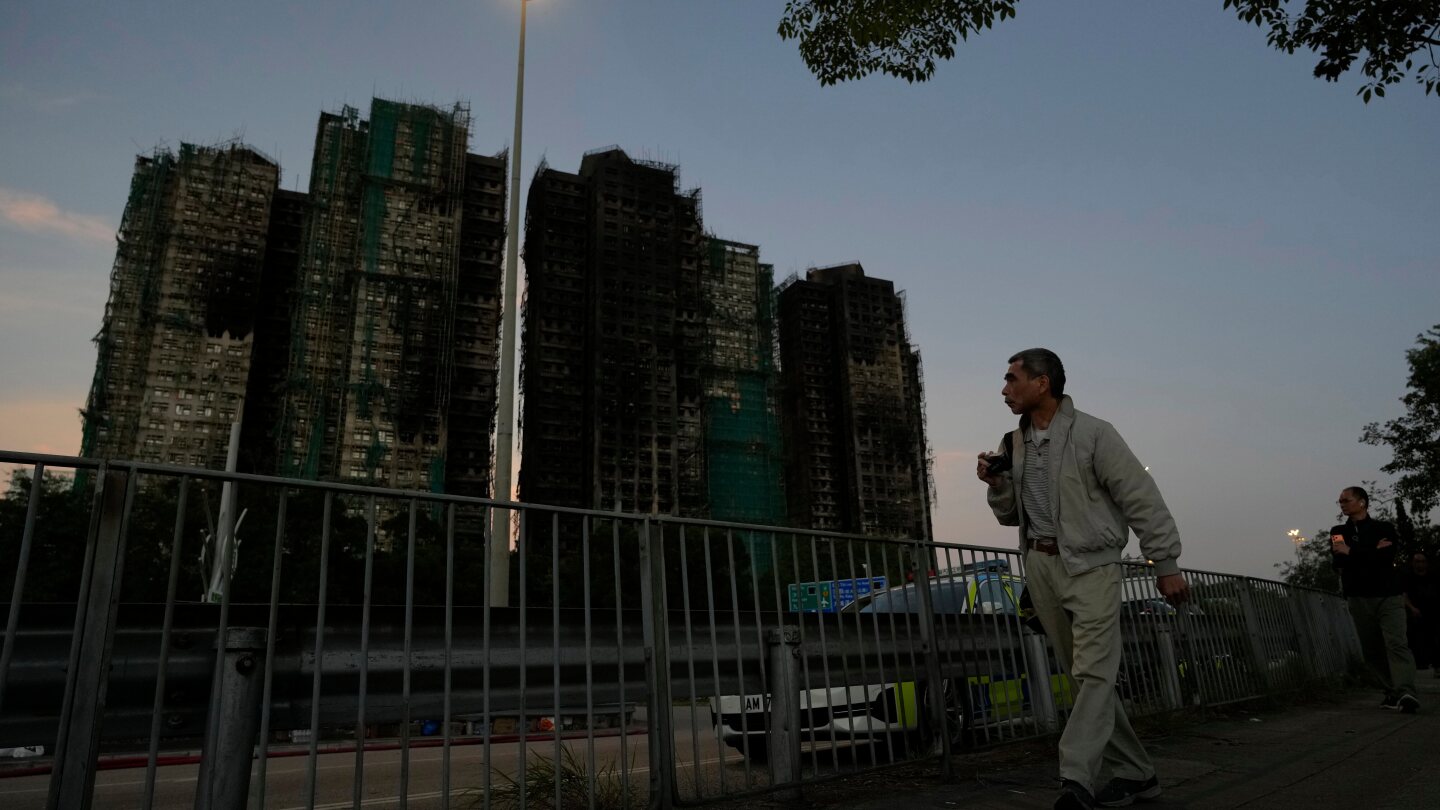
    Hong Kong authorities have unveiled comprehensive regulatory reforms targeting building maintenance and fire safety protocols in response to November’s catastrophic high-rise fire that claimed 161 lives and displaced thousands of residents. The blaze, which rapidly engulfed seven interconnected towers in the Wang Fuk Court apartment complex, has triggered intense scrutiny over alleged corruption, negligence, and systemic oversight failures within the city’s building management sector.

    Chief Executive John Lee addressed the newly convened legislature, acknowledging the tragedy exposed critical vulnerabilities requiring immediate intervention. Lee pledged a thorough investigation through both law enforcement channels and an independent judge-led commission, vowing to hold accountable “anyone who should bear responsibility, regardless of whether they are from within or outside the government, or whether they are junior or senior staff.”

    The proposed reforms center on combating bid-rigging practices by empowering the Urban Renewal Authority to oversee contractor selection processes. This includes establishing pre-vetted lists of consultants and contractors based on rigorous background checks and historical performance evaluations. Additionally, the government mandates third-party professional supervision for major renovation projects, requires fire department approval before deactivating critical fire safety systems, and implements complete smoking bans on construction sites.

    Investigators identified substandard construction netting and flammable foam boards installed during renovations as primary contributors to the fire’s rapid spread. The failure of multiple fire alarm systems during safety tests further compounded the tragedy. Urban planning experts warn this disaster may represent merely the “tip of the iceberg” in a city dominated by high-density architecture, with concerns mounting about potentially widespread use of hazardous materials and corrupt bidding practices across other housing developments.

    Legislative proposals regarding the smoking ban are expected within weeks, while other measures remain under discussion with the Urban Renewal Authority. These developments occur against the backdrop of heightened political sensitivity, testing Beijing’s “patriots-only” governance model for the special administrative region.

  • System prioritizes human dignity, expert says

    System prioritizes human dignity, expert says

    China has undergone a revolutionary transformation of its social welfare system over the past seventy years, evolving from employer-tied benefits to a comprehensive market-oriented framework that now encompasses nearly the entire population of 1.4 billion people. This monumental shift represents one of the most significant social policy achievements in modern history, creating a sophisticated risk management mechanism that leverages collective resources to protect individual citizens.

    The architecture of China’s current social protection system rests on two fundamental pillars: the mandatory ‘five insurances’ covering pension, healthcare, unemployment, work injury, and maternity protection, complemented by the housing provident fund. These contributory programs operate alongside social assistance initiatives including dibao (minimum living allowance) and specialized medical aid programs designed to support vulnerable populations such as low-income families and individuals with disabilities.

    Historical context reveals that China’s welfare system originated in the immediate post-1949 era when state-owned enterprises directly provided employees with comprehensive benefits. The market reforms of the 1980s initiated a gradual decoupling of welfare from specific employers, with experimental social pooling mechanisms for pensions and healthcare. The 1994 Labor Law established crucial legal foundations for the modern social insurance framework.

    Critical expansion milestones occurred in the 21st century. The 2003 introduction of the new cooperative medical scheme extended healthcare coverage to rural residents, while the 2009 implementation of the new rural pension scheme brought retirement security to the countryside. These programs were subsequently integrated with urban counterparts, establishing welfare access as a fundamental citizenship right.

    Professor Yang Yifan, a social security specialist at Southwest Jiaotong University, characterizes the system as a ‘high-resilience floor’ that utilizes state-coordinated collective action to distribute and mitigate fundamental life risks that exceed individual capacity. He highlights the basic medical insurance system, covering approximately 95% of the population and substantially funded by fiscal subsidies, as a critical ‘firewall’ against medical impoverishment—a primary cause of family financial collapse.

    The system’s implementation philosophy emphasizes protecting basic livelihood above procedural rigidity. Some localities have adopted ‘protective execution’ approaches when recovering improperly distributed benefits, particularly for severely ill patients without repayment capacity, ensuring survival and medical needs remain uncompromised.

    Ongoing reforms focus on enhancing portability of pension and healthcare funds across regions—historically fragmented under local management—and enabling transfers from wealthier to less economically developed areas. This approach embodies a governance philosophy rooted in mutual aid and collective solidarity.

    China’s parallel poverty alleviation achievements, which have lifted over 800 million people from extreme poverty since the 1980s, have operated synergistically with the expanding social safety net to protect vulnerable households. The fifth anniversary of China’s declaration of extreme poverty eradication marks a strategic pivot toward comprehensive rural vitalization.

    According to Professor Wu Haitao, a poverty studies expert at Zhongnan University of Economics and Law, this success stems from China’s multidimensional understanding of poverty that extends beyond income considerations to include education, healthcare access, and social participation deficits. The implementation strategy integrates tiered social assistance with regional cooperation and industrial development, creating a comprehensive mechanism encompassing poverty prevention monitoring, economic growth, and social security.

    The fundamental distinction of China’s approach lies in its people-centered modernization model that prioritizes human dignity within its governance framework.

  • US ‘kill line’ in stark contrast to China’s supportive policies

    US ‘kill line’ in stark contrast to China’s supportive policies

    A new social media phenomenon dubbed the ‘kill line’ has sparked intense discussion across Chinese platforms, drawing stark comparisons between economic vulnerabilities in the United States and China’s comprehensive social welfare system. The term, borrowed from gaming culture where it indicates critically low health levels, now describes how middle-class American families can rapidly descend into financial ruin from a single crisis.

    Recent financial surveys reveal alarming fragility in US households. Bankrate’s study indicates 59% of Americans cannot cover an unexpected $1,000 expense, while PNC Bank’s 2025 report shows approximately 67% of US workers live paycheck to paycheck. This vulnerability gained attention after viral posts documented cases like a former JavaScript engineer earning a six-figure salary who became homeless within six months of job loss.

    Social security expert Yang Yifan from Southwest Jiaotong University explains that the ‘kill line’ metaphor reveals ‘low fault tolerance’ in a system where essentials like healthcare and housing operate for profit. ‘A single shock can set off a cascading failure,’ Yang noted, highlighting how the US market-centered paradigm moves risk to individuals and heightens loan default possibilities.

    Multiple factors drive this crisis: soaring living costs, weakened family ties, and rampant consumerism. A Posh Peanut study identified the US as the world’s most expensive country to raise children, with nearly $600,000 average costs from birth to age 18. Brigham Young University research shows over 70% of Americans now consider economic challenges among the most critical family issues.

    The situation may worsen following recent legislation. The newly enacted One Big Beautiful Bill Act reduces health program funding by over $1 trillion—the largest cut in US history—potentially stripping insurance coverage from millions. The administration defends these reforms as necessary to eliminate waste and promote self-reliance.

    Meanwhile, China has significantly expanded its social security framework. Basic pension insurance now covers 1.072 billion people (over 95% coverage), while unemployment and work-related injury insurance have reached 246 million and 302 million participants respectively. The three major social insurance funds have accumulated a 9.81 trillion yuan balance, creating substantial financial buffers.

    China’s approach represents a strategic shift toward human capital investment. The recent plenum adopted recommendations for the 15th Five-Year Plan (2026-30), emphasizing childcare, elderly care, health, and education to promote well-rounded development. This marks a departure from traditional infrastructure-focused models.

    Poverty reduction expert Wu Haitao from Zhongnan University notes China employs a systematic strategy linking poverty alleviation to broader goals like rural vitalization. Rather than relying primarily on cash transfers, China ensures affordable access to education and healthcare while fostering rural industries for stable employment.

    From 2012-2020, China lifted nearly 100 million people above the national poverty line, achieving the UN’s 2030 Sustainable Development Goal a decade early. The campaign followed the comprehensive ‘Two Assurances and Three Guarantees’ standard—ensuring adequate food, clothing, healthcare, education, safe housing, and clean drinking water.

    Even after households exited poverty in 2021, support continued for five additional years to prevent regression—a practice officials describe as ‘helping them onto the horse and accompanying them for part of the journey.’ Recent data shows authorities have identified 7 million vulnerable individuals and helped eliminate relapse risks.

    As global poverty rises approaching the UN’s 2030 deadline, China’s holistic, empowerment-driven model offers a reference for systematic investment in human capital—demonstrating how societies can maintain upward trajectories far from any ‘kill line’ vulnerability.

  • A Dubai chocolate-inspired dessert has taken S Korea by storm

    A Dubai chocolate-inspired dessert has taken S Korea by storm

    South Korea has been swept by an unprecedented dessert phenomenon as the Dubai-inspired chewy cookie captivates the nation’s culinary scene. This innovative confectionery, featuring a unique combination of pistachio cream and knafeh pastry shreds enveloped in chocolate marshmallow, has created a nationwide buying frenzy since its introduction last September.

    The trend gained monumental traction when Jang Won-young, a member of the popular girl band Ive, shared an image of the distinctive treat on her Instagram platform. Almost immediately, consumer demand skyrocketed beyond all expectations. Retail establishments report selling hundreds of units within minutes of availability, while convenience store chain CU has moved approximately 1.8 million pieces since October launch.

    The overwhelming popularity has triggered significant market disruptions, with pistachio prices surging approximately 20% due to supply chain pressures. The scarcity has prompted some retailers to implement purchase limitations per customer. Meanwhile, entrepreneurial developers have created real-time tracking maps showing inventory levels across participating vendors.

    Interestingly, the dessert’s texture more closely resembles traditional Korean rice cakes than conventional cookies, contributing to its distinctive appeal. Food critic Lee Yong-jae observes that the treat’s success stems from its visual intensity and substantial density, aligning with contemporary Korean culinary preferences that prioritize impressive presentation over flavor balance.

    The phenomenon has expanded beyond traditional bakeries, with sushi restaurants, cold-noodle establishments, and even convenience stores incorporating the Dubai-inspired item into their offerings. Some consumers have reported counterfeit products appearing in the market, prompting online complaints about inferior imitations lacking authentic ingredients.

    As production facilities struggle to meet relentless demand, industry analysts predict further price increases from the current 5,000-10,000 won range, cementing this culinary trend as one of South Korea’s most significant food movements in recent years.