VATICAN CITY — Six months into his papacy, Pope Leo XIV is steadily adapting to his role, demonstrating a blend of continuity with his predecessor, Pope Francis, and a willingness to carve out his own path. During a historic visit to the Vatican last month, King Charles III remarked on the omnipresent television cameras, to which Leo responded with a casual, “You get used to it.” This offhand comment underscores the pontiff’s growing comfort in his position, according to Vatican observers.
分类: society
-

France mourns its stolen crown jewels as their uncomfortable colonial past returns to view
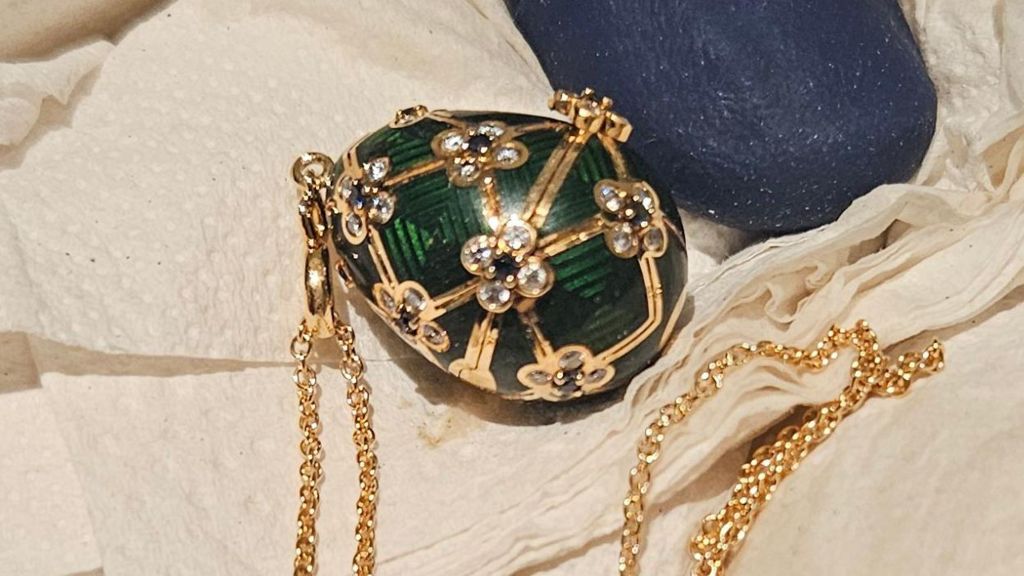
The recent theft of crown jewels from the Louvre in Paris has not only triggered a high-profile police investigation but also reignited a contentious debate about the origins of museum artifacts and the ethics of colonial-era acquisitions. While the stolen jewels were crafted in France, their gemstones trace back to former colonies, including Ceylon (Sri Lanka), India, Brazil, the Persian Gulf, and Colombia. This revelation has prompted calls for greater transparency from the Louvre and other European museums about the provenance of their collections. Experts argue that the heist presents an opportunity to confront the uncomfortable histories tied to these treasures and to push for restitution. The stolen items, including tiaras, necklaces, and brooches, once belonged to 19th-century French royalty, but their raw materials were sourced through imperial networks that exploited global labor and resources. Critics emphasize that while the theft is criminal, the colonial context of these jewels complicates the narrative of loss. The case parallels other high-profile restitution battles, such as India’s claim over the Koh-i-Noor diamond, which is currently held by the British Crown. France has taken limited steps toward restitution, returning some artifacts to Benin and Senegal, but critics argue that legal and institutional barriers hinder broader action. The Louvre, meanwhile, has been accused of narrowly defining what constitutes “looted” artifacts and demanding excessive proof for restitution claims. Scholars and activists advocate for museums to adopt a decolonized approach, providing honest accounts of how artifacts were acquired and acknowledging the exploitation involved. The Louvre heist, they say, could catalyze a broader reckoning with colonial legacies in Western museums.
-

The Parthenon in Athens briefly shed its scaffolding. Here’s a look at its restoration
For the first time in years, the iconic Parthenon stood free of scaffolding, offering residents and visitors in Athens an unobstructed view of the ancient marble temple atop the Acropolis. This rare sight, lasting roughly four weeks, was a testament to the ongoing restoration efforts that have spanned decades. Culture Minister Lina Mendoni described the scene as “breathtaking,” likening the gleaming temple to its appearance nearly 2,500 years ago. However, the scaffolding returned in late September, albeit in a lighter and less intrusive form, to continue fine-tuning work on the western façade. The Parthenon has been under restoration since 1975, a process that has already taken more than three times longer than its original construction. The project involves 161 highly specialized professionals, including engineers, archaeologists, and marble craftsmen, who meticulously work to stabilize and preserve the temple. The restoration includes replacing rusted iron clamps with titanium fasteners and reassembling over 1,500 marble blocks like pieces of a colossal puzzle. The Parthenon, built between 447 and 432 BC, remains a symbol of Greece’s Golden Age, showcasing the unmatched skill of its ancient builders. With 4.5 million visitors in 2024, the Acropolis is Greece’s most-visited site, and the current restoration phase is expected to conclude in 2026, marking a significant milestone in preserving this architectural marvel.
-

UAE: Emirati National Identity Strategy launched to strengthen sense of belonging, pride
The UAE Government has introduced the ‘Emirati National Identity Strategy,’ a comprehensive initiative aimed at reinforcing national belonging, pride, and social cohesion. Announced during the UAE Government Annual Meetings 2025 in Abu Dhabi, the strategy was developed collaboratively by the Ministry of Culture and the National Projects Office of the Presidential Court. Minister of Culture Salem bin Khalid Al Qassimi outlined its vision and objectives during a keynote session titled ‘Legacy and Responsibility,’ emphasizing its role in unifying government efforts to embed Emirati identity across all sectors. The strategy is built on three pillars: defining the identity’s core values, establishing a national framework, and creating a governance model to ensure sustainability. It also highlights six core elements of Emirati identity, including Islamic values, the Arabic language, heritage, and family, alongside five core values such as respect, ambition, and generosity. Seven dimensions, ranging from education to media, will serve as channels to deliver the strategy’s objectives. Thirteen key initiatives, including integrating national identity into educational curricula and developing a Media Content Policy, will drive implementation. A National Identity Committee will oversee governance, ensuring alignment across entities. H.H. Sheikha Mariam bint Mohamed bin Zayed Al Nahyan emphasized the strategy’s role in fostering unity and inspiring future generations to embrace their heritage. The initiative reflects the UAE leadership’s vision of nurturing a society rooted in shared values and coexistence.
-

Galadari Brothers earns second place in Dubai Sustainability Challenge 2025
Galadari Brothers has proudly secured the second position in the Dubai Sustainability Challenge 2025, a citywide initiative orchestrated by Companies for Good. This event aimed to galvanize corporate teams to take actionable steps towards fostering a greener and more sustainable Dubai. The three-week challenge saw the participation of leading organizations across the UAE, documenting over 500 sustainable actions, including waste reduction, energy conservation, community volunteering, and recycling initiatives. The program concluded with a grand finale desert clean-up, where the top three companies collaborated to collect waste from the desert environment.
Mohammed Galadari, Co-Chairman and Group CEO of Galadari Brothers, expressed his pride in the achievement, stating, ‘This recognition reflects Galadari Brothers’ shared purpose to drive meaningful change. Our teams demonstrated how sustainability can thrive when it becomes a collective habit, woven into the way we work and contribute to the community.’ Employees from various divisions of Galadari Brothers actively participated, contributing ideas and daily actions that aligned with the conglomerate’s broader Environmental, Social, and Governance (ESG) goals.
Talat Jahan Sheikh from Group Finance highlighted the personal impact of the challenge, saying, ‘What made the challenge special was how it turned sustainability into something personal. Small habits like switching off unused lights or reusing materials created a real sense of ownership.’ The finale event was marked by a spirited desert cleanup competition, which Muhammad Kamran from Galadari Ventures Division described as ‘an inspiring day,’ adding, ‘Seeing teams from different companies working together in the open desert reminded us how powerful collective action can be.’
This achievement underscores Galadari Brothers’ steadfast commitment to embedding sustainability into its operations and corporate culture, aligning with Dubai’s vision for a green and circular economy and the UAE’s sustainable future.
-

Abu Dhabi announces road closures for Al Ain Half Marathon
Abu Dhabi authorities have unveiled plans for temporary road closures in preparation for the ADNOC Al Ain Half Marathon, scheduled to take place on Saturday, November 8, 2025, at the Hazza Bin Zayed Stadium. The closures will be enforced from 2:00 AM to 10:00 AM on the event day to ensure the safety and smooth execution of the race. The half marathon will commence at 6:00 AM, followed by the 10km race at 6:45 AM, the 5km at 6:45 AM, and the 2.5km event at 7:00 AM. Participants and spectators can visit the Race Village, which will be open from Wednesday, November 5, to Friday, November 7, from 3:00 PM to 10:00 PM, and on the race day from 5:00 AM to 12:00 PM. The authorities have shared detailed information about the affected roads via a post on X (formerly Twitter), urging residents and commuters to plan their travel accordingly. The event underscores Abu Dhabi’s commitment to promoting sports and healthy lifestyles while ensuring minimal disruption to daily activities.
-

Man catches fire after power bank overheats at Melbourne airport lounge
A recent incident at Melbourne International Airport has reignited concerns over the safety of lithium power banks during air travel. A man in his 50s suffered burns to his leg and fingers after a power bank in his pocket ignited in the Qantas business lounge. The device overheated, burst into flames, and filled the area with smoke, leading to the evacuation of approximately 150 people. Quick-thinking staff assisted the man by placing him under a shower until paramedics arrived. He was hospitalized in stable condition and later released. Witnesses reported seeing ‘battery acid flying everywhere,’ according to The Age newspaper. The lounge was cleaned and reopened two hours later. Australian film producer Leanne Tonkes, who was present during the incident, shared an image of the burnt power bank on Instagram, expressing concern for the injured man and praising the swift response of staff and bystanders. This incident has prompted Qantas to review its policies regarding passengers carrying lithium batteries, including power banks. The airline is expected to announce updated guidelines soon. The incident is not isolated. In July, a fire on a Virgin Australia flight from Sydney to Hobart was attributed to a power bank stored in an overhead locker. The airline is now advising passengers to keep power banks ‘in sight and within easy reach’ during flights. Earlier this year, a fire believed to be caused by a power bank destroyed a passenger plane in South Korea. In response to these safety concerns, several international airlines, including Emirates, Cathay Pacific, China Airlines, Korean Air, and Singapore Airlines, have banned the use and charging of power banks during flights. Additionally, many airlines have imposed limits on the number and capacity of rechargeable batteries passengers can carry. For example, some airlines restrict passengers to two power banks with a capacity between 100Wh and 160Wh. These measures aim to mitigate the risks associated with lithium batteries, which are known to be prone to overheating and combustion under certain conditions.
-

Bird-watching festival in Yunnan unveils new avian discoveries
The second Yunnan Lancang Bird-Watching Festival, held in the Lancang Lahu Autonomous County of Yunnan Province, concluded with remarkable findings. Over a span of 60 hours, participants documented an impressive 273 bird species, setting a new record for the region. Among these, seven species were newly recorded in the area, including the spot-winged starling, which also marked a new record for Pu’er City, the administrative jurisdiction of Lancang. The event, which drew bird enthusiasts and researchers alike, highlighted the rich biodiversity of Yunnan Province, known for its unique ecosystems and avian diversity. The discovery of these new species underscores the importance of conservation efforts in the region, as well as the potential for further scientific exploration. The festival not only celebrated the beauty of bird-watching but also contributed valuable data to the field of ornithology, reinforcing Yunnan’s status as a global hotspot for bird species.
-

Sudan’s takaaya community kitchens collapsing as population starves
Sudan’s community kitchens, known as takaaya, have been a cornerstone of survival for millions amid the ongoing conflict that began in April 2023. However, a recent report by Islamic Relief warns that these vital institutions are on the brink of collapse due to international neglect, supply shortages, and volunteer exhaustion. The charity’s extensive research reveals that 83% of Sudanese families lack sufficient food, with 52% of surveyed households having food supplies lasting less than a week. These kitchens, which operate alongside Emergency Response Rooms (ERRs), have been a beacon of hope and solidarity, providing not just meals but also shelter, health facilities, and support for victims of sexual violence. The ERRs, once supported by US funding under President Biden, have seen their resources drastically reduced since President Trump cut USAID support, leaving them struggling to maintain operations. Volunteers like Mazen Osman ibn Ibrahim and Manal Ahmed Ibrahim emphasize the cultural and religious significance of takaaya, rooted in Sudanese traditions of mutual aid and Islamic principles of charity. Despite their resilience, many kitchens have downsized from serving multiple meals a day to just one, with some shutting down entirely. Islamic Relief has called for urgent international aid to support these local initiatives, warning that their collapse would have catastrophic consequences for a population already facing famine and starvation.
-

At least 1 dead, 6 trapped after structure collapses at decommissioned South Korean power plant
A tragic incident unfolded in Ulsan, South Korea, when a 60-meter (196-foot) tower at a decommissioned thermal power plant collapsed during demolition work, resulting in at least one fatality and leaving six individuals trapped under the debris. The collapse occurred on Thursday afternoon, prompting an immediate and extensive rescue operation.
Rescuers managed to locate one of the trapped individuals, though fears of their demise loom large as extraction efforts have been hindered by unstable rubble. Two other workers were rescued shortly after the collapse and are reported to have escaped life-threatening injuries. However, another worker, rescued later, succumbed to injuries and was pronounced dead at a hospital early Friday, according to Kim Jeong-shik, an official with Ulsan’s fire department.
The search for the remaining trapped individuals was temporarily suspended on Friday morning due to safety concerns regarding the unstable debris. Rescue operations are set to resume once stabilization measures are completed. Kim highlighted the deployment of advanced detection equipment, including thermal cameras and endoscopes, alongside rescue dogs to aid in the search efforts.
South Korean President Lee Jae Myung has directed officials to mobilize all available resources, including over 340 rescue workers and approximately 90 vehicles and equipment, to expedite the rescue mission while ensuring the safety of the rescue personnel.
The thermal power plant, which had been operational for 40 years, was decommissioned in 2021. Officials noted that the boiler tower, one of three at the site, had been weakened during preparations for its demolition, contributing to the catastrophic collapse.